|
|
|
ARAYICI Ali
Les instituts de village en Turquie (1937-1952) - Une experience unique d'éducation rurale
196pp., 24cm., br.orig., Thèse de doctorat, cachet au verso de la p.d.t., texte frais, X109989
|
|
|
ARCHAEOLOGISTS OF CATALHOYUK.
Çatalhöyük. Site guide book.
Very Good English Paperback. Pbo. 4to. (30 x 21 cm). In English. Color and b/w ills. 24 p. Çatalhöyük. Site guide book.
|
|
|
ARCHITECT KEMALEDDIN, 1870-1927.
Mimar Kemalettin Anma Programi Dizisi. 3 volumes set. Vol. 1. Mimar Kemalettin çagi. Mimarlik / Toplumsal yasam / Politika. Vol. 2. Istanbul Vakiflar Bölge Müdürlügü Mimar Kemaleddin Proje Katalogu. Vol. 3. Imparatorluktan Cumhuriyete Mimar Kemaleddin, 1870-1927. Prep. by Ali Cengizkan, Afife Batur.
New New English Original bdg. Dust wrapper. In special slip-case. 4to. (32 x 23 cm). In Turkish. 3 volumes set (251 p.; [xvi], 340 p.; 536 p.). Mimar Kemalettin Anma Programi Dizisi. 3 volumes set. Vol. 1. Mimar Kemalettin çagi. Mimarlik / Toplumsal yasam / Politika. Vol. 2. Istanbul Vakiflar Bölge Müdürlügü Mimar Kemaleddin Proje Katalogu. Vol. 3. Imparatorluktan Cumhuriyete Mimar Kemaleddin, 1870-1927. A comprehensive study on Kemaleddin the Architect, 1870-1927.
|
|
|
ARCHITEKT SEHABETTIN.
Konya abideleri.
Very Good English Paperback. Pbo. Roy. 8vo. (24 x 17 cm). In Turkish. 68 p., b/w plts. Konya abideleri. Turkish and Islamic m¿numents in Konya city. First and Only Edition. Extremely rare. Ex-library copy.
|
|
|
ARCHIVUM ANATOLICUM.
Archivum Anatolicum.= Anadolu arsivleri. 15 issues set.
New English Paperback. Pbo. Roy. 8vo. (24 x 17 cm). Articles in English, German, French, Italian, and Turkish. 15 volumes set: (Vol 1: 180 p., b/w ills.; Vol. 2: 121 p., b/w ills.; Vol. 3: (Emin Bilgiç ani kitabi: Festschrift Emin Bilgiç) 381 p., b/w ills.; Vol. 4: 244 p., b/w ills.; Vol. 5: 212 p., b/w ills.; Vol. 6-I: 196 p., b/w ills.; Vol. 6-II: 154 p., b/w ills.; Vol: 7-I: 78 p., b/w ills.; Vol. 7-II: 98 p., b/w ills.; Vol. 8-I: 75 p., b/w ills.; Vol. 8-II: 108 p., b/w ills. Vol. 9-I: 78 p., b/w ills.; Vol. 9-II: 106 p., b/w ills.); 10-I: 85 p., b/w ills. Archivum Anatolicum.= Anadolu arsivleri. 13 issues set. Very heavy set. Extra shipping cost will be requested.
|
|
|
ARCHIVUM ANATOLICUM.
Archivum Anatolicum.= Anadolu arsivleri. No: 7/2.
Fine English Paperback. Pbo. Roy. 8vo. (24 x 17 cm). 89, [7] p. Ex-library. In Turkish and in English abstracts. Contents: 'Ana kaspim annim Samas-abi qatatum' = 'Bu gümüs için Samas-abi kefildir', Irfan Albayrak. / Yazili kaynaklar ve arkeolojik veriler isiginda Hattusa ile Arinna arasindaki uzaklik, Hatçe Baltacioglu. / Hattiler ve Hititler döneminden eski Türkler'e, Osmanlilar'a ve günümüz Anadolu'suna kadar uzanan bazi benze runsurlar II, Hayri Ertem. / Pilah-Istar arsivinden aile hukukuna dair bazi yazismalar, L. Gürkan Gökçek. / M.Ö. II. Bin'de bir Anadolu sehri 'Aliasa'.
|
|
|
ARCHIVUM ANATOLICUM.
Archivum Anatolicum.= Anadolu arsivleri. Vol. VI No: 1.
Fine English Paperback. Pbo. Roy. 8vo. (24 x 17 cm). 196 p. Ex-library. In Turkish and in English abstracts. Contents: Kanis-Karum'unun bir mektubu, Irfan Albayrak. / Hitit çivi yazili belgelerinde suhha- (düz) dam, çati ve onun dinsel ve sosyal hayattaki yeri, Hatçe Baltacioglu. / Eufileto coltivatore e custode dei suoi campi, Orazio Anatonio Bologna. / Laodikeia'da tespit edilen bir deprem ve Diocletianus's ithaf edilen bir yazit (Lykos Laodikeia'si), Ali Ceylan, Celal Simsek. / Kizzuwatna'li Mastigga'ya ait ritüel metinler üzerine, Esma Reyhan. In Turkish and Italian.
|
|
|
ARISTARCHI Bey (Grégoire)
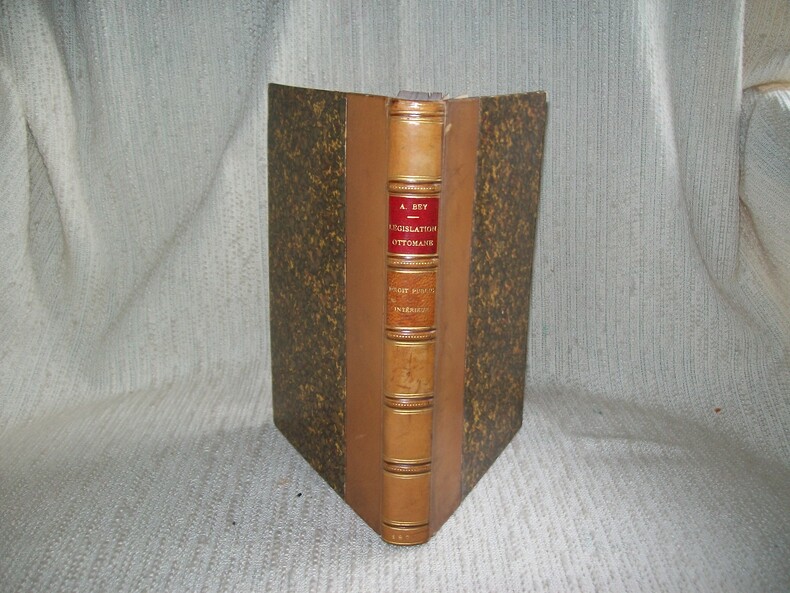
LEGISLATION OTTOMANE ou recueil des lois, règlements, ordonnances, traités, capitulations et autres documents officiels de l'Empire Ottoman. 2e PARTIE DROIT PUBLIC INTERIEUR. Publiée par Demetrius Nicolaïdes.
Constantinople Bureau du Journal Thraky 1874. In-8 3 feuillets non chiffrés 464pp. Demi veau havane, dos à nerfs orné de filets continus et perlés, pièces rouge (auteur) et tabac (titre), tranches brique, reliure de l'époque. Texte imprimé sur papier ordinaire un peu bruni. 2e partie seule de cet important recueil de lois, complète pour le sujet traité. Bel exemplaire bien relié, décoratif.
书商的参考编号 : GITj310
|
|
|
ARIF CEMIL [DENKER].
Ittihatçi seflerin gurbet maceralari.
Very Good Turkish Paperback. Cr. 8vo. (20 x 14 cm). In Turkish. 188 p. Ittihatçi seflerin gurbet maceralari.
|
|
|
ARIF CEMIL DENKER.
Birinci Dünya Savasinda Teskilat-i Mahsusa.
Very Good Turkish Paperback. Cr. 8vo. (19 x 14 cm). In Turkish. 395 p. Birinci Dünya Savasinda Teskilat-i Mahsusa. Teskilât-i Mahsusa (Turkish / Ottoman intelligence service founded by Union and Progress Society) during WW 1.
|
|
|
ARIF CEMIL.
I. Dünya Savasinda Teskilat-i Mahsusa.
Very Good Turkish Paperback. Cr. 8vo. (20 x 14 cm). In Turkish. 408 p. I. Dünya Savasinda Teskilat-i Mahsusa. Turkish / Ottoman intelligent service (Teskilât-i Mahsusa) and its activities during World War 1.
|
|
|
ARIF KESKINER.
Around Anatolia through the ages: A series of 40 documentaries.
Very Good English Paperback. Pbo. Roy. 8vo. (24 x 16 cm). In English. 303 p., ills. Around Anatolia through the ages: A series of 40 documentaries. ARCHEOLOGY Anatolian civilizations Documents Ancient history Turkish and Islamic culture.
|
|
|
ARIF KOLAY, SEFIK MEMIS, SAKIR TURAN.
Kizilay Karahisar maden suyu: Hayra akan su. [DJ COPY]
New New Turkish Original bdg. Dust wrapper. 4to. (30 x 21 cm). In Turkish. 272 p., many color and b/w ills. Kizilay Karahisar maden suyu: Hayra akan su. History of 'Kizilay Karahisar' mineral water and its sources.
|
|
|
ARIF KOLAY, SEFIK MEMIS, SAKIR TURAN.
Kizilay Karahisar maden suyu: Hayra akan su. [HC COPY]
New Turkish Original bdg. HC. 4to. (30 x 21 cm). In Turkish. 272 p., many color and b/w ills. Kizilay Karahisar maden suyu: Hayra akan su. History of 'Kizilay Karahisar' mineral water and its sources.
|
|
|
ARIF MÜFID MANSEL, (1905-1975).
Archaologische Gesellschaft zu Berlin. [Sonderdruck aus Archaologischer Anzeiger 1959]. 115. Winckelmannsfeier am 9. Dezember 1958.
Very Good German Paperback. 4to. (28 x 21 m). In German. 365-402 pp., 38 numerous b/w ills. (Each pages have two columns and each columns numbered as one page). Archaologische Gesellschaft zu Berlin. [Sonderdruck aus Archaologischer Anzeiger 1959]. 115. Winckelmannsfeier am 9. Dezember 1958. "Herr Arif Müfid Mansel, Istanbul, halt den Festvortrag über 'Die Grabbauten von Side (Pamphylien)'. Die zwei Grabbauten, die ich heute der Festversammlung vorführen werde, befinden sich in der weitausgedehnten Nekropole der pamphylischen Hafenstadt Side (heute Eski Antalya), etwa in der Mitte der Stüdküste Kleinasiens und 60 km östlich von der heutigen Stadt Antalya (Adalia) gelegen...".
|
|
|
ARIF MÜFID MANSEL, (1905-1975).
Ege ve Yunan tarihi.
Fine Turkish Paperback. Roy. 8vo. (24 x 17 cm). In Turkish. [xiv], 707 p. 322 numerous plates. Ege ve Yunan tarihi. Revised Third Edition.
|
|
|
ARIF MÜFID MANSEL, (1905-1975).
Ege ve Yunan tarihi.
Very Good Turkish Paperback. Roy. 8vo. (24 x 17 cm). In Turkish. [xxi], 578 p., 307 numerous b/w plates. Ege ve Yunan tarihi. First edition.
|
|
|
ARIF MÜFID MANSEL, (1905-1975).
Eski Dogu ve Ege tarihinin ana hatlari.
Very Good Turkish Paperback. Roy. 8vo. (24 x 17 cm). In Turkish. [2], 211 p. Eski Dogu ve Ege tarihinin ana hatlari. First Edition.
|
|
|
ARIF MÜFID MANSEL, (1905-1975).
Ilk çagda Antalya bölgesi.
Very Good Turkish Paperback. Roy. 8vo. (24 x 17 cm). In Turkish. 30 p. Ilk çagda Antalya bölgesi. Antalya (Adalia) region in the ancient history.
|
|
|
ARIF MÜFID MANSEL, (1905-1975).
Misir ve Ege tarihi notlari.
Very Good Turkish Paperback. Roy. 8vo. (24 x 17 cm). In Turkish. [4], 266 p. Misir ve Ege tarihi notlari. Notes on history of Egypt and Aegean. First Edition.
|
|
|
ARIF MÜFID MANSEL.
Die Kuppelgraeber von Kirklareli in Thrakien.= Trakya - Kirklareli kubbeli mezarlari ve sahte kubbe ve kemer problemi.
Very Good English Paperback. Pbo. 4to. (34 x 25 cm). In Turkish and German. 54 p., 38 b/w plates. The domed tombs of Kirklareli in Thrace. Die Kuppelgraeber von Kirklareli in Thrakien.= Trakya - Kirklareli kubbeli mezarlari ve sahte kubbe ve kemer problemi.
|
|
|
ARIF MÜFID MANSEL.
Side. 1947-1966 yillari kazilari ve arastirmalarinin sonuçlari.
Fine English Original bdg. 4to. (28 x 21 cm). In Turkish. [vi], 347, [1] p., 1 folding map. A study on Side excavations in 1947-1966. Side. 1947-1966 yillari kazilari ve arastirmalarinin sonuçlari.
|
|
|
ARIF MÜFID MANSEL.
Side. 1947-1966 yillari kazilari ve arastirmalarinin sonuçlari.
Fine English Original bdg. 4to. (28 x 21 cm). In Turkish. [vi], 347, [1] p., 1 folding map. A study on Side excavations in 1947-1966. Side. 1947-1966 yillari kazilari ve arastirmalarinin sonuçlari. ARCHEOLOGY Anatolian civilizations Excavations Pamphylia.
|
|
|
ARIF MÜFID MANSEL.
Türkiye'nin arkeoloji, epigrafi ve tarihi cografyasi için bibliyografya.
New English Paperback. Pbo. Roy. 8vo. (24 x 16 cm). In Turkish. [xxxiv], 616 p. Türkiye'nin arkeoloji, epigrafi ve tarihi cografyasi için bibliyografya. A comprehensive bibliography of Turkish archaeology, epigraphy, and historical geography.
|
|
|
ARIF SAYIL, (1901-1952), (Early Turkish deputy of CHP -Republican Party- from Trabzon city).
[A collection of photographs, newspapers and business cards of Arif Sayil].
Very Good Turkish, Ottoman (1500-1928) Original collection includes photographs of Arif Sayil and two business cards of him with autograph notes. The collection contains a small portrait photograph, two business cards, one is written some Ottoman Turkish notes, a standard sized studio photograph of his youth, gelatin silver small photo of him, a fine studio photograph with his fine clothes and his hat, a photograph showing him among some military stuff and early politicians of Trabzon city (Turkish rugs back), an autograph photograph with his manuscript note '25. yas Trabzon hatirasi, 15,4,1934' [i.e. A souvenir of Trabzon for my 25th age], a studio photo by Weinberg signed by Weinberg, two huge sized portrait photographs, and four photographs showing his funeral in varios sizes. The years of photographs between the 1930-1950s, until his death (his funeral photos). Arif Sayil was an early Turkish deputy of CHP -Republican Party- from Trabzon city and one of the theoretician of Republican Party of Republican Turkey.
|
|
|
ARIF UYGUÇ.
Dünden bugüne Çine.
Fine English Paperback. Pbo. Roy. 8vo. (23 x 16 cm). In Turkish. [4], 203 p., ills. Dünden bugüne Çine. Local history of Çine district of Aydin City.
|
|
|
ARISTARCHI BEY [GREGORY "LIGOR" ARISTARCHIS], (Ottoman diplomat), (1843-1915).
Autograph letter signed 'Aristarchi Bey' as an Ottoman minister in Washington addressed 'Cher Monsiuer'.
Washington: Epeude Vradeus Letterhead 1878. No Binding. Very Good. Original manuscript handwritten letter ALS signed as a Turkish / Ottoman minister in Washington addressed 'Cher Monsiuer' evidently taking in hand the arrangements for his correspondent's visit to Constantinople. 18x11 cm. In French. 3 p. Washington 25 January 1878. Folds lightly toned some mnor blemmishes. Embossed crest with Greek inscription 'Epeude Vradeus'. Gregory "Ligor" Aristarchis also known as Aristarchi Bey was an Ottoman diplomat of Phanariote Greek ethnicity compiler of a corpus of Ottoman legislation. Originally a provincial jurist he became the director of foreign correspondence of Crete beginning in 1861 and then from 1867 the Smyrna Izmir directeur politique "political director" and vice-governor. He served as Ottoman Minister in Washington from 1873 to 1883 with Alexandros Mavrogenis. The Ottoman government dismissed him from his post. Sinan Kuneralp the author of "Ottoman Diplomatic and Consular Personnel in the United States of America 1867-1917" argued that his relationship with Midhat Pasha was the "more likely" reason why he was fired while the official accusation was that Aristarchis misused money from a weapons deal. After 1883 he lived in Paris where he worked as an advisor to Alfred Nobel. After the fall of Abdul Hamid II he served as an Ottoman envoy to the Netherlands where he died. He composed one of the first collections of the Ottoman law in 7 volumes in the French language: "egislation ottomane ou Recueil des lois reglements ordonnances traités capitulations et autres documents officiels de l'Émpire Ottoman" Constantinople: Imprimerie Frères Nicolaides. <br/> <br/> Epeude Vradeus Letterhead unknown
书商的参考编号 : 052130
|
|
|
ARISTARCHI BEY [GREGORY "LIGOR" ARISTARCHIS], (Ottoman diplomat), (1843-1915).
Autograph letter signed 'Aristarchi Bey' as an Ottoman minister in Washington, addressed 'Cher Monsiuer'.
Very Good Turkish, Ottoman (1500-1928) Original manuscript (handwritten) letter (ALS) signed as a Turkish / Ottoman minister in Washington addressed 'Cher Monsiuer', evidently taking in hand the arrangements for his correspondent's visit to Constantinople. 18x11 cm. In French. 3 p. Washington, 25 January 1878. Folds, lightly toned, some mnor blemmishes. Embossed crest with Greek inscription 'Epeude Vradeus'. Gregory "Ligor" Aristarchis also known as Aristarchi Bey, was an Ottoman diplomat of Phanariote Greek ethnicity, compiler of a corpus of Ottoman legislation. Originally a provincial jurist, he became the director of foreign correspondence of Crete beginning in 1861, and then from 1867 the Smyrna (Izmir) directeur politique ("political director") and vice-governor. He served as Ottoman Minister in Washington from 1873 to 1883 with Alexandros Mavrogenis. The Ottoman government dismissed him from his post. Sinan Kuneralp, the author of "Ottoman Diplomatic and Consular Personnel in the United States of America, 1867-1917," argued that his relationship with Midhat Pasha was the "more likely" reason why he was fired, while the official accusation was that Aristarchis misused money from a weapons deal. After 1883 he lived in Paris where he worked as an advisor to Alfred Nobel. After the fall of Abdul Hamid II, he served as an Ottoman envoy to the Netherlands, where he died. He composed one of the first collections of the Ottoman law in 7 volumes in the French language: "egislation ottomane, ou Recueil des lois, reglements, ordonnances, traités, capitulations et autres documents officiels de l'Émpire Ottoman", Constantinople: Imprimerie, Frères Nicolaides.
|
|
|
ARISTIDE COUMBARY, (The director of the Imperial Ottoman Internal Meteorological Observatory in Constantinople), (1826-1896).
THE LAW OF STORMS: FRENCH METEOROLOGIST IN THE OTTOMAN EMPIRE / FORECAST / TELEGRAPH Lois des tempêtes avec dessins et cartes des tempêtes = Firtinalarin kavanîni ve bunlarin denizlerde müstelzim oldugu mehalik ve muhatirattan ihtiraz için ittihazi iktiza eden suver ve tedâbîr-i fiiliyeden bâhis risâle. i.e. It is a tractate that talks about the laws of storms and the actual measures and figures and the protection from their dangers and damages their causing at the seas.
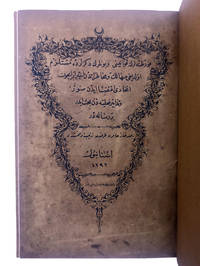
Constantinople Istanbul: Neologos Litografyasi - Votîra ve Sürekasi Matbaasi. AH 1292 1875. 1st Edition . Leather. Very Good. 8vo - over 7¾ - 9¾" tall. Contemporary 1/4 leather bdg. with marbled boards. Small 4to. 27 x 19 cm. 23 p. 11 p. in Ottoman script Old Turkish with Arabic letters; 12 p. in French with rare 4 folded maps. A very good copy. First and only edition of this extremely rare bilingual book in French and Ottoman Turkish including the first records on the formation and characteristics of storms to explain how storms and hurricanes occurred which route they followed and how they were conveyed to the regions that need to be warned by telegraph for the vessels sailing in the seas by French expert Coumbary who was founded the Rasathâne-i Âmîre i.e. Ottoman Imperial Observatory. Both the original French and Turkish translations of the work were published together in one volume. The work also included four maps which were drawn for this work only. The first map shows the movement of a storm that occurred on March 8 1865 the second one shows the occurrence between the Tropic Cancer and Capricorn whirlwinds storms in the Atlas and Indian oceans the movements in the Bay of Bengal the storms in different directions in the China Sea the Gulfstream Grönland and Azores. The second observatory in the Ottoman era was established for meteorology. Before this center was established beginning from the Reformation 1839 many meteorological observatories were built by foreigners in various cities such as Istanbul Smyrna Trebizond Tekirdag and Merzifon both as private and public establishments. The very first known temperature readings are the meteorological observations made by the Priest Dalmas at the St. Benôit monastery between 1839-1847. Later William Lane an Englishman who came to Istanbul during the Crimean War made observations at the British Cemetery at Haydarpasa. W. Noe director of the Mekteb-i Fünûn-u Sahane made observations at the house in Kalyoncukulluk where he lived until the Beyoglu Fire in 1848; and finally it is known that French engineer Ritter who was invited by the government for waterworks in Kuruçesme 1856-1860 also conducted meteorological observations. Observations on precipitation and humidity conducted between 1875-1892 by an amateur observer on the Thomson Farm in Erenköy are invaluable on the subject of Istanbul's climate. These observations have been published in Budapest in 1928. Excellent observations on heat pressure and humidity made in the summer residence of the Russian ambassador on Büyükada have also been published in Annales St. Petersburg. In 1858 the French government established the first observatory communicating data over the telegraph and in 1863 by compiling meteorological data in France the French National Meteorological Network started operations. In 1868 upon the recommendation of the French government the Rasathane-i Âmire was founded to convey meteorological forecasts to certain centers by telegraph. Instruments were purchased from leading European factories and operations started on top of a hill 74 meters high on Pera. The first director was Mr. Aristide Coumbray who came to Istanbul to renovate the telegraph network. Instruments commissioned from France were set up at Mr. Coumbary's home which stood at the garden of the Swedish Embassy. The observatory was later moved after its offices were prepared. Coumbary represented Turkey in the first international meteorology congress convened in Wien five years later in 1873. Rasathane-i Âmire worked by the same system as the National Meteorology Center in France. In the observation books of 1868 August-November names of affiliated stations are given to us Soulina Köstence Constantia Varna Burgaz Valona Elbasan Durazzo and Beirut. Later stations in Izmir Diyarbakir Baghdad and Fao were also added. The observatory founded by Aristide Coumbary in 1868 in Istanbul operated until the end of the First World War. Özege 5735.; TBTK 7688 10862.; Not in OCLC. <br/> <br/> Neologos Litografyasi - Votîra ve Sürekasi Matbaasi., [AH 1292] hardcover
书商的参考编号 : 055260
|
|
|
ARISTIDE COUMBARY, (The director of the Imperial Ottoman Internal Meteorological Observatory in Constantinople), (1826-1896).
[THE LAW OF STORMS: FRENCH METEOROLOGIST IN THE OTTOMAN EMPIRE / FORECAST / TELEGRAPH] Lois des tempêtes avec dessins et cartes des tempêtes = Firtinalarin kavanîni ve bunlarin denizlerde müstelzim oldugu mehalik ve muhatirattan ihtiraz için ittihazi iktiza eden suver ve tedâbîr-i fiiliyeden bâhis risâle. [i.e. It is a tractate that talks about the laws of storms and the actual measures and figures and the protection from their dangers and damages, their causing at the seas].
Very Good French Contemporary 1/4 leather bdg. with marbled boards. Small 4to. (27 x 19 cm). 23 p. (11 p. in Ottoman script (Old Turkish with Arabic letters; 12 p. in French), with rare 4 folded maps. A very good copy. First and only edition of this extremely rare bilingual book in French and Ottoman Turkish, including the first records on the formation and characteristics of storms to explain how storms and hurricanes occurred, which route they followed, and how they were conveyed to the regions that need to be warned by telegraph, for the vessels sailing in the seas, by French expert Coumbary who was founded the Rasathâne-i Âmîre [i.e. Ottoman Imperial Observatory]. Both the original French and Turkish translations of the work were published together in one volume. The work also included four maps which were drawn for this work only. The first map shows the movement of a storm that occurred on March 8, 1865, the second one shows the occurrence between the Tropic Cancer and Capricorn whirlwinds, storms in the Atlas and Indian oceans, the movements in the Bay of Bengal, the storms in different directions in the China Sea, the Gulfstream, Grönland, and Azores. The second observatory in the Ottoman era was established for meteorology. Before this center was established, beginning from the Reformation (1839), many meteorological observatories were built by foreigners in various cities such as Istanbul, Smyrna, Trebizond, Tekirdag, and Merzifon both as private and public establishments. The very first known temperature readings are the meteorological observations made by the Priest Dalmas at the St. Benôit monastery between 1839-1847. Later William Lane, an Englishman who came to Istanbul during the Crimean War, made observations at the British Cemetery at Haydarpasa. W. Noe, director of the Mekteb-i Fünûn-u Sahane made observations at the house in Kalyoncukulluk where he lived until the Beyoglu Fire in 1848; and finally, it is known that French engineer Ritter, who was invited by the government for waterworks in Kuruçesme (1856-1860) also conducted meteorological observations. Observations on precipitation and humidity conducted between 1875-1892 by an amateur observer on the Thomson Farm in Erenköy are invaluable on the subject of Istanbul's climate. These observations have been published in Budapest in 1928. Excellent observations on heat, pressure, and humidity, made in the summer residence of the Russian ambassador on Büyükada have also been published, in Annales St. Petersburg. In 1858, the French government established the first observatory communicating data over the telegraph, and in 1863, by compiling meteorological data in France, the French National Meteorological Network started operations. In 1868, upon the recommendation of the French government, the Rasathane-i Âmire was founded to convey meteorological forecasts to certain centers by telegraph. Instruments were purchased from leading European factories, and operations started on top of a hill 74 meters high on Pera. The first director was Mr. Aristide Coumbray, who came to Istanbul to renovate the telegraph network. (Instruments commissioned from France were set up at Mr. Coumbary's home, which stood at the garden of the Swedish Embassy. The observatory was later moved after its offices were prepared.) Coumbary represented Turkey in the first international meteorology congress, convened in Wien five years later in 1873. Rasathane-i Âmire worked by the same system as the National Meteorology Center in France. In the observation books of 1868 (August-November), names of affiliated stations are given to us Soulina, Köstence (Constantia), Varna, Burgaz, Valona, Elbasan, Durazzo, and Beirut. Later, stations in Izmir, Diyarbakir, Baghdad, and Fao were also added. The observatory founded by Aristide Coumbary in 1868 in Istanbul, operated until the end of the First World War. Özege 5735.; TBTK 7688, 10862.; Not in OCLC.
|
|
|
ARKEOLOJI VE SANAT.
Historical researchment at Strandza Mountains and in their vicinity.= Yildiz Daglari ve yakin çevresi tarih arastirmalari. Symposium papers. Edited by Mehmet Özdogan.
As New English Paperback. Pbo. Mint. Roy. 8vo. (24 x 17 cm). In English, Bulgarian, Turkish. 199 p. B/w ills. Historical researchment at Strandza Mountains and in their vicinity.= Yildiz Daglari ve yakin çevresi tarih arastirmalari. Symposium papers. Edited by Mehmet Özdogan.
|
|
|
ARLEN, Michael.
Embarquement pour l’Ararat. À la recherche de l’identite armenienne. Trad. de l’anglais.
in-8°, 251 pages, broche, couverture illustree plastifiee. Bel exemplaire [CA32-2]
|
|
|
Armitage, Flora
The Desert and the Stars: a Portrait of T.E. Lawrence
The Desert and the Stars: a Portrait of T.E. Lawrence London: Faber and Faber, 1956. 334 pp , relié plein chagrin , dos à nerfs , bel exemplaire P2-6E
书商的参考编号 : PHO-466
|
|
|
ARMAGAN ERKANAL-ÖKTÜ.
Panaztepe I. Die Friedhöfe von Panaztepe (Text-Tafeln-Falttafeln).
New German Paperback. Large 8vo. In German. Panaztepe I. Die Friedhöfe von Panaztepe (Text-Tafeln-Falttafeln).
|
|
|
ARMAGAN ERKANAL.
Die in Anatolien vorkommenden altsyrischen Siegel und Siegelabdrucke.= Anadolu'da bulunan Suriye kökenli mühürler ve mühür baskilari.
New New English Original bdg. Dust wrapper. 4to. (28 x 21 cm). In Turkish and German. 209 p. Color and b/w ills. Die in Anatolien vorkommenden altsyrischen Siegel und Siegelabdrucke.= Anadolu'da bulunan Suriye kökenli mühürler ve mühür baskilari.
|
|
|
ARMAND GOSU.
Le Troisieme Coalition Antinapoleonienne et la Sublime Porte 1805. Avec une preface de Mihai Maxim.
New English Paperback. Pbo. Roy. 8vo. (24 x 17 cm). In French. 186 p. Studies in Ottoman diplomatic history: XII. Le Troisieme Coalition Antinapoleonienne et la Sublime Porte 1805. Avec une preface de Mihai Maxim.
|
|
|
Armin Vambery [born Hermann Wamberger; also Arminius Vambery; Armin Vambery] (1832-1913), Hungarian Jewish authority on Ottoman
Ãrmin Vámbéry Hermann Wamberger; Ãrminius Vámbéry Hungarian Jewish traveller and authority on the Ottoman Empire. Autograph Note Signed 'Armin Vambery' to 'Mr Blacket' asking 'how many pages of print are in the first volume'.
'Wedesday' no date. On monogram letterhead combining the letters C and A. 1p 12mo. In good condition lightly aged. Folded twice. Reads: 'Dear Mr Blacket I should wish to know in the course of the day how many pages of print are in the first volume.' Despite the spelling of the name the recipient is presumably either Henry Blackett 1825-1871 of the publishers Hurst and Blackett or one of the four of his sons to become publishers. There is no record of a book by Vámbéry being published by a Blacket or Blackett but he may be referring to an essay or article published in a periodical or compilation or an anonymous or pseudonymous work. 'Wedesday' [no date]. On monogram letterhead combining the letters C and A. unknown
书商的参考编号 : 22474
|
|
|
Armistead, Samuel G.
EL ROMANCERO JUDEO - ESPAÑOL EN EL ARCHIVO MENENDEZ PIDAL. Tomo I - II- III. (Catálogo - índice de romances y canciones) por Samuel G. Armistead con la colaboración de Selma Margaretten, Paloma Montero y Ana Valenciano
3 vols., 387; 393; 358p., illus., facsimiles, bibl., index, wrps. (Fuentes para el Estudio del Romancero. Serie Sefardi; I, II & III) Tomo I: Catalogo de Textos A-K. Tomo II: Catálogo de Textos L-DD. Tomo II: Transcripciones musicales editadas por Israel J. Katz; Antología - Indices. clear taped spines, library labels and stamps, ow. a vg copy. heavy: international customers please inquire on shipping. Ex-Library
|
|
|
Arnakis, George G Ottoman Empire Balkan States Near East
THE NEAR EAST IN MODERN TIMES VOLUME ONE THE OTTOMAN EMPIRE AND THE BALKAN STATES TO 1900
Pemberton Press TX 1969. Fine in gray buckram with brown print with light foxing to top edge of text block. First edition first printing hardcover SIGNED INSCRIBED TO by Mrs George Arnakis Pemberton Press, TX hardcover
书商的参考编号 : 832
|
|
|
ARNOLD J. TOYNBEE, (1889-1975).
Las atrocidades en Armenia: El Exterminio de una nacion. Precedido de un discurso pronunciado por Lord Bryce.
Very Good Spanish Paperback. Cr. 8vo. (20 x 14 cm). In Spanish. 201 p. Las atrocidades en Armenia: El Exterminio de una nacion. Precedido de un discurso pronunciado por Lord Bryce.
|
|
|
Aron Rodrigue (a cura di), Sarah Abrevaya Stein (a cura di), Isaac Jerusalmi (Traduttore)
A Jewish Voice from Ottoman Salonica: The Ladino Memoir of Sa'adi Besalel a-Levi
8vo, br, ed, 372pp. This book presents for the first time the complete text of the earliest known Ladino-language memoir, transliterated from the original script, translated into English, and introduced and explicated by the editors. The memoirist, Sa'adi Besalel a-Levi (1820-1903), wrote about Ottoman Jews' daily life at a time when the finely wrought fabric of Ottoman society was just beginning to unravel. His vivid portrayal of life in Salonica, a major port in the Ottoman Levant with a majority Jewish population, thus provides a unique window into a way of life before it disappeared as a result of profound political and social changes and the World Wars. Sa'adi was a prominent journalist and publisher, one of the most significant creators of modern Sephardic print culture. He was also a rebel who accused the Jewish leadership of Salonica of being corrupt, abusive, and fanatical; that leadership, in turn, excommunicated him from the Jewish community. The experience of excommunication pervades Sa'adi's memoir, which documents a world that its author was himself actively involved in changing.
|
|
|
Aron Rodrigue (a cura di), Sarah Abrevaya Stein (a cura di), Isaac Jerusalmi (Traduttore)
A Jewish Voice from Ottoman Salonica: The Ladino Memoir of Sa'adi Besalel a-Levi.
8vo, br. ed. text in english and ladino (turkish sefardi), pp.372. This book presents for the first time the complete text of the earliest known Ladino-language memoir, transliterated from the original script, translated into English, and introduced and explicated by the editors. The memoirist, Sa'adi Besalel a-Levi (1820-1903), wrote about Ottoman Jews' daily life at a time when the finely wrought fabric of Ottoman society was just beginning to unravel. His vivid portrayal of life in Salonica, a major port in the Ottoman Levant with a majority Jewish population, thus provides a unique window into a way of life before it disappeared as a result of profound political and social changes and the World Wars. Sa'adi was a prominent journalist and publisher, one of the most significant creators of modern Sephardic print culture. He was also a rebel who accused the Jewish leadership of Salonica of being corrupt, abusive, and fanatical; that leadership, in turn, excommunicated him from the Jewish community. The experience of excommunication pervades Sa'adi's memoir, which documents a world that its author was himself actively involved in changing.
|
|
|
ARPAEMINIZÂDE MUSTAFA SAMI, (?-1742).; HUSEYIN SAKIR, (18th century).; VAKANÜVIS MEHMED SUBHI, (1711-1769).
[THE 19TH ISLAMIC INCUNABULA] Târîh-i Sami ve Sakir ve Subhi. [i.e. The chronicle of Sami, Sakir and Subhi].
Very Good Turkish, Ottoman (1500-1928) Original dark brown handsome full leather bdg. with a traditional flap. Folio. (32 x 22 cm). In Ottoman script (Old Turkish with Arabic letters). [2], [6], 238 leaves. The size of the text block in red borders: 25.5 x 14.5 cm. 33 lines on each page. Printed on paper with European watermarks. The size of the text block in red borders: 25 x 14.5 cm. 33 lines on each page. Printed on paper with European watermarks. Handwritten title on the bottom edge. A fine copy. The 19th incunable of the Islamic world, printed by Ibrahim Müteferrika's legendary Basmahane. The publication of Ottoman chronicles which began in 1734 with the edition of Naimâ's history, continued after a long break in 1783. This volume, containing the works of three court chroniclers who followed each other in rapid succession, is a chronological continuation of Mehmed Râsid's history, published by Müteferrika. Arpaemînizâde Mustafa Sâmî (deceased 1734) was the court's historian from 1730 to 1733, Sâkir Hüseyin (died 1742) in 1733, and Subhî Mehmed (ca. 1711-1769) from 1739 to 1745. The work of the three chroniclers is known as one coherent historiography, which presents the events of Ottoman history from 1730 to 1744. This work is a particularly valuable source on the Habsburg-Ottoman war between 1736 and 1739, in which Subhî participated in person. The prestige of the work, which offers detailed data on the administrative events (appointments, dismissals, and other biographical communications) is further increased by the fact that Subhî in many cases used original documents. This chronicle includes the events between the years 1730-1743. Contents: Ahd-i Humâyûn [i.e. Imperial constitutional declaration]., Zikr-i tecdîd-i san'at-i tab' [i.e. Preface on the Muteferrika Press of Vasif Efendi]., Fihrist-i târîh-i Sami ve Sakir ve Subhi [i.e. Contents of the work]., Text., History of Subhi. The workshop of Müteferrika began its historical mission in 1728. They published 17 works in 22 volumes. The printing house served as a means to the long-term goal of Müteferrika, his efforts to broaden the horizon and modernize the knowledge of Ottoman society and Islamic civilization. This is evidenced by the subjects of the books selected for publishing, the motivations put forth in the publisher's introductions, as well as by the documents illuminating the background of the publication of each book, also published in print. In 1742, with the publication of the Persian dictionary of Hasan Suûrî, a chapter of Ottoman book printing came to an end. With the death of Müteferrika, the printing of Turkish books was temporarily interrupted. The first generation of Ottoman-Turkish prints was soon followed by a new series when in 1756 Ahmed and Ibrâhîm Efendi (the latter perhaps the founder's son, according to speculative sources) made an attempt to resurrect the legacy of Müteferrika through the possession of a decree obtained from the Sultan. However, this experiment did not prove to be lasting, as it did not last longer than the new edition of the first Turkish printed book, the Lugat-i Vankûlî. After this, for several decades there was no continuation to the Turkish book printing established by Müteferrika, until in 1783 the workshop was put in operation again for the publication of six more works. The subjects of these late 18th century works were dominated by history and military technology, thus Müteferrika's strategy of book distribution made its way hand in hand with the efforts of modernization of the Ottoman state. The second edition of Lugat-i Vankûlî followed the principles of the first edition, and its introduction was composed on the model of the introductory pages of the two last books published under Müteferrika's supervision. The works published after 1783 display a noticeable development in typography not only as to its somewhat refined visual impression but also in its structure. For example, the d+h and r+h ligatures, (For more info please visit our website)
|
|
|
ARPAEMÎNI-ZÂDE MUSTAFA SÂMÎ.
Arpaemîni-zâde Mustafa Sâmî. Dîvân. Prep. by Fatma Sabiha Kutlar.
Fine English Paperback. Pbo. Roy. 8vo. (24 x 17 cm). In Turkish and examples in Ottoman script. 633 p. Arpaemîni-zâde Mustafa Sâmî. Dîvân. Prep. by Fatma Sabiha Kutlar.
|
|
|
ARSEN YARMAN, ARA AGINYAN.
Sultan II. Mahmud ve Kazaz Artin Amira.
New English Paperback. Pbo. Roy. 8vo. (24 x 17 cm). In Turkish. 505 p. Color ills. A study on Kazaz Artin Amira, an Armenian intellectual. Sultan II. Mahmud ve Kazaz Artin Amira.
|
|
|
ARSEN YARMAN.
Ermeni Etibba Cemiyeti, 1912-1922: Osmanli'da tiptan siyasete bir kurum.
New English Paperback. Pbo. Roy. 8vo. (24 x 16 cm). In Turkish. 488 p., ills. History of the Armenian Medical Corporate in the Ottoman Empire, 1912-1922. Ermeni Etibba Cemiyeti, 1912-1922: Osmanli'da tiptan siyasete bir kurum.
|
|
|
ARSEN YARMAN.
Osmanli saglik hizmetlerinde Ermeniler ve Surp Pirgiç Ermeni Hastanesi tarihi.
Fine Fine English Original bdg. with original dust wrapper. DJ. 4to. (33 x 24 cm). In Turkish. Ills. [xiii], 866 p. Osmanli saglik hizmetlerinde Ermeniler ve Surp Pirgiç Ermeni Hastanesi tarihi. Armenians in the Ottoman health and medical services and history of Surp Pirgiç Armenian Hospital. A very volume. Extra shipping cost will be requested. Content: Giris - Gayrimüslimlerin Hukuki Statütlerinin Genel Hatlari - Istanbul'da Ermeni Nüfusu ve Yerlesimi - Ermenilerin Tercih Ettikleri ve Meslekler Amiralar.; Ermeni Tip Tarihi: - Ilk Ermenilerde Tip (MÖ 15. yy- MÖ 6. yy) - Pagan Ermenistan'da Tip (MÖ 4. yy- MS 4. yy) - Geleneksel Ermeni Tibbinda Sifali Ot ve Su Tedavileri - Geleneksel Ermeni Tibbinda Ayur-Veda Etkileri - Ortaçag'in Ilk Yarisinda Hiristiyanligin Ermenistan'a Girisi ve Tibbin Gelisiminde Kilisenin Rolü (4. yy- 9. yy) - Ortaçag Ermeni Filozof ve Hekimlerinde Antik Tip Etkisi - Ortaçag Ermeni Tibbinin Önemli Kisileri - (Yeznik Koghbatsi, David Anhaght, Anania Sirakatsi) - Ermeni Rönesansi'nda Tip (10. yy- 14. yy) - (Ani Tip Okulu, Kilikya Tip Okulu, Kakig-Hetumyan'in Tip Kitabi, Kilikya Tip Okulu'nun Diger Isimleri, Diger Tip Okullari) - Ortaçag'in Ikinci Yarisinda Ermeni Tibbi - (Amasya Tip Okulu, Sivas Tip Okulu) - Arap Kültürünün Etkisi (Ermeni Tip Terminolojisi) - 18. yy Tibbi - (Tokat Tip Okulu, Nor Culfa Tip Okulu, Petros Kalantaryan, Stepannos Sahrimanya) - 19. yy Tibbi - (Hovagim Oguluyken, Mikayel Resden-Der-Bedrosyan) - Istanbul Ermeni Hekimler Birligi - Ermeni Diasporasi Hekimleri - Ortadogu'da Ermeni Hekimler - Ermeni Tip Tarihçileri.; Osmanli Tibbi ve Ermeniler - Osmanlidan Önce Saglik Hizmetleri - Osmanli Darrüssifalari - Tibhane-i Amire'nin Açilisi- Mekteb-i Tibbiye-i Adliye-i Sahane.; Osmanli Eczaciligi ve Ermeniler - Osmanli Eczaciligi ve Ermeniler - Ermeni Eczacilarin Biyografileri - Ermeni Botanikçiler: Hilal-i Ahmer Cemiyeti, Darülaceze ve Himaye-i Etfal'de Ermeniler - Hilal-i Ahmer Cemiyeti - Darülaceze - Himaye-i Etfal Cemiyeti - Anadolu Ermeni Hastaneleri: - Surp Agop Hastanesi, Misyoner Hastaneleri, Izmit, Bursa, Izmir, Amasya, Tokat, Sivas, Merzifon, Maras, Harput, Urfa, Antep Mardin, Kahire, Halep - II. Mahmud ile Kazaz Artin Amira Bezciyan'in Dostlugu - Surp Pirgiç Ermeni Hastanesi Tarihi - Surp Pirgiç Ermeni Hastanesi Tarihi Bir Vakfiye: Surp Pirgiç Vakfiyesi Surp Pirgiç Ermeni Hastanesi Salnamesi - Osmanli Imparatorlugu'nun Saglik Hizmetlerine Katkida Bulunan Ermeni Doktorlarin Biyografileri. ARMENIANS Ottoman history Medicine Non-Muslim minorities.
|
|
|
Arslan Antonia
Il rumore delle perle di Legno
8vo, 177pp."I ricordi, usciti dalle loro scatole, dilagano nel cuore e prendono possesso della mente." Così, guardando il cortile dalla finestra, una donna torna bambina. Lì, a Padova, dentro e fuori da quella casa, Antonia per la prima volta ha ascoltato il nonno Yerwant raccontare le storie vitali e poi tragiche dei suoi fratelli armeni. Lì, ha vissuto gli anni della guerra, con le bombe dell'aereo Pippo e i tedeschi in città, ma sempre insieme alla mamma Vittoria, lunatica e bellissima, che infilò un maialino sotto il cappotto, fingendosi incinta per nasconderlo ai nazisti, e al nonno, che la tenne con sé a chiacchierare al buio, durante l'ultimo bombardamento nel 1945. I ricordi della Bambina invecchiata si spalancano, avventurosi e intimi, e ci conducono verso altri luoghi dell'infanzia, costellati da figure umanissime. Ma ci portano anche al cuore di un periodo cruciale per l'Italia tutta. La guerra, la sua fine, gli anni Cinquanta e Sessanta. E poi gli amori della protagonista e i suoi viaggi in Grecia, i racconti di un'Armenia che ha messo radici in lei ma soprattutto la scoperta dei libri e del loro prodigioso potere.
|
|
|
ARSLAN TERZIOGLU.
A brief view to Turkish medicine and medical education at Republic era of Turkey.= Cumhuriyet dönemi Türk tibbina ve tip egitimine kisa bir bakis.
New English Paperback. Pbo. Demy 8vo. (21 x 15 cm). In Turkish and small abstract in English. 81, [1] p., b/w and color ills. A brief view to Turkish medicine and medical education at Republic era of Turkey.= Cumhuriyet dönemi Türk tibbina ve tip egitimine kisa bir bakis.
|
|
|
ARSLAN TERZIOGLU.
Beitrage zur geschichte der Türkisch-Islamichen medizin, wissenschaft und technik. 2 volumes set.
New English Original bdg. Roy. 8vo. (24 x 17 cm). In German. 2 volumes set: ([xii], 496 p.; [vi], 350 p). Beitrage zur geschichte der Türkisch-Islamichen medizin, wissenschaft und technik. 2 volumes set.
|
|
|

 ?????????
 ?????PDF???
 RSS feed
 ??
??


