|
|
|
MUSTAFA TATCI.
Yunus Emre divâni (Inceleme). 4 volumes set.
Fine Turkish Paperback. Cr. 8vo. (20 x 14 cm). In Turkish. 4 volumes set: (691 p.; 818 p.; 267 p.; 337 p.), b/w plates of facsimile. Yunus Emre divâni (Inceleme). 4 volumes set. A comprehensive critical study on the poems (diwan) by Yunus Yunus Emre, (13th century).
|
|
|
MUSTAFA TATÇI.
Yunus Emre divani. Inceleme. Tenkitli metin. 2 volumes set.
Fine Turkish Paperback. Roy. 8vo. (24 x 16 cm). In Turkish. [xxvii], 1013 p. Yunus Emre divani. Inceleme. Tenkitli metin. 2 volumes set. TURKISH LITERATURE Traditional Ottoman literature Divan poetry Tasavvuf Sufism Old Anatolian Turkish Turkish language.
|
|
|
MUSTAFA TÜRKES.
Turkish - Bulgarian relations: Past and present.
New English Paperback. Pbo. Cr. 8vo. (20 x 14 cm). In English. 133 p. Turkish - Bulgarian relations: Past and present.
|
|
|
MUSTAFA ULUÇAY.
Tasannûsuz bir sanatkâr Mehmet Akif. Dil, üslûp ve sanati.
New English Paperback. Pbo. Demy 8vo. (22 x 14 cm). In Turkish. 252 p. Tasannûsuz bir sanatkâr Mehmet Akif. Dil, üslûp ve sanati. A study of Mehmet Akif Ersoy and his poetica.
|
|
|
MUSTAFA UYSUN.
Göreme churches' iconography: Göreme Open Air Museum Churches.
New English Paperback. Roy. 8vo. (24 x 17 cm). In English. 400 p., color ills. Göreme churches' iconography: Göreme Open Air Museum Churches. "Cappadocia is a region in the heart of central Anatolia. It was the homeland of the Early Christian Church Fathers who made many significant and lasting contributions to provincial Byzantine culture. Orthodox theory evolved here in the writings of Basil, Bishop of Caesaera, his brother's Gregory of Nyssa, and his friends Gregory of Nazianzus, all born and bred in the heart of Cappadocia. Cappadocia for the historians of Byzantine art is very unique, in that almost all the churches, chapels, monasteries are carved out of the soft volcanic stone. Göreme Open Air Museum area is characterized by many different types of painted churches in a landscape of impressive beauty. The wall painting of the churches inthe Open air Museum is exhibits an extensive pictorial cycle, dated back to the 10th-13th century, with scenes of the life of Christ, the 12 religious feats, Old Testament Prophets, Angels, Saints and Martyr. This book will give all information on the basis of 12 religious festivals, narrative life cycle of the Christ, Angels, Prophets and Saints depicted in the churches of the Göreme Open Air Museum.".
|
|
|
MUSTAFA UYSUN.
The guide to iconography in the rock-cut churches of Cappadocia.
New English Paperback. Roy. 8vo. (24 x 17 cm). In English. 400 p., color ills. The guide to iconography in the rock-cut churches of Cappadocia. Cappadocia, the vast stretch of land located in central Turkey is home to surreal landscapes and a rich history of tribes and peoples making this unique land their own for more than 4000 years, starting with the assyrians. For decades, travelers and scholars have made their way to Cappadocia to enjoy the fantastic rock formations, explore underground cities and experience the many rock-cut cave churches revealing exquisitely-painted frescoes depicting scenes from the old and new testaments. This book describes and explains the iconography located within these spectacular ancient cave churches as well as a general reference guide to iconography.
|
|
|
Mustafa Vazih Efendi (1764 - 1831).
Amasya fetvâlari ve ilk Amasya sehir tarihi. (Belâbilü'r-râsiye fî riyâz-i mesâili'l-Amâsiyye). Prep by: Ali Riza Ayar, Recep Orhan Özel.
As New English Paperback. Pbo. Oblong large 8vo. B/w ills. and 2 facsimile pages in Ottoman Turkish. [xxi], 107, [1] p. In Turkish. Amasya fetvâlari ve ilk Amasya sehir tarihi. (Belâbilü'r-râsiye fî riyâz-i mesâili'l-Amâsiyye). Prep by: Ali Riza Ayar, Recep Orhan Özel.
|
|
|
MUSTAFA VAZIH EFENDI, (1764-1831).
Amasya fetvâlari ve ilk Amasya sehir tarihi. (Belâbilü'r-râsiye fî riyâz-i mesâili'l-Amâsiyye). Prep by: Ali Riza Ayar, Recep Orhan Özel.
As New English Paperback. Pbo. Oblong large 8vo. B/w ills. and 2 facsimile pages in Ottoman Turkish. [xxi], 107, [1] p. In Turkish. Amasya fetvâlari ve ilk Amasya sehir tarihi. (Belâbilü'r-râsiye fî riyâz-i mesâili'l-Amâsiyye). Prep by: Ali Riza Ayar, Recep Orhan Özel.
|
|
|
MUSTAFA YALÇIN.
Jöntürklerin serüveni.
Fine English Paperback. Fine., 20 x 14 cm., 245 p., "Jöntürklerin serüveni.", Mustafa Yalçin, Ilke Yayinlari, Ist., 1994.
|
|
|
MUSTAFA YAZICI.
Tanzimattan bu yana Millî Egitim Bakanlari, basbakanlar ve Atatürk, 1839-1973.
Very Good English Paperback. Pbo. Roy. 8vo. (23 x 16 cm). In Turkish. [2], 212 p., b/w plates. Signed and inscribed by Yazici. Tanzimattan bu yana Millî Egitim Bakanlari, basbakanlar ve Atatürk, 1839-1973.
|
|
|
MUSTAFA YILMAZ.
British opinion and the Lausanne Peace Conference and Treaty.
Very Good English Paperback. Roy. 8vo. (24 x 16 cm). In English. 23 p. British opinion and the Lausanne Peace Conference and Treaty.
|
|
|
MUSTAFA YILMAZ.
Fav Yarimadasi'nda Osmanli-Ingiliz çekismesi, (1886-1915): Çatisma-diplomasi-isgal.
New English Paperback. Pbo. Demy 8vo. (21 x 14 cm). In Turkish. 240 p. Fav Yarimadasi'nda Osmanli-Ingiliz çekismesi, (1886-1915): Çatisma-diplomasi-isgal. British - Ottoman struggle and contention on the Faw Peninsula between 1886-1915. OTTOMANIA Turkish - English international relations Al-Faw Peninsula Abadan Basra Persian Gulf Middle East Iran Imperialism Britain World War 1.
|
|
|
MUSTAFA YÜCE, YÜCEL NAMAL.
Zonguldak with documents from Ottoman to Republic.= Osmanli'dan Cumhuriyet'e belgelerle Zonguldak.
New English Original bdg. HC. 4to. (30 x 22 cm). In English and Turkish with Ottoman archival documents. 200 p., b/w photos and color ills. Zonguldak with documents from Ottoman to Republic.= Osmanli'dan Cumhuriyet'e belgelerle Zonguldak.
|
|
|
MUSTAFA ZEKI PASHA, (The Grandmaster and Commander of Artillery - Tophane-i Amire Müsiri), (1849-1914).
Autograph letter sealed 'Mustafa Zeki', sent to Mazhar Pasha who was the commander of naval forces located in Chios Island (Sakiz Adasi) in the Archipelago, for the fortification to Chios fortress and around, and preparation of an exploration report and a map.
Very Good Turkish, Ottoman (1500-1928) Original manuscript autograph letter/document signed/sealed by Mustafa Zeki Pasha who was Tophâne-i Âmire müsiri [i.e. Grandmaster and Commander of Artillery / Brigadier and Ministry of Military Schools], sent to Mazhar Pasha who was the commander of naval forces located in Chios Island (Sakiz Adasi) in the Archipelago, for the fortification to Chios fortress and around, and preparation an exploration report and a map. 34x21 cm. In Ottoman script. Folded. 1 p. It's written in a beautiful and legible riq'a script. Including 23 lines. Full. Zeki Pasha was one of the most trusted Ottoman generals and statesmen of Sultan Abdulhamid II. He served as Tophane Counselor for 18 years during the reign of Sultan Abdülhamid II. In 1899, Italian architect Alexandre Vallaury built the 'Tophane Müsiri Zeki Pasa Mansion (Yali)', one of the most valuable estates of Istanbul, on his behalf. In 1908, he fell out of favor with the declaration of the Second Constitutional Monarchy by Union and Progress Society (Ittihad ve Terakki Cemiyeti) and was deported first to Büyükada and then to Rhodes. (Source: Wikipedia). Minor stains on paper. A very good manuscript on a fine watermarked paper with a letterhead "Tophâne-i Âmîre Müsireti".
|
|
|
MUSTAFA ÖZDAMAR.
Islâmbol geleneginde sivil merasimler ve dogumdan ölüme mûsiki.
Fine English Paperback. Pbo. Cr. 8vo. (19 x 13 cm). In Turkish. 232 p., musical scores. Islâmbol geleneginde sivil merasimler ve dogumdan ölüme mûsiki. First Edition.
|
|
|
MUSTAFA ÖZER.
Edirne Sarayi (Saray-i Cedîd-i Âmire). Kisa bir degerlendirme.
As New English Paperback. Pbo. Mint. Large demy 8vo. (22 x 16 cm). In Turkish. [xi], [1], 105 p. Color and b/w ills. Edirne Sarayi (Saray-i Cedîd-i Âmire). Kisa bir degerlendirme.
|
|
|
MUSTAFA ÖZER.
The Ottoman Imperial Palace in Edirne (Saray-i Cedîd-i Âmire). A brief introduction.
New English Paperback. Roy. 8vo. (24 x 17 cm). In English. 120 p., ills. The Ottoman Imperial Palace in Edirne (Saray-i Cedîd-i Âmire). A brief introduction. The author began his academic career in 1992, and has been working at Bahçesehir University's Faculty of Architecture and Design since 2011. Özer had the opportunity to visit and study the Ottoman cities and architectural monuments in the Balkan countries starting with Macedonia while on a one year scholarship in 1994. Özer has pubÜshed many articles, conference proceedings and books on the topic of Ottoman architecture and its legacy in the Balkans. Among the books he has published are "Tukish Architecture in Skopje", "The Selçuk Hatun Mosque in Edirne" and "Sadullah Kologlu Primary School" in Kirklareli-Pinarhisar.' Özer is involved in many projects to preserve the cultural heritage in Turkey and has been a member of the Cultural Heritage Preservation Board for the past nine years. Starting from the time he was a student, Özer has participated in archaeological excavations in Turkey. Since 2009, Özer has been Directing the archaeological excavation, restoration and conservation of the Edirne Palace.
|
|
|
MUSTAFA ÖZKAN.
Faruk Kadri Timurtas. Hayati - eserleri - eserlerinden seçmeler.
Fine English Paperback., Fine., 24 x 16 cm., [ix], 346, [16] p., b/w ills., "Faruk Kadri Timurtas hayati, eserleri, eserlerinden seçmeleri.", Mustafa Özkan, Türk Tarih Kurumu Basimevi, Ank., 2000.
|
|
|
MUSTAFA ÖZKAN.
Faruk Kadri Timurtas. Hayati, eserleri, eserlerinden seçmeleri.
Fine Turkish Paperback. Roy. 8vo. (24 x 16 cm). In Turkish. [ix], 346, [16] p., b/w ills. Faruk Kadri Timurtas hayati, eserleri, eserlerinden seçmeleri.
|
|
|
MUSTAFA ÖZKAN.
Türk dilinin gelisme alanlari ve Eski Anadolu Türkçesi.
New English Original bdg. HC. Large Roy. 8vo. (25 x 18 cm). In Turkish. 1328 p., facsimiles in Ottoman Turkish. Türk dilinin gelisme alanlari ve Eski Anadolu Türkçesi.
|
|
|
MUSTAFA ÖZÇELIK.
Bursa'nin Yunus'u Âsik Yunus.
New Turkish Paperback. Demy 8vo. (21 x 14 cm). In Turkish. 128 p., ills. Bursa'nin Yunus'u Âsik Yunus. A biographical study on Turkish sufi / mystic minstrel Asik Yunus of Bursa, (1438-?).
|
|
|
MUSTAFÂ SELÂNIKI.
Târih-i Selâniki: Die Chronik des Selâniki. Preface by Klaus Schwarz.
Very Good English Paperback. Cr. 8vo. (20 x 14 cm). In Ottoman script, and introduction in German. [vii], 351 p. Facsimile. Ex-library copy. Târih-i Selâniki: Die Chronik des Selâniki. Preface by Klaus Schwarz.
|
|
|
MUTLU ADAK.
Ortaçagda Bayburt (XV. yüzyila kadar Bayburt'un tarihi cografyasi).
New English Paperback. Pbo. Demy 8vo. (21 x 14 cm). In Turkish. 334 p., b/w ills. Ortaçagda Bayburt (XV. yüzyila kadar Bayburt'un tarihi cografyasi). Bayburt city in Medieval Age. Historical geography of Bayburt to 15th century.
|
|
|
MUVAHHID ZEKI.
Artvin vilâyeti hakkinda ma'lûmât-i umûmîye. Prep. by Prof. Dr. Muammer Demirel.
New English Paperback. Pbo. Cr. 8vo. (19 x 13 cm). In Turkish. B/w plates. 239 p., 1 b/w map. This book's first edition printed in 1927 in Ottoman Turkish. Artvin vilâyeti hakkinda ma'lûmât-i umûmîye. Prep. by Prof. Dr. Muammer Demirel.
|
|
|
MUZAFFER DEMIR.
Lidyalilar: Mythos'tan Logos'a.
New English Paperback. Pbo. In Turkish. [xiv], 346 p., color and b/w maps. Lidyalilar: Mythos'tan Logos'a. A study on Lydians. (From Mythos to Logos).
|
|
|
MUZAFFER ERENDIL.
Topçuluk tarihi.
Very Good English Paperback. Pbo. Roy. 8vo. (24 x 16 cm). In Turkish. [viii], 341 p. A comprehensive work on Ottoman and Turkish gunnery. Topçuluk tarihi.
|
|
|
MUZAFFER GÖKMAN, (1914-996).
Türk kütüphaneciliginin bibliyografyasi. Bir deneme.
Very Good English Paperback. Pbo. Roy. 8vo. (24 x 16 cm). In Turkish. 32 p. Bibliography on the Turkish librarianship. Türk kütüphaneciliginin bibliyografyasi. Bir deneme.
|
|
|
MUZAFFER GÜNAY.
Ordu ili Osmanlica kitabeli mezar taslari.
New Turkish Original bdg. HC. 4to. (28 x 20 cm). In Turkish. 294 p., ills. Ordu ili Osmanlica kitabeli mezar taslari. Tombstones in Ottoman script of Ordu.
|
|
|
MUZAFFER KAMIL GORDUYSUS, (Turkish Consul of Komotini, 1943-1947).; ISMAIL HAKKI OKDAY, (Son of last Ottoman vizier Ahmet Tevfik
Autograph dedicated business card of Muzaffer K. Görduysus to Ismail H. Okday.
Ankara: 1940s 1940. Soft cover. Very Good. Original business card with autograph dedication. In Turkish. Muzaffer Görduysus was Turkish consul of Komotini Gümülcine between the years of 1943-1947. Dedicated to Ismail Hakki Okday 1881-1977 who was son of last Ottoman vizier Ahmet Tevfik Pasha groom of the last Ottoman sultan Vahdeddin soldier diplomat and philatelist. <br/> <br/> [1940s] paperback
Bookseller reference : 049547
|
|
|
MUZAFFER KÂMIL GÖRDUYSUS, (Turkish Consul of Komotini, 1943-1947).; ISMAIL HAKKI OKDAY, (Son of last Ottoman vizier Ahmet Tevfik Pasha, groom of last Ottoman sultan Vahideddin, soldier, diplomat and philatelist), (1881-1977).
[Autograph dedicated business card of Muzaffer K. Görduysus to Ismail H. Okday].
Very Good Turkish Original business card with autograph dedication. In Turkish. Muzaffer Görduysus was Turkish consul of Komotini (Gümülcine) between the years of 1943-1947. Dedicated to Ismail Hakki Okday, (1881-1977) who was son of last Ottoman vizier Ahmet Tevfik Pasha, groom of the last Ottoman sultan Vahdeddin, soldier, diplomat and philatelist.
|
|
|
MUZAFFER POLAT.
Kaptan-i Derya Cezayirli Gazi Hasan Pasa, (1713 / 1715 - 30.03.1790).
Very Good English Paperback. Pbo. 4to. (30 x 21 cm). In Turkish. [viii], 133 p., color and b/w ills. Kaptan-i Derya Cezayirli Gazi Hasan Pasa, (1713 / 1715 - 30.03.1790). Biography of Gazi Hasan Pasha the Algerian, (1713-1790). Signed and inscribed by Polat.
|
|
|
MUZAFFER SERBETÇI.
Türkiye haritaciligi bibliyografyasi. 2 volumes set . Vol. 1. Kitaplar - tezler, (1800-2000). Vol. 2. Makaleler - bildiriler, (1924-2000).
Fine Turkish Paperback. Pbo. Roy. 8vo. (24 x 17 cm). In Turkish. 2 volumes set (76 p.; 230 p.). Türkiye haritaciligi bibliyografyasi. 2 volumes set . Vol. 1. Kitaplar - tezler, (1800-2000). Vol. 2. Makaleler - bildiriler, (1924-2000). Bibliography of Turkish cartography.
|
|
|
MUZAFFER TEPEKAYA, ALPAY BIZBIRLIK, NECCDET OKUMUS.
Manisa'da Osmanli dönemi hazireleri.
New Turkish Original bdg. HC. Folio. (34 x 25 cm). In Turkish. [4], 829 p., 109 numerous color plates. Manisa'da Osmanli dönemi hazireleri. A very heavy volume. 1000 copies were printed.
|
|
|
MUZAFFER ÇETIN, IBRAHIM IMAMOGLU.
Arsiv belgeleri isiginda Tavasli Osman Aga.
New Turkish Paperback. Roy. 8vo. (24 x 17 cm). In Turkish with Ottoman documents. 166 p., b/w ills. and Ottoman archival documents. Political and economical developments that took place beginning from the late 16th century, by changing the Ottoman administrative order in a great scale, gave way to a decentralization process. In this period, the class of notable superseded the governors assigned from the centre. Notables, who acquired the management of vast acres and farms through the system of tax farming and manor, in time had captured province bureaucracy and strengthened their autonomies. However, while the consequences of heavy defeat against Russia in 1774 had necessitated reformation in military field, the cost of these reforms played off central government and local powers. In he beginning of 19th century, as reforms which proposed re-centralization tired to push notables out of the system, notables opposed with a rigorous resistance. In this period in which arduous struggles occurred had taken place between Notables and the government, one of the strongest notables who joined authority struggle with the state was Osman Agha of Tavas. (Source: A Notable Against Ottoman Centralization in the Period of Tanzimat: Tavaslizâde Osman Agha, MEHMET YASAR ERTAS).
|
|
|
MUZAFFER ÜREKLI.
Kirim Hanliginin kurulusu ve Osmanli himâyesinde yükselisi, (1441-1569).
Fine Turkish Paperback. Roy. 8vo. (24 x 17 cm). In Turkish. [xxv], 110, [8] p. Kirim Hanliginin kurulusu ve Osmanli himâyesinde yükselisi, (1441-1569).
|
|
|
MUZEJ KNEZA PAVLA, BEOGRAD.
Izlojva Turskih slika i publikatsiya. Muzej Kneza Pavla. [Exhibition catalogue]. 14 April - 30 April, Beograd 1937.
Very Good Serbian Paperback. Roy. 8vo. (23 x 16 cm). In Serbian. 2 b/w portraits, 17, [18] p., ix numerous b/w plates. Izlojva Turskih slika i publikatsiya. Muzej Kneza Pavla. [Exhibition catalogue]. 14 April - 30 April, Beograd 1937. Extremely rare. Exhibition catalogue of Turkish / Ottoman masterpieces.
|
|
|
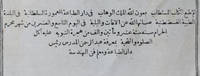
MUḤAMMAD ESʿAD EFENDİ Şeyhulislam of the Ottoman Empire (d 1166 AH / 1753 AD)
KitÄb Laḥjat al-LughÄt Book of the Pronunciation of Tongues. Early Mühendishane press printing Istanbul.
<p>.Istanbul Ãœsküdar: Imperial Press DÄr al-ṬibÄÊ¿a al-Ê¿Ä€mira 1801.<br />Folio over 12–15 in.<br />KitÄb Laḥjat al-LughÄt<br />Tri-lingual Dictionary Turkish–Arabic–Persian<br />First edition. An early Ottoman printed dictionary produced at the Imperial Press of Muhendishane established by imperial decree following the closure of the Ä°brahim Müteferrika press. Printed under the supervision of Ê¿Abd al-RaḥmÄn al-Mudarris head administrator of the Ãœsküdar printing house.<br />Contemporary French binding in yellowish-brown morocco richly gilt in Ottoman Turkish decorative style with original folding envelope flap. Gilt panels and tooling spine and flap partially worn.<br />Collation:<br />2 pp. imperial decree and justification for the establishment of the press signed by Ê¿Abd al-RaḥmÄn al-Mudarris<br />7 pp. index<br />851 pp. text<br />Upper left corners of the imperial decree index and first six pages with early professional restoration slightly affecting the first letters of the opening lines on some pages. Light water staining throughout as commonly encountered in early Ottoman imprints. The upper half of the colophon leaf is neatly adhered to the rear cover. Otherwise complete with the text internally clean crisp and fully legible.<br />Binding shows wear: minor losses to spine and flap covers lightly rubbed. Overall good condition with notable bibliographical integrity.<br />Provenance / Reference:<br />An identical copy recorded in the Atabey Sale Sotheby's 28 May 2002 Lot 844.</p><p>Rare and important: among the earliest products of the post-Müteferrika Ottoman state press representing a major milestone in Ottoman lexicography and multilingual scholarship.</p><p>Muḥammad EsÊ¿ad Efendi was a prominent Ottoman jurist Ê¿Älim religious authority and statesman who served as Åžeyhülislâm the highest religious office in the Ottoman Empire during the mid-18th century.<br />Educated in the classical Ottoman madrasa system he rose through the ranks of the Ê¿ilmiyye learned hierarchy serving in various judicial and scholarly posts before attaining the office of Åžeyhülislâm where he exercised authority over Islamic law SharÄ«Ê¿a legal opinions fatwÄs and religious appointments throughout the Empire.<br />EsÊ¿ad Efendi was known for his legal scholarship administrative prudence and engagement with intellectual life at a time when the Ottoman state was navigating institutional consolidation and reform. He authored and supervised works in Islamic jurisprudence theology and language and his name appears on several important Ottoman scholarly and administrative publications of the period.<br />He died in 1166 AH / 1753 AD leaving a legacy as one of the notable religious jurists of the 18th-century Ottoman Empire.</p> the Imperial press, Muhendishane hardcover
Bookseller reference : 000449
|
|
|
Myriam Harry
Djelaleddine Roumi Poète et Danseur Mystique
Paris. 17 5 cm x 25 5 cm. 1947. Broché. 219 pages. Paris Éditions Flammarion 1947 édition originale numérotée. Broché 17 5 cm x 25 5 cm 219 pages. Texte de Myriam Harry - Bon état. Il est joint une lettre manuscrite de l'autrice où elle remercie un critique littéraire (non identifié) pour son article sur cet ouvrage
Bookseller reference : 100074714

|
|
|
M{EHMET] ZEKÂÎ KONRAPA.
Bolu tarihi.
Very Good English Paperback. Pbo. Roy. 8vo. (24 x 17 cm). In Turkish. 744, [4] p., ills., portrait. Bolu tarihi.
|
|
|
MÂHIR IZ.
Yillarin izi.
Fine English Paperback. Demy 8vo. (21 x 15 cm). In Turkish. 554 p. Yillarin izi. MEMOIRS Turkish intellectual.
|
|
|
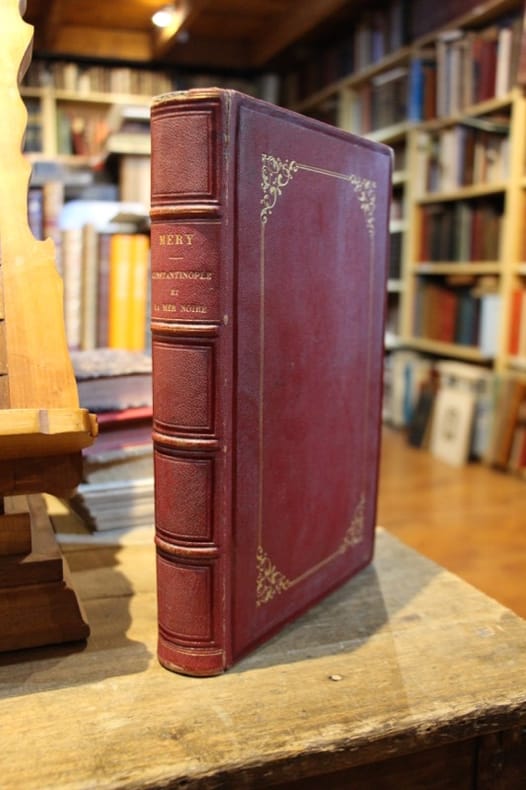
MéRY, Joseph
Constantinople et la Mer Noire . Illustrations de MM. Rouargue frères
Paris, Belin-Leprieur et Morizot 1855 In-4 26,5 x 17 cm. Reliure plein chagrin cerise, dos à nerfs ornés d’un filet doré, caissons ornés d’un double cadre à froid, plats en cadrés d’un double filet à écoinçons, dorés, tranches dorées, XI-487 pp., 21 gravures à pleine hors texte sous serpentes, dont 6 coloriées, table des matières, placement des gravures. Reliure légèrement frottée avec accroc en tête dos, faibles rousseurs marginales, planches d’une grande fraîcheur, gouttière régulière.
Bookseller reference : 111244
|
|
|
Méry Joseph
La guerre du Nizam
Hachette et Cie Reliure 1870 In-12 (11 x 18 cm), demi chagrin à coins, dorures aux fers sur le dos à cinq nerfs, gardes couleur, 363 pages ; bords et coins frottés, charnière supérieure fendue, quelques rousseurs, bon état général par ailleurs. Livraison a domicile (La Poste) ou en Mondial Relay sur simple demande.
Bookseller reference : gl1301

|
|
|
MÎNÂ URGAN, (1915-2000).
[HARLEQUINS IN SHAKESPEARE PLAYS] Elizabeth devri tiyatrosunda soytarilar (Doçentlik tezi). [i.e. Harlequins in the Era of Elizabeth I of England Theatre].
Very Good Turkish Original wrappers. Cr. 8vo. (20 x 14 cm). In Turkish. [4], 403 p. First edition of Urgan's thesis through which she became an associate professor. A comprehensive study of harlequins in Shakespeare's plays by an internationally renowned English language professor. Mina Urgan (1916-2000) was a Turkish (with Armenian origin) academic, translator, author and socialist politician. After graduating from the Department of French Philology at Istanbul University, Mina Urgan, who completed her doctorate in English Language and Literature at the same university, continued her post-doctoral education. She started her career as an associate professor with her thesis "Harlequins in the Era of Elizabeth 1 of England Theatre", which she completed in 1949, and through which she received the title of Professor in 1960. OCLC 1128311793, 1030079607.
|
|
|
MÎR HAMZA NIGÂRÎ.
Divan-i Seyyid Nigârî. Prep by A. Azmi Bilgin, Dr. Necdet Yilmaz.
As New As New English Original bdg. Dust wrapper. Mint. 4to. (28 x 22 cm). In Turkish. [xv], 369 p. prep by: A. Azmi Bilgin; Verse takhrij, dictionary and index by: Dr. Necdet Yilmaz. Divan-i Seyyid Nigârî. Prep by A. Azmi Bilgin, Dr. Necdet Yilmaz.
|
|
|
MÎR HAMZA NIGÂRÎ.
Divan-i Seyyid Nigârî. Prep. by A. Azmi Bilgin, Dr. Necdet Yilmaz.
As New As New English Original bdg. Dust wrapper. Mint. 4to. (28 x 22 cm). In Turkish. [xv], 369 p. Prepared by A. Azmi Bilgin; Verse takhrij, dictionary and index by: Dr. Necdet Yilmaz. Divan-i Seyyid Nigârî. Prep. by A. Azmi Bilgin, Dr. Necdet Yilmaz. Poems in romanized Ottoman Turkish (mixed with Azerbaijani Turkish); introduction material in Turkish. Includes glossary.
|
|
|
MÎZANCI MURAD BEY.
Mîzanci Murad Bey'in II. Mesrutiyet Dönemi hâtiralari (Hürriyet vâdisinde bir pençe-i istibdâd, Enkaz-i istibdâd içinde zügürdün tesellisi, Tatli emeller aci hakîkatler). Translated by Celile Eren Argit.
Fine Turkish Paperback. Cr. 8vo. (20 x 14 cm). In Turkish. 384 p. Mîzanci Murad Bey'in II. Mesrutiyet Dönemi hâtiralari (Hürriyet vâdisinde bir pençe-i istibdâd, Enkaz-i istibdâd içinde zügürdün tesellisi, Tatli emeller aci hakîkatler).
|
|
|
Mûcîdi (Composed by) GUISEPPE DONIZETTI [PACHA], (1788-1856).
[FATHER of the MODERN MUSIC and MUSIKA-YI HUMÂYÛN / FIRST ANTHEM of the OTTOMAN EMPIRE in the WESTERN STYLE] [SHEET MUSIC] Marche Imperiale Ottomane.= Devlet-i Âliyye-i Osmaniyye marsi. Arrangee pour piano par G[iovanni] Avolio, (1849-1936).
Very Good Turkish, Ottoman (1500-1928) Paperback. Folio. (33 x24cm). In Ottoman script and French. [3], [1] p. Ottoman stamped in period. The Ottoman Empire used anthems since its foundation in the late 13th century, but did not use a specific imperial or national anthem until the 19th century. During the reign of Mahmud II, when the military and imperial band were re-organized along Western lines, Giuseppe Donizetti was invited to head the process. Donizetti Pasha, as he was known in the Ottoman Empire, composed the first Western-style imperial anthem, the Mahmudiye Marsi. Like in many other monarchies of its time, the anthem of the Ottoman Empire was an imperial anthem, not a national one. Hence it paid homage to a specific ruler and a new anthem was composed at each imperial succession. However, in 1844, with the Tanzimat reforms, the Mecidiye Marsi was recognized as the first official Ottoman national anthem. The first official Ottoman national flag (which was in essence identical to the present-day Turkish flag) was also adopted in 1844. Giuseppe Donizetti was an Italian musician. From 1828 he was Instructor General of the Imperial Ottoman Music at the court of Sultan Mahmud II (1808-39). His younger brother was the famous opera composer Gaetano Donizetti. He studied music first with his uncle, Carini Donizetti, and, later, he was a pupil of Simone Mayr. After enlisting in Napoleon's army (1808), he served there as band leader. He took part in the campaigns against Austria and in Spain, and followed Napoleon to Elba. He was present at the Battle of Waterloo. After the fall of Napoleon, he continued his career as a bandmaster in the Savoy army. Giuseppe Donizetti Pasha, as he was called in the Ottoman Empire, played a significant role in the introduction of European music to the Ottoman military. Apart from overseeing the training of the European-style military bands of Mahmud's modern army, he taught music at the palace to the members of the Ottoman royal family, the princes and the ladies of the harem, is believed to have composed the first national anthem of the Ottoman Empire, supported the annual Italian opera season in Pera, organised concerts and operatic performances at court, and played host to a number of eminent virtuosi who visited Istanbul at the time, such as Franz Liszt, Parish Alvars and Leopold de Meyer. Although the elder Donizetti was born in Bergamo, Italy, Constantinople became a second home for him, and he lived there until his death in 1856. He is buried in the vaults of the St. Esprit Cathedral, near the Beyoglu district of Istanbul, in Pera. Giovanni Avolio, (1849-1936) was an Italian conductor and composer. According to the sheet musical paper, this first anthem was composed in 1831 by Donizetti and arranged by Avolio into piano in 1918. J. D. Andria is one of the best known music publishers among the Ottoman Empire mionrities. According to he documents in hand, it can be estimated that he began musical score publication in the year of 1904. Andria dealt with music publication at the address of Beyoglu, Istiklal Street (Near Agha Mosque) at 68 no. Andria also published four pieces of Turkish marche parties for piano as far as we know; besides his big sized west music works, which were published in general by him. Donizetti's 'Marche' is one of them as well besides Halit Recep Arman's, Miilok's, and Orente's ones. It is known when publishing life of Andria ended. (Source: Musical publications from Ottoman Empire up today, 1876-1986.; BÜLENT ALANER).
|
|
|
MÜBAHAT S. KÜTÜKOGLU.
Osmanli - Ingiliz iktisadî münasebetleri. 2 volumes set. Vol. 1: (1580-1838). Vol. 2: (1838-1850).
Very Good English Paperback. Pbo. Roy. 8vo. (24 x 17 cm). In Turkish. 2 volumes set: ([xi], 152 p.; [xiii], 151 p.), 15 folding plts. Osmanli - Ingiliz iktisadî münasebetleri. 2 volumes set: Vol. 1: (1580-1838). Vol. 2: (1838-1850). A precious study on Turkish / Ottoman - British economic relations from 16th to 19th centuries.
|
|
|
MÜBAHAT S. KÜTÜKOGLU.
Osmanli belgelerinin dili (Diplomatik).
New New English Original bdg. Dust wrapper. 4to. (34 x 23 cm). In Turkish. [xxxv], [1], 616 p. b/w and color documents. A precious study on Ottoman diplomatica and its method with documents. Osmanli belgelerinin dili (Diplomatik).
|
|
|
MÜBIN MANYASIG.
Turkish cradle of mythology and history.
Very Good English Paperback. Pbo. 12mo. (16 x 12 cm). In English. 96 p., 4 b/w plates, 1 folding map. Turkish cradle of mythology and history.
|
|
|

 Receive by email
 Download as PDF document
 RSS feed
 Permanent link


