|
MAURICE MAETERLINCK
L'OMBRE DES AILES.
BIBLIOTHEQUE CHARPENTIER. 1936. In-12. Broché. Etat d'usage, Couv. légèrement passée, Dos plié, Intérieur frais. 253 pages.. . . . Classification Dewey : 840-Littératures des langues romanes. Littérature française
Referentie van de boekhandelaar : R260137227
|
|
|
MAURICE PERISSET
L'OISEAU PROIE
GRAPHIC-SERVICE / TERRIFIC. 1978. In-12. Broché. Etat d'usage, Couv. légèrement passée, Dos plié, Intérieur frais. 190 pages. Premier plat illustré en couleurs. Ouvrage débroché.. . . . Classification Dewey : 840-Littératures des langues romanes. Littérature française
Referentie van de boekhandelaar : R260139225
|
|
|
MAURICE LESAUNIER
L'ORAISON SELON L'ECOLE FRANCAISE.
LIBRAIRIE PAILLARD. 1941. In-12. Broché. Etat d'usage, Couv. légèrement passée, Dos satisfaisant, Intérieur frais. 33 pages.. . . . Classification Dewey : 265-Rites, cérémonies et sacrements
Referentie van de boekhandelaar : R260134082
|
|
|
MAURICE ANDRE
L'ORCHESTRE J.F. PAILLARD. EGLISE DE SAINT-LUPICIN, 5 JUILLET 1974.
NON PRECISE. 1974. In-8. Broché. Bon état, Couv. convenable, Dos satisfaisant, Intérieur frais. Programme de 2 pages entouré de pages de publicités. Premier plat illustré en noir et blanc.. . . . Classification Dewey : 781.68-Musique classique
Referentie van de boekhandelaar : R260141329
|
|
|
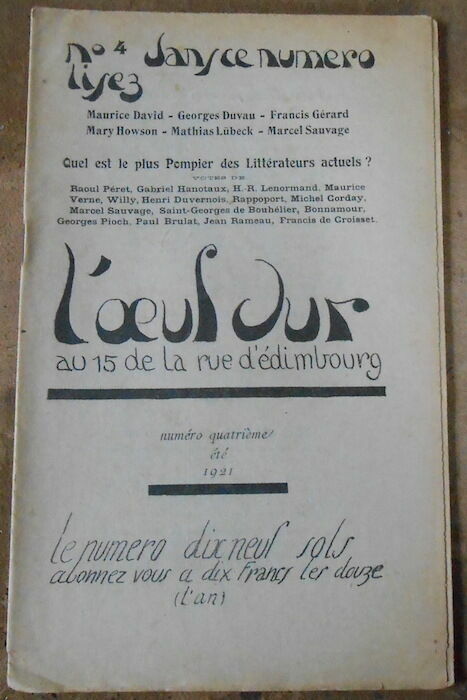
Maurice David Georges Duvau Mary Howson Marcel Sauvage Mathias Lübeck (Robert Enoch) Francis Gérard (Gérard Rosenthal)
L'oeuf dur au 15 de la rue d'édimbourg n°4
1921. Paris Imprimerie Alençonnaise n°4 été 1921 - Agrafé 14 cm x 22 5 cm 16 pages - Textes et Poèmes de Maurice David Georges Duvau Francis Gérard (Gérard Rosenthal) Mathias Lübeck (Robert Enoch) Mary Howson Marcel Sauvage; Quel est le plus Pompier des Littérateurs Actuels : votes de Raoul Péret Gabriel Hanoteaux H.-R. Lenormand Maurice Verne Willy Henri Duvernois Rappoport Michel Corday Marcel Sauvage Saint-Georges de Bouhélier Bonnamour Georges Pioch Paul Brulat Jean Rameau Francis de Croisset - Non coupé bon état
Referentie van de boekhandelaar : 18052
|
|
|
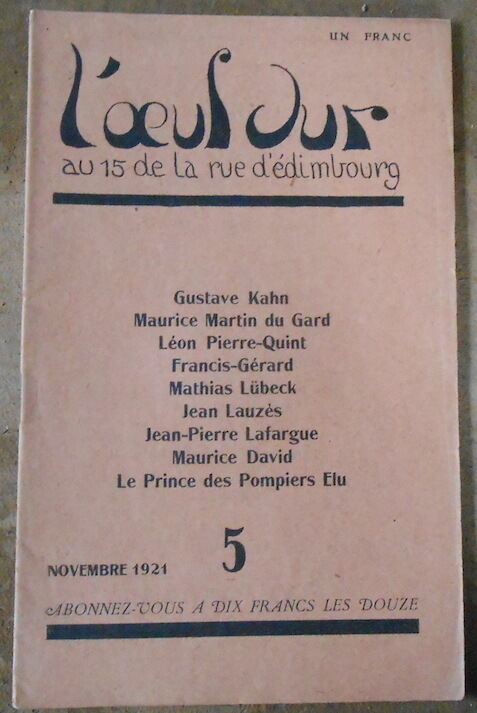
Maurice David Gustave Kahn Jean Lauzès Maurice Martin du Gard Mathias Lübeck (Robert Enoch) Léon-Pierre Quint Francis Gérard (Gérard Rosenthal) Jean-Pierre Lafargue (Maurice David)
L'oeuf dur au 15 de la rue d'édimbourg n°5
1921. Paris Imprimerie Alençonnaise n°5 novembre 1921 - Agrafé 14 cm x 22 5 cm 16 pages - Textes et Poèmes de Gustave Kahn Maurice David Francis Gérard (Gérard Rosenthal) Mathias Lübeck (Robert Enoch) Maurice Martin du Gard Léon-Pierre Quint Jean Lauzès Jean-Pierre Lafargue (Maurice David) - Le Prince des Pompiers Elu- Très bon état
Referentie van de boekhandelaar : 18053
|
|
|
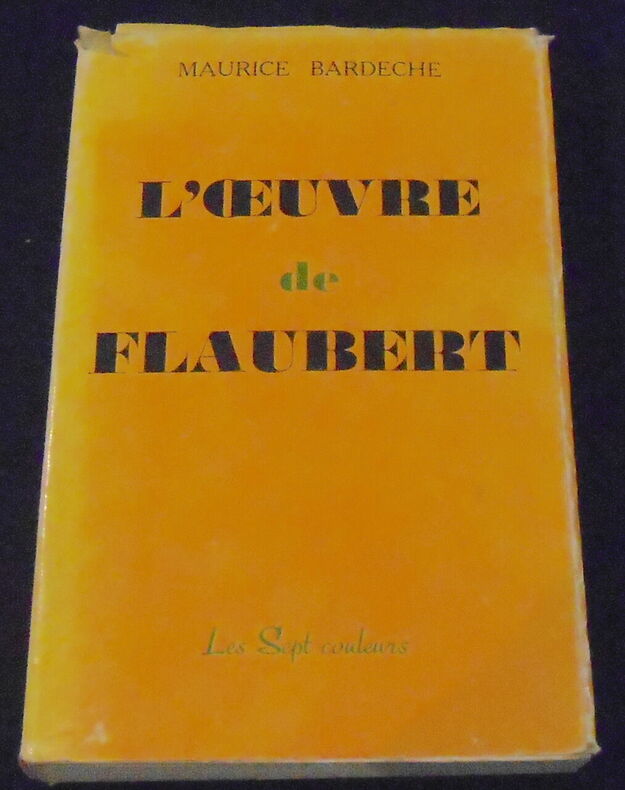
Maurice Bardèche
L'oeuvre de Flaubert
Paris. 13 5 cm x 21 cm. 1974. Brché. 424 pages. Paris Éditions Les Sept couleurs 1974. e.o. du tirage courant. Broché bien complet de la jaquette 13 5 cm x 21 cm 424 pages. Texte de Maurice Bardèche. Jaquette légèrement usagée sinon bon état Jaquette légèrement usagée sinon bon état
Referentie van de boekhandelaar : 100073491
|
|
|
Maurice de Launay
L'Orpheline du Temple, ouvrage complet en deux tomes,
Deux forts volumes au dos de cuir rouge entretenu à la cire 213 de la BnF ; plats marbrés ; GLN-432, Jules Rouff et Cie, Editeurs, Paris 1895
Referentie van de boekhandelaar : 1574160668529
|
|
|
Maurice Larrouy
L'Odyssée d'un transport torpillé,
PM-FONDS-14-18, Plon-Nourrit et Cie, Imprimeurs-Editeurs, Paris 1929
Referentie van de boekhandelaar : 1648567325549
|
|
|
Maurice Larrouy ( René Milan, 1882-1939) Officier de marine.
L'odysée d'un transporteur torpillé (Marine) de Maurice Larrouy
1922 Paris, Payot, 1922 - In-12 - Reliure 1/2 basane - Couverture conservée - 244-(10) - joint note biographique sur l'auteur - bel exemplaire - Réf; 49011
Referentie van de boekhandelaar : 49011
|
|
|
Maurice MERLEAU-PONTY
L'Oeil et l'Esprit
Couverture souple rempliée. Non coupé.
Referentie van de boekhandelaar : 82089
|
|
|
Maurice Larrouy
L'odyssée d'un transport torpillé
Paris Kieffer 1926 In8 - demi chagrin vert - dos à nerfs - titres et ancre marine au dos - dos insolé - coins trés légèrement frottés - couvertures conservées - Beandeaux de G. Braun - Envoi autographe signé de M. Larrouy à Albert Whettnall - Numéroté 505 sur un tirage de 1000 Ex.
Referentie van de boekhandelaar : 65Dp

|
|
|
Maurice Larrouy
L'odyssée d'un transport torpillé
Paris Kieffer 1926 In8 - demi chagrin vert - dos à nerfs - titres et ancre marine au dos - dos insolé - coins trés légèrement frottés - couvertures conservées - Beandeaux de G. Braun - Envoi autographe signé de M. Larrouy à Albert Whettnall - Numéroté 505 sur un tirage de 1000 Ex.
Referentie van de boekhandelaar : 65Dp
|
|
|
Maurice Maeterlinck , Jacques Touchet
L'Oiseau bleu 1931
Piazza 1931
Referentie van de boekhandelaar : lc_14197
|
|
|
Maurice Bidaux
L'orgueilleux mutin
chez l'auteur 1991 1991.
Referentie van de boekhandelaar : 300003198

|
|
|
Maurice Roux Lilianne Marini-Ben Kessoum
L'ordre de la noblesse : Familles d'Europe enregistrées in ordine nobilitatis du 1er janvier 1977 au 30 juin 1978 Volume Premier
Jean de Bonnot 1978 409 pages 1978. 409 pages.
Referentie van de boekhandelaar : 300004195

|
|
|
Maurice Levaillant
L'oeuvre de Victor Hugo : Poésie Prose Théatre
Librairie delagrave 1937 1937.
Referentie van de boekhandelaar : 300030899
|
|
|
Maurice Roland & André Picot
L'Ombre et le Silence
Sans date.
Referentie van de boekhandelaar : 500275083

|
|
|
Maurice Boisvert
L'organisation et la décision
Les Presses H.E.C. / Les éditions d'organisation / Agence d'ARC inc. (les éditions) Sans date.
Referentie van de boekhandelaar : 500329578

|
|
|
Maurice Chappaz
L'Océan
Editions Empreintes Sans date.
Referentie van de boekhandelaar : 500380537

|
|
|
Maurice BARDÈCHE
L'oeuf de Christophe Colomb
Les sept couleurs | Paris 1951 | 12 x 19 cm | broché
Referentie van de boekhandelaar : 12583
|
|
|
Maurice ROUX ] sous la direction de
L'ordre de la noblesse. Volume Premier. Familles d'Europe enregistrées In Ordine Nobilitais du 1er janvier 1977 au 30 juin 1978
Jean de Bonnot Paris, Jean de Bonnot 1978. Fort in-4 pleine reliure de l'éditeur noire estampées à froid. Dos lisse richement orné de blasons dorés et pièce de titre rouge, tête dorée. CDXLII + 409 pages + table. Exemplaire du tirage de tête en parfait état. Editions Jean de Bonnot édité sous le contrôle de l'Ordo Nobilitatis.
Referentie van de boekhandelaar : 131463

|
|
|
MAURICE RENE
L'UNEF OU LE PARI ETUDIANT
Editions Sociales - Notre Temps/Monde. 1977. In-12. Broché. Bon état, Couv. convenable, Dos satisfaisant, Intérieur frais. 157 pages. Envoi manuscrit de l'auteur en page de faux-titre. Etiquette de code sur le dos. Tampons et annotation de bibliothèque en page de titre.. . . . Classification Dewey : 97.2-Dédicace, envoi
Referentie van de boekhandelaar : RO40169737
|
|
|
Maurice Ren
L'UNEF: Union nationale des tudiants de France: ou le Pari tudiant
Referentie van de boekhandelaar : ABC1435
|
|
|
Maurice Barrès
L'âme française et la guerre**. Les saints de la France.
Paris, Emile-Paul Frères, Editeurs, 1915, in-8, broché, 378 pages. Bel état. Exemplaire numéroté, sur papier courant. ENVOI de M. Barrès à Hélène Rouart, fille du peintre et collectionneur Henri Rouart.
Referentie van de boekhandelaar : 77414

|
|
|
Maurice Papon
L'ère des responsables
DX2-C65, Librairie Arthème Fayard 1960
Referentie van de boekhandelaar : 1350818405
|
|
|
Maurice Vidal
L'Èglise - People de Dieu dans l'histoire des hommes
Le Centurion 1975 1975.
Referentie van de boekhandelaar : 500054012

|
|
|
Maurice Berger
L'échec de la protection de l'enfance - 2e edition augmentee
DUNOD. 2006. In-8. Broché. Bon état, Couv. convenable, Dos satisfaisant, Intérieur frais. 264 pages. . . . Classification Dewey : 360-Problèmes et services sociaux. Associations
Referentie van de boekhandelaar : RO20257738 ISBN : 2100486489

|
|
|
Maurice Déribéré
L'énergie atomique, la bombe atomique annonce-t-elle notre fin prochaine ou le début d'une ère nouvelle ?
GLN-86, Elzévir 1945
Referentie van de boekhandelaar : 4246226417
|
|
|
Maurice Leblanc
L'éclat d'obus,
GLN-532, Editions Payot & Rivages, Paris 2013
Referentie van de boekhandelaar : 1592930977073
|
|
|
Maurice MAGNIER
L'épousée
Couverture illustrée. Fragilité au mors. Intérieur propre et blanc. Avec 11 illustrations dans le texte par A. Guillaumot Fils.
Referentie van de boekhandelaar : 2790
|
|
|
Maurice BOUVIER-AJAM
L'économie distinguée
Paris Editions du Millénaire, 1954, in-4, agrafé, 45p. Bon état.
Referentie van de boekhandelaar : 82951

|
|
|
Maurice Villebresme
L'Élevage en Europe et en Amérique, méthodes d'exploitation, améliorations, rendements, alimentation, prix de revient, prix de vente, débouchés, par le vicomte M. de Villebresme [Unknown Binding] Villebresme, Maurice
BROCHE OUVRAGE COMPORTANT DE NOMBREUSES ROUSSEURS SUR LE PREMIER PLAT DE COUVERTURE.BIEN BROCHE INTERIEUR COMME NEUF.
Referentie van de boekhandelaar : Z20604A ISBN : 19
|
|
|
Maurice Moreau
L'Économie du Japon : Par Maurice Moreau,... 3e édition [Unknown Binding] Moreau, Maurice
PHOTOS SUR DEMANDE
Referentie van de boekhandelaar : pp3405 ISBN : 14
|
|
|
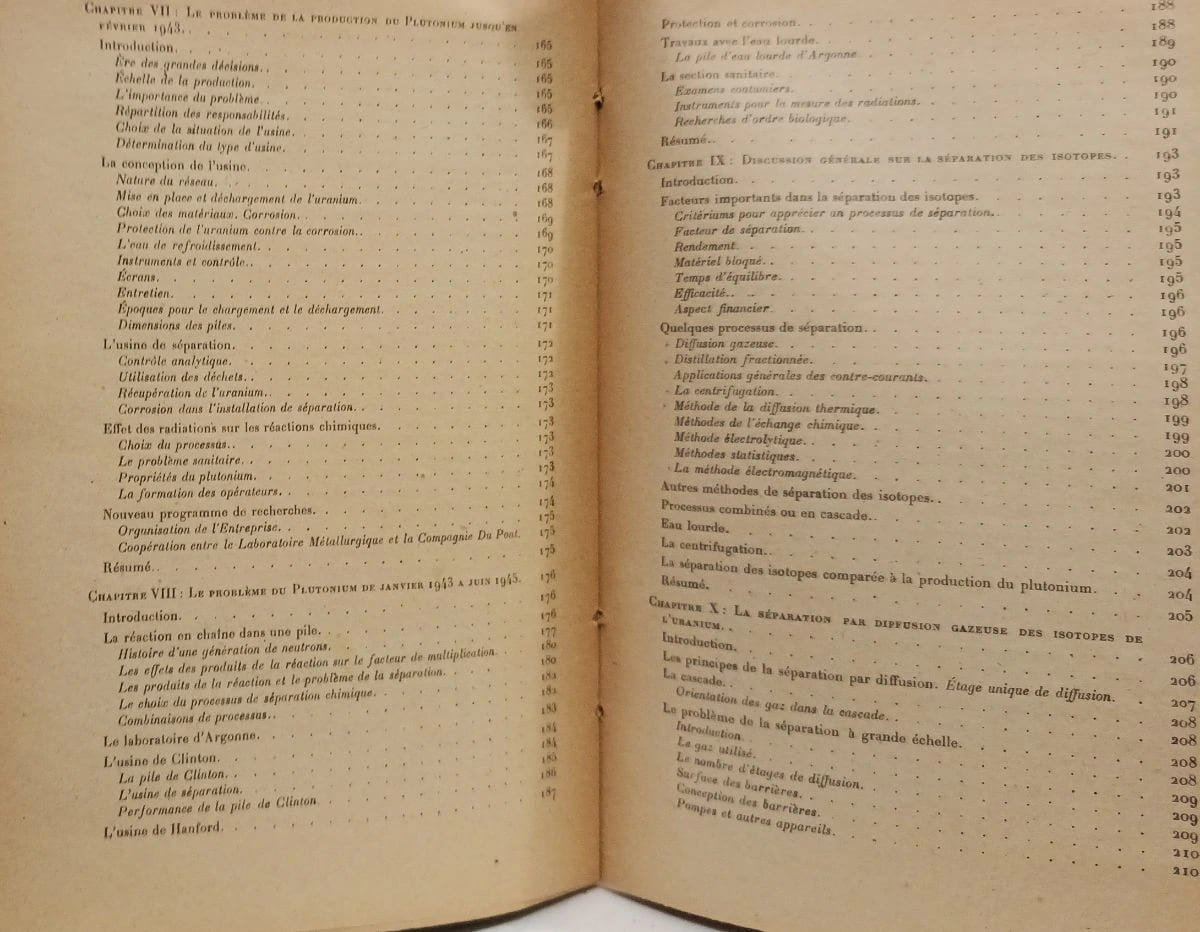
Maurice E. Nahmias
L'Énergie Atomique et son Utilisation Militaire
EDITIONS DE LA REVUE D'OPTIQUE THEORIQUE ET INSTRUMENTALE 1946 in8. 1946. Broché.
Referentie van de boekhandelaar : 100155482
|
|
|
Maurice LIMAT
L'étoile de sang Collection Allo police
1952 1952.
Referentie van de boekhandelaar : 400019585

|
|
|
Maurice Soulié
L'équipage révolté marpon Envoi de l'auteur
L'editeur 1927 1927.
Referentie van de boekhandelaar : 400021129

|
|
|
Maurice Fontan
L'éternullité L'amitié par le livre
L'AMITIE PAR LE LIVRE 1973 1973. Maurice Fontan: L'éternullité / L'amitié par le livre 1973
Referentie van de boekhandelaar : 400049850

|
|
|
Maurice Leblanc
l'éclat d'obus le triangle d'or Opta clp
1962 1962. Maurice Leblanc: l'éclat d'obus-le triangle d'or/ Opta CLP 1962 . Maurice Leblanc: l'éclat d'obus-le triangle d'or/ Opta CLP 1962
Referentie van de boekhandelaar : 400073237

|
|
|
Maurice LIMAT
L'étoile du Silence Fleuvre noir
1973 1973. Maurice Limat : L'étoile du Silence / Fleuvre Noir 1973 LBN18
Referentie van de boekhandelaar : 400105789

|
|
|
Maurice Rouable
L'épreuve de géographie au b.e.p.c
Sans date.
Referentie van de boekhandelaar : 500031072

|
|
|
Maurice Genevoix
L'Écureuil ou Bois-Bourru
Sans date.
Referentie van de boekhandelaar : 500275449

|
|
|
Maurice Moreau
L'économie du Japon
PRESSES UNIVERSITAIRES DE FRANCE Sans date.
Referentie van de boekhandelaar : 500345430

|
|
|
Maurice Leblanc
L'éclat d'obus
Le Livre de Poche Sans date.
Referentie van de boekhandelaar : 500353495

|
|
|
Maurice BERGER
L'échec de la protection de l'enfance
DUNOD Sans date.
Referentie van de boekhandelaar : 500360716

|
|
|
Maurice Pezet
L'épopée des Camisards - Languedoc - Vivarais - Cévennes
Hachette 1979 255 pages in8. 1979. Reliure couverture rigide. 255 pages.
Referentie van de boekhandelaar : 724

|
|
|
Maurice Parodi
L'économie et la société française depuis 1945 - Exemplaire dédicacé
Armand Colin 1981 287 pages Grand in8. 1981. broché. 287 pages.
Referentie van de boekhandelaar : 803

|
|
|
Maurice Moreau
L'économie du japon
Presses Universitaires de France 1972 collection que sais je n°311. poche. 1972. broché. Cet ouvrage analyse l'ascension économique du Japon au XXe siècle souvent qualifiée de 'miracle japonais'. Il examine les facteurs historiques notamment la période d'après-guerre et la reconstruction qui ont permis au pays de devenir une grande puissance industrielle. Le livre propose une reconsidération de l'histoire moderne japonaise pour expliquer cette réussite économique
Referentie van de boekhandelaar : 7220

|
|
|
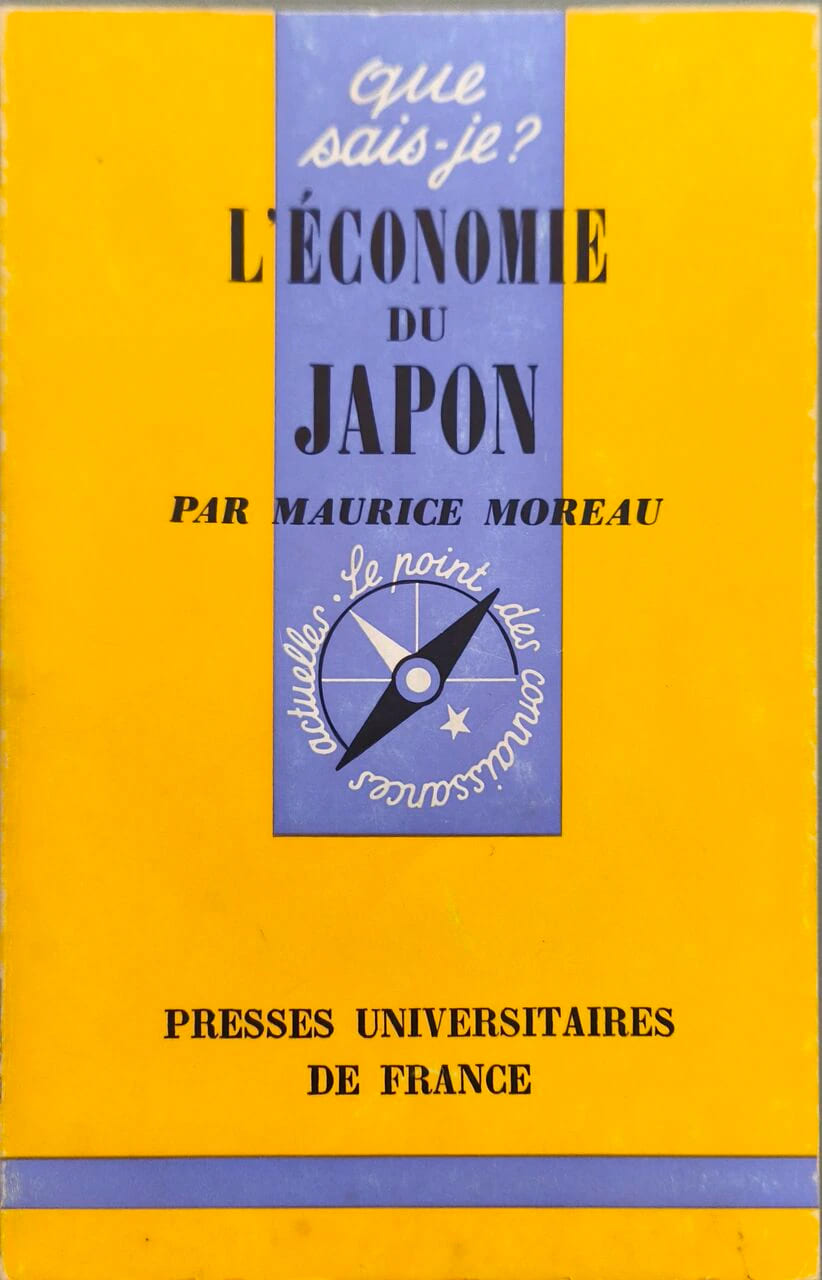
Maurice Moreau
L'économie du Japon
Presses Universitaires de France 1972 collection Que sais-je #811. in12. 1972. broché. Cet ouvrage analyse l'ascension économique du Japon au XXe siècle souvent qualifiée de 'miracle japonais'. Il examine les facteurs historiques notamment la période d'après-guerre et la reconstruction qui ont permis au pays de devenir une grande puissance industrielle
Referentie van de boekhandelaar : 18494
|
|
|
maurice champagne
L'île engloutie
Dupuis Sans date.
Referentie van de boekhandelaar : 500081080

|
|

 De zoekresultaten per email ontvangen
 Zoekresultaten downloaden als PDF
 RSS feed
 Permanente link


