Certificate awarded to the Vicereine of India Lady Hardinge of Penshurst upon her visit to the Indraprastha Hindu Girls School in Delhi. 1914. Measures 10" x 16" inches. Text enclosed in ornately decorative box with the school's seal centered at the top reading "The Hindu Girls School Delhi First deserve then desire 1904." The certificate's attractive green script reads in part "To her excellency Lady Hardinge of Penshurst May it please your Excellency It is with feelings of the profoundest joy and gratitude that we to-day welcome Your Excellency to the Indraprastha Hindu Girls School Delhi.Your Excellency's loving interest in the advancement of the women of this land and motherly affection for the children your care for the suffering poor the exemplary fortitude which you have shewn in the time of danger and the heroic devotion to your husband--our ideals of womanhood--have endeared your name to every woman and child in India and we pray you to accept our reverential and warm-hearted welcome to-day." Lady Hardinge of Penshurst Winifred Selina Sturt married her first cousin Henry Sturt a racing magnate and close friend of Edward Prince of Wales. She served as a Woman of the Bedchamber to the Princess of Wales before her husband by then a Baron was named Viceroy of India. The concurrence of monarchical rule and colonialism put aristocratic families with close ties to the royal family put aristocratic Europeans in positions of power worldwide no matter their qualifications. The family moved to India where Lady Hardinge worked to advance women's education. She was instrumental in starting the Lady Hardinge Medical College in Delhi the first medical school exclusively for women in India. She died in November of 1914 just 8 months after receiving this certificate. Signed by the school's President Lady Superintendent and Secretary. Creased along lines where paper was folded. 3 small holes along left side do not affect text. 1" tears along top do not affect text. Tape attached to verso. Very good condition. unknown
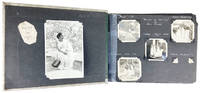
Kasauli India: s.i. 1956. Very Good. Kasauli India: s.i. 1956-57. Oblong quarto; original string-tied decorated silver boards filled nearly to completion with one hundred seventeen 117 black and white photographs with captions to most written in manuscript. Boards rather soiled with light edgewear. Binding sound. A few photographs missing; some marginal chipping; tape repair to every page near gutter though text and images largely unaffected; overall Very Good.<br /> <br /> Intriguing look into the life of a young nurse in mid-1950s India. The photos often captioned by our subject show us the friends work and leisure of a young nurse working in a recently independent India. We see a play "Shriman" performed an Independence Day celebration and many scenes with her friends and co-workers often accompanied by amusing commentary: "All dead look - Cheer Up!!!" or "Oh! My! One man with this OCTOGAN - Terrible. [s.i.] unknown
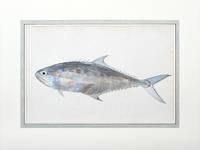
Calcutta early 19th century. From the collection of Richard Wellesley governor-general of Bengal A superb study of a bluefish in the Company School style. Artists from different Indian traditions combined miniature painting with Western naturalist techniques. Characteristically made with watercolour depth is introduced through linear perspective and tonal change through shading. Richard Wellesley first Marquess Wellesley governor-general of Bengal from 1798 to 1805 was a major patron. The style emerged from the interaction between Indian and European cultures after the British East India Company gained administrative control of Bengal in 1757. "Although the essential impulse of the Company School was assimilative its results were quite the opposite: what emerged was a unique genre in its own right characterized by a plethora of hybrid styles and a blending of visual vocabularies" Mathur p. 86. It arose in different cities each distinguishable by style and artists came from traditions such as Mughal Maratha Punjabi Pahari Tamil and Telugu. "Calcutta was among the important early production centers as the site of one of the oldest British trade houses" Sardar. One of Calcutta's most enthusiastic patrons was Wellesley 1760-1842 who had a collection of around 2660 folios depicting plants birds mammals insects and fish. He found documenting the knowledge of Indian fauna crucial: "To facilitate and promote all enquiries which may be calculated to enlarge the boundaries of general science is a duty imposed on the British Government in India by its present exalted situation" Martin p. 674. His Scottish surgeon Francis Buchanan 1762-1829 was appointed to collect materials "for a correct account of all the most remarkable quadrupeds and birds in the provinces subject to the British Government in India and to extend his enquiries as circumstances shall admit to the other divisions of this great continent and the adjacent isles" Martin p. 674. Wellesley established the Institute for Promoting the Natural History of India with a menagerie and aviary at Barrackpore. Specimens were collected for scientific study often with commissioned drawings by Indian artists. According to Wellesley's accounts 500 rupees were reserved for the upkeep of the birds and animals 300 for capturing them 100 for painters and 60 for stationery and paints. The institute survived until 1878 and the animals were moved to Alipore later Kolkata Zoo. Provenance: i Richard 1st Marquess Wellesley; ii "West-East: The Niall Hobhouse collection" Christie's London 22 May 2008 lot 34. Hobhouse b. 1954 established the gallery Eyre and Hobhouse focused on Indian art from the colonial period and worked as an advisor specializing in Anglo-Indian art. The Hobhouse family has ties to India Arthur 1st Baron Hobhouse serving as a legal member to the governor-general of India and vice-chancellor of the University of Calcutta from 1872 to 1877. Watercolour with gum arabic heightened with metallic paint pencil under-drawings visible area 327 x 500 mm window-mounted framed and glazed. General light creasing: a very good example. Montgomery Martin The Despatches Minutes and Correspondence of the Marquess Wellesley Vol. IV 1836-40; Saloni Mathur India by Design: Colonial History and Cultural Display 2007; Marika Sardar "Company Painting in Nineteenth-Century India" 2004. unknown
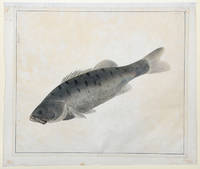
Calcutta early 19th-century. A sensitive visual language A superbly observed study of aquatic life in the Company School style. Artists from diverse Indian traditions combined miniature painting with Western naturalist techniques. Characteristically made with watercolour depth is introduced through linear perspective and tonal change through shading. The governor-general of Bengal from 1798 to 1805 Richard 1st Marquess Wellesley was a major patron. The style emerged from the interaction between Indian and European cultures after the British East India Company gained administrative control of Bengal in 1757. "Although the essential impulse of the Company School was assimilative its results were quite the opposite: what emerged was a unique genre in its own right characterized by a plethora of hybrid styles and a blending of visual vocabularies" Mathur p. 86. It arose in different cities each distinguishable by style. Artists came from traditions such as Mughal Maratha Punjabi Pahari Tamil and Telugu. "Calcutta was among the important early production centers as the site of one of the oldest British trade houses" Sardar. One of Calcutta's most enthusiastic patrons was Wellesley 1760-1842. He found documenting the knowledge of Indian fauna crucial: "To facilitate and promote all enquiries which may be calculated to enlarge the boundaries of general science is a duty imposed on the British Government in India by its present exalted situation" Martin p. 674. His Scottish surgeon Francis Buchanan 1762-1829 was appointed to collect materials "for a correct account of all the most remarkable quadrupeds and birds in the provinces subject to the British Government in India and to extend his enquiries as circumstances shall admit to the other divisions of this great continent and the adjacent isles" Martin p. 674. Wellesley established the Institute for Promoting the Natural History of India with a menagerie and aviary at Barrackpore. Specimens were collected for scientific study often with commissioned drawings by Indian artists. According to Wellesley's accounts 500 rupees were reserved for the upkeep of the birds and animals 300 for capturing them 100 for painters and 60 for stationery and paints. The institute survived until 1878 and the animals were moved to Alipore later Kolkata Zoo. Provenance: "West-East: The Niall Hobhouse collection" Christie's London 22 May 2008 lot 33. Hobhouse b. 1954 established the gallery Eyre and Hobhouse focused on Indian art from the colonial period and worked as an advisor specializing in Anglo-Indian art. The Hobhouse family has ties to India Arthur 1st Baron Hobhouse serving as a legal member to the governor-general of India and vice-chancellor of the University of Calcutta from 1872 to 1877. Watercolour and gum arabic pen pencil and ink touches of body colour paper size 320 x 380 mm window-mounted framed and glazed. "Rowhee" in pencil in upper left corner. General light creasing short tear to lower edge of carp paper foxed: a very good example. Montgomery Martin The Despatches Minutes and Correspondence of the Marquess Wellesley Vol. IV 1836-40; Saloni Mathur India by Design: Colonial History and Cultural Display 2007; Marika Sardar "Company Painting in Nineteenth-Century India" 2004. unknown
Carlisle Pa.: Indian Industrial School 1899. 8pp. Folio newspaper. Front leaf split in two along middle horizontal fold and detached closed tears and splits throughout. Fair only printed on poor paper to begin with. Vol. XV no. 8 of the newspaper of the Carlisle Indian Industrial School. This issue reports on the resolutions passed by the Indian school at their Los Angeles convention a short article on "Indianizing vs. Americanizing" the school's upcoming twentieth anniversary and more. Indian Industrial School unknown books
Carlisle Pa.: Indian Industrial School 1902. 4pp. Folio newspaper. Some chipping around the edges. Good condition printed on poor paper to begin with. Vol. XVII no. 42 of the newspaper of the Carlisle Indian Industrial School. Contains more information on a recent cruise taken by the students who now find themselves in Italy and typical school news. One article reprints a New York story on the Indian Commission. Indian Industrial School unknown books
Carlisle Pa.: Indian Industrial School 1902. 4pp. Folio newspaper. Long tears. In fair condition printed on poor paper to begin with. Vol. XVII no. 39 of the newspaper of the Carlisle Indian Industrial School. Contains more information on a recent cruise taken by the students and typical school news. One article reports on George Washington's rules of behavior. Another article expounds upon the importance of one's personal appearance. Indian Industrial School unknown books
Carlisle Pa.: Indian Industrial School 1902. 4pp. Folio newspaper. In fair condition printed on poor paper to begin with. Vol. XVII no. 37 of the newspaper of the Carlisle Indian Industrial School. Contains more information on a recent cruise taken by the students and typical school news. Also relates the school's baseball schedule. Indian Industrial School unknown books
Carlisle Pa.: Indian Industrial School 1902. 4pp. Folio newspaper. Minor edge wear and short tears. Very good printed on poor paper to begin with. Vol. XVII no. 41 of the newspaper of the Carlisle Indian Industrial School. Contains more information on a recent cruise taken by the students who now find themselves in Egypt and typical school news. One article reports on a scholarly presentation about the purchase of native lands in colonial Pennsylvania. Indian Industrial School unknown books
Carlisle Pa.: Indian Industrial School 1902. 4pp. Folio newspaper. Short edge tears and chipping. Good printed on poor paper to begin with. Vol. XVII no. 40 of the newspaper of the Carlisle Indian Industrial School. Contains more information on a recent cruise taken by the students who now find themselves in Israel and typical school news. One article is entitled "The Red Race Supplanted by the White" reporting on the history of the Delaware or Lenni Lenape Indians. Indian Industrial School unknown books
Carlisle Pa.: Indian Industrial School 1902. Folio newspaper. 4pp. Noticeable tears and chips. Fair only printed on poor paper to begin with. Vol. XVII no. 35 of the newspaper of the Carlisle Indian Industrial School. This issue contains a "First Letter from 'Our Travellers.'" This article is a report from a group of Indian school students on a cruise ship bound for Madeira and other points. Other school news is related here including a short notice that "A western writer is far out of his reckoning when he asserts that the American Indian will be extinct by the year 1950." Indian Industrial School unknown books
Carlisle Pa.: Indian Industrial School 1902. 4pp. Folio newspaper. In fair condition printed on poor paper to begin wtih. Vol. XVII no. 38 of the newspaper of the Carlisle Indian Industrial School. Contains more information on a recent cruise taken by the students and typical school news such as the appointment of one of the students to a national meeting of the United Confederate Veterans in Dallas. Indian Industrial School unknown books
Carlisle Pa.: Indian Industrial School 1902. 4pp. Folio newspaper. Poor condition printed on poor paper to begin with. Vol. XVII no. 36 of the newspaper of the Carlisle Indian Industrial School. Contains more information on a recent cruise taken by the students and typical school news. One interesting article reports on a Denver newspaper asking whether Indian schools are a failure. Indian Industrial School unknown books
Carlisle Pa.: Indian Industrial School 1904. 8pp. Folio newspaper in very good condition although on poor paper. Vol. XIX no. 47-48 of the newspaper of the Carlisle Indian Industrial School. This issue is of particular interest as it commemorates the retirement of General R.H. Pratt the founder of the School and leading exponent of assimilation as the best path for the American Indian. Included in this issue are his retirement statement a letter he wrote T.R. in 1901 on Indian policy statements and commendations from all over and another Pratt speech from 1904. Indian Industrial School unknown books
Bangolore: Ecumenical Christian Centre. 1996. The theme is Turn to God and Rejoice in Hope". Pp 112 small mark to closed foredges. Paperback illustrated cover. VG. Bangolore: Ecumenical Christian Centre. 1996. paperback
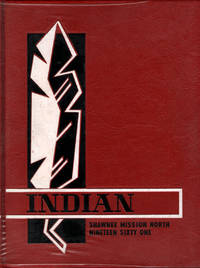
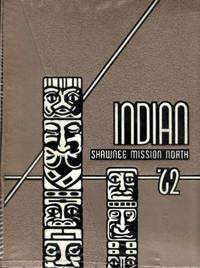
Indian Shawnee Mission North Hig 1961T. hardcover. Good. in x in x in. Hardback. No dust jacket. Cover edges and corners in good shape. Spine is tight. First few pages - Lots of autographs from friends. Remaining pages are clean no markings notes or stains. Ships from Friends bookstore to benefit Beaverton Oregon library. Indian Shawnee Mission North Hig hardcover
Indian Shawnee Mission North High School 1961. hardcover. Very Good. 0x0x0. HB 1961. Formerly belonged to a student named John Weber. Has several signatures from classmates and notes. Ships next day. Book is in very good shape no tears scribbles highlighting or underlining; a little general wear; from a smoke free environment. Has a plastic cover on the HC. Indian Shawnee Mission North High School hardcover
indian shawnee mission north high school 1962. hardcover. Good. 0x0x0. HB 1962. Formerly belonged to someone named John Weber has several notes and signatures from students. Ships next day. Book is in good shape no tears scribbles highlighting or underlining; has a little stain on the inside cover and first page; a little general wear; from a smoke free environment. indian shawnee mission north high school hardcover
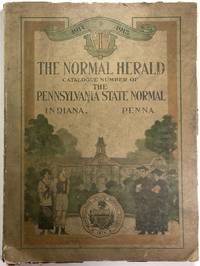
Indiana PA: Indiana Normal School of Pennsylvania 1914. Stiff Wraps. Very Good. Stiff Wraps. c.1914. Illustrated cover. 4to. 123pp. Illus. Very Good. Moderate chipping / creasing to edges of wraps with some loss spine creased spine-ends worn contents unmarked. Indiana Normal School of Pennsylvania unknown

 ?????????
 ?????PDF???
 RSS feed
 ??
??