|
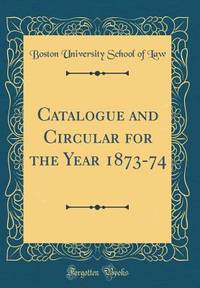
Boston University School of Law
Catalogue and Circular for the Year 1873-74 Classic Reprint
hardcover. Good. Access codes and supplements are not guaranteed with used items. May be an ex-library book. hardcover
Riferimento per il libraio : 0260435368.G ISBN : 0260435368 9780260435361
|
|
|
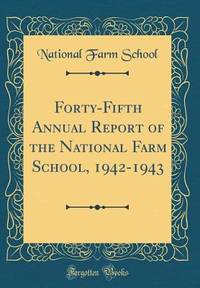
National Farm School
Forty-Fifth Annual Report of the National Farm School 1942-1943 Classic Reprint
hardcover. Good. Access codes and supplements are not guaranteed with used items. May be an ex-library book. hardcover
Riferimento per il libraio : 026043213X.G ISBN : 026043213X 9780260432131
|
|
|
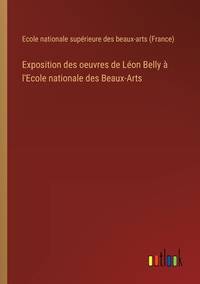
Ecole Superieure Des Beaux-Arts
Exposition des oeuvres de Léon Belly à l'Ecole nationale des Beaux-Arts French Edition
paperback. Good. Access codes and supplements are not guaranteed with used items. May be an ex-library book. paperback
Riferimento per il libraio : 3385005442.G ISBN : 3385005442 9783385005440
|
|
|
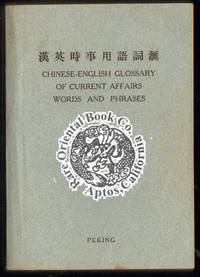
WAIWEN GANBU XUEXIAO [FOREIGN LANGUAGE CADRE SCHOOL]
HAN YING SHI SHI YONG YU CI HUI: CHINESE-ENGLISH GLOSSARY OFCURRENT AFFAIRS VOCA
Beijing 1964 Xinhua Shudian. Gray stiff wrappers Chinese Hanzi text English & Chinese tranlations 599p. 13.2 x.18.8 cm. very clean copy solid9 indices English Chinese text leading edge mendedHong Kong 2nd. printing of FIRST EDITION . . . AN IMPORTANT DICTIONARY OF POLITICAL VOCABULARY . . . PRECURSOR OF THE WENHUA DA GEMING CULTURAL REVOLUTION . . This item was published about a year or so before the beginning of the WENHUA DA GEMING CHINESE CULTURAL REVOLUTION. It contains a dearth of useful vocabulary for scholars researchers & students of the Chinese especially related to Communism Cultural Revolution Red Guards Hong Wei Bing government & politically related vocabulary. . This is a copious work with tens of thousands of Chinese words translated into English showing the Chinese Hanzi characters as well. The work is alphabetically organized. . WITH TEN INDICES: . a. List of Ministries State Societies Federations Commissions &c. . b. List of Chinese provinces. . c. List of foreign countries in Asia Africa Europe Americas & Australia. . d. Official body list of government representatives like National People's Congress of the People's Republic of China National Assembly National Council Congress House of Lords and so on. . e. The name of the highest leader of each country i.e. President Chairman Queen Emperor Iman &c. . f. International News Agencies list. . f. List of International organizations treaties agreements and the like i.e. United Nations International Red Cross Warsaw Pact Atlantic Charter &c. . g. List of athletic sports vocabulary. . h. Military vocabulary. . i. Stroke order dictionary Chinese Hanzi. . CONDITION: The work is bound in the publisher's gray stiff wrappers with black ink printed titles in both English & Chinese. . The text body paper is toned as usual otherwise there are not marks or distractions to the text. By and large solidly bound & quite firm. . Please carefully read the description of each copy as copies vary. . Color photos are posted to our website . . unknown
Riferimento per il libraio : 40003203
|
|
|
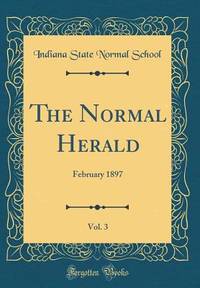
Indiana State Normal School
The Normal Herald Vol. 3: February 1897 Classic Reprint
hardcover. Good. Access codes and supplements are not guaranteed with used items. May be an ex-library book. hardcover
Riferimento per il libraio : 0260421537.G ISBN : 0260421537 9780260421531
|
|
|
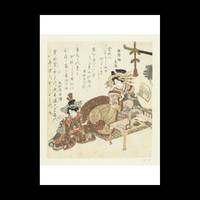
Eisen (school)
Courtisane writes on a fan Museum Etching Museum Quality A3
Contentum Ltd. Loose sheet. New. High-quality art print based on an original work from the Rijksmuseum. Created in the 19th century 1820. Professionally printed on premium fine-art paper Museum Etching museum quality in size A3. The artwork is printed with a white border museum-style presentation. Contentum Ltd. unknown
Riferimento per il libraio : 1842964
|
|
|
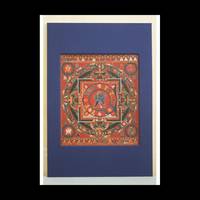
Sakya School
Museum Etching Museum Quality A3
Contentum Ltd. Loose sheet. New. High-quality art print based on an original work from the Met. Created in the 16th century 16th century. Professionally printed on premium fine-art paper Museum Etching museum quality in size A3. The artwork is printed with a white border museum-style presentation. Contentum Ltd. unknown
Riferimento per il libraio : 258117
|
|
|
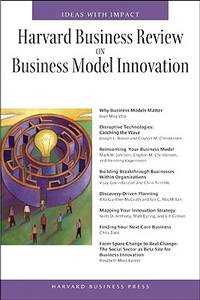
Harvard Business School Press
Harvard Business Review on Business Model Innovation Harvard Business Review Paperback Series
paperback. Good. Access codes and supplements are not guaranteed with used items. May be an ex-library book. paperback
Riferimento per il libraio : 1422133427.G ISBN : 1422133427 9781422133422
|
|
|
HARCOURT SCHOOL PUBLISHERS
Harcourt Social Studies: Student Edition Grade 5 US: Making a New Nation 2010
hardcover. Good. Access codes and supplements are not guaranteed with used items. May be an ex-library book. hardcover
Riferimento per il libraio : 0153770457.G ISBN : 0153770457 9780153770456
|
|
|
Harcourt School Publishers
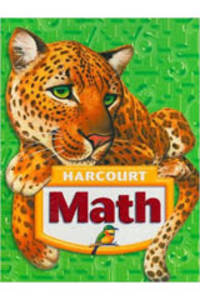
Harcourt Math: Practice Workbook Grade 5 Teacher Edition
paperback. Good. Access codes and supplements are not guaranteed with used items. May be an ex-library book. paperback
Riferimento per il libraio : 015336484X.G ISBN : 015336484X 9780153364846
|
|
|
HARCOURT SCHOOL PUBLISHERS
Harcourt School Publishers Social Studies Ohio: Student Edition Grade 4 Ohio 2007
hardcover. Good. Access codes and supplements are not guaranteed with used items. May be an ex-library book. hardcover
Riferimento per il libraio : 0153485809.G ISBN : 0153485809 9780153485800
|
|
|
Harcourt School Publishers
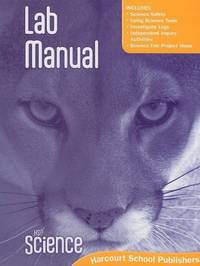
HSP Science Grade 5
paperback. Good. Access codes and supplements are not guaranteed with used items. May be an ex-library book. paperback
Riferimento per il libraio : 0153610050.G ISBN : 0153610050 9780153610059
|
|
|
HARCOURT SCHOOL PUBLISHERS
Trophies: Independent Reader Collection 35 titles Grade K
paperback. Good. Access codes and supplements are not guaranteed with used items. May be an ex-library book. paperback
Riferimento per il libraio : 0153254688.G ISBN : 0153254688 9780153254680

|
|
|
Harcourt School Publishers
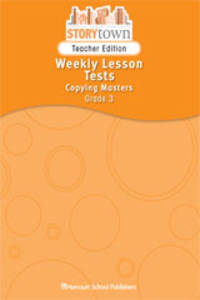
Storytown Teacher Edition Weekly Lesson Tests Copying Masters Grade 3
paperback. Good. Access codes and supplements are not guaranteed with used items. May be an ex-library book. paperback
Riferimento per il libraio : 0153517212.G ISBN : 0153517212 9780153517211
|
|
|
Harcourt School Publishers
Storytown: Extra Support Copying Masters Grade 2
paperback. Good. Access codes and supplements are not guaranteed with used items. May be an ex-library book. paperback
Riferimento per il libraio : 0153498676.G ISBN : 0153498676 9780153498671

|
|
|
Pearson School,Modern Curriculum Press,Not Availab
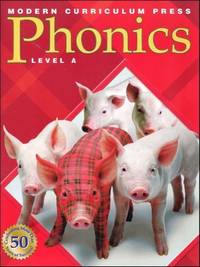
Modern Curriculum Press Phonics: Level A
paperback. Good. Access codes and supplements are not guaranteed with used items. May be an ex-library book. paperback
Riferimento per il libraio : 0765226197.G ISBN : 0765226197 9780765226198
|
|
|
HARCOURT SCHOOL PUBLISHERS
Storytown: Spelling Practice Book Student Edition Grade 6
paperback. Good. Access codes and supplements are not guaranteed with used items. May be an ex-library book. paperback
Riferimento per il libraio : 015349901X.G ISBN : 015349901X 9780153499012

|
|
|
School Mathematics Project
SMP 11-16 Book Y1 School Mathematics Project 11-16
paperback. Good. Access codes and supplements are not guaranteed with used items. May be an ex-library book. paperback
Riferimento per il libraio : 0521317541.G ISBN : 0521317541 9780521317542
|
|
|
Harcourt School Publishers
California Science: Lab Manual Grade 5 Teacher Edition
paperback. Good. Access codes and supplements are not guaranteed with used items. May be an ex-library book. paperback
Riferimento per il libraio : 015352278X.G ISBN : 015352278X 9780153522789
|
|
|
Fort Wayne High School
Eniauton 1902 Vol. 7 Classic Reprint
hardcover. Good. Access codes and supplements are not guaranteed with used items. May be an ex-library book. hardcover
Riferimento per il libraio : 0265503078.G ISBN : 0265503078 9780265503072
|
|
|
School, Shawnigan Lake
Shawnigan Lake School Magazine 1926 Classic Reprint
paperback. Good. Access codes and supplements are not guaranteed with used items. May be an ex-library book. paperback
Riferimento per il libraio : 1527713903.G ISBN : 1527713903 9781527713901
|
|
|
School, South End Industrial
First Annual Report of the South End Industrial School 1884 Classic Reprint
paperback. Good. Access codes and supplements are not guaranteed with used items. May be an ex-library book. paperback
Riferimento per il libraio : 1528395875.G ISBN : 1528395875 9781528395878
|
|
|
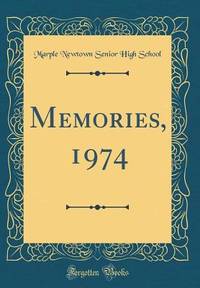
Marple Newtown Senior High School
Memories 1974
hardcover. Good. Access codes and supplements are not guaranteed with used items. May be an ex-library book. hardcover
Riferimento per il libraio : 0331158736.G ISBN : 0331158736 9780331158731
|
|
|
[CHEUNGQUA ?]. [Studio Or School of Cheung-Qua]
COLOR CHINESE PITH PAINTING SHOWING AN IMPERIAL CHINESE WOMAN:CAISE ZHONGGUO SHI
Canton 1860-80's Cheungqua. A single pith or Tongcao color painting usual minimal issues clean & solid example brilliantly vivid colors rarely found in such clean & fine condition. A RARE EXAMPLE ! . . . . FINE CHINESE COLOR PITH PAINTINGS . . . SHOWING BEAUTIFULLY DRESSED CHINESE IMPERIAL COURT LADY . . . EXECUTED IN STUNNING & BRILLIANT COLORS . . . AKA: CHINESE EXPORT WATERCOLOURS . A stunning Chinese Imperial Court. She wears a golden-embroidered outer dress with elaborate collar sleeves and hem. She wears pink silk-embroidered pants and her "lotus" bound feet are on a wooden stool. She sits on a Ming dynasty style Huahuali wood chair with a fan in her right hand and silk-embroidered accessory in her left. Adjacent to her is a matching Ming table with three ripe 'You' fruits pommel. . This is a typical studio trade painting" executed by Chinese native artists hand-painted color pith painting for foreign traders visiting Canton or Macao during the early to mid-19th century. . "GOLDEN LOTUS" or "LOTUS FEET" BOUND FEET Chanzu: This like most illustrations of the period show the woman with bound feet peeking out below her pant cuff. Chanzu bound feet was an erotic obsession and fetish in ancient China. The erotic ramifications are outlined in the references below. . DESCRIPTION OF THE PAINTING ART WORK AND CONDITION: . This painting is in brilliant vivid and stunning colors. Skillfully painted with a fine hand delicate fine-point brush with great detail incredible reality texture and appeal. . As usual this paintings was tipped to a contemporary stiff backing paper card. . This painting is approximately 19.5 x 27.5 cm. . There are a few old mends on the verso the image is not impacted it remains quite solid and very stable. By and large a far and above average excellent example. Suitable for framing and display. . Please review the photograph posted to our website for details. . "RICE PAPER" PAINTINGS: Several authors refer to this name rather than the proper name "Pith" paper paintings also can be called "Tung Tsao." . THE CANTON ARTIST OR 'SCHOOL' OF CHEUNG QUA: Cheung Qua was an export watercolor painter in Canton. He and followers of his school produced various single and albums of these paintings which were sold from his studio. . Often his in-house artists began painting on their own thus replicating the techniques subjects and essence of their masters. Because these paintings were rarely signed the one and only identification ever found was occasionally on the album cover or spine with the studio name. . Often these paintings were sold in various shops in Macao the main resting and gathering place of foreigners during part of the year. . REFERENCE: . CLUNAS Craig.: CHINESE EXPORT WATERCOLOURS. This entire book is devoted to Pith or Rice paper paintings. For musical instruments see color plates on pp.50-53 especially plates on pp.66-67 plates 39 & 40 are particularly similar to our examples that is to say by the same or an artist who was in the same house of Cheungqua or that school. CHU Arthur. et al.: ORIENTAL ANTIQUES AND COLLECTIBLES: A GUIDE pp.62-66. THE CHINESE PITH PAINTING COLLECTION AT THE NATIONAL LIBRARY OF AUSTRALIA: An Annotated Guide. Crossman Carl L. The decorative arts of the China trade : paintings furnishings and exotic curiosities. LEVY Howard S.: CHINESE FOOT BINDING: The History of a Curious Erotic Custom. . --. THE LOTUS LOVERS: The Complete History of the Curious Erotic Custom of Foot binding in China. JACKSON Beverly.: SPLENDID SLIPPERS: A THOUSAND YEARS OF AN EROTIC TRADITION. . . unknown
Riferimento per il libraio : 38044201

|
|
|
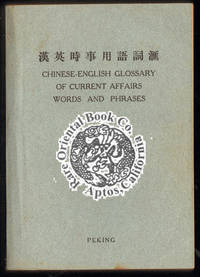
WAIWEN GANBU XUEXIAO [FOREIGN LANGUAGE CADRE SCHOOL]
HAN YING SHI SHI YONG YU CI HUI: CHINESE-ENGLISH GLOSSARY OFCURRENT AFFAIRS VOCA
Beijing 1964 Xinhua Shudian. Gray stiff wrappers Chinese Hanzi text English & Chinese tranlations 599p. 13.2 x.18.8 cm. very clean copy solid9 indices English Chinese text Hong Kong 2nd. printing of the FIRST EDITION . . . AN IMPORTANT DICTIONARY OF POLITICAL VOCABULARY . . . PRECURSOR OF THE WENHUA DA GEMING CULTURAL REVOLUTION . . This item was published about a year or so before the beginning of the WENHUA DA GEMING CHINESE CULTURAL REVOLUTION. It contains a dearth of useful vocabulary for scholars researchers & students of the Chinese especially related to Communism Cultural Revolution Red Guards Hong Wei Bing government & politically related vocabulary. . This is a copious work with tens of thousands of Chinese words translated into English showing the Chinese Hanzi characters as well. The work is alphabetically organized. . WITH TEN INDICES: . a. List of Ministries State Societies Federations Commissions &c. . b. List of Chinese provinces. . c. List of foreign countries in Asia Africa Europe Americas & Australia. . d. Official body list of government representatives like National People's Congress of the People's Republic of China National Assembly National Council Congress House of Lords and so on. . e. The name of the highest leader of each country i.e. President Chairman Queen Emperor Iman &c. . f. International News Agencies list. . f. List of International organizations treaties agreements and the like i.e. United Nations International Red Cross Warsaw Pact Atlantic Charter &c. . g. List of athletic sports vocabulary. . h. Military vocabulary. . i. Stroke order dictionary Chinese Hanzi. . CONDITION: The work is bound in the publisher's gray stiff wrappers with black ink printed titles in both English & Chinese. . The text body paper is toned as usual otherwise there are not marks or distractions to the text. By and large solidly bound & quite firm. . Please carefully read the description of each copy as copies vary. . Color photos are posted to our website . . unknown
Riferimento per il libraio : 40003202
|
|
|
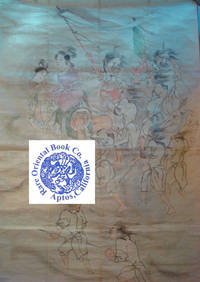
[KAWANABE, Kyosai or KAWANABE KYOSAI SCHOOL]
OTOHIME GYORETSU ZU: OTO HIME DAUGHTER OF THE SEA GOD'S PARADE
Japan 1860 n.p. Large sheet 96 x 1m 44 cm. gouachevery clean work no worming or other condition issues painted on 16 joined sheets of Washi paper to make one large sheetfine water-color painting. THIS IS AN ORIGINAL PAINTED ART WORK . . . AM ORIGINAL COLOR PAINTING IN GRAND SIZE . . . FROM JAPAN'S OLDEST MYTHOLOGY: . . . THE KOJIKI & NIHON SHOKI PANTHEON . . . THE ORIGINS OF THE EMPEROR . . . OTOHIME GYO RETSU ZU: . . . THE PROCESSION OF OTOHIME DAUGHTER OF THE SEA GOD . . A stunning color painting by Kyosai. Probably done for a temple donation or as an expression of his faith to Japan's historic heroine. . OTOHIME is a goddess in Japanese mythology and is featured in the Kojiki as well as Nihon Shoki. Also known as "Luminous Jewel". A Japanese goddess the beautiful daughter of the sea-king Ryujin. She married Hoori and gave birth to a son after which she turned into a dragon. . Per the Japanese text brushed on the verso upper left corner: "239 ban dated Ansei 7th Kanoe-Saru-doshi 2 gatsu jojun end of February OTOHIME GYO RETSU ZU" . English: "#239 dated Ansei 7th monkey zodiac year end of Feb.: 1860 . PAINTING TITLE PER VERSO: "THE FIGURE OF PRINCESS OTOHIME'S PROCESSION THE DAUGHTER OF THE SEA GOD" . "Toyotama-hime" Japanese for "Lady Bountiful Soul" better known as Otohime is a goddess in Japanese mythology and is featured in the Kojiki as well as Nihon Shoki. She is the beautiful daughter of Ryujin the "God of the Sea." . A STUNNING ORIGINAL POLYCHROME GOUACHE PAINTING: . This original color watercolor painting shows the lively procession of OTOHIME and her hand maid. She is followed by a flag and umbrella bearer. Also following is a man with a pair of deer antlers good omen a man with a small red offering table with peaches the Wind God and his thunder-drum. Another flag bearer his helper followed by two others one holds a staff the other an offering of golden egg. . The items carries are symbolic good fortune and wealth in terms of deer antlers peaches and the golden egg represent ancient Chinese also used by the Japanese of omens of good fortune and good luck. . THE PAINTING: . Per the Japanese brushed text on the verso there is a number found meaning this panel of several was part of a larger work per the chronology found in Clark see below. . This panel of several paintings was part of a restoration of Zojo-ji temple in Shiba. In 1859 KANO Toei & Kyosai "participates in a repair project at the Zojo-ji temple." See Clark. . Although Kyosai had officially left the Kano school in 1854 by participating in the restoration of Tokugawa's family temple in Shiba he was showing loyalty to the Tokugawa family a good reason to volunteer his skills to the temple. It is also noteworthy that his mentor Kano Toei also participated in the restoration and in all likelihood Kyosai joined his master in a sign of respect and loyalty to him. . Based on this chronology it is clear Kyosai was one of the painters who worked at Zojo-ji temple along with his mentor and master teacher Kano Toei. It was not uncommon at this time for schools to volunteer teachers and students to do temple restoration and art work painting replacing or enhancing paintings and large murals. . This item's date matches the restoration dates for the Zojo-ji temple which began in 1859 and continued into 1860. . This panel was unused in the restoration it may have been a precursor to the final painting which was actually used in the restoration project. It matches the scenes found in Zojo-ji temple restoration. The work is the exact style of others painted by Kyosai and his genre. The caricatures of the people in this painting reflect Kyosai's style exactly the theme of his eccentric humor expressing his love for creativity and the joy of painting. . It is entirely within Kyosai's bizarre character to undertake and devote himself to such a project as illustrating the famous myth of OTOHIME in more than 200 deluxe extra-large-size format paintings. . This restoration project could also have been a 'paying job' for Kyosai as at that time he did not seem to be employed but in 1858 he began to design "Kyoga crazy pictures. It was in 1857 he married Okyo the daughter of a Rimpa painter Suzuki Kiitsu but Okyo died in 1859 and he remarried Tose who died in 1860. . It is more than likely Kyosai being a Buddhist he felt it was his religious obligation to do pennants by contributing to and drawing Buddhist or such traditional images as a way to placate the loss of his wife. . THE STORY OF OTOHIME DAUGHTER OF THE SEA GOD: . Because this work was part of the Zojo-ji temple restoration it cannot be considered a commercial painting one that was casually drawn and put on the market for sale. This was part of a commissioned restoration financed by some benefactor to the temple and most likely supported by the Tokugawa family. . ONE OF JAPAN'S EARLIEST AND MOST FAMOUS MYTHS: . The story of OTOHIME DAUGHTER OF THE SEA GOD is one of Japan's oldest and most famous myths known to all Japanese. Treasured as one of the most important in the ancient pantheon it is found in the earliest writing about the origin of Japan and the Emperor in the KOJIKI and the NIHON SHOKI. . This kind of larger paper illustrated story would take months to complete by It would also take devotion to the subject and focus with responsibility to produce a good number of paints daily. This was something Kyosai could and would do ! . THE ARTIST/PAINTER: This work is unsigned which is expected as part of a larger series of paintings. If this was the work of Kyosai it falls entirely within the dates during his period of work produced when he was 29 years old. . The caricature in the faces and fluid bodies in motion the "flowing" style are his. Although there is no signature and it is a true reflection of Kawanabe's work we are attributing it to him. . Another convincing point is that this kind of painting and meticulous style is also found in his famous instructional showing various 'schools' of painting in his KYOSAI GADEN. See below. . WHO WAS KAWANABE GYOSAI/KYOSAI: 1831-1889: Kawanabe Kyosai was a superb artist in the words of a critic "an individualist and an independent perhaps the last virtuoso in traditional Japanese painting". . Living through the Edo period to the Meiji period Kyosai witnessed Japan transform itself from a feudal country into a modern state. Born at Koga he was the son of a Samurai. His first aesthetic shock was at the age of nine when he picked up a human head apart from a corpse in the Kanda river. . After working for a short time as a boy with Utagawa Kuniyoshi he received his artistic training in the Kano school but soon abandoned the formal traditions for the greater freedom of the popular school. During the political ferment which produced and followed the revolution of 1867 Kyosai attained a reputation as a caricaturist. His very long painting on Makimono" scroll The battle of the farts" may be seen as a caricature of this ferment. . He was arrested three times and imprisoned by the authorities of the Shogunate. Soon after the assumption of effective power by the Emperor a great congress of painters and men of letters was held at which Kyosai was present. . He again expressed his opinion of the new movement in a caricature which had a great popular success but also brought him into the hands of the police this time of the opposite party. After this time he changed his name from Kyo crazy or wild to any one of 19 other "Go" studio names he used. However after the police jailed him he avoided use of "Kyo" but returned back to it with three other "GO" that used the same character "Kyo" crazy & wild such as #7 "Baiga Kyosha" #10 "Kyosai #12 Kyosha Gaishi #16 "Shosho Kyosai" Quoted from Roberts below see that reference for more details. . Kyosai is considered by many to be the greatest successor of Hokusai as well as the first political caricaturist of Japan. His work mirrored his life in its wild and undisciplined nature and occasionally reflected his love of drink. . Color photos are posted to our website. . REFERENCE: . More on OTO HIME: heon-org/articles/o/otohime-html KAWANABE Gyosai later known as Kyosai: Is well collected by world museums I GADAN: 1887 4 vol. set: In this work he outlines and exhibits a wide variety of "styles" of painting. In this work there are several examples of this kind or school of painting. Wikipedia stated about this book: "The most important work about Kyosai's art and life was written by himself: Kyosai Gadan or "Kyosai's Treatise on Painting" half autobiography and half painting manual. WESTERN APPRECIATORS: Many westerners came to visit Kyosai and their memoirs about the artist are valuable. The two important ones both rare were: Emile Etienne Guimet Promenades Japonaises Paris 1880. Josiah Conder: "Paintings and Studies by Kawanabe Kyosai" Tokyo 1911. Conder was a serious student of Japanese art; after some initial rejections he was accepted as Kyosai's pupil and accompanied him for ten years until the master's death. Timothy Clark Demon of painting: the art of Kawanabe Kyosai p.186 chronology and the drawing #21 p.58 is very similar to the pose found in our painting of OTOHIME Toyotama-hime both in pose facial quality hair style and the general perspective. ROBERTS Laurance P.: A DICTIONARY OF JAPANESE ARTISTS: PAINTING SCULPTURE CERAMICS PRINTS LACQUER p.100 stated of him: Kyosai ".was marked by a wild eccentric humor.caricatures of full of fantasy and invention." KAWANABE KYOSAI MEMORIAL MUSEUM. KAWANABE KYOSAI DOKU HON. OTOHIME: Nihon Jinmei Daijiten Toyotama-hime. Tokyo: Shogakukan. 2012. . . unknown
Riferimento per il libraio : 36023801
|
|
|
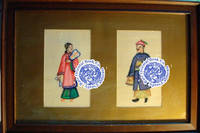
[LAM-QUA/TING-QUA SCHOOL]
SUITE OF TWO MINIATURE GOAUCHE PAINTINGS ON PITH PAPER OF A CHINESE MANDARIN COU
Canton 1800-1820 Lam-Qua. Framed & glazed gold mat a pair of hand-painted "Pith" paintings 5.7 x 9.5 cm. matted size very clean bright excellent examples. ORIGINAL HAND-PAINT IN FULL COLOR. R A R E ! . . . A RARE PAIR OF 'PITH' PAINTINGS . . . IN EXCELLENT CONDITION . . A pair of lovely and delicately color painted Chinese couple. The woman on the left wears a long ping silk gown with emerald green under skirt. She hold a silk fan with a painted flower in her left hand and in her right a silken cloth. She wears jade earring and has a flower in her hair. She wears white shoes with orange tops. The man clearly a Mandarin wears a purple robe with his "Mandarin Square" silk embroidered rank on his chest. His undergarment is the typical Imperial green red and yellow colors. He wear the typical Mandarin's hat of red and pink with a green feather. His shoes are the typical black cloth top with white felt soles. The both look at each other. A typical Mandarin scene. . LAM-QUA & TING-QUA SCHOOLS: The works are done in the Canton style of Lam-Qua and his brother Ting-qua. See item #2 below for a link. . Ting-qua born ca. 1809; flourished 1840-70. He was the brother of Lam-Qua 1801-1860 and probably a close relation of Spoilum. Ting-qua's studio at 16 China Street Guangzhou was perhaps the most prolific source of Chinese export paintings of its time. Working in a manner influenced by Western artistic traditions Ting-qua and the painters of his studio restricted themselves to gouache and water-colors perhaps to avoid rivalry with Lam-qua's oil paintings. Their pictures which were often sold in sets." Quoted from item #2 below. . PITH PAPER: The paintings were done on pith paper. "Pith paper or rice paper a misnomer as it is sometimes known is made from the inner pith of the plant Tetrapanex papyrifera which is a member of the Araliaceae family. The plant is a shrub native to Southern China and Taiwan. As well as a painting material pith paper was used to make artificial flowers and surgical dressings." Cited from item #1 below. . THE LEGAL SYSTEM OF CHINA IN EARLY 19TH CENTURY: Justice was swift and usually done to make an example of the accused. If the accused pleaded guilty and confessed his punishment was lessoned. If he persisted in innocence even though he was not guilty his punishment was more severe. Showing a cooperative attitude was of advantage. Nearly all people accused of a crime were assumed to be guilty. The punishment for various crimes were commonly known and justice was meted out by the magistrate. . RARITY: Gouache pith paintings are now rare most were damaged cracked and brittle rendering them useless. The few that survived are considered RARE and uncommon. The paintings were drawn with much skill and patience and were for the most part drawn for and sold to foreigners in the treaty ports of China in the early 19th century. Drawn with a fine brush in vivid colors the paintings depicted things that would fascinate foreigners and encourage them to bring home as souvenirs. The current examples often caught the eye of foreigners who may have actually seen some form of public punishment or execution. . CONDITION: The work is remarkable clean and solid. There are no damage to the paintings visible from the glazed side the back has not been opened but the images look very clean solid with none of the usual cracking or other damage often found on these kinds of early paintings. The frame is clean solid and ready for library or display. . THE FRAMING AND MOUNTING: The pair of painting have been western-style gold-matted framed in brown wood and glazed. The over all size of the frame is 25.5 x 17.5 cm. The verso or back has brown paper glued to all edges and two tiny holes in the back where eyelets were probably screwed in to hold the hanging wire not present. . REFERENCES: . ease see this site for copious details on pith plant and its uses. -org/wiki/Lam_Qua C.L. Crossman.: THE DECORATIVE ARTS OF THE CHINA TRADE p.173-203 and the associated color and b.w. photo examples. . C.L. Crossman.: THE CHINA TRADE p.93-120 and the photos. Arthur Chu.: ORIENTAL ANTIQUES AND COLLECTIBLES pp.62-67 photo #60. . . unknown
Riferimento per il libraio : 34040601
|
|
|
[LAM-QUA/TING-QUA SCHOOL]
SUITE OF TWELVE GOAUCHE PAINTINGS OF CHINESE ON PITH PAPERBound in Black on G.
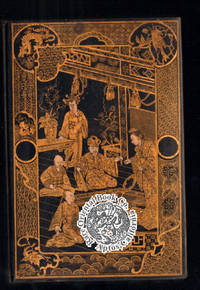
Canton ca.1800-1820 Lam-Qua.Black lacquer gold painted 12 fine gouache hand-drawn & colored paintings 12.5 x 16.5 cm. very fine condition each mounted in an album with old gold paper corners on pith paperexcellent example. RARE ! . . . A SUPERB SUITE OF TWELVE STUNNING COLOR PITH PAINTINGS . . . ILLUSTRATING VARIOUS CHINESE IN ELABORATE COSTUME . This is a charming suite of 12 lovely portraits of Chinese men women and military men. . THE PAINTED SUBJECTS: . 1. An old sage holds a scroll of holy texts while he is seated behind him stands a guard with a pole sword. . 2. A young warrior holds a long axe ready for action. . 3. A young lady a white porcelain teacup. . 4. A warrior holds his halberd ready for action. . 5. A fierce older warrior holds a sword and his shield. . 6. A guard holds his long sword at the ready. . 7. An elderly man strokes his long beard. . 8. A young man takes a stroll holding a fan behind his back. . 9. An elderly an holds two Burmese-green jade bracelets. . 10. A man holds a feather fan. . 11. A very old man holds his long sword. . 12. A bearded man points with his hand toward the right. . The twelve paintings are gently mounted to stiff black album pages with the old style "NuAce" photo mounting corners. There is no damage to the paintings with this technique. . THE STUNNING GOLD OVER BLACK ILLUSTRATED LACQUER COVERS: This is a very unusual binding hand-painted in gold lacquer over black lacquer background on wooden boards. . The cover illustration shows five Chinese: The Lord & Master; his concubine; his son Prince; his retainer; and the maid. . The Lord & master is seen seated before a tea service with three golden cups and a golden ceramic tea pot. The Lord & Master reaches for the hand of his fair and very young concubine who holds a fan. The tea service is clearly for three people: The Lord & Master his son the Prince and the concubine. . The retainer is seated just behind the Lord & Master's right side showing proper respect by looking at the floor. The young Prince the son is seated before his father and looks at the concubine. At the rear is the maid waiting for order. She puts her right hand on the adjacent table holding a tray. . The work has an elaborate and stunning border. In the upper corners are two stunning illustrations: the upper left sows the Golden Dragon in the upper right is the Phoenix. At the left center margin is a golden Peacock. The margin-borders are elaborately done with differing traditional Chinese patterns and designs. A most stunning view inside of the . The back is plain black lacquer. . The spine is black leather with period Chinese swastika design white over black end papers. Some of the old glue is showing through the very thin tissue endpapers else very solid with heavy black pages. . CONDITION OF THE GOLD AND BLACK LACQUER COVERS: The covers are in exceptionally good condition. There are two minor spots: one ca. 1.5 cm spot at the son's midsection and another black spot .05 cm just below his robe. . There is the very small amount of occasional and barely visible usual and very minor mild scuffing with a minor discoloration of the face of the maid. There is a bit of 'crackle' to the black lacquer which is normal for a piece 200 years old. Else this is in very nice condition. . CONDITION OF THE PAINTINGS: These are exceptionally bright and clean drawings lightly mounted on a now browned backing paper with blue-glossy patterned paper borders. . Numbers: . 1 has a tiny 1.5 & .5 cm. small split at bottom left this does not affect the painting. . 2 has the lower portion folded in the process of paper-making which is normal variation and does not detract. . 5 has a tiny 1 cm. split at top in the margin this does not affect the painting. . 9 has a 7 cm. split from the elbow to the bottom of the work apparently restored from the verso minimal impact. . 11 has a small 1 cm. scuff in the right margin this does not affect the image. . 12 has a similar but less obvious 1 cm. scuff in the right margin at the same place as #11 this does not affect the image. . The balance i.e. numbers: 3467810 are without issues. . OVERLY CRITICAL: We are commonly obsessive and overly critical about pointing out any and all defects. Please view the scans posted to our website. All in all these look much better than the above description. Perfectly clean no blemishes. . NOTE: Typically "pith" paintings are prone to be very brittle and delicate. We are happy to state this suite is exceptionally very solid and intact. The colors are brilliant bright and stunningly fresh without any fading or issues. They appear to have been properly cared for protected. These are in excellent "Collector's Condition." . PAINTING QUALITY AND FRESH BRILLIANTLY COLORED: The paintings are meticulously executed with fine detail painted a steady skilled hand. . LAM-QUA TING-QUA SCHOOLS: The works are done in the Canton style of Lam-Qua and his brother Ting-qua. See link below. . Ting-qua born ca. 1809; flourished 1840-70. He was the brother of Lam-Qua 1801-1860 and probably a close relation of Spoilum. Ting-qua's studio at 16 China Street Guangzhou was perhaps the most prolific source of Chinese export paintings of its time. Working in a manner influenced by Western artistic traditions Ting-qua and the painters of his studio restricted themselves to gouache and water-colors perhaps to avoid rivalry with Lam-qua's oil paintings. Their pictures which were often sold in sets." . PITH PAPER: The paintings were done on pith paper. "Pith paper or rice paper" a misnomer as it is sometimes known is made from the inner pith of the plant Tetrapanex papyrifera which is a member of the Araliaceae family. The plant is a shrub native to Southern China and Taiwan. As well as a painting material pith paper was used to make artificial flowers and surgical dressings." . RARITY: Gouache pith paintings are now rare most were damaged cracked and brittle rendering them useless. The few that survived are considered RARE and uncommon. The paintings were drawn with much skill and patience and were for the most part drawn for and sold to foreigners in the treaty ports of China in the early 19th century. Drawn with a fine brush in vivid colors the paintings depicted things that would fascinate foreigners and encourage them to bring home as souvenirs. The current examples shows portraits of Chinese officials guards military men as well as upper class citizens. . Albums of pith paintings were typically issued in a suite of twelve. . BIBLIOGRAPHY: . -org/wiki/Lam_Qua C.L. Crossman.: THE DECORATIVE ARTS OF THE CHINA TRADE p.173-203 and the associated color and b.w. photo examples. . C.L. Crossman.: THE CHINA TRADE p.93-120 and the photos. Arthur Chu.: ORIENTAL ANTIQUES AND COLLECTIBLES pp.62-67 photo #60. . . unknown
Riferimento per il libraio : 35006201
|
|
|
[UTAGAWA, Kuniyoshi Painting School]
A PAINTING OF "DEVIL KIYOMASA" & "KONISHI YUKINAGA" AS THEY SUBDUED THE KOREAN K.
Japan n.d. ca 1830. A superb scroll painting on silk 39.5 cm. wide by 233 cm. long painting size: 29.5 x 185cm. fine mounting pale silk chrysanthemum patterned border flawless flawless excellent pastel colors excellent condition.RARE! THIS IS A GREAT AND STUNNINGLY BEAUTIFUL HAND-PAINTED SCROLL THE SUBJECT: Kato Kiyomasa 1562-1611 was the son of Kiyotada a relative of Hideyoshi Toyotomi and served him and distinguished himself as one of the seven most famous warriors of that time by his heroic acts at the Battle of Shizugadatake. . During the invasion of Korea he followed Yukinaga Konishi -1600 to Pusan and on to Seoul in 1592 where he fought so fiercely that the Koreans named him "Devil Kiyomasa." Yukinaga was a Christian warrior & retainer of Hideie Ukita and was appointed Lord of Settsu by Hideyoshi Toyotomi. . Hideyoshi appointed these two to spearhead the Korean invasion with Yukinaga the commander. The plan was to launch waves of army corps by ship across the 56 mile wide Tsushima straits to Pusan. Some 300000 fighting men a truly serious force embarked. The first force of 9200 Samurai armed with matchlocks bows and swords set out. Upon landing they rapidly advanced North up the peninsula taking out Korean castles and subduing the regions through power of force. They advanced to Seoul as the armies divided into two parts each racing to see who would enter Seoul first. . At Cho-ryung pass they united then both advanced on Seoul & took the castle as the Korean King and his entourage fled over the river at Imjin where the Koreans up their valiant effort to check the Japanese. This is a most magnificent painting of both Kiyomasa and Yukinaga as each holds a Naginada while the Korean King prepares to rides a black steed effecting his escape while being protected by a retainer who also holds an elaborate Naganada with the Imperial banner. THE ARTIST AND PAINTING SCHOOL: . This work was done in the Utagawa school style and was likely painted by Utagawa Kuniyoshi or one of his star pupils. It was painted in the "Ukiyo-e" style similar to that of a color woodblock print. . It is painted in a firm solid confident strong hand this work is executed with most impressive brush strokes style & manner expressing the Bushido spirit celebrating triumph over the Koreans. Marvelous detail to the whole work renders this a major piece. Skillfully drawn & painted on silk which is the most difficult medium to control ink flow this work is flawless and a fine example worthy of display in any Tokunoma. . The top is blue paper with black Sumi inscription naming the heroes and citing the Korean Battle. REFERENCE: For biographical details see JAPAN BIOGRAPHICAL ENCYCLOPEDIA & WHO'S WHO pp.592 689-90. . F. Brinkley: A HISTORY OF THE JAPANESE PEOPLE pp.509-520. . unknown
Riferimento per il libraio : 98166101

|
|
|
[UTAGAWA, Kuniyoshi School]
SO NO AKEBONO: THE DAWN & DAYBREAK OF LOVEMAKING. The Erotic Tale of Oseru & He
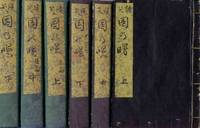
Japan 1826 n.p. Blue stitched wrs. very good 6 vol.set Chuban or 12 x 18 cm. very good 111 double folded leaves 23 b.w. illustrations many are hand tinted around the genit- alia wood block printed on hand-made paper minor old worm damage but properly mended. This set was likely illustrated by a very skilled Utagawa Kuniyoshi school artist. Since it was common for artists not to sign erotic book one can not know the exact artist name. The lavishly illustrated text is a good example of a skillful hand and illustrator. While there is no colophon which is also usual for erotic books a cyclical date is found in volume one for 1826. The story seems to be about Tokuseru a girl who has various affairs with several lovers. In one illustration she is shown asle- ep in a dream-state with an image floating above her. In this she is with her favorite lover Tokushichi who is making love to her. She is shown sleeping with her hand on an erotic book with Chirishi paper to wipe the aftermath of love-making while her cat looks on. She has been stimu- lated by looking at the erotic book and then her lover appe- ared in her dream. Another shows her being raped in the river by two boat boatman. Others show her with her favorite Tokushichi and other lovers. In one very dark midnight scene she is found making love to her lover while an unin- vited guest stumbles into their room by error. Contained in a period paper covered slipcase. unknown
Riferimento per il libraio : 21159501
|
|
|
[LAM-QUA/TING-QUA SCHOOL]
SUITE OF SIX MINIATURE GOAUCHE PAINTINGS ON PITH PAPER OF CHINESE TORTURE AND EX
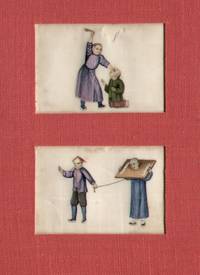
Canton ca. 1800-1820 Lam-Qua. Red flax mat six goauche color paintings on pith paper each 10 x 7 cm two per mat very good clean two with marginal chipsimage not affected meticulously color drawn in much detail. R A R E . . . THE SUITE OF SIX COLOR GOUACHE PAINTINGS . . Begins with the a painting of Imperial police bringing the accused to where he will be punished. He wears a cangue or a large wooden collar clamped around his neck with his crime written on paper which is then glued to the wood. Image two shows the guilty on his knees being beaten with a leather strap by the punisher. Image three shows the policeman pulling a chain connected to a metal ring on the neck of the accused. The next shows the image of a large rock connected to a chain and the accused sitting on the rock with the chain fastened to his leg. The fifth shows the magistrate pointing his finger at the guilty as he while being admonished the guilty is forced to kneel on small rocks while a policeman holds ears. The last image shows the executioner with a long sword at the ready while the accused has a very sour look on his face his hands tied behind his back with his crime written on a long piece of wood at his side. It was common to parade the guilty through the streets for all to see the criminal as he was led to the execution grounds. . LAM-QUA TING-QUA SCHOOL: The works are done in the Canton style of Lam-Qua and his brother Ting-qua. See item #2 below for a link. . Ting-qua born ca. 1809; flourished 1840-70. He was the brother of Lam-Qua 1801-1860 and probably a close relation of Spoilum. Ting-qua's studio at 16 China Street Guangzhou was perhaps the most prolific source of Chinese export paintings of its time. Working in a manner influenced by Western artistic traditions Ting-qua and the painters of his studio restricted themselves to gouache and water-colors perhaps to avoid rivalry with Lam-qua's oil paintings. Their pictures which were often sold in sets." Quoted from item #2 below. . PITH PAPER: The paintings were done on pith paper. "Pith paper or rice paper" a misnomer as it is sometimes known is made from the inner pith of the plant Tetrapanex papyrifera which is a member of the Araliaceae family. The plant is a shrub native to Southern China and Taiwan. As well as a painting material pith paper was used to make artificial flowers and surgical dressings." Cited from item #1 below. . THE LEGAL SYSTEM OF CHINA IN EARLY 19TH CENTURY: Justice was swift and usually done to make an example of the accused. If the accused pleaded guilty and confessed his punishment was lessoned. If he persisted in innocence even though he was not guilty his punishment was more severe. Showing a cooperative attitude was of advantage. Nearly all people accused of a crime were assumed to be guilty. The punishment for various crimes were commonly known and justice was meted out by the magistrate. . RARITY: Gouache pith paintings are now rare most were damaged cracked and brittle rendering them useless. The few that survived are considered RARE and uncommon. The paintings were drawn with much skill and patience and were for the most part drawn for and sold to foreigners in the treaty ports of China in the early 19th century. Drawn with a fine brush in vivid colors the paintings depicted things that would fascinate foreigners and encourage them to bring home as souvenirs. The current examples often caught the eye of foreigners who may have actually seen some form of public punishment or execution. . CONDITION: The work is remarkable clean and solid. As usual when ever pith paper is fastened at the corners there is a reaction to moisture in the air and the paper will expand or contract and thus snap its connection. By and large these works are not damaged except for two corners where there was some loss. Please see link #1 below on how to mount and care for pith paintings. These can be re-matted per the link and preserved on acid-free paper and reframed for display. . Color photos are posted to our website. . BIBLIOGRAPHY: . C.L. Crossman: THE DECORATIVE ARTS OF THE CHINA TRADE p.173-203 and the associated color and b.w. photo examples. C.L. Crossman THE CHINA TRADE p.93-120 and the photos. A. Chu: ORIENTAL ANTIQUES AND COLLECTIBLES pp.62-67 photo #60. 1: see: artfacts dot org/artinfo/articals/pith_paper dot html 2. www dot answers dot com/topic/tingqua 3. Wikipedia: Lam_Qua C.L. Crossman: THE DECORATIVE ARTS OF THE CHINA TRADE p.173-203 and the associated color and b.w. photo examples. C.L. Crossman THE CHINA TRADE p.93-120 and the photos. A. Chu: ORIENTAL ANTIQUES AND COLLECTIBLES pp.62-67 photo #60. . unknown
Riferimento per il libraio : 30018401
|
|
|
[CHEUNGQUA]. [Studio Or School Of]
A SUITE OF 7 COLOR CHINESE PITH PAINTINGS SHOWING CHINESE WOMAN PLAYING MUSICAL
Canton 1860-80's Cheungqua. A group of 7 pith or Tongcao color paintings usual minimal issues mostly clean & solid sold "as is" as a collection with the typical chips & a few fox spots else very good clean examples. A RARE GROUP ! . . . . A SUITE OF 7 FINE CHINESE COLOR PITH PAINTINGS . . . SHOWING BEAUTIFULLY DRESSED CHINESE WOMEN . . . PLAYING MUSICAL INSTRUMENTS . . . EXECUTED IN STUNNING & BRILLIANT COLORS . . . AKA: CHINESE EXPORT WATERCOLOURS . A group of typical "trade paintings" executed by Chinese native artists for foreign traders visiting Canton or Macao during the early to mid-19th century. . A SUPERB SUITE OF FABULOUS COLOR PITH PAINTINGS: A stunningly beautiful group of hand-painted color pith paintings depicting a woman playing a musical instrument. . "GOLDEN LOTUS" or "LOTUS FEET" BOUND FEET Chanzu: This like most illustrations of the period show the women with bound feet. Chanzu bound feet was an erotic obsession and fetish in ancient China. The erotic ramifications are outlined in the references below. . The paintings illustrate Chinese women in a domestic scene with furniture playing musical instruments. Subjects are: . a. Yue1in Ruan Moon Guitar Moon Zither 4 stringed . b. Yanqin Chinese Dulcimer . c. Sanxian three-stringed Chinese lute . d. Drumming on the back of a Chinese ceramic bowl . e. Dizi Chinese bamboo flute . f. Huqin Chinese violin . g. Tong Luo Chinese Brass Gong . DESCRIPTION OF THE PAINTING ART WORK AND CONDITION: . Each painting is in brilliant vivid and stunning colors. Each is skillfully painted with a fine hand delicate fine-point brush with great detail incredible reality texture and appeal. . As usual the set paintings were tipped to a contemporary backing period Each painting is backed with a contemporary stiff paper or a more current back card. . Items "a" & "b" are matted see cover.jpg & title.jpg photos posted to our website. . Each painting is approximately 21 x 34 cm. most have a blue silk ribbon border partial border or border lacking chipped and the like on has restorations on the verso in the margin only. . Each painting has some chips parts missing on the edges or with small holes here and there 'e' by and large the images are complete but some may have usual and often typical age-related cracks or splits a touch of fox spots on "c." . Suitable for framing & display. Please review photographs posted to our website for details. . "RICE PAPER" PAINTINGS: Several authors refer to this name rather than the proper name "Pith" paper paintings also can be called "Tung Tsao." . THE CANTON ARTIST OR 'SCHOOL' OF CHEUNG QUA: Cheung Qua was an export watercolor painter in Canton. He and followers of his school produced various single and albums of these paintings which were sold from his studio. . Often his in-house artists began painting on their own thus replicating the techniques subjects and essence of their masters. Because these paintings were rarely signed the one and only identification ever found was occasionally on the album cover or spine with the studio name. . Often these paintings were sold in various shops in Macao the main resting and gathering place of foreigners during part of the year. . REFERENCE: . CLUNAS Craig.: CHINESE EXPORT WATERCOLOURS. This entire book is devoted to Pith or Rice paper paintings. For musical instruments see color plates on pp.50-53 especially plates on pp.66-67 plates 39 & 40 are particularly similar to our examples that is to say by the same or an artist who was in the same house of Cheungqua or that school. CHU Arthur. et al.: ORIENTAL ANTIQUES AND COLLECTIBLES: A GUIDE pp.62-66. THE CHINESE PITH PAINTING COLLECTION AT THE NATIONAL LIBRARY OF AUSTRALIA: An Annotated Guide. Crossman Carl L. The decorative arts of the China trade : paintings furnishings and exotic curiosities. LEVY Howard S.: CHINESE FOOT BINDING: The History of a Curious Erotic Custom. . --. THE LOTUS LOVERS: The Complete History of the Curious Erotic Custom of Foot binding in China. JACKSON Beverly.: SPLENDID SLIPPERS: A THOUSAND YEARS OF AN EROTIC TRADITION. . . unknown
Riferimento per il libraio : 98101501

|
|
|
UTAGAWA SCHOOL ARTIST
SHUNPON: A SET OF 2 OF 3 COLOR WOODBLOCK PRINTED EROTIC BOOKS
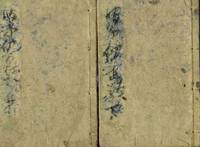
Japan n.d. ca 1830's n.p. Stiff stitched wrappers vols. 2 & 3 of a 3 vol. set lacks vol. 1 18 double folded leaves Japanese text 5 double page 2 single page color platesbit of minor cover rubbing else solid & clean. FIRST EDITION . . . AN EROTIC CLASSIC BY THE UTAGAWA SCHOOL . . As usual this "SHUNPON" erotic illustrated woodblock printed book is unsigned. See below for more about this. . This and most other "SHUNGA" erotic print and "SHUNPON" were never signed by the artist using his true name. It was a common practice to use an ironic or humorous name in poking fun at the Tokugawa Shogunate who forbid erotic and anti-government publications. . ATTRIBUTION: Stylistic analysis of Japanese artists can be used to recognize the artist or his "school""style" by carefully examining a large number of examples. To that end we strongly feel this is either the work of Utagawa Kuniyoshi or the "Kuniyoshi" school meaning his followers or students. . THE SET: This set was issued in 3 volumes. We have volume 2 & 3 only. The work is nicely woodblock printed in full color. . THE CONTENTS: From volume 2 shows a girl with her vagina open and exposed. A voyeur is outside and peeps through a Fusuma sliding door most likely at the couple in the next room. . This shows a double-page illustration of a sleeping young man holding a Shamisen. He sports an enormous erection he is being held by a young girl who's vagina is exposed and she is ready to insert her lover's erect penis. . The next shows a couple preparing to make love. They are embracing each other tightly her vulva is exposed and his large erect penis is protruding from his Kimono. . The view shows the couple just after they made love. She erotically holds a wad of "Chirishi" hand-made tissue Washi toilet paper in her mouth while wiping her wet vagina. Her lover looks outside. The next shows her once again in the throes of rapture as she flows much vaginal juice while he pumps her into orgasm. . Vol. 3 begins with two young women in the public bathing house. Both are nude one is carefully washing her vagina with a cloth and using a water bucket. The other combs her hair her vulva fully exposed. . The next shows a couple preparing to make love. He is on top of his prostitute. He has inserted four fingers into her vagina while a cat observes. . Another man is shown in an adjacent room asleep. . RARITY OF "SHUNPON": Books of this subject reflect the "natural" pension and attitudes of 19th century Japan vis-a-vis nudity and sex. The Japanese have always been very "natural" open and easy going about sex and casual relationships. . The art work is ski fully executed by Kuniyoshi or one of his followers. The landscapes human anatomy and portraiture show a keen knowledge and experienced skill. . THE SIZE: These are 12 x 8 cm. . REFERENCE: NOT LISTED IN: SHIBUI Kiyoshi.: ESTAMPS EROTIQUES PRIMITIVES DU JAPON:GENROKU KOHANAGA SHU-E . It is not surprising this and a plethora of other Japanese Shunga Shunpon Erotic prints & books are not listed in Shibui. While he lists many there are even more not listed in his book or any other reference book on the subject. . Erotic books were "suppressed" by the Tokugawa Shogunate therefore the majority of these kinds of books & prints were published on the 'black market' and not distributed openly. They remain on the 'fringe' of publication. There were stiff penalties for artists block cutters and publishers of this category of woodblock printed work. . . unknown
Riferimento per il libraio : 21160501
|
|
|
[MORONOBU or SUKENOBU SCHOOL]
AMANJAKU DEN: A PERVERSE EROTIC JAPANESE LEGEND. A Bizarre and Unque Erotic Jap
Edo c.1700-50 n.p. Brown & silver covered boards very clean 7 double-page b.w. erotic woodblock illustrations mounted on mica flecked paper 18 x 25 cm. accordion folded illustration size: 31 x 12 cm. FIRST & ONLY UNRECORDED COPY! . . . . A VERY RARE UNRECORDED EARLY BOOK . . . A BIZARRE & UNIQUE EROTIC BOOK . . . UNSIGNED BUT CLEARLY THE WORK OF A MASTER ARTIST . BY SUKENOBU OR HIS :SCHOOL: . A unique and hitherto unfound odd and most unusual erotic book of the early-mid-18th century. One of the most bizarre erotic books ever done in Japan. . The graphically explicit work portrays men and women with genitals on their foreheads engaged in heterosexual and homosexual intercourse. There is no other book with such unusual and strange illustrations. . . THE TITLE: THE LEGEND OF AMANJAKU or AMAN NO JAKU: Chinese Title: TIAN XIE GUI YUN . THE MEANING OF AMANJAKU: Japanese Buddhist literature is abundant with variations on the theme of "Aman-No-Jaku" aka. "Amanjaku" "Manojaku" commonly understood to be a "Heavenly Evil Spirit." . This spirit or demon-like creature in Japanese folklore is usually depicted as being a male during the day and female at night. The demon is usually depicted as a kind of small Oni devil and is thought to be able to provoke a person's darkest desires and instigate him into perpetrating wicked deeds. . Amanjaku is also depicted in Chinese and Japanese mythology the AMANOJAKU is a changeling a water spirit that infiltrates the human world to play cruel tricks on people by reading their minds and twisting their requests or desires to be used against them. . The "AMANOJAKU" is also known the "Lord of the River" and in Japan serves Bishamonten one of the four Deva kings of Buddhism as a minor demon. See Wikipedia below. . In Japanese the term "Amanojaku" also refers to a person who is deliberately contradictory someone who argues for the sake of arguing or can be used in common Japanese conversation to refer to someone who is a "Perverted Demon." . THE ILLUSTRATIONS: THE BUDDHIST THEME:. This work is unusual in that the genitals of common people are located on their foreheads. A symbolist meaning can be in Buddhist concept that sex and sexual hedonism is openly on the minds of 'lay' people. The Buddha and his disciples on the other hand do not have sex organs on their foreheads meaning their organs are covered and in a different usual location. This can symbolize 'self control' over such biological energies. Devout Buddhist disregard sex as a pleasurable pastime and devote themselves to monastic focus. By contrast "lay" people are distracted with hedonistic pleasure a path away from rather than towards the Dharma or teachings of Buddhism. . In a sense this work illustrates the overwhelming force of evil or the "Amanojaku" and how it distracts people from the "Righteous Path" towards the Dharma and the ultimate goal of attaining Nirvana. It can be posited that this work is designed to give understanding to "lay" people by way of visual example of what forces direct their energies away from the Buddhist teachings in an effort to redirect them towards the "Righteous Path" and life style. . EXCEPTIONALLY RARE UNIQUE WORK: . The work is exceptionally RARE unusual and erotic there are no other example showing genitals on the foreheads of any other Japanese book cited anywhere in the bibliographic literature or record. . This work is certainly RARE in subject content and quantity. Though it was woodblock printed and unsigned which was usual for Japanese erotic works which were banned by the Shogun we have not found anything similar or recorded anywhere in the bibliography. Being woodblock printed one assumes there are other copies in existence. The average printing from woodblocks were somewhere between 100-200 copies. However in this instance no others exist. We have the strong feeling the book could have been the production of a famous Japanese illustrator and perhaps financed by a Buddhist temple again there are no known facts about this rarity. . THE EROTIC ILLUSTRATIONS: . Number 1: This work begins showing the Buddha flanked by two of his disciple monks. The title is written in four Japanese Kanji in Kambun & Chinese characters. The Buddha and his two disciples listen to two elderly Buddhist believers: one is a male he has and erect penis on his forehead. The other is a woman she has a vagina on her forehead. Neither the Buddha nor his two disciples monks show genitals on their foreheads. The couple have come to consult with the Buddha about their grievances. . Number 2: Shows a man and a woman in a Tatami matted room both wear lovely 18th century decorated Kimono. They embrace each other and are engaged in making love from their foreheads which show an erect penis and testicles inserted into the woman's forehead where her vagina is located. Adjacent to the young couple is an older woman who has become aroused by the adjacent couple's making love. The old woman uses a dildo tied to a post which she hugs while inserting the dildo into the vagina on her forehead. . Number 3: Shows a couple laying on a blanket their Kimono pulled down and opened and used as a top cover. They engage in love-making and kiss. The man has an erect penis on his forehead the woman a vagina on hers. There is some used Chirishi toilet paper just above her head on the floor used to wipe the love fluids. There is a folded package of yet unused Chirishi in readiness. Chishiri shown in Japanese Shunga erotic prints prints & paintings is an 'erotic symbol' indicative of sexual excitement with lots of love fluids flowing. Ergo the need for paper to clean up the results of erotic love-making. . Number 4 shows an adult man with an erect penis on his forehead penetrating the anus of a younger man who's smaller but erect penis is seen on his forehead as he faces his lover. The younger man has no pubic hair yet indicating his youth. . Adjacent to these two men is a woman in the next room. The door is open she is a secret voyeur of the two men. Her vagina is also on her forehead. A Shogi board and two bowls for stones is located in the front left of the illustration. Gay activities in Japanese society were accepted as a norm and were not especially unusual. However to find graphic examples in Japanese erotic books are exceptionally rare and seldom found. . Number 5: Depicts a fully clothed man on his knees he bends over a sleeping woman. He has a very large erect penis and begins to penetrate a woman with her vagina on her forehead. She is fully clothed and sleeping on a wooden "pillow" which supports her elaborate hair coiffeur. . Number 6: Depicts a lively scene of two men and a woman. One man with a very large and erect penis pulls the woman's arm toward him while she fends him off with a straight arm to his head. A second excited man also with a large and erect penis on his forehead masturbates and ejaculates in ecstasy. The woman has a vagina on her forehead. The scene is likely an intended rape of a young girl. She looks away in an effort not to allow him to pull her close enough to insert his penis into her exposed vagina. . Number 7: Illustrating a lonely old man in bed. He has an erect penis on his forehead and holds a kind of pot with a large opening. He faces down and inserts his penis into the pot for gratification. . THE TEXT: The text in Shunga erotic Japanese books & prints is often an erotic dialogue describing the erotic action. Often these words are onomatopoetic mimicking the sounds of people in orgasm or making comments about making love or the pleasure and good feelings. The size and hardness of the penis or the flavor and the juices of the vagina and its supple feelings of euphoria when engaged in love-making. All wear 18thcentury period Kimono. . MODE AND FASHION OF THE MID-18TH CENTURY: The room furnishing and Kimono of the participants in this work all wear 18th century period Kimono with period decorations. The style of Kimono and room screens reflect this period. . BINDING AND MOUNTING: Binding: The book has probably been rebound sometime after the 1750's with a more recent thin brown decorated paper with a silver chrysanthemum and a Mon family crest with gold and black on both front and rear covers. Each cover has a distinctly different kind of illustration but of the same theme. The corners and edges are a bit worn some loss to the paper as usual for a work from this period. . Mounting: At an earlier time each page was expertly mounted on a stiff Washi hand-made Japanese paper into an accordion folded book. Each illustration is bordered with a rare and stunning crushed oyster-shell powder mixed with rice-glue and overlaid on the border paper. The stunning effect is a rare shimmering pearl-like color and hue with a remarkable effect. This rare and largely unknown effect has been used for print backgrounds by some of the later masters. . This was no ordinary mounting and appropriate for an exceptionally and most unusual RARE book ! . Contents: By and large the contents are clean solid with a two old worm holes for the first 6 of 7 pages. These are small and towards the edge and does not detract from the overall quality of the illustration. On page 7 there are a few center margin old minor worm holes. All of these have been restored when the prints were laid down on the thick Washi paper creating book format. The work is otherwise solid and firm. There are a few 'rubs' on the old Washi paper which was made from very soft Kozo fibers common to any item of this period on this on handmade papers of the period. . CONDITION OF THE WOODBLOCK PRINTS: . These are very early black and white woodcut prints. Each print has an excellent and vivid impression key blocks are black and superbly printed with strong images. The paper is old and has the patina of paper from that age the usual minor mild surface rubbing or thumbing in the lower corners which is common. . We tend to be overly critical of any flaws found on our books and believe it is better to overly describe rather than avoid such discussion any imperfections. Suffice to say by and large this is an excellent item in very nice condition something that any collector or museum would be proud to own. Please review photos posted to our website. . R A R I T Y OF SUBJECT: The placement of the genitals on the forehead gives one a lot of room to theorize on the meaning of such artistic expression. In our 50 years of experience in dealing Japanese woodblock printed books and painted original art this is the first and only example with such imaginative and symbolist expression. With the beginning of the work showing the Buddha and his two disciples lacking any genitals on their foreheads one can simply assume that in a Buddhist way they have given up carnal desire as represented by common people who's foreheads display genitals perhaps meaning that sex is on their minds or they simply view others as sexual objects eager to make love and engage in carnal thoughts and activities. Obviously seeing an erect penis on some man whiles others see what he thinks and feels is an insight to his innermost thoughts and desires. In all cases in this book the men all show an erect penis. The women are a bit more difficult to fathom. Their vaginas are simply visible on their foreheads and no fluids are visible or other evidence of their carnal desire or sexually excited stated. All of the men have public hair adjacent to their sex organs while all women are lacking any pubic hair completely. This is an erotic symbolism giving full view to women's genitals. . "BANNED" or "PROHIBITED" BOOKS: Shun Pon Haru Bon: In the case of this item it is very likely that it was printed in a much smaller discreet quantity than the 200 copies possible off the blocks. Due to the "banned" nature of such books there is no date publisher nor place cited. One is simply left to determine the date and artist by stylistic analysis. It is well-known that during the Tokugawa period 1603-1868 erotic prints and books were "BANNED" or "PROHIBITED" by decree of the Shogun. One of the influencing factors was that during this period some Shoguns were changing their views and being influenced by Christians who entered Japan during this period. The Shogun did not want foreigners and Jesuit missionaries to think that Japan was a crass and base nation. Naturally foreigners soon learned that prostitution was rampant and so this strange logic from the Shogun never had much affect on the Christians and surely not on the Japanese. . The Shogun enforced severe punishments for persons involved in drawing printing carving blocks and publishing erotic books and prints. With out the "Kiwame" or censor's approval seal all such items were "Banned" outright by the Shogun decree. . While these "Prohibited" books and prints were widely circulated in an "underground" society there are ample examples of famous artists taking on commissions to produce erotic books and prints fun or profit. The record and bibliography is loaded with these examples. "Banning" such erotic works simply meant that the number printed were limited to smaller numbers and distribution was done under the table discretely circulating such books privately among collectors. During these times it was not necessary for artists to sign their such artistic creations by-and-large the population had a very good idea who the artist was by being familiar with their style and other works it was simply a "public secret" who the artist was. Often the artist poked fun at the Shogun with political jokes and assumed names to confound any chance of being discovered by the authorities. . Over the centuries this knowledge decreased and is now the domain of the art historian or scholar to identify and determine the actual artist. Stylistic analysis remains the standard method for unsigned works. . THE ARTIST/SCHOOLS: While there are no signatures or seals indicating the artist's name or even his alternate Go studio name we believe this work is part of the "Primitives and First Century of Ukiyo-e School 1660-1765" period. See Lane below. The women's coiffeur is very similar to those found in this period as well as the drawing style technique and genre. It is this cataloger's opinion that this work was likely the creation of one of the Moronobu School masters. Perhaps done by Sukenobu Yoshikiyo Morishige Sugimura Moronobu Kiyonobu Masanobu or others from this period. We believe this work was likely done from around 1710-1750. It was also likely that it was done by one of the artists listed below. . LIKELY ARTIST ATTRIBUTION: . MORONOBU SUKENOBU SCHOOL: Nishikawa Sukenobu 1671 -August 20 1750 often called simply "Sukenobu" was a Japanese printmaker from Kyoto. He was unusual for a Ukiyo-e in being based in the imperial capital of Kyoto. He did prints of actors but gained note for his works concerning women. His Hyakunin Joro Shinasadame: Appreciating 100 Women in two volumes published in 1723 depicted women of all classes from the empress to prostitutes and received favorable results His Hyakunin Joro Shinasadame: Appreciating 100 women in two volumes published in 1723 depicted women of all classes from the empress to prostitutes and received favorable results Leading members of this school were: Nishikawa Sukenobu the founder; Nishikawa Suketada; Kawashima Nobukiyo; Nishikawa Terunobu; and Takagi Sadatake. . NISHIKAWA MORONOBU SCHOOL: Nishikawa Moronobu 1618-July 25 1694 was a Japanese painter and printmaker known for his advancement of the Ukiyo-e woodcut style starting in the 1670s. Leading members of the MORONOBU school were: Nishikawa Moronobu the founder; Hishikawa Morofusa; Hishikawa Moroyoshi; Hishikawa Moronaga; Hishikawa Moroshige; Hishikawa Morohira; and Tamazaki Ryujo. . BIBLIOGRAPHY: . This title is NOT listed in any of the below resources: SHIBUI Kiyoshi. UKIYO-E NAISHI. BIBLIOGRAPHY OF JAPANESE EROTIC ILLUSTRATED WOODBLOCK PRINTED BOOKS. H. KERLEN. CATALOGUE OF PRE-MEIJI JAPANESE BOOKS & MAPS IN PUBLIC COLLECTIONS IN THE NETHERLANDS. Richard Lane: IMAGES FROM THE FLOATING WORLD THE JAPANESE PRINT; pages 28 40-60 show examples of the Ukiyo-e primitives 1660-1765 especially the Moronobu school pp.60-88 et al. . NOT LISTED IN: . KSM SHIBUI Kiyoshi: UKIYO-E NAISI. BIBLIOGRAPHY OF JAPANESE EROTIC ILLUSTRATED WOODBLOCK PRINTED BOOKS. Modern Reading: UKIYO-E NAISHI KERLEN H.: CATALOGUE OF PRE-MEIJI JAPANESE BOOKS & MAPS IN PUBLIC COLLECTIONS IN THE NETHERLANDS. Not in any other usual bibliographies on Japanese E-hon woodblock printed books. . See: WIKIPEDIA:. unknown
Riferimento per il libraio : 86003001
|
|
|
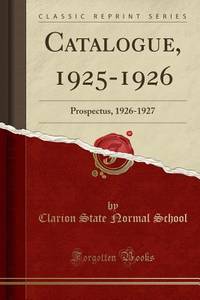
Clarion State Normal School
Catalogue 1925-1926
paperback. Good. Access codes and supplements are not guaranteed with used items. May be an ex-library book. paperback
Riferimento per il libraio : 0428083102.G ISBN : 0428083102 9780428083106
|
|
|
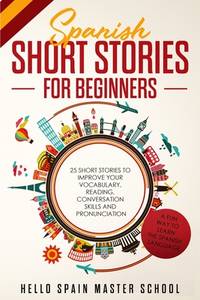
Hello Spain Master School
Spanish Short Stories for Beginners: 25 Short Stories To Improve Your Vocabulary Reading Conversation skills and Pronunciation
paperback. Good. Access codes and supplements are not guaranteed with used items. May be an ex-library book. paperback
Riferimento per il libraio : 1801187975.G ISBN : 1801187975 9781801187978
|
|
|
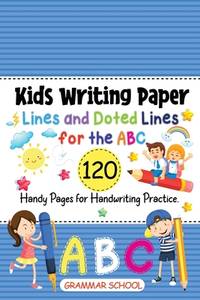
School, Grammar
Kids Writing Paper: Lines and Doted Lines for the ABC. 120 Handy Pages for Handwriting Practice
paperback. Good. Access codes and supplements are not guaranteed with used items. May be an ex-library book. paperback
Riferimento per il libraio : 1801646252.G ISBN : 1801646252 9781801646253
|
|
|
Jimmy School
Letter and Number Tracing Books for Kids Ages 3-5: 100 Pages Tracing Activity Book and Coloring Alphabet for Preschool
paperback. Good. Access codes and supplements are not guaranteed with used items. May be an ex-library book. paperback
Riferimento per il libraio : 1801148910.G ISBN : 1801148910 9781801148917

|
|
|
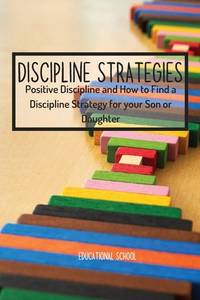
Educational School
Discipline Strategies: Positive Discipline and How to Find a Discipline Strategy for your Son or Daughter
paperback. Good. Access codes and supplements are not guaranteed with used items. May be an ex-library book. paperback
Riferimento per il libraio : 1802128182.G ISBN : 1802128182 9781802128185
|
|
|
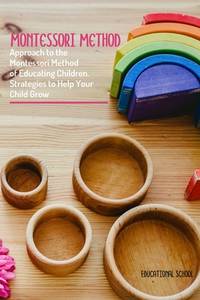
Educational School
Montessori Method: Approach To The Montessori Method Of Educating Children. Strategies To Help Your Child Grow
paperback. Good. Access codes and supplements are not guaranteed with used items. May be an ex-library book. paperback
Riferimento per il libraio : 1802128034.G ISBN : 1802128034 9781802128031
|
|
|
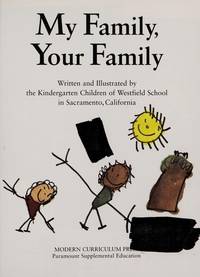
The Kindergarten Children of Westfield School
My Family Your Family
paperback. Good. Access codes and supplements are not guaranteed with used items. May be an ex-library book. paperback
Riferimento per il libraio : 0813639506.G ISBN : 0813639506 9780813639505
|
|
|
Language School
French Language Learning: French Short Stories For Beginners French Language for Beginners
paperback. Good. Access codes and supplements are not guaranteed with used items. May be an ex-library book. paperback
Riferimento per il libraio : 1801259879.G ISBN : 1801259879 9781801259873
|
|
|
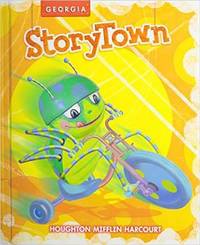
HARCOURT SCHOOL PUBLISHERS
Harcourt School Publishers Storytown Georgia: Se Zoom Along Level 1-2 Grade 1 2008
hardcover. Good. Access codes and supplements are not guaranteed with used items. May be an ex-library book. hardcover
Riferimento per il libraio : 0153815930.G ISBN : 0153815930 9780153815935
|
|
|
School Mathematics Project
Smp Companion to Advncd Maths Book School Mathematics Project Advanced Mathematics
hardcover. Good. Access codes and supplements are not guaranteed with used items. May be an ex-library book. hardcover
Riferimento per il libraio : 0521076250.G ISBN : 0521076250 9780521076258
|
|
|
Language School
French Short Stories for Beginners: Learn French with Short Stories and Phrases in a fast and Revolutional way a Language Learning Book You Will Never Forget
paperback. Good. Access codes and supplements are not guaranteed with used items. May be an ex-library book. paperback
Riferimento per il libraio : 1801584818.G ISBN : 1801584818 9781801584814
|
|
|
Trinity College School
Trinity College School Record Vol. 48: October 1944 Classic Reprint
hardcover. Good. Access codes and supplements are not guaranteed with used items. May be an ex-library book. hardcover
Riferimento per il libraio : 0266739350.G ISBN : 0266739350 9780266739357
|
|
|
Ciao Italy Master School
Learn Italian for Beginners: An Easy and Fast Way To Learn The Basics of Italian Language Build Your Vocabulary and Improve Your Reading and Conversation Skills
hardcover. Good. Access codes and supplements are not guaranteed with used items. May be an ex-library book. hardcover
Riferimento per il libraio : 1801699763.G ISBN : 1801699763 9781801699761
|
|
|
Harcourt School Publishers
Como Miniparque / Como Minipark Spanish Math Spanish Edition
paperback. Good. Access codes and supplements are not guaranteed with used items. May be an ex-library book. paperback
Riferimento per il libraio : 0153692642.G ISBN : 0153692642 9780153692642
|
|
|
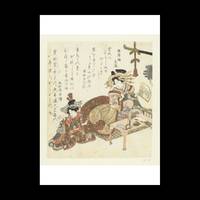
Eisen (school)
Courtisane writes on a fan Photo Matt Fibre A2
Contentum Ltd. Loose sheet. New. High-quality art print based on an original work from the Rijksmuseum. Created in the 19th century 1820. Professionally printed on premium fine-art paper Photo Matt Fibre in size A2. The artwork is printed with a white border museum-style presentation. Contentum Ltd. unknown
Riferimento per il libraio : 1842965
|
|
|
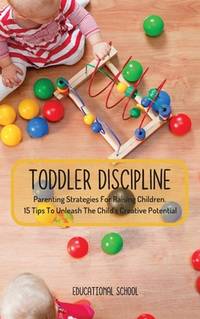
Educational School
Toddler Discipline: Parenting Strategies For Raising Children. 15 Tips To Unleash The Child's Creative Potential
hardcover. Good. Access codes and supplements are not guaranteed with used items. May be an ex-library book. hardcover
Riferimento per il libraio : 1802128166.G ISBN : 1802128166 9781802128161
|
|

 Ricevere i risultati per e-mail
 Scaricare i risultati in PDF
 RSS feed
 Link
Link


