[BRASSAÏ]Livre Rare Book
719 résultats
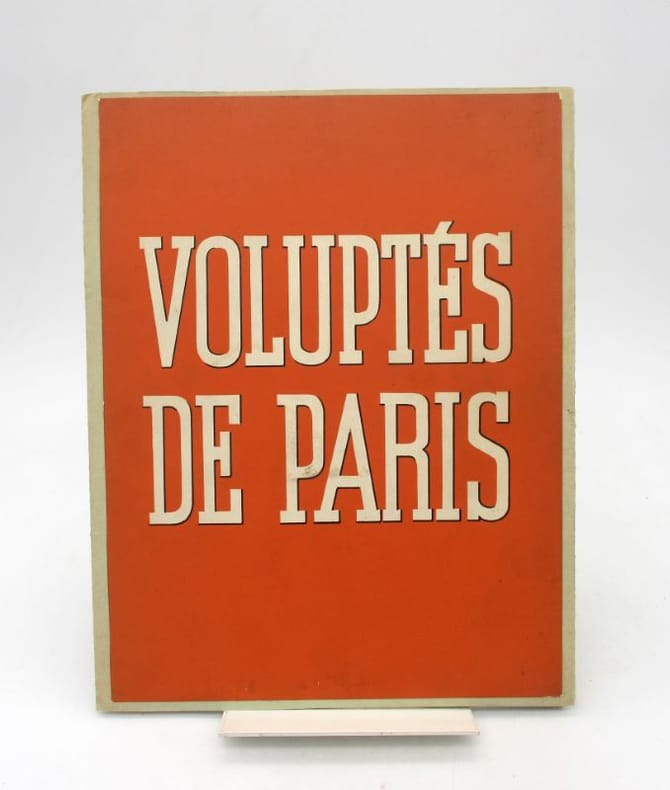
réf. 22691Paris, Paris-Publications, s.d. [1934]. In-4, non paginé, broché, couverture originale imprimée (couverture tachée et frottée, mouillure marginale aux feuillets de texte, entièrement débroché, petits manques aux perforations du brochage, anneaux manquants).
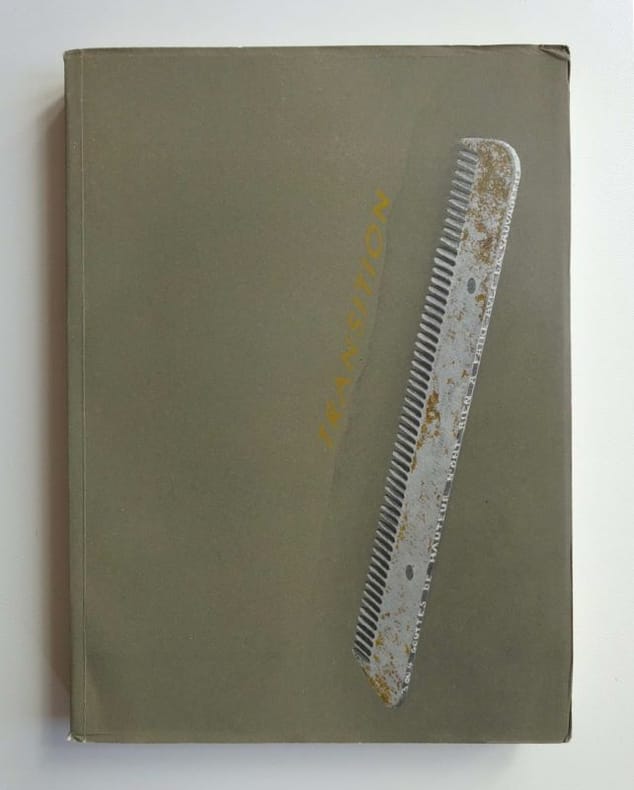
réf. 126Eugene Jolas (Associate Editor : James Johnson Sweeney), New-York, 1937, (15,5 x 21,5 cm), 220 pages. Fameuse couverture de Marcel Duchamp (très belle qualité d'impression) : 3 ou 4 gouttes de hauteur n'ont rien à faire avec la sauvagerie. Textes de James Agee, Hans Arp, Paul Eluard, Eugene Jolas, Raymond Queneau, André de Richaud, James Joyce, Franz Kafka, Fernand Léger, André Lhote, L. Moholy-Nagy, Piet Mondrian, Erwin Panofsky, etc... Reproductions des oeuves de Man Ray, Brassaï, Edward Weston, Joseph Albers, Alberto Magnelli, Joan Miró, Jean Hélion, Hans Hartung, John Piper, Paalen, Kandinsky, Calder, Ben Nicholson, Henry Moore, Mondrian, etc... Bel et rare exemplaire de toute fraîcheur.
1987réf. 51232Paris France Arts et Metiers Graphiques 1987. Hardcover Fine in Near Fine DJ: The Book is flawless; the binding is square and secure; the text is clean. Free of underlining hi-lighting notations or marginalia in the text. Free of creased or dog-eared pages in the text. Free of any ownership names dates addresses notations inscriptions stamps plates or labels. A handsome like-new copy structurally sound and tightly bound showing no flaws. Virtually 'As New'. The DJ shows the lower corner of the rear inside flap clipped; else only mild rubbing to the panels and a touch of scuffing to the head of the backstrip. Close to 'As New'. NOT a Remainder Book-Club or Ex-Library. Folio 12.75 x 11 x 0.8 inches. 7-page text by Paul Morand who also provides an 11-page section of explanations for each of the 62 full-page duotone photographs which make up the bulk of the book. 80 pages. Language: French. Hardback with DJ. Brassaï became interested in photography as a way to record encounters on his nightly walks through the streets of Paris. He enjoyed these long strolls after dark and began carrying a camera and tripod in 1929. He compiled these photographs in a book entitled Paris de nuit. A collection of black and white images that juxtaposed luminous dreamlike nightscapes with contemporary documentary images of the nighttime's denizens. "Night does not show things it suggests them. It disturbs and surprises us with its strangeness." Brassaï's subjects are not only aware of the photographer they collaborate with him. His unique style gave Paris de nuit its distinctive intimacy and was a revelation for his artist friends. Fellow night owl Henry Miller wrote: "Brassaï is a living eye.his gaze pierces straight to the heart of truths in everything." Brassaï was at ease with all types of people and this played an important role in his photography. In the course of his nighttime perambulations he befriended pimps and streetwalkers hoodlums and laborers who allowed him to photograph freely among them. He was equally accepted photographing nude showgirls backstage at the Folies Begere as he was photographing prostitutes and their clients at Chez Suzy. Paris by Night was also a technical achievement. In an era of slow lenses and even slower filmBrassï relished the darkness and by trial and error learned to get the night shots he was after. Using his training as a painter Brassaï framed his shots so that small areas of light pierced large areas of blacks and shadows. Light reflected in wet streets and diffused by fog would define shapes within the dark. This contrast gave his printed images richness and depth and he called these prints his "little boxes of night." Arts et Metiers Graphiques , hardcover
réf. 909964Paris Olympia Press. 1956. First and original edition. 71pp.31pp. photogr. 29 photographs by Brassaï. Soft Cover Kl 8vo. Little wear to spine while the corners of of the first 75 pages are just slightly creased. Overall a good copy. l Printer: Paris Impr. Mazarine: Impr. Aulard. Cover design: T.Tajiri. First edition second state with matt photographs; 'First and original printing' stated on title-page.' paperback
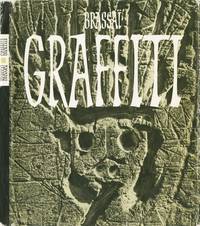
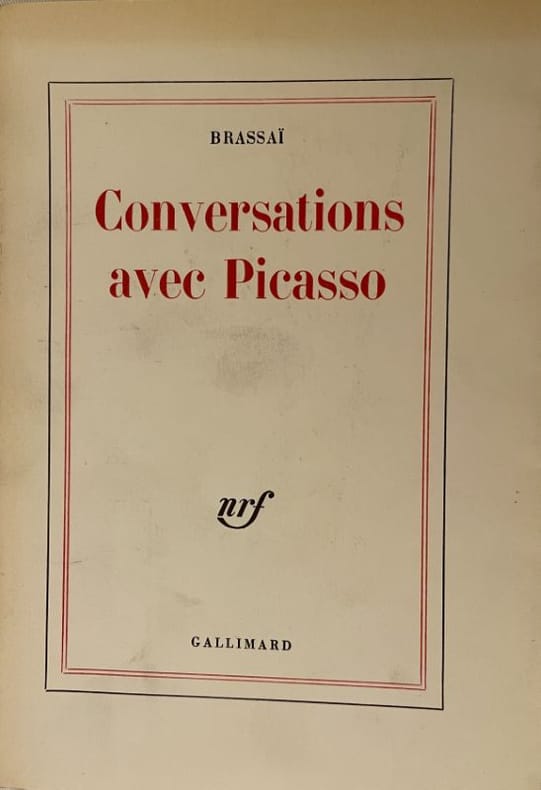
1960réf. 11Stuttgart: Chr. Belser Verlag 1960. First Edition First Printing. Fine/Near fine. Quarto 11 1/8 x 9 in. 283 x 229 mm; pp. 47 text 2 conversations with Picasso printed on brown laid paper in black ink ; 105 full-page reproductions of b/w photos divided into 9 chapters. Black-stamped white clothfine prior owner's name in ink on half-title page. Photo-pictorial dust jacket near fine minor wear along the edges crease to inner front flap. This is the first printing of the book and preceded the more commonly available French edition of 1961 Editions du Temps. Chr. Belser Verlag unknown
1976réf. 142641976. Brassaï Gyula Halász. Letter discussing the publication of The Secret Paris of the Thirties written by the Hungarian born photographer whose images of Paris nightlife helped define twentieth century documentary photography. Brassaï gained international recognition through his photographs of nocturnal Paris produced during the early 1930s images that documented the city's bars cabarets streets and marginalized social spaces with unusual candor and atmospheric lighting. His 1933 book Paris de Nuit established his reputation and led writer Henry Miller to describe him as "the eye of Paris." This 1976 letter was written during the release of The Secret Paris of the Thirties a publication that expanded the photographic record of Parisian nightlife by presenting images from the same early period that had remained unpublished or excluded from earlier editions. Brassaï Gyula Halász. Typed Letter Signed "Brassai". Paris September 9 1976. One page on personal stationery measuring approximately 11 3/4 x 8 1/4 inches. Writing in French Brassaï discusses the simultaneous publication of his new photography book and his upcoming exhibition in New York. In the letter he notes: "My book the Secret Paris of the Thirties Pantheon Books is due out at the same time." He continues by mentioning travel plans connected with the exhibition writing that he will be in New York from September 12 to September 28 in order to attend the opening of his show at the Marlborough Gallery. Brassaï also remarks on the date of the letter noting that it coincides with his seventy seventh birthday. The letter is signed in large purple marker "Brassai" with an underline and includes a handwritten postscript in green marker reading "venir nous soutenir" translated as "come support us." The Secret Paris of the Thirties published in 1976 more than four decades after the photographs were first taken completed Brassaï's long project of documenting the hidden nightlife of interwar Paris. Many of the photographs originated from the same period as those reproduced in Paris de Nuit but had remained unpublished because they were considered too provocative for earlier editions. The images depict bars nightclubs one night hotels bordellos and other locations associated with the city's nocturnal culture. Brassaï later wrote of his motivation for photographing the city at night: "I was inspired to become a photographer by my desire to translate all things that enchanted me in the nocturnal Paris I was experiencing." The Marlborough Gallery exhibition in New York was organized in conjunction with the publication of the book and introduced many of these photographs to a wider audience for the first time. Folded twice through the center as mailed; otherwise clean and well preserved. Overall very good condition. A content rich letter documenting the publication and exhibition history of one of Brassaï's most significant photographic projects. unknown
1976réf. 142641976. Brassaï Gyula Halász. Letter discussing the publication of The Secret Paris of the Thirties written by the Hungarian born photographer whose images of Paris nightlife helped define twentieth century documentary photography. Brassaï gained international recognition through his photographs of nocturnal Paris produced during the early 1930s images that documented the city's bars cabarets streets and marginalized social spaces with unusual candor and atmospheric lighting. His 1933 book Paris de Nuit established his reputation and led writer Henry Miller to describe him as "the eye of Paris." This 1976 letter was written during the release of The Secret Paris of the Thirties a publication that expanded the photographic record of Parisian nightlife by presenting images from the same early period that had remained unpublished or excluded from earlier editions. Brassaï Gyula Halász. Typed Letter Signed "Brassai". Paris September 9 1976. One page on personal stationery measuring approximately 11 3/4 x 8 1/4 inches. Writing in French Brassaï discusses the simultaneous publication of his new photography book and his upcoming exhibition in New York. In the letter he notes: "My book the Secret Paris of the Thirties Pantheon Books is due out at the same time." He continues by mentioning travel plans connected with the exhibition writing that he will be in New York from September 12 to September 28 in order to attend the opening of his show at the Marlborough Gallery. Brassaï also remarks on the date of the letter noting that it coincides with his seventy seventh birthday. The letter is signed in large purple marker "Brassai" with an underline and includes a handwritten postscript in green marker reading "venir nous soutenir" translated as "come support us." The Secret Paris of the Thirties published in 1976 more than four decades after the photographs were first taken completed Brassaï's long project of documenting the hidden nightlife of interwar Paris. Many of the photographs originated from the same period as those reproduced in Paris de Nuit but had remained unpublished because they were considered too provocative for earlier editions. The images depict bars nightclubs one night hotels bordellos and other locations associated with the city's nocturnal culture. Brassaï later wrote of his motivation for photographing the city at night: "I was inspired to become a photographer by my desire to translate all things that enchanted me in the nocturnal Paris I was experiencing." The Marlborough Gallery exhibition in New York was organized in conjunction with the publication of the book and introduced many of these photographs to a wider audience for the first time. Folded twice through the center as mailed; otherwise clean and well preserved. Overall very good condition. A content rich letter documenting the publication and exhibition history of one of Brassaï's most significant photographic projects. unknown books
réf. 44520Editions du Point du Jour.1949.In-12 carré broché.90 p.Ex.n°793.Dédicace de Brassai datée du 10 Juillet 1952.Introduction de H.Miller. Bon état.
1961réf. 190447Paris: Les Éditions Du Temps 1960 1961. First French Edition. Hardback. Fine cloth copy in a near-fine very slightly edge-nicked and dust-dulled dw now mylar-sleeved. Remains particularly and surprisingly well-preserved overall; tight bright clean and strong. Copy has previous owner's minor pen inscription to FFEP. ; 8vo 8"" - 9"" tall; 43 pages; Physical desc.: 43 p. 105 plates ; 29 cm. Subject: Sculpture -- Figures -- Masks -- Faces -- Etchings. Language: French Paris: Les Éditions Du Temps (1960) hardcover
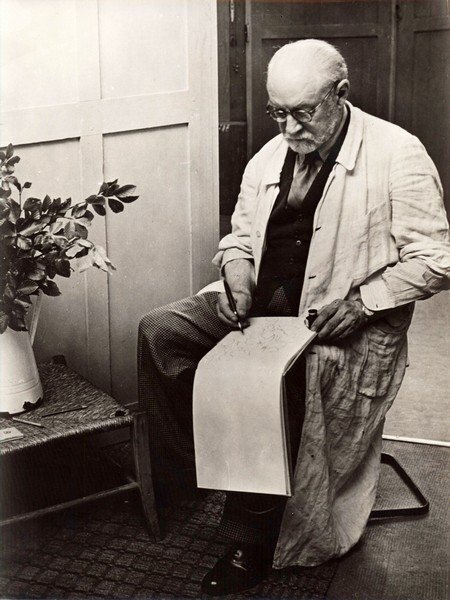
1943réf. 14361943-1944. UNE IMPORTANTE DOCUMENTATION SUR MATISSE
1952réf. 8277Paris, Revue Neuf, 1952. In-4 de [84]pages, pleine toile rouge, premier plat orné d'un portrait au trois quart de Brassaï, dos passé, coiffe supérieure à peine frottée.
1976réf. D16946New York: Pantheon 1976. First American Edition. Hardcover. Near Fine/Very Good. A visual and textual portrait of the debauched underbelly of Paris in the 1930's with photographs and accompanying stories and anecdotes by Brassai. Organized into chapters from "The Urinals of Paris" to "Ladies of the Evening." Inscribed in French by Brassai in the year of publication to Grace Meyer former head of MOMA. A very nice association. With an invitation addressed to Meyer to the show for the book held at Marlborough Gallery in NYC. Nice copy of the book. Tear to top of DJ spine. "This is a stunning view of the forbidden Paris of the thirties its brothels its whores its pimps its opium dens the sordid yet fascinating world where high society mingled with the underworld." Pantheon hardcover
1976réf. D16946New York: Pantheon 1976. First American Edition. Hardcover. Near Fine/Very Good. A visual and textual portrait of the debauched underbelly of Paris in the 1930's with photographs and accompanying stories and anecdotes by Brassai. Organized into chapters from "The Urinals of Paris" to "Ladies of the Evening." Inscribed in French by Brassai in the year of publication to Grace Meyer former head of MOMA. A very nice association. With an invitation addressed to Meyer to the show for the book held at Marlborough Gallery in NYC. Nice copy of the book. Tear to top of DJ spine. "This is a stunning view of the forbidden Paris of the thirties its brothels its whores its pimps its opium dens the sordid yet fascinating world where high society mingled with the underworld." Pantheon hardcover books
1980réf. 001194Bukarest: Kriterion Konyvkiado 1980. Book. Near Fine. Hardcover. Signed by Authors. 1st Edition. 8vo. Original boards in illustrated dust jacket. 182 pages of tekst 56 pages with 59 black and white photographs. Text misprinted on some pages. Dustjacket with light handling wear. Boldly SIGNED on the title page by Brassai. No other marks or inscriptions. Kriterion Konyvkiado Hardcover
1964réf. 100944Paris Gallimard 1964 1 206x142mm In-12, 206x142mm, 338 p. et 53 photographies hors texte, broché. Edition originale, un des 45 sur vélin pur fil Lafuma (n°17), seul grand papier. Léger brunissement en partie haute de la couverture.
réf. 616853Les Editions Du Point Du Jour Paris 1949 In-12 carré ( 165 X 130 mm ) de 92 pages, broché. Edition originale. Tirage limité à 2600 exemplaires. Un des 126 premiers exemplaires ( N°3 ) sur Alfa, les seuls à comporter l'eau-forte originale signée par BRASSAÏ. Très bel exemplaire.
1961réf. 31716Les éditions du temps Jaquette en état satisfaisant Couverture rigide Paris 1961
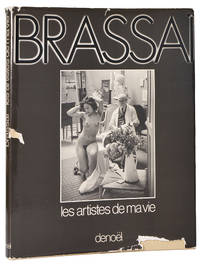
réf. 104609Paris Denoël 1982. . First French edition; 4to; 38 black & white photographic illustrations slightly shaken; publisher's cloth pictorial dust jacket nicked along the edges torn with some loss on the top edge at the rear lower edge at the front small chip to the spine. A presentation copy inscribed in ink on the half title page 'Pour notre chere Juliette en toute amitie Brassai Paris. le 4 decembre 1982' Paris, Denoël, 1982. hardcover
1949réf. 84586Les éditions du point du jour | Paris 1949 | 12.90 x 16.50 cm | broché
1951réf. 80254Gallimard | Paris 1951 | 11 x 16.50 cm | broché
réf. EXE-301Paris, Maeght, 1964. In-folio, en feuilles, couverture illustrée d'une lithographie. Illustré de de nombreuses lithographies originales par les plus grands artistes du XXème siècle.
1960réf. 100285Stuttgart Belser Verlag 1960 285x233mm, 48p., 105 planches photographiques, pleine toile blanche, titre sur le plate et au dos, jaquette photographique, étui d'éditeur marqué « Brassai » au tampon. Avec un texte de Picasso sur l'art du graffiti traduit en allemand par Karl Balser L'intérêt de Brassaï pour les graffiti se manifeste dès les années 30 avec leur publication dans la revue surréaliste « Minotaure »; ce livre est publié à l'occasion d'une exposition présentée à New York, London, Milan, Baden-Baden, Frankfurt, Hannover, and Paris. L'approche est influencée par le surréalisme et l'art brut. Edition originale parue avant l'édition française de 1961, texte en allemand. Bel exemplaire complet de son étui. (100285)
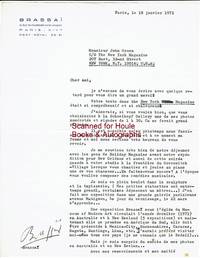
1972réf. 604522"Brassai" boldly penned in black ink on his engraved Brassai 81 Rue du Faubourg Saint Jacques Paris letterhead January 18 1972. 8 1/4" x 10 3/4"; 1 page recto only. To Monsieur John Gruen c/o The New York Magazine 207 East 32nd Street New York N.Y. 10016 U.S.A. In part: ". . . Please forgive me for taking so long for thanking you . . . Your article in New York Magazine was so understanding and friendly! . . . If you would like to I would like you to choose one of my photographs those that are signed and numbered from 1 to 30 at the Schoelkopf Gallery. It would truly make me very happy . . . I am working very hard on tapestries and sculptures . . . They will be in a show in a large Parisian gallery avenue Matignon. Opening day 22 March is approaching . . . A Brassai show . . . last year to Australia and New Zealand . . . South America . . . Mexico City Buenos Aires . . . I am surprised at the success of my photographs . . . With gratitude and friendship . . ."
1972réf. 604522"Brassai" boldly penned in black ink on his engraved Brassai 81 Rue du Faubourg Saint Jacques Paris letterhead January 18 1972. 8 1/4" x 10 3/4"; 1 page recto only. To Monsieur John Gruen c/o The New York Magazine 207 East 32nd Street New York N.Y. 10016 U.S.A. In part: ". . . Please forgive me for taking so long for thanking you . . . Your article in New York Magazine was so understanding and friendly! . . . If you would like to I would like you to choose one of my photographs those that are signed and numbered from 1 to 30 at the Schoelkopf Gallery. It would truly make me very happy . . . I am working very hard on tapestries and sculptures . . . They will be in a show in a large Parisian gallery avenue Matignon. Opening day 22 March is approaching . . . A Brassai show . . . last year to Australia and New Zealand . . . South America . . . Mexico City Buenos Aires . . . I am surprised at the success of my photographs . . . With gratitude and friendship . . ." books
1934réf. 55114Paris-Publications 1934. Softcover. Previous owner’s signature inside front cover. As is nearly always the case with this book the plastic or Bakelite rings that once held the book together are lacking having apparently broken they must have been quite fragile and so the covers and the pages are entirely disbound. However this copy differs from most others in being more complete: it has 2 pages of text and 46 pages of images. Most copies have either 38 or 44 pages of images. This is said to be the result of censorship; since the pages are unnumbered and there is no list of the images the removal of one or more leaves would not be noticeable. Or it may be the result of there not having been an equal number of good copies of each leaf when the book was assembled. In any case this is except for the binding rings the most complete and probably earliest state of this scarce volume. Some remnants of celotape on the covers probably from an attempt to compensate for the missing binding rings. Credit to Brassia inside back cover and price 40 francs on back cover. . 48p. Paris-Publications, [ paperback