Nadar (Photogr)Biblio.com

918 resultados
ref. 41878Paris 1877. 2° 1 Doppelbl. m. montierter Orig.-Photogr. 12.5 x 8.5 cm a. erster Seite Im Falz tlw. durchgerieben etw. randrissig u. -knittrig die Photogr. tadellos. Mit der «Camée artistique» zu der Opernsängerin «Mlle. Sablairolles» - diese auch auf der Photographie bezeichnet mit «Cliché Nadar». Text frz. 010 Paris, 1877 unknown
ref. 41879Paris 1877. 2° 1 Doppelbl. m. montierter Orig.-Photogr. 12.5 x 8.5 cm a. erster Seite Im Falz tlw. durchgerieben etw. randrissig u. -knittrig m. kleinen Verlusten die Photogr. tadellos. Mit der «Camée artistique» zur Theaterschauspielerin Jane Hading - diese auch auf der Photographie bezeichnet mit «Cliché Nadar». Text frz. 010 Paris, 1877 unknown
1995ref. 001587Harry N Abrams 1995. Soft cover. Near Fine/No Jacket issued. Minor shelf wear. Harry N Abrams paperback
ref. 29520798-nnew. unknown
ref. 29711445like new. unknown
1997ref. BN81354Trinckvel 1997. 1997. Paris Sens Dessus-Dessous. Marville et Nadar Photographies 1852-1870 Trinckvel unknown
2021ref. BN92059Regnum Books International 2021. 2021. Ecumenical Encounters with Desmond Mpilo Tutu Ecumenical Encounters with Desmond Mpilo Tutu Maluleke Nadar Werner Kgabe Hinz Sarojini Tinyiko Dietrich Vicentia Rudolf Regnum Books International unknown
ref. 44342438like new. unknown
1880ref. 47201Paris: E. Dentu Libraire de la Societe des Gens de Lettres 1880. Very Good-. Paris: E. Dentu Editeur Libraire de la Societe des Gens de Lettres 1880. First Edition. 12mo 18cm; publisher's pictorial wrappers; viii308pp. Moderate soil chipping and wear to wrapper margins spine cracked with evidence of glue repair interior clean and sound. About Very Good overall. Inscribed and signed on half title page "a mon brave et bon Schemborgh mon camarade De la Legion 1848 / mon excellent ami depuis 1880 / Nadar." A collection of impressionistic vignettes by the famed French photographer and air balloonist. The title references the fictitious and absurdist creature the Coquecigrue first coined by Rabelais in his novel "Pantagruel. E. Dentu, Libraire de la Societe des Gens de Lettres unknown
1995ref. 213011New York: The Metropolitan Museum of Art 1995. Hardcover. 272 pages. Published in conjunction with a show that was held at the Musee d'Orsay in Paris that ran June 7 through September 11 1994 and then at The Metropolitan Museum of Art for a run of April 14 through July 9 1995. Text by Maria Morris Hambourg Francois Heilbrun and Philippe Neagu and with additional contributions by Sylvia Aubenas Andre Jammes Ulrich Keller Sophie Rochard and Andre Rouille. Includes 98 plates and 103 figures. A fine copy in a fine dust jacket. As new and still in the publisher's shrinkwrap. The Metropolitan Museum of Art unknown
1884ref. 353598Paris: Nadar 51 rue d'Anjou 1884. Half length portrait with hands at waist right hand on an ornamental belt. 1 vols. 13-1/2 x 7-1/2 inches. On black card mount lettered in gilt at foot and on verso. Old gilt frame by Walker Gallery Westport Conn. Half length portrait with hands at waist right hand on an ornamental belt. 1 vols. 13-1/2 x 7-1/2 inches. Attractive portrait of the young Sarah Bernhardt inscribed above her head. The most logical candidate for "Mademoiselle Moore" would seem Eva Moore 1870-1965 who had a long stage career and from 1920 made many films. She was quite well known married to actor-manager H. V. Edmond. Theater critic and translator Michael Feingold 1945-2022 knew Eva Le Gallienne 1899-1901 when he was a student a Yale. Provenance: Eva Le Gallienne; Michael Feingold Nadar, 51 rue d'Anjou unknown
2008ref. BN24178Kerber Christof Verlag 2008. 2008. Hardcover. 288 x 244 x 32 cm. Die Kunstsammlungen Chemnitz besitzen eine der umfangreichsten grafischen Sammlungen des französischen Künstlers Honoré Daumier 18081879 außerhalb Frankreichs. Aus Anlass des 200jährigen Geburtstages Daumiers 2008 wird in diesem Katalog ein Teil dieses Sammlungsschatzes präsentiert. Die gezeigten Serien die im Zeitraum von 1837 bis 1850 für die Pariser Satirezeitschrift `Le Charivari´ entstanden bilden dabei einen besonderen und seltenen Höhepunkt. Daneben werden weitere Arbeiten Daumiers präsentiert darunter kolorierte Einzelblätter. Mit Arbeiten der zwei bedeutenden französischen Karikaturzeichner Jean Cabu und Philippe Mougey wird zudem der Ausblick in die zeitgenössische französische Karikaturszene eröffnet und der Verweis auf die ungebrochene Modernität Daumiers bekräftigt. Autor: Karin Sagner hat Kunstgeschichte und Germanistik in München sowie in Paris studiert und über Claude Monet promoviert. Zunächst war sie als wissenschaftliche Mitarbeiterin an den Bayerischen Staatsgemäldesammlungen in München tätig; heute arbeitet sie als freie Autorin und Kuratorin. Über ihr Spezialgebiet die französische und deutsche Kunst des 19. und 20. Jahrhunderts hat sie mehrere Bücher publiziert darunter den Bestseller "Claude Monet. Ein Fest für die Augen" sowie die 2009 erschienene erste deutsche Monografie über Gustave Caillebotte. Als freie Kuratorin arbeitet sie für diverse Museen und Kunsthäuser. Die Kunstsammlungen Chemnitz besitzen eine der umfangreichsten grafischen Sammlungen des französischen Künstlers Honoré Daumier 18081879 außerhalb Frankreichs. Aus Anlass des 200jährigen Geburtstages Daumiers 2008 wird in diesem Katalog ein Teil dieses Sammlungsschatzes präsentiert. Die gezeigten Serien die im Zeitraum von 1837 bis 1850 für die Pariser Satirezeitschrift `Le Charivari´ entstanden bilden dabei einen besonderen und seltenen Höhepunkt. Daneben werden weitere Arbeiten Daumiers präsentiert darunter kolorierte Einzelblätter. Mit Arbeiten der zwei bedeutenden französischen Karikaturzeichner Jean Cabu und Philippe Mougey wird zudem der Ausblick in die zeitgenössische französische Karikaturszene eröffnet und der Verweis auf die ungebrochene Modernität Daumiers bekräftigt. Autor: Karin Sagner hat Kunstgeschichte und Germanistik in München sowie in Paris studiert und über Claude Monet promoviert. Zunächst war sie als wissenschaftliche Mitarbeiterin an den Bayerischen Staatsgemäldesammlungen in München tätig; heute arbeitet sie als freie Autorin und Kuratorin. Über ihr Spezialgebiet die französische und deutsche Kunst des 19. und 20. Jahrhunderts hat sie mehrere Bücher publiziert darunter den Bestseller "Claude Monet. Ein Fest für die Augen" sowie die 2009 erschienene erste deutsche Monografie über Gustave Caillebotte. Als freie Kuratorin arbeitet sie für diverse Museen und Kunsthäuser. Kerber Christof Verlag hardcover
ref. 29711445-nnew. unknown
ref. 44342438-nnew. unknown
ref. ria9780983908838_inpHardcover. New. New Book; Fast Shipping from UK; Not signed; Not First Edition; A bilingual book about a lonely goat looking for a friend to play with. At the end of the story the goat meets a girl and becomes her pet. A grammar glossary and pronunciation guide are included in the print book. Children can use this hardcover
ref. 44203334like new. unknown
ref. DADAX0262025329New unknown
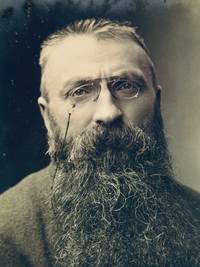
1891ref. 92258Paris: Paul Nadar 1891. Fine. Paul Nadar Paris s. d. 1891 11 x 16.5 cm format carte de cabinet Original albumen print photograph of Auguste Rodin cabinet card format mounted on stiff card. Nadar's signature in red in the lower margin. Advertisements in red on the verso. A small white area in the upper left margin with a few imperfections from the glass plate in the same area not affecting the portrait. Foxing to the margins. Iconic portrait of the sculptor with close-cropped hair and pince-nez staring fixedly into the lens. This snapshot gathers every hallmark of the celebrated ""style Nadar"" whose stark unadorned clarity establishes his gallery of portraits as one of the most compelling of the nineteenth century. The Nadar collection at the Bibliothèque nationale de France holds the few surviving trial prints of the Rodin portraits the present portrait appears under number 9115 B of volume 39. Rodin appears to have sat for the photographer only once on which occasion four exposures were taken in total. The sitting is usually dated to 1891 by which time Félix Nadar had retired from active business to devote himself to his aeronautical projects though he is known to have continued sporadically producing portraits of established artists and literary figures. This is far removed from the ""commercial"" style often attributed to his son Paul who took over the running of the studio in 1886. This ""spartiate"" approach to use Ulrich Keller's expression corresponds far more closely to Félix's own manner. The Musée Rodin which holds a print of this portrait attributes the negative to him: a letter from Rodin sent to the Ermitage de Sénart where Félix was then residing confirms this attribution: ""et puis des remerciements encore pour autres choses des portraits de votre serviteur"" lettre du 18 septembre 1892. The present print dates from the late 1920s as indicated by the studio stamp the studio then being located in the former Léon Bonnat atelier at 48 rue Bassano. In reference to Félix's earlier profession the stamp on the print reads ""Panthéon Nadar"" after the celebrated gallery of hundreds of celebrity caricatures assembled into a panoramic composition the first sheet of which Nadar published in 1854. He had planned to issue four lithographed sheets each presenting a serpentine procession of a thousand figures drawn from the ranks of noted ""gens de lettres auteurs dramatiques peintres et sculpteurs musiciens."" It was this aborted titanic undertaking that turned him toward photography in which he would become one of the most gifted practitioners of the nineteenth century. Sculptor and photographer also collaborated during this same period on a major undertaking: when Rodin received the commission for a monument to Balzac in 1891 Nadar placed his entire archive at his disposal: most notably the sole surviving daguerreotype portrait of Balzac taken by Bisson in 1842 which the sculptor regarded as the ""seule effigie fidèle et vraiment ressemblante de l'écrivain."" The letter quoted above bears witness to a further project as well for a Baudelaire portrait. A superb portrait of the master of sculpture by the master of nineteenth-century photography. Paul Nadar unknown
1888ref. 92029Paris: Paul Nadar 1888. Fine. Paul Nadar Paris s. d. 1888 - 1900 11 x 16.4 cm une photographie Paris Nadar studio negative circa 1888 print circa 1900-1924. Cabinet-card photograph. Albumen print mounted on the Nadar studio card. Maupassant is shown bust-length in left profile. The mount bears the printed name ""P. Nadar"" at the head and the studio signature printed in red in the lower margin. The verso gives the addresses 51 rue d'Anjou and 53 rue des Mathurins together with Paul Nadar's distinctions at the 1900 Exposition Universelle: hors concours member of the jury Class XII. These details make it possible to distinguish clearly between the date of the sitting and that of the present print. The negative is generally dated to 1888 although 1890 has also been proposed whereas the mount cannot predate the 1900 Exposition Universelle. The present photograph is therefore a later print made by the studio from an earlier negative probably between 1900 and the transfer of the rue d'Anjou premises in 1924. Paul Nadar who had worked full-time in the studio from 1876 had assumed its artistic direction by 1880 and thereafter signed most of its portraits. A label mounted on the verso reads: ""Gaston Bernard / 174 rue de Rivoli / Paris / Estampes"" recording the photograph's passage through this Paris establishment. At least two closely related poses of Maupassant from this sitting are known one showing his right profile and the other his left as here. In the latter the face turned almost entirely away from the viewer together with the moustache and sharply defined line of forehead and nose creates an immediately recognisable silhouette. The image was to become one of the writer's most familiar photographic portraits. The paradox is particularly striking since Maupassant consistently resisted the public dissemination of his likeness. He had little taste for the construction of a public image of the writer and explicitly protested against the reproduction of his portraits. Octave Uzanne who had known him personally reproduced in 1902 an autograph note in which Maupassant expressed his position unequivocally: ""I have made it an absolute rule never to allow my portrait to be published whenever I can prevent it. The exceptions have occurred only by surprise. Our works belong to the public but not our faces."" This reluctance partly accounts for the relative scarcity of his photographic iconography. Less than a decade after Maupassant's death Uzanne already observed that authentic likenesses of the writer consisted essentially of a small number of photographs taken full-face in profile or three-quarter view. He singled out the portrait of 1888 as the one in which he most readily recognised his lost friend: the Maupassant of Le Horla and Sur l'eau then at the height of his literary fame. The photograph belongs precisely to this period. Pierre et Jean and Sur l'eau appeared in 1888 while Bel-Ami published three years earlier had already established Maupassant before a wide readership. The Nadar profile thus fixes the writer at the moment when his face might naturally have become that of a literary celebrity precisely when he was attempting to prevent such a transformation. The present print is all the more revealing for having been produced after his death. The negative retained by the studio continued to be used after 1900 on a mount now advertising Paul Nadar's latest distinctions. The image Maupassant had wished to withhold from public curiosity survived him and entered the commercial repertoire of a photographic house celebrated for its portraits of prominent figures. A photographic sitting had gradually become an icon. A rare cabinet-card portrait of Maupassant printed after 1900 from a negative made circa 1888 by the Nadar studio. Of the writer who insisted that ""our works belong to the public but not our faces"" this photograph was destined to preserve one of the most recognisable faces of all. Â Paul Nadar unknown
1856ref. 84662Paris: Nadar 1856. Fine. Nadar Paris 1856 6.50 x 10.50 cm une feuille Original photographic portrait of Alfred de Vigny seated in profile in a velvet armchair mounted at an early date on stiff grey card. The poet sits with his arms folded his gaze directed beyond the frame holding a propelling pencil in his right hand. Early manuscript caption in ink along the lower margin of the mount Le C.te Alfred de Vigny with NADAR inscribed in capitals in the right margin. From a collector's album. Small area of superficial loss to the mount in the foreground beneath the sitter's hand. The composition belongs to Nadar's earliest sittings with Vigny. The Musée d'Orsay preserves among others a portrait dated circa 1854 showing the writer in a closely related pose seated in profile against a deliberately spare background; the same iconography was subsequently circulated in different formats. By the mid-1850s Alfred de Vigny had long been one of the major figures of French Romanticism while his presence in literary and social life had become increasingly discreet. He was still working on the philosophical poems that would be collected posthumously as Les Destinées. Nadar's portrait appears particularly consonant with the image the ageing writer fashioned of himself: no theatrical setting scarcely an accessory only the controlled rigidity of the pose the sharply defined profile and the gaze directed into the distance. The propelling pencil held in his right hand provides the composition's only explicit allusion to his vocation as a writer. Yet the attitude is less that of an author caught at work than of a man consciously constructing his own likeness: the folded arms close the silhouette while the profile removes his gaze from that of the viewer. In this economy of means the portrait closely accords with the reserve distance and self-command that had become central to Vigny's public persona. A small insignia appears at his collar probably the rosette of the Légion d'honneur. Vigny a Chevalier since 1833 was promoted to Officer in 1856; the detail is therefore consistent with a date in the middle of the decade. Nadar himself was then entering the most inventive period of his photographic career. Working from his rue Saint-Lazare studio he increasingly dispensed with the elaborate props and settings still common in commercial portraiture concentrating instead upon physiognomy posture and the presence of the sitter. Vigny thus belongs to the first generation of writers whose likenesses he fixed at the moment when photography was beginning permanently to shape the public image of literary figures. With its severe pose and extreme economy of setting this portrait closely accords with the late image Vigny sought to leave of himself; made during Nadar's formative years as a photographer it brings together the almost hieratic self-fashioning of the writer and one of the foundational moments of French literary portrait photography. Nadar unknown
1878ref. 82671Paris: Nadar 1878. Fine. Nadar Paris 1878 6 x 10.50 cm une photographie Original albumen photograph of Jules Verne in profile in carte-de-visite format mounted on the heavy card stock of the Nadar studio 51 rue d'Anjou-Saint-Honoré Paris. Early pen inscription on the verso identifying Jules Verne printed advertising matter for the studio including the statement Gold Medal Universal Exhibition 1878 and blue stamp J. Kuhn Paris. Card with rounded corners; very slight wear to one corner otherwise without significant defect. The Nadar mount whose advertising records the gold medal awarded at the 1878 Universal Exhibition establishes a date after 1878 for this print. The Bibliothèque nationale de France preserves several portraits of Jules Verne in the studio's reference albums catalogued under numbers 3436 and 3437 and broadly dated between 1875 and 1895. Jules Verne and Nadar had known one another since the early 1860s when the photographer embarked upon his celebrated campaign in support of heavier-than-air flight. When Nadar founded the Société d'encouragement de la navigation aérienne au moyen du plus lourd que l'air in 1863 Verne was among the dozen or so figures associated with it; a surviving sheet of the Society's letterhead in the Jules Verne collections at Nantes expressly lists him among its censors. In the same year Verne published Nadar the Aeronaut in the Musée des Familles while Nadar constructed the Géant the enormous balloon whose first ascent took place that October. Their association soon passed from aeronautics into fiction. In From the Earth to the Moon published in 1865 Verne gave the French adventurer Michel Ardan a surname formed as an anagram of Nadar; the character would return in Around the Moon. His physical description extends the tribute by borrowing several traits from the photographer's famously exuberant personality: He was a man of forty-two tall though already somewhat stooped like those caryatids that bear balconies upon their shoulders. His powerful head a veritable lion's mask would from time to time toss a mass of fiery hair that formed a true mane. By the rearrangement of a few letters Verne's aeronaut friend had entered the world of the Voyages extraordinaires. By the time this carte de visite was printed after 1878 Verne was already the author of Around the World in Eighty Days Michael Strogoff Hector Servadac and The Fifteen-Year-Old Captain; Nadar whose name had become that of a Verne hero thirteen years earlier now fixed the writer's own likeness. This portrait thus brings together within a single object the personal and intellectual relationship between two men brought close by the aeronautical experiments of the 1860s: the Nadar studio here photographs the writer who in the figure of Michel Ardan had already brought his friend into fiction. Nadar unknown
ref. A9781630570958Paperback / softback. New. paperback
1877ref. 76745Paris: Georges Decaux 1877. Fine. Georges Decaux Paris s. d. 1877 11.50 x 18.50 cm relié First edition. Contemporary half bottle-green shagreen binding spine with five raised bands set with gilt fleurons some minor rubbing to spine without gravity marbled paper boards endpapers and pastedowns of pebbled paper contemporary binding. Some minor foxing without gravity a pencil library shelf mark on one endpaper. Autograph inscription dated and signed by Nadar: ""A M. Bertrand de main amie. Nadar. Nov"". Georges Decaux hardcover
1880ref. 73633Paris: Nadar 1880. Fine. Nadar Paris 1880 10.70 x 16.60 cm une photographie Original albumen photograph in cabinet card format mounted on cardboard. At the bottom of the photograph: Aimé dupont 574 fifth Avenue New-York. Portrait of the actress taken in New-York during the great American tour of 1880-1881 256 performances in 50 cities. Sarah Bernhardt poses in elegant Parisian attire her gaze turned skyward. Signed in the plate: Copyright by A. Dupont. Good overall condition one dark stain on the right of the photograph near the margin. Aimé Dupont was a Belgian photographer first active in Brussels then in Paris. He settled in New-York with his American wife Etta Greer herself a photographer. Already in Paris the photographer had specialized in photographs of actors and singers from the Opera and he renewed this specialty for the New-York opera and all the French artists who came to the USA. It is therefore not surprising that Sarah Bernhardt visited his studio to create a recent photograph dedicated to her American tour. Nadar unknown
ref. 00236905Paris Plon Freres/Philipon Fils n.a. No binding. Good. Loose episodes as issued. Present are no 2 cover missing 3 4 5 6 7 8 9 13 14 16 17 18 20 21 22 23 24 26 27 28 29 30 31 32 33 34 35 36 38 39 40 43 44 45 47 50 51 52 53 54 55 56 57 63 64 66 69 71 72 73 74 75 76 77 78 80 82 back cover missing 83 84; All episodes worn some with loose cover. No 2. Cover missing; no. 82 back cover missing; no. 84 loose pages unclear how it should be. Paris, Plon Freres/Philipon Fils unknown