NADAR (Félix Tournachon, dit).Livre Rare Book

852 résultats
1877réf. 144661877 P., Michel Lévy Frères, 1858, 1 vol. in-12 (183 x 117 mm), reliure de l'époque en 1/2 chagrin rouge à coins, dos à 5 nerfs, caissons ornés, doubles filets dorés bordant les plats de papier marbré, gardes et contreplats de papier peigné, tête dorée, de (2) ff. (faux-titre et titre) 281 pp. (1) p. (table).Dos légèrement insolé, mors et coupes inférieures frottés, coins légèrement émoussés, très pâles rousseurs éparses, bon exemplaire par ailleurs.
réf. 9782742717972Babel
1989réf. 22893Paris Jean De Bonnot 1989 In-8 254 pp et enrichie de 95 ff de reproductions de portraits photographiques de Nadar
réf. 121577Paris, Jean de Bonnot 1989, 215x140mm, X - 253pages, reliure d'éditeur. Dos ornementations dorés, plats ornés à froid, tranche supérieure dorée. Exemplaire à l'état de neuf.
réf. Z17757MRELIURE NOIRE ESTAMPAGE DORE 1989
1989réf. 125186Jean de Bonnot 1989 In-8 reliure éditeur pleine peau noire, dos lisse et plats ornés, tête dorée. 21 cm sur 15. Edition originale de Jean de Bonnot. Impression sur papier vergé filigrané à la forme. Reliure en cuir véritable de mouton, finissage à la main. L’or utilisé est titré 22 carats. 253 pages. Très bon état d’occasion.
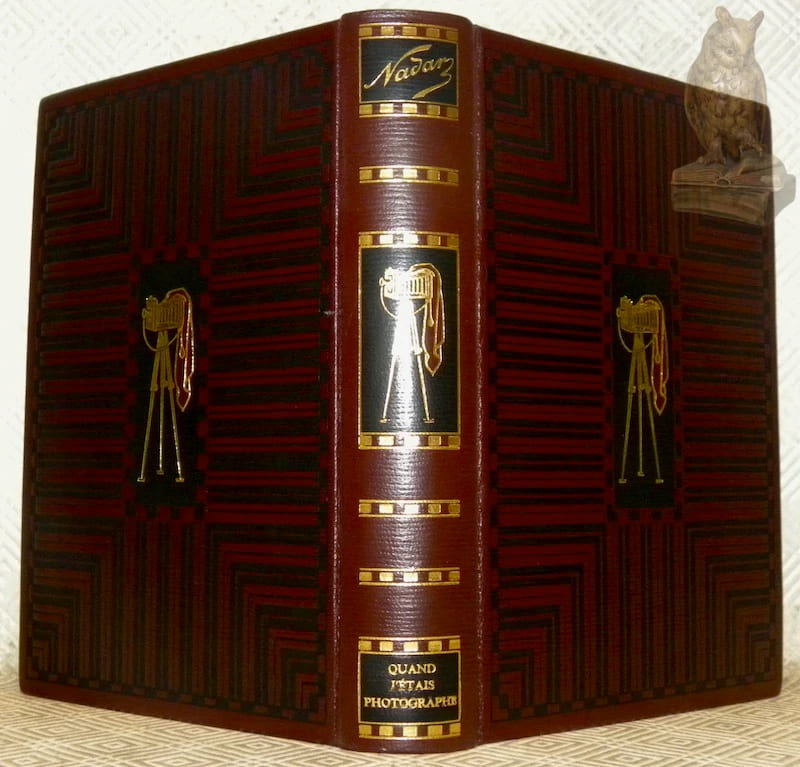
1989réf. 132179à Paris, chez Jean de Bonnot 1989 In-8 21 x 13,5 cm. Reliure éditeur pleine basane grenat, dos orné et plats estampés de filets noirs, tête dorée, 253 pp., 113 planches hors-texte, table des matières. Exemplaire en très bon état.
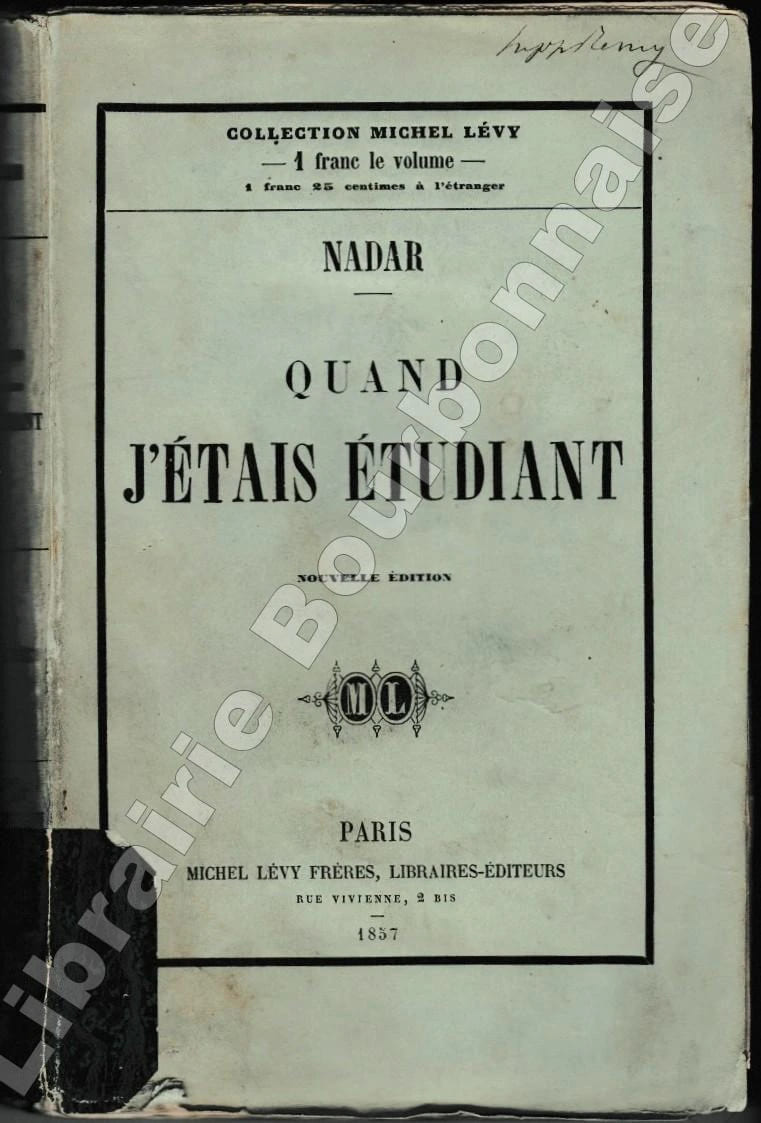
réf. 15553P., Michel Lévy Frères, 1857 ; in-12, broché. 3 ff. (faux-titre, titre, dédicace à George Sand)-281 pp. Couverture défraîchie, renfort de papier bleu en queue. Non rogné. exemplaire modeste mais sans rousseurs.
1857réf. 40580Michel Lévy | Paris 1857 | 11.50 x 18 cm | relié
1989réf. 45529Paris, Jean de Bonnot, 1989, in-8, reliure plein cuir, tranche dorée, np Très bon état. Tirage spécial. Exemplaire de tête. Nbr. photographies.
1989réf. ROD0100063JEAN DE BONNOT. 1989. In-8. Relié plein cuir. Bon état, Couv. convenable, Dos satisfaisant, Intérieur frais. 253 pages suivies d'environ 100 planches successives de photos en noir et blanc de l'auteur - frontispice en noir et blanc - signet conservé - plats décorés d'un appareil photo ancien doré - dos orné de frises dorées façon pellicules - titre et auteur dorés au dos- tranches dorées - 2 PHOTOS DISPONIBLES.. . . . Classification Dewey : 770-Photographie
réf. LRB901Éditions d'Aujourd'hui Collection : Les IntrouvablesDate d'édition : 1979 — Édition : Réimpression conforme à l'édition originale Flammarion ; 1er tirage — Tirage : 400 exemplaires — Impression : Offset par l'Imprimerie de Provence, Plan-de-la-Tour — Reliure : Broché, couverture souple grise imprimée — Langue : Français — État : Bon état - dos légèrement bruni, intérieur propre
réf. 4628a la librarie universelle de Joubert passage du saumon et chez l'auteur Juin 1857 - In8 broché LXXIV-205 pages - édition originale - couverture avec défauts d'usage, mouillures mais exemplaire solide.
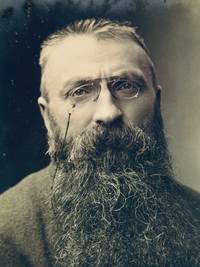
1891réf. 92258Paris: Paul Nadar 1891. Fine. Paul Nadar Paris s. d. 1891 11 x 16.5 cm format carte de cabinet Original albumen print photograph of Auguste Rodin cabinet card format mounted on stiff card. Nadar's signature in red in the lower margin. Advertisements in red on the verso. A small white area in the upper left margin with a few imperfections from the glass plate in the same area not affecting the portrait. Foxing to the margins. Iconic portrait of the sculptor with close-cropped hair and pince-nez staring fixedly into the lens. This snapshot gathers every hallmark of the celebrated ""style Nadar"" whose stark unadorned clarity establishes his gallery of portraits as one of the most compelling of the nineteenth century. The Nadar collection at the Bibliothèque nationale de France holds the few surviving trial prints of the Rodin portraits the present portrait appears under number 9115 B of volume 39. Rodin appears to have sat for the photographer only once on which occasion four exposures were taken in total. The sitting is usually dated to 1891 by which time Félix Nadar had retired from active business to devote himself to his aeronautical projects though he is known to have continued sporadically producing portraits of established artists and literary figures. This is far removed from the ""commercial"" style often attributed to his son Paul who took over the running of the studio in 1886. This ""spartiate"" approach to use Ulrich Keller's expression corresponds far more closely to Félix's own manner. The Musée Rodin which holds a print of this portrait attributes the negative to him: a letter from Rodin sent to the Ermitage de Sénart where Félix was then residing confirms this attribution: ""et puis des remerciements encore pour autres choses des portraits de votre serviteur"" lettre du 18 septembre 1892. The present print dates from the late 1920s as indicated by the studio stamp the studio then being located in the former Léon Bonnat atelier at 48 rue Bassano. In reference to Félix's earlier profession the stamp on the print reads ""Panthéon Nadar"" after the celebrated gallery of hundreds of celebrity caricatures assembled into a panoramic composition the first sheet of which Nadar published in 1854. He had planned to issue four lithographed sheets each presenting a serpentine procession of a thousand figures drawn from the ranks of noted ""gens de lettres auteurs dramatiques peintres et sculpteurs musiciens."" It was this aborted titanic undertaking that turned him toward photography in which he would become one of the most gifted practitioners of the nineteenth century. Sculptor and photographer also collaborated during this same period on a major undertaking: when Rodin received the commission for a monument to Balzac in 1891 Nadar placed his entire archive at his disposal: most notably the sole surviving daguerreotype portrait of Balzac taken by Bisson in 1842 which the sculptor regarded as the ""seule effigie fidèle et vraiment ressemblante de l'écrivain."" The letter quoted above bears witness to a further project as well for a Baudelaire portrait. A superb portrait of the master of sculpture by the master of nineteenth-century photography. Paul Nadar unknown
réf. 51-7391Paris: circa 1879. Silver print. 16.3 x 11 cm. Engagé à la Comédie Française le 18 novembre 1875 pour occuper le rôle de Clitandre dans Les Femmes savantes il y joue régulièrement jusqu'en 1903. Il est nommé Sociétaire en 1887. L'un des rôles qu'il interprète le plus souvent est celui de César de Bazan dans Ruy Blas.Don César de Bazan is a French melodrama in five acts by Dumanoir Philippe-François Pinel 1806-1865 and Adolphe d'Ennery 1811 – 1899.A French opéra comique in four acts by Jules Massenet entitled Don César de Bazan said to be based on Ruy Blas by Victor Hugo was composed to a French libretto by Adolphe d'Ennery Philippe-François Pinel "Dumanoir" and Jules Chantepie and first performed at the Opéra-Comique in Paris on 30 November 1872. The involvement of Dumanoir and d'Ennery does suggest that the “libretto” may have in fact been their 1844 play. Paris: circa 1879 unknown
réf. 51-7373Paris: circa late 19th Century. Silver print. 16.3 x 11 cm. Benoît-Constant Coquelin 1841-1909 known as Coquelin aîné Coquelin the Elder was a French actor who was known as one of the greatest theatrical figures of the age.He might be best remembered today for his association with two plays by Edmond Rostand: he originated the title character in Cyrano de Bergerac 1897 and he rehearsing to play the lead in Chanticler in 1909 when he died suddenly several days before opening night.Nadar whose real name was Félix Tournachon 1820–1910 was a conspicuous even astonishing presence in nineteenth-century France. Engaging and quick-witted he invented himself over and over as a bohemian writer a journalist a romantic Utopian a caricaturist a portrait photographer a balloonist an entrepreneur a prophet of aeronautics. The name "Nadar" was on everyone's lips.Today it is Nadar's photography that is remembered. In just a few years he taught himself the young art and became one of its greatest practitioners making portraits that are intimate and extraordinarily beautiful. His sitters who were often his friends included the great men and women of his time: Dumas Rossini Baudelaire Sarah Bernhardt Daumier Berlioz George Sand Delacroix. Nadar had a remarkable capacity to elicit his sitter's most natural qualities and to create even more than a likeness a true portrait of character. Paris: circa late 19th Century unknown
réf. 51-7372Paris: circa late 19th Century. Silver print. 16.3 x 11 cm. François Jules Edmond Got 1822–1901 was a famous French stage actor and librettist who joined the Comédie-Française in 1844 and became one of its leading permanent members.Nadar whose real name was Félix Tournachon 1820–1910 was a conspicuous even astonishing presence in nineteenth-century France. Engaging and quick-witted he invented himself over and over as a bohemian writer a journalist a romantic Utopian a caricaturist a portrait photographer a balloonist an entrepreneur a prophet of aeronautics. The name "Nadar" was on everyone's lips.Today it is Nadar's photography that is remembered. In just a few years he taught himself the young art and became one of its greatest practitioners making portraits that are intimate and extraordinarily beautiful. His sitters who were often his friends included the great men and women of his time: Dumas Rossini Baudelaire Sarah Bernhardt Daumier Berlioz George Sand Delacroix. Nadar had a remarkable capacity to elicit his sitter's most natural qualities and to create even more than a likeness a true portrait of character. Paris: circa late 19th Century unknown
1880réf. 71647Paris: Goupil & Cie 1880. Fine. Goupil & Cie Paris 1880 24 x 33 cm une feuille Photoglypty from the Galerie contemporaine. Portrait of Edmond Goncourt. Mounted sheet on which a photoglypty of 19x24cm has been laid down. Caption at the bottom of the mount: Galerie Contemporaine 126 boulevard de Magenta. Phot. Goupil et Cie. Cliché Nadar 51 rue d'Anjou-St-Honoré. Superb condition. Handsome portrait of the writer seated with a fixed and fierce gaze a cigarette in his right hand his elbow resting on attributes that represent him. Close to a carbon print by its warm and deep tones photoglypty is a complex photomechanical process of photographic reproduction which the publishing industry used for about 20 years from 1875 to 1895. Seeking an ideal and aesthetic image of famous men the plates were always retouched and repainted to erase an unsightly wrinkle or too troublesome defect to polish the hair etc. Thus photography and printmaking converge in a new representation. The Galerie Contemporaine became a publishing house that sold images of contemporary men these images were assembled into 8 folio volumes by Paul de Lacroix but continued to be sold separately at the headquarters of the Galerie Contemporaine. Goupil & Cie unknown
1885réf. GF57701885 Paris - Galerie Contemporaine des Illustrations Françaises - (vers 1885) - Photographie originale d'époque tirée en photoglyptie de 23 x 18,5 cms environ, contrecollée sur carton fort -
1885réf. GF57741885 Paris - Galerie Contemporaine des Illustrations Françaises - (vers 1885) - Photographie tirée en photoglyptie de 23 x 18,5 cms environ, contrecollée sur carton fort -
1885réf. GF57761885 Paris - Galerie Contemporaine des Illustrations Françaises - (vers 1885) - Photographie originale d'époque tirée en photoglyptie de 23 x 18,5 cms environ, contrecollée sur carton fort -
1885réf. GF57801885 Paris - Galerie Contemporaine des Illustrations Françaises - (vers 1885) - Photographie tirée en photoglyptie de 23 x 18,5 cms environ, contrecollée sur carton fort -
1885réf. GF57821885 Paris - Galerie Contemporaine des Illustrations Françaises - (vers 1885) - Photographie tirée en photoglyptie de 23 x 18,5 cms environ, contrecollée sur carton fort -
1885réf. GF57841885 Paris - Galerie Contemporaine des Illustrations Françaises - (vers 1885) - Photographie tirée en photoglyptie de 23 x 18,5 cms environ, contrecollée sur carton fort -
1885réf. GF57871885 Paris - Galerie Contemporaine des Illustrations Françaises - (vers 1885) - Photographie tirée en photoglyptie de 23 x 18,5 cms environ, contrecollée sur carton fort -