564 results
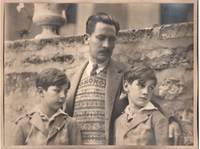
1925ref. 22149Paris ca1925. As issued. Very good. Silver halide photographic print ca1925 that meas. appx. 173 x 230 mm. Signed in the lower right: Man Ray / Paris. It is spot mounted to a sheet of heavy weight paper. The mount bears the following unidentified inscription: "To our old friend Carles / Helen & Guy". Carles is Arthur Beecher Carles a Philadelphia artist who on several occasions prior to 1930 had lengthy stays in Paris and/or at Edward Steichen's home in the village of Voulangis with the financial help of Tyson and friends. Tyson was a one time student of the artist who later established a reputation for his nature studies. Helen was Carroll Tyson's wife. unknown books
1937ref. 170731001Paris: GLM 1937. First Edition. Loose Leaves in Cloth Portfolio. Very Good. First edition. Seventeen loose leaves including 12 halftone plates on coated stock in flexible blue cloth portfolio and outer black die-cut wraps. Near Fine with uneven fading to blue cloth portfolio light general shelf wear and with die-cut intact. A lovely example. GLM unknown books
1937ref. 2467Paris Éditions GLM 1937. MAN RAY. La Photographie n'est pas L'Art. Paris: Éditions GLM 1937. Slim octavo 17 loose leaves in original flexible blue cloth portfolio original black die-cut wrapper. First edition of this landmark treatise with 12 full-page halftones of Man Ray's distinctive photographs 'regarded by some as amongst the greatest of the 20th century' Parr & Badger. Jean Cocteau called him 'the poet of the darkroom.' 'It was with Man Ray's arrival in Paris in the summer of 1921 when Dada was at its height that photographic experimentation temporarily leaderless after the disastrous war took a decisive new direction' Frizot 442. 'Man Ray's work introduced a particular note to Dadaism since he used photography and recognized early on that this medium could reproduce the effects of object-based art in two-dimensional form. Photography was in a position to preserve the ordinary and to unleash surreal effects' Icons of Photography 26. 'Although he incorporated photography into his Dadaist practice much of his photographic activity was given over to conventional portrait and fashion commissions. This rankled with him and 'photography is not an art' was a constant theme in his work. La Photographie n'est pas L'Art is one of the most enigmatic yet advanced of all his books. It can be taken as a summation of his experiments in photography and might be said to be his photographic swansong' Parr & Badger 108-09. With text by André Breton. See Roth 80-81 86-87. Interior and images fine. Only light sunning to cover through aperture in wrapper. A fine copy. Scarce. Bauman quote In a contemporary clam shell box in blue cloth. GLM books
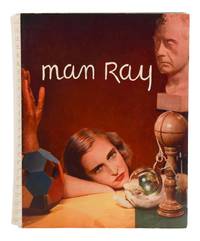
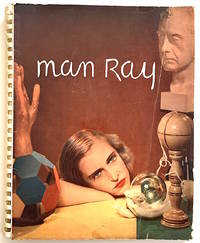
1934ref. 140948952Hartford CT: James Thrall Soby 1934. First Edition. Fine. A superlative example of the first edition first issue of May Ray's first monograph. 104 pp. with frontispiece portrait of Man Ray by Pablo Picasso the original title page and gravure plates after photographs by Man Ray with text in English and French. Bound in publisher's comb-bound pictorial card wraps. Light wear to wraps with faint marginal soiling to contents else Fine unusual in such nice condition and with spirals intact. Initial sales were so dismal that the publisher recalled most copies of the first printing and replaced the title page with two different fictitious ones claiming "second edition" and "deuxieme edition" in efforts to stoke demand. Copies like this one with the original title page are therefore rare. A fantastic copy of this pioneering work. James Thrall Soby unknown books
ref. 32865Hartford Conn: James Thrall Soby. First edition. Man Ray. 104 pp plastic spiral binding. Second issue with the false "second edition" statement. A few small rubs and creases to covers; very good. James Thrall Soby unknown books
1934ref. 2198Hartford: James Thrall Soby 1934. First edition. Publisher's plastic comb binding stiff wrappers. Minor vertical crease to front cover light chipping to outer edge. Upper and lower portions of the front cover coming loose from the binding but the cover is still held firmly. Internally clean and bright. Now housed in a custom clamshell box. The very rare first issue. As Roth describes the publisher "attempted to generate demand where none existed by suggesting the edition had sold out. After replacing the title pages of these copies- presumably a healthy percentage of the run whose sales had in fact been slow to none- with one stating 'deuxième edition' second edition he returned them for sale. Copies with the original title page are exceedingly rare." Man Ray's first monograph with texts in English and French by Duchamp Tzara Eluard Breton and Man Ray himself. Frontispiece portrait of Man Ray by Picasso. Contains 104 heliogravure images. "Part art part illustration the book was meant to be an inventory of his work a kind of grand promotional catalogue. Man Ray's album was a virtuoso presentation of modern European-style photography. Close-up views distorted angles double exposures night photography negative prints rayographs still lifes nudes portraits fashion photographs and even a painting. were reproduced. Intended for an American more than a European audience the album was Man Ray's means of presenting his career to a homeland that had rarely seen his work." Perpetual Motif: The Art of Man Ray pp. 35-39 Roth pp. 80-81. James Thrall Soby unknown books
1934ref. D7445Hartford Connecticut: James Thrall Soby 1934. First Edition First Issue. Fair. Spiral bound full-color wraps with b/w photo-illustrations heliogravure throughout; pp. 4 104 2 blank colophon complete. First edition first issue including the rare original title-page. Covers and final blank detached; first and last few leaves a little loose with chip out of bottom corner of last leaf pp. 103-104 near the gutter not affecting the images. Certainly a much-used copy but complete uncommon and with nice clean images overall. Sold as is. James Thrall Soby paperback books
1932ref. 29081Seule épreuve signée connue par Man Ray [Paris, circa 1950]. 1 tirage sur carte, d'après-guerre, signé « Man Ray » à la mine de plombe en angle inférieur droit. L'épreuve est signée Man Ray à la mine de plomb en angle inférieur droit et contient au dos la mention, de la main de Char, «René Crevel».
1927ref. 31574Eluard par Man Ray, 1927 [Paris, 1927]. Tirage noir et blanc sur papier (170 x 230 mm). Tampon au dos « MAN RAY 31 bis, Rue Campagne Première PARIS» et note manuscrite au crayon «Éluard, 1927», mais en tirage postérieur. Tirage avec recadrage du célèbre portrait d'Éluard prit par Man Ray à Paris en 1927 dans son atelier du 31bis rue Campagne Première.
1963ref. 4737Paris: Editions Prisma 1963. Cloth. Collectible; Fine/Very Good. A crisp clean copy of the 1963 1st French edition. Near Fine in a bright VG pictorial dustjacket with light fading along the spine. Quarto nicely-reproduced Man Ray portraits thruout. Editions Prisma unknown
1963ref. 4737Paris: Editions Prisma 1963. Cloth. Collectible; Fine/Very Good. A crisp clean copy of the 1963 1st French edition. Near Fine in a bright VG pictorial dustjacket with light fading along the spine. Quarto nicely-reproduced Man Ray portraits thruout. Editions Prisma unknown books
1918ref. 1910Lausanne, Imprimeries Réunies, 1918. Un volume in-8 (24 x 16 cm), 78 pages, broché sous couverture bleutée imprimée sur le premier plat. ÉDITION ORIGINALE. 51 poèmes illustrés de 18 dessins-calligrammes mécaniques en hors-texte reproduits en noir. Tirage unique sur vélin bouffant ivoire non numéroté. Le recueil est "terminé à Gstaad, le 5 avril 1918". Note historique : Francis Picabia (1879-1953) rencontre en 1917 à Paris Germaine Everling qui allait devenir pendant plus de quinze ans sa compagne dévouée. Au cours d'un bref voyage qu'ils effectuent ensemble aux Martigues, il écrit les premiers poèmes de ce qui allait devenir "La fille née sans mère", titre d'un dessin exécuté à New York en 1913. Puis au mois de février 1918, il part pour Lausanne avec sa femme (Gabrielle Buffet) pour y consulter un neurologue de renom; il y est bientôt rejoint par sa maîtresse. Il publie alors l'ouvrage grâce auquel il rencontre Tristan Tzara et le groupe Dada de Zurich. "La fille née sans mère" est, au même titre que "La Mariée" de Marcel Duchamp une machine célibataire ; l'œuvre est parallèle au "grand verre" de Duchamp, "La Mariée", est accompagnée par ses notes, "à la manière" [dit Duchamp], "d'un catalogue de grand magasin où l'image et le texte ne font qu'un tout". Rappelons que l'activité proprement littéraire de Picabia à l'époque de 391, est toute entière placée sous le signe de la mécanique; obsédé par la machine, fille née sans mère du cerveau de l'homme, Picabia n'aura de cesse de lui faire produire, en 1918, l'œuvre ambivalente parfaite comprenant dix-huit dessins et cinquante et un poèmes "équivalents". Les dessins, présentant des mécanismes étranges aux titres troublants de "Machine de bons mots", "Machine à idées actuelles dans l'amour", etc., ne sont pas sans évoquer l'intrigante "Mariée mise à nu" de Marcel Duchamp. (Sanouillet 391 p. 32; Picabia Mnam p. 449 reproduit).
ref. L3581Londres. London Gallery Editions, 1944. In-12 br. Jaquette typo. Portrait de P. Eluard par Man Ray. Édition bilingue de Poésie et Vérité 1942, traduction de R. Penrose & E.L.T. Mesens. E.O. Bel envoi autographe de E.L.T. Mesens. Justification autographe de Roland Penrose et E.L.T. Mesens au colophon.
1944ref. 4758Londres London Gallery Editions 1944 in-8 broché Londres, London Gallery Editions, 1944. 21 x 14,5 cm, in-8, 43 (4) pp., portrait de l'auteur par Man Ray en noir en frontispice, broché sous couverture orange imprimée et jaquette verte imprimée.
in-8 etroit, 178 pages, broche, couverture illustree plastifiee (photo de MAN RAY). Tres bel exemplaire. [JU-1]
1989ref. 213330Udine: Art& 1989. Rilegato sovracoperta hard cover dust jacket. Molto buono Very Good. Testo di Cesare de Seta. Numerose fotografie in bianco e nero di Man Ray. 4to cm 29x305. pp. 144. Molto buono Very Good. Sovracoperta con leggere abrasioni Slight abrasions to dustjacket. Prima edizione First Edition. "Prima di fare il fotografo sono stato per molti anni pittore. Poi un giorno mi comprai una macchina fotografica perchè non ero soddisfatto delle riproduzioni del mio lavoro fatte dai fotografi professionisti. Invece di dipingere cominciai a fotografare le persone e non volli più fare ritratti. Alla fine decisi che non c'era alcun rapporto tra pittura e fotografia.Certo tutto è gioco. Il motivo Cosa cerco Prima di tutto la libertà. Quando mi dicevano che ero in anticipo sui tempi rispondevo 'Non è vero io sono nel mio tempo siete voi che siete rimasti indetro'" da un'intervista a Man Ray - Caméra. Art&, hardcover
1970In 8, cm. 15,5 x 21, pp. 126 + (2) con 45 illustrazioni in bianco e nero a piena pagina nel testo. Brossura editoriale illustrata. Leggere tracce di polvere alla coperta. In ottimo stato. Volume n. 4 della collana: 'Nadar' ricerche sull'arte contemporanea. Il volume continene molte opere e un testo di Man Ray oltre alle testimonianze di Aragon, Breton, Duchamp, Eluard, Richter, Tzara. Nel 1922 Man Ray produce i suoi primi fotogrammi, che chiama (rayographs), ovvero immagini fotografiche ottenute poggiando oggetti direttamente sulla carta sensibile. L'artista scopri' per caso le rayografie nel 1921: mentre sviluppava alcune fotografie in camera oscura, un foglio di carta vergine, accidentalmente, fini' in mezzo agli altri e dato che continuava a non comparirvi nulla, poggio', piuttosto irritato, una serie di oggetti di vetro sul foglio ancora a mollo e accese la luce. L'artista ottenne cosi' delle immagini deformate, quasi in rilievo sul fondo nero. Attraverso i suoi rayographs, termine costruito sul suo cognome, ma che contemporaneamente evoca il disegno luminoso, poteva sondare ed esaltare il carattere paradossale e inquietante del quotidiano.
1929ref. 104668Prague Odeon 1929 Prague, Odeon, avril 1929, 235x182mm, 32p. numérotées de 237 à 268, broché sous couverture illustrée d'une composition de Karel Teige (104668)
1977ref. 4379Paris ARC 2, Musée d'art moderne de la ville de Paris 1977 in-4 dépliant Paris, ARC 2, Musée d'art moderne de la ville de Paris, 1977. 32 x 23 cm, in-4, 2 ff. n. ch. (4 pp.), illustrations en noir, plaquette pliée en 2.
ref. 33198Editions Jean-Jacques Pauvert - Revue trimestrielle Bizarre n° 1 de 1955. In-4 broché de 100 pages au format 27 x 19 cm. Superbe couverture illustrée par Maurice Henry. Dos carré. Plats et intérieur frais. Numéro avec textes, illustrations et photographies de Eugène Ionesco, J. M. A. Paroutaud, John B. L. Goodwin, Gisèle Prassinos, Lise Deharme, Alphonse Allais, Henri Storck, Saki, Marcel Schneider, Souzouki, Man Ray, Maurice Henry, Francis Rose, etc. Edition originale en très bel état général.
1957ref. 6493Editions Jean-Jacques Pauvert 1957. In-8 broché carré de 167 pages au format 19,5 x 19,5 cm. Superbe couverture illustrée par Pierre Molinier. Dos carré avec titre. Plats et avec petits frottis aux coins. Intérieur frais, malgré l'absence des pages 114 à 143 qui contenaient l'encart " Le royaume de la terre ", scénario inédit par Abel Gance et Nelly Kaplan. Cet encart malheureusement manque très souvent. Tirage sur couché. Revue dirigée par André Breton et dont il ne parut que 5 numéros. Textes inédits de : André Breton, Gérard Legrand, Joyce Mansour, Julien Gracq, Benjamin Péret, Léonora Carrington, Jean Schuster, Pierre de Massot, Jean-Jacques Lebel, etc. Portraits photographiques de quelques uns des auteurs. Très nombreuses illustrations par Léonora Carrington, Man Ray, Toyen, Wolfang Paalen, Adrien Dax, Pierre Molinier, etc. Assez bel état général. Edition originale, peu courante.
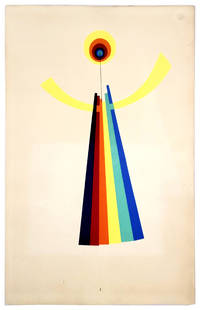
1926ref. 1696841926. MAN RAY. Revolving Doors. Comprised of 10 pochoir plates ca. 580 x 380 mm. Folio loose in original publisher's black portfolio with ties laid into a new folding box. Paris: Editions Surréalistes 1926. A fine copy of this legendary Surrealist publication. Between 1916 and 1917 the artist and photographer Man Ray created a series of collages he called "Revolving Doors." He included the series in his third solo exhibition at the Daniel Gallery in New York in 1919. The collages whose geometric shapes combine machine-like and anthropomorphic forms were framed and installed on a rotating pole that the viewer could spin. The original collages were destroyed but he later reproduced them in this series of pochoir prints published by Éditions Surréalistes in Paris. This publication represents an important contribution to avant-garde art and together with Jazz and the Prose du Transsibérien comprise the Holy Trinity of great pochoir books of the twentieth century. Complete sets in fine condition are extremely rare. One of 105 copies signed on the colophon by Man Ray. Reynolds 71. unknown
1926ref. 1696841926. MAN RAY. Revolving Doors. Comprised of 10 pochoir plates ca. 580 x 380 mm. Folio loose in original publisher's black portfolio with ties laid into a new folding box. Paris: Editions Surréalistes 1926. A fine copy of this legendary Surrealist publication. Between 1916 and 1917 the artist and photographer Man Ray created a series of collages he called "Revolving Doors." He included the series in his third solo exhibition at the Daniel Gallery in New York in 1919. The collages whose geometric shapes combine machine-like and anthropomorphic forms were framed and installed on a rotating pole that the viewer could spin. The original collages were destroyed but he later reproduced them in this series of pochoir prints published by Éditions Surréalistes in Paris. This publication represents an important contribution to avant-garde art and together with Jazz and the Prose du Transsibérien comprise the Holy Trinity of great pochoir books of the twentieth century. Complete sets in fine condition are extremely rare. One of 105 copies signed on the colophon by Man Ray. Reynolds 71. unknown books
1996ref. 35981Tokyo: Tokyo Station Gallery 1996. Very Good . Tokyo: Tokyo Station Gallery 1996. First Edition. Quarto 26cm; 226pp. Publisher’s stiff black wraps; light grey endsheets. Photographs throughout several in color. Wraps rather bumped and smudged. Binding sound. Textblock endsheets and interior pages clean. Very Good or better. Published in conjunction with a series of posthumous retrospective exhibitions throughout Japan. Interior text in Japanese and French. Tokyo Station Gallery unknown books
1935ref. 102196Paris Les Editions Véga 1935 1 vol. Broché in-4, broché, 63 pp. Edition originale ornée de deux portraits hors-texte contrecollés : une photographie solarisée par Man Ray et un dessin par Derain. Tirage limité à 243 exemplaires, celui-ci sur papier Offset de Ruysscher est enrichi d'un envoi autographe signé de l'autrice "à Jacques Baron, en souvenir des "Peines perdues" - avec l'émotion d'un début... Rosemonde, novembre 1934". Curieusement cet exemplaire provient de la bibliothèque de Georges Bataille avec tampon à l'encre noire sur le premier feuillet "Bibliothèque de Georges Bataille". Rosemonde Wilms était la belle-fille du peintre Antonio de La Gandera, elle possédait une villa à Mougins et fréquentait les milieux d'avant garde, elle apparaît dans la première séquence du court-métrage de Man Ray "La Garoupe" en compagnie d'Eluard, Nusch, Picasso, Roland et Valentine Penrose (information aimablement communiquée par M. Gilles Bion). Quant au surréaliste Jacques Baron, il collabora notamment à la revue Documents dans les années 1930. Couverture un peu salie.