HARE, T TruxtunBiblio.com

3,106 results
ref. 434195Unbound. Very Good. An archive of material by and about College Football Hall of Famer and two-time Olympic Medal winner T. Truxtun Hare including the manuscript for his unpublished autobiography. Also included are photographs from his playing days two different sheets of rare perforated photos showing him in his University of Pennsylvania uniform; more than 50 letters sent to him from friends and family including a Typed Letter Signed by Walter Camp the Father of American Football; and assorted ephemera such as a broadside for a 1898 game against Cornell. Overall very good or better with typical light wear to the material included toning wear at the edges with nicks and small tears and letters folded as mailed. Thomas Truxtun Hare 1878-1956 was born in Philadelphia but attended St. Mark's School in Massachusetts before being accepted to the University of Pennsylvania. He played multiple sports but excelled at football playing every minute of every game for all four years. He was one of just four players to be named a four-time All-American and was named a charter member of the Football Hall of Fame in 1951. Hare also twice achieve Olympic glory first as an undergraduate winning a silver medal for the hammer throw in 1900 and a bronze medal four years later in St. Louis in the equivalent of the decathlon then called the "all-around". In his post-sports career Hare was a practicing lawyer until his retirement in 1941 as well as the author of nine fictional football books for boys over two series: The Graduate Coach Series four volumes and the Kent of Malvern Series five volumes. Hare's writings in this collection total 108 holograph pages. The manuscripts are largely separated into gatherings that are between two to nine pages of unlined paper each gathering secured by a paperclip. Each gathering has been edited and corrected by Hare with eight of the gatherings accompanied by typed versions totaling just over 30 pages. One loose manuscript sheet contains a preliminary list of chapters with several directly corresponding to the titles of the individual gatherings "Equipment" "The Field" and "Tactics". In a note accompanying the list Hare relates that a hip injury has limited his mobility and that he had "turned to these random thoughts compiled over many years and put them into shape & submit them for what they are worth." The manuscripts contain anecdotes from his career his thoughts about various coaches players and teams discussions of both his personal and team strategies an overview of football history and the evolution of play during his collegiate years as well as Hare's opinion of the then current state of football and the introduction of the pass and its effect on play which he largely disapproved of. Additionally there are individual notes about other topics to include or brief anecdotes to expand on later. Additional writings in the archive include a typed 12-page speech given at the "Phila Club - 1941" presenting the history and development of football with an accompanying partial five-page manuscript draft; a typed three-page eulogy of William W. Barber headmaster of St. Mark's school; and eight typed pages - taken from his personal diary - relating the details of his 1901 Canadian hunting and fishing trip to Lake Champlain accompanied by letters from his Canadian guide relating to the trip. Of the more than 50 letters received by Hare in the archive the most notable is probably a one-page typed letter from Walter Camp in 1908 thanking Hare for a photograph he sent of himself for Camp's forthcoming book The Book of Foot-Ball: "The photograph in uniform reminds me of a young man whom Mrs. Camp and I watched with the greatest interest and admiration when he fought such a plucky game at Cambridge." About half of the correspondence was received from fellow Penn students many of them from Dorothy Sims the daughter of the president of the University of Penn Athletic Association John C. Sims. Her letters reference various parties get-togethers and other social activities of their group of friends include acknowledging several gestures "thanks so very much for the roses" that suggest a possible romantic relationship. Other letters include: four from Truxtun's father university professor Horace Binney Hare; one from friend Benjamin Franklin Pepper who was killed in World War I describing staying at California Senator George Hearst's house on a trip out West; and three letters from his friend Louis Rush who served in France at the end of the WWI. The archive is rounded out by several rare pieces of ephemera: two sheets of perforated and gummed "postage stamp-style" photographs of Hare in uniform one a full-body shot and the other from the chest up. These are also accompanied by two additional shots of college-era Hare camping and with friends posing with their bikes along with a third image of him as a boy. Five much later 8" x 10" images show an older Hare before a University of Penn football game being award his Hall of Fame Certification and posing with former teammates. Finally there are present a few other pieces of ephemera: an 1898 three-color printed broadside for a game between Penn and Cornell that list both team's lineup an issue of The College Athlete which features Hare throughout; and his contract with Penn Publishing for his boy's book series. A unique archive of material from one of the greatest college football players of the 19th Century. unknown
ref. 434195Unbound. Very Good. An archive of material by and about College Football Hall of Famer and two-time Olympic Medal winner T. Truxtun Hare including the manuscript for his unpublished autobiography. Also included are photographs from his playing days two different sheets of rare perforated photos showing him in his University of Pennsylvania uniform; more than 50 letters sent to him from friends and family including a Typed Letter Signed by Walter Camp the Father of American Football; and assorted ephemera such as a broadside for a 1898 game against Cornell. Overall very good or better with typical light wear to the material included toning wear at the edges with nicks and small tears and letters folded as mailed. Thomas Truxtun Hare 1878-1956 was born in Philadelphia but attended St. Mark's School in Massachusetts before being accepted to the University of Pennsylvania. He played multiple sports but excelled at football playing every minute of every game for all four years. He was one of just four players to be named a four-time All-American and was named a charter member of the Football Hall of Fame in 1951. Hare also twice achieve Olympic glory first as an undergraduate winning a silver medal for the hammer throw in 1900 and a bronze medal four years later in St. Louis in the equivalent of the decathlon then called the "all-around". In his post-sports career Hare was a practicing lawyer until his retirement in 1941 as well as the author of nine fictional football books for boys over two series: The Graduate Coach Series four volumes and the Kent of Malvern Series five volumes. Hare's writings in this collection total 108 holograph pages. The manuscripts are largely separated into gatherings that are between two to nine pages of unlined paper each gathering secured by a paperclip. Each gathering has been edited and corrected by Hare with eight of the gatherings accompanied by typed versions totaling just over 30 pages. One loose manuscript sheet contains a preliminary list of chapters with several directly corresponding to the titles of the individual gatherings "Equipment" "The Field" and "Tactics". In a note accompanying the list Hare relates that a hip injury has limited his mobility and that he had "turned to these random thoughts compiled over many years and put them into shape & submit them for what they are worth." The manuscripts contain anecdotes from his career his thoughts about various coaches players and teams discussions of both his personal and team strategies an overview of football history and the evolution of play during his collegiate years as well as Hare's opinion of the then current state of football and the introduction of the pass and its effect on play which he largely disapproved of. Additionally there are individual notes about other topics to include or brief anecdotes to expand on later. Additional writings in the archive include a typed 12-page speech given at the "Phila Club - 1941" presenting the history and development of football with an accompanying partial five-page manuscript draft; a typed three-page eulogy of William W. Barber headmaster of St. Mark's school; and eight typed pages - taken from his personal diary - relating the details of his 1901 Canadian hunting and fishing trip to Lake Champlain accompanied by letters from his Canadian guide relating to the trip. Of the more than 50 letters received by Hare in the archive the most notable is probably a one-page typed letter from Walter Camp in 1908 thanking Hare for a photograph he sent of himself for Camp's forthcoming book The Book of Foot-Ball: "The photograph in uniform reminds me of a young man whom Mrs. Camp and I watched with the greatest interest and admiration when he fought such a plucky game at Cambridge." About half of the correspondence was received from fellow Penn students many of them from Dorothy Sims the daughter of the president of the University of Penn Athletic Association John C. Sims. Her letters reference various parties get-togethers and other social activities of their group of friends include acknowledging several gestures "thanks so very much for the roses" that suggest a possible romantic relationship. Other letters include: four from Truxtun's father university professor Horace Binney Hare; one from friend Benjamin Franklin Pepper who was killed in World War I describing staying at California Senator George Hearst's house on a trip out West; and three letters from his friend Louis Rush who served in France at the end of the WWI. The archive is rounded out by several rare pieces of ephemera: two sheets of perforated and gummed "postage stamp-style" photographs of Hare in uniform one a full-body shot and the other from the chest up. These are also accompanied by two additional shots of college-era Hare camping and with friends posing with their bikes along with a third image of him as a boy. Five much later 8" x 10" images show an older Hare before a University of Penn football game being award his Hall of Fame Certification and posing with former teammates. Finally there are present a few other pieces of ephemera: an 1898 three-color printed broadside for a game between Penn and Cornell that list both team's lineup an issue of The College Athlete which features Hare throughout; and his contract with Penn Publishing for his boy's book series. A unique archive of material from one of the greatest college football players of the 19th Century. unknown books
1998ref. SBBIH-5PLTGQYGVEJHPurple House 1998. paperback. Good. Our good condition books are generally good for reading but not for gifting or collecting. They could have imperfections such as creasing fanning inscriptions margin notes yellowing staining on edge or cover or pages bumps scuffs etc etc sometimes multiple of these. It's a wide category that encompasses anything that isn't almost-new down to anything that is slightly better than poor. We would NOT recommend gifting Good books - these should be considered reading copies. Our books are dispatched from a Yorkshire former cotton mill. We list via barcode/ISBN so please note that the images are stock images and may not be the exact copy you receive furthermore the details about edition and year might not be accurate as many publishers reuse the same ISBN for multiple editions and as we simply scan a barcode or enter an ISBN we do not check the validity of the edition data when listing. If you're looking for an exact edition please don't order at least not without checking with us first although we don't always have time to check. We aim to dispatch prompty the service used will depend on order value and book size. We can ship to most countries see our shipping policies. Payment is via Abe only. Purple House paperback
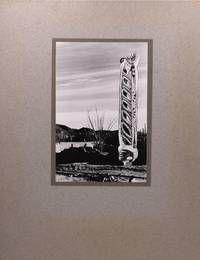
1930ref. 3245941930. 27 photos mounted on board approx. 14 x 18 inches. Prints range from approx. 5 x 6-1/2 inches to 13 x 10 inches. 8 Kodak color prints mounted on board 3 of them signed on the mount; 18 silver gelatin prints mounted on 15 boards; 1 Kodachrome slide; 1 black and white negative transparency. Some soiling to the 2 sets of nude photos on board otherwise general slight toning overall very good. With Portfolio case labeled I-A. 27 photos mounted on board approx. 14 x 18 inches. Prints range from approx. 5 x 6-1/2 inches to 13 x 10 inches. Subjects include: Portraits of Yves Tanguy two different Mabel Dodge Luhan and Robinson Jeffers; six color and black and white portraits; three surrealist photo collages one with a severed head and two others incorporating Pueblo art; a group of nudes; three commercial images; and a group of surrealist-photographs of everyday items. David Hare 1917-1992 was born into modern art. His mother Elizabeth Sage Goodwin was a collector friends with Brancusi and Duchamp and one of the backers of the 1913 Armory Show. When Hare was 10 the family relocated to the Southwest and he grew up in Santa Fe and Colorado Springs. After studying biology and chemistry at Bard he dropped out and founded a commercial photography studio specializing in Kodak's new color dye transfer process in Roxbury Connecticut in 1937. There he met Arshile Gorky Alexander Calder and Yves Tanguy who was married to his cousin Kay Sage and began experimenting with automotatist techniques to create surrealist photographs on the side. He was sent on assignment by the Museum of Natural History to take portraits of the "village" Indians in New Mexico eventually publishing the limited portfolio Pueblo Indians of New Mexico As They Are Today twenty color photos that combined ethnography studio portraiture and surrealist phenomenology. Editor of Duchamp's magazine VVV and a contributor to Sartre's Le Temps Moderne Hare was a pivotal figure in the American phase of surrealism and in the words of Clement Greenberg one of the two preeminent sculptors of nascent Abstract-Expressionism. That he began as a photographer and not as did so many of his peers as a draughtsman and how this may have effected his mature art has not been explored. unknown
1930ref. 3245941930. 27 photos mounted on board approx. 14 x 18 inches. Prints range from approx. 5 x 6-1/2 inches to 13 x 10 inches. 8 Kodak color prints mounted on board 3 of them signed on the mount; 18 silver gelatin prints mounted on 15 boards; 1 Kodachrome slide; 1 black and white negative transparency. Some soiling to the 2 sets of nude photos on board otherwise general slight toning overall very good. With Portfolio case labeled I-A. 27 photos mounted on board approx. 14 x 18 inches. Prints range from approx. 5 x 6-1/2 inches to 13 x 10 inches. Subjects include: Portraits of Yves Tanguy two different Mabel Dodge Luhan and Robinson Jeffers; six color and black and white portraits; three surrealist photo collages one with a severed head and two others incorporating Pueblo art; a group of nudes; three commercial images; and a group of surrealist-photographs of everyday items. David Hare 1917-1992 was born into modern art. His mother Elizabeth Sage Goodwin was a collector friends with Brancusi and Duchamp and one of the backers of the 1913 Armory Show. When Hare was 10 the family relocated to the Southwest and he grew up in Santa Fe and Colorado Springs. After studying biology and chemistry at Bard he dropped out and founded a commercial photography studio specializing in Kodak's new color dye transfer process in Roxbury Connecticut in 1937. There he met Arshile Gorky Alexander Calder and Yves Tanguy who was married to his cousin Kay Sage and began experimenting with automotatist techniques to create surrealist photographs on the side. He was sent on assignment by the Museum of Natural History to take portraits of the "village" Indians in New Mexico eventually publishing the limited portfolio Pueblo Indians of New Mexico As They Are Today twenty color photos that combined ethnography studio portraiture and surrealist phenomenology. Editor of Duchamp's magazine VVV and a contributor to Sartre's Le Temps Moderne Hare was a pivotal figure in the American phase of surrealism and in the words of Clement Greenberg one of the two preeminent sculptors of nascent Abstract-Expressionism. That he began as a photographer and not as did so many of his peers as a draughtsman and how this may have effected his mature art has not been explored. unknown books
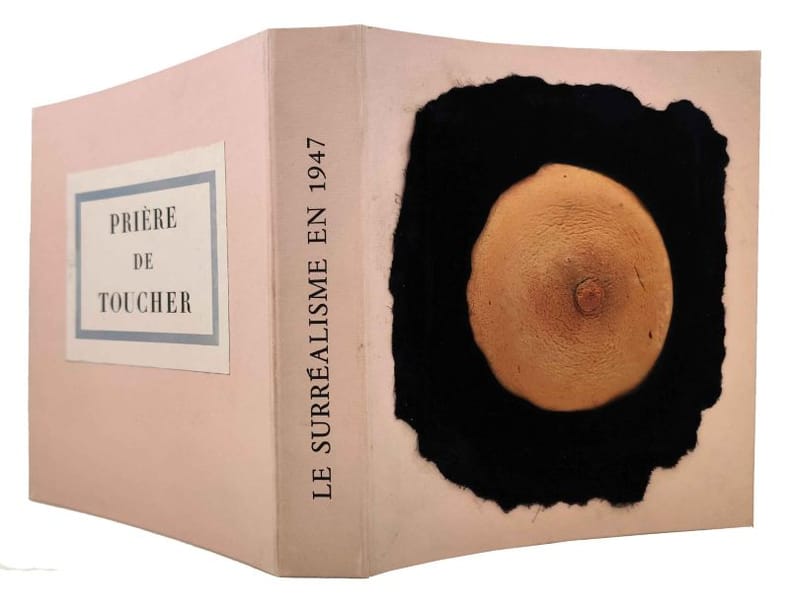
ref. 105538Paris, Pierre à Feu, 1947, 240x205mm, 142 pp., broché sous couverture photographique reproduisant la photographie d'un sein féminin entouré de velours noir, glassine originale imprimée en rouge, sur-couverture en carton rose portant au recto l'objet-sein de Marcel Duchamp et Enrico Donati et au verso l'étiquette "Prière de toucher"; cet objet fut réalisé à partir de deux moulages en plâtre d'un sein dont Maria Martins fut le modèle. (Schwarz 521 et 522).L'ensemble est contenu dans une étui-chemise de l'éditeur réalisé par Maeght en 1989 qui y a apposé une étiquette explicative.