John Hare PowelBiblio.com
4,176 results
ref. A9781165511846New. unknown
ref. A9781164662273New. unknown
ref. A9781164564232New. unknown
ref. A9781163221044New. unknown
ref. 19546Hare autograph letter: The Athenaeum Pall Mall S.W. London ; 9 February 1897. Hare copy letters: Holmhurst St. Leonard's on Sea; 10 and 11 December 1896. Harington's two draft letters: Whitbourne Court Worcester; 8 and 12 February 1897. Four items in good condition lightly aged and worn. An interesting correspondence casting light on the proprieties of Victorian biographical writing. Hare's 'The Story of my Life' was published in six volumes between 1896 and 1900 and was described by the original DNB as ‘a long tedious and indiscreet autobiography’. The Oxford DNB remarks that 'By the late twentieth century however Hare was undergoing something of a revival. A society of enthusiasts and collectors of his works was formed: a one-volume condensed edition of his autobiography was edited by A. Miller and J. Papp in 1995 and it and the original proved a useful source for those interested in country-house life in the later nineteenth century.' The 'defamatory' passage that is the subject of the complaint by Harington and the family of Dean Smith in the present correspondence is paraphrased by Harington in Item Four below. ONE: Manuscript 'Copies' presumably by Henry Smith or a member of his family see Item Three of two letters from Hare to Henry Smith. Both from Holmhurst St Leonards on Sea the first on cancelled letterhead of the Shire Hall Worcester; 10 and 11 December 1896. On the same bifolium. Totalling 4pp. 12mo. In the letter of 10 December he states that he is 'sorry to learn from you that anyone has been pained by anything in the “Story of my Life” The story you mention was told me as quoted from a letter to my mother by a lady who was intimate with your family. She was certainly unconscious of doing anything unkind in repeating a well known & popular anecdote which I have since often heard at dinner tables both in Oxfordshire & Yorkshire – so often that I imagined everyone considered it historic'. He continues with his defence pointing out that the anecdote is responsible for 'the well known nick name of Dean Smith – so familiar still at Ch Ch'.' As he is 'unwilling to cause the slightest pain the passage shall certainly be omitted henceforth'. In a postscript he writes: 'My publishers are in no sense responsible for my books as I pay for them entirely. I alone am to blame if there is blame.' Letter of 11 December begins: 'On looking again at yr. letter today it strikes me in quite a different light. It is possible that you thought that I or my readers or the readers of the story where it has appeared elsewhere or the many who say they heard Dr. Smith narrate it regarded the story as true! - that never occurred to me before! As far as I know it has been universally regarded as such a story as an elderly lover of anecdote would tell against himself evolving it from his own imagination with a very considerable sense of humour & no idea of any serious construction being placed upon it – and certainly with little idea of who would be the first to place such a construction. From what I have heard he was always himself amused by the soubriquet which arose from the story. Besides regretting anything that has given you pain I regret that I did not insert the words “wholly imaginary” - “told this wholly & sic imaginary story against himself”'. TWO: Hare to Harington. 5pp. 12mo. He begins by thanking him for his 'very kind letter' and expresses sorrow 'for any pain your uncle has felt through the “Story of my Life”.' He explains that 'the earlier volumes' of the book were written seventeen years before and that it had been 'printed some years – though with no intention of publication till long after my death; an arrangement which last year circumstances induced me to alter'. Publication has allowed him to 'correct errors – the story of Alexander the Great for instance which I had already been made aware that I had most stupidly spoilt.' When he agreed to publication he had 'no idea of the possibility of a son & daughters of Dean Smith being alive: indeed the latter seemed to me quite old ladies when I saw them above thirty years ago'. He recalls that after he took his degree he lived 'much at Oxford with my cousin Canon Stanley' and that he 'often heard the story which was an especial favourite with him' and that when he 'went to Doncaster I was taken to see the ladies because of their supposed connection with the story'. He has 'expunged' the anecdote from 'the second edition not out yet'. He has been assured by 'several young men' to whom he has mentioned Harington's uncle's letter that 'they have heard it before – always of course as an old gentlemans story told in obliviousness of the construction which his hearers might place upon it'. He ends by claiming to be well acquainted with Harington's son: 'I think he would let me say that he was a friend of mine'. Both of the autograph drafts of Harington's letters to Hare are signed with initials. THREE: Draft of Harington to Hare. 8 February 1897. 4pp. 12mo. With deletions and emendations. Begins: Dear Sir My Uncle Henry Smith has shown me the correspondence which passed between himself & you last December with reference to the defamatory anecdote which you related in your autobiography touching my grandfather Dr Gaisford's predecessor as Dean of Ch. Ch.' He accepts Hare's 'assurance that the story was inserted without any intention of giving the pain & annoyance which it undoubtedly has to his descendants & that it will be omitted in future editions but I must protest against your speaking of it or the sobriquet which you have attached to him as familiar still at Ch Ch.' He points out that he is himself 'an old Student of Ch Ch. of within a month or two exactly the same University standing as yourself & Oxford has been the home of my boyhood since 1842.' Hare's story was 'perfectly well known' in Harington's time 'but told not of Dr Smith but of another man – an old gentleman nearly in his dotage himself quite as incapable of such an act as my grandfather but of whom it was told in <> of his imbecility.' He boasts of 'an unbroken succession of descendants of my grandfather at Ch Ch or living in Oxford for more than 70 years down to my son Edward whom you have met in County & know. My Father was a Ch Ch man my father in law an old Student of Ch Ch.' He presents further information repudiating the anecdote before pointing out how Hare has lost the point of 'the Alexander the Coppersmith story of Dean Gaisford'. FOUR: Draft of Harington to Hare. 12 February 1897. 4pp. 12mo. With extensive deletions and emendations. Continuing in the same vein with reference to his 'undergraduate days' and with biographical information relating to Smith's family. He recounts the anecdote as it was 'really told in the thirties' and 'associated with no name in particular': 'Two men went out in a boat – one fell overboard & was drowned. The survivor called upon the mother of the drowned man & said Madam I have something important to communicate. As your son & I were out in a boat he unfortunately fell overboard. He clung to the side of the boat & would have upset it had I not had the presence of mind to hit him on the hand with the stretcher. Failing this we should both have perished. As it is your son was drowned & I have escaped to bring you the news.' The letter concludes: 'Thank you much for the manner in which you received my letter. I had the pleasure of showing yours to Mr William Rose Smith the present head of the family who happened to be on a visit here when it arrived and he was much pleased with it'. From the Harington family papers. Hare autograph letter: The Athenaeum, Pall Mall, S.W. [ London ]; 9 February 1897. Hare copy letters: Holmhurst, St. Leonard's o unknown
ref. 21220At head of first page: 'Copy January 16 1894'. A highly interesting letter from a leading Victorian dramatic critic Thomas describes himself in the letter as 'For five & twenty years . theatrical critic of the Daily news & the Graphic' who has 'served under at least thirteen editors' to a leading actor-manager Hare was knighted in 1907 on the subject of alleged editorial pressure on Fleet Street's theatre critics. 4pp 8vo. On four leaves. Aged and worn but with text complete and clear. Thomas has noted on the reverse of the last leaf: 'Letter to Hare about Grundy's Comedy An Old Jew produced at the Garrick Janry 6 1894.' Grundy wrote 'An Old Jew' for Hare who portrayed the main character Julius Sterne. Draft of long letter with numerous minor emendations. He was glad to read Hare's letter despite its 'lingering trace of the languor of the sick room'. 'To me so many years your senior it seems strange indeed to find you speaking of the close of your stage career. I can only say on that head that I hope to live to see you for many more years gathering fresh laurels'. On the subject of Grundy's play he states that he does not believe that 'the journalistic world has any claim to be exempt from the satire or even the extreme caricature which is freely allowed in the case of other classes. Literary cliques & côteries undoubtedly do exist as they existed in the days of Delatouche's Tour de Faveur & Delavigne's Comédiens and Scribe's Camaraderie'. He deplores critics who 'will now fall down & worship certain Scandinavian idols & their crude & offensive methods'. He cannot conceive of 'editors who give instructions to critics to denounce plays contrary to their real opinions'. He can 'only say that I have never met with any such editor. For five & twenty years I have been the theatrical critic of the Daily news & the Graphic & for some years of that time I occupied the same post on The Academy besides writing drama notices occasionally for other journals. Altogether I have served under at least thirteen editors and I can conscientiously affirm that never did any one of these attempt to entice me to speak ill of what I thought or might think a good paly or performance or vice versâ.' After some more observations he concludes: 'Depend upon it the whole thing will be forgotten ere long or remembered only to excite wonder that any sensible journalist of decent standing should have made a fuss about it'. At head of first page: 'Copy | January 16, 1894'. unknown
ref. 22014On letterhead of 'Mr. John Hare's Autumn Provincial Tour 1900' Birmingham Liverpool Manchester. 15 September 1900. 2pp 12mo. In good condition lightly aged. The letter casts an interesting sidelight on the practicalities of the late-Victorian theatre. He begins by explaining that he is sending back a wig he made for him which was 'an admirable one in every way' and asking that he make him 'one like it for America & to bestow your best skill on it as it is of great importance to me'. He instructs him to 'make the wig a shade darker something of the color it is dyed behind & put a little natural white hair on the temples each side'. He urges him to be 'very careful that the waive is a natural one & not overdone it looks bad from the front see Mr in Julius Caesar'. He ends with the assumption that Clarkson will 'do your best for me'. James Morton in his 'Gangland Soho' 2012 alleges that Clarkson who has a blue plaque to his name at 41-43 Wardour Street was not only a repeated insurance fraudster but a notorious homosexual blackmailer after whom the public lavatory in Dansey Place was named 'Clarkson's Cottage'. On letterhead of 'Mr. John Hare's Autumn Provincial Tour, 1900' (Birmingham, Liverpool, Manchester). 15 September 1900. unknown
ref. 147800Used. For more details please contact me unknown
ref. feb70714Used. For more details please contact me unknown
ref. feb49200Used. For more details please contact me unknown
ref. feb49195Used. For more details please contact me unknown
ref. feb70728Used. For more details please contact me unknown
2002ref. 9776530Gower 2002. This is an ex-library book and may have the usual library/used-book markings inside.This book has hardback covers. In fair condition suitable as a study copy. No dust jacket. Library sticker on front cover. Please note the Image in this listing is a stock photo and may not match the covers of the actual item1100grams ISBN:9780566084553 Gower hardcover
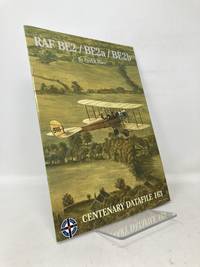
ref. 112868Albatros Productions. First Edition. Trade Paperback. Like New. First Edition First Printing. Published by Albatros Productions 2014. Quarto. Pictorial wraps. Book is like new; clean with no writing or names. Sharp corners and spine straight. Binding tight and pages crisp. A fine copy of this guide to RAF BE2/BE2a/BE2b aircraft. Windsock Datafile #163. 48 pages. ISBN: 978906798352. 100% positive feedback. 30 day money back guarantee. NEXT DAY SHIPPING! Excellent customer service. Please email with any questions or if you would like a photo. All books packed carefully and ship with free delivery confirmation/tracking. All books come with free bookmarks. Ships from Southampton New York. We Buy Books! Individual titles libraries collections. Message us if you have books to sell! Albatros Productions paperback
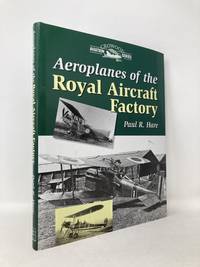
1999ref. 112837The Crowood Press 1999. First Edition. Hardcover. Like New/Like New. First Edition First Printing. Not price-clipped £25.00 price intact. Published by Crowood 1999. Quarto. Black cloth boards stamped in gold. Book is like new; clean with no writing or names. Sharp corners and spine straight. Binding tight and pages crisp. Dust jacket is like new. A fine copy of this guide to the Aeroplanes of the Royal Aircraft Factory. 144 pages. ISBN: 9781861262097. 100% positive feedback. 30 day money back guarantee. NEXT DAY SHIPPING! Excellent customer service. Please email with any questions or if you would like a photo. All books packed carefully and ship with free delivery confirmation/tracking. All books come with free bookmarks. Ships from Southampton New York. We Buy Books! Individual titles libraries collections. Message us if you have books to sell! The Crowood Press hardcover
ref. B9781163221044New. unknown
ref. A9781164617297New. unknown
ref. A9781163302569New. unknown
ref. 1142498956.Gpaperback. Good. Access codes and supplements are not guaranteed with used items. May be an ex-library book. paperback
ref. KT0223Aperture. Paperback. Good. 8x5x0. Aperture paperback
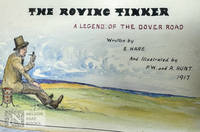
1917ref. 333n.p. England 1917. Very good internally but vellum heavily soiled and toned boards bowed contents clean with some light finger-soiling. Attractive manuscript children's book filled with watercolor illustrations. A whimsical story in verse about a carefree itinerant fellow and his dog set in the early twentieth century wandering the towns of southern England before finding and then losing untold riches in Canterbury - and learning that time and leisure are more valuable than money. This book appears to be unpublished as we trace no printed version of any variation of this title by this author or illustrators. Oblong 4to. 7 leaves. Clearly a work of love as it is bound in full vellum with gilt lettering and marbled endpapers.
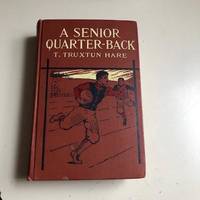
1910ref. 59006537PA: Penn Publishing 1910. Endpapers professionally restored and booked tightened. Bound in brown cloth stamped in yellow and black. A tight clean copy of this scarce first edition of this football book by Hare. 363 pp. Scarce in this protected condition. . First Edition. Hard Cover. Very Good /No Jacket. Penn Publishing Hardcover
1910ref. 5005194PA: Penn Publishing 1910. Bound in brown cloth illustrated front panel of a football running play. An early reprint in great condition. Scarce book -- especially in this protected condition. 333 pp. Illustrated endsheets. . Early Reprint. Hard Cover. Very Good /No Jacket. Penn Publishing Hardcover
1970ref. 078361London: George Allen And Unwin 1970. Red hard covers in tidy condition with a slightly chipped dust jacket which is price clipped and browned on the reverse 237pp First Edition uncommon. First Edition. Hardcover. Good/Good. 8vo - over 7¾" - 9¾" tall. George Allen And Unwin Hardcover