[JAPANESE WORLD WAR II BOARD GAME].Biblio.com
2,331 results
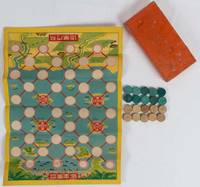
1940ref. 216804Japan. Circa 1940. Colour folding game sheet 36.5 x 26cm 10 wooden playing pieces each with embossed images in beige and blue complete original box 15.5 x 7.6 x 2.3cm considerably worn and soiled and corners reinforced the game itself is in very good bright condition. This is a two-player board game where air planes and war ships fight against each other. Fascinatingly the game sheet illustration shows the battle ground is in the Pacific where islands with palm tree are dotted. Consequently the game might be produced at the early stage of the Pacific War. The players attack each other after starting from a naval base and an air base. There are two islands each where they are safely protected from their enemies. The playing pieces are made out of paper with embossed images of war ships and air planes in beige air power and blue sea power colours. . unknown
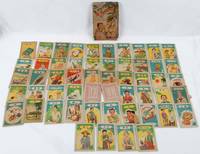
1942ref. 221345大阪. Osaka.: 増田営業所. Masuda Eigyosho. Circa 1942. Complete set of 54 flash cards in original pictorial light card box 13.5 x 9.7cm. Some occasional browning box worn and a little chipped but overall very good. A fascinating Japanese wartime card game designed to teach Malay to Japanese speakers. This set of flash cards formed part of a series entitled “Learning the Languages of East Asia” Tōa no Gogaku. Each card bears a Japanese word on one side accompanied by a colourful illustration with the Malay translation on the reverse. The text on the back of the box explains the rules of the game and adds that “because there is the Malay translation on the back of the picture you can study by yourself while looking at the customs and scenery of Malaya.” Although the cheerful illustrations of flowers animals foodstuffs and other everyday subjects give the cards the appearance of a children’s game they were intended primarily for Japanese soldiers taking part in the occupation of the Malay Peninsula as the box illustration indicates. Words printed on the sides show that this card game was produced to be sent to the servicemen in Malaya. Encounters between local people and Japanese depicted on the cards invariably involve members of the Japanese military. One card teaches greetings such as “good morning” “hello” and “good evening” for example shows a Malayan boy bowing to a saluting Japanese soldier while aircraft fly overhead. The vocabulary taught includes the names of various forms of transport such as “ship” “train” and “aeroplane” as well as words including “translator” “army” and “cannon” and phrases such as “come here” and “please show me that”. The latter is illustrated by a Japanese soldier addressing a boy holding a book. An unusual and intriguing piece of wartime ephemera offering insight into the practical challenges of communication between occupier and occupied in Southeast Asia. . 増田営業所. [Masuda Eigyosho]. unknown
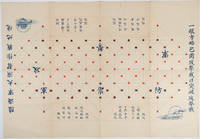
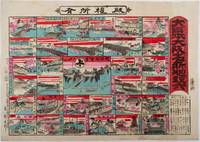
ref. 214048Early 20th Century. Colour folding game sheet some light browning and a few small holes at folds but overall a good and attractive game. 54 x 80cm. The title of this board game sheet indicates that the game is designed for two opposing sides with one side acting as the attackers and the other as the defenders. The defending side possesses more naval power compared to the attacking side. Although specific playing instructions are not provided information on the right-hand side suggests that offensive tactics should involve either seizing or charging. At the top and bottom there are lists of rear force units for both sides including docks for housing captured enemy boats and sunken boats Red Cross field hospitals and facilities for casualties. Additionally in the corners two small illustrations of warships are printed in blue ink. . unknown
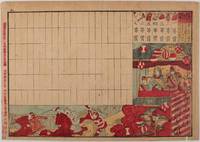
1892ref. 215726大野栄吉. Ōno Eikichi. Meiji 25 1892. Colour woodblock print 22.8 x 32.5cm evenly browned few chips in margins but overall very good. This colourful woodblock print serves as a point sheet for a horse racing board game. While the game rules are unclear the print vividly captures an exciting race scene featuring three horses and their jockeys. The race unfolds in a festive atmosphere complete with blossoms and lanterns while the spectators appear to include the Meiji Emperor and Empress along with their entourage. The Emperor is depicted in full military uniform and the Empress is shown in a traditional kimono. The print also displays the prizes for first through seventh place which include a silver cup a trophy a riding cap a scarf a shoe and a whip. Western-style horse racing began in Japan in the mid-19th century following the arrival of Westerners and became a high-class social event during the Meiji period. . 大野栄吉. [Ōno Eikichi]. unknown
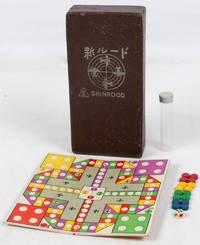
1930ref. 216904Japan. Circa 1930. Folding coloured board game 12.6 x 12.9cm small tube with a metal lid containing a dice and 4 playing pieces each in 4 colours original box 15 x 7.5 x 2.6cm rules of the game in Japanese text laid down inside lid. Signs of light use but overall very good. A compact miniature Ludo game set neatly packed in a small box. The game rules are printed inside the lid. It is described as a "new" version of Ludo likely due to the inclusion of aeroplanes in the illustrations. The board features English captions. . unknown
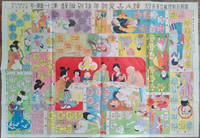
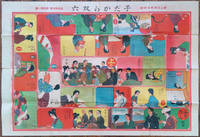
1419ref. 223794東京. Tokyo.: 実業之日本社. Jitsugyo no Nihonsha. Taisho 14 1925. Colour folding sugoroku game sheet 55 x 75.5 cm occasional browning visible on the reverse and a little on the margins but otherwise a very clean and good copy. The game follows a woman's life stages from her wedding to child birth as players progress each month from January to December. In addition daily and seasonal menus are included for each month. The breakfast and lunch menus given are in the main for Japanese dishes but occasionally western dishes such as croquettes and beef steaks appear for dinner. The beginning of the game is the woman's wedding in January. In March she is learning to cook. In April her husband helps cooking as she is suffering from morning sickness. The pregnancy progresses well and in December a baby boy arrives. The goal is a family tea party held in western style to welcome the baby. Both the husband and the wife are featured in illustrations and the companionship of marriage is emphasised as a source of family happiness. This colourful sugoroku game sheet was issued as a supplement to the January 1924 issue of Fujin Sekai Women's World. The magazine was founded in 1906 and was a very popular monthly magazine for women. . 実業之日本社. [Jitsugyo no Nihonsha]. unknown
1919ref. 223772東京. Tokyo.: 實業之日本社. Jitsugyō no Nihonsha. Taisho 8 1919. Colourful folding sugoroku game sheet 54.7 × 78.6cm one panel on reverse soiled light even browning small holes at fold points professionally strengthened with washi very good condition. This sugoroku game from 1919 issued as a supplement in the New Year issue of Fujin Sekai Women's World provides a fascinating glimpse into the idealized life of an upper-middle-class woman during that era. The game narrates the journey from her wedding day to the creation of the ideal family highlighting the expected societal roles and duties of women. Starting with the wedding day the game swiftly transitions to the new wife's pregnancy. It follows her through various steps including ceremonial rituals performed by family members and preparation for the child's arrival. During her pregnancy the woman meets with a midwife and follows recommended activities like exercise reflecting some medical advice of the time. As the game progresses the new mother attempts to breastfeed her baby but due to insufficient milk a wet nurse is employed. The baby is then raised with the care of the family and a baby-sitter showing a collaborative nurturing environment. The game concludes with a scene of a contented family where the parents relax with their five children and some household staff symbolizing the idealized outcome of a woman's role in society. This sugoroku not only reflects the societal expectations and gender roles of the time but also offers a window into the medical and childcare practices that were considered important. The game is a blend of cultural norms and educational advice wrapped in an engaging visual narrative. . 實業之日本社. [Jitsugyō no Nihonsha]. unknown
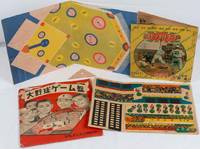
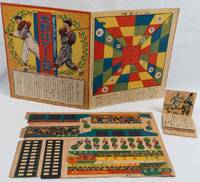
1952ref. 214222Tokyo.: 集英社. Shūeisha. Showa 27 1952. Folding colour game board 37.7 x 20cm with accompanying sheet of cut-outs of players and for constructing the stadium 19 x 27.2cm additional small card with punch-out cardboard bat and balls 1 ball missing; 3.5 x 8cm and original pictorial wrapper. Board is worn at edges with a little loss to paper on reverse at lower edge. Stapled booklet: 16pp line illustrations in coloured ink 18.5 x 17.2cm. Pictorial paperback covers little worn and lightly soiled. This collection comprises two items: a baseball board game and a sports guidebook. The board game was distributed as a supplement to Omoshiro Bukku おもしろブック released in March 1952. Enclosed in the game is a coloured sheet depicting a baseball field with an additional game on the reverse side. A cut-out sheet featuring players spectators scoreboards and advertising boards is included allowing children to construct their own stadium. Additionally there is a cardboard sheet featuring a bat and two balls. The sports guide booklet was provided as an add-on to Chūgaku no tomo 中学生の友 a monthly magazine for junior high school students published in 1949. This booklet covers various sports including baseball swimming athletics and basketball offering fundamental information on rules and games. The inaugural article titled 'Will you be able to become a professional baseball player' underscores the profound enthusiasm for baseball among young boys. . [集英社. Shūeisha]. paperback
1952ref. 218517東京. Tokyo.: 集英社. Shūeisha. Showa 27 1952. Folding colour game board 37.7 x 20cm with accompanying sheet of cut-outs of players and for constructing the stadium 19 x 27.2cm additional small picturebook of 早慶優勝戦. Sōkei yūshōsen. Some light browning but otherwise very good. This collection comprises three items: a baseball board game a cut-out sheet and a miniature picture book. The board game was distributed as a supplement to Omoshiro Bukku おもしろブック issued in March 1952. Included is a coloured sheet depicting a baseball field with an additional game on the reverse; a cut-out sheet featuring players spectators scoreboards and advertising panels for assembling a miniature stadium; and a small picture book narrating the final game between the university rivals Waseda and Keio. Baseball had become one of Japan’s most popular sports since its introduction in 1873 by Horace Wilson an American teacher in Tokyo. Rivalries in both the professional league—most famously between the Giants and the Tigers—and in the Tokyo University League particularly between Waseda and Keio were legendary and are reflected in this set. The illustrated players are shown in the uniforms of those teams while the booklet recreates the excitement of a Waseda–Keio match in the style of a live radio broadcast. The cut-outs for the stadium are particularly detailed with spectators animatedly cheering and advertising boards promoting Shueisha’s children’s magazines. . 集英社. [Shūeisha]. hardcover
1898ref. 218612大阪. Osaka.: 東新太郎. Azuma Shintarō. Meiji 31 1898. Colour woodblock sugoroku 37.8 x 53cm a little light staining and soiling in margins very good. This vividly printed colour woodblock sugoroku game was published in 1898 and features major sites in Osaka. The game highlights entertainment districts such as Dōtonbori Shinsaibashi and the city’s red-light areas. It also includes the headquarters of Osaka Shōsen Kaisha OSK. Known as the city of rivers canals and bridges Osaka is well represented in the game through depictions of several famous bridges. The goal of the game is the Osaka Army Headquarters located near Osaka Castle. Distances from Kōrai Bridge to various destinations are listed in the lower right corner. . 東新太郎. [Azuma Shintarō]. unknown
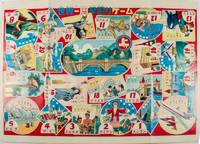
1960ref. 171593No publication details. Circa1960. Colourful folding sugoroku game sheet 55 x 79cm a fukuwarai game on reverse does not include face pieces. This is brightly coloured post-war sugoroku is a "round the world" game and this together with the fukuwarai game printed on the reverse would have been enjoyed by Japanese families during the new year celebrations. The game which is colourfully illustrated covers East Asia Southeast Asia New Guinea Africa Europe and North and South Americas with the final goal being returning to Japan and visiting the Royal Palace in Tokyo. The game was probably printed in the 1960s when overseas travel by jet plane was regarded as a possible dream for many Japanese people. On the reverse is a fukuwarai happy-laughter game where a blind-folded player places eyes nose mouth and other pieces on the faces outlined. . No publication details. unknown
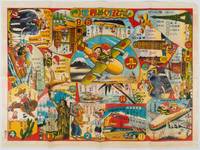
1960ref. 215411Japan.: No publication details. Circa1960. Very colourful folding sugoroku game sheet 45 x 61.4cm a little very light browning at margins very good copy. This vibrant sugoroku game sheet showcases playful illustrations of landscapes and cultures from around the world. The game begins in Japan where a boy and girl embark on an adventurous journey. Their first stop is the United States followed by rafting along the Amazon River. Along the way they explore Africa Europe India Australia and Sumatra. The journey concludes with their return to Japan by small plane. Through the game players experience a sense of global travel and gain insight into world geography. . No publication details. unknown
1930ref. 177813Japan. Circa1930. 16 colour cards with black and white illustrations on reverse 8 black and white cards 4.5 x 7cm cardboard box with sliding cover 7.5 x 5.5cm. Colour cards have the same black and white illustrations on reverse. Set of small cards with delightful images of mischievous boys and girls having fun. . unknown
ref. 25468'232 Piccadilly London / Septem 28. 56' 1856. At the time of writing Gordon-Cumming’s trophies were being exhibited at this Piccadilly address having previously formed part of the Great Exhibition. The recipient Henry Charles Angelo 1806-1866 was a member of the celebrated family of fencing masters and was at this time teaching the art at the Cavalry College Richmond. 2pp 12mo. On the rectos of the two leaves of a bifolium with the recipient’s name written lengthwise on the verso of the first leaf: ‘H. C. Angelo Esqr’. In good condition lightly aged. Folded twice. The sort of bold and forceful hand and ebullient signature one might expect from a big game hunter. Reads: ‘Dear Sir / I have forwarded your letter to Sir Alexander. his address is Altyre. Forres. if you send a pampered menial last two words underlined to my house-keeper Mrs Lee at the museum and shew this note she will give him the portrait you require. / Yours faithfully. / Gordon Cumming’. '232 Piccadilly [London] / Septem 28. 56' [1856]. unknown
ref. ria9798295659584_inpPaperback. New. New Book; Fast Shipping from UK; Not signed; Not First Edition; ¿¿¿¿¿¿¿¿¿¿¿¿¿¿¿¿¿¿¿¿¿¿¿!¿¿¿¿¿¿¿¿¿¿¿¿¿¿¿¿¿¿¿¿¿¿¿¿¿¿¿¿¿¿¿¿¿¿¿¿¿¿¿¿¿¿¿¿¿¿¿¿¿¿¿¿¿¿¿¿¿¿¿¿¿¿¿¿¿¿¿¿¿¿¿¿¿¿¿¿¿¿¿¿¿¿¿¿¿¿¿¿¿¿¿¿¿¿¿¿¿¿¿¿¿¿¿¿¿¿¿¿¿¿¿¿¿¿¿¿¿¿¿¿"¿¿¿¿"¿¿¿¿¿¿¿¿¿¿¿¿¿¿¿¿¿¿¿¿¿¿¿¿¿¿¿¿¿¿¿¿¿¿¿¿¿¿¿¿¿¿¿¿¿¿¿¿¿¿¿¿¿¿¿¿¿¿¿¿¿¿¿¿¿¿¿¿¿¿¿¿ paperback
ref. ria9798295659546_inpPaperback. New. New Book; Fast Shipping from UK; Not signed; Not First Edition; ¿¿¿¿¿¿¿¿¿¿¿¿¿¿¿¿¿¿¿¿¿¿¿!¿¿¿¿¿¿¿¿¿¿¿¿¿¿¿¿¿¿¿¿¿¿¿¿¿¿¿¿¿¿¿¿¿¿¿¿¿¿¿¿¿¿¿¿¿¿¿¿¿¿¿¿¿¿¿¿¿¿¿¿¿¿¿¿¿¿¿¿¿¿¿¿¿¿¿¿¿¿¿¿¿¿¿¿¿¿¿¿¿¿¿¿¿¿¿¿¿¿¿¿¿¿¿¿¿¿¿¿¿¿¿¿¿¿¿¿¿¿¿¿"¿¿¿¿"¿¿¿¿¿¿¿¿¿¿¿¿¿¿¿¿¿¿¿¿¿¿¿¿¿¿¿¿¿¿¿¿¿¿¿¿¿¿¿¿¿¿¿¿¿¿¿¿¿¿¿¿¿¿¿¿¿¿¿¿¿¿¿¿¿¿¿¿¿¿¿¿ paperback
ref. ria9798295659621_inpPaperback. New. New Book; Fast Shipping from UK; Not signed; Not First Edition; ¿¿¿¿¿¿¿¿¿¿¿¿¿¿¿¿¿¿¿¿¿¿¿!¿¿¿¿¿¿¿¿¿¿¿¿¿¿¿¿¿¿¿¿¿¿¿¿¿¿¿¿¿¿¿¿¿¿¿¿¿¿¿¿¿¿¿¿¿¿¿¿¿¿¿¿¿¿¿¿¿¿¿¿¿¿¿¿¿¿¿¿¿¿¿¿¿¿¿¿¿¿¿¿¿¿¿¿¿¿¿¿¿¿¿¿¿¿¿¿¿¿¿¿¿¿¿¿¿¿¿¿¿¿¿¿¿¿¿¿¿¿¿¿"¿¿¿¿"¿¿¿¿¿¿¿¿¿¿¿¿¿¿¿¿¿¿¿¿¿¿¿¿¿¿¿¿¿¿¿¿¿¿¿¿¿¿¿¿¿¿¿¿¿¿¿¿¿¿¿¿¿¿¿¿¿¿¿¿¿¿¿¿¿¿¿¿¿¿¿¿ paperback
ref. ria9798295659737_inpPaperback. New. New Book; Fast Shipping from UK; Not signed; Not First Edition; ¿¿¿¿¿¿¿¿¿¿¿¿¿¿¿¿¿¿¿¿¿¿¿!¿¿¿¿¿¿¿¿¿¿¿¿¿¿¿¿¿¿¿¿¿¿¿¿¿¿¿¿¿¿¿¿¿¿¿¿¿¿¿¿¿¿¿¿¿¿¿¿¿¿¿¿¿¿¿¿¿¿¿¿¿¿¿¿¿¿¿¿¿¿¿¿¿¿¿¿¿¿¿¿¿¿¿¿¿¿¿¿¿¿¿¿¿¿¿¿¿¿¿¿¿¿¿¿¿¿¿¿¿¿¿¿¿¿¿¿¿¿¿¿"¿¿¿¿"¿¿¿¿¿¿¿¿¿¿¿¿¿¿¿¿¿¿¿¿¿¿¿¿¿¿¿¿¿¿¿¿¿¿¿¿¿¿¿¿¿¿¿¿¿¿¿¿¿¿¿¿¿¿¿¿¿¿¿¿¿¿¿¿¿¿¿¿¿¿¿¿ paperback
ref. ria9798295659652_inpPaperback. New. New Book; Fast Shipping from UK; Not signed; Not First Edition; ¿¿¿¿¿¿¿¿¿¿¿¿¿¿¿¿¿¿¿¿¿¿¿!¿¿¿¿¿¿¿¿¿¿¿¿¿¿¿¿¿¿¿¿¿¿¿¿¿¿¿¿¿¿¿¿¿¿¿¿¿¿¿¿¿¿¿¿¿¿¿¿¿¿¿¿¿¿¿¿¿¿¿¿¿¿¿¿¿¿¿¿¿¿¿¿¿¿¿¿¿¿¿¿¿¿¿¿¿¿¿¿¿¿¿¿¿¿¿¿¿¿¿¿¿¿¿¿¿¿¿¿¿¿¿¿¿¿¿¿¿¿¿¿"¿¿¿¿"¿¿¿¿¿¿¿¿¿¿¿¿¿¿¿¿¿¿¿¿¿¿¿¿¿¿¿¿¿¿¿¿¿¿¿¿¿¿¿¿¿¿¿¿¿¿¿¿¿¿¿¿¿¿¿¿¿¿¿¿¿¿¿¿¿¿¿¿¿¿¿¿ paperback
ref. ria9798295659690_inpPaperback. New. New Book; Fast Shipping from UK; Not signed; Not First Edition; ¿¿¿¿¿¿¿¿¿¿¿¿¿¿¿¿¿¿¿¿¿¿¿!¿¿¿¿¿¿¿¿¿¿¿¿¿¿¿¿¿¿¿¿¿¿¿¿¿¿¿¿¿¿¿¿¿¿¿¿¿¿¿¿¿¿¿¿¿¿¿¿¿¿¿¿¿¿¿¿¿¿¿¿¿¿¿¿¿¿¿¿¿¿¿¿¿¿¿¿¿¿¿¿¿¿¿¿¿¿¿¿¿¿¿¿¿¿¿¿¿¿¿¿¿¿¿¿¿¿¿¿¿¿¿¿¿¿¿¿¿¿¿¿"¿¿¿¿"¿¿¿¿¿¿¿¿¿¿¿¿¿¿¿¿¿¿¿¿¿¿¿¿¿¿¿¿¿¿¿¿¿¿¿¿¿¿¿¿¿¿¿¿¿¿¿¿¿¿¿¿¿¿¿¿¿¿¿¿¿¿¿¿¿¿¿¿¿¿¿¿ paperback
ref. ria9798295659560_inpPaperback. New. New Book; Fast Shipping from UK; Not signed; Not First Edition; ¿¿¿¿¿¿¿¿¿¿¿¿¿¿¿¿¿¿¿¿¿¿¿!¿¿¿¿¿¿¿¿¿¿¿¿¿¿¿¿¿¿¿¿¿¿¿¿¿¿¿¿¿¿¿¿¿¿¿¿¿¿¿¿¿¿¿¿¿¿¿¿¿¿¿¿¿¿¿¿¿¿¿¿¿¿¿¿¿¿¿¿¿¿¿¿¿¿¿¿¿¿¿¿¿¿¿¿¿¿¿¿¿¿¿¿¿¿¿¿¿¿¿¿¿¿¿¿¿¿¿¿¿¿¿¿¿¿¿¿¿¿¿¿"¿¿¿¿"¿¿¿¿¿¿¿¿¿¿¿¿¿¿¿¿¿¿¿¿¿¿¿¿¿¿¿¿¿¿¿¿¿¿¿¿¿¿¿¿¿¿¿¿¿¿¿¿¿¿¿¿¿¿¿¿¿¿¿¿¿¿¿¿¿¿¿¿¿¿¿¿ paperback
ref. ria9798295659607_inpPaperback. New. New Book; Fast Shipping from UK; Not signed; Not First Edition; ¿¿¿¿¿¿¿¿¿¿¿¿¿¿¿¿¿¿¿¿¿¿¿!¿¿¿¿¿¿¿¿¿¿¿¿¿¿¿¿¿¿¿¿¿¿¿¿¿¿¿¿¿¿¿¿¿¿¿¿¿¿¿¿¿¿¿¿¿¿¿¿¿¿¿¿¿¿¿¿¿¿¿¿¿¿¿¿¿¿¿¿¿¿¿¿¿¿¿¿¿¿¿¿¿¿¿¿¿¿¿¿¿¿¿¿¿¿¿¿¿¿¿¿¿¿¿¿¿¿¿¿¿¿¿¿¿¿¿¿¿¿¿¿"¿¿¿¿"¿¿¿¿¿¿¿¿¿¿¿¿¿¿¿¿¿¿¿¿¿¿¿¿¿¿¿¿¿¿¿¿¿¿¿¿¿¿¿¿¿¿¿¿¿¿¿¿¿¿¿¿¿¿¿¿¿¿¿¿¿¿¿¿¿¿¿¿¿¿¿¿ paperback
ref. ria9798295659676_inpPaperback. New. New Book; Fast Shipping from UK; Not signed; Not First Edition; ¿¿¿¿¿¿¿¿¿¿¿¿¿¿¿¿¿¿¿¿¿¿¿!¿¿¿¿¿¿¿¿¿¿¿¿¿¿¿¿¿¿¿¿¿¿¿¿¿¿¿¿¿¿¿¿¿¿¿¿¿¿¿¿¿¿¿¿¿¿¿¿¿¿¿¿¿¿¿¿¿¿¿¿¿¿¿¿¿¿¿¿¿¿¿¿¿¿¿¿¿¿¿¿¿¿¿¿¿¿¿¿¿¿¿¿¿¿¿¿¿¿¿¿¿¿¿¿¿¿¿¿¿¿¿¿¿¿¿¿¿¿¿¿"¿¿¿¿"¿¿¿¿¿¿¿¿¿¿¿¿¿¿¿¿¿¿¿¿¿¿¿¿¿¿¿¿¿¿¿¿¿¿¿¿¿¿¿¿¿¿¿¿¿¿¿¿¿¿¿¿¿¿¿¿¿¿¿¿¿¿¿¿¿¿¿¿¿¿¿¿ paperback
ref. ria9798295659713_inpPaperback. New. New Book; Fast Shipping from UK; Not signed; Not First Edition; ¿¿¿¿¿¿¿¿¿¿¿¿¿¿¿¿¿¿¿¿¿¿¿!¿¿¿¿¿¿¿¿¿¿¿¿¿¿¿¿¿¿¿¿¿¿¿¿¿¿¿¿¿¿¿¿¿¿¿¿¿¿¿¿¿¿¿¿¿¿¿¿¿¿¿¿¿¿¿¿¿¿¿¿¿¿¿¿¿¿¿¿¿¿¿¿¿¿¿¿¿¿¿¿¿¿¿¿¿¿¿¿¿¿¿¿¿¿¿¿¿¿¿¿¿¿¿¿¿¿¿¿¿¿¿¿¿¿¿¿¿¿¿¿"¿¿¿¿"¿¿¿¿¿¿¿¿¿¿¿¿¿¿¿¿¿¿¿¿¿¿¿¿¿¿¿¿¿¿¿¿¿¿¿¿¿¿¿¿¿¿¿¿¿¿¿¿¿¿¿¿¿¿¿¿¿¿¿¿¿¿¿¿¿¿¿¿¿¿¿¿ paperback
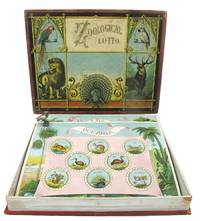
ref. 076544N: N 189-. Early English lotto game manufactured in Germany. Comprising: six coloured lithographed oblong card sheets 18.3 cm. x 23.5 cm. each incorporating eight removable pictorial disks representing the native animals of the different continents; contained within the original card box with decorative sides and pictorial title label on lid edges of box slightly rubbed and with a couple of neat repairs to corners the title label lightly soiled; a couple of small closed tears to the card beneath the Jaguar disk; n.d.c.1890s. The disks are all captioned with the name of the animal and feature a question about that animal on the verso which is answered by the brief text printed on the depression into which the disks are set on the card sheets. For example the Oceania sheet contains disks depicting a kangaroo which asks on the reverse: Who are these funny jumping creatures The answer printed below the disk is The kangaroo's with very clever features. This sheet also includes a black swan emu dingo and a Lyer-bird sic- Whose Lyer does not give one sound The lyer-birds in Australia it is found. N unknown