GRENIER (Francis)Livre Rare Book

2302 risultati
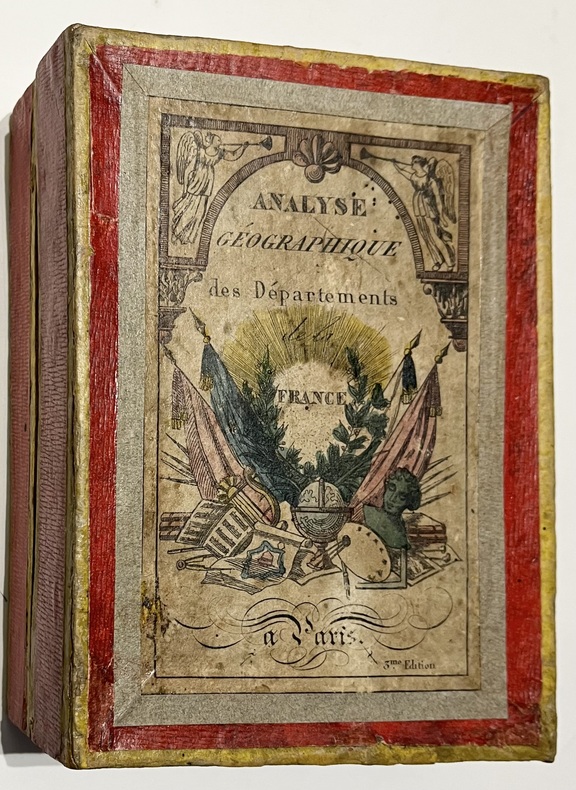
rif. 23192Paris, Aubert & Cie, [vers 1840]. In-folio oblong, 33 pl., cartonnage éditeur illustré (petits frottements et taches, rousseurs).
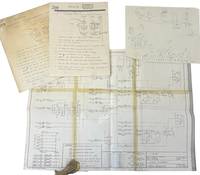
1974rif. 236291974. JRW Electronics' board level modification of Atari Pong to create Handicap Pong arcade conversion engineering archive 1974 documenting JRW Electronics' board level modification of Atari Pong during the first years of the commercial video game industry. The name "Handicap pong" originated with the intention to allow for gameplay to be adjusted so players of different skill levels preferences or abilities could compete on the same machine without replacing the original cabinet. The archive records the conversion of an existing Pong cabinet into Handicap Pong through revised controls altered circuitry and adjustable game parameters. The annotated sheets suggest professional technical use by a JRW technician installer or arcade service operator Archive of four technical documents Mountain View and Sunnyvale California 1974. 1 Logic Diagram. Pong Handicap. JRW Electronics Inc. drawing no. JRW 005 dated 8-6-74. Large engineering schematic titled Logic Diagram Pong Handicap identifying integrated circuit IC locations electrical signal paths wiring harness connections and required circuit board modifications. 2 Handicap Pong. JRW Electronics Inc. Sunnyvale California. Stapled three-page instruction packet titled in manuscript "Handicap Pong" with component-side diagrams showing the populated face of the printed circuit board and numbered steps for lifting IC pins from the board cutting printed copper traces replacing electronic components and adding jumper wires. 3 Handicap Pong. JRW Electronics Inc. Mountain View California. Stapled four-page instruction packet with manuscript check marks wire color assignments IC pin modifications underside wiring connections and a printed adjustment sheet for paddle position paddle centering and ball speed. 4 Single lined notebook sheet with hand-drawn wiring diagrams connector layouts and pin assignments. The documents record the engineering practice of the discrete logic era before microprocessor-based arcade games made software the primary means of altering game behavior. The conversion required physical intervention in the circuit: lifted IC pins cut printed traces substituted resistors and capacitors rerouted harnesses and recalibrated analog controls. JRW's kit belongs to the first commercial aftermarket for coin operated video games in which operators modified existing cabinets rather than purchasing complete replacements. Folding moderate toning edge wear old tape to the large schematic and manuscript annotations throughout. Overall good condition. A compact technical archive of early arcade hardware modification and pre microprocessor video game engineering. unknown
1974rif. 236291974. JRW Electronics' board level modification of Atari Pong to create Handicap Pong arcade conversion engineering archive 1974 documenting JRW Electronics' board level modification of Atari Pong during the first years of the commercial video game industry. The name "Handicap pong" originated with the intention to allow for gameplay to be adjusted so players of different skill levels preferences or abilities could compete on the same machine without replacing the original cabinet. The archive records the conversion of an existing Pong cabinet into Handicap Pong through revised controls altered circuitry and adjustable game parameters. The annotated sheets suggest professional technical use by a JRW technician installer or arcade service operator Archive of four technical documents Mountain View and Sunnyvale California 1974. 1 Logic Diagram. Pong Handicap. JRW Electronics Inc. drawing no. JRW 005 dated 8-6-74. Large engineering schematic titled Logic Diagram Pong Handicap identifying integrated circuit IC locations electrical signal paths wiring harness connections and required circuit board modifications. 2 Handicap Pong. JRW Electronics Inc. Sunnyvale California. Stapled three-page instruction packet titled in manuscript "Handicap Pong" with component-side diagrams showing the populated face of the printed circuit board and numbered steps for lifting IC pins from the board cutting printed copper traces replacing electronic components and adding jumper wires. 3 Handicap Pong. JRW Electronics Inc. Mountain View California. Stapled four-page instruction packet with manuscript check marks wire color assignments IC pin modifications underside wiring connections and a printed adjustment sheet for paddle position paddle centering and ball speed. 4 Single lined notebook sheet with hand-drawn wiring diagrams connector layouts and pin assignments. The documents record the engineering practice of the discrete logic era before microprocessor-based arcade games made software the primary means of altering game behavior. The conversion required physical intervention in the circuit: lifted IC pins cut printed traces substituted resistors and capacitors rerouted harnesses and recalibrated analog controls. JRW's kit belongs to the first commercial aftermarket for coin operated video games in which operators modified existing cabinets rather than purchasing complete replacements. Folding moderate toning edge wear old tape to the large schematic and manuscript annotations throughout. Overall good condition. A compact technical archive of early arcade hardware modification and pre microprocessor video game engineering. unknown books
1902rif. 1677Seventh Report from the Forest Fish and Game Commission a portfolio of unbound prints undated but assumed 1902. The slipcase in green cloth stamped on the front board as shown with this listing is rubbed scuffed and bumped. 99 of 100 plates as issued of fish birds and wildlife as: 52 fish by Denton signed in the plates 5 fish by Denton unsigned; 1 deer by Denton signed in the plate; 1 pheasant by Denton signed in the plate; 1 lobster by Denton signed in the plate. Also 12 birds by Fuertes signed in the plate; 4 animals by Kemp signed in the plate 19 birds by Ridgeway signed in the plate and 4 birds unsigned. The plates are in good condition more photos are available on request. Your purchase helps our small public library. pi B2 State of New York
1938This special issue most notable for its article beginning on page 238 which introduces hemp as a new billion dollar cash crop for American farmers. Pages: 161-320 plus 128 pages of great vintage ads. Other features include: The Lockheed Electra - Flying Wing of the Future (with cover illustration); Chemistry and You - Part 3; The Rough Road to Glory; The Toy That Grew Up; Hunting Oil with Earthquakes; Short Waves Rule the Seas; Shoot When They Don't Expect It; The Puzzle of the Ice Ages; Game Wardens with Wings; Adventures of the Hurricane Hunters; The Hit and Run Fleet. Advertising page 113A is a fantastic one-page black and white photo ad for Harley Davidson motorcycles entitled "You Can't Beat Fun". Unmarked with average wear. Binding intact. Lacking back cover. A worthy copy of this historic vintage issue. Magazine
M., Blass y Cía., s.a. (hacia 1928), 23,5 x 17,5 cm., tela original, 362 págs. con ilustraciones intercaladas + 9 láminas en negro y 43 en color. (?Corta tirada en papel de hilo no puesta a la venta? Palau).
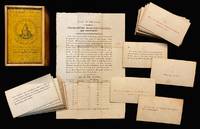
1834rif. 322002724 printed cards 9.5 x 5.4 cm including 12 question cards printed in red and 12 Answer cards printed in black; a folding printed sheet of instructions; contained in the original wooden box two sides very skilfully replaced; sliding lid with printed title label depicting a seated Moses reading from the Tablets. The game is intended for six players who are each provided with a piece of scrap paper called 'Contracts'. The Answer cards are dealt to the players and the Question cards retained by the dealer. The players each examine their aAswer card they have been given after which the dealer selects a question card and lays it down in front of the players and then asks each in turn until the Answer card is produced. If no answer is forthcoming then the dealer refers to a 'key' which matches questions to the correct answers. Whoever reads the wrong answer or fails to recognise they have the correct card in their hand forfeits a Contract. The player who has parted with the fewest Contracts is the winner. Questions include 2 'What time did God employ in forming the Creation' the Answer 'Six days: and rested on the seventh day. We are not to suppose by this expression that God was weary and required rest but that he rested from or left off creating.' 16 'Who is supposed to have arranged and published the Old Testament' Answer 'Ezra a priest of the Jews. Some of the answers stray into the New Testament and are also fearsomely long for children to remember:- 15 'How did the Jews forfeit the favour of God; and will they ever regain it' Answer 'They forfeited the divine favour but their obstinate rejection of the Son of God whose pure doctrine of humility and love was in direct opposition to the worldly pomp and glory which they had falsely led themselves to expect at the coming of Christ. It is predict that they will one day acknowledge Christ as the Messiah and be restored to their former privileges' One has to admit there is quite a lot of anti Jewish feeling in many of the Answer cards reinforcing contemporary prejudices - 22 'In reading the Bible what part may be passed over in order to connect the historical records' - Answer 'You may be allowed to pass over the book of Leviticus and the eight first chapters of the book of Numbers. The books of Chronicles may be read as a repetition of the book of Kings both bring you to the Babylonish Captivity; you then pursue the History of the Jews and read to the end of Esther. The writings of the Prophets as connected with the History of the Bible should be read next. The book of Job the Psalms &. are beautiful compositions and may be read as such at any time.' Produced by the short lived partnership of William Mason Wood a typefounder and shareholder in the Austin Letter Foundry in Aldergate and Kilelm Chandler a printer from Tewkesbury who had recently moved to London and married in 1834. The partnership in Beech street was a few hundred yards from the Austin Letter foundry and as far as we can tell lasted as a business for only a few months before it was dissolved in October 1834. Chandler was successively a printer Station Master Compositor and latterly a Fruitier. We have found no other item issued from their partnership and one feels as a product of their business the cards were a commercial failure. Wood and Chandler, Printers, 41, Beech Street, Barbican.
1931176 pages. "The author of this book believes that you can teach the fundamental mechanism of money and banking as you teach bridge, "by playing it," and thinks this game will do it. As an innovation in teaching method the possibilities are so revolutionary that no educator can afford to ignore it. Moreover, the game is an exceedingly entertaining one; as good a card game as any; can be played by any number from five to ten, and so is well adapted to the family circle, to the business man's club, or as a novelty for the next little dinner party." - from dust jacket. Contents clean and unmarked. Light wear and soiling to exterior of book which features bright gilt lettering and design upon backstrip and front board respectively. Binding sound. Game pieces uniquely stored in boxes within a box inside back board. Minor repair to one interior box. Dust jacket bears several closed tears and is missing a few chips, most notably at top fore-edge of back board and lower corner of back flap. Dust jacket is not price-clipped, bears average wear and is preserved in a glossy new archival-grade Brodart cover. Includes a total of 260 game pieces: 8 score cards; 2 jokers; 150 bank notes; 100 game cards. Overall, a quality copy of this unique and intriguing work. Book
rif. SONG194158232XCatalyst Game Labs 2017-10-04. paperback. Used: Good. 8.70x0.50x11.00. Buy with confidence. Excellent Customer Service & Return policy. Catalyst Game Labs paperback
1923Telephone Talk was the glossy bimonthly publication of the British Columbia Telephone Company. It was written by employees for employees to present information of interest to those engaged in the plant, traffic, commercial, operating, accounting and other departments of the service. Each issue is replete with black and white photos and information on topics such as: company, industry and technological news, traffic levels, expansion plans, personnel announcements, publicity and social events, deaths, weddings, lists of exchanges, and more. As such, these issues serve as a vital preserve of rare and fascinating British Columbia history. This volume covers topics including: Photo of downton Nelson; Bird's-eye photo of Nelson from atop a mountain on north shore of west arm; Kootenay Feature 'The Romance of the 1890s - 8 pages of text and archival photos, including electric street cars in Nelson!; Table showing 'Exchanges in order of percent good toll calls; Cover advert. for Northern Electric Vacuum Cleaner!; Review of growth show steady expansion - 3 pages; Telephoning across Atlantic by AT&T Wireless continued for hours; When the Victoria and Esquimalt Telephone Company issued its own (one call) nickels; B.C. Industrial Review - statistics; Bar graph of # of phones operated from 1906 through 1923; the company's operator school; Issuing of monthly phone bills a work of magnitude - 4 page article with photos; photos of the halibut industry before 'the fish were scarcer in quantities and their habitats more scattered'; William Farrell- an appreciation of the former company president; 7 page article on B.C.'s deep sea fishing industry - great photos - halibut, herring, flounder; multiple photos from the Kootenays of snakes which have climbed up phone poles onto the wires!; photo of 25 year-old phone; Great full-page photo of the CIBC building at Hastings and Granville; 8 page article on the banks of vancouver with excellent photos; First interdepartmental football game; new power plant at Seymour office; A phone in B.C. for every 6 persons; Feature on Dams and the water-powers that turn the wheels of industry - photos of dams and various industries which use electricity, including the American Can factory and grain elevators; new power plant at Seymour office - illustrated; photos of productive farms and ideal homesites with super centerfold luxury Saanich home; Cover photo of U.S. President Harding in Stanley Park; Full-page photos of the U.S.S. Henderson entering the narrows and at dock with President Harding aboard; 13 page illustrated feature on the visit of President Harding - the first visit to Canada made by a President of the United States (President Harding died mere days later on August 2nd in San Francisco and this is reported as well); Photo of Crosland Bros. Farm in Duncan; 9 page illustrated feature on the seed growers of B.C.; photo of Duncan office under construction; Nice 8-page illustrated feature on Haney and area; photographing sound; Exploring Kootenay - Bill Skilling; 9 page illustrated feature on the Delta and Ladner district; Many miles of new long distance circuits; Improved inter-office trunk lines in Vancouver; and more. Half-leather binding. Average wear overall with the exception of the backstrip which is missing small chips and loose at back edge. Ink stamp of company executive E.P. LaBelle upon top edge else unmarked. Binding intact. Spine leaning moderately. Book
1875rif. 37921Paris: M.J. & Cie 1875. 10 1/4 x 10 1/4 x 5 inches. Some minor wear. 10 1/4 x 10 1/4 x 5 inches. M.J. & Cie unknown
1875rif. 37921Paris: M.J. & Cie 1875. 10 1/4 x 10 1/4 x 5 inches. Some minor wear. 10 1/4 x 10 1/4 x 5 inches. M.J. & Cie unknown books
1952rif. 63021Paris: Imprimeurs L.I.E.S.A. 174 Quae de Jemmapes 1952. Oblong 4to. 9.25 x 7.75 in. 2 24 pp. colour-lithograph illustrations throughout 10 leaves unnumbered. consisting of 4 colour lithograph boards to cut out alphabet letters for playing 2 black & white lithograph letter pages for colouring cutting out themselves and playing word games 1 thick instruction leaf 3 printed leaves on blue- salmon- and green-tinted thin paper instruction sheets. Flexible boards colour-lithographed front cover rear board with model figures on verso to be cut out to create paper-engineered toys spiral metal comb binding as issued minor edgewear age toning still a VG and complete copy. First edition of this wonderfully illustrated and charming alphabet game/book featuring anthropomorphic letters in the “Kingdom of the Alphabet” set against the adventures of a Medieval/Renaissance Country of Vowels and the Isle of Consonants uniting over a banquet ball to form an alphabet. Marquet 1892-1984 and Desnoyer 1901-1988 were illustrators and miniaturists noted for their inventive games and illustrations who had originally designed this game/book in 1939. They were married to the well known painters Albert Marquet and Francois Denoyer respectively. Desnoyer a Russian-Ukrainian emigre from Kiev had originally landed in Bohemia by 1906 where she learned the Western alphabet and later settled in France. This particular copy not only features the four colour lithograph boards for children to cut out and play the suggested alphabet game but also the 2 additional boards for an adult word game and back board to create toys which are typically missing as are often the colour-tinted instruction sheets. Worldcat locates 4 copies U of WA & Princeton Incomplete Bibliotheque Nationale FR & Bibliotheque des Chiroux BE -- complete; See: Robert Bolick Books on Books Collection -- Souza Desnoyer and Marcelle Marquet Il etait une fois un alphabet 1951-2009 Dec. 22 2022. Imprimeurs L.I.E.S.A., 174, Quae de Jemmapes, hardcover
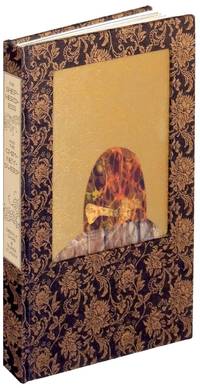
2012rif. 32906San Francisco: Deeply Game Publications 2012. Hardcover. Fine. Hardcover. Number 45 of 55 copies. Signed by the author and book artists. Book artist Sara Press collaborated with Andrew Rottner to create this exquisite tribute to printing's golden age. "The story by Christina Lauritsen mis-remembers H.C. Andersen's classic tale of the same name transforming it into a story of revelation and madness. The visual progression of the book mirrors the plot pitting the beauty of the decorative arts against the intense and unpredictable messiness of human experience. This book confronts the inevitability of loss and bows to intellectual freedom and its attendant risks." artists' statement. The book is printed in Garamond and Bembo types on Moab Entrada paper. It features two 26 inch wide foldouts with illustrations by Rottner. The striking cover is done from a cut-marbled-paper and brocade. The book measures 7 x 9 inches. It is unpaginated. Deeply Game Productions creates and distributes the art works of Sara Press and her collaborators. Sara L. Press is a photographer printmaker and book artist based in the San Francisco Bay Area. Many of her projects examine peculiar areas of overlap between nature and culture for example: dog fighting feral children and our co-evolution with snakes. Sara has also wrestled with the relationship between creativity and the scientific method. Recently Sara has turned to constructions of masculinity and femininity in our culture such as human bloodsports and altered fairy-tales. Her work can be seen in public collections around the country and are also in many library and private collections. A lovely book in fine condition. PRI/021919. Deeply Game Publications hardcover
2012rif. 32906San Francisco: Deeply Game Publications 2012. Hardcover. Fine. Hardcover. Number 45 of 55 copies. Signed by the author and book artists. Book artist Sara Press collaborated with Andrew Rottner to create this exquisite tribute to printing's golden age. "The story by Christina Lauritsen mis-remembers H.C. Andersen's classic tale of the same name transforming it into a story of revelation and madness. The visual progression of the book mirrors the plot pitting the beauty of the decorative arts against the intense and unpredictable messiness of human experience. This book confronts the inevitability of loss and bows to intellectual freedom and its attendant risks." artists' statement. The book is printed in Garamond and Bembo types on Moab Entrada paper. It features two 26 inch wide foldouts with illustrations by Rottner. The striking cover is done from a cut-marbled-paper and brocade. The book measures 7 x 9 inches. It is unpaginated. Deeply Game Productions creates and distributes the art works of Sara Press and her collaborators. Sara L. Press is a photographer printmaker and book artist based in the San Francisco Bay Area. Many of her projects examine peculiar areas of overlap between nature and culture for example: dog fighting feral children and our co-evolution with snakes. Sara has also wrestled with the relationship between creativity and the scientific method. Recently Sara has turned to constructions of masculinity and femininity in our culture such as human bloodsports and altered fairy-tales. Her work can be seen in public collections around the country and are also in many library and private collections. A lovely book in fine condition. PRI/021919. Deeply Game Publications hardcover books
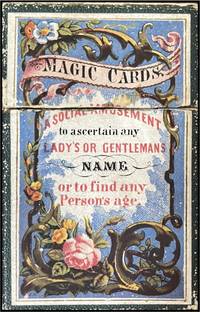
1850rif. 19999England 1850. 18 cards 89 x 54 mm 9 printed on pink cardstock and 9 on yellow. Housed in original slipcover made of pebbled green paper over boards with chromolithographed label affixed to the front open at top and bottom. Light wear to edges of slipcover otherwise in excellent condition. A charming and unusual magic card game based on mathematical principles that purports to reveal anyone’s name and age. Using the pink cards for women and yellow for men the questioner holds onto the instruction and key cards and gives the player the rest of them which have lists of names and numbers and the letters A E I O U W and Y at the top. The player tells the questioner the letters corresponding to which cards have their name on them and using the key the questioner adds their corresponding numbers to get the player’s name provided it is one of the 127 names listed. The game is played the same way to determine players’ ages. The game actually works! unknown
1850rif. 19999England 1850. 18 cards 89 x 54 mm 9 printed on pink cardstock and 9 on yellow. Housed in original slipcover made of pebbled green paper over boards with chromolithographed label affixed to the front open at top and bottom. Light wear to edges of slipcover otherwise in excellent condition. A charming and unusual magic card game based on mathematical principles that purports to reveal anyone’s name and age. Using the pink cards for women and yellow for men the questioner holds onto the instruction and key cards and gives the player the rest of them which have lists of names and numbers and the letters A E I O U W and Y at the top. The player tells the questioner the letters corresponding to which cards have their name on them and using the key the questioner adds their corresponding numbers to get the player’s name provided it is one of the 127 names listed. The game is played the same way to determine players’ ages. The game actually works! unknown books
1836rif. 5579Paris, Bourrut Lemerie, [circa 1836]. 1836 Jeu de 90 cartes (132 x 82 mm). (quelques rousseurs) 1 boite d'origine (160 x 120 mm) en carton recouverte de papier rouge, titre imprimé en couleur sur le couvercle. (défauts d'usage)
rif. 118195Berlin Simon Schropp c. 1790. Engr. broadsheet. Large folio 400x505 mm. Uncut with wide margins 465x635 mm folded. Small tears in foldings and in the outer margins. Stain in upper part. Rare version of this board game with the main title and the individual ones in four languages; French German English and Polish. cf V & A Museum MISC.124-1989.Based on the English version published in 1790 as ”The New Game of Human Life” by John Wallis and Newbury the Berlin publisher Simon Schropp published one version with French text only and this one in four languages. They all go back to Crépy’s ”Le Nouveau Jeu de la Vie Humaine” from ca. 1775.The aim of the game is to reach immortality and the end space nr 84 of the game is the Immortal Man. This version contains no printed rules but the game is so similar to that published by John Wallis that it will be played the same way:The game is played with two dice. Each tile on the playing field has instructions to follow. For instance: ”The Studious Boy at 7 shall receive a Stake and shall proceed to 42 the place of the Orator”. ”The Negliant boy at 11 shall pay a Stake and shall remain two rounds without spinning”. ”The Married Man at 34 shall receive two Stakes for his Wife’s Portion and go to be a Good Father at 56”. ”The Romance Writer at 40 shall pay two Stakes and go back to the Mischievous Boy at 5”. Etc.”The Immortal Man who has existed 84 years seems worthy by his Talents and Merit to be a Model for the Close of Life which can end only be Eternity. When we arrive at the No. 84 we shall have gained all we can by this Game but if we exceed this number we must go back as many points as we have proceeded beyond it. The Age of Man is divided in seven periods of twelve years viz. Infance to Youth Manhood Prime of Life Sedate Middle-age Old age Decreptitude and Dotage”. Some famous people are depicted. As philosoper nr 62 is Voltaire the poet nr 41 is Alexander Pope and the geographer nr 47 is Captain Cook pointing at a map. The final end space Immortality in the Berlin version shows a monument to Leopold of Brunswick Prince of Brunswick-Wolfenbüttel 1752-85. His charity as a general towards his soldiers made him famous and he drowned while trying to save his soldiers lives in the great flood of the River Oder. unknown
1957rif. 186938Japan: Koide Nobuhirosha c. 1957. A charming set of playing cards based on the film Nankyoku Tairiku "The South Pole" recounting the story of the 1956-57 Japanese Antarctic Research Expedition. The cards show scenes of penguins the research ship Soya and the expedition members. In 1955 the Japanese government announced plans to send a research group to Antarctica in the following year. A team of 53 scientists led by Professor Nagata Takeshi set off on 8 November 1956 the first time Japan had explored the south pole since the early 1900s. They set up the Syowa Station on East Ongul Island before being emergency airlifted out of a storm. A documentary film focusing on the expedition was released in June 1957 directed by Hayashida Shigeo and titled Nihon nankyoku chiiki kansokutai no kiroku: Nankyoku Tairiku. This game was released to complement the film. Karuta is a traditional Japanese matching game where each pictorial card is assigned a letter of the Japanese alphabet and must be paired with an associated poem sentence or proverb. The player who can make the most matches wins. 90 playing cards 61 x 81 mm landscape or portrait 45 with colour photographic illustrations on one side 45 lettered in black on one side. Housed in original pictorial box 170 x 132 x 35 mm lettered in red and black. Lacking instructional booklet. Cards a little toned and bowed; box scuffed with minor loss in places bottom with some damp-staining remains of plastic wrap on lid verso old repairs in places: a very good example. Galbraith p. 133. unknown
1929rif. 63842London: H.F. & G. Witherby 1929. Tall 8vo. 223 pp. plus 1 pp. publisher’s ads. Photo frontisp. numerous photo plates throughout by W. Woodhouse. Red embossed publisher’s cloth gilt lettering & ruling on spine minor bumping to couple corners edgewear to lower fore-edges dustsoiling to upper fore-edge minor sunning head of spine w/ d.j. wraparound cover art image of hunter shooting at a man-eater lion w/ brushfire in the background chipping & tear to head of spine w/ about 1.75 in. of loss to lettering chipping & edgewear to foot of spine some minor creasing still a VG/G- copy w/ mimeographed private library slip laid-in for M.R. Steele and bookseller’s label on rear pastedown. First edition stated of this work describing the author’s hunting adventures while leading an American hunting party through the African bush tracking down man-eating lions and rogue elephants. Chadwick 1882 had first emigrated to South Africa in the 1920’s and became a transport rider and member of the Bechuanaland Protectorate Police while working as a professional hunter earning a living selling ivory and lion skins from his trophies. The original dustjacket is exceedingly scarce with Ellen Herring of Trophy Room Books noting that they had only seen this one copy. H.F. & G. Witherby, hardcover
1874rif. 246686London: Chapman and Hall 1874. First edition secondary binding. vi 337. 1 vols. 8vo. Green cloth spine titled in gilt. Very good minor rubbing. First edition secondary binding. vi 337. 1 vols. 8vo. Tiger hunting in Central India with notes on leopard. The author "also relates numerous stories from other sportsmen focusing on hunting bear rogue elephant and the like" Czech. Czech Asia p. 2 Chapman and Hall unknown
1874rif. 246686London: Chapman and Hall 1874. First edition secondary binding. vi 337. 1 vols. 8vo. Green cloth spine titled in gilt. Very good minor rubbing. First edition secondary binding. vi 337. 1 vols. 8vo. Tiger hunting in Central India with notes on leopard. The author "also relates numerous stories from other sportsmen focusing on hunting bear rogue elephant and the like" Czech. Czech Asia p. 2 Chapman and Hall unknown books
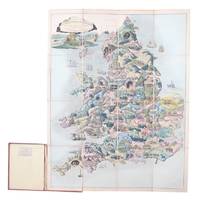
rif. AQ30350London: Published by Edward Wallis 42 Skinner Street s.d. c. 1840 Elaborately lithographed aquatint folding sheet dissected into 16 and mounted on linen bound within original publisher's gilt-lettered blind-tooled cloth folding case. The case a trifle marked lacking ties with some cracking to hinges internally; very occasional marking to map-sheet itself. Without the rare instruction book or draw cards. A well-preserved example of an obscure early nineteenth-century educational map game - issued by Edward Wallis 42 Skinner Street - wherein the player is instructed through play and vignette illustrations in the notable towns and principal economic outputs of the different English and Welsh counties. Dorset for example features images of coopers i.e. making barrels and dairy maids; whilst the topography of Cornwall is dominated by an illustration of copper mining. Other counties feature cathedrals Such as Winchester and factories. The aim of the race was to progress through the counties which are numbered with Essex as 1 and Kent as 150 the moves determined by drawing cards; the answering of questions related to the county of landing would also allow players to progress more rapidly. Edward Wallis was one of two of the sons of John Wallis d. 1818 the prolific London board game book map and print seller to follow him into the publishing business. He operated on his own account from 42 Skinner Street between 1818 and 1847. . Dimensions 520 x 660mm unfolded 140x180mm folded. Published by Edward Wallis, 42 Skinner Street, [s.d., c. 1840] hardcover
rif. 1304JC037POR M. MARIA DA CAZA E SOCIEDADE Censor Regio e Professor de Mathematica no Collegio Mazarino. Traduzido do Francez. COIMBRA: NA REAL OFFICINA DA UNIVERSIDADE. M.DCC.LXXV. 1775. In 8º de 21x14 cm com xvi 359 pags. Encadernação da época inteira de pele. Ilustrado com 12 gravuras desdobráveis em extra-texto com desenhos de geometria descritiva linear e no espaço; sistemas mecânicos de desmultiplicação das forças; etc. 1ª edição desta obra. Inocêncio não menciona. Obra publicada à luz da reforma pombalina da Universidade de Coimbra e dos estudos em Portugal. Nas folhas iniciais constam um privilégio régio e respetivo alvará assinado pelo próprio marquês de Pombal retirando ao Colégio dos Nobres as faculdades do ensino dos estudos e da impressão dos livros clássicos matemáticos e transferindo as mesmas em exclusivo para a Universidade de Coimbra. M-4-D-13 unknown