2 302 résultats
1978réf. 62356Surrey England: Spur Publications Saiga 1978. English Language Edition. Hardcover. Nr Fine/Very Good Clean Price Clipped Paper Price Label. Octavo. Two Pages in Full Colour Of Indian And Cornish Game Together With 41 Illustrations Of Prize Winning Birds And Equipment. 8.75 5.75 0.8 From the Poultry FAnciers’ Library Edited by Dr. and Mrs. J. Batty A Crisp Copy Spur Publications, Saiga hardcover
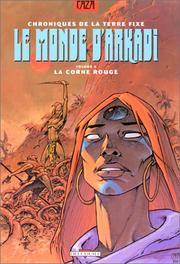
2004réf. I-478-535Productions Guy Delcourt 2004. Hardcover. Very Good. Volume 1. Ammareal gives back up to 15% of this item's net price to charity organizations. Productions Guy Delcourt hardcover
2004réf. I-478-537Productions Guy Delcourt 2004. Very Good. Volume 3. Ammareal gives back up to 15% of this item's net price to charity organizations. Productions Guy Delcourt unknown
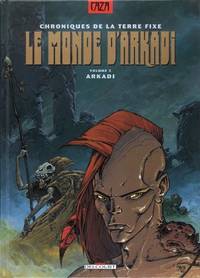
2001réf. I-478-538Delcourt 2001. Very Good. Volume 4. Ammareal gives back up to 15% of this item's net price to charity organizations. Delcourt unknown
réf. D16OS-00436Game Designer's Workshop. Used - Very Good. Very Good condition. 1977. Revised edition. Gaming Role-playing A copy that may have a few cosmetic defects. May also contain light spine creasing or a few markings such as an owner’s name short gifter’s inscription or light stamp. Game Designer's Workshop unknown
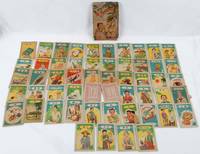
1942réf. 221345大阪. Osaka.: 増田営業所. Masuda Eigyosho. Circa 1942. Complete set of 54 flash cards in original pictorial light card box 13.5 x 9.7cm. Some occasional browning box worn and a little chipped but overall very good. A fascinating Japanese wartime card game designed to teach Malay to Japanese speakers. This set of flash cards formed part of a series entitled “Learning the Languages of East Asia” Tōa no Gogaku. Each card bears a Japanese word on one side accompanied by a colourful illustration with the Malay translation on the reverse. The text on the back of the box explains the rules of the game and adds that “because there is the Malay translation on the back of the picture you can study by yourself while looking at the customs and scenery of Malaya.” Although the cheerful illustrations of flowers animals foodstuffs and other everyday subjects give the cards the appearance of a children’s game they were intended primarily for Japanese soldiers taking part in the occupation of the Malay Peninsula as the box illustration indicates. Words printed on the sides show that this card game was produced to be sent to the servicemen in Malaya. Encounters between local people and Japanese depicted on the cards invariably involve members of the Japanese military. One card teaches greetings such as “good morning” “hello” and “good evening” for example shows a Malayan boy bowing to a saluting Japanese soldier while aircraft fly overhead. The vocabulary taught includes the names of various forms of transport such as “ship” “train” and “aeroplane” as well as words including “translator” “army” and “cannon” and phrases such as “come here” and “please show me that”. The latter is illustrated by a Japanese soldier addressing a boy holding a book. An unusual and intriguing piece of wartime ephemera offering insight into the practical challenges of communication between occupier and occupied in Southeast Asia. . 増田営業所. [Masuda Eigyosho]. unknown
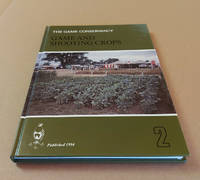
1994réf. 13290Scarce hardcover viii 97pp 4 pages of glossy colour plates numerous b&w photos in text NOT ex-library. Book is clean and bright throughout untanned with unmarked text free of inscriptions and stamps firmly bound. Issued without a dust jacket. -- This is a practical field guide to the selection establishment and management of crops grown to provide cover and feed for gamebirds produced by the advisory arm of the Game Conservancy - a body whose research into farmland ecology and game management has shaped best practice across the British countryside for decades. This second volume in the Game Advisory Guides series draws directly on that research heritage and on the hands-on experience of the Conservancy's advisory officers working with shoots and farms throughout the UK. -- This guide explains how to design establish and manage game and shooting crops on working lowland shoots. It links agronomy ecology and shoot layout showing how cover and feed crops can be built into existing rotations rather than bolted on as an afterthought. Early sections discuss how to choose and position strips and blocks in relation to drives topography and prevailing winds and how soil type drainage and previous cropping influence the choice of mixes and cultivation methods. The core of the book is a series of crop profiles that compare annual and biennial species and mixtures used to provide both shelter and seed through the shooting season and winter. Examples include tall brassicas such as kale and Texel greens and seed rich combinations based on quinoa buckwheat millet canary grass and fodder radish. For each the guide discusses sowing dates and rates fertiliser needs susceptibility to pests and disease and likely longevity alongside their value to pheasants partridges and a wide range of farmland birds. Later sections place game and shooting crops in a wider conservation and policy context. They look at how winter bird crops function as habitat for declining seed eating species how game covers can be aligned with agri-environment and stewardship schemes and how to balance sporting aims with wider biodiversity objectives. The manual continues to be cited in ecological research and is recommended reading on gamekeeping countryside management and wildlife feeding courses reflecting its ongoing relevance wherever shoots and conservation need to be planned together. Game Conservancy hardcover
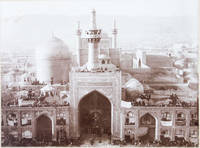
réf. PF48Fourteen loose original albumen photographs ca. 171x123 cm 6 ¾ x 4 ¾ in mounted on ornamented cardboards. All photos with period Russian captions on the verso. Photos housed in a folder. Light soiling of the cardboards photos age-toned several photographs with small stains but overall a very good collection of strong interesting photos. Historically important collection of professional albumen photographs mostly documenting Mashhad Iran in the late 19th century and before the 1912 bombardment of the city. At the time Mashhad was a major political and commercial center under the Qajar dynasty. Owing to its proximity to Afghanistan and Russian Central Asia the city became a focal point of the Great Game between Britain and Russia. Following the establishment of the Russian consulate in Mashhad 1889 Russian consular guards Cossack escorts and military advisers appeared in the city to protect Russian subjects. In 1912 amid anti-Russian protests Russian Cossack forces heavily bombarded the city heavily damaging the Imam Reza Holy shrine complex and surrounding areas. As follows from the captions the photographer was of Russian origin and was likely on assignment related to the military interests of the empire in the region. The stiff ornamental mounts suggest that the photos were produced for official or presentation purposes possibly intended for consular archives a government report or as a gift to a high-ranking official. The collection contains 14 photographs of mostly Mashhad including four well-executed early views of the pre-bombarded Imam Reza Holy Shrine. The images show a general view of the crowded shrine the arch and courtyard with horses and an archway guarded by armed soldiers. Another important photo depicts the interior of the nearby Gawhar-Shad Mosque with three Russian soldiers posing on the pulpit. Especially interesting is an image of the British Consulate entrance established in the city in 1889 The consulate was closed in 1911 following the Anglo-Russian Convention of 1907 which divided Persia into spheres of influence. Despite thorough research no other photographs of the consulate have been found online. Other identified photographs from Mashhad include the Persian artillery barracks with cannons in the yard and the entrance to the governor’s palace showing a dozen militaries and civilians posing for the photo. The collection also includes at least two photographs from Afghanistan depicting the crowded “Tehran Gate” with locals in traditional attire passing through and the “New Afghan Gate” with armed soldiers facing the camera. Among four unidentified photographs are “Igda” possibly “Eedgah” Kandahar Aghanistan “Kochan” possibly Kashan Iran the “Ergov” gates and the “Bank Gates” with Kazak soldiers guarding the entrance. Overall historically important collection of professional albumen photographs mostly documenting Mashhad Iran in the late 19th century and before the 1912 bombardment of the city. hardcover
2010réf. DADAX1166778517Kessinger Publishing 2010-09-10. paperback. New. 6.00x0.82x9.00. Buy with confidence. Excellent Customer Service & Return policy. Kessinger Publishing paperback
1954réf. 145721London: The Trustees of the British Museum 1954. First Edition. Paperback. Very Good. London The Trustees of the British Museum 1954. Octavo xiii-xviii 165-255 pages. Wrappers a little creased sunned and rubbed; price inked out at the foot of the front cover; an excellent copy. The Trustees of the British Museum paperback
2025réf. 9781506739601Dark Horse Books 2025 Book. New. Hardcover. Dark Horse Books hardcover
réf. DADAX1947335375Catalyst Game Labs 0000-00-00. First Edition. Paperback. New. 11.02x7.87x0.04. Buy with confidence. Excellent Customer Service & Return policy. Catalyst Game Labs paperback
2023réf. DADAX1638611262Catalyst Game Labs 2023-11-22. hardcover. New. 11.00x8.75x1.00. Buy with confidence. Excellent Customer Service & Return policy. Catalyst Game Labs hardcover
réf. ria9780415706704_inpPaperback / softback. New. New Book; Fast Shipping from UK; Not signed; Not First Edition; This is the only book out there that deals with the technical details of sound for social casual mobile and cloud gaming markets. Including Unity iOS Android HTML5 and more. paperback
réf. 05401France: 1900. Les Trois Chats" A Delightfully Grotesque French Belle Époque Passé-Boules Carnival Game PASSÉ-BOULES GAME. Les Trois Chats. French hand-painted polychrome papier-mâché ball-toss carnival game. France ca. 1900. A remarkable surviving French passé-boules fairground game modeled as three wonderfully expressive cats arranged side by side each with a wide-open mouth forming the target through which the player was required to throw a ball. Hand-modelled and painted in polychrome papier-mâché over a wooden-supported structure measuring approximately 24 1/2 inches high × 23 5/8 inches wide × 5 7/8 inches deep 630 × 600 × 150 mm. The three feline heads are individually characterized with wonderfully exaggerated green eyes whiskers and large open mouths each approximately 2 1/2 inches 63 mm. across. The particularly splendid central gray cat wears a jaunty orange-and-blue striped hat prominently lettered "TOTO." The cats rest above three projecting differently colored receptacles - blue orange and yellow - with the respective scores "30" "50" and "20" painted beneath them. The higher-scoring central target is therefore appropriately occupied by the magnificently hatted Toto. The whole is reinforced by a simple wooden structure including boards at the base and upper portion while the projecting lower section forms the ball-catching receptacle. The reverse revealing the utilitarian construction of what was intended as a working fairground amusement survives substantially intact. The photographs also reveal the wonderfully irregular hand-modeled surfaces and surviving original polychrome decoration that give the three cats their extraordinary personalities. A remarkable survival of a French passé-boules carnival game from the Belle Époque. Passé-boules - literally games in which a ball was passed or thrown through an opening - were a familiar feature of French fêtes foraines and popular entertainments during the nineteenth and early twentieth centuries. Targets frequently took the form of grotesque or comic human and animal heads their exaggerated open mouths providing the aperture through which the player attempted to propel a small ball. Points were awarded according to the successful target as demonstrated here by the painted scores beneath the three cats. The present example is particularly appealing for its three anthropomorphic feline characters. Their exaggerated expressions brilliant green eyes and distinctly individual personalities inevitably recall the celebrated comic cats of Louis Wain 1860-1939. No attribution to Wain is intended but the comparison places the game delightfully within the wider late-Victorian and Edwardian fascination with humorous humanized cats. Unlike printed or manufactured toys intended for domestic use fairground games were working objects subjected to repeated handling impact transportation and exposure. Consequently early papier-mâché examples surviving substantially complete are inherently scarce. The survival here of the three original sculptural targets their painted decoration numbered scoring system and integral ball receptacle makes Les Trois Chats an unusually evocative piece of French popular entertainment. Its appeal lies equally as a folk-art sculpture fairground artifact and piece of feline whimsy: three gloriously eccentric cats who have apparently spent more than a century waiting for someone to throw a ball into their mouths. Provenance: Acquired in Paris directly from the family of the former owner by whom it was said to have descended from a grandparent who acquired the game around the turn of the twentieth century. France: , 1900 unknown
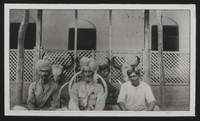
réf. P95Oblong Folio album ca. 24x35 cm. 12 card stock leaves. With 96 mounted gelatin silver photographs mostly printed as real photo postcards all ca. 85x135 cm 3 ¼ x 5 ¼ in. All but ten photos with period white ink captions on the mounts. With a large loosely inserted gelatin silver photo ca. 20x30 cm 7 ¾ x 11 ¾ in. Period black cloth album with a gilt-tooled vignette “The Photo Gallery” on the front board. Captions slightly faded one photo has been previously removed from the album but overall a very good album with interesting strong images. Attractive collection of well-preserved vivid photographs of British colonial residents going on big game hunting trips in central and southern India in the 1920s. The images illustrate a 1921 hunting trip to the Nilgiri Mountains the areas near Ooty Avalanche Lake and modern-day Mudumalai National Park a 1923 safari to the Godavari River valley near Karimnagar a 1926 trip to the “Kanara jungle” near “Bilki” Bilaki and “Chipgiri” Chipageri both in the state of Karnataka near the modern-day Sharavati Valley Wildlife Sanctuary and a 1925 trip to the Wardha River valley on the Central Plains. There are also several photos from a fishing trip to the Nilgiri Mountains in 1923. Most photos show the British hunters “self” “Harry” “Bill” and their trophies – tigers including “maneaters” bison elephants bears caught fish a panther and a chinkara antelope. There are also interesting images of a “view from Ooty club” Ooty and Avalanche Lakes “the Kundas” Kunda Hills “forest bungalow Mudumalai” hunting camps native staff and porters fishermen in the Godavari River two examples of “How not to and how to climb for toddy” “Chipgiri bungalow” Wardha River etc. Eight photos at rear portray the album compiler and his racing horses – winners of several races in India in the 1920s. Overall a nice album with sound photos from traditional hunting trips in the jungles and mountains of central and southern India – to the areas many of which became national parks in independent India. hardcover
réf. DADAX1942487541Catalyst Game Labs 2016-10-12. hardcover. New. 8.30x0.60x10.80. Buy with confidence. Excellent Customer Service & Return policy. Catalyst Game Labs hardcover
1794réf. 114610London: John Wallis 1794. First Edition. Hardcover. Very Good. London John Wallis 24 December 1794. Overall dimensions 520 × 663 mm dissected into 16 panels and mounted on linen comprising a hand-coloured map engraved by McIntyre printed surface 380 × 530 mm with extensive letterpress text on either side. Paper slightly tanned with a few small marks including some inkspots creases tiny chips and scattered light foxing; top right-hand corner trimmed close with the text lightly shaved; cloth a little foxed and discoloured on the verso; overall in very good condition. An attractive Georgian board game with the winner being the first player to reach London. The letterpress gives rules for playing the game and details of the history and manufactures of the 117 towns mentioned. It is not necessarily accurate; for instance Henry VI not Henry IV was captured at Northampton by the Yorkists. We have traced several reissues of the game using the same plate but with some variation to the letterpress and this error appears in several of them. A spinner 'Totum' and counters were available for separate purchase and are not present in this instance. John Wallis hardcover
1906réf. BIGGAMEH002055Privately printed by Marchant Singer & Co London. 1906. First edition. Royal octavo. pp xvi 415. 112 illustrations mostly from photographs by Mrs McMillan but also a number of full-page reproductions of drawings by the author. Large folding colour map in pocket at rear. Original red cloth gilt. Accounts of four hunting trips by Mr and Mrs McMillan in which the author participated. The McMillans originally from St Louis Missouri had relocated to London and also owned a farm in Kenya.Gift inscription from 1923 on front free endpaper. Front inner hinge starting to split. Endpapers a bit tanned and spotted. Very good indeed. Scarce. Privately printed by Marchant Singer & Co, London. hardcover
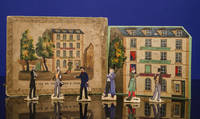
réf. 04338Paris: H. Duru 1840. A Remarkable Survival H. Duru's Apparently Unrecorded Le Jeu du Portier Complete with All Six Hand-Colored Standing Figures and the Original Pictorial Box FRENCH GAME. DURU H. publisher. Le Jeu du Portier. The Doorman's Game. Paris: H. Duru ca. 1840. An exceptionally rare early French hand-colored lithographed game complete with the original architectural playing board all six numbered standing figures and the original pictorial card box. Original hand-colored lithographed board depicting the façade of a Parisian multi-story house 8 3/4 x 6 3/4 inches; 222 x 172 mm. the upper right corner beveled as issued. Six original hand-colored lithographed cut-out figures each mounted on its original base average size 3 1/8 x 1 1/4 inches; 80 x 32 mm. Complete in the original card box the lid bearing a hand-colored lithograph depicting the same multi-story house and titled beneath "LE JEU DU PORTIER PAR H. DURU." The board and figures in near fine condition; the box somewhat soiled with the corners strengthened with cloth tape. A remarkable survival in substantially complete original condition. The architectural board represents a vertically organized Parisian apartment house its occupants and businesses identified floor by floor. It is lettered from top to bottom: "No. 6"; "No. 5 / Locart Fnt Lunetier au 3me"; "No. 4 / F. Sonnet M.de Dentelles"; "No. 3 / Clagmann et Cie. Banquiers"; "No. 2"; and "No. 1 / Loge du Portier." The six accompanying figures correspond to the numbered hierarchy of the building and are identified as: 1. Le Portier the doorman or concierge; 2. Propriétaire proprietor or landlord; 3. Banquier banker; 4. Marchand merchant; 5. Fabricant manufacturer; and 6. Ouvrier worker. The original printed numbers and occupational designations remain visible on the bases of the figures. The figures form a delightful miniature gallery of French social types: the prosperous Propriétaire in his vividly patterned blue coat; the top-hatted Banquier; the fashionably dressed Marchand carrying his hat; the Fabricant; the plainly dressed Ouvrier; and the Portier the indispensable guardian of the building. Their original hand-coloring remains remarkably fresh. More than simply a children's amusement Le Jeu du Portier presents in miniature a fascinating picture of nineteenth-century Parisian urban life and social hierarchy. Proprietor banker merchant manufacturer workman and concierge are transformed into movable characters associated with a single apartment house. The game belongs to the particularly appealing nineteenth-century tradition in which children's toys simultaneously entertained and introduced their young players to occupations social distinctions and the organization of contemporary life. The choice of the portier as the central character is especially evocative. Occupying the loge at street level the Parisian concierge stood literally at the entrance to the social world represented by the building controlling access and observing the comings and goings of its occupants. The numbered inhabitants ascending through the building consequently provide an engaging physical representation of the social structure of nineteenth-century Paris. H. Duru was a Parisian publisher active in the production of illustrated educational works children's books puzzles and games during the middle decades of the nineteenth century. Among Duru's publications were Nouvelle méthode de lecture progressive ou Lecture apprise en quarante jours Syllabaire universel en action Les homonymes illustrés Grammaire illustrée and Alphabet chantant. Duru's activity as a publisher of games is independently confirmed by another lithographed production Le Jeu du Touriste preserved in the collection of the Musée des Civilisations de l'Europe et de la Méditerranée Mucem. The survival of the six separate standing figures together with their architectural board and original pictorial box is exceptional. The standing figures are of particularly delicate construction consisting of thin lithographed card cut-outs mounted upright on their original bases - ephemeral playthings never intended to survive nearly two centuries of use. We have been unable to locate another example of Le Jeu du Portier in OCLC or in the institutional collections and published references consulted. Apparently unrecorded and possibly unique in this complete state. A remarkable and highly evocative survival of an early French children's game combining hand-colored lithography three-dimensional play and a wonderfully detailed representation of nineteenth-century Parisian social life. Paris: H. Duru, 1840 unknown
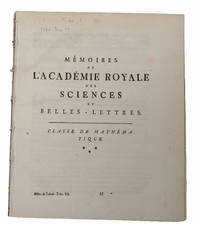
1766réf. 31081Berlin Haude et Spener 1766. 4to. No wrappers as issued in "Mémoires de l'Academie Royale des Sciences et Belles Lettres" tome XX pp. 91-164 91-116;117-143;144-164. 1 engraved plate belonging to "Microscope." 3 first editions by Euler in algebra in optics and in the theory of chance - in this last paper he discusses the so-called St. Petersburg paradox the Game Pharon. unknown
réf. DADAX1930206291Official Nintendo Power January 1 2002 0000-00-00. paperback. New. 0.00x0.00x0.00. Buy with confidence. Excellent Customer Service & Return policy. Official Nintendo Power (January 1, 2002) paperback
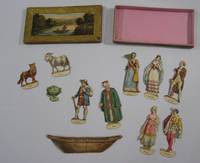
1825réf. 18320French: n.p. 1825. Very good. 11 engraved cut-out figures or objects including ferryman three couples wolf goat cabbage and boat to be slotted into boat original box with engraved pictorial label colored by hand A rare children's game possibly printed by the Parisian publisher Nepveau. Contained in the box measuring 14cm x 7cm x 1cm is a complete set of figures for the two river crossing puzzles known as the 'Jealous Husbands Problem' and 'Goat Wolf and Cabbage'. The earliest account of these puzzles is in the 9th century manuscript "Propositionnes ad Acuendos Juvenes" Problems to Sharpen the Young attributed to Alcuin. In both puzzles there are only two places in the boat. In the Jealous Husbands Problem no woman can be with another man unless also accompanied by her husband. In Goat Wolf and Cabbage the wolf will eat the goat and the goat will eat the cabbage unless they are guarded by the boatman. Originally accompanied by counters and an instruction sheet now lost. The box is lightly worn else in very good condition; the figures are in fine condition except the boat which has been repaired and the cabbage which lacks the lower part of its insertion tab and one female figure lacks a hand. Rare. n.p. unknown
2009réf. SONG1934857122Catalyst Game Labs 2009-01-01. paperback. Used: Good. 8.50x0.25x11.00. Buy with confidence. Excellent Customer Service & Return policy. Catalyst Game Labs paperback
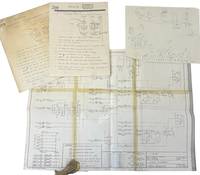
1974réf. 236291974. JRW Electronics' board level modification of Atari Pong to create Handicap Pong arcade conversion engineering archive 1974 documenting JRW Electronics' board level modification of Atari Pong during the first years of the commercial video game industry. The name "Handicap pong" originated with the intention to allow for gameplay to be adjusted so players of different skill levels preferences or abilities could compete on the same machine without replacing the original cabinet. The archive records the conversion of an existing Pong cabinet into Handicap Pong through revised controls altered circuitry and adjustable game parameters. The annotated sheets suggest professional technical use by a JRW technician installer or arcade service operator Archive of four technical documents Mountain View and Sunnyvale California 1974. 1 Logic Diagram. Pong Handicap. JRW Electronics Inc. drawing no. JRW 005 dated 8-6-74. Large engineering schematic titled Logic Diagram Pong Handicap identifying integrated circuit IC locations electrical signal paths wiring harness connections and required circuit board modifications. 2 Handicap Pong. JRW Electronics Inc. Sunnyvale California. Stapled three-page instruction packet titled in manuscript "Handicap Pong" with component-side diagrams showing the populated face of the printed circuit board and numbered steps for lifting IC pins from the board cutting printed copper traces replacing electronic components and adding jumper wires. 3 Handicap Pong. JRW Electronics Inc. Mountain View California. Stapled four-page instruction packet with manuscript check marks wire color assignments IC pin modifications underside wiring connections and a printed adjustment sheet for paddle position paddle centering and ball speed. 4 Single lined notebook sheet with hand-drawn wiring diagrams connector layouts and pin assignments. The documents record the engineering practice of the discrete logic era before microprocessor-based arcade games made software the primary means of altering game behavior. The conversion required physical intervention in the circuit: lifted IC pins cut printed traces substituted resistors and capacitors rerouted harnesses and recalibrated analog controls. JRW's kit belongs to the first commercial aftermarket for coin operated video games in which operators modified existing cabinets rather than purchasing complete replacements. Folding moderate toning edge wear old tape to the large schematic and manuscript annotations throughout. Overall good condition. A compact technical archive of early arcade hardware modification and pre microprocessor video game engineering. unknown