4to. XII, 127, (8) pp., final blank page. Front flyleaf included in the pagination. Original printed wrappers. With dust jacket. Only edition, very scarce. - Noted essay on the physique of the Anglo-Arabian horse, challenging the theory of its over-lightness and insufficiency - the "gravest and most unjust" criticism levelled against the breed. Prepared by the vice-president of the prominent Toulouse stables "Écurie coopérative du Midi", Claude Marty. Of the utmost rarity: a single library copy traceable internationally (French National Library). - The main part of this work is made up of highly informative tables, displaying the distribution of the various breeds in the French, Algerian, Spanish, and Prussian cavalry forces, specifying their origins, as well as weights and body measures, and occasionally even stating their given names. Several other tables show the use of the Anglo-Arabian for public transportation in Toulouse. The work concludes with remarks on the Anglo-Arabian's high bone density and their physical ability to set vehicles in motion. - Ownership stamp of the Bibliothèque de Trélissac to half-title. Dust jacket somewhat worn, minor tears. A few pages loosened. A good copy of this important work rarely seen in the trade. OCLC 457358123.
réf. ria9780470958742_inpHardback. New. New Book; Fast Shipping from UK; Not signed; Not First Edition; Successful management of eye disease relies on the veterinarian s ability to identify ocular features and distinguish pathologic changes. Atlas of Feline Ophthalmology Second Edition is an invaluable diagnostic reference providing hig hardcover
1900A set of two oil panels, 285 x 130 mm each. Signed at bottom right "Marin Tanger".
8vo. (32), "290" (but: 288; omitting 257f.), 38 pp. With engraved frontispiece (portrait of Cosimo Medici III) and woodcut Medici coat of arms on title page. Contemporary limp vellum with handwritten spine title. Only edition of this uncommon Italian-Turkish dictionary by the Neapolitan linguist Mascis, interpreter to the Grand Duke of Tuscany (to whom his effort is dedicated). In Roman type throughout, even the table of Arabic letters consists only of the letters' transliterated names. The alphabetical word list is followed by quick-reference sections on the parts of the human body as well as on numbers and the names of the Islamic months, and lists of the languagues spoken throughout the Ottoman Empire (no fewer than 33), of the kingdoms and principalities ruled by the Ottomans, and of the names of all the Ottoman sultans to Mehmed IV, reigning at the date of publication. A final part with separate page numbering contains a basic grammar of Turkish to facilitate translation from Italian into the Turkish language. - Occasional brownstaining. Wants endpapers; contemporary ownership on front pastedown. A little loosened, but complete. A rare little vocabulary. The Macclesfield copy, which wanted the portrait frontispiece, commanded £1060. Zaunmüller 389. Vater/Jülg 414. BM-STC Italian XVII, 554.
4to. (6), 96 ff. With a woodcut initial coloured in red and green and several diagrams. Rubricated throughout. - (Bound after) II: Aristotle. Meteorologia. (Nuremberg, Friedrich Peypus, 11 Nov. 1512). 94, (6) ff. (final blank). With 8 large woodcuts in the text, some with touches of contemporary colour. Rubricated throughout. - (Bound with) III: Abraham ben 'Ezra (Aben Ezra, Avenares). In re iudiciali opera. (Venice, Petrus Liechtenstein, 1507). 96 ff. (f. 92 blank). Rubricated throughout, some initials coloured green. Contemporary wooden boards on three raised double bands with leather spine. Two brass clasps (repaired). I: Editio princeps of this "work composed in Arabic probably exactly in the form in which it is preserved in Latin, typical of the encyclopaedic period but limited [...] to certain early sources" (Carmody), uniting the Judaic and Islamic astrological traditions. The form, arranged in twelve parts according to each house, is based on the doctrines of Sahl al-Tustari. The various tracts are constructed from chapters compiled systematically from such writers as Mâshâ'allâh (including the first printing of 'De electionibus') and al-Kindi. The crucial factor that they were translated intact in their present form from Arabic "is apparent in the unified Latin style and terminology" (ibid.). The collection includes a number of quotations attributed to Ptolemy; the rare mention of "Abuali" refers perhaps to Abu 'Ali al-Khayyâj. - "Masha'allah, [a Jew from Basra,] was one of those early 'Abbasid astrologers who introduced the Sassanian version of the predictive art to the Arabs; he was particularly indebted to the Pahlavi translation of Dorotheus of Sidon and to the 'Zik i Shahriyaran', or Royal Astronomical Tables, issued under the patronage of Khusrau Anushirwan in 556. He was also acquainted with some Greek material (perhaps through Arabic versions of Syriac texts) and would have acquired some knowledge of Indian science, both through the Pahlavi texts that he read and through such Indian scientists as the teacher of al-Fazari and Kanaka, who visited the courts of al-Mansur and Harun al-Rashid. It is during al-Mansur's reign that Masha'allah's name first appears: he participated in the astrological deliberations that led to the decision to found Bagdad [...] Masha'allah wrote on virtually every aspect of astrology [...] ['De electionibus'], which quotes Dorotheus, is ascribed to Masha'allah and Ptolemy but is probably by neither" (DSB IX, 159 ff.). - Extremely rare. A very clean copy with only an insignificant inkstain in the lower margin of ff. 12v and 13r and tiny traces of worming in the upper margin of the final two leaves. A few contemporary handwritten marginalia; f. 80v has a contemporary handwritten ownership of Wigand, Baron Redwitz (1476-56), bishop of Bamberg, who as a young man had travelled to Palestine and is remembered as a conservative but not fanatical Catholic cleric during the tumultuous years of the Reformation. - Bound with this work in the same appealing Renaissance volume are two other rare, thematically related contemporary treatises. - II: Aristotle's "Meteorology", long known in the West only through a Latin translation based on the Arabic version "al-'Athar al-`Ulwiyyah". This is the very rare illustrated first edition of Faber's expanded translation, including an extensive commentary by Johannes Cochlaeus, who also mentions the recently-discovered American continent ("Nova illa Americi terra", f. 62v). Comprising the first three of Aristotle's four books (on the heavens, water, and wind), it also constitutes "one of the main sources of medieval geology" (Stillwell, Awakening 577). "Cochlaeus's discussion of the relationship between motion and heat appears quite modern" (cf. Spahn). The woodcuts, coloured in earth tones or simply accented by the rubricator, show spheres as well as light and cloud phenomena; a large woodcut (f. 60v) shows the climate zones of the ancient world. - A single, tiny wormhole in the blank lower margin throughout; another small wormhole in the first two leaves (repaired in A1, insignificant loss to a few letters in A2). A clean and wide-margined copy. - III: The first collected edition of ten astrological treatises by the 12th-century Jewish mathematician and astronomer Ibn Ezra from Tudela in Spain. During his lifetime the town was under the Muslim rule of the emirs of Zaragoza; later he lived in Muslim Andalusia. "Ibn Ezra disseminated rationalistic and scientific Arabic learning in France, England and ltaly [... He] wrote a number of astrological works that were very popular [...] all of them appeared in Latin in 1507. They are rich in original ideas and in the history of scientific subjects" (DSB). - Contemporary marginalia in red, green, and brown ink throughout. Some insignificant browning. The well-preserved binding shows a hunting scene blindstamped into the leather. A fine assembly of important natural scientific works: published by Christian editors and printers in the early Renaissance, they bring together the Muslim and Jewish traditions that were the driving forces behind mediaeval science. I: Edit 16, CNCE 63196. BM-STC ltalian 424. Houzeau/Lancaster 751 ("volume tres rare"). DSB IX, 162. Carmody p. 112. Not in Adams, Mortimer, Essling, Stillwell, Honeyman. - II: VD 16, L 959. Cranz/Schmitt 13. Hoffmann I, 321. Schweiger I, 60. IA 107.806. Alden/Landwehr 512/1. Zinner 953. Brüggemann/Brunken 29. Spahn, Cochläus, p. 16. - III: Edit 16, CNCE 35576. IA 100.150. Adams A 38. Proctor-Is. 12998. Stillwell, Awakening 2. Houzeau/Lancaster 3927 ("rare"). Thorndike II, 917 & 927. DSB IV, 502.

4to. (100) ff. With several woodcut astronomical diagrams in text. Modern marbled boards with morocco label to gilt spine. Marbled endpapers. A collection of astrological writings in Latin translation first published in 1504 as "De scientia motus orbis". The work provides a comprehensive account of the whole cosmos along Aristotelian lines. The 8th-century Persian Jewish astrologer and astronomer Maša'allah ibn Atari "wrote on virtually every aspect of astrology [...] His brief and rather primitive 'De scientia motus orbis' [or 'De elementis et orbibus coelestibus'] combines Peripatetic physics, Ptolemaic planetary theory, and astrology in such a way that, in conjunction with its use of the Syrian names of the months, one strongly suspects that it is based on the peculiar doctrines of Harran, to which al-Kindi and Abu Masar were also attracted [...] This important Latin translation by Gerard of Cremona of the lost Arabic original of this exposition was published by J. Stabius (Nuremberg, 1504) and by J. Heller (Nuremberg, 1549)" (DSB). - Bookplate of the Marques de Viana, Conde de Urbasa on front pastedown. In excellent condition. VD 16, ZV 10470. DSB IX, 160 & 162. Zinner p. 211, 1962. Lalande, Bibliographie Astronomique, p. 68. Sarton I, 531. Graesse IV, 503.
1960pp. vi, 218. Illustrated with cartoon drawings. 8vo. Original full cloth binding. Hardbound. First edition. Nice condition. **PRICE JUST REDUCED! GAMES BOX 2
1976[8], 128 pages including index, appendices and interesting 17 page black and white photo section. Signed by author beneath her photo. Note to prior owner signed by author stapled to title page. Author lived on this beautiful island for nearly forty years, leaving in 1955. "This was a setting that people from all walks of life might admire and which many would claim as their own. And though the beauty would chage under the hand of man, man would add a beauty of his making ; weathered cabins, pioneer gardens, and hard won fields." - Introduction. Includes sections entitled: Exploration; The First White Settlers; Settlers - the Second Wave (1900-1919); Early Industries; The Community Organizes; Arrival (describes author's family's move to Lasqueti); Lasqueti in the 20's; The Thirties; Lasqueti During World War II; The Post-War Period; Return (describes a return visit by the author to Lasqueti in 1972). Prior owner's details written atop title page. Average wear. Binding intact. A sound copy. Bibliographic reference: HALE & BARMAN 583. Book
Folio (240 x 319 mm). 36 pp. of text and 20 mounted black-and-white photographs with paper guards. Contemporary half calf with giltstamped covers, spine, and spine-title. Marbled endpapers. Rare first edition of the first report on the Royal Cache, an ancient Egyptian tomb near Deir el-Bahri in the Theban Necropolis, officially discovered in 1881. Including 20 impressive photographs of sarcophagi and mummies, this account convinced authorities to expand the Boulaq archaeological Museum. - The cache at Deir el-Bahri was first discovered in 1871 by the Abd el-Rassul brothers, who ended up selling items from the tomb on the black market. Eventually the Director of the Boulaq Museum, Gaston Maspero, who had succeeded Auguste Mariette in 1881 as director general of excavations and antiquities for the Egyptian government, became suspicious and had two of the brothers arrested. One of them revealed a tomb secreted in a cliff near Deir al-Bahri. Upon arriving on-site, the delegation of the Museum discovered an extraordinary collection of mummified remains and funeral equipment of more than 50 kings, queens, and other members of the royalty (including the mummies of Thutmose I and Ramesses II), suggesting that the tomb was used for safekeeping royal mummies during the Twenty-first Dynasty. In only 48 hours the entire cache was cleared and all contents, including the mummies, were transported to Luxor and then Cairo. The present work constitutes Maspero's first study of the objects. It served as the basis for a more elaborate study of the findings he published eight years later ("Les Momies royales de Deir-el-Bahari", Paris, 1889). - Extremities somewhat rubbed, occasional light foxing. A pretty copy. Rarely seen at auction. Provenance: from the private library of the American diplomat and collector Elbert Eli Farman (1831-1911), Consul General of the US at Cairo from 1876 to 1881, with his bookplate to the front pastedown. Ibrahim-Hilmy I, 93 & II, 21. OCLC 8670353.
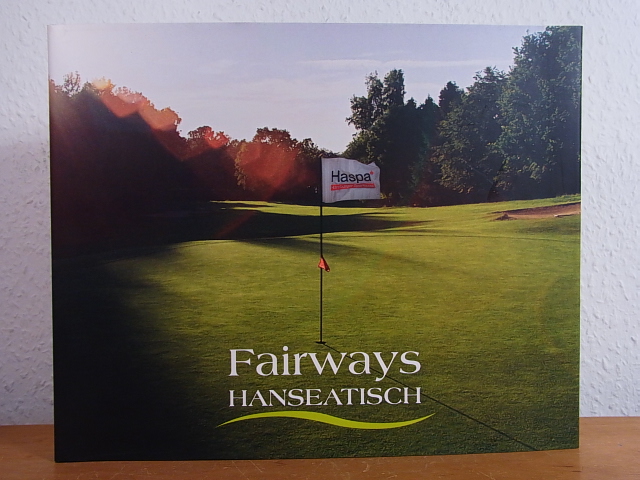
2006réf. 106264Hamburg: Horstmann & Werbung, 2006. 30,5 x 24,5 cm quer ; Pp.
1977réf. 116381977 plaquette (booklet) grand in-octavo carré, couverture ornée d'illustrations photographiques en couleurs de Jean Le Corguillé (cover with photographic illustrations in colours), tranches lisses (smooth edges), illustrations photographiques en couleurs, 32 pages, 1977 à Rennes Ouest-France,
réf. 13703Naples et son golfe. Trente planches volantes, sur vélin, en couleurs, du peintre J.F BOUCHOR. Ornementation de David BURNAND. Henri Laurens éditeur 1928. In 8 cartonné, dos demi-toile écrue, pièce de titre chagrin rouge. 200x240mm. faux titre, titre, 172 pages. Achevé d’imprimer le 31 octobre 1927. Couverture insolée, quelques rousseurs en début et fin de volume.
réf. 3523Paris, Henri Laurens, 1928. In-4 broché, couv. rempliée ill. (sirène), 172 p. 30 planches en couleur contrecollées d'après les tableaux du peintre, tirées par G. Kadar. Ornementations de David Burnand : bandeaux, lettrines, culs-de-lampe. Très bon état
4to. XVI, 144 pp. With 7 numbered plates (4 of which coloured) and several black and white illustrations in the text. Original full cloth with stamped falcon to front cover and stamped spine-title. First edition. - A standard work of modern falconry literature by one of the most renowned falconers of the 20th century, the British lawyer Mavrogordato (1905-87). This "excellent book" (Gallagher) is directed at a new generation of falconers choosing to work with the previously frowned-upon sparrowhawks instead of falcons, but also addresses experienced hawkers. It includes observations on the choice of a suitable bird, the treatment of eyasses, the falconer's equipment, and the calling-off of a bird, as well as the animals' diet and health. - The charming illustrations were carried out by the British artist George Edward Lodge (1860-1954), himself an authority on falconry. The plates show muskets and goshawks sitting or in flight; the text illustrations mainly display tools used by the falconer, including hoods, knots, and perches. - Title-page slightly foxed, otherwise in excellent condition. Gallagher, Falcon Fever 85. Oelgart 29B. OCLC 6399849.
8vo. XI, (1), (5)-343, (1) pp. With a photogravure portrait frontispiece. Publisher's stamped full cloth with gilt title to spine. Rare first and only edition: a collection of vivid letters by the Belfast-born engineer Maxwell (1838-80), written from Syria in 1870-73 to friends while he was performing surveys for a railroad through the valley of the Euphrates and planning the water supply of Beirut in Lebanon. - Maxwell travels via Brindisi and the Greek islands through Smyrna, Rhodes, Antioch, and Beilan, where he describes the difficulty of designing a railroad due to the lack of proper mapping of the area: "On many occasions I was tripped up, and sent rolling down amongst other unfriendly plants" (p. 50). He also gives an account of his visit to "the finest house of Aleppo" (p. 101) and a flood in Smyrna, describes the cities of Tripolis, Beirut, Jerusalem, and Port Said, and expresses his disappointment over the Sublime Porte interrupting his survey, which indeed was never carried out completely, on several occasions. - The second and third period of letters were prompted by Maxwell's engagement in providing the city of Beirut with a water supply. They give an account of Cairo and the pyramids as well as of Alexandria before going on to describe negotiations with the council in Beirut and the obstacles met there: "As a last hope, we determined, and I think wisely, to try and obtain by means of the Consuls and public opinion what cannot be obtained by polite asking" (p. 273). The letters from the second period include a trip to Cyprus as well as descriptions of Damascus and the ancient waterworks, while those from the third period show the works on the Nahr-al-Kalb in full swing and describe an inspection of the site by Rustem Pasha, Governor-General of the Lebanon. - The frontispiece shows a portrait of Maxwell with his reproduced signature. Binding discreetly rebacked, modern cloth hinges. Light foxing near the beginning; otherwise in excellent condition. Rare: OCLC lists only five copies internationally (2 in the US, 3 in the UK). OCLC 24929041.
Folio (340 x 490 mm). 2 ff, 24 coloured aquatints (1 folding). Contemp. half calf with giltstamped red morocco label to marbled front cover, spine rebacked and gilt. "The plates in this selection are not re-engraved, but plates available from the stock originally printed for Bowyer, with new title page" (Atabey). Includes views of Constantinople, the Voivode palace of Bucharest, Tripoli and Tortosa, a mosque in Laodicea, as well as antiquities from the Eolian Islands and Ephesus. - The German-Italian artist Luigi Mayer (1755-1803) was one of the foremost late 18th-century European painters of the Ottoman Empire. He was a close friend of Sir Robert Ainslie, British ambassador to Turkey between 1776 and 1792, and the bulk of his paintings and drawings during this period were commissioned by him. Mayer travelled extensively throughout the Ottoman Empire and became well known for his sketches and paintings of panoramic landscapes of ancient sites from the Balkans to Turkey and Egypt, particularly ancient monuments and the Nile. Many of the works were amassed in Ainslie's collection, which was later presented to the British Museum, providing a valuable insight into the Middle East of that period. - Occasional insignificant brownstaining. Formerly in the Ottoman collection of the Swiss industrialist Herry W. Schaefer. Atabey 790. Chatzipanagioti-S. 631. Hage Chahine 56. Cf. Blackmer 1100. Abbey 369.
12mo. 3 vols. X, 238 pp. With 8 steel engraved plates. (4), 166 pp. With 6 steel engraved plates. (4), 279 pp. With 10 steel engraved plates. Contemporary long-grained red morocco, decorated raised bands, gilt fillet and decorative frames on covers, gilt edges. First edition of this early study of the Bedouins of Egypt and Syria, covering their manners, laws, civil and religious customs. Illustrated with 24 steel engraved plates by Charlin after F. Massart and finely watercoloured at the time. The notes by Dom Raphaël were most probably taken during the French occupation of Egypt. Raphaël Monachis (Rufa'il Zakhûr) was born in Egypt of Syriac ancestry and was a monk in the Greek community in Cairo. He was an Arab member of the French Institute of Egypte and the first interpreter of the Diwan from Cairo. - Rare complete copy, some corners slightly scuffed, spine faded, otherwise in good condition. Macro 1555. Gay 3587. OCLC 25988256.
Folio (490 x 375 mm). (2), 70 pp. With lithographed title-page and 48 lithogr. plates. Contemporary giltstamped half calf. Rare, elaborately produced publication about Maximilian's journey to Egypt, Nubia, Palestine, Syria, and Malta, on which he was accompanied by the artist Heinrich Mayr. The harem and market scenes are obviously indebted to the French orientalist tradition; several plates show details of architecture, costumes, camel and horse care, etc. They are not identical with the better known plates in Mayr's earlier "Malerische Ansichten aus dem Orient" (Leipzig 1839). - Spine professionally rebacked. Foxing throughout, mainly confined to the plates' margins. Blackmer 1101 (French ed.). Ibrahim-Hilmy II, 26. Tobler 161. Rohricht 1871. Lipperheide Ma 28 (French ed.). Thieme/B. 477 (citing 36 plates only). Kainbacher 299, 2 ("RR").
Folio (422 x 528 cm). Lithogr. t. p. and 60 lithogr. plates, all in original hand colour, captions often raised in gilt. With 10 leaves of letterpress text. 10 instalments in the original printed wrappers as issued. Stored in contemporary green half calf with giltstamped spine and cover label. Ties. - (Includes): Die Uebergangsländer von Asien und Afrika, begreifend: Arabien nebst Mesopotamien und Syrien und das Nilgebiet. Munich, C. Wenng, 1845. Engraved map with contemporary border colour. 640 x 544 mm. Scale 1:7,000,000. Only edition of the rare variant with all the plates and in their splendid original colour: the personal copy of Duke Maximilian in Bavaria. "Published in ten parts. The plates show costume of the period and also that of earlier times, taken from paintings" (Hiler). The picturesque views, which include Cairo, Alexandria, Jerusalem, La Valletta, Luxor, and Thebes, genre scenes and landscapes, are all framed within a decorative border and arranged as a small painting. The Nuremberg artist Mayr, especially well-known for his depictions of battles scenes and horses, was personal painter to Duke Maximilian, whom he accompanied on his 1838 journey of the Orient. The group had departed from Munich on January 20 with a small entourage, travelling via Venice, Korfu, Patras, Athens, Alexandria, and Cairo to the Holy Land. They returned to Munich after eight months on 17 September 1838; the following year, Maximilian was made honorary member of the Bavarian Academy of Sciences. - Some foxing to letterpress explanatory text, plates beautifully preserved with only the backing paper showing occasional duststaining. From the library of Duke Maximilian at Tegernsee Castle, retaining the original shelfmark label on the spine. - Includes the extremely rare map of the Arabian Peninsula and the Middle East which was published only in 1845, at the instigation of the naturalist Gotthilf Heinrich von Schubert (1780-1860) and the geologist Joseph von Russegger (1802-63), to satisfy this frequently noted lack in Mayr's production (some foxing, but also finely preserved). Ibrahim-Hilmy II, 26. Gay 90 (only 36 plates). Lipperheide Ma 22 (= 1589). Hiler 578. Tobler 161. Graesse IV, 457. Engelmann 124. Kainbacher 265 ("a rarity"). Thieme/Becker XXIV, 477. Nagler VIII, 498f. ("highly memorable drawings"). ADB XXI, 139ff. Not in Blackmer or Abbey (Travel). Not in Colas.
Folio (422 x 528 cm). Lithographed title-page and 60 lithographed plates, all in original hand colour, captions often raised in gilt. With 10 leaves of letterpress text. Half calf with giltstamped spine. (Includes): Die Uebergangsländer von Asien und Afrika, begreifend: Arabien nebst Mesopotamien und Syrien und das Nilgebiet. Munich, C. Wenng, 1845. Engraved map with contemporary border colour. 640 x 544 mm. Scale 1:7,000,000. Only edition of the rare variant with all the plates and in their splendid original colour: "Published in ten parts. The plates show costume of the period and also that of earlier times, taken from paintings" (Hiler). The picturesque views, which include Cairo, Alexandria, Jerusalem, La Valletta, Luxor, and Thebes, genre scenes and landscapes, are all framed within a decorative border and arranged as a small painting. The Nuremberg artist Mayr, known especially for his depictions of battle scenes and horses, was personal painter to Duke Maximilian, whom he accompanied on his 1838 journey of the Orient. The group had departed from Munich on January 20 with a small entourage, travelling via Venice, Korfu, Patras, Athens, Alexandria, and Cairo to the Holy Land. They returned to Munich after eight months on 17 September 1838; the following year, Maximilian was made honorary member of the Bavarian Academy of Sciences. - Some foxing, otherwise splendidly preserved. Includes the extremely rare map of the Arabian Peninsula and the Middle East which was published only in 1845, at the instigation of the naturalist Gotthilf Heinrich von Schubert (1780-1860) and the geologist Joseph von Russegger (1802-63), to satisfy this frequently noted lack in Mayr's production (some foxing, but also finely preserved). Ibrahim-Hilmy II, 26. Gay 90 (only 36 plates). Lipperheide Ma 22 (= 1589). Hiler 578. Tobler 161. Graesse IV, 457. Engelmann 124. Kainbacher 265 ("a rarity"). Thieme/Becker XXIV, 477. Nagler VIII, 498f. ("highly memorable drawings"). ADB XXI, 139ff. Not in Blackmer or Abbey (Travel). Not in Colas.
43, (1) pp., 2 blank ff. Contemporary wrappers. 8vo. The official Arabic edition of the canons of the first council of Ain Traz (southeast of Beirut, Lebanon), held in 1835; the Latin text is not considered official. The Synod of Ain-Traz "was convoked and presided over by the then newly elected patriarch Maximos Mazloum on Dec. 13, 1835. The canons outlined by this synod relate to the Melchite discipline. They regulate Baptism, Confirmation, the Liturgy of the Presanctified, Confession, Extreme Unction, Holy Orders, Matrimony, communication in sacris, the holy days of obligation, the clergy (garb, commerce, residence, catechism, exercise of medicine, inheritance), the religious (garb, exclaustration), pastoral visits of the bishops, alms to the seminary of Ain-Traz, charitable foundations, fast and abstinence, pilgrimages to different churches, usury, etc. The Congregation for the Propagation of the Faith confirmed in forma generali the 25 canons listed above with few modifications of the text submitted. In this manner the Melchite discipline [...] received the official stamp of the Church on Jan. 13, 1838" (Cath. Encyclopedia). "Finalement, le 28 août 1841, la Congr. de la Propagande publia un décret approuvant in forma generali les canons de 1835; elle en assurait la publication et aucune autre édition ne ferait autorité. L'édition arabe ainsi faite en 1841 par ordre de la Congrégation contenait de très légères retouches aus quatre canons discutés" (Histoire des conciles). - Entirely printed in Arabic save for the "Decretum" (promulgation dated 28 August 1841) printed in Latin. A very good, untrimmed and uncut copy. Cf. Histoire des conciles d'après les documents originaux XI: conciles des orientaux catholiques, partie 1 (Paris 1949), p. 390.
19864to, 255 pages, illustrations by Michael Frith. eng
2003réf. e0793London: Philip Wilson Publishers Ltd. VG : in very good condition with dust jacket. 2003. First Edition. Green hardback cloth cover. 260mm x 260mm 10" x 10". x 278pp plates. 32 colour plates. Heavy item - shipping supplement may apply for overseas. . Philip Wilson Publishers Ltd hardcover
1999215 pages. Hand-numbered copy #104 of 300. The recollections of this experienced activist who trained many in the art of non-violent protest and served as one of the famous Raging Grannies. Sure to be valuable reading for others hoping to help keep and make this world a better place. Recounts her activities in Israel.Palestine, Clayoquot Sound, Nicaragua, etc. It appears this copy was originally signed and inscribed by the author but this has been obscured by liquid paper. Average wear. Unmarked. A sound copy. Book
1951Pages 1025-1124 (99 pages in total). Includes index and prices. Profusely illustrated in black and white. Intended to be read by shop owners. Presents a wonderful cross-section of "the most complete stocks in Western Canada" - from page 1024. Extensive listings of firearms and related products. Also included are products for dogs, traps, thermos and related products, flashlights and batteries, lighters, harmonicas, cards, baseball, tennis, badminton, golf, football, hockey, soccer, volleyball, basketball, boxing, lawn bowling, croquet, roller skating, snow shoes, bicycles and ski equipment. Above-average but not excessive wear. Front cover taped in place. Back cover missing. A very enjoyable and nostalgic item. Young readers will be amazed to see how far today's gear has advanced in the past 50+ years, particularly ski equipment. Book