Contarini, Giovanni Pietro.MareMagnum

4 213 résultats
4to. (8), 181, (1) pp. With folding woodcut map. Modern half calf. First German edition. - "This is an important source work for the battle of Lepanto. Contarini has written a detailed account of the battle, including the events leading up to it. He includes many interesting statistics - the source of the various ships, numbers of men taking part, etc." (Navari). "One of the most extensive accounts of the Battle of Lepanto, with details as to the Venetian, Spanish, and Papal ships" (cf. Göllner). - Title page numbered; a few old underlinings. Closely trimmed at upper edge (occasionally touching headlines); insignificant brownstaining. Very rare: not a single copy in postwar German auction records. Formerly in the Ottoman collection of the Swiss industrialist Herry W. Schaefer. VD 16, C 4965. IA 143.974. BM-STC 221. Blackmer 396 (note). Schottenloher 43475 c. Apponyi 1837. Kertbeny 860. Göllner 1617.
4to. 15 works in 5 volumes, paginated as 3 and bound as 2. (36), 372, (8); (26), "637" [= 535], (9), [lacking 1-2], 3-716, (86) pp. With 2 title-pages in red and black (each with a woodcut decoration, the first of fruits and the second of flowers), 5 of 6 divisional title-pages (2 in red and black) plus numerous drop-titles; 2 engraved portraits (vol. I) and 3 folding tables (1 in vol. I, 2 in vol. II). Further with 4 woodcut foot rulers divided into 16ths, 12ths (inches) and 4ths, woodcut numerical signs, headpieces, tailpieces and decorated initials. Set in roman types with extensive italic and Greek, and incidental fraktur and Hebrew. Contemporary or near contemporary vellum, sewn on 4 vellum tapes laced through the joints, with a hollow back, with manuscript title on each spine. A collection of works devoted primarily to the ancient Hebrew, Greek, Roman and Arabic number systems, numismatics and mensuration, more than half (nominally 3 volumes) comprising the collected works of Matthäus Host (1509-87), numismatist and professor of Greek in Frankfurt an der Oder. After these follow works by Alessandro Sardi (1520-88) (misattributed to John Selden), Philippe Labbe (1607-67) and Guillaume Budé (1468-1540). Host published his most important works on the Hebrew and other Middle Eastern, Greek, Roman and Arabic number systems (plus "astronomical" numbers probably taken from Agrippa and Noviomagus), coins and related subjects in the years 1578 to 1582. His collected works were published in three volumes at Frankfurt am Main, dated 1586 old style (1587 new style), volume 3 containing 10 short works, the first in 4 parts (here numbered I-XIII in the contents but I-X in the titles). Budé's "De asse", first published at Paris in 1514, is generally regarded as the best Renaissance attempt to determine the values of ancient coins relative to each other and to contemporary money. Sardi published his "De nummis" (on numismatics) at Mainz in 1579, but it appears here as the work of the British scholar and lawyer John Selden (1584-1654), with his preliminary note dated from Middle Temple in London, 1 May 1642. Since he does not appear to have published it himself, it is unclear whether he plagiarized it, or whether it was mistakenly attributed to him when published at London in 1675. At that time it appeared together with Labbe's "Bibliotheca nummaria" and Budé's "De asse". Labbe's work first appeared as an appendix to his 1664 "Bibliotheca bibliothecarum" and describes books on the subject of antiquarian coins, medals, weights and measures. The ESTC suggests that "De nummis" in the "1675" London edition of these three works and in the present edition (which has a 1685 Edinburgh copy imprint) are both reissues of the 1579 edition, but comparing the "1675" and "1685" versions in EEBO with the 1579 Mainz edition shows that they represent three different editions and that the "1685" version on EEBO is the present one. No 1685 Edinburgh edition is known, so the reason for the 1685 copy imprint (and for Selden's 1642 note) remains unclear. Pending further study we suppose the "1685" edition was printed ca. 1692 for issue with the 1692 edition of Host's works, which was printed (according to the colophon) by Nisius in Jena and published (according to the imprints) by Johann Georg Lipper in Leipzig and Lüneburg, and by Peter Le Clert in Amsterdam. The present version is a reissue of all these works in the same editions as 1692, but now with the two 1695 title-pages for publication by Van der Aa in Leiden. - Each volume with the 19th-century yellow bookplate on the front pastedown of the library of the Baptist Newton Theological Institution near Boston, which later merged with the Andover Theological Seminary and became associated with Harvard University. - Lacking the divisional title (A1) for the Sardi/Selden, "De nummis", with its 1685 Edinburgh copy imprint. With some browning and foxing throughout, a small tear into the text of one leaf and in the margin of the first folding table. Otherwise in good condition. The binding of the first volume is somewhat dirty and each has one or two of the vellum tapes broken at the hinge, but they are still in good condition. A detailed account of numbers, coins, etc., especially in the Middle East and Greece. STCN (6 copies, incl. 2 incompl.). Cf. ESTC R41079 ("1685" [= ca. 1692] ed., including Host's works only in a note); Smith, Rara arithmetica, pp. 372-375 (1582 ed. of one of Host's works on numbers); for Host: ADB XIII, p. 191.
Folio (305 x 200 mm). Vol. 1 (of 2) only. (40), 495, (23) pp. Wood-engraved title border, double-page woodcut map of Africa, including Arabia, and 26 illustrations, all but one coloured by a contemporary hand. 18th c. mottled calf with giltstamped red label to fully gilt spine. Marbled endpapers. Scarce first French edition of the famous description of Islamic Africa and Arabia, with the illustrations coloured by a contemporary hand; the first collection of voyages printed in France. The book was originally written in Arabic around 1526 by the Berber Andalusi geographer and traveller al-Hasan ibn Muhammad al-Wazzan al-Fasi (ca. 1494-ca. 1554), known in the West as Johannes Leo Africanus, translated into Italian by the author and first published in Venice in 1550. The Arabian Peninsula is depicted nearly complete on the double-page woodcut map and is treated extensively in the first chapter, which contains information on its people, cities, geography, religion, customs, costumes, etc. Illustrations include Arabian camels and veiled women. - Johannes Leo took his Christian name from his sponsor Pope Leo X when he converted to Christianity after his capture in 1520. While still very young he began to travel widely in the Barbary States; in 1513 he appears to have started on his famous Sudan and Sahara journeys (1513-15). In 1516-17 he travelled to Constantinople, probably visiting Egypt on the way; it is more uncertain when he visited Arabias, Armenia and Tartary. His three Egyptian journeys, immediately after the Turkish conquest, all probably fell between 1517 and 1520; on one of these he ascended the Nile from Cairo to Aswan. - Binding somewhat rubbed; spine head and hinges professionally repaired. Repairs to lower margin of first two leaves (very slight loss of title border), some toning and soiling, water- and inkstains. Very occasional marginal tears or worming. Early marginalia and ink ownerships on title page ("Pacauld" and "Ex Bibliotheca Joh. Huyseri", i. e. Johann Huyser). No other auction record of a coloured copy in RBH or ABPC. Adams L 482. Howgego A17. Gay 258. USTC 1136. Sabin 40044.
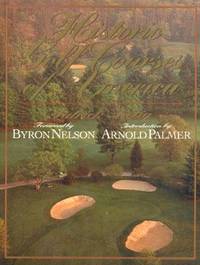
1994réf. 31264Dallas: Taylor Publishing Company. Fine in Near Fine dust jacket. 1994. Hardcover. 0878338586 . Color and black and white photographs throughout. First printing. Fine in an about fine dust jacket. . Taylor Publishing Company hardcover books
Large 4to. (2), LXVII, (1), 472, (32) pp. With engr. portrait frontispiece, a text engraving on p. LXVII, and 3 maps (2 folding). Modern marbled half calf with giltstamped label to gilt spine. Second, enlarged edition (first published in 1782). Newly added in this edition are an account of the "origin of the English establishment and of the East India Company’s trade at Broach and Surat", "A General Idea of the Government and People of Indostan", which Orme began writing in 1752, and an account of the life and writings of the author. Much of Orme’s life was spent in the employ of the East India Company, as a writer, a member of the council at Madras, commissary and accountant-general, and later as historiographer. - Slightly brownstained, a marginal tear to p. 275f., otherwise in good condition. Cox I, 300.
4to (170 x 202 mm). (6), 58 pp. With 8 photographic plates and one map. Original pictorial grey wrappers. Ten excellent short essays on Mesopotamia (modern-day Iraq), printed at the Times offices in Basra. According to the preface, the pamphlet was published in response to growing curiosity about the country, sparked by British involvement post-WWI. Most of the essays, as per the title, focus on the distant past, taking the reader to the founding of Baghdad in the eighth century, Basra in the Middle Ages and the construction of the Ctesiphon Arch (Taq Kasra). The latter is one of the finer pieces, providing a brief but detailed account of the creation of the structure and its completed finery, drawing on Gertrude Bell's musical translation of al-Tabari's description of the famous carpet "woven in the pattern of a garden" (Amurath to Amurath). - Other essays turn to the early twentieth century and contemporary life. The piece on Mandaeism, in addition to outlining its history, features a short interview with a group of Mandaeans from the Mesopotamian Marshes, in which they discuss their beliefs and religious practices. The final essay, by the missionary John Van Ess (the only contributor to give his full name), reflects on his time in Mesopotamia among certain rural tribes, highlighting episodes of kindness and hospitality. Van Ess (1878-1949) is notable for the time he spent in Mesopotamia (nearly fifty years), his role as an advisor to British officials and, in that capacity, for his opposition to making Faisal King. - With contemporary ink ownership of A. H. Lee on the front cover. Remnants of postage stamps on rear wrapper, slight repair to spine. Exceedingly rare: only two intact copies known, in the British Library Reference Collections and in the National Library of Scotland; the Munich University Library appears to own an incomplete copy. OCLC 562435427.
4to. 3 parts in one volume. (6), 26, (16), 167, (51) pp. (8), 115, (13) pp. (4), 107, (9) pp. Letterpress title printed in red and black. With additional engraved title and engr. frontispiece to part 2 (lacking plates of Arabic characters); ornamental head bands and initials. 18th-century calf with gilt spine. All edges red. First edition. "Collated with a manuscript in the library of the Elector of Brandenburg, preface, geographical index, glossary, etc." (Lust). The gifted orientalist Andreas Müller (1630-94) compiled in a single volume this collection of travel accounts and information on China: Part I is an edition of a Berlin manuscript of Marco Polo, including comparisons with editions by Grynaeus (1532) and Ramusio (1559). Part II, often bound last, is an encyclopedia of China by Müller, listing "Chinese peculiarities" based on Chinese and oriental sources (cf. Löwendahl 153). Part III is a Latin version of "Historia orientalis" by the Armenian Hayton of Corycus (d. 1308). - According to Lach, Müller was “one of the most cosmopolitan of [...] world-conscious Europeans” of his time, although he never travelled outside of Europe. He fell out with Kircher over a linguistic issue, and when Chinese writing was described by theologians as a breach of the Second Commandment, his position in Berlin became untenable. Having resigned his position as provost of St. Nicolai in 1685, he relocated to Stettin and spent the remainder of his life with private studies. "By his own ways of publishing he much hampered the production of a bibliography of his works, which would certainly warrant scrutiny. Before his death he destroyed his manuscripts. He negotiated over the sale of his library with numerous universities, but finally, on a whim, gave away a mere 50 books to the Stargard Consistorium in 1692; most of his books and the remainder of his papers he willed to St. Mary's collegiate church in Stettin" (cf. ADB XXII, 513f.). - Some browning and spotting throughout. Still a fine copy from the library of the Ducs de Luynes at the Château de Dampierre: their bookplate reproducing the arms of Charles Marie d'Albert de Luynes (1783-1839), 7th Duc de Luynes, on pastedown; latterly in the library of Jean R. Perrette (his bookplate). VD 17, 12:108208R. Cordier (Sinica) III, 1968. Lust 288. Löwendahl 153. Morrison II, 535. Ebert 17665. Henze IV, 380. ADB XXII, 513. Brunet III, 69 & 1406 ("receuil assez recherché").
4to. (6), 119, (1) pp. With separate engraved title and 9 engravings in the text. - (Bound with) II: Prophetien, of voorseggingen der beyde Keyseren Severi en Leonis, die beyde in Orienten geregeert hebben. Ibid., 1640. (4), 41, (3) pp. 19th century vellum with calligraphed title to spine; covers ruled in red. Marbled endpapers. All edges gilt. Very rare, prettily illustrated biography of the Prophet Muhammad. Second edition, previously published in 1627 and based on de Bry's "Acta Mehmeti" from 1597. The engraved title page shows ten different scenes which enframe the worlds of the title. Nine of these are taken directly from de Bry and are repeated throughout the book, enlarged and with much greater detail; only the Ottoman army train at the top is likely based on a different source. The book also comprises the divinations of the Byzantine Emperors Leo and Severus about the fall of Constantinople. - An appealing and well-preserved copy from the library of the adventurer, linguist, diplomat, and collector Charles Schefer (1820-98) with his bookplate on the front pastedown. Schefer, who held a chair at the Ecole des Langues Orientales, was perhaps best known in his day as the most prominent Orientalist of his generation. I: Chauvin XI, 572. Theunissen, p. 39f. OCLC 65527830. II: Knuttel 3725. Waller 1389. OCLC 914266113.
12mo (96 x 138 mm). Engraved title-page, 1 letterpress leaf, 15 engraved plates (of which 3 are double-page-sized). In a pretty red leather wallet binding with fore-edge flap and tab. Marbled endpapers. Edges gilt. Pretty German issue of engravings showing views from Levantine journeys. The set was published by Degen between 1803 and 1809 in the "Wiener Taschenbuch". The plates were engraved after the monumental, never-completed "Voyage pittoresque de la Syrie, de la Phénicie, de la Palestine et de la Basse Égypte" by L. F. Cassas (Paris 1799, 180 plates in-folio: cf. Cohen/Ricci 204; Tobler 134). The travels during which the illustrations were made largely took place in the years 1778-87; Cassas was one of the engravers whom Choiseul-Gouffier had hired for his "Voyage Pittoresque". The plates show cities, landscapes, ancient and modern buildings in the Near East. - Binding rubbed, interior somewhat brownstained, but an attractive volume.
17408vo. (16), 344 pp. Modern marbled calf with gilt title to spine. First German edition. "Il La Croze era bibliotecario del re di Prussia. Il primo libro di quest' istoria narra le origini e il progresso del monofisismo, il secondo contiene la relazione di Etiopia del patriarca Bermudez, il terzo racconta il progresso e la decadenza della influenza portoghese in Etiopia" (Fumagalli). - Some brownstaining throughout. Fromm 26499. Mulsow, Drei Ringe, p. 150. Cf. Cioranescu 35510. Fumagalli 2268. Gay 2691 (1739 first French ed.). Not in Kainbacher or Paulitschke.
4to. (18), 494, (38) pp. With engr. frontispiece and 12 (instead of 13) engr. plates (2 folding). Contemp. calf with giltstamped spine label. Edges sprinkled in red. First authorized German edition. Driesch, a native of Cologne, was secretary to Damian Hugo von Pyrmont, ambassador of Charles VI to the Sublime Porte, in which capacity he went to Constantinople in 1719. "Contains unprejudiced accounts of the oriental customs" (cf. Griep/L.). Seven of the plates show portraits, the others show the entrance of the delegation, the audience, a Turkish bath, etc. - Complete save for the plan of Constantinople. Occasional slight browning and waterstaining; binding professionally restored. From the library of the Budapest numismatist and collector Béla Procopius (1868-1945), sometime Hungarian ambassador to Athens, with his stamp on the title page. Atabey 362. Weber II, 484. Lipperheide Lb 29. Hiler 248. Griep/L. 364. Not in Blackmer.
8vo. XVI, 652 pp., publisher's catalogue. With engraved title-page and frontispiece, one folding engraved map of Arabia, and 5 engraved plates with tissue guards (including a view of Mecca). Publisher’s gilt-illustrated red cloth. Outstandingly preserved specimen of this account of Arabia and its inhabitants by the Scottish-born biographer and historian Crichton (1790-1855). Discusses the life and religion of Muhammad, the conquest, arts, and literature of the Saracens, the Caliphs of Damascus, Bagdad, Africa, and Spain, the modern Arabs, the Wahhabis, the Bedouins etc. Rare. An exceptional copy of the Edinburgh Cabinet Library new edition, the first single-volume edition (previously published 20 years earlier as two duodecimos). Entirely unread, the pages remaining mostly unopened, internally and externally crisp and bright. A stunning example of Victorian pictorial cloth with presentation inscription on the verso of the frontispiece: "Presented to William Hitchins on his leaving for Australia by Edward McNaughtan, 20th January 1853". - A trace of foxing to the fore-edge, occasional loosening to quires, otherwise flawless. Macro 781. OCLC 175544. Cf. Gay 3462 (1833 ed.). Brunet 27998 ("pourrait se placer plus haut"). DNB XIII, 86.
1985in 4°, pp. 192, leg. edit. ill. con sovracop. ill. Testo in inglese. Storia e sviluppo del gioco, grandi campionati e grandi campioni, risultati, glossario e indice dei nomi, con mm. foto a colori e in b/n. Ottimo. 604/34
1973207 pages. The first and only complete record of Canadian golf. Abundantly illustrated with black and white photos from provincial archives and private collections. Includes a who's who of Canadian Golf, information about historic clubs and courses, anecdotes and golf lore as well as the complete records of the: Canadian Open Championships; Canadian Amateur Championships; Willingdon Cup Matches; Senior Championships of Canada; Canadian Juvenile Championships; Interprovincial Senior and Junior Team Matches; Canadian Ladies Open; and the Canadian Professional Championships. Gift greetings and small Christmas sticker upon front endpaper else clean and unmarked. Light wear to book in attractive brownish-grey cloth boards. Average wear to dust jacket which is missing some chips and is well-worn at edges with a variety of tears. Book
1973207 pages. Dozens of archival black and white illustrations. "Including a complete record of touraments & winners; who's who in Canadian golf; historic clubs and courses; anecdotes & golf lore." - from dust jacket. Front free endpaper removed. Above-average wear with usual library markings. A worthy reference copy. Book
8vo. 2 vols. XX, 542 pp. VI, 596 pp. Original blue cloth, title gilt to spines, blind panelling to the boards, pale yellow surface-paper endpapers. Neatly rebacked with the original spines laid down. First edition, uncommon in the cloth. Forms the basis for studies of campaigns and exploration wherever the Bombay Marine operated: in the Red Sea, the Gulf, the Arabian Sea, the Laccadives, Maldives and west coast of India, the Andamans, Java and Burma. Of primary importance as a record of the history of the British presence in the Gulf, where the Bombay Marine served as police force, mail carrier, ethnographer, surveyor and, when necessary, strike force for over three centuries - in particular in the period when British relations with the Gulf sheikhdoms were being consolidated. Includes detailed accounts of hydrographic surveys by the Indian Navy, including those in the Gulf. Never surpassed as a history of the maritime arm of India's foreign policy. - Engraved bookplates of the Royal Artillery Library, Woolwich, to the front pastedowns with manuscript annotations of their receipt in April 1878; small paper press-mark labels above. Extremeties slightly rubbed, light browning, but overall a very good set. Macro, Bibliography of the Arabian Peninsula, 1492. NMM V, 2273.
8vo. 2 vols. XX, (8), 541, (1) pp. (final page of appendix erroneously bound at rear of vol. II). VI, 596 pp. Modern half calf over marbled boards, giltstamped labels to spine. The only published detailed history of the British Navy and its engagement with the Arabs of the Gulf. Covers specifically the British naval power in the Near and Middle East from the earliest days of the East India Company until its abolition in 1863. Forms the basis for studies of campaigns and exploration wherever the Bombay Marine operated: in the Red Sea, the Persian Gulf, the Arabian Sea, the Laccadives, Maldives and west coast of India, the Andamans, Java and Burma. Of primary importance as a record of the history of the British presence in the Gulf, where the Bombay Marine served as police force, mail carrier, ethnographer, surveyor and, when necessary, strike force for over three centuries - in particular in the period when British relations with the Gulf sheikhdoms were being consolidated. Includes detailed accounts of hydrographic surveys by the Indian Navy, including those in the Gulf. Never surpassed as a history of the maritime arm of India's foreign policy. - A finely preserved copy. Macro 1492. NMM V, 2273.
4to. 459, (1) pp. Ottoman Turkish in Arabic type. With 1 folding map and 32 woodcut plates. Contemporary half calf with giltstamped spine and spine title (partly oxydized). First edition. - Exceedingly rare Turkish translation (by Ahmed Sükrü) of the popular account of the 1873 Russo-Khivan war and the fall of the Khivan Khanate by the American war correspondent MacGahan (1844-78), first published in New York in 1874 as "Campaigning on the Oxus and the fall of Khiva". After a daring journey through the Kyzil Kum desert, MacGahan joined the Russian commander Konstantin von Kaufmann’s army on the banks of the Amu Darya. In his report he vividly describes the fall of the Khanate to three Russian columns reaching it from North and East. The book discusses the situation of Kazakh (misleadingly called "Kirghiz") and Yomuk Turkmen nomads, Uzbek and Sart settlers, as well as of Persian slaves, and includes a report on earlier failed Russian attempts to conquer Khiva. While MacGahan is impressed by the beautiful gardens and orchards of the Khanate, he is disappointed by the city of Khiva, the capital and main residence of its ruler. Even the Khan's palace, in which he is allowed by the Russian authorities to spend a few days, including a visit to the treasury room, strikes him as unspectacular. The illustrations, based on designs and paintings by artists and Russian officers, including Vereschagin and Feodoroff, show portraits, scenes of rural and nomad life, somewhat stereotypical depictions of locals, as well as buildings, army generals, and battle scenes. - While the original English edition occasionally appears at auction, the Turkish edition has never been seen on the market. - A few crayon annotations and underlinings in a contemporary hand. Binding slightly bumped at extremeties. Paper evenly browned and brownstained throughout; a few pages somewhat waterstained in the second half of the volume. OCLC 1014870496. Özege 7682. Cf. Atabey 744 (English ed.).
A pair of original watercolours with traces of pencil, measuring 333 x 485 mm each. Framed and matted, captioned on the mat in Indian ink. Exceptionally rare: a pair of near-contemporary watercolours reflecting the English popular imagination of a crucial event in UAE history, the disastrous first sack of Ras Al-Khaimah in late 1809. - The punitive expedition was carried out by a 16-ship fleet of the British navy headed by HMS Chiffone under the command of Captain Wainwright, allegedly in retaliation for repeated acts of piracy against British ships perpetrated by the Qawasim, but certainly a convenient means for the British to expand their power in the Gulf on behalf of the East India Company. The battle, a massacre that is still locally remembered in story and song, was the beginning of a new era: that of British control in the Gulf. - The fleet sailed from Bombay on 14 September 1809, reaching Muscat on 11 November and descending on Ras Al-Khaimah in the dawn of the 12th. All day long the British ships bombarded the town’s defences and homes. In the early morning of 13 November, 600 of the more than 1,300 British soldiers landed on the beach and, after bitter fighting, soon breached Ras Al-Khaimah’s defences. Having demolished the town, the Chiffonne and the rest of the fleet sailed along the coast, wrecking additional fortresses. - The atmospheric watercolours depict the landing operation, with the Chiffonne firing its cannons and the British soldiers reaching the beach, in one picture setting fire to a pirate ship. The set of drawings at hand, apparently the work of a talented enthusiast, may even pre-date the publication of the aquatints by Richard Temple in his famous “Sixteen Views of Places in the Persian Gulph Taken in the Years 1809-10”, published in 1813 from his own drawings made on location as a private in the 65th Regiment. - Provenance: once sold through the London rare book and autograph dealer Frank T. Sabin (1846-1915), with his labels on the back. Latterly in a private UK collection. Cf. Sultan Muhammad Al-Qasimi, The Myth of Arab Piracy in the Gulf (London, 1985). Charles E. Davies, The Blood-Red Arab Flag (Exeter, 1997).
8vo. (24), 402, (22) pp., final blank f. Title-page printed in red and black. With 21 folding engr. plates and woodcut device at the end. Contemporary vellum with ms. spine title. Traces of ties. Excessively rare first printing of Hieronymus Megiser's German translation: Ludovico di Varthema's famous account of travels to Arabia, Syria, Persia, Ethiopia, India and the East Indies; a highly important and adventurous narrative including the first printed eyewitness account of any place in today's United Arab Emirates. On his return journey from Mecca (which he was the first Westerner to describe), Varthema visited Ras al-Khaimah ("Giulfar") and portrayed the city as "most excellent and abounding in everything", with "a good seaport", and whose inhabitants are "all Muslims". While Montalboddo's famous anthology of discoveries, printed in 1507, contained the first printed reference to the Arabian Gulf region, it was Varthema's work, published only three years later, that offered the first actual report from the region by a Western traveller who had visited the coast. "Varthema's Itinerario, first published in 1510, had an enormous impact at the time, and in some respects determined the course of European expansion towards the Orient" (Howgego). The 1510 edition, published in Italian at Rome, had no illustrations. The illustrations in this early 17th century edition include a map of the Arabian Peninsula as well as a separate one of only the Gulf (both identifying "Catura", i.e., Qatar), a view of Aden, riders on Arabian horses, a view of Damascus and the Arab costume as worn in Syria, an elephant, etc. - Ludovico di Varthema or Barthema (ca. 1468-1517) sailed from Venice to Egypt in 1502 and travelled through Alexandria, Beirut, Tripoli and Aleppo, arriving in Damascus in April 1503. There he enrolled in the Mameluke garrison and proceeded overland to Khaybar, Medina and Mecca, thereby becoming the first European to enter the two holiest cities of Islam. His travels took him further to South Arabia, Persia, India, Goa, Cochin, and supposedly the Malay isthmus, Sumatra, Banda, the Moluccas, the Spice Islands, Borneo, Java and Malacca. It has often been suggested, however, that he never came further east than Ceylon and that the account of the rest of his journey was assembled from stories passed on by others, but even in these regions much of his information appears to be accurate. Thanks to his knowledge of Arabic and of Islam, Varthema was able to appreciate the local culture of the places he visited. Impressed and fascinated, he describes not only rites and rituals, but also social and geographical aspects and details of daily life. He gives a detailed description of Mecca and the Islamic pilgrimage, and his description of the Hejaz (the west coast of Arabia on the Red Sea, including Mecca and Medina) is especially valuable as it pre-dates the Ottoman occupation of 1520. He finally returned to Lisbon in 1508. - Varthema's account became a bestseller as soon as it appeared in 1510 and went through about twenty editions in various languages in the next fifty years. It certainly provided many Europeans with their first glimpse of Islamic culture and of non-European cultures in general. This first edition of this translation is so rare that Röhricht doubted its existence. - Somewhat browned throughout due to paper. Several contemp. underlinings and marginalia in red and black ink. Contemp. ownership "Michael Thomas, Ao. 1635, 1 Octobris" on t.p. and note of acquisition ("const. 8 ggr") on flyleaf (with later ownership "A. U. D. S. 1715" and further provenance note "Aus des Vice Praesid. Fryers Erbschafft" on pastedown). VD 17, 39:129377V. Goedeke I, p. 379, no. 17, item 9 (note). Röhricht 574, p. 165. Cf. Cordier, Indosinica, col. 104 (1610 reprint only). Macro 2239f.; Gay 140; Blackmer 1719; Carter, Sea of Pearls, p. 68; Cox I, p. 260; Howgego, to 1800, V15 (other eds. only). D. F. Lach, Asia in the making of Europe I, pp. 164-166, 503, 593-594 & passim. Not in Atabey.
1996No marks or inscriptions. A lovely clean very tight copy with bright unmarked boards and no bumping to corners. Dust jacket not price clipped or marked or torn or creased with minor traces of storage. 262pp. A biography of one of the greatest golfer of all time, Ben Hogan, and one who no one really knew. From interviews with scores of golf professionals the author has lifted the lid on an enigma.
1996No marks or inscriptions. A very clean very tight copy with bright unmarked boards, tiny mark to lower page edges and no bumping to corners. Dust jacket not price clipped or marked or torn with faint creasing to spine ends. 262pp. Full-scale biography of Ben Hogan, one of the most complex and fascinating athletes of the twentieth century who won four US Opens in six years.
1991213 pages including index and references. "The lovely Gulf Islands of the BC coast have captivated visitors and settlers for almost 150 years. Their tranquil present belies a turbulent past - the pioneers faced cattle rustlers, Indian battles, political upheavals and opium smugglers, but they were still attracted by the islands' independent lifestyle. Everybody worked hard, but they enjoyed themselves too, with tennis parties, picnics and dances that went on till dawn, so the guests could row home safely in daylight. Each island has a different story: Salt Spring exported apples before the Okanagan, Texada boasted an elegant opera house, Lasqueti sheltered notorious robbers, Mayne was known as "Little Hell" for its boisterous pubs. This colourful past is brought together in this volume." - from back cover. Gift greetings inside front cover else clean and unmarked with moderate wear. Sound copy. Book
Colour-printed map. Ca. 52 x 66 cm. Constant ratio linear horizontal scale 1:100,000. Relief shown by form lines. French military map of the portion of Syria east of Homs to Talkalakh, based on mapping received by May 1924. - Pencil shelfmarks of the Geographical Institute of the University of Berlin. Two holes punched in lower margin. Well preserved.
198883 pages. Many wonderful black and white archival photos. "An attempt at recording a post-European era history of Horny Island." - from Introduction. Average wear. Binding intact. Modest moisture exposure to last few pages. A sound copy. Book