4 114 résultats
12mo. 6 vols. With 84 engraved plates, mostly aquatints, in contemporary hand colour, several folding. Contemp. red grained morocco, blindstamped and giltstamped, spine gilt, leading edges and inner dentelle gilt. All edges gilt. First edition, the rare coloured issue in contemporary French master bindings. - Contains a large number of very pretty views and charming genre scenes, also showing costumes, arms, tools, etc. Accompanied by notes by Jean Joseph Marcel (1776-1854), director of the French imperial printshop at Cairo. Immaculate, sumptuously bound copy from the library of Mary Lecomte du Noüy with her gilt morocco bookplate on all pastedowns. Uncommonly well preserved; most copies in the great travel collections were incomparably the worse for wear: the Atabey copy was described as "rubbed, upper joint of vol. VI wormed" and was uncoloured, as were most of the press run and all recent copies showing up in trade or at auction. Atabey 148. Blackmer 200. Ibrahim-Hilmy I, 87. Röhricht 1631. Lipperheide Ma 10. Colas 438. Hiler 113.
8vo (170 x 253 mm). 38, (2), 112 pp. With a wood-engraved portrait of Abou Naddara and numerous illustrations. Modern marbled half calf with gilt-stamped spine. Silk divider. Inscribed to Paul Leclerc, "ami de l'Égypte, hommage respectueux du Cheikh Abou Naddara", also signed in Arabic. - "Abou Naddara" was the first Arabic magazine to feature cartoons (with captions in French and Arabic), as well as the first work to use in the press a form of colloquial Arabic, radically different from the literary form. - The Egyptian journalist James Sanua ("Ya'qub Rufa'il Sanu'" in Arabic, but usually known simply by his pseudonym, Abou Naddara, "father of spectacles") was born into a family of Sephardic Jews in Cairo. He played an important role in the development of the Arabic theatre in the 1870s, but it was as a satirical journalist that he became best known, targeting the Khedive as well as the British interlopers. He founded the satirical magazine "Abou Naddara" in 1877, which immediately enjoyed a broad appeal and was quickly suppressed; of the 15 issues that appeared between March and April 1877, no copies are known. Sanua went into exile in 1878, but his celebrated journal, reproduced lithographically from manuscript in Arabic and French, continued to appear, printed in Paris at a shop aptly located in the Passage du Caire in the 2e arrondissement. Within Egypt, where the magazine's smaller format allowed it to be smuggled inside other larger newspapers, its circulation was considerable, with possibly over 3000 copies of each issue printed. There is evidence of its presence in the highest echelons of Egyptian society, and its content focused on the political and financial turmoil in Egypt, as Sanua was undoubtedly privy to information from friends and informants well-placed inside administrative circles. - Extremely rare. Loosely inserted is a folded original issue of the "Journal Oriental" ("Directeur & Rédacteur en chef: J. Sanua Abou Naddara"), no. 8, dated 25 September 1886 (entirely lithographed in Arabic). OCLC 25737746.
Small 8vo. 2 vols. in one. (8), 252 pp. (14), 9-240, (4) pp. Contemporary French brown morocco with gilt spine (spine-ends repaired). A mixed copy of the 1784 first and the 1788 edition. A Jesuit perspective on the Muslim faith, including many observations on Islamic customs and culture; "contenant les choses les plus curieuses qui regardent Mahomet & l'établissement de sa secte, qui n'ont pas encore été imprimées. Avec des conferences sur la religion chrétienne, & sur l'Alcoran" (subtitle). Indeed, the Tours-born Jesuit Michel Nau (1631-83) had first-hand knowledge of the Middle East: he had undertaken a long voyage to the Holy Land during which he visited Galilee in 1665 and the remainder of Palestine in 1674. He published an account of his journey, "Voyage nouveau de la Terre-Sainte". - From the library of the Abbé de la Paluelle with his ownership to title page and his etched armorial bookplate to pastedown. Chauvin XII, p. 283f., no. 1187 & 1190. Luzac, Bibl. orientalis IX, 26, no. 493. OCLC 54746487. De Backer/Sommervogel V, 1595, no. 3. Cf. Hurter IV, 428.
1974réf. 100149873L'ermitage 1974 in8. 1974. Broché. Ouvrage de Michel de Galzain illustré par les photographies de Jos Le Doaré consacré au golfe du Morbihan en Bretagne. Il s'agit d'une réédition numérique d'un livre paru initialement en 1957 décrivant ce site naturel remarquable
Paris, Typographie Philippe Renouard, [c. 1918], in-8, br. edit., pp. [4], 13, [5]. Con ill. Invio autografo dell'autore.
8vo (140 x 222 mm). (10), XIV, (5)-342 pp. With 3 folding lithographed plates. Contemporary half calf over marbled covers with florally gilt spine. Marbled endpapers. First and only edition of this important French translation of the surgical section of the author's "Al-Tasrif", "the first rational, complete and illustrated treatise on surgery and surgical instruments" (Garrison/M.). Abu-l-Qasim Khalaf al-Zahrawi, a 10th-century physician from Cordoba, was the author of a voluminous medico-surgical encyclopedia gathered in a set of thirty treatises under the title of "Kitab at-tasrif liman agiza 'an it-ta'alif", but his fame rests on the section on surgery, which forms the 30th and final treatise in the book. "During the Middle Ages it was the leading textbook on surgery until superseded by Saliceto" (ibid.). The illustrations of the instruments, numbering between 150 and 200 in the various the manuscripts, contributed to the success of the work. - Al-Zahrawi designed several devices used during surgery, for purposes such as inspection of the interior of the urethra, applying and removing foreign bodies from the throat, inspection of the ear, etc. He described how to ligature blood vessels almost 600 years before Ambroise Paré and was also the first to describe a surgical procedure for ligating the temporal artery for migraine, also almost 600 years before Pare recorded that he had ligated his own temporal artery for headache that conforms to current descriptions of migraine. His use of catgut for internal stitching is still practised in modern surgery. - Leclerc based his version on the Oxford edition of the text, improved by comparison with the Paris manuscript. "The French translation by Lucien Leclerc, with a useful introduction, was very influential in making al-Zahrawi's surgery better known to modern historians of science" (DSB). - Spine a little rubbed, occasional browning, but still an appealing copy. Campbell, Arabian Medicine 90. GAL I, 239 (276), 24, no. 1. DSB XIV, 585. M. H. Fikri, Treasures from the Arab Scientific Legacy in Europe, p. 25. OCLC 876228425. Cf. Garrison/M. 5550.
1988réf. LFA-126738994Un ouvrage de 256 pages, format 215 x 310 mm, illustré, relié cartonnage couleurs, publié en 1988, Editions Solar, bon état
Imperial folio (405 x 474 mm). 2 vols. (10), 12, (2) pp. With 10 colour illustrations in the the text and 100 full-page coloured illustrations mounted on plates. Sumptuous dark brown contemporary full calf, gilt, covers lined in silk, with silk endpapers. First edition of this monumental publication on Islamic pottery, no. 107 of 200 copies printed. All ceramics pictured within the two volumes are described in detail with place and date of origin as well as the current owner (mostly French noble or institutional collections). Includes a bibliography on the subject and list of plates. - Union Club bookplate. Contemporary bindings somewhat rubbed; hinges professionally repaired, otherwise a fine copy, clean throughout. Rare. Not in Arntzen/Rainwater.
Small 4to. 3 vols. (2), 300 pp. (2), 300 pp. 316 pp. Near-contemporary half calf over green papered boards with gilt spines. Extremely rare, entirely complete run of this journal, praised by Guérmard as a "truly scientific review" and hailed by Glass and Roper as the first periodical published in the "Arab world". The 916 pages of these various issues appeared between 1798 and 21 March 1801: first every 10 days, then monthly for the second volume, and quarterly for the third. - The journal has great interest for marking the beginning of printing in Egypt: "The expedition of Napoleon Bonaparte to Egypt from 1798 until 1801 was a prelude to modernity. It was to change permanently the traditional Arab world [...] The French brought Arabic typography to Egypt [...] For, leaving aside the Hebrew printing presses in Egypt of the 16th to the 18th centuries, until this date announcements and news adressed to Arabs there, as well as in other parts of the Arab-Islamic world, had been spread only in hand-writing or orally, by criers, preachers or storytellers [...] The periodical [...] 'La Décade Egyptienne' [was one of] the first press productions of Egypt" (D. Glass and G. Roper, cf. below). - The journal took its name from the "Décade philosophique", the publication of the Institut National's Section des Sciences morales et politiques, and contains "soit le texte intégral, soit le texte intégral, soit des extraits d'un grand nombre de mémoires ou rapports présentés au premier Institut d'Égypte par des membres de l'expédition, faisant pour la plupart partie de la Commission des sciences et arts. On y trouve également des observations faites par des médicins placés sous les ordres de Desgenettes. Celui-ci dirigea d'ailleurs la publication après le départ de Tallien" (de Meulenaere). At the time of the French capitulation, the first 24 pages of a fourth volume were in the press, but they were never distributed, and the only copy of these sheets remains in the Library of the Royal Museums of Art and History in Brussels (cf. ibid.). - First and last volume show traces of worming, occasionally touching the text, with additional brownstains in the lower corner of vol. 3 near the end. Bound in the mid-19th century for Gaillardot Bey, with his handwritten ownership "Ch. Gaillardot" on the half-title of the first volume. D. Charles Gaillardot (1814-83) served as one of the two vice-presidents of the Egyptian Institute in 1881. A professor of natural history at the National School of Medicine in Cairo founded by Antoine Clot Bey, for 20 years head physician at the military hospital and finally director of the Cairo medical school, he had created in the Egyptian capital a "Musée Bonaparte" of his personal collections, comprising books, engravings, weapons, and decorative items - keepsakes of the French Expedition to Egypt, today dispersed. Later in the collection of the writer André Maurois (1885-1967) with his engraved bookplate to pastedown. D. Glass/G. Roper, Arabic Book and Newspaper Printing in the Arab World, in: Middle Eastern Languages and the Print Revolution (Gutenberg Museum Mainz 2002), pp. 177-216, at pp. 182 & 207 ("scientific magazine [... first periodical] of the 'Arab world'"). Maunier, Bibliogr. économique, juridique, et sociale de l'Égypte moderne, p. XXIV, no. 2. De Meulenaere, Bibliogr. raisonnée des témoignages de l'Expédition de l'Égypte, p. 57. Not in Blackmer or Atabey.
1885Folio (310 x 405 mm). 4 pp. index of plates. 110 plates, 100 of which are in colour (incl. 26 double-page plates). Contemp. half leather with gilt title to spine, marbled boards. First edition of this selection from the author's famous, standard work on Arabian art, published between 1869 and 1877. The plates are slightly reduced from the original format and limit themselves to characteristic elements of decoration and ornament from all areas of the visual and applied arts of the Middle East. "'Arab Art', however, is more than a monument to the author's tenacity, skill, and devotion. For the historian of architecture, it is a precise source, a unique documentary record [...] On an entirely different level, Prisse d'Avennes has provided today's architects, designers, artists, and illustrators with some of the finest examples of measured drawings, pattern details, and illustrations of selected aspects of the built environment of a medieval Islamic city" (preface to the London 1963 edition). - Spine shows insignificant traces of restoration; interior clean and spotless. A fine copy. OCLC 643808682. Cf. Ibrahim-Hilmy II, 138-140.
8vo. 176 pp. Half-title, wood-engraved illustrations. Original printed wrappers bound within. First edition. - Occasional spotting, a little soiled and creased. Harting 200. Schwerdt I, 109. Thiébaud 192.
8vo. (4), 176 pp. With woodcut title-vignette, 45 numbered and several unnumbered woodcut illustrations in the text. With the original printed wrappers bound in at the end. Later half calf over marbled boards with giltstamped spine-title. First edition. - A classic of falconry, this pocket-sized manual is a supplement to the second volume of the ornithological textbook "Leçons élémentaires sur l'histoire naturelle des oiseaux" (1862-63) by the French zoologist Chenu (1808-79) and the ornithologist Des Murs (1804-94). The illustrations show various kinds of falcons, as well as their training and typical flight paths, sometimes displaying specific parts of the birds' bodies like wings and claws in detail. Figure no. 5 ("Faucon sur une Gazelle") is copied from the plate of "Goshawk and Gazelle" by Joseph Wolf, which forms the frontispiece to Richard F. Burton's 1852 work "Falconry in the Valley of the Indus". - Ownership of Charles Henry Stanley Garton (b. 1920), dated Kingswood, 13 October 1943, to front pastedown. Occasional light spotting; traces of the title-page being glued to the first page near the gutter. Harting 200. Schwerdt I, 109. Thiébaud 192. Souhart 100. OCLC 944664144.
8vo. (4), 176 pp. With woodcut title-vignette, 45 numbered and several unnumbered woodcut illustrations in the text. Later half calf with giltstamped spine and spine-title. First edition. - A classic of falconry, this pocket-sized manual is a supplement to the second volume of the ornithological textbook "Leçons élémentaires sur l'histoire naturelle des oiseaux" (1862-63) by the French zoologist Chenu (1808-79) and the ornithologist Des Murs (1804-94). The illustrations show various kinds of falcons, as well as their training and typical flight paths, sometimes displaying specific parts of the birds' bodies like wings and claws in detail. Figure no. 5 ("Faucon sur une Gazelle") is copied from the plate of "Goshawk and Gazelle" by Joseph Wolf, which forms the frontispiece to Richard F. Burton's 1852 work "Falconry in the Valley of the Indus". - Ownership of Charles Henry Stanley Garton (b. 1920), dated Kingswood, 24 February 1942, to front pastedown. Paper evenly browned throughout; tiny marginal tear to p. 29f. Partly uncut copy. Harting 200. Schwerdt I, 109. Thiébaud 192. Souhart 100. OCLC 944664144.
8vo. (8), 272 pp. With half-title and errata leaf. Contemporary half morocco, gilt, with original printed wrappers bound in at end. Signed presentation copy from the author to Florian Pharaon (1827-87). A good association copy of a "work which no student of the history of Falconry should neglect" (Harting). Florian Pharaon was the first Arab editor at Le Figaro, and the translator of an Arabic hunting work into French. - Some spotting, binding rubbed. Harting 211. Schwerdt II, pp. 2-3. Thiébaud 621.
6 cards, 110:70 mm each. A complete set of six so-called "Liebigbilder" issued by the German producer of beef extracts, the Liebig Extract of Meat Co., showing falconry practises throughout the world and history: by Kublai Khan in the 13th century, in mediaeval Flanders, in 16th century Belgium, in 19th century Persia and 17th century Japan. - Very well preserved.
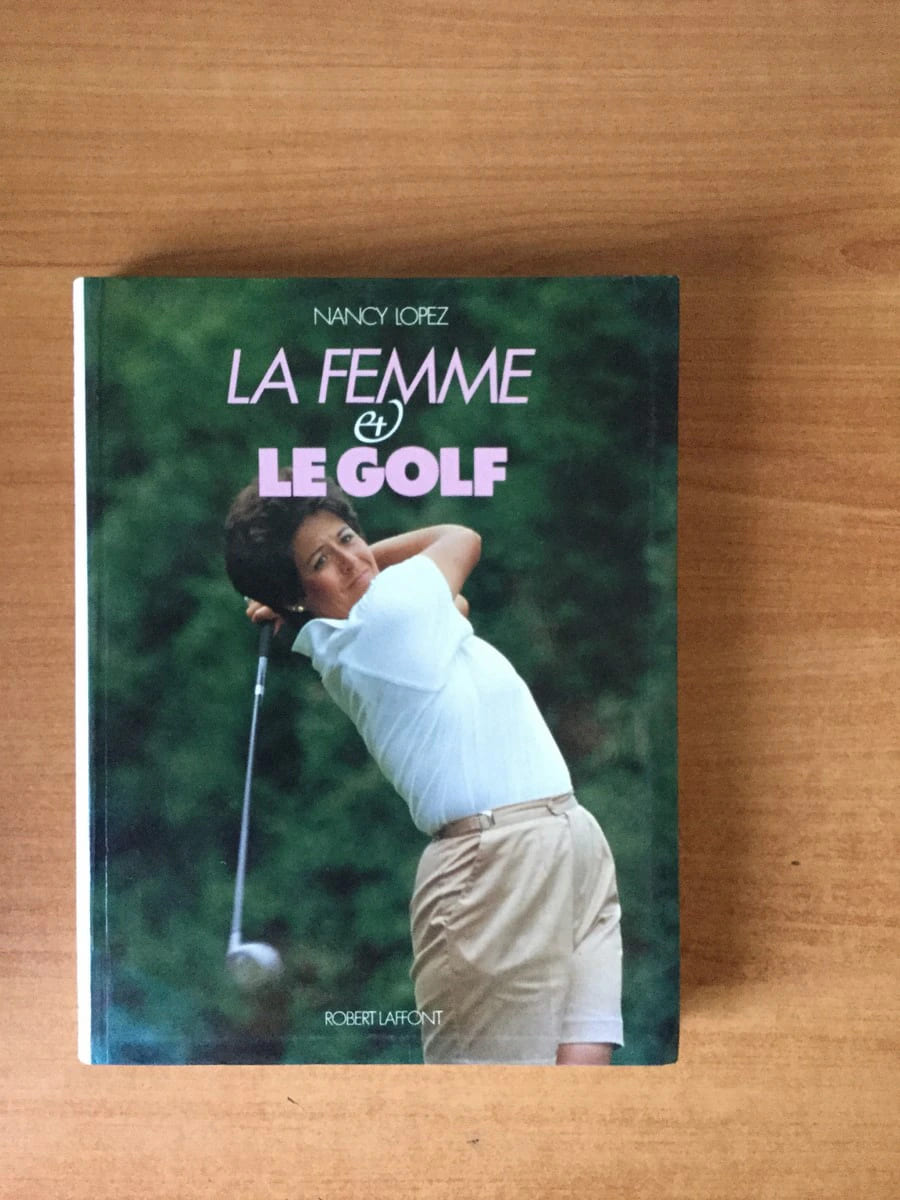
réf. 51784Robert Laffont 1990 livre récit 26*19,5 224 pages sports pour tous
Oblong 8vo (168 x 228 mm). Hand-coloured lithographed upper cover and 7 hand-coloured lithographed scenes bound concertina-style and extending to approximately 850 mm. A fine example of a peepshow, consisting of six cut away scenes and one back scene on the inside of the lower cover. When viewed through the holes in the upper cover a lively, three-dimensional scene is revealed, a festival crowd in a long street of Constantinople, terminating at the port. An intact example of a fragile piece. No copies recorded in OCLC. - Some soiling and wear to cover, bellows intact, minor damage to a few figures, minor spots of toning.
réf. 27125Paris, V.S.D./Bruxelles, J.-M. Collet, 1991. 24 x 30, sans pagination, nombreuses illustrations en couleurs, broché, état neuf.
4to. (7) ff., 1 blank f., (4) ff. With woodcut device on title, large historiated woodcut initials, and an additional engraved folding plan of Tripolis (204 x 285 mm), not called for by bibliographies. 18th century full vellum with giltstamped red morocco label to spine (very similar to the bindings done for the Venetian library of Giacomo Soranzo). First dated publication of Ulloa's account of the siege of Tripolis in Italian. Includes the three-page dedication to Johann Jakob Fugger - the only place in the book where Ulloa's name appears. The author, a courtier of King Philip II, celebrates the defence of St Angelo's fortress on Malta, modern Libya. - In the 1551 Siege of Tripoli, the Ottoman fleet vanquished the Knights of Malta in Tripoli; the city was captured on 15 August by Sinan Pasha after six days of bombardment. The knights, many of them French, were returned to Malta upon the intervention of the French ambassador, and shipped onboard his galleys, while the mercenaries were enslaved. Murad Agha, the Ottoman commander of Tajura since 1536, was named as the Pashalik of the city. The siege was the first step in the all-out Italian War of 1551-59 in the European theatre. In 1553, Dragut was nominated commander of Tripoli by Suleiman, making the city a centre for piratical raids in the Mediterranean and the capital of the Ottoman province of Tripolitania. In a famous attack from Tripoli, in 1558, Dragut attacked Reggio and took all its inhabitants as slaves to Tripoli. In 1560, a powerful naval force was sent to recapture Tripoli, but that force was defeated in the Battle of Djerba, an event also described in Ulloa's book. The end of the volume is brought up by an interesting four-page account of Malta ("Descrittione dell'Isola di Malta") and a list of the names of Christian knights who died in the siege. The fine engraved plate bound after the preliminaries, entitled "Il vero disegno del porto, della città, della fortezza, et del sito dove è posta Tripoli di Barbaria. Ven. l'anno 1567 alla libreria della Colonna" appeared a year after the book. It is engraved by Paolo Forlani. - A clean, well preserved copy. Edit 16, CNCE 37528. BM-STC Italian 704. Gay 1494. Palau 343.401. Göllner 1134. Graesse VI, 224. Olschki L II, 222. Cf. Mortimer 509 (with note on this edition). Not in Adams, Blackmer or Aboussouan. This edition not in Atabey.
4to. (7) ff., 1 blank f., 88, (4) ff. With woodcut printer's device to title page. 19th century vellum with giltstamped red spine labels. First dated publication of Ulloa's account of the siege of Tripolis in Italian. Includes the three-page dedication to Johann Jakob Fugger - the only place in the book where Ulloa's name appears. The author, a courtier of King Philip II, celebrates the defence of St Angelo's fortress on Malta, modern Libya. - In the 1551 Siege of Tripoli, the Ottoman fleet vanquished the Knights of Malta in Tripoli; the city was captured on 15 August by Sinan Pasha after six days of bombardment. The knights, many of them French, were returned to Malta upon the intervention of the French ambassador, and shipped onboard his galleys, while the mercenaries were enslaved. Murad Agha, the Ottoman commander of Tajura since 1536, was named as the Pashalik of the city. The siege was the first step in the all-out Italian War of 1551-59 in the European theatre. In 1553, Dragut was nominated commander of Tripoli by Suleiman, making the city a centre for piratical raids in the Mediterranean and the capital of the Ottoman province of Tripolitania. In a famous attack from Tripoli, in 1558, Dragut attacked Reggio and took all its inhabitants as slaves to Tripoli. In 1560, a powerful naval force was sent to recapture Tripoli, but that force was defeated in the Battle of Djerba, an event also described in Ulloa's book. The end of the volume is brought up by an interesting four-page account of Malta ("Descrittione dell'Isola di Malta") and a list of the names of Christian knights who died in the siege. - Occasional slight browning and brownstaining (more pronounced on title page); a few pages near end show insignificant edge flaws. Early 19th century ms. bibliographical note on flyleaf. A good copy. Edit 16, CNCE 37528. BM-STC Italian 704. Gay 1494. Palau 343.401. Göllner 1134. Graesse VI, 224. Olschki L II, 222. Cf. Mortimer 509 (with note on this edition). Not in Adams, Blackmer or Aboussouan. This edition not in Atabey.
réf. c3269Paris, Editions D' Artrey, 1964 ; grand in- 8°, broché, couverture jaune imprimée en noir et rouge; 225 pp.; cartes dans le texte; couverture un peu passée au beige.Ouvrage publié avec le conbcours du CNRS.
1991réf. LFA00fe4Un ouvrage de 343 pages, format 230 x 155 mm, broché couverture couleurs, publié en 1991, Editions Jacques Granger, bon état
1935Folio (280 x 360 mm). 2 parts in 2 vols. (4), XVI, 262 pp. (2), 263-555, (1) pp. With large colour map, 169 plates (15 in colour, including 13 large portolan facsimiles) and 95 text illustrations. Contemporary half cloth with original printed covers and spines. Important study of Near-Eastern travel routes, also including Mecca and oriental cartography. Only vol. 2 (out of 3, published 1929-52), published as no. 16 in the series "Mémoires de la Société Royale de Géographie d'Égypte". Inscribed and signed on the title page by the author to the French psychiatrist Pierre Janet (1859-1947): "A Monsieur le Dr. Pierre Janet membre de l'Institut en témoinage de haute estime et d'admiration [...]" (Paris, 7 Nov. 1937); Janet's autograph ownership on front flyleaf. Janet, a great bibliophile, was a member of the Institut de France since 1913; he is credited with coining the words ‘dissociation’ and ‘subconscious’ and was an important forerunner of Sigmund Freud. - Spine of the first volume beginning to split; covers show slight staining (more pronounced in second volume), with occasional browning to margins. Macro, Bibliography of the Arabian Peninsula, 1339. Henze II, 315 (s. v. Estevâo da Gama). OCLC 2891592.
Folio (280 x 360 mm). 2 parts in 2 vols. (4), XVI, 262 pp. (2), 263-555, (1) pp. With 168 (instead of 169) numbered plates, including 14 (instead of 15) in colour, of which 10 large portolan facsimiles, and one folding colour printed map of Abyssinia and Yemen. The black-and-white plates include another 3 large portolan facsimiles. Also 95 numbered text illustrations. Contemporary half cloth with original printed covers and spines. Important study of Near-Eastern travel routes, also including Mecca and oriental cartography. Commissioned by King Fouad I of Egypt, and prepared by Albert Kammerer, scholar and French Ambassador to Turkey (1933-1936) as a three-volume series published 1929-52. - The present set comprises volume II in two parts, dedicated to Portuguese seafaring exploits in the Indian Ocean and the Red Sea up to the 16th century. It is particularly remarkable for its large portolan facsimiles, all of which are fine specimens of both Western and oriental historical cartography. - Lacks plate CL (a facsimile of the 1543 world map of Battista Agnesi); pencil note in Arabic regarding the missing plate on flyleaf of part II. Upper hinges of part II broken, spine loosened. Covers a little stained. Interior very well preserved with only occasional light waterstaining. Macro, Bibliography of the Arabian Peninsula, 1339. Henze II, 315 (s. v. Estevâo da Gama). OCLC 2891592.
1900Oblong folio. (4) pp., 8 printed illustrations in colour after photographs. Original printed wrappers. Fascicule 18 from the "Autour de Monde. Aquarelles, Souvenirs, Voyages", showing eight views from the Red Sea. Depicts the wells of Aden, street scenes from Jeddah, the Arabic bazaar at Suakim, etc. - Slight edge defects, otherwise well preserved.