4 114 résultats
4to. (6), 96 ff. With a woodcut initial coloured in red and green and several diagrams. Rubricated throughout. - (Bound after) II: Aristotle. Meteorologia. (Nuremberg, Friedrich Peypus, 11 Nov. 1512). 94, (6) ff. (final blank). With 8 large woodcuts in the text, some with touches of contemporary colour. Rubricated throughout. - (Bound with) III: Abraham ben 'Ezra (Aben Ezra, Avenares). In re iudiciali opera. (Venice, Petrus Liechtenstein, 1507). 96 ff. (f. 92 blank). Rubricated throughout, some initials coloured green. Contemporary wooden boards on three raised double bands with leather spine. Two brass clasps (repaired). I: Editio princeps of this "work composed in Arabic probably exactly in the form in which it is preserved in Latin, typical of the encyclopaedic period but limited [...] to certain early sources" (Carmody), uniting the Judaic and Islamic astrological traditions. The form, arranged in twelve parts according to each house, is based on the doctrines of Sahl al-Tustari. The various tracts are constructed from chapters compiled systematically from such writers as Mâshâ'allâh (including the first printing of 'De electionibus') and al-Kindi. The crucial factor that they were translated intact in their present form from Arabic "is apparent in the unified Latin style and terminology" (ibid.). The collection includes a number of quotations attributed to Ptolemy; the rare mention of "Abuali" refers perhaps to Abu 'Ali al-Khayyâj. - "Masha'allah, [a Jew from Basra,] was one of those early 'Abbasid astrologers who introduced the Sassanian version of the predictive art to the Arabs; he was particularly indebted to the Pahlavi translation of Dorotheus of Sidon and to the 'Zik i Shahriyaran', or Royal Astronomical Tables, issued under the patronage of Khusrau Anushirwan in 556. He was also acquainted with some Greek material (perhaps through Arabic versions of Syriac texts) and would have acquired some knowledge of Indian science, both through the Pahlavi texts that he read and through such Indian scientists as the teacher of al-Fazari and Kanaka, who visited the courts of al-Mansur and Harun al-Rashid. It is during al-Mansur's reign that Masha'allah's name first appears: he participated in the astrological deliberations that led to the decision to found Bagdad [...] Masha'allah wrote on virtually every aspect of astrology [...] ['De electionibus'], which quotes Dorotheus, is ascribed to Masha'allah and Ptolemy but is probably by neither" (DSB IX, 159 ff.). - Extremely rare. A very clean copy with only an insignificant inkstain in the lower margin of ff. 12v and 13r and tiny traces of worming in the upper margin of the final two leaves. A few contemporary handwritten marginalia; f. 80v has a contemporary handwritten ownership of Wigand, Baron Redwitz (1476-56), bishop of Bamberg, who as a young man had travelled to Palestine and is remembered as a conservative but not fanatical Catholic cleric during the tumultuous years of the Reformation. - Bound with this work in the same appealing Renaissance volume are two other rare, thematically related contemporary treatises. - II: Aristotle's "Meteorology", long known in the West only through a Latin translation based on the Arabic version "al-'Athar al-`Ulwiyyah". This is the very rare illustrated first edition of Faber's expanded translation, including an extensive commentary by Johannes Cochlaeus, who also mentions the recently-discovered American continent ("Nova illa Americi terra", f. 62v). Comprising the first three of Aristotle's four books (on the heavens, water, and wind), it also constitutes "one of the main sources of medieval geology" (Stillwell, Awakening 577). "Cochlaeus's discussion of the relationship between motion and heat appears quite modern" (cf. Spahn). The woodcuts, coloured in earth tones or simply accented by the rubricator, show spheres as well as light and cloud phenomena; a large woodcut (f. 60v) shows the climate zones of the ancient world. - A single, tiny wormhole in the blank lower margin throughout; another small wormhole in the first two leaves (repaired in A1, insignificant loss to a few letters in A2). A clean and wide-margined copy. - III: The first collected edition of ten astrological treatises by the 12th-century Jewish mathematician and astronomer Ibn Ezra from Tudela in Spain. During his lifetime the town was under the Muslim rule of the emirs of Zaragoza; later he lived in Muslim Andalusia. "Ibn Ezra disseminated rationalistic and scientific Arabic learning in France, England and ltaly [... He] wrote a number of astrological works that were very popular [...] all of them appeared in Latin in 1507. They are rich in original ideas and in the history of scientific subjects" (DSB). - Contemporary marginalia in red, green, and brown ink throughout. Some insignificant browning. The well-preserved binding shows a hunting scene blindstamped into the leather. A fine assembly of important natural scientific works: published by Christian editors and printers in the early Renaissance, they bring together the Muslim and Jewish traditions that were the driving forces behind mediaeval science. I: Edit 16, CNCE 63196. BM-STC ltalian 424. Houzeau/Lancaster 751 ("volume tres rare"). DSB IX, 162. Carmody p. 112. Not in Adams, Mortimer, Essling, Stillwell, Honeyman. - II: VD 16, L 959. Cranz/Schmitt 13. Hoffmann I, 321. Schweiger I, 60. IA 107.806. Alden/Landwehr 512/1. Zinner 953. Brüggemann/Brunken 29. Spahn, Cochläus, p. 16. - III: Edit 16, CNCE 35576. IA 100.150. Adams A 38. Proctor-Is. 12998. Stillwell, Awakening 2. Houzeau/Lancaster 3927 ("rare"). Thorndike II, 917 & 927. DSB IV, 502.
1981Mm 210x275 Edizione in francese / French edition - Brossura editoriale con copertina illustrata a colori, 160 pagine con splendidi disegni originali a colori. Opera in condizioni molto buone. SPEDIZIONE IN 24 ORE DALLA CONFERMA DELL'ORDINE.
2 parts in 1 vol. (2), VIII, (2), 393, (2), 393-980 pp. With half-title. 19th century marbled half calf with giltstamped title to gilt spine. Marbled endpapers. 4to. First separate edition of Castell's Syriac-Latin dictionary, taken from the author's great "Lexikon heptaglotton" (1669) and here edited by the German Biblical scholar Johann David Michaelis. The English orientalist Edmund Castell (1606-85) was appointed Professor of Arabic at Cambridge in 1666. - Insignificant browning; upper spine-end chipped, otherwise a well-preserved, prettily bound copy. From the library of the Ducs de Luynes at the Château de Dampierre: their bookplate reproducing the arms of Charles Marie d'Albert de Luynes (1783-1839), 7th Duc de Luynes, on pastedown. Zaunmüller 372. Vater/Jülg 387. Graesse II, 65. OCLC 4683081.
Small folio (238 x 298 mm). (4), XXVII, (1), 470, (2) pp. Later 19th century marbled half calf with giltstamped title to gilt spine. Marbled endpapers. First edition. - Since 1815 Peyron (1785-1870) taught oriental languages at the University of Turin. He was a specialist in the Coptic language, the latest stage of Egyptian and spoken in Egypt until at least the 17th century. His research in this field gained him an international renown that was consolidated by his Coptic dictionary, the earliest of its kind. It remained unsurpassed until Wilhelm Spiegelberg's "Koptisches Handwörterbuch" in 1921. - From the library of the Ducs de Luynes at the Château de Dampierre: their bookplate reproducing the arms of Charles Marie d'Albert de Luynes (1783-1839), 7th Duc de Luynes, on pastedown. An excellent copy. Ibrahim-Hilmy II, 113. Gay 2337. Zaunmüller 228. Vater/Jülg 209. Brunet IV, 584. Graesse V, 247. OCLC 2786885.
8vo. (2), 490, (2) pp. Contemporary half calf with marbled boards and giltstamped spine title. All edges red. First edition of this Arabic-Latin dictionary, prepared to accompany the author's Arabic chrestomathy. While both works were published simultaneously, they were sold separately and hence are not usually encountered together. - The Czech theologian and orientalist Jahn (1750-1816) taught at Olomouc and Vienna, where he also served as Canon of St. Stephan's Cathedral. - Somewhat browned throughout, as common. Old Linz library stamp to title page (cancelled); ink ownership of Wenzel Hajduk (dated 1826) on flyleaf.
Hand-coloured steel engraving. 247 x 150 mm. Plate from "A History of the Birds of Europe, Not Observed in the British Isles" by Charles Robert Bree, published by George Bell and Sons in 1875.
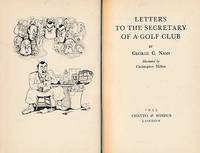
1935réf. j1136London: Chatto & Windus. G: in good condition with poor dust jacket. Inner hinge cracking. Previous owner label to fep verso. Browning to pages. 1935. First Edition. Green hardback cloth cover. 190mm x 130mm 7" x 5". 196pp. . Chatto & Windus hardcover
8vo. XI, (1), (5)-343, (1) pp. With a photogravure portrait frontispiece. Publisher's stamped full cloth with gilt title to spine. Rare first and only edition: a collection of vivid letters by the Belfast-born engineer Maxwell (1838-80), written from Syria in 1870-73 to friends while he was performing surveys for a railroad through the valley of the Euphrates and planning the water supply of Beirut in Lebanon. - Maxwell travels via Brindisi and the Greek islands through Smyrna, Rhodes, Antioch, and Beilan, where he describes the difficulty of designing a railroad due to the lack of proper mapping of the area: "On many occasions I was tripped up, and sent rolling down amongst other unfriendly plants" (p. 50). He also gives an account of his visit to "the finest house of Aleppo" (p. 101) and a flood in Smyrna, describes the cities of Tripolis, Beirut, Jerusalem, and Port Said, and expresses his disappointment over the Sublime Porte interrupting his survey, which indeed was never carried out completely, on several occasions. - The second and third period of letters were prompted by Maxwell's engagement in providing the city of Beirut with a water supply. They give an account of Cairo and the pyramids as well as of Alexandria before going on to describe negotiations with the council in Beirut and the obstacles met there: "As a last hope, we determined, and I think wisely, to try and obtain by means of the Consuls and public opinion what cannot be obtained by polite asking" (p. 273). The letters from the second period include a trip to Cyprus as well as descriptions of Damascus and the ancient waterworks, while those from the third period show the works on the Nahr-al-Kalb in full swing and describe an inspection of the site by Rustem Pasha, Governor-General of the Lebanon. - The frontispiece shows a portrait of Maxwell with his reproduced signature. Binding discreetly rebacked, modern cloth hinges. Light foxing near the beginning; otherwise in excellent condition. Rare: OCLC lists only five copies internationally (2 in the US, 3 in the UK). OCLC 24929041.
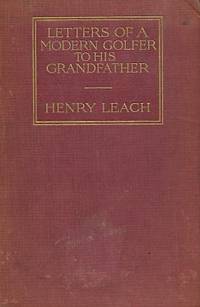
1910réf. e7499London: Mills & Boon Ltd. G: in Good condition without dust jacket. Cover rubbed faded and marked. 1910. First Edition. Red hardback cloth cover. 190mm x 120mm 7" x 5". 309pp ads. Frontispiece portrait plate. . Mills & Boon Ltd hardcover
Large 8vo. 1½ pp. on bifolium. To an unidentified recipient, answering a request for a copy of his Ottoman History or the Divan of Hafiz: "[...] Ihren Wunsch eines Exemplars der osmanischen Geschichte oder des Diwans von Hafis zu erfüllen, bin ich leider nicht im Stande, da ich von dem ersten [...] Werke selbst nur ein Exemplar mehr besitze und Hafis, wenn ich auch ein Exemplar desselben kaufen wollte, nicht mehr zu haben, sondern längstens vergriffen ist; ich sende Ihnen aber dafür fünf Bändchen des Gemäldesaals, die untereinander in keinem Zusammenhang stehen und deren Inhalt für Sie selbst mehr Interesse haben dürfte, als die zehn Bände der osmanischen Geschichte, samt dem Umblick der Reise nach Brussa, den zwei Abhandlungen Samachschari's, und Ghasali's und der Zeitworte des Gebetes, die nicht nur nach dem Tode meiner innigst geliebten Gattinn, sondern auch nach dem großen Unglücke, das mich Anfangs Septembers durch den Tod meines hofnungsvollen 21 jährigen jüngeren Sohne betroffen hat, als die beßte Tröstung erprobt worden von Ihrem hochachtungsvoll ergebenen / Hammer-Purgstall [...]". - Some brownstaining and wrinkling.
Large 4to. 2 pp. Together with a contemporary transcription into French. To the Crown prosecutor of Algeria, describing a case of child murder under Sharia law.
Manuscript letter in Italian, opening with a duplicate of an earlier letter, in a different hand, dated 26 September 1732, written in ink on one page of a bifolium originally folded 4 more times for sending (to 8.5 x 14 cm) with the address on one side and traces of a red wax on the other. Letter in Italian concerning the cloth trade in the capital of Egypt during the last months of 1732. The letter is addressed to the Italian merchant Nicolò Caragiani in Venice, who actively traded with the Levant and correspondence with several other merchants survives. The present letter informs Caragiani on the demand in certain types of cloth, which prizes are expected to rise during the approach of Ramadan. It mentions various fabrics including silks, damask and wools and also includes the prices of coffee and pepper. The letter opens with a copy of an earlier letter, followed by the actual letter in a different hand, signed by one Michiel whose last name is unclear, but could read something like Petea or Retea. - With some faint foxing, and a tiny hole and a tear along a fold on the address side, otherwise in very good condition.
Folio. 2 pp. Clichy provides 25 horses in fulfilment of a mandate issued on September 4, concerning the requisition of 40,000 horses. - Somewhat spotty and browned.
Folio (34 x 24 cm). 1 p. on bifolium. Brown ink on paper, written in a clear gothic hand. Folded for sending and addressed on the outside, with a slot for a ribbon and traces of a red wax seal. Watermark: B [crowned heart] P, (with the feet of the letters toward the centre of the sheet). An informative letter written by the French regent Catherina de' Medici concerning the exchange of gifts between France and the Ottoman Sultan. Written in French, from Catharine's favourite palace, Château de Chenonceau in the Loire valley near Tours, to Jacques de Germigny (d. 1587 or 1596), French ambassador to the Ottoman Empire. Catherine, mother of King Henry III, last of the Valois kings of France, was a powerful and colourful figure (familiar in literature from the historical novels of Alexandre Dumas), often running the government for her son. In the present letter she arranges an exchange of gifts with the Ottoman Sultan Murad III (1546-95). Germigny had written to her on 17 July concerning various items he had selected, and she asks him to send the gifts from the Sultan to André Hurault de Maisse (1539-1607) at Venice, who was France's ambassador there. She also suggests a change in one item they are giving the Sultan: "J[']ay receu v[ost]re l[ett]re du xvij de juillet avec la liste des presens que ma faict la sultane mere du grand seigneur lesquelz vous me mandez avoir retenuz par devers vous pour me les faire apporter quant vous partirez de par dela pour venir trouver le Roy monsieur mon filz. Et pour ce quil pourra passer plus de temps jusques la que je ne le vouldrois et que je seray bien ayse d[']avoir plustost lesd[its] presens je vous prie de les envoier au Sr de Maisse ambassadeur du Roy monsieur mon filz a Venize lequel me les fera tenir par apres. Au surplus j[']ay a vous dire touchant Le Rouge que desire recouvrer de moy lad[ite] Sultane semblable a celluy que je luy ay cy devant envoie quelle trouve meilleur, et mieulx faict que celluy d[']Espaigne, que je n[']en ay plus maintenant, et ne seay en sorte du monde la recepte et facon de le faire qui est cau[s]e que je ne puis contenter a p[rese]nt lad[ite] Sultane de ce qu[']elle desire de moy en cest endrent, dont du suis bien marrye mais j[']adviseray si j[']en pourray avoir le moien par cy apres dont je vous advertiray [...]". Counter-signed by her Secretary of State, Pierre Brulart, and addressed to "Mons[ieur] de Germigny, ch[eva]l[ie]r de l[']ordre du Roy monsieur mon filz, son con[seill]er et amba[ssa]deur en Levant". The two-leaf folio was folded twice on horizontal folds, then briefly once more on a vertical fold without a sharp crease for sending. A cut through the sixteen layers would have had a ribbon through it and one can see traces of red sealing wax around the slot on the back. The letter was stored folded horizontally, and eight small worm holes run through the eight layers, but they barely touch an occasional letter of the text. There are also a few small marginal tears. In very good condition and with the whole sheet of paper untrimmed.
Latin ms. on vellum. 378 x 210 mm. Papered seal. Signed by Charles Soillot (1434-93?), secretary to Charles the Bold. Letter of "sauf conduit" (safe conduct) for the merchant and diplomat Anselm Adornes (1424-83) for a Burgundian embassy to Persia: "[...] Universis principibus baronibus militibus et plebeis quibus hec nostre littere fuerint ostense, benivolenciam nostram et salutem universitatem vestram et vestrum quemlibet. Rogamus quatenus dilectum et fidelem consiliarium, oratorem et cambellanum nostrum dominum Anselmum Adornes militem, dominum de Corthuy, harum latorem, quem ad nonnullas orientales partes impresentiarum mittimus cum penes vos venerit seu per terras et dominia vestra iter fecerit benevole recipere, amoreque nostri et contemplatione favorabiliter tractare et tractari mandare velitis eumdem unacum viginti personis et totidem equis seu aliis equitaturis aut inferius, permittendo transire sine pedagio, gabella, fundonavis, datia aut alia exactione quacunque [...]". - From March to June 1474, Adornes, Lord of Cortachy, led an embassy in the name of Charles the Bold to the Shah of Persia Uzun Hassan (1423-78), whom the Duke of Burgundy sought to persuade to engage in a new military expedition against the Ottomans, following a campaign in the previous year which had ended in Uzun Hassan's defeat by Mehmed II. Adornes was chosen for this mission due to his knowledge of Muslim territories; he had made a pilgrimage to the Holy Sepulchre in Jerusalem in 1470/71 (the account of his journey written by his son Jan is still preserved). - One of the most illustrious members of the Adornes-Adorno family, of Genoese origin, and a wealthy patron, Anselm was closely involved in international trade (mainly in alum and cloth from Tournai and England). He maintained commercial relations with Genoa as well as Spain and played an important role in Burgundian diplomacy. - Some wrinkling as common; traces of folds. Well preserved. Messager des sciences historiques ou Archives des arts et de la bibliographie de Belgique (1881), pp. 41-42. Cf. Nationaal biografisch woordenboek XII, 2/25. C. van Hoorebeeck, Livres et lectures des fonctionnaires bourguignons (Turnhout, 2014), passim.
Latin ms. on vellum. 372 x 295 mm. Secretarial letter of safe conduct for the merchant and diplomat Anselm Adornes (1424-83) for a Burgundian embassy to Persia, issued in the name of Casimir IV Jagiellon, King of Poland. - From March to June 1474, Adornes, Lord of Cortachy, led an embassy in the name of Charles the Bold to the Shah of Persia Uzun Hassan (1423-78), whom the Duke of Burgundy sought to persuade to engage in a new military expedition against the Ottomans, following a campaign in the previous year which had ended in Uzun Hassan's defeat by Mehmed II. Adornes was chosen for this mission due to his knowledge of Muslim territories; he had made a pilgrimage to the Holy Sepulchre in Jerusalem in 1470/71 (the account of his journey written by his son Jan is still preserved). - One of the most illustrious members of the Adornes-Adorno family, of Genoese origin, and a wealthy patron, Anselm was closely involved in international trade (mainly in alum and cloth from Tournai and England). He maintained commercial relations with Genoa as well as Spain and played an important role in Burgundian diplomacy. - Seal missing; a large tear touching the last lines of the text. Folded. Cf. Nationaal biografisch woordenboek XII, 2/25. C. van Hoorebeeck, Livres et lectures des fonctionnaires bourguignons (Turnhout, 2014), passim.
réf. 343812 pages in8 - bon état - cachet de collection -
1995Leadbetter, David Lessons from the Golf Greats. , HarperCollinsWillow 1995, Copertina rigida telata, sovraccoperta plastificata illustrata con piccoli segni d'uso, taglio e margini leggermente ingialliti Buono (Good) . Copertina rigida 159 0002187019
1995réf. 23953London, Harper Collins, 1995. 132 SS., 3 Bll. Verlagswerbung. (19 x 14,5 cm), gelber original Pappband im illustr. original Schutzumschlag.
4to. (16), 540, (10), (2 blank) pp. With a woodcut and an engraved author's portrait, 34 woodcut illustrations in text, including several full-page, and some woodcut initals, head- and tailpieces. Contemporary calf, gold-tooled spine. Rare first edition of a travelogue by the French explorer, merchant and diplomat François de la Boullaye-Le Gouz (ca. 1610-69). The largest part of the book deals with his travels through the Middle East and India, while a smaller parts treats Le Gouz's travels through Europe. In 1643 he travelled the Middle East under the name Ibrahim Beg, visiting Syria, Palestine, Persia, Egypt, Anatolia and Armenia. "Like so many European travellers in the east he adopted oriental clothes and an oriental name ... Unlike most European travellers to the east, however, La Boullaye-Le Gouz continued to wear his Persian clothes in his return to France and was consequently regarded as something of a curio" (Hamilton). A few years later he was sent by the French king with an embassy to the Mogul emperor Shah Jahan, where he met and became great friends with the Jesuit Alexandre de Rhodes (1591-1660). - La Boullaye-Le Gouz describes the routes he takes, the cities he visits and the people he meets along the way, with frequent observations on religion, natural history and commerce. The illustrations show various Indian deities, some city views or buildings, Indian and Eastern costumes, plants and trees. Pages 243-255 deal with plants, fruits and trees in India, including several palm trees, a fig tree, a jack tree and a melon tree. "The work is notable for its information on northern India and its relations to Persia, and for its inclusion of a summary of the Ramayana" (Howgego). - In Europe, Le Gouz travelled Italy, Greece, Poland, England, Ireland, Germany, and the Netherlands. In his later years he travelled again to Persia and died in Isfahan probably in 1669, whereafter the Shah ordered a splendid funeral to be held. Included at the end of the book is a list of names of the people La Boullaye-Le Gouz met, sorted by country; a list of uncommon words, and a table of contents. A second, enlarged edition was published in 1657 at Troyes. - Binding rubbed, restored and front hinge partly cracked. Occasional small (water) stains, otherwise in very good condition internally. Atabey 645. Hage-Chahine 2526. Hamilton, Europe and the Arab world 22. Howgego, to 1800, L4. Slot, The Arabs of the Gulf 1602-1784, p. 410. WorldCat (5 copies). Not in Blackmer.
8vo. 2 parts in 1 volume. (8), 119, (1) pp. (4), 158, (2) pp. Publisher's original printed auburn cloth with gilt spine. Second edition of the original Arabic text, revised and corrected; first published in 1874. "Chaque page entourée d'un double filet vermillon" (Chauvin). The text and vocabulary, lithographed throughout, are hand-drawn by E. Ducret, "Diplomé de première classe". A clean copy. Chauvin VII, p. 3. NYPL Arabia Coll. 187. OCLC 4433368.
8vo. (16), 358, (24) pp. (including final errata leaf). Small woodcut vignette to title; woodcut intitials, head and tail pieces. Modern full calf, bound to style. First edition (variant title). - A series of ten letters written from 1639 to 1641 in which Du Loir gives his impressions of Constantinople and the Sultan's court, to which the author was privy as a member of the entourage of French ambassador Jean de La Haye. The originality of this correspondence lies also in the transliteration of several Qur'an verses (letter 5) and in providing the musical source of a Turkish song. The eighth letter includes the Ottoman text (and its French translation) of an account of the conquest of Baghdad, with a bilingual translation from Ottoman into French of the several titles of the Sultan and the other dignitaries of the court. - The author spent some eighteen months in the Levant: while he was in Turkey, Sultan Murad died and Du Loir was present at the coronation of Sultan Ibrahim. He returned to Venice in 1641 after passing through the Morea; the first and the last of the letters give some account of mainland Greece and the islands. "Cet ouvrage, écrit avec conscience, contient sur les moeurs orientales de l'époque des documents utiles pour l'histoire de la Turquie" (NBG XV, 138). - This is the rarer (and probably earlier) variant edition, mentioned in Blackmer, with a different subtitle (instead of "contenu ... sujets"). - Contemporary ownership ("G. Carius") to title; latterly in the collection of the American dietician and professor of medicine Edward E. Cornwall (b. 1866; his ownership signature to the front free endpaper), previously inscribed to N. O. Cornwall "with a merry Christmas". Insignificant browning, but a good copy. Uncommon on the market. BM French (17th) D1038. Aboussouan 286. Cf. Atabey 373f. Blackmer 511. Weber II, 299. OCLC 43056926.
8vo (98 x 160 mm). (18), 356, (28) pp. - (Bound after) II: Theophrastus / La Bruyère, Jean de (transl.). Les caracteres de Theophraste traduits du grec: avec les caracteres ou les moeurs de ce siecle. Sixième edition. Paris, Estienne Michallet, 1691. (32), 587, (5) pp. 18th century full calf with gilt supralibros of Louis-Robert-Hippolyte Bréhant de Plélo on both covers. Spine on five raised bands; compartments show gilt armorial crest. Marbled endpapers. Leading edges gilt. All edges red. Original edition of the first book published by the French orientalist Antoine Galland (1646-1715), soon to be famous for his influential translation of Alf Layla wa-Layla. "Galland, professor of Arabic at the Collège de France since 1709, had made three journeys to Turkey, the Levant and Palestine, and approached the Orient without prejudice and with an open mind. Following the example of Plutarch's Apophthegmata and the anecdote collections of Valerius Maximus, he set about collecting from Arabic, Persian, and Turkish works, such as the chronicles of Makin, of Bar Hebraeus, of Mirchond, from the Matla' us-sa'dain of Abdarrazzaq, from the Tag ut-tavarikh of Hodsha Effendi, from Sa'adi's Gulistan, from Latifi and other sources, remarkable sayings to show his readers that the orientals did not rank behind the West for wit, powers of observation, and pithiness of expression. To these he appended maxims taken from the collections of sayings published by Erpenius and Golius" (cf. Fück). Although a reissue appeared at Den Haag the same year, the work is very rare; Fück reports that he knows it only from the reprinted text in the supplement to d'Herbelot's Bibliothèque orientale (1780). - Bound first is the sixth edition of La Bruyère's Theophrastus translation, containing 77 new characters, including Le distrait, Onuphre, the portraits of La Fontaine, Jean de Santeul, and others. - Provenance: from the library of the French diplomat and military officer Louis-Robert-Hippolyte Brehant de Plélo (1699-1734), bound for him with his arms stamped in gilt to both covers (OHR, 1715, fer no. 1). Brehant de Plélo married Louise-Françoise Phélipeaux de la Vrilliere, daughter of a secretary of state of Louis XV. He fell during the siege of Danzig on 27 May 1734. Latterly in the collection of the French industrialist and patron Pierre Bergé (1930-2017); acquired from the sale of his estate. I: Chauvin I, 81A. Tchemerzine-Scheler III, 802. Brunet III, 720. Fück 101. OCLC 14147406. - II: OCLC 32361379.
8vo. (4), XII, 265 (but: 255), (1) pp. With an engraved frontispiece. Contemporary half calf with gilt-stamped label to florally gilt spine. Only edition thus of this collection of Arabic tales in the manner of the 1001 Nights. Anonymously edited by Jean-Baptiste Decourdemanche; attributed by Chauvin to the abbé Marie Nicholas Silvestre Guillon. - Slight traces of worming to upper cover; a very light waterstain near the end, otherwise fine. From the collection of the Swedish goldsmith Christian Hammer (1818-1905) with his wood-engraved bookplate on the front pastedown over an earlier engraved armorial bookplate, monogrammed "H.U.D.G." in ink. Chauvin IV, 96. OCLC 47704430.
4to. 3 parts in 1 volume. (12), 212, (1) ff. With title in woodcut border with Cavellet's device and initials at the foot, each part-title with Cavellet's woodcut device, 1 folding woodcut map (315 x 350 mm) showing Mount Sinai, 44 woodcuts in the text (including a portrait of the author by Geoffroy Tory), and numerous fine decorated initials. Main text set in italic, with preface and commentary in roman. Overlapping vellum (ca. 1600?), sewn on 5 cords, laced through the joints. Third edition of Belon's "Observations", the fruit of his extensive travels in Greece, Turkey, Egypt, Palestine, Lebanon and Syria from 1546 to 1549. The naturalist Pierre Belon (c. 1518-64), famous for his works on ornithology, was attached to the French embassy to the Ottoman Empire, led by Gabriel de Luetz (Luez, Luels) d'Aramont, who aimed at convincing Suleiman the Magnificent to join forces against Charles V. The envoy sailed for Venice in December 1546 and proceeded to Croatia. Here Luetz continued overland to Adrianople (Edirne), while Belon sailed for Istanbul by way of Greece, visiting Lemnos, Macedonia, Crete and Kavala en route. He reached Istanbul in August 1547, explored the city and continued to Alexandria, while Luetz accompanied Suleiman to Persia. Belon's journey continued to Cairo, Mount Sinai, Jerusalem, Damascus, Baalbek, Aleppo, and again to Turkey. - Unlike many contemporary travel writers, Belon does not elaborate on extraordinary adventures, but rather limits himself to detailed observations on mammals, fish, snakes, birds, plants and the manners and customs of the peoples he encountered, commenting only on what he himself had witnessed. The fine woodcuts, attributed to Arnold Nicolai and Pierre Goudet (Gourdelle), include a map of the Dardanelles (Hellespont), a folding map of Mount Sinai, a view of Alexandria, coins with Arabic inscriptions, 3 illustrations of Egyptian costumes, a giraffe, chameleon and, surprisingly, a flying dragon and an armadillo. - The first edition was published in 1553, illustrated with 35 woodcuts only, followed by a second, augmented edition in 1554. The present edition was a joint publication of Guillaume Cavellat and Gilles Corrozet, comprising two issues with either Corrozet's or Cavallet's name in the imprint. - With printed description from a sales catalogue on pastedown, slightly browned, some light waterstains, folding plate mounted. Overall in very good condition. Adams B 564. Aboussouan 94. Ibrahim-Hilmy 61. Gay 10. Nissen, ZBI 304. Tobler 72f. USTC 6761. Cf. Macro, Bibliography of the Arabian Peninsula, 505 (1st ed. 1553). Atabey 93 (2nd ed.). Blackmer 115 (same copy). Weber II, 153 (1st ed. 1553). Henze I, 237 (first edition). Hage Chahine 393 (later ed.). For the author: Dictionnaire des orientalistes, 75f.