Golf DigestBiblio.com

4 085 résultats
réf. 0883635003New. hardcover. New. Satisfaction Guaranteed or your money back. hardcover
4to. 22¼ pp. on 12 ff. Extracts from the Arabic historical manuscript "no. 689" by Joseph de Guignes, the famous French sinologist and orientalist, with notes on the history of Egypt during the years 1517-1522 and the Ottoman conquest by Sultan Selim. Guignes's notes start at f. 111 and end at f. 334 of the Arabic manuscript, which is a part of a historical work on Egypt entitled "Bada'I al-Zuhur fi Waqa'I al-Duhur". The "Bada" was written by the famous chronicler of the late Mamluk and early Ottoman period in Egypt, Muhammad Ibn Iyas (1448-after November 1522) and today is kept in the manuscript section of the French Royal library (no. 1825, ancien fonds no. 689). Guignes's extract contains numerous of transcripts in Arabic script. - Today, Joseph de Guignes is best known for his "Histoire générale des Huns, des Turcs, des Mogols, et des autres Tartares occidentaux" (Paris, 1756-1758), for his unsuccessful attempts to decipher Egyptian hieroglyphics (before the 1799 discovery of the Rosetta Stone and Champollion's breakthrough), and for his theory that China was an outpost of Ancient Egypt.
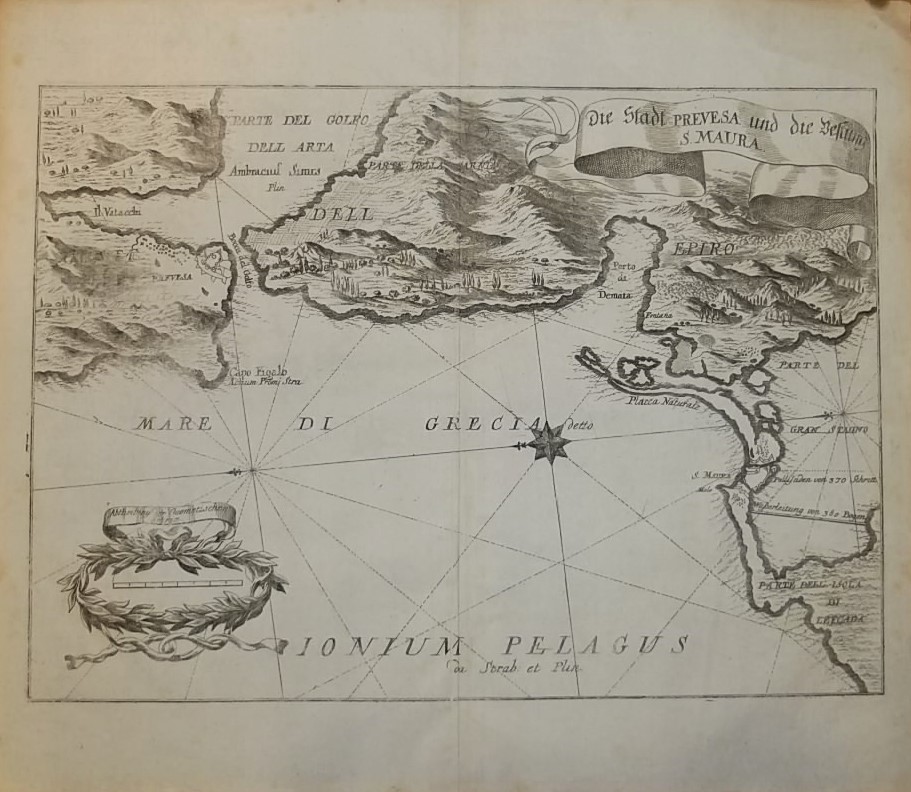
1691réf. 17962Frankfurt, Merian, 1691. Ca. 26 cm x 36cm (Bild), 34,5 cm x 40 cm (ganze Blatt).
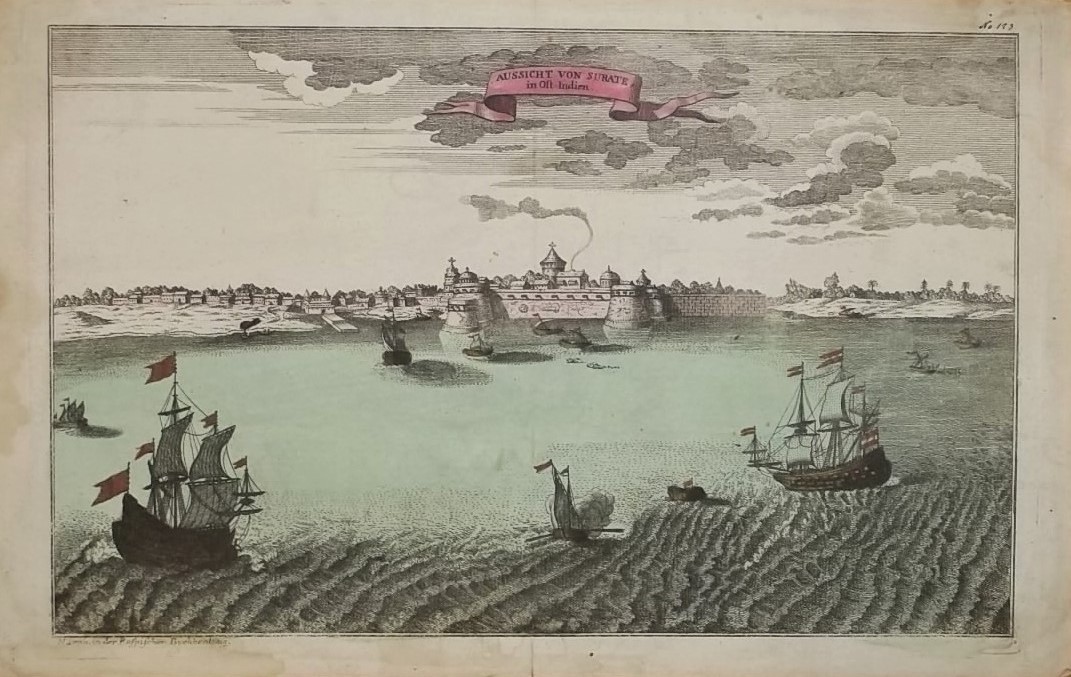
1760réf. 18711Nürnberg, Raspische Buchhandlung, um 1760. Ca. 23 cm x 35,5 cm (Druckplatte).
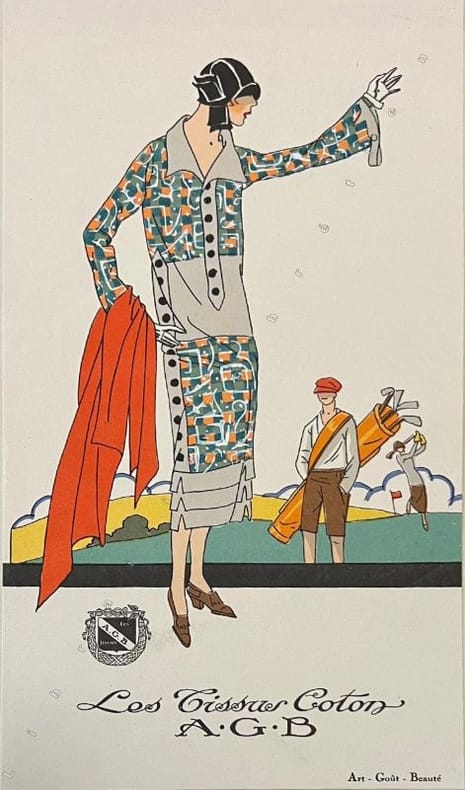
1922réf. 24714paris 1922 1 in 4 Estampe rehaussée au pochoir, titrée, rehaussée sur la page de Garde. Paris, Successeurs d'Albert Godde, Beddin et Cie, (1922),
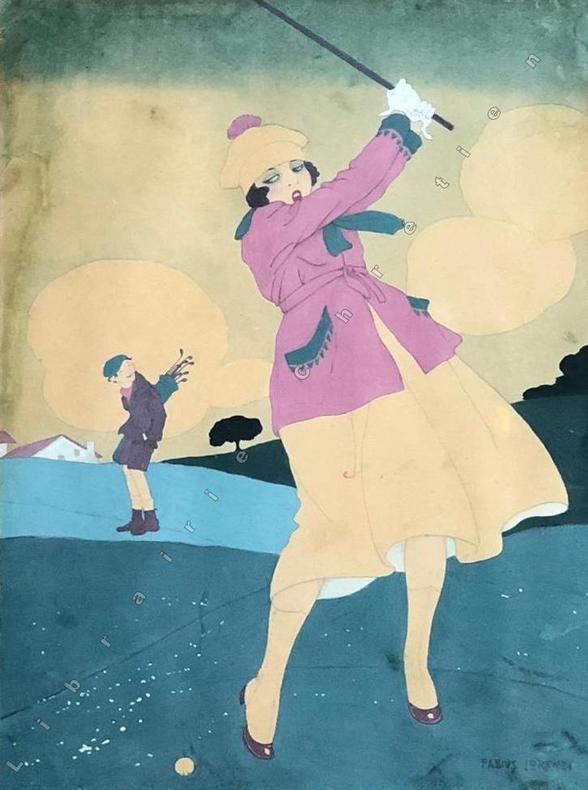
1917réf. 233321917 Aquarelle et gouache signée en bas à droite, 1917, 32.3 x 22.8 cm. (format de la feuille), cadre argenté.
1920réf. 237981920 Encre noire signée en bas à droite du monogramme, (1920), 9 x 12,5 cm., sous Marie-Louise.
8vo. 15 black and white photographs captioned in white, plus one repeat in a smaller print. Original board album, acquired from "M. Arthur, Beyrouth". Paper label to upper cover: "Arab Types. Syria". Small but fascinating collection of portrait photographs showing Arabian nobles as well as commoners, all captioned and the subject often identified by name and tribe. The photos, many of which are executed as highly expressive profile studies, were taken and assembled by Lt. Col. Walter Francis Stirling (1880-1958), Chief of Staff to T. E. Lawrence. While the present photographs were taken during his time with Lawrence, whom Stirling revered, it is not his British comrades but rather the striking features of the sheikhs and bedouins on which this collection is focused. Among the images are "Sheik Gawaileh of Nejd, one of Lawrence's Bodyguard", and "Sheikh Hamondi, Friend of Lawrence"; others are more ominously identified as "Yezidi Shepherd, Devil worshipper" or "Bad type of Hadadiyim Tribesman". Of many noble tribesmen here depicted, such as Fauraz ibn Sha'laan, Emir of the Ruwalla, or Sheikh Daham al-Hadi, Paramount Sheikh of the Shammar tribe, these probably constitute the only photographic record. - Stirling was trained at Sandhurst and served in the Transvaal operation during the Boer War before being seconded to the Egyptian Army in 1906. He spent five years patrolling with an Arab battalion on the Eritrean and Abyssinian borders. Throughout WWI he served at Gallipoli and the Palestinian campaign until he was appointed chief staff officer to Lawrence of Arabia, who called him "Stirling the imperturbable". In 1937, Stirling would reflect on his famous wartime comrade: "From then [early 1918] throughout the final phase of the Arab revolt on till the capture of Damascus, I worked, travelled, and fought alongside Lawrence [...] We sensed that we were serving with a man immeasurably our superior [...] In my considered opinion, Lawrence was the greatest genius whom England has produced in the last two centuries [...] If ever a genius, a scholar, an artist, and an imp of Shaitan were rolled into one personality, it was Lawrence." In 1919 Stirling became advisor to Emir Feisal and Deputy Political Officer in Cairo, then acting governor of Sinai and Governor of the Jaffa district in Palestine before moving to Albania in 1923 to take up a position advising and assisting in the reorganisation of the Albanian Ministry of the Interior.
4to (195 x 165 mm). (191) ff., including paste-downs and about 55 blanks. The journal with an engraved view as frontispiece, 15 full-page, 1 nearly full-page and 1 smaller manuscript maps and coastal profiles, plus a small engraved view mounted on 1 page. The lecture notes with a matching pair of engravings of a scull on and facing the title-page, and 27 pencil and/or ink anatomical drawings (including 2 full-page), some also with red. - Including: [Anatomical manuscript]. Morse, Edward George. Lecture Book [notes on anatomical lectures by Joseph Constantine Carpue]. [London], November-December 1828. Contemp, sheepskin parchment. A manuscript ship's journal kept by Edward George Morse (Bromyard 1805?-Deal post 1850?), who no doubt served, among other functions, as the ship's surgeon. Morse reflects on Arabian navigation and Arabian explorers, including the deservedly famous Ibn Battuta. "The Arabians like the Chinese are said to have employed the compass to guide them through the trackless sands of the desert or to enable them at the hours of prayer to direct their faces with precision towards the city of Mecca and tomb of the prophet. In the sixteenth century moreover when the Portuguese first visited the Indian seas they found that the Arabians are the chief navigators of those seas [...]". - Morse made his earliest dated entries in April 1831 at the island Mauritius in the Indian Ocean and others at Madagascar and its surrounding islands from May to August 1831. Those around Madagascar indicate he was on the barque Manchester, but from at least 11 December 1831 to his arrival back in England on 14 March 1833 he was on the barque Sarah, a 600 ton ship sailing out of London. In it he spent a year in the Seychelles 11 December 1831-15 December 1832, including Make Island, Bird Island, Praslin Island and La Digue. - In very good condition. The binding is soiled and rubbed, and the boards slightly warped, but it remains structurally sound. A fascinating and unusual ship's journal with numerous maps, kept in the unused leaves of the author's illustrated anatomical lecture notes of a few years earlier.
réf. M14399Vannes , Imprimerie de Bretagne , 1948 , in8 br , 96 pp Envoi de l' auteur