1938ref. 405071Hastings-on-Hudson NY: Self-published 1938. Wrappers with a few small spots and some light soiling and edgewear internally clean and unblemished save the library markings to the preliminaries. 8vo 9 x 6.25 inches. 146 4 pages. Color frontispiece black-and-white plates. Original salmon printed wrappers. Provenance: Hastings Historical Society label on front pastedown donor's name in ink on-half-title. Sold on behalf of the Society to Benefit their annual fund. SCARCE FIRST EDITION one of only 400 privately-printed copies most of which were distributed to members of the club. The Saint Andrews Golf Club in Hastings-on-Hudson New York is the oldest golf club in the United States. John Reid of Dunfermline Scotland founded the club in 1888. It has existed in its current site since 1897 and features an 18-hole golf course designed by golf course architects William H. Tucker and Harry Tallmadge. In 1983 the track was refurbished by legendary golfer Jack Nicklaus. Self-published unknown books
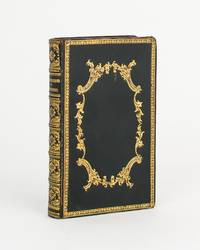
1838ref. 111804Cupar: G.S. Tullis and St Andrews Melville Fletcher Printed by G.S. Tullis Printer to the University of St Andrews 1838. 3rd Edition. Hardcover. Very Good. Cupar G.S. Tullis and St Andrews Melville Fletcher Printed by G.S. Tullis Printer to the University of St Andrews 1838 third edition/ 1807. Duodecimo xii last blank 264 pages with several tables plus 12 full-page engraved plates including an additional title page. Early gilt-decorated polished black calf all edges gilt endpapers marbled; top corners a little bumped with the extremities a little rubbed; light stain to the blank bottom corner of the last 40 leaves gradually reducing in extent from the rear and not affecting the printed surfaces; early ownership signature James Astle at the head of the engraved title page slightly cropped; a very good copy. Not least 'The Company of Golfers' pages 237-247. G.S. Tullis, and St Andrews, Melville Fletcher (Printed by G.S. Tullis, Printer to the University of St Andrews) hardcover
1938ref. 405071Hastings-on-Hudson NY: Self-published 1938. Wrappers with a few small spots and some light soiling and edgewear internally clean and unblemished save the library markings to the preliminaries. 8vo 9 x 6.25 inches. 146 4 pages. Color frontispiece black-and-white plates. Original salmon printed wrappers. Provenance: Hastings Historical Society label on front pastedown donor's name in ink on-half-title. Sold on behalf of the Society to Benefit their annual fund. SCARCE FIRST EDITION one of only 400 privately-printed copies most of which were distributed to members of the club. The Saint Andrews Golf Club in Hastings-on-Hudson New York is the oldest golf club in the United States. John Reid of Dunfermline Scotland founded the club in 1888. It has existed in its current site since 1897 and features an 18-hole golf course designed by golf course architects William H. Tucker and Harry Tallmadge. In 1983 the track was refurbished by legendary golfer Jack Nicklaus. Self-published unknown
Large 8vo. XVIII, 200 pp. With half-title, frontispiece portrait, 5 black-and-white plates, folding map and "Genealogical table of members of the Al Bu Said dynasty". Publisher's original blue cloth, title gilt on spine & upper cover, Said bin Sultan name gilt in Arabic on upper cover. Rare first edition: presentation copy from Said-Ruete to Sir Saleh bin Ghalib Al-Qu'aiti, Sultan of Shihr and Makalla (ruled 1936-56), inscribed in green ink: "To / His Highness The Sultan / of Shiher and Makalla / Saleh bin Galib Alcaity / a token of sincere esteem / by the Author. / London, May 7th 1937". Below this is pasted a printed bookplate in Arabic. - The Qu'aiti Sultanate of Shihr and Mukalla, in the Hadhramaut region of the southern Arabian Peninsula (now Yemen), was the third largest kingdom in Arabia after the Kingdom of Saudi Arabia and the Sultanate of Oman. While the monarchy was toppled by communists in 1967 and Sultan Ghalib II was forced to abdicate, the Qu'aiti royal family still thrives in exile. - Said-Ruete was the son of Princess Salma (1844-1924), daughter of Sayyid Sai’id ibn Sultan (1791-1856), ruler of Oman and Zanzibar. The Princess married Friedrich Ruete, a clerk at the German embassy, and lived for 52 years as a widow in Germany. Their son Rudolph produced this remarkable survey of his grandfather’s life and times, considered as important as Vincenzo Maurizi‘s "History of Seyd Said, Sultan of Muscat" (London 1819). Sayyid Said ibn Sultan became the ruler of Oman in 1806, when he was about 15 years of age. After defeating the opposition with British help he determined to reassert Oman's traditional claims in East Africa. He eventually succeeded, and in about 1840 shifted his capital to Zanzibar, where he introduced the cloves that became the foundation of the island's economy. He also controlled the Arab traders that brought back slaves and ivory from the African interior. In this monograph the author highlights the early history of Oman, the rise of Said ibn Sultan to power in Oman and Zanzibar, and his relations with foreign powers (France, England, and the United States). In his foreword to this work, Major General Sir Percy Cox identifies the establishment of an Arab dominion in Zanzibar as Sultan Said's most lasting achievement. - Minimal wear to extremeties; insignificant spotting to first few leaves as common. Upper spine-end professionally repaired. A beautiful copy. Macro 1986. OCLC 5705061.
Large 8vo. XVIII, 200 pp. With half-title, frontispiece portrait, 5 black-and-white plates, folding map and "Genealogical table of members of the Al Bu Said dynasty". Publisher's original blue cloth, title gilt on spine & upper cover, Said bin Sultan name gilt in Arabic on upper cover. Rare first edition. - Said-Ruete was the son of Princess Salma (1844-1924), daughter of Sayyid Sai’id ibn Sultan (1791-1856), ruler of Oman and Zanzibar. The Princess married Friedrich Ruete, a clerk at the German embassy, and lived for 52 years as a widow in Germany. Their son Rudolph produced this remarkable survey of his grandfather’s life and times, considered as important as Vincenzo Maurizi‘s "History of Seyd Said, Sultan of Muscat" (London 1819). Sayyid Said ibn Sultan became the ruler of Oman in 1806, when he was about 15 years of age. After defeating the opposition with British help he determined to reassert Oman's traditional claims in East Africa. He eventually succeeded, and in about 1840 shifted his capital to Zanzibar, where he introduced the cloves that became the foundation of the island's economy. He also controlled the Arab traders that brought back slaves and ivory from the African interior. In this monograph the author highlights the early history of Oman, the rise of Said ibn Sultan to power in Oman and Zanzibar, and his relations with foreign powers (France, England, and the United States). In his foreword to this work, Major General Sir Percy Cox identifies the establishment of an Arab dominion in Zanzibar as Sultan Said's most lasting achievement. - Covers a little soiled (lower cover more so); light wear to extremeties; insignificant spotting confined to flyleaves. A fine copy with ticket of The Times Book Club to lower pastedown. Provenance: from the library of Christopher Palmer Rigby (1820-85), who served as the East India Company's agent and British Consul in Zanzibar from 1858 to 1861. Macro 1986. OCLC 5705061.
4to. 12, CIII, (1) pp. With a woodcut vignette on the title-page. Contemporary grey wrappers. An account of the religion, literature, and manners of the Arabs before the Prophet. While largely compiled from European sources, Pococke, George Sale, Sir William Jones, and D'Herbelot in particular, the book includes extensive quotations in Arabic as well as details on Mecca, the Kaaba, and Muhammad. Assemani (1752-1821), a great-nephew of Joseph Assemani, the cataloguer of the oriental manuscripts in the Vatican library, is best known for his catalogue of the manuscripts and Cufic coins in the Naniana in Venice (cf. Fück 125). - Corner of lower free endpaper torn away, occasional light browning, wrappers a little frayed at the spine. Otherwise a good, wide-margined copy, untrimmed as issued. Brunet VI, 27994. Gay 3454. Cf. Biographical Dictionary of the Society for the Diffusion of Useful Knowledge III.2, 815.
455 x 575 mm and 435 x 560 mm. 14 folding posters: 13 graphic posters and 1 photographic poster. With instructions in English and Arabic. A collection of Aramco safety posters featuring bright illustrations, bold colors, and techniques that give a nod to popular culture. The earliest poster in the set, dating from June 1984 ("Stop accidents before they stop you"), was designed by Ninoy Lumboy - perhaps the most productive artist of Aramco safety posters in the 1980s. "For the three years from 1982 to 1984 he designed almost every poster published by the Loss Prevention Department. While Lumboy was prolific, he was also amazingly inventive, merging elements of the cubism and impressionism art movements with pop art to create colorful and striking posters. He described his technique as 'crosshatchism' - a method of painting where an artwork is rendered with multiple layers of intersecting sets of parallel lines" (Bartlett). - Other than the Lumboy-poster, only 2 posters bear their artist's name or at least initials: Jenny Dahroug ("Wear hearing protection"), and J.v.D. ("Hand tool tips"). The remainder of the set are anonymous creations not ranging behind the above-mentioned in effort or style. Also, the set includes one photo poster featuring Aramco employees as models - a technique "that would become standard practice for the company's safety publications" (ibid.) from 1986 onwards. The present specimen shows two uniformed guards strapping into their car seats, ready to respond to a call, captioned with the slogan "The danger may not always be obvious. Buckle up". - Margins slightly worn. A unique ensemble. Bartlett, Saudi Aramco and the Art of Safety, 227 & 238.
280 x 330 mm. Graphic poster. In English and Arabic. Rare poster with safety instructions for Aramco bus drivers. Prepared by the Transportation Department, it reminds the drivers that "one bus should never pass another", as well as to "keep plenty of space between buses": "The lives of your passengers are in your hands". Apart from the safety rules in English and Arabic, the poster shows sketches of six fully occupied coaches. - Very well preserved.
1991429 pages. Numerous colour photographic plates and black and white reproductions of photos. Text in English. "Describes the stages of militant, intellectual and political life of one of the most distinguished existing leaders of the Arabian world and of the Third World. Tends to find and tell the truth to those who look for it far from fanaticism, resentments and prejudices." - from back cover. Unmarked with average wear. Binding intact. A sound copy. Book
Folio (256 x 370 mm). (36), 431, (15) pp., final blank f. With printer's device to title page, woodcut headpiece and four half-page woodcuts of the Evangelists. Printed in red and black throughout. Contemporary paper boards. The Maronite edition of the Gospels in Syriac and Carshuni (following the Roman Arabic Bible of 1671), including the Peshitta text. Edited by Faustus Naironus Banensis and Josephus Banesius for use as a service-book in Maronite churches and dedicated to Cardinal Barberini, this was published as the first volume of the "Novus Testamentum Syriacum, et Arabicum". - Some browning and occasional foxing, marginal waterstaining near beginning. Chapter and verse numbers supplied in the margins in ink by a late-18th century owner. An untrimmed, wide-margined copy in the original temporary boards as issued. Very scarce. Schnurrer 338. Darlow/Moule 1742 & 8968. OCLC 254265613.
8vo. 37, (1) pp., final blank leaf. Sewn without binding. Extremely rare publication of the rules of the Coptic Catholic Church, decreed in 1790 and printed in Latin and Arabic in Rome in 1830, following the Ottomans' permission that the Coptic Catholics of Egypt build their own churches: "In conventu habito die 15 Martii anni 1790 decrevit, infrascriptas regulas ab omnibus RR. Sacerdotibus tam saecularibus, quam regularibus ritus Coptici, vel in urbe Cayri, vel in superiori Aegypto commorantibus, esse observandas". - Paper flaws to second leaf, with minor loss to a few letters. No other copy could be traced in libraries internationally.
Large colour-printed map, ca. 113 x 84 cm. Scale 1:500,000. A highly detailed large scale British military map, showing the coast from Doha (Qatar) to Ras Al-Khaimah (modern-day UAE). - Old folds, some creasing to bottom margin, and one small closed tear to left margin, otherwise very good.
Large colour-printed map, ca. 113 x 84 cm. Scale 1:500,000. A highly detailed large scale British military map, showing the coast from Doha (Qatar) to Ras Al Khaimah (modern-day UAE). - Old folds, some creasing to margins and corners, 10 cm closed tear to bottom margin, a few other small closed tears, otherwise good. With "Additions drawn by: - Sgt Newman 17:11:61. 1 Troop 19 Topo Sqn R.E.", marking additional camps, old oil camps, place names and airstrips (old, extant and "possible"), mainly in the desert areas of Abu Dhabi.
1964ref. 900321AG1964. Blattmaß: 31 x 24 cm,
Folio (325 x 465 mm). Broadsheet. Printed in French and Arabic in two columns. Only known copy of this broadside intended for wall-mounting, printed by the first printing press in the Arab world. Issued by the paymaster of Napoleon's Armée de l'Orient, Martin-Roch-Xavier Estève (1772-1852), it is a proclaimation of six articles regulating the production of liquor, mosty from dates, in Cairo, Giza, and Boulaq (now a district of Cairo), including tariffs on the raw materials and final product, a maximum price, and corresponding fines. Distilleries needed to be registered and marked in capital letters as "Fabrique d'eau de vie" within a fixed period following the proclamation. Inspectors were supposed to make "frequent inspections", checking, among other things, that the produced liquor had at least 18 per cent by volume and that it be "of good quality and without any kind of adulteration detrimental to health". The raw materials enumerated in the proclamation include five qualities of fresh dates, dried dates, figs, and raisins. - Small waterstain in the lower edge, traces of folds, otherwise well preserved. No copy in the Bibliotheque nationale de France, not recorded in OCLC. The only known documentation for this highly interesting broadside is the sales catalogue for the library of the famous orientalist Antoine Isaac Silvestre de Sacy. Bibliothèque de M. le baron Silvestre de Sacy, Vol. III, Paris, 1847, p. 461, no. 50. Cf. D. Glass/G. Roper, The Printing of Arabic Books in the Arab World, in: Middle Eastern Languages and the Print Revolution (Gutenberg Museum Mainz 2002), p. 177-225, at 182.
1985No marks or inscriptions. Two small creases to rear cover, none to spine. A very clean very tight copy with bright unmarked boards and no bumping to corners. Unpaginated. ca 125pp. Official Souvenir Programme of the 1985 Ryder Cup at The Belfry between Europe and the USA. With mini leaflet of the event tucked in.
ref. M163910Photos Mrs Hugues & Mullins. Whight , slnd (v 1900). In4° à l' italienne toile illustrée éditeur. 22 pages de photos avec texte anglais-allemand-français en regard . Mors intérieur fatigué , exemplaire en très bon état.
Large 8vo (177 x 263 mm). 3-485 pp. With 11 mostly photographic plates (2 folding, a few tinted in watercolours). Lithographed Persian throughout, text in Nasta’liq script, 14 lines to the page, written by Ali Asghar and dated 1283 H (1866 CE). Contemporary full calf binding with handwritten paper spine label in Persian. Rare travel report of the pilgrimage to the Imam Reza Shrine in Mashad (Khorasan), undertaken by Shah Nasir al-Din in 1866. Lithographed in Persian throughout. - Binding rubbed; spine reinforced at the head. Wants first leaf; some soiling and brownstaining (more pronounced near the beginning) with a few edge and corner repairs. Traces of old block-stitching. Margins show a few contemporary annotations, a few old waqf stamps and Russian blindstamps "Vysochajshe u Kompanija Uglichskoj fabriki" (ca. 1890) from the head office of the paper factory of the town of Uglich, north of Moscow.
1934ref. A117216St. Andrews: W. C. Henderson 1934. revised edition. Very Good. octavo. hardback in original cloth 190 xviiipp. index Minor wear to peripheries o/w nice bright copy in blue cloth with bright gilt titles & decoration W. C. Henderson hardcover
1983ref. 52574Far Hills New Jersey: United States Golf Asso. Good. 1983. limited ed. Hardback. # 1178 Copies of 1900 Copies Two Book Set Box Set; 50 pages . 0941774023 . United States Golf Asso. hardcover
ref. 136955aafParis, Yves Meyer & Cie Imprimeurs, s.d., vers 1966). 27 x 36 cm, série complèt comme publiée (malgré le fait que qqs “Rules” ne son pas inclus (par ex. Rule 5 &19, pour Rule 12 ily a 2 diff. planches), chaque planche avec le cachet à froid de Perrier, portfolio / enveloppe avec titre & impression à froid: “offert par la source PERRIER”.
Small 8vo (150 x 95 mm). (10), 172, (48) pp. With title page printed in red and black. 19th-century green sheepskin. Rare second, corrected edition of Erpenius's influential Arabic grammar. Erpenius, one of the most distinguished orientalists and by far the best Arabist of his day, published his famous "Grammatica Arabica" in 1613, followed in 1620 by the "Rudimenta linguae Arabicae", a slightly abridged version of the "Grammatica". It includes the Arabic text, with Latin transcriptions, of chapter 64 of the Quran. - Removed from the Reims Jesuit College library, with their annotation to title page ("Collegii Remensis / Societatis Jesu / Catalogo Inscriptur"). A fine copy. Aboussouan 309. Smitskamp I, 69. Schnurrer 60. STCN (3 copies). Cf. Hamilton, Europe and the Arab world 18.
17704to. (6), 374, (174) pp. With engr. publisher's device on t. p. Contemp. half calf with giltstamped red label to gilt spine. All edges red. Re-issue of the 1733 4th edition (first published in 1620). "An important addition is Schultens' 'Clavis dialectorum', in which he discusses the lexicological relation between Hebrew and Arabic. Another new feature is the anthology of proverbs entitled 'Al-Nawabig' [...] The indexes are this time predominant, for Arabic alone 142 pages" (Smitskamp). Erpenius (1584-1624), professor of oriental languages at Leiden, is regarded as "one of the men whom the study of oriental languages owes its resurrection" (cf. ADB). His own private printing shop, equipped with Hebrew, Arabic, Syrian, Ethiopian, and Turkish type, produced its first specimens as early as 1615. - Some slight browning and brownstaining throughout due to paper. Contemporary bibliographical note to front flyleaf; ms. ownership "Fuchs" to pastedown. Smitskamp, PO 76. Schnurrer 108. Gay 3400. Brunet II, 1050. Graesse II, 499. Ebert 6914.
8vo. (16), 184, (56) pp. With woodcut printer's device on t. p. Modern half vellum with marbled covers. Rare first edition. "The work opens with the well known 'Consilium de studio arabico feliciter instituendo' here published for the first time. At the end is given a 'Catalogus librorum arabicorum', compiled by Erpenius and Coddaeus, and listing most of the work concerned with Arabic published so far. It is one of the sources for the alleged Koran printed in Venice ca. 1520" (Smitskamp). Remarkably, the author printed his introduction in the Arabic style, from right to left. Erpenius (1584-1624), professor of oriental languages at Leiden, "is one of the men whom the study of oriental languages owes its resurrection [...] He set up his own printing shop with Hebrew, Arabic, Syrian, Ethiopian, and Turkish type" (cf. ADB). Until well into the 19th century his works, published in numerous editions, remained the foundation of Arabic language teaching in the west. - A few underlinings and marginalia in Latin and Arabic. Some waterstaining. From the library of the Danzig Lutheran Nathanael Dilger (1604-79) with his marginalia and autograph note of acquisition, dated November 1625, on title page. Graesse II, 499. Hoefer XVI, 309. Schnurrer 55. Smitskamp 88. ADB VI, 329 ("1628" in error). Cf. Ebert 6914. Gay 3400 (later ed.). Brunet 1050 (later ed.).
Large 8vo. (16), 184, (48) pp. Title printed in red and black with woodcut vignette in red and black. Contemp. limp vellum. "A scholar’s issue, with 5 prefatory leaves" (Smitskamp): the first of three versions distinguished by Smitskamp of the third edition of the "Rudimenta". As the earlier editions (first: 1620; second, posthumously: 1628), this is printed in the beautiful Arabic type of Savary de Brèves. Erpenius (1584-1624), professor of oriental languages at Leiden, "is one of the men whom the study of oriental languages owes its resurrection [...] He set up his own printing shop with Hebrew, Arabic, Syrian, Ethiopian, and Turkish type" (cf. ADB). Until well into the 19th century his works, published in numerous editions, remained the foundation of Arabic language teaching in the west. - Old ownership of Bernard Marin Bottelko on title and final page (the latter repaired by a former owner). Occasional insignificant browning and waterstaining to margins. Aboussouan 310. Goldsmith E 273. CLC E 524. Duverdier, Impressions, 201. Schnurrer 69. Silvestre de Sacy 2769. Smitskamp 281.