234 resultados
1969ref. 230704052059ybvkTokyo, Kodansha, Showa 42-43 (1968-1969). Each volume with few pages Introduction, some 100 glossy-paper colour-plates tipped-on cardboards, ca. 20 glossy black-and-white plates, ca. 40 pages commentary. - Heavy gilt-titled raw-cloth (silk?) bindings in thick cloth-folders with wings and bone-clasps, protected by publisher's illustrated (clan-signs) matted thick cardboard-boxes; Folio (overall ca. 45 x 32 x 22 cm; ca. 21 kg.)!
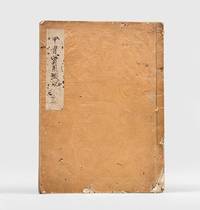
1860ref. 3052211860. 37 pen and ink illustrations of techniques of horse breaking. On rice paper. 8vo 240 x 170 mm. Wrappers in thicker paper with title labels covers slightly soiled and occasionally affected by worm holes some spreading through the text. 37 pen and ink illustrations of techniques of horse breaking. On rice paper. 8vo 240 x 170 mm. A fine mid 19th century Samurai text on horse-riding by Hiko. The Otsubo school of samurai training originated in the 7th century and was popularized in the 12th century when the elite Samurai warriors rode into battle. By 1600 under the comparitive peace of the Toguwara Era the military practice of Military equestrianism was discouraged and often became more of a ceremonial practice amongst the Samurai clans. This late manuscript text just predates the final extinguishing of the Samurai clans by the Meiji Emperor. unknown books
1820ref. 305224Edo 1820. 200 woodblock illustrations of crests some light soiling to margins. 208 pp. small oblong 8vo 110 x 155 mm. blue paper wrappers worn stitched. 200 woodblock illustrations of crests some light soiling to margins. 208 pp. small oblong 8vo 110 x 155 mm. Japanese woodcut book on the crests and symbols of the Samurai families. WITH: A series of 99 small manuscript information cards on for ceremonial use for Samurai families denoting their crests and banners pen ink and colors. First half of 19th century each card 70 x 55 mm some affected by worm tracks. unknown books
1820ref. 305224Edo 1820. 200 woodblock illustrations of crests some light soiling to margins. 208 pp. small oblong 8vo 110 x 155 mm. blue paper wrappers worn stitched. 200 woodblock illustrations of crests some light soiling to margins. 208 pp. small oblong 8vo 110 x 155 mm. Japanese woodcut book on the crests and symbols of the Samurai families. WITH: A series of 99 small manuscript information cards on for ceremonial use for Samurai families denoting their crests and banners pen ink and colors. First half of 19th century each card 70 x 55 mm some affected by worm tracks. unknown
1800ref. 305220Nara 1800. 152 woodcut illustrations some double-page across several bifolia on mulberry paper. Folio 380 x260 mm. With a small stain on the opening pages thicker paper covers slightly soiled the upper cover with a few worm holes not affecting illustrations. upper cover title label not present. Stitched. Ownership chop of Sato Takekicho. 152 woodcut illustrations some double-page across several bifolia on mulberry paper. Folio 380 x260 mm. Woodcut book of the samurai armor at the Kasaga Shrine Nara Prefecture "A fine illustrated text on an important collection of ancient samurai armor. The Kasaga shrine in Nara was the shrine of the Fujiwara family first built in 768 and rebuilt several times over the centuries and is now one of the more important in Japan and a Unesco World Heritage Site. The family armor which came to be placed in the Shrine includes pieces dating from the 12th century such as a special helmet with a sparrow motif said to have been dedicated by Minamoto no Yokishitsune dating form the Kamakura period 1185. The shrine is famous for its bronze lanterns. unknown books
1800ref. 305220Nara 1800. 152 woodcut illustrations some double-page across several bifolia on mulberry paper. Folio 380 x260 mm. With a small stain on the opening pages thicker paper covers slightly soiled the upper cover with a few worm holes not affecting illustrations. upper cover title label not present. Stitched. Ownership chop of Sato Takekicho. 152 woodcut illustrations some double-page across several bifolia on mulberry paper. Folio 380 x260 mm. Woodcut book of the samurai armor at the Kasaga Shrine Nara Prefecture "A fine illustrated text on an important collection of ancient samurai armor. The Kasaga shrine in Nara was the shrine of the Fujiwara family first built in 768 and rebuilt several times over the centuries and is now one of the more important in Japan and a Unesco World Heritage Site. The family armor which came to be placed in the Shrine includes pieces dating from the 12th century such as a special helmet with a sparrow motif said to have been dedicated by Minamoto no Yokishitsune dating form the Kamakura period 1185. The shrine is famous for its bronze lanterns. unknown
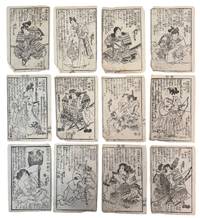
1853ref. 236181853. Heroic biography woodblock print archive from the late Edo to early Meiji period primarily featuring famed female samurai Tomoe Gozen. Drawn from Eiyū Hyakunin Isshu "One Hundred Heroic Figures with Poems" the series combines portraits concise biographies and moralizing verse celebrating warriors imperial loyalists and legendary figures whose deeds formed the historical canon of the Tokugawa and early Meiji eras. The present group is distinguished by the inclusion of Tomoe Gozen one of the few female warriors represented in the Japanese heroic tradition. Her appearance alongside figures including Minamoto no Yoshitsune Kusunoki Masashige Nitta Yoshisada and Tokugawa Ieyasu demonstrates how publishers presented female martial valor not as an exception detached from samurai history but as part of the same continuum of loyalty military skill and sacrifice that defined Japan's most celebrated heroes. Eiyū Hyakunin Isshu 英雄百人一首. Japan late Edo to early Meiji period nineteenth century. Twelve original woodblock printed leaves on thin washi paper each approximately 4" x 7". Each sheet presents a full length portrait accompanied by a biographical text and poetic verse identifying a celebrated historical figure. Subjects represented include Tomoe Gozen the armored woman warrior of the Genpei War; Minamoto no Yoshitsune the brilliant and tragic Taira clan conqueror; Tokugawa Ieyasu the patient unifier and founder of the Tokugawa shogunate; Kusunoki Masashige the fourteenth century imperial loyalist later elevated as a model of self sacrificing service; Nitta Yoshisada the anti Kamakura commander associated with the 1333 assault on Kamakura; Tokiwagozen the courtly mother of Yoshitsune whose story became a model of maternal endurance; and a further female court or courtesan figure shown in elegant dress rather than armor indicating the series' inclusion of women remembered for beauty loyalty literary refinement or moral example as well as martial action. The Tomoe Gozen sheet depicts the heroine in complete samurai armor with bow quiver and paired swords reflecting the traditional iconography established by the Heike Monogatari in which she is praised as an accomplished horsewoman archer and swordswoman who fought beside Minamoto no Yoshinaka during the Genpei War. The accompanying biographical text recounts her martial accomplishments and enduring reputation among Japan's legendary heroes placing her within the same educational sequence as the nation's most celebrated military commanders. The Eiyū Hyakunin Isshu series emerged during a period where townspeople students and aspiring samurai could access historical legend. The concise biographies and poems distilled episodes from works including the Heike Monogatari Taiheiki and other medieval chronicles into a format that reinforced ideals of courage loyalty and service. Tomoe Gozen occupies an exceptional place within this tradition. Although medieval Japanese literature preserves relatively few women on the battlefield Tomoe's inclusion here alongside Yoshitsune Masashige and Ieyasu demonstrates that nineteenth century readers encountered her not as a literary curiosity but as one of the established heroic figures of Japanese history. Light edge wear moderate toning scattered corner losses and creasing consistent with removal from a bound volume; impressions and printed text remain clear. Overall good condition. A nineteenth century Japanese historical publishing preserving one of the enduring printed representations of Tomoe Gozen within the broader canon of Japan's heroic warriors. unknown
1884ref. 2080302106807452Chichizando 1884. Soft Cover. Fine. The book is in fine condition. Chichizando paperback
1840ref. 122137Japan: c. 1840s. A samurai's armour was a map of his spiritual power A colourful and intricately painted explanation of the complex steps samurai followed to don their famous warrior armour and required undergarments. The sequential illustrations show the fitting of a loincloth shirt and cord belt. The figure puts on trousers slippers leggings sandals greaves and thigh guards followed by the external armoured vest belt and shoulder guards. A couple of paintings show the warrior jumping and moving to test the fit of the armour and the security of the knots. Finally he straps on his swords and secures his mask helmet and arm guards completing a fearsome appearance. This manuscript was brushed on the cusp of the major changes in the status of the samurai. After the Meiji Restoration imperial decrees began to curtail their privileges and elite social standing - changes which transformed works like the present example into valuable historical documents. Quarto 267 x 197 mm ff. 15. With 30 original colour illustrations. Contemporary brown wrappers early 20th-century green thread yotsume toji stitching manuscript title label on front cover. Red ownership seal of the artist Hitomi Yuuichi Gyokuransai d.1968 on first leaf. Losses at foot of spine stitching split but still sturdy worming to wrappers and contents illustrations generally unaffected inner rear cover with old paper repair: a good example attractively illustrated. Antony Cummins & Yoshie Minami eds Samurai Arms Armour & the Tactics of Warfare: the Collected Scrolls of Natori-Ryu 2018. hardcover