57 résultats
1969réf. 149363N.p.: Aetos 1969. Four vintage borderless reference photographs taken on the set of the 1969 Italian film. With the stamps of photographer Angelo Frontoni and Cinemondial on the verso along with manuscript ink and pencil annotations regarding layout. Over the course of several days a mysterious visitor seduces each member of a bourgeois Milanese family. The second film in director Pier Paolo Pasolini's Mythical Cycle preceded by "Oedipus Rex" 1967 and followed by "Porcile" and "Medea" both 1969. Set and shot on location in Rome and Milan. 9 x 7 inches. Very Good plus with light dampstaining to the versos. Rosenbaum 1000. Godard Histoires du cinema. BFI 1166. Aetos unknown books
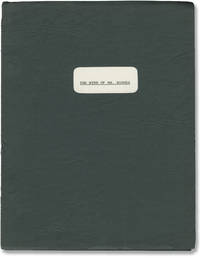
1970réf. 141627Middlesex: Amicus Productions 1970. Draft script for the 1970 Amicus Productions film. Laid in are eight pages of notes and letters to and from Hollywood agent Paul Kohner. Based on the 1961 novel of the same name by Charles Eric Maine. A man has been in a coma since his literal birth and thirty years after his birth he awakens for the first time with the mind of an infant. Set in London. Dark green wrappers with die-cut window in the British style. Title page present with credits for screenwriters Stanley Mann and John Hale and author Charles Eric Maine. 117 leaves with last page of text numbered 116. Mechanical duplication. Pages Near Fine wrapper Near Fine bound internally with two silver brads. Amicus Productions unknown books
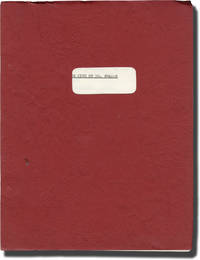
1969réf. 142322N.p.: Amicus Productions 1969. Revised Draft script for the 1970 film. Based on the 1961 novel by Charles Eric Maine. One of the classics from Amicus Productions in the 1960s about a man who awakens from his lifelong coma at the age of 30 with the mind of an infant. Set in London. Red untitled wrappers with a die-cut title window in the British style. Title page present dated January 2 1969 noted as REVISED with credits for screenwriters Stanley Mann and John Hale and author Charles Eric Maine. 109 leaves with last page of text numbered 108. Mimeograph duplication rectos only. Pages Near Fine wrapper Near Fine bound internally with two silver brads. Amicus Productions unknown books
1966réf. 152873N.p.: N.p. 1966. Vintage oversize color reference photograph from the 1966 film showing actress Monica Vitti sipping a pastis next to the notable headdress wears in the film Based on the British comic strip which originally appeared in 1963. Modesty Blaise a former criminal mastermind occasionally employed by the Secret Service must protect a shipment of diamonds en route to a small Middle Eastern kingdom from a crime syndicate. Monica Vitti's first English-speaking role. Nominated for the Palme d'Or. Shot on location in Italy the Netherlands and England. 9.25 x 12 inches. Near Fine. N.p. unknown books
1965réf. 155867N.p.: N.p. 1965. Seven vintage reference photographs from the set of the 1965 film With stamps and manuscript press notations variously on the versos of each. Based on the 1963 novel by John Fowles about an amateur entomologist who kidnaps a London art student. Nominated for three Academy Awards and winner of Best Actor and Best Actress awards at Cannes Film Festival. Three photographs 9.5 x 7 inches two photographs 10 x 8 inches. Near Fine to Very Good plus. Grant US. N.p. unknown books
1766réf. 38951London: J. Almon 1766. Debating the Validity of the Stamp Act Argues the questions of England's right to tax its dependencies and addresses the issue of the Stamp Act with reference to America. The anonymous author's opinion on the matter is fairly measured admitting that the American colonies should contribute to their defense but asserting that the Stamp Act was the improper way to go about it - he would rather see Americans contribute directly to their own military defense and thereby reduce the costs incurred on Britain rather than indirectly by feeding the mother country's coffers. Attributed to one Mr. Gretrix a Dublin lawyer. Half title. Modern plain blue wrappers paper label. Moderate age-toning else internally clean. Very good. AMERICAN CONTROVERSY 66-7. HOWES A297. SABIN 1849. unknown books
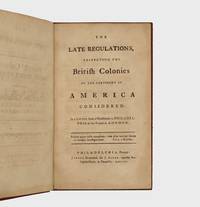
1766réf. 376944London: J. Almon 1766. First English edition. 62pp. Without the terminal ad leaf. 8vo. Modern full speckled calf spine gilt red morocco label. First English edition. 62pp. Without the terminal ad leaf. 8vo. The scarce first British edition after the first edition printed in Philadelphia in December 1765 of Dickinson's first work an important tract against the Stamp Act. Here Dickinson argued against stricter trade regulations that drained the colonies of currency and warned that taxing the colonies without their consent was a step toward slavery. "Considered only as an essay in economic theory the pamphlet is notable for its discussion of paper money of flows of trade and of the mechanisms and effects of taxation are sophisticated for the time.But the essay is more than a technical treatise. Stylistically it has the vivid phraseology the dramatic exclamatory italicization and paragraphing and the aptness of illustration that would soon make Dickinson the most widely read pamphleteer in the colonies" Bailyn. This can be exemplified by the culminating section of this work in which Dickinson writes: "Late measures have indeed excited an universal and unexampled grief and indignation throughout the colonies. What man who wishes the welfare of America can view without pity without passion her restricted and almost stagnated trade with its numerous train of evils-taxes torn from her without her consent-Her legislative assemblies the principal pillars of her liberty crushed into insignificance-A formidable force established in the midst of peace to bleed her into obedience-The sacred right of trial by jury violated by the erection of arbitrary and unconstitutional jurisdictions-and general poverty discontent and despondence stretching themselves over his unoffending country" Indeed it was in the wake of the dissent following the Stamp Act that Dickinson emerged as arguably the first hero of the Revolution an important spokeman against British tyranny. His Letters from a Farmer in Pennsylvania published in 1768 would put him at the forefront of the Patriot movement and the philosophical underpinnings of that work can be found in his Late Regulations. It is widely believed that Benjamin Franklin then in London as the colonial agent for Pennsylvania arranged for the work's publication there timed with his famous testimony before the House of Commons protesting the Stamp Act. Both the Philadelphia and London first editions of Dickinson's Late Regulations are considerably more scarce than his Letters from a Farmer with only a single example of either edition appearing in the auction records in the last quarter century. American Controversy 65-5b; Howes D238; Sabin 20043; Bailyn Pamphlets of the Revolution 14 J. Almon unknown books