Giovanni BoccaccioBiblio.com

2.614 Ergebnisse
1757Best.-Nr. 852Published 1757-1761 in French. Volume five from a five volume set. Cover as shown with this listing bound in red Morocco five raised bands. small crack at head of spine see photo. Marbled endpaper as shown head and tail bands silk ribbon marker marbled edges under gilt. Previous owner bookplate on front endpaper. Text is foxed and mottled binding is firm. A beautifully crafted book. Your purchase helps our small public library. pi A4 Prault hardcover
1952Best.-Nr. 698244 xii128 pages 23 woodcuts 1 facsimile title page limited edition no.188 of 225 copies handmade paper tipped in bookplate for John Ryder Published by Editones Officinae Bodoni hardcover
Best.-Nr. 22629Londres [Paris], s.n. [Prault], 1757-1761. Cinq volumes in-8. Edition ornée de 5 titres-frontispices, un portrait de l'auteur, 110 figures hors texte et 97 culs-de-lampe gravés à l'eau-forte d'après les dessins de Gravelot, Boucher, Eisen et Cochin. Quelques épreuves comportent au verso le paraphe caractéristique du premier tirage. (Quelques cahiers uniformement brunis à la fin du T.I et début du T.II, la vignette "Huitième Nouvelle" (T.IV p.71) gravée à l'envers, gravure en regard insérée de travers par le relieur, quelques fines rousseurs éparses). Plein veau blond, dentelle de palmettes dorées, dos lisse orné, torsade sur les coupes, dentelle intérieure, tranches dorées. Reliure vers 1800. (Usures à 3 coins, traces brunes sur un plat du tome I et une coiffe du tome III).
1976Best.-Nr. 2865A NICE. LE CHANT DES SPHERES. EDITIONS D’ART SEFER. 1976-1978. 5 VOLUMES IN-4 (21,5 X 27 X 29,5 CENTIMETRES ENVIRON), RELIURE DE L’EDITEUR PLEIN VEAU HAVANE, PLATS ENTIEREMENT ORNES D'UN DECOR MOYENNAGEUX ESTAMPE A FROID ET DORE, DOS A QUATRE NERFS DECORE DE MEME, TITRE ET TETE DORES, SOUS ETUI BORDE. AVEC 45 ILLUSTRATIONS EN COULEURS DANS LE GOUT DE L'ENLUMINURE : 5 TITRES-FRONTISPICES, 30 PLANCHES HORS TEXTE DONT 1 PLANCHE DOUBLE, 10 TETES DE CHAPITRES A PLEINE PAGE. NOMBREUSES LETTRINES ET CULS-DE-LAMPE EN COULEURS ET DORE. TEXTE ENCADRE DUNE GUIRLANDE A DECOR DE FEUILLAGES MONOCHROME. PREMIER TIRAGE LIMITE A 2530 EXEMPLAIRES NUMEROTES, DONT 30 HORS COMMERCE , TOUS SUR VELIN DE LANA FLIGRANE SEFER AU LEOPARD. UN DES 60 EXEMPLAIRES DE TETE NUMEROTES DE I A LX ET COMPORTANT: UNE ILLUSTRATION ORIGINALE EN COULEURS SIGNEE, UN DESSIN ORIGINAL EN NOIR SIGNE, UNE SUITE EN COULEURS ET UNE SUITE EN SEPIA DES ILLUSTRATIONS HORS TEXTE, CELUI-CI PORTANT LE NUMERO XXXVI. BEL EXEMPLAIRE.
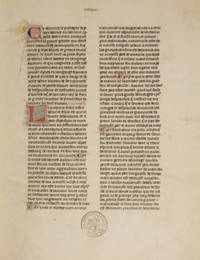
Best.-Nr. 2503SB005Biblioteca Apostólica Vaticana. Egeria. Madrid. 2006. De 305x24 cm. Com ii 327 vii fólios. Encadernação editorial inteira de pele sobre pastas de madeira com belos rótulos e estampagens a ouro acondicionada numa caixa editorial forrada em tecido acetinado. Cortes das folhas pintados de castanho. Profusamente ilustrado com um ciclo de cem belíssimas iluminuras ricamente decoradas a ouro. Criadas pelo Mestre da Cité des Dames estas imagens revelam uma impressionante diversidade narrativa retratando figuras da nobreza eruditos religiosos reis e ladrões imersos em ambientes vibrantes com detalhadas representações da arquitetura gótica. Inclui também a reprodução de iniciais ornamentadas e de belos florões. Exemplar n.º 649 de uma tiragem de 2900 assinado pelos editores e autenticado pelo notário José Manuel Senante Romero do Notário de Madrid que declara que a edição foi feita em exclusivo para ser comercializada pelo Club Internacional del Libro. Edição fac-similada muito luxuosa e limitada do Codex Palatinus Latinus 1989 cujo único exemplar se conserva na Biblioteca Apostólica Vaticana. A reprodução do documento original é feita com o máximo detalhe possível atendendo ao formato e às cores. Foram publicados também dois volumes complementares um com a tradução integral para espanhol e outro com uma coletânea de estudos sobre a obra não presentes neste exemplar. Vale notar que estes foram traduzidos publicados e distribuídos também em português pela «Ediclube» Lisboa 2007. O Decameron Vaticano é uma das mais notáveis joias da arte e literatura francesas representando a primeira tradução francesa do célebre Decameron de Giovanni Boccaccio realizada por Laurent de Premierfait entre 1411 e 1414 a partir de uma versão latina. Este magnífico manuscrito iluminado datado de 1414 terá sido originalmente propriedade dos Duques da Borgonha possivelmente oferecido por Jean de Berry um dos mais importantes bibliófilos da época. O códice distingue-se por ilustrar pela primeira vez cada uma das novelas do Decameron com as iluminuras descritas acima. A obra de Boccaccio escrita em meados do século XIV é constituída pelos contos narrados num grupo de sete mulheres e três homens que fugindo da peste que assolava Florença em 1348 se refugiam no campo e passam o tempo a contar histórias que retratam com realismo e ironia a sociedade da época. Esta coleção de cem novelas tornou-se um marco da literatura mundial. Giovanni Boccaccio 13131375 foi um escritor poeta e humanista italiano considerado um dos precursores do Renascimento. Nascido em Certaldo ou Florença destacou-se pela sua obra-prima Decameron influenciando profundamente a literatura europeia. Amigo de Petrarca Boccaccio contribuiu para a valorização dos clássicos e da língua italiana sendo especialmente lembrado pelo seu estudo da obra de Dante Alighieri. Além da sua produção literária dedicou-se ao estudo da Antiguidade e à preservação do legado cultural greco-romano tornando-se uma figura central no Humanismo. Laurent de Premierfait c. 13601370 1418 foi um humanista poeta e tradutor francês reconhecido por introduzir obras clássicas na França medieval. Natural de Prémierfait uma aldeia próxima de Troyes estudou em Paris e serviu como secretário do cardeal Amédée de Saluces na corte papal de Avinhão. Destacou-se pelas traduções de textos de autores como Cícero e Boccaccio. As suas traduções encomendadas por figuras aristocráticas como Jean de Berry foram fundamentais para a disseminação da literatura clássica e humanista em França. Laurent faleceu em Paris em 1418 possivelmente vítima de uma epidemia ou durante a invasão da cidade pelos borgonheses. O Mestre da Cité des Dames fl. 1400 fl. 1415 foi um iluminador anónimo ativo em Paris entre 1400 e 1415 conhecido por colaborar com Christine de Pizan na decoração de manuscritos. O seu nome deriva das ilustrações que criou para «La Cité des Dames» obra de Christine. Trabalhou em parceria com artistas como Jacquemart de Hesdin e o Mestre de Boucicaut destacando-se pela atenção aos detalhes da vida quotidiana e pela representação realista da arquitetura gótica. Além dos manuscritos de Christine de Pizan ilustrou obras como a «Bible historiale» de Jean de Berry e a primeira tradução francesa do «Decameron» de Boccaccio. EN 30.5x24 cm. ii 327 vii folios. Publisher's binding in full leather over wooden boards with beautiful labels and gilt embossing packed in a publisher's box lined with satin fabric. Brown edges. Profusely illustrated with a cycle of one hundred beautiful illuminations richly decorated in gold. Created by Maitre de la Cité des Dames these images reveal an impressive diversity of narrative portraying figures of nobility scholars churchmen kings and thieves immersed in vibrant environments with detailed representations of Gothic architecture. It also includes the reproduction of decorated initials and beautiful fleurons. Copy no. 649 of a print run of 2900 signed by the publishers and authenticated by notary José Manuel Senante Romero of the Notary of Madrid who declares that the edition was made exclusively to be commercialised by the Club Internacional del Libro. A very luxurious and limited facsimile edition of the Codex Palatinus Latinus 1989 the only copy of which is kept in the Vatican Apostolic Library. The original document has been reproduced in as much detail as possible taking into account the format and colours. Two complementary volumes have also been published one with the full translation into Spanish and the other with a collection of studies on the work which are not present in this copy. It is worth noting that these have also been translated published and distributed in Portuguese by "Ediclube" Lisbon 2007. The Decameron Vaticano is one of the most remarkable jewels of French art and literature representing the first French translation of the famous Decameron by Giovanni Boccaccio made by Laurent de Premierfait between 1411 and 1414 from a Latin version. This magnificent illuminated manuscript dated 1414 was originally the property of the Dukes of Burgundy possibly given to them by Jean de Berry one of the most important bibliophiles of the time. The codex stands out for illustrating each of the Decameron's novellas for the first time with the illuminations described above. Boccaccio's work written in the middle of the 14th century is made up of tales told by a group of seven women and three men who fleeing the plague ravaging Florence in 1348 take refuge in the countryside and spend their time telling stories that portray the society of the time with realism and irony. This collection of one hundred novellas has become a landmark in world literature. Giovanni Boccaccio 1313-1375 was an Italian writer poet and humanist considered one of the forerunners of the Renaissance. Born in Certaldo or Florence he stood out for his masterpiece Decameron which profoundly influenced European literature. A friend of Petrarch Boccaccio contributed to the valorisation of the classics and the Italian language and is especially remembered for his study of the work of Dante Alighieri. In addition to his literary output he dedicated himself to the study of antiquity and the preservation of the Greco-Roman cultural legacy becoming a central figure in Humanism. Laurent de Premierfait c. 1360-1370 - 1418 was a French humanist poet and translator recognised for introducing classical works to medieval France. Born in Prémierfait a village near Troyes he studied in Paris and served as secretary to Cardinal Amédée de Saluces at the papal court in Avignon. He stood out for his translations of texts by authors such as Cicero and Boccaccio. His translations commissioned by aristocratic figures such as Jean de Berry were fundamental to the dissemination of classical and humanist literature in France. Laurent died in Paris in 1418 possibly from an epidemic or during the invasion of the city by the Burgundians. Maitre de la Cité des Dames fl. 1400 - fl. 1415 was an anonymous illuminator active in Paris between 1400 and 1415 known for collaborating with Christine de Pizan on the decoration of manuscripts. His name derives from the illustrations he created for "La Cité des Dames" a work by Christine. He worked in partnership with artists such as Jacquemart de Hesdin and the Master de Boucicaut and stood out for his attention to the details of everyday life and his realistic depiction of Gothic architecture. As well as Christine de Pizan's manuscripts he illustrated works such as Jean de Berry's "Bible historiale" and the first French translation of Boccaccio's "Decameron". M-10-B-35 hardcover
1955Opera in 2 volumi con relativi cofanetti. Rilegatura in pelle Rigoldi Monza. Con fregi, scritte e taglio superiore delle pagine in oro zecchino. Diverse tavole a colori. ottime condizioni
In-8°; cc. 72, s.n.t., (1525). Si apre con la lettera “Al gentile et valoroso giovane messer Francesco Tomacello da Fano, Lucio Paolo Rosello”, sacerdote padovano, segue il testo dell’opera “Invettiva ... contra una malvagia donna, detto Laberinto d’amore, et altrimenti il Corbaccio”. Da c. 57 l’Episola a Pino de Rossi. Legatura in piena pergamena più tarda con tassello e titolo in oro al dorso. Gamba 203 “non ho trovato registrata da verun bibliografo questa stampa”. Mostra di manoscritti, documenti e edizioni, Certaldo, 1975, v. 2, n. 42, EDIT16 2367.
1803Best.-Nr. 270497Milan: Societa Tipografica 1803. hardcover. very good. 4 volumes. Thick 8vo full tree calf ornately gilt spine and covers rubbed at extremities all edges gilt. Milan: Societa Tipographica 1803. Very good. Societa Tipografica unknown
1803Best.-Nr. 270497Milan: Societa Tipografica 1803. hardcover. very good. 4 volumes. Thick 8vo full tree calf ornately gilt spine and covers rubbed at extremities all edges gilt. Milan: Societa Tipographica 1803. Very good. Societa Tipografica unknown books
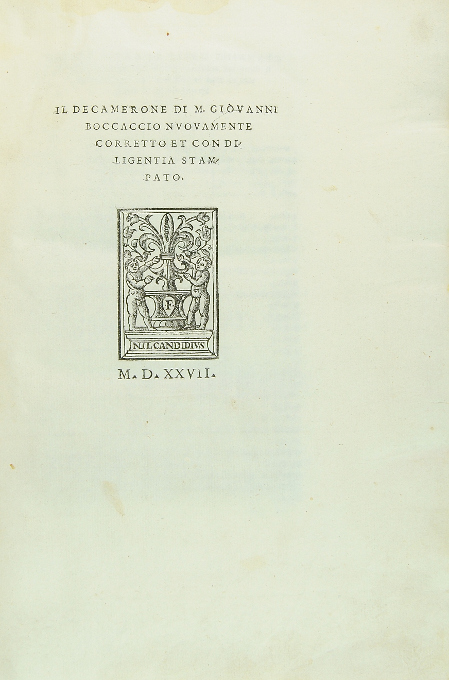
1729Best.-Nr. ABC_49826Florence: Heirs of Filippo Giunta 1729. 18th-century vellum gold-tooled spine with a red morocco label lettered in gold and blue-sprinkled edges. 4to. With a woodcut device on the title page and the final leaf. A rare celebrated typographical facsimile of the so-called Ventisettana widely regarded as the finest early edition of Il Decamerone. Produced in Venice in 1729 in a strictly limited edition of approximately 300 copies many of which were reportedly destroyed by fire.Executed with remarkable technical skill by Stefano Orlandini using the presses of Pasinello the edition reproduces the original with such fidelity that it may easily deceive even a trained eye. It has long been regarded as one of the earliest and most accomplished examples of printed facsimile sometimes described somewhat misleadingly as a case of book forgery. The enterprise was financed by Salvatore Ferrari though other sources attribute its patronage to the English consul in Venice the noted bibliophile Joseph Smith 1682-1770.Composed in the mid-14th century by Boccaccio Il Decamerone stands as one of the foundational works of European prose literature. Boccaccio a Florentine writer and humanist was a close contemporary and friend of Francesco Petrarca 1303-1374 and played a key role in the early development of Renaissance humanism. Educated partly in Naples he was deeply influenced by courtly culture as well as classical antiquity which shaped both his literary style and intellectual outlook. Structured as a frame narrative set against the backdrop of the Black Death in Florence it recounts how 10 young Florentines 7 women and 3 men withdraw to the countryside where they pass 10 days telling stories resulting in a collection of 100 tales. The work combines wit satire and vivid observation of human behaviour ranging from the comic and erotic to the moral and tragic. Its influence on the development of vernacular Italian prose was profound and it has remained a cornerstone of the Western literary canon ever since.The gutter of leaf 143 and the outer margin of leaf 258 have been reinforced a tear in leaf 263 some minor damp-staining to the outer margin of leaves 264-276. Otherwise in very good condition.l COPAC TO0E108243; EDIT16 CNCE 24078; Gamba no. 172 pp. 54-55; USTC 814784; cf. Brunet I 999. Heirs of Filippo Giunta, hardcover
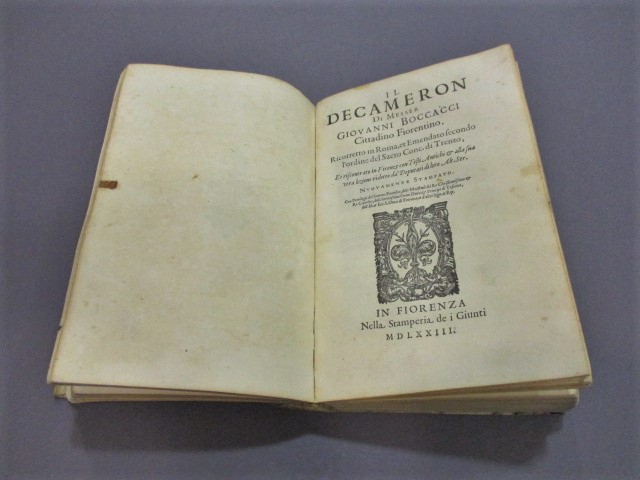
1573Best.-Nr. 21702Florenz, Giunti, 1573. 16 Bll., 578 S., 2 Bll. mit einigen einigen großen, figürlichen Holzschnitt-Initialen und Holzschnitt-Vignetten. 8°. Pgmt. der Zeit (knitterfaltig, etw. fleckig und gebräunt sowie etw. bestoßen, oberes Kapitell mit kl. Einriss). [5 Warenabbildungen]
1531In folio, pp. (24), 374, (1), all’ultima pagina marca tipografica incisa su legno; con l’aggiunta di due carte manoscritte datate bologna 1553 che contengono un’epistola di Rigus a Francesco Cospo, in cui l’autore della lettera sostiene che la traduzione dell prima opera di Diodoro qui pubblicata sia da ascriversi a Angelo Cospo e non a Bartolomeo, come indica il frontespizio, che infatti è stato corretto a mano dallo stesso. Il grecista bolognese Cospo fu variamente chiamato anche Angelo Bartolomeo. LEgatura in piena pergamena. Al frontespizio piccola lacuna restaurata in corrispondenza di un legno ovale. fori di tarlo alle prime e ultime carte.
Best.-Nr. 14062[Au colophon] : Venise, Vettore di Ravani, 1534. 1 vol. petit in-8°, veau blond glacé, dos lisse orné de fleurons dorés et de triples filets dorés à l'emplacement des nerfs, pièce de titre en maroquin brun et date en pied sur pièce de maroquin brun, encadrement d'un triple filet doré sur les plats, filet doré sur les coupes, roulette dorée intérieure, tranches dorées. Reliure du XVIIIe s. Titre dans un encadrement architectural gravé sur bois, marque de l'imprimeur au r° du dernier feuillet, lettrines historiées sur fond criblé, impr. en car. ital., 102 ff., (1) f. Signatures : [A-N]8. Manque le dernier feuillet blanc (N8).
1582Best.-Nr. 33055-217Florence Filippo & Iacopo Giunti October 1582. Printer's woodcut device on title large historiated woodcut initials a different printer's device on last leaf. In Italics. 16 leaves 585 pp. 1 38 leaves. 4to c. 210 x 145 mm. 18th century half calf rep. Florence Filippo & Iacopo Giunti October 1582. An important edition of this classic of Italian literature by Giovanni Boccaccio 1331-1375. This literary ten-day odyssey became the emblem of creative expression in the Italian Renaissance about the human experience its nature and psyche. Boccaccio's epic is edited here by Leonardo Salviati 1540-1589 a Florentine nobleman who was a founder member of the Accademia della Crusca. Its avowed aim was to uphold the purity of the Tuscan language as it had been in the fourteenth century. The Accademia Florentina founded in 1540 was dedicated to the same purpose and Salviati was active in both bodies. In 1584 Salviati published his "Degli Avvertimenti della Lingua sopra il Decamerone" a detailed discussion about the language used by Boccaccio. In this edition of the Decameron Salviati returned to the old texts and dedicated the work to Jacopo Buoncompagni one of his patrons. The text includes many beautiful historiated initials. - A very well printed and rare edition. - Ind. Aur. 120.402; Adams B-2158; STC Italian 110; Brunet I 1002; Gamba Serie dei testi di lingua p. 59 no. 181. LITERATURE:ITALIAN ; EROTICA ; GRAPHIC ARTS:GIUNTA ; Florence, Filippo & Iacopo Giunti unknown
1585Best.-Nr. 142483Florence: Per li Giunti di Firenze 1585. bound in later half mottled leather and brown marble-patterned boards. Giunti. 8vo. bound in later half mottled leather and brown marble-patterned boards. 648 4 pages. Edited by Leonardo Salviati 1540-1589 drawing from 14th century manuscripts in the Tuscan dialect. Stated third Giunta edition "terza edizione" of the important Salviati text of the Decameron Not in Adams - 1582 Giunta second edition is Adams B-2158. With the exlibris bookplate of Christopher Clark Geest 1936-2023 on the front pastedown. Leather boards with some rubbing and wear along the edges and corners minor worming mostly to blank margins minor spotting; small unobtrusive exlibris institutional stamp to title page signature torn from foot of title but professionally repaired. Printed in italic and roman typefaces. Printer's woodcut device to title page a nice suite of historiated woodcut initials used throughout the text; leaf with engraved and printed dedication on page 587. Opens with the Medici dedication and privilege followed by Salviati's prefatory matter and the hundred novelle. Collation appears complete with dedication and final register present. As the great rivals of the Aldine Press the Giunti aggressively captured large portions of the lucrative governmental and Church's printing business. From their base in Florence and Venice family members set up printing presses in Burgos Salamanca Madrid Valladolid Lerma and Lyons. In Spain they became printers to the most powerful King in the world and established "The Imprenta Real" changing their name to "Junta." This particular book was prepared under Medici patronage Salviati's recension regularized Boccaccio's Tuscan and offered a "safe" post-Tridentine version of the work making this a key late-Renaissance edition of the classic Italian novella collection. Provenance: Christopher Clark Geest had a great love for literary works in the English language and focused his collecting on some of the best-known and beloved verse and prose by Chaucer Shakespeare Burton Swift Burns Johnson and beyond. His special interest in the development of the novel in the early modern period is highlighted by number of earliest gothic novels including first editions of Horace Walpoles The Castle at Otranto and Charles Brockden Browns Wieland. Other important books include first editions of Hobbes Leviathan Johnsons Dictionary and Spensers Faerie Queen as well as Coriolanus and Titus Andronicus as extracted from Shakespeares First Folio. Per li Giunti di Firenze unknown
1585Best.-Nr. 142483Florence: Per li Giunti di Firenze 1585. bound in later half mottled leather and brown marble-patterned boards. Giunti. 8vo. bound in later half mottled leather and brown marble-patterned boards. 648 4 pages. Edited by Leonardo Salviati 1540-1589 drawing from 14th century manuscripts in the Tuscan dialect. Stated third Giunta edition "terza edizione" of the important Salviati text of the Decameron Not in Adams - 1582 Giunta second edition is Adams B-2158. With the exlibris bookplate of Christopher Clark Geest 1936-2023 on the front pastedown. Leather boards with some rubbing and wear along the edges and corners minor worming mostly to blank margins minor spotting; small unobtrusive exlibris institutional stamp to title page signature torn from foot of title but professionally repaired. Printed in italic and roman typefaces. Printer's woodcut device to title page a nice suite of historiated woodcut initials used throughout the text; leaf with engraved and printed dedication on page 587. Opens with the Medici dedication and privilege followed by Salviati's prefatory matter and the hundred novelle. Collation appears complete with dedication and final register present. As the great rivals of the Aldine Press the Giunti aggressively captured large portions of the lucrative governmental and Church's printing business. From their base in Florence and Venice family members set up printing presses in Burgos Salamanca Madrid Valladolid Lerma and Lyons. In Spain they became printers to the most powerful King in the world and established "The Imprenta Real" changing their name to "Junta." This particular book was prepared under Medici patronage Salviati's recension regularized Boccaccio's Tuscan and offered a "safe" post-Tridentine version of the work making this a key late-Renaissance edition of the classic Italian novella collection. Provenance: Christopher Clark Geest had a great love for literary works in the English language and focused his collecting on some of the best-known and beloved verse and prose by Chaucer Shakespeare Burton Swift Burns Johnson and beyond. His special interest in the development of the novel in the early modern period is highlighted by number of earliest gothic novels including first editions of Horace Walpoles The Castle at Otranto and Charles Brockden Browns Wieland. Other important books include first editions of Hobbes Leviathan Johnsons Dictionary and Spensers Faerie Queen as well as Coriolanus and Titus Andronicus as extracted from Shakespeares First Folio. Per li Giunti di Firenze unknown books
1665Best.-Nr. CLL-190Amsterdam, Daniel Elzevier, 1665 In-12 de (12) ff., 744 pp., maroquin rouge, trois filets dorés en encadrement, dos lisse orné de caissons de fleurons dorés, coupes et bordures décorées, tranches dorées (reliure du début du XVIIIe siècle).
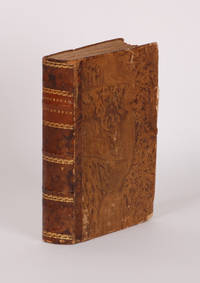
1757Best.-Nr. 016455Londra Paris. Five volumes. Full mottled calf with the spines divided into six compartments by gilt designs. Red title slips and volume slips in two of the compartments on each spine and a gilt decoration in the others. 8.25" by 5.25". Called by Ray "one of the masterpieces of the illustrated book." Superbly designed by Gravelot 89 of the 111 plates and all 97 tailpieces Eisen Cochin and Boucher. Italian text with its better impressions of the plates. Heads of spines of Volumes 1 and 4 with slight loss spines of Volumes 1 and 2 rubbed but very nice and very tight. Large margins dark impressions. Armorial bookplates of William Tennant of Aston Hall. . Very Good. Hardcover. First Edition Thus. 1757. hardcover
1913Best.-Nr. 86052Roma: Treccani 1913. Cm. 36 pp. 340. Con molte decorazioni policrome nel testo. Legatura edit. in velluto rosso con decorazione in oro al piatto anteriore. Entro custodia edit. in piena pelle. Perfetta conservazione in stato di nuovo. Bella ristampa impressa su similpergamena in tiratura limitata di 599 esemplari ns. n. 97. Riproduce il manoscritto Holkham misc. 49 in possesso della Bodleian Library di Oxford. Le miniature sono opera di Taddeo Crivelli. Privo del volume di commentario. Treccani unknown
2008Best.-Nr. 75035Madrid: Egeria 2008. Cm. 30 pp. 656. Con molte belle miniature nel testo. Legatura editoriale in piena pelle con titoli e decorazioni in oro. Entro custodia. Pregiata edizione stampata su carta pergamenata e d in edizione a tiratura limitata e numerata a mano. Ottima conservazione. Non sono presenti i due volumi di commentario e traduzione dell'opera in italiano. Egeria unknown
Best.-Nr. 121101Moscow Kushnerev 1891-92. . 2 vols 8vo 24.8 x 17 cm; contemporary Russian bookseller's label to upper pastedown of Vol. I; profusely illustrated exceptionally fresh; contemporary burgundy morocco-backed cloth spines gilt in compartments a fine set. First edition of the first complete Russian translation of Boccaccio's Decameron. Translated by Veselovsky a leading literary theorist and expert on Medieval Italian literature. In a handsome contemporary binding from the library of Albert McGill a wealthy industrialist and part of the influential British community in 19th century Russia. The first McGills in Moscow were most-likely Albert's grandfather Robert McGill and his brother David who emigrated from Paisley in the 1840s. The family is credited with starting the first mechanical and foundry works in Russia as well playing an important role in the country's cotton mill industry. Just like any other British Family living in the 19th century Moscow the McGill family was related by marriage to several other British families and Albert was no exception. His wife Eleonora McGill née Gibson was the daughter of Charles John Gibson or Karl Yakovlevich Gibson as he was known was director of the Nevsky Stearin Factory in Moscow which produced soap. The McGills donated the largest sum towards the construction of St Andrew's Anglican Church in Moscow which was completed in 1884. Moscow, Kushnerev, 1891-92. hardcover
Best.-Nr. 26046Paris, Nicolas Eve, relieur du Roi, 1578. 1 vol. petit in-8°, vélin ivoire souple à recouvrement, titre écrit à la plume au dos. Reliure de l'époque, couv. sup. déboîtée. Bon exemplaire, traces de lacets. Ex-dono ms. sur le titre. Titre orné d'une marque typographique, (4) ff., 696 pp. Signatures : at4 [a-z]8 [A-V]8 X4. Quelques petites rousseurs.
Best.-Nr. 76533Club Internacional del Libro . Club Internacional del Libro unknown
1729Best.-Nr. 50857(Florenz, Philippo di Giuntas Erben, 1527 [Nachdruck: Venedig, Pasinello, 1729]). 4°. Mit wiederh. Holzschn.-Druckermarke am Titel u. am Ende. 8 nn. (das letzte weiß), 284 num. Bll., Pgmt. d. Zt. m. goldgepr. Rückenschild.
1594In-4°; pp. (24), 585, (3 pp. bianche), 589-648; marca tipografica incisa su legno al frontespizio Dedicato a Giacomo Buoncompagni Duca di Sora. Edizione a cura di Leonardo Salviati, frutto di un lavoro filologico assai approfondito, ampiamente spiegato nella lettera ai lettori. In fine “Alcune differenze che sono tra’l testo del 1573 e’l nostro”.