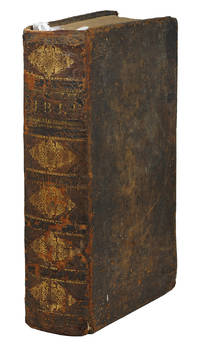
18.364 Ergebnisse
1806Best.-Nr. 1087301806. London: J Johnson 1806. 2 vols. 4to xviii 423 4 index and plate list; iv 419 6 index and plate list pp with 40 hand-coloured plates in both vol I and vol II as called for plus hand-coloured title page to vol I and coloured vignette to both volumes. 16 of the plates and the two title page vignettes are by Blake. Contemporary diamond calf with gilt rules and decoration including to spine with general light wear the front cover of vol I rehinged; internally good some offsetting and spotting to reverse of a few plates occasional mild foxing to margins but generally a good clean copy. § Second edition revised and enlarged very scarce colored. Stedman's account of the slave rebellion in Dutch Guiana 1772-1777 with 40 hand-colored plates 16 by William Blake. A best-seller in its day and translated many times Stedman's narrative was an important resource for the abolitionist movement across Europe even though Stedman himself was not straightforwardly anti-slavery. Stedman based the text on personal diaries he kept on his travels now held by the University of Minnesota albeit with his numerous accounts of sexual liaisons with free and enslaved women reduced and romaticised. Essick writes that "Stedman's narrative of the brutalities of slavery very probably influenced Blake's own anti-slavery position"; Blake's graphic illustrations of abused slaves infused with human dignity undoubtedly influenced the reading public and advanced the abolitionist's cause. Essick William Blake's Commercial Book Illustrations XXXIII. Bentley Blake Books 499. unknown books
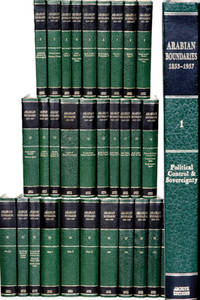
1988Best.-Nr. Arabian-Boundaries-30Archive Editions Ltd 1988-12-01. Hardcover. Very Good. 23x15x11. In fine clean condition 30 volume set including all maps some volumes have DENTED corners clean pages no missing pages Archive Editions Ltd hardcover
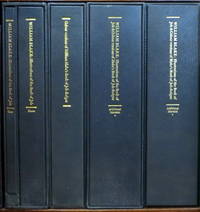
Best.-Nr. 42250London: The William Blake Trust 1987. Limited edition one of five special sets from a total edition of 387 copies. Four parts each containing subdivisions of text volumes and/or portfolios of illustrations. Dark blue half morocco the text volumes and solander boxes over marbled boards with gilt labels the portfolios and slipcases over grey cloth. Part Ia - text volume titled as above 147 1 pp.; Part Ib - "The Plates with an Introduction and Plate-by-Plate Commentary by Bo Lindberg" the introduction and 22 plates Blake's title design plus 21 in different states presented in individual fascicles; Part IIa - text volume titled "Colour Versions of William Blake's Book of Job Designs from the Circle of John Linnell. Facsimiles of the New Zealand and Collins Sets and the Fitzwilliam Plates. With an Essay by Bo Lindberg. Edited by David Bindman" 27 1 pp.; Parts IIb-d - Three portfolios containing 22 22 and 4 plates from the respective sets plus a further two images loosely inserted in the case; Parts IIIa-e - The first collection of "Additional Materials" comprising five portfolios holding numerous plates titled thus: "Label printed for original publication March 1826" "Guides and Stencils for Coloured Version of Page from 'Riches' Sketchbook not used." "Colour Versions. Collins & New Zealand Sets & Fitzwilliam Plates" ".Illustrations of the Book of Job Alternative Printing Without Plate Mark" and ".Hand coloured Maquettes and First Proofs from Pochoirs with Comments"; Parts IVa-d - The second collection of "Additional Materials" comprising four portfolios with numerous plates thus: "Proofs Guides and Stencils for Colour Plates from Colour Versions. Trianon Press Paris c.1974" ".First Proofs from the Collotype Plates with Notes by Arnold Fawcus" "Pages from the 'Riches' Sketchbook with Colour Washes not published" "Facsimiles of Subjects from the Butts Version Watercolours Printed Collotype by Emery Walker for the Pierpoint Morgan Library Edition 1935". Slight rubbing to the head of the spine of one of the solander boxes occasional slight dustiness to the slipcases excellent condition overall. John Commander's set with his name inscribed on the limitation leaf being one of five "containing extra material. specially made up for those most closely concerned with bringing the publication to completion". Commander spent his life in publishing and for many years headed the Scolar Press. An expert on Blake he was heavily involved in the refounding of the William Blake Trust and was appointed as secretary and executive director of the organisation. A scarce work to begin with this is a highly desirable set of this expanded and very limited issue given to an esteemed authority on Blake who had did much to promote the study and enjoyment of the artist's work over many decades. London: The William Blake Trust unknown
1797Best.-Nr. 48706London.: R. Noble. 1797. Scarlet morocco-backed contemporary moiré cloth boards gilt titles to front cover and spine. Folio. 415 x 325 mm. Leaf with 'Explanation of the Engravings' recto and verso printed title advertisement pp. iii - viii and 43 leaves with engravings by William Blake surrounding the text; 21 of the leaves retain the publisher's imprints. First edition of Blake's illustrations for Edward Young's Night Thoughts.Night Thoughts is a key work in the Blake canon executed at a crucial point in his career. Sometime in 1795 or 1796 Blake was comissioned by the publisher Richard Edwards to undertake the illustration of each page of Young's bestseller 'Night Thoughts'. It was intended to publish the whole poem of nine nights in installments accompanied by engravings based on Blake's drawings but Edwards went out of business after the first volume consisting of 4 Nights and the project was never completed. 'Blake has undertaken to make designs to encircle the letter press of each page of Young's Night Thoughts Edwards the Bookseller of Bond Street employed him and has had the letter press of each page laid down on a large half sheet of paper. There are about 900 pages - Blake asked 100 guineas for the whole. Edwards said he could not afford to give more than 20 guineas for which Blake agreed. Fuseli understands that Edwards proposes to select about 200 from the whole to have that number engraved by Blake as decorations for a new edition.' Blake Records. R. Noble. hardcover
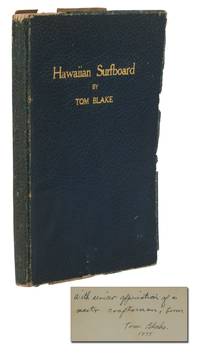
1935Best.-Nr. 140945466Honolulu: Paradise of the Pacific Press 1935. First Edition. Very Good. First edition first printing. Signed by Tom Blake and inscribed in the year of publication "with sincere appreciation of a master craftsman from Tom Blake 1935". In 200 Years of Surfing Literature an Annotated Bibliography by Timothy DeLaVega the author states "There is one known soft bound cover blue with text only." It is not certain that this is the specific copy known to DeLaVega but it would appear that this binding is in the very least identical to the one he described and nonetheless a true rarity. Very Good with wear to yapped edges light lean to binding. Toning and light soiling to pages with several light marginal tidemarks several hinges slightly exposed and the page Blake has signed on is partially detached at the top inch; but on the whole very well preserved given the production and materials used for the binding. Tom Blake is often considered to be one of the most influential surfers in the history of the sport. He is largely credited with transforming surfing from a regional Hawaiian sport to one with national popularity as well as establishing California surf culture. Paradise of the Pacific Press unknown
1935Best.-Nr. 140945466Honolulu: Paradise of the Pacific Press 1935. First Edition. Very Good. First edition first printing. Signed by Tom Blake and inscribed in the year of publication "with sincere appreciation of a master craftsman from Tom Blake 1935". In 200 Years of Surfing Literature an Annotated Bibliography by Timothy DeLaVega the author states "There is one known soft bound cover blue with text only." It is not certain that this is the specific copy known to DeLaVega but it would appear that this binding is in the very least identical to the one he described and nonetheless a true rarity. Very Good with wear to yapped edges light lean to binding. Toning and light soiling to pages with several light marginal tidemarks several hinges slightly exposed and the page Blake has signed on is partially detached at the top inch; but on the whole very well preserved given the production and materials used for the binding. Tom Blake is often considered to be one of the most influential surfers in the history of the sport. He is largely credited with transforming surfing from a regional Hawaiian sport to one with national popularity as well as establishing California surf culture. Paradise of the Pacific Press unknown books
1884Best.-Nr. 303028Edmonton: John Pearson for Bernard Quaritch 1884. Each title one of 50 copies. With 8 26 11 and 21 plates in the four works 66 total. 1 vols. 4to. Contemporary full white vellum gilt spine and upper cover titled in gilt t.e.g. others untrimmed. Fine copy. Cloth slipcase. Each title one of 50 copies. With 8 26 11 and 21 plates in the four works 66 total. 1 vols. 4to. The Muir facsimiles were produced in editions of 50 copies; a few copies would have been bound up by Quaritch the distributor in white vellum as here. The wrappers are not preserved but the books are complete. Bentley 249 bce & g John Pearson for Bernard Quaritch unknown
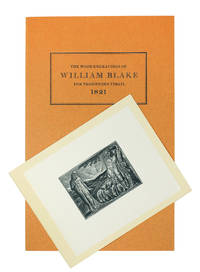
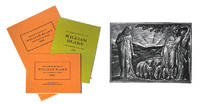
Best.-Nr. 1245991977. London: BM Publications Ltd. 1977. 8vo introductory pamphlet and 17 woodcuts on special paper each in an individual folder all contained in a brown cloth folding box with black leather gilt-lettered labels on upper cover and backstrip. As issued. § Limited to 150 sets this copy unnumbered this superb reprinting of Blake's only woodcuts from the original blocks was executed by Iain Bain the Bewick authority and sold out immediately. Very few sets have since come to market as most were purchased by institutions. The accompanying commentary volume includes an introduction by Lord Clark a technical account of the printing of the blocks by Bain and David Chambers an essay on the engravings by Andrew Wilton and the text of Ambrose Phillip's "Imitation of Virgil's First Eclogue" which the illustrations were made to accompany. Bentley BBS p.262. unknown
Best.-Nr. 1246331977. London: BM Publications Ltd. 1977. 8vo introductory pamphlet and 17 woodcuts on special paper each in an individual folder all contained in a brown cloth folding box with black leather gilt-lettered labels on upper cover and backstrip. As issued. § Limited to 150 sets this superb reprinting of Blake's only woodcuts from the original blocks was executed by Iain Bain the Bewick authority and sold out immediately. Very few sets have since come to market as most were purchased by institutions. Bentley BBS p.262. unknown
1884Best.-Nr. 303028Edmonton: John Pearson for Bernard Quaritch 1884. Each title one of 50 copies. With 8 26 11 and 21 plates in the four works 66 total. 1 vols. 4to. Contemporary full white vellum gilt spine and upper cover titled in gilt t.e.g. others untrimmed. Fine copy. Cloth slipcase. Each title one of 50 copies. With 8 26 11 and 21 plates in the four works 66 total. 1 vols. 4to. The Muir facsimiles were produced in editions of 50 copies; a few copies would have been bound up by Quaritch the distributor in white vellum as here. The wrappers are not preserved but the books are complete. Bentley 249 bce & g John Pearson for Bernard Quaritch unknown books
Best.-Nr. 1246331977. London: BM Publications Ltd. 1977. 8vo introductory pamphlet and 17 woodcuts on special paper each in an individual folder all contained in a brown cloth folding box with black leather gilt-lettered labels on upper cover and backstrip. As issued. § Limited to 150 sets this superb reprinting of Blake's only woodcuts from the original blocks was executed by Iain Bain the Bewick authority and sold out immediately. Very few sets have since come to market as most were purchased by institutions. Bentley BBS p.262. unknown books
Best.-Nr. 1245991977. London: BM Publications Ltd. 1977. 8vo introductory pamphlet and 17 woodcuts on special paper each in an individual folder all contained in a brown cloth folding box with black leather gilt-lettered labels on upper cover and backstrip. As issued. § Limited to 150 sets this copy unnumbered this superb reprinting of Blake's only woodcuts from the original blocks was executed by Iain Bain the Bewick authority and sold out immediately. Very few sets have since come to market as most were purchased by institutions. The accompanying commentary volume includes an introduction by Lord Clark a technical account of the printing of the blocks by Bain and David Chambers an essay on the engravings by Andrew Wilton and the text of Ambrose Phillip's "Imitation of Virgil's First Eclogue" which the illustrations were made to accompany. Bentley BBS p.262. unknown books
1797Best.-Nr. 007894London: R. Noble for R. Edwards 1797. First Edition. Full Morocco. Very Good. Elephantine folio 44 by 34 cm. viii 2 95 2 pp. 43 of the pages have Blake's expansive charismatic illustrations surrounding the text. Four of these are section heads the balance being border ornamentation but even the latter are far more than merely decorative. The distinctive Blake artwork fires the imagination regardless. In fact the text which is framed with ruled lines seems to cover some of the illustration. Last two pages are the Explanation of the Engravings which are often not present. The full navy blue morocco is fairly heavily rubbed along the edges a bit less so by the joints. Some scattered soiling within but the pages are generally quite clean. There are a few closed tears not of great length and one repaired close tear which was somewhat longer. The Explanation of Engravings leaf has two repaired tears. Notwithstanding these flaws this is an attractive appealing copy. R. Noble for R. Edwards unknown
1797Best.-Nr. 007894London: R. Noble for R. Edwards 1797. First Edition. Full Morocco. Very Good. Elephantine folio 44 by 34 cm. viii 2 95 2 pp. 43 of the pages have Blake's expansive charismatic illustrations surrounding the text. Four of these are section heads the balance being border ornamentation but even the latter are far more than merely decorative. The distinctive Blake artwork fires the imagination regardless. In fact the text which is framed with ruled lines seems to cover some of the illustration. Last two pages are the Explanation of the Engravings which are often not present. The full navy blue morocco is fairly heavily rubbed along the edges a bit less so by the joints. Some scattered soiling within but the pages are generally quite clean. There are a few closed tears not of great length and one repaired close tear which was somewhat longer. The Explanation of Engravings leaf has two repaired tears. Notwithstanding these flaws this is an attractive appealing copy. R. Noble for R. Edwards unknown books
1959Best.-Nr. 219868Spartan Productions 1959 1959. First Edition. Hardback. A large format publication in fair to good condition. It is spiral-bound in elaborately blind-tooled full leather. There is some wear to the top of the spiral spine. In a portfolio leather folder with imitation cowhide on the front cover. The portfolio folder is somewhat edge-worn. The pages are impressively produced on colour-illustrated stiff card with slight dulling around the edges. Some of the introductory and credit pages have separated from the binding and have become brittle and edge-worn. Remains particularly well-preserved overall. Futher images and additional bibliographic information available on request. ; 8vo 8"" - 9"" tall; 0 pages; Pre-production or proposal portfolio for a western TV series entitled 'Rango' featuring the script for a presumed pilot episode 'Posse from Hell' with a selection of proposed storylines for future episodes. Three pages of production credits indicate that this item was published in 1959 by Spartan Productions with Blake Edwards credited as director. Gordon Oliver is credited in the leading role of Rango. Clair Huffaker is credited as writer indicating that the script is based on his 1958 novel 'Posse from Hell'. This novel was eventually adapted into a Universal film in 1961 starring Audie Murphy and directed by Herbert Coleman. Also included is the album cover for the original theme music written by Hank Mancini. Unfortunately the LP is lacking. Hank Henry Mancini was involved in a dispute regarding the 1961 film with Universal's music director Joseph Gershenson who reused the music scores from This Island Earth 1955 and It Came from Outer Space 1953 rather that the original music. Therefore it appears that Rango: Posse from Hell was the pilot for a proposed TV series that was eventually adapted into a film produced by Gordon Kay and Edward Muhl for Universal. In the film version Rango's name is changed to Banner Cole. There was also a 1967 Western/Comedy TV series called Rango. Other than the title of the main character there does not appear to be any link to between these productions although is is possible some elements may have been adapted. Subjects: Film -- Westerns -- TV series -- Scripts -- 1950s -- 1960s -- Television -- History -- United States. Physical description: Unpaginated. Impressively colour illustrated throughout. 38 x 54cm. [Spartan Productions, 1959] hardcover
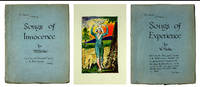
1927Best.-Nr. 1104431927. London: Quaritch 1927. 2 vols 4to 28 and 22 hand-colored plates plus 4 more hand-colored plates and one plate colored in brown only; original printed wrappers as issued. Bookplate of Raymond and Pamela Lister. In a green cloth slipcase. § The second Muir facsimiles of these titles both inscribed by Muir "For Review." Proof copies without the printed material added to the wrappers and with inscriptions on both upper wrappers by Muir signed by him. About 50 copies were printed. The coloring is exceptionally bright and clear in these early copies. They were "facsimiled by Joseph Patrick Trumble Sophia Elizabeth Muir and William Muir from the Beaconsfield Originals in the British Museum with in Experience as an appendix 4 plates from the other British Museum copy. Also one plate for which no colouring is known 'A Divine Image' which seems to belong to the Songs although not included in them by Blake." Bentley Blake Books 162 Innocence and 144 Experience. unknown
1927Best.-Nr. 1104431927. London: Quaritch 1927. 2 vols 4to 28 and 22 hand-colored plates plus 4 more hand-colored plates and one plate colored in brown only; original printed wrappers as issued. Bookplate of Raymond and Pamela Lister. In a green cloth slipcase. § The second Muir facsimiles of these titles both inscribed by Muir "For Review." Proof copies without the printed material added to the wrappers and with inscriptions on both upper wrappers by Muir signed by him. About 50 copies were printed. The coloring is exceptionally bright and clear in these early copies. They were "facsimiled by Joseph Patrick Trumble Sophia Elizabeth Muir and William Muir from the Beaconsfield Originals in the British Museum with in Experience as an appendix 4 plates from the other British Museum copy. Also one plate for which no colouring is known 'A Divine Image' which seems to belong to the Songs although not included in them by Blake." Bentley Blake Books 162 Innocence and 144 Experience. unknown books
Best.-Nr. 1859472016. The excited retelling of great stories An alternative version of the illustration published within Morpurgo's picture book on page 8 showing an excited group of children talking with animation in a classroom. The story concerns a class of children from an inner-city school who spend a week living as farmers at Nethercott Farm in Devon. Morpurgo's text reads "Every year after our week in Devon we come back to school and the whole place is buzzing with excitement. Everyone wants to hear about it. In the playground and in the staff room all the stories of our time down on the farm. are told again and again. Some are true some are not so true maybe a bit exaggerated but they all make great stories". For many decades Quentin Blake has created different versions of the same illustration prior to publication. The one finally reproduced in a book is retained in the artist's archive and the alternative versions have generally been sold. These alternatives offer an insight into Blake's process of changing small details in his work. The present illustration for example includes a bright sunlit window and more wall decoration than in the published version. Ink and watercolour drawing 84 x 160 mm on single sheet of wove paper 198 x 280 mm signed "Quentin Blake" lower left. Mounted framed and glazed framed size 250 x 330 mm. Light rippling to paper some finger marks: fine and unfaded. unknown
Best.-Nr. 109358London: Jonathan Cape 1982. First edition of this Dahl classic which has sold over 20 million copies. Octavo original cloth illustrated by Quentin Blake. Presentation copy inscribed by the author on the front pastedown "Nicola Love Roald Dahl." Additionally inscribed by the illustrator Quentin Blake opposite Dahl's inscription. Fine in a near fine dust jacket. Uncommon signed by both Dahl and Blake. Roald Dahl is now considered one of the most beloved storytellers of the twentieth century. Dahl's ability to twist words into a clever and creative new language is fascinating to children and is evident in BFG. The gruesome descriptions of the horrid giants and the subtle allusions to other stories will entertain children young and old. An animated adaptation was released in theatres in 1987 with David Jason providing the voice of the BFG and Amanda Root as the voice of Sophie. It was also the basis for the 2016 film directed and co-produced by Steven Spielberg written by Melissa Mathison and starring Mark Rylance Ruby Barnhill Penelope Wilton Jemaine Clement Rebecca Hall Rafe Spall and Bill Hader. Jonathan Cape hardcover
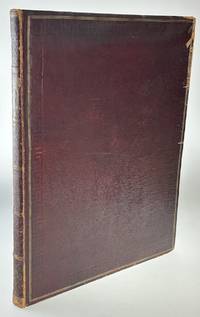
1797Best.-Nr. 6888London: R. Noble for R. Edwards 1797. First Edition. First Edition. Folio 16 1/4 x 13 inches. Bound in contemporary burgundy straight-grain morocco with triple gilt fillet and wide Greek key border in blind spine in compartments tooled in blind with five raised bands in gilt. Blake's inimitable illustrative interpretations of Edward Youngís philosophical and poetic meditation on death immortality and the soulís journey. In his preliminary work for "Night Thoughts" William Blake created 537 large watercolors and 43 of these were engraved and included in the published work. Blake brought a visionary symbolic dimension to the work infusing the illustrations with dramatic often apocalyptic imagery that expanded rather than merely echoed the text. His art introduced themes of cosmic struggle and spiritual awakening aligning Youngís moral reflections with Blakeís own mythic universe. Four engraved part-titles and 39 full-page illustrations by William Blake after his own designs around letterpress text. This copy without letterpress 'Explanation' leaf as often is the case. Some very light offsetting from plates as usual some plates slightly shaved at edges covers slightly rubbed and scuffed particularly spine ends and corners a couple of small gouges to lower cover endpapers with prior fold marks. Internally near fine. R. Noble for R. Edwards unknown
1797Best.-Nr. 6888London: R. Noble for R. Edwards 1797. First Edition. First Edition. Folio 16 1/4 x 13 inches. Bound in contemporary burgundy straight-grain morocco with triple gilt fillet and wide Greek key border in blind spine in compartments tooled in blind with five raised bands in gilt. Blake's inimitable illustrative interpretations of Edward Youngís philosophical and poetic meditation on death immortality and the soulís journey. In his preliminary work for "Night Thoughts" William Blake created 537 large watercolors and 43 of these were engraved and included in the published work. Blake brought a visionary symbolic dimension to the work infusing the illustrations with dramatic often apocalyptic imagery that expanded rather than merely echoed the text. His art introduced themes of cosmic struggle and spiritual awakening aligning Youngís moral reflections with Blakeís own mythic universe. Four engraved part-titles and 39 full-page illustrations by William Blake after his own designs around letterpress text. This copy without letterpress 'Explanation' leaf as often is the case. Some very light offsetting from plates as usual some plates slightly shaved at edges covers slightly rubbed and scuffed particularly spine ends and corners a couple of small gouges to lower cover endpapers with prior fold marks. Internally near fine. R. Noble for R. Edwards unknown books
1801Best.-Nr. 1227331801. London : Dalla Stamperia di Gul. Bulmer 1801. Thick 4to 2 1 1-721 pp. Printed in English and Italian. Contemporary red straight-grained goatskin flat spine banded with double gilt rules single gilt rule to the margins of the boards all edges gilt some foxing to the preliminaries binding repaired and refurbished still showing some scratches and stains but still an attractive copy. § Only edition of absolute rarity three copies recorded none at auctionone in the marketplace bought by Yale. Maggs wrote of this copy: "Written by an associate of William Blake this is a profoundly eccentric production full of the revolutionary spirit of the times combining mysticism philosophy electricity and magnetism. One of an unknown number of copies privately printed for the author without a title page by George Bulmer all of them intended for presentation to the author's friends this copy bearing the 19th Century ownership inscription 'Girdlestone' for whose identity there are several candidates none completely convincing. It is in two parts the first "An Investigation into Principles" written in English is a series of reflections on the nature of elements gravitation "the pressure of the general ethereal fluid against our orb" time "Look for time in the vast expanse Eternity will start to view and time revolve no more" tides earthquakes and the lack of salt in rain when raised into the sky by waterspouts it is sweetened by the action of electricity. His logic is baffling at times demonstrating the wisdom of a forward five year old or of an experienced haschischan : for instance he observes that gravity isn't all that Newton cracked it up to be since water "from a known principle in hydraulics" rises to the top of mountains which truth he derives from the fact that rivers never run dry. "On the Barleycorn" is a dialogue between Mata and Ata based on a conversation with George Finch Earl of Winchilsea concerning wisdom folly genius reason the individuality and the faculty of the soul. The second part is titled "On the Soul. On Magnetism. Magnetic Productions." and comprises the transcripts of Avena's automatic writings see below in Italian many with English introductions and some untranscribed writings dismissed as "too confused to merit attention". There are a total 51 sessions in the first year dated to "Alessandria 1796" 52 in the second year and 27 in the third and last year. The last two years have almost no English narrative. In researching this book we Maggs rely heavily on the intoxicating and brilliant essay by Marsha Schuchard "Blake's Healing Trio: Magnetism Medicine and Mania" published in Blake an Illustrated Quarterly Vol 23 Issue 1 which explores Blake's relationship with the "eclectic network of illuminés which included Swedenborgians Freemasons and Cabalists who shared his interest in animal magnetism spirit-communication and erotic trances". George Baldwin was one of these and is included as "Baldwin of Egypt's Lake" in a vicious later 1808 - 1811 poem attacking their lack of commitment to his studies. Baldwin born in 1744 was an author and diplomat who became very wealthy in the later years of the 18th century establishing trade links for the East India Company with Egypt owning a monopoly of the British trade route through Suez demonstrating remarkable prescience about the importance to British trade of this route to the east. He was British Consul-General in Egypt from 1786 to 1796 in which position he warned the British Government of French plans to take over Egypt a warning which was largely ignored. When the French invaded Egypt in 1798 he left the country for Italy leaving behind substantial property in Alexandria which was seized by the French. He was of considerable help in the planning of the British counter invasion returning to Egypt in 1801 with the British forces and claimed the credit for the decision to breach the canal in Alexandria and flood Lake Mareotis to hinder French navigation which played a significant role in the recapture of Egypt - this is what Blake refers to when he mentions "Baldwin of Egypt's Lake." It is attractive to think of a time in which a man could be a senior servant of the state as well as indulging in such arcane personal tastes. Baldwin's wife Jane Malpass a famous Greek beauty sat for her portrait to Sir Joshua Reynolds and to Richard Cosway who introduced Baldwin to English devotees who believed in healing by magnetism which although he was a popular figure in English society made him the subject of some ridicule. Some Blake scholars believe that Jane Malpass is one of the figures in Blake's 'Vala' manuscript. Baldwin had come across what he claimed were many cures in Egypt using magnetism and experimented on himself with he said considerable success. His Magus so to speak was an itinerant poet one Cesare Avena di Valdieri who passed on his gifts to Baldwin during magnetic sleep. The 'Principles' begins in English with a history of the development of Animal Magnetism then turns to Italian and intertwines the further exploration of the theme with the story of Baldwin's 'contact' with the spirit of his lost first love through the mediumship of Valdieri in a magnetised trance. Both Blake and Baldwin believed that the same Muse that dictated spirit writings to them also inspired Milton in the writing of 'Paradise Lost'. Baldwin was in London from 1781-6 where he must have first encountered the English school of Animal Magnetism a fashionable science begun largely by Franz Anton Mesmer who was for a while very successful as a practitioner in London society. It is highly likely that Baldwin made the acquaintance of Blake during these years. Mesmer was soon eclipsed by his disciple Dr. John Bonniot de Mainaduc who became a very rich man treating the great and the good of British society from Royalty downwards. Mainaduc published in 1798 a series of lectures with a frontispiece by Cosway where much of the phraseology bears a striking resemblance to the writings of Blake. Baldwin was back in Egypt in 1786 from where he ordered many publications on Animal Magnetism and on his interest in 'native' medicines with their use of magic and trance states. He set himself up as a practitioner and claimed much success as a healer - it is thought that a drawing from Blake's notebooks showing a cloaked man wearing a turban treating a young crippled girl represents Baldwin. Baldwin even claimed to be able to heal the plague rife in Egypt at the time mainly by the use of massage with olive oil. This publication originated with Baldwin's meeting with Valdieri and his consequent magnetisation of the poet who poured forth the verse printed here dictated to him by spirits. In 1797 Baldwin was visited in Egypt by the art connoisseur Thomas Hope a devotee of Animal Magnetism. The copy of this book in Emory University Library is inscribed to Hope's brother Henry a wealthy banker and disciple of Mainaduc. The inscription reads 'To Henry Hope Esq from his humble servant George Baldwin author of the English part of this work and editor only of the Italian'. Baldwin himself categorises the principles of the title as 'the discovery of a spiritual influence on the physical temperature of man'. Worldcat reports only two copies in institutions worldwide Emory University and the University of Chicago but a deeper poke reveals a mis-catalogued copy in the British Library. Not in Crabtree Animal Magnetism early hypnotism and psychical research an annotated bibliography. 1766-1925." DNB notes: "Baldwin was welcomed into London society as an exotic newcomer. He was described by Wright as 'lolling on oriental cushions amid strange hangings' T. Wright Life of William Blake 1929 2.31 and had some interesting pictures to share. Baldwin became intrigued by Cosway's keen interest in the therapeutic powers of magnetism as expounded by John de Mainauduc. Baldwin's presence was noted in William Blake's lines: Cosway Frazer and Baldwin of Egypt's lake Fear to associate with Blake This life is a warfare against evils They heal the sick he Blake casts out devils." Bentley BBS 495 p. 404. unknown
1801Best.-Nr. 1227331801. London : Dalla Stamperia di Gul. Bulmer 1801. Thick 4to 2 1 1-721 pp. Printed in English and Italian. Contemporary red straight-grained goatskin flat spine banded with double gilt rules single gilt rule to the margins of the boards all edges gilt some foxing to the preliminaries binding repaired and refurbished still showing some scratches and stains but still an attractive copy. § Only edition of absolute rarity three copies recorded none at auctionone in the marketplace bought by Yale. Maggs wrote of this copy: "Written by an associate of William Blake this is a profoundly eccentric production full of the revolutionary spirit of the times combining mysticism philosophy electricity and magnetism. One of an unknown number of copies privately printed for the author without a title page by George Bulmer all of them intended for presentation to the author's friends this copy bearing the 19th Century ownership inscription 'Girdlestone' for whose identity there are several candidates none completely convincing. It is in two parts the first "An Investigation into Principles" written in English is a series of reflections on the nature of elements gravitation "the pressure of the general ethereal fluid against our orb" time "Look for time in the vast expanse Eternity will start to view and time revolve no more" tides earthquakes and the lack of salt in rain when raised into the sky by waterspouts it is sweetened by the action of electricity. His logic is baffling at times demonstrating the wisdom of a forward five year old or of an experienced haschischan : for instance he observes that gravity isn't all that Newton cracked it up to be since water "from a known principle in hydraulics" rises to the top of mountains which truth he derives from the fact that rivers never run dry. "On the Barleycorn" is a dialogue between Mata and Ata based on a conversation with George Finch Earl of Winchilsea concerning wisdom folly genius reason the individuality and the faculty of the soul. The second part is titled "On the Soul. On Magnetism. Magnetic Productions." and comprises the transcripts of Avena's automatic writings see below in Italian many with English introductions and some untranscribed writings dismissed as "too confused to merit attention". There are a total 51 sessions in the first year dated to "Alessandria 1796" 52 in the second year and 27 in the third and last year. The last two years have almost no English narrative. In researching this book we Maggs rely heavily on the intoxicating and brilliant essay by Marsha Schuchard "Blake's Healing Trio: Magnetism Medicine and Mania" published in Blake an Illustrated Quarterly Vol 23 Issue 1 which explores Blake's relationship with the "eclectic network of illuminés which included Swedenborgians Freemasons and Cabalists who shared his interest in animal magnetism spirit-communication and erotic trances". George Baldwin was one of these and is included as "Baldwin of Egypt's Lake" in a vicious later 1808 - 1811 poem attacking their lack of commitment to his studies. Baldwin born in 1744 was an author and diplomat who became very wealthy in the later years of the 18th century establishing trade links for the East India Company with Egypt owning a monopoly of the British trade route through Suez demonstrating remarkable prescience about the importance to British trade of this route to the east. He was British Consul-General in Egypt from 1786 to 1796 in which position he warned the British Government of French plans to take over Egypt a warning which was largely ignored. When the French invaded Egypt in 1798 he left the country for Italy leaving behind substantial property in Alexandria which was seized by the French. He was of considerable help in the planning of the British counter invasion returning to Egypt in 1801 with the British forces and claimed the credit for the decision to breach the canal in Alexandria and flood Lake Mareotis to hinder French navigation which played a significant role in the recapture of Egypt - this is what Blake refers to when he mentions "Baldwin of Egypt's Lake." It is attractive to think of a time in which a man could be a senior servant of the state as well as indulging in such arcane personal tastes. Baldwin's wife Jane Malpass a famous Greek beauty sat for her portrait to Sir Joshua Reynolds and to Richard Cosway who introduced Baldwin to English devotees who believed in healing by magnetism which although he was a popular figure in English society made him the subject of some ridicule. Some Blake scholars believe that Jane Malpass is one of the figures in Blake's 'Vala' manuscript. Baldwin had come across what he claimed were many cures in Egypt using magnetism and experimented on himself with he said considerable success. His Magus so to speak was an itinerant poet one Cesare Avena di Valdieri who passed on his gifts to Baldwin during magnetic sleep. The 'Principles' begins in English with a history of the development of Animal Magnetism then turns to Italian and intertwines the further exploration of the theme with the story of Baldwin's 'contact' with the spirit of his lost first love through the mediumship of Valdieri in a magnetised trance. Both Blake and Baldwin believed that the same Muse that dictated spirit writings to them also inspired Milton in the writing of 'Paradise Lost'. Baldwin was in London from 1781-6 where he must have first encountered the English school of Animal Magnetism a fashionable science begun largely by Franz Anton Mesmer who was for a while very successful as a practitioner in London society. It is highly likely that Baldwin made the acquaintance of Blake during these years. Mesmer was soon eclipsed by his disciple Dr. John Bonniot de Mainaduc who became a very rich man treating the great and the good of British society from Royalty downwards. Mainaduc published in 1798 a series of lectures with a frontispiece by Cosway where much of the phraseology bears a striking resemblance to the writings of Blake. Baldwin was back in Egypt in 1786 from where he ordered many publications on Animal Magnetism and on his interest in 'native' medicines with their use of magic and trance states. He set himself up as a practitioner and claimed much success as a healer - it is thought that a drawing from Blake's notebooks showing a cloaked man wearing a turban treating a young crippled girl represents Baldwin. Baldwin even claimed to be able to heal the plague rife in Egypt at the time mainly by the use of massage with olive oil. This publication originated with Baldwin's meeting with Valdieri and his consequent magnetisation of the poet who poured forth the verse printed here dictated to him by spirits. In 1797 Baldwin was visited in Egypt by the art connoisseur Thomas Hope a devotee of Animal Magnetism. The copy of this book in Emory University Library is inscribed to Hope's brother Henry a wealthy banker and disciple of Mainaduc. The inscription reads 'To Henry Hope Esq from his humble servant George Baldwin author of the English part of this work and editor only of the Italian'. Baldwin himself categorises the principles of the title as 'the discovery of a spiritual influence on the physical temperature of man'. Worldcat reports only two copies in institutions worldwide Emory University and the University of Chicago but a deeper poke reveals a mis-catalogued copy in the British Library. Not in Crabtree Animal Magnetism early hypnotism and psychical research an annotated bibliography. 1766-1925." DNB notes: "Baldwin was welcomed into London society as an exotic newcomer. He was described by Wright as 'lolling on oriental cushions amid strange hangings' T. Wright Life of William Blake 1929 2.31 and had some interesting pictures to share. Baldwin became intrigued by Cosway's keen interest in the therapeutic powers of magnetism as expounded by John de Mainauduc. Baldwin's presence was noted in William Blake's lines: Cosway Frazer and Baldwin of Egypt's lake Fear to associate with Blake This life is a warfare against evils They heal the sick he Blake casts out devils." Bentley BBS 495 p. 404. unknown books
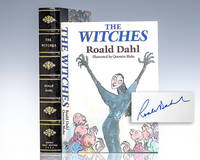
Best.-Nr. 144317London: Jonathan Cape 1983. First edition of Dahl’s Whitbread Award-winning children’s novel illustrated by Quentin Blake. Octavo original cloth. Boldly signed by Roald Dahl on the half-title page. Fine in a near fine dust jacket. Housed in a custom half morocco clamshell box made by the Harcourt Bindery. Dahl's The Witches centers on the experiences of a young British boy and his Norwegian grandmother in a world where child-hating societies of witches secretly exist in every country. "Don't be fooled by those witches with their black hats black cloaks and broomsticks though those are not REAL WITCHES. Real witches are exceedingly difficult to spot in the wild and dress in ordinary clothes looking very much like ordinary people." Dahl's vital indicators for spotting a real witch include facts like they always wear gloves they have no toes are bald as boiled eggs and they have blue spit. “Dahl seems to have made an art form of the rediscovery that children tend to warm to the sorts of horror that make lesser mortals adults squirm with displeasure… He is undeniably special” Connolly 104. Jonathan Cape hardcover
1780Best.-Nr. 1240091780. London: Fielding and Walker 1780 and J. Fielding: 1781. Two vols. in one large thick folio vol. 1 frontispiece title page printed in red and black 6 632 pp. with 46 plates including 5 maps and a plan; vol. 2 with title page dated 1781 494 pp. with 33 plates indices etc. 79 of 80 plates in total. Very early calf very worn and rubbed newly consolidated and now stable. Internally very good and the plates in fine condition. § First edition of this version being Blake's first appearance as the sole engraver and in one case the designer and engraver of five plates. Plates 1 2 3 and 5 all engraved and 5 engraved and designed by Blake. See Essick CBI III. Easson and Essick 1 #1 for plate 5. The plates are: 1 Numbers chap. 13 v. 23 in vol. 1; 2 Jonah chap. 3 v. 4; 3 Judith chap. 13 v. 104; Matthew chap. 3 v. 135; Revelations chap. 1 v. 12-13. Plate 5 is signed "d & sc. Blake." Here "d" stands for delineavit as distinct from invenit invented the image. Essick thinks Blake was strongly influenced by an engraving by Picart-see Essick CBI p.22. Blake's wash drawing for pl. 5 is in the British Museum. unknown