Blake, WilliamABAA

18 324 résultats
1964réf. 1262271964. Northampton MA: Gehenna Press 1964. Slim 12mo 16pp. With 6 wood-engravings 4 printed on Japan tissue all being versions of Blake's face. Original marbled wrappers printed label on upper cover. Backstrip somewhat worn and chipped with fading and shelfwear to edges and tips. § Limited to 500 copies but surely fewer than that this copy unnumbered. There were also 25 de luxe copies with an extra suite of the plates. Only two copies are recorded as having sold in the last 30 years and this is the only copy we have ever seen. The letter is classic Blake to his great patron: "I hear a voice you cannot hear that says I must not stay I see a hand you cannot see that beckons me away. Naked we came here naked of Natural things & naked we shall return; but while clothed with the Divine Mercy we are richly clothed in Spiritual & suffer all the rest gladly." Bentley Blake Books 94. unknown books
1970réf. 6442London: Trianon Press 1970. First thus. Fine. Limited edition number 9 of 600 numbered copies out of a total edition of 662 copies. A Fine copy. Quarto 11 3/4 x 9 in; 298 x 230 mm. 28 pp. Ten color plates. Original quarter green morocco over marbled boards. In the original marbled board slipcase. "Through aphoristic declarations and accompanying emblem-like designs Blake argues for the essential unity of all religions as expressions of the "Poetic Genius" within all human beings." The William Blake Archive. Blake first etched the work in c. 1788 returned to it in 1795 and again in 1818. In this edition the plates were reproduced by the Trianon Press France using the collotype process with some water-color washes added by hand. The editorial matter was printed by the Imprimerie Darantiere Dijon and binding was by Engel Malakoff and the hand-made slip-case by Adine Paris. With a description and bibliographical history by Blake scholar Geoffrey Keynes. Fine. Trianon Press unknown books
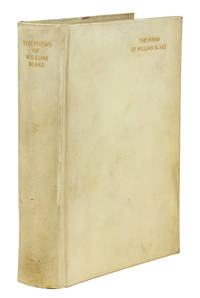
1921réf. 1262361921. London: Florence Press Chatto and Windus 1921. Small 4to xxxviii 345 pages. Original de luxe binding of full vellum stamped in gilt inscribed at front in ink "C.G.A. Hill". § First edition of this collection a lovely copy in the special binding of which I suspect very few were issued -- I have seen two in the last 40 years. Sampson was a highly regarded editor. Bentley Blake Books 294 and see Bentley 300: "This the works is a work of pioneer scholarly importance well informed meticulously accurate well balanced and intelligent - virtues that were never collectively applied to Blake's text before this time. It is particularly valuable on the Songs. unknown books
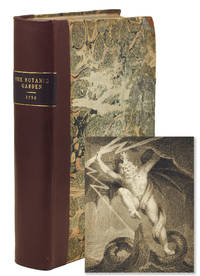
1795réf. 1262351795. London: Johnson 1795-94. 2 vols. in one 4to xx 218 124 2 directions to binder and advertisement; 2 viii 200 2 directions to the binder lacking the errata and ads pp. With a frontispiece to each volume ten plates in vol. I and 8 in vol. II. Early half calf marbled boards newly rebacked in calf with gilt-lettered label. A very good copy if a little aged -- early manuscript note loosely inserted about the Portland Vase copied from the Morning Chronicle c. 1796. § Best edition. 6 plates are engraved by Blake the best known being Fertilization of Egypt and Tornado both after Fuseli. The third edition of part one is the only edition to include the striking Tornado plate. At page 87 appears the enigmatic circular image of an African man in chains titled "Am I not a man and a brother." Bentley 450B and C. Essick William Blake's Commercial Book Illustrations XXI. The Morning Chronicle was a newspaper founded in 1769 in London. It was notable for having been the first steady employer of essayist William Hazlitt as a political reporter and the first steady employer of Charles Dickens as a journalist. unknown books
1975réf. 85625San Francisco: T. Ingmire 1975. First edition. 48mo. 16 pp. Near fine in sewn wrappers. Gold on title page hand-colored. One of 350 copies. Text reproduced from Thomas Ingmire’s calligraphy. San Francisco: T. Ingmire unknown books
1949réf. 1259721949. Seattle: Silver Quoin Press 1949. Sm. slim 4to 12pp. Original blue paper wrappers as new. § No limitation stated doubtless printed in a tiny edition. Unrecorded by Bentley not noted in the Blake Archive. These were the first four poems in Blake's first book "Poetical Sketches.". unknown books
1827réf. 1259791827. N.p.: n.d. 8vo 141pp. original printed blue wrappers with the Blake plate pasted in at the front. The image and plate mark as per Essick 3.1 x 7.8 cm. and 3.3 x 8.1 cm. respectively. Printed in black on wove India paper measuring 5 x 10 cm. § Enigmatic version of the famous "Cumberland card" Blake's last engraving executed for one of his closest friends. It is lightly printed and pasted into a copy of the Hayward catalogue: inscribed at the front by Geoffrey Keynes to Robin Skelton and with a later pencil inscription see below noting that this is "a copy of Blake's engraving struck off by Keynes from the plate". This cannot be true since Keynes never owned the original plate and its whereabouts have never been established. More likely is that Keynes gave Skelton a spare proof of the card illustrated in his book Engravings by William Blake plate 38. A subsequent owner William Clair notes in pencil: "Presented to Robin Skelton by Geoffrey Keynes with a copy of Blake's engraving struck off by Keynes from the plate." and adding "Bought in Toronto". Skelton was a highly regarded poet and academic who though English lived in Toronto and taught at the University of Victoria. The images invoke one of Blake's greatest themes-the relationships between time and eternity. Opinions vary on the purpose of this plate but it should be noted that at the time 1827 it was not uncommon to paste a calling card into a book as proof of ownership. However no book once owned by Cumberland has been located with his card pasted in. It has also been suggested that the name of Cumberland in the center was executed by a writing engraver and Blake added his borders later. 39 examples of this print are known to Essick not including examples now untraced all but three on laid paper printed later and three on card but it is quite rare in commerce. Offered with the book Engravings by William Blake. Essick The Separate Plates of William Blake XXI. Bindman Complete Graphic Works of Blake 654. unknown books
1963réf. 65744NY: Bernard Geis 1963. First edition. 213 pp. Very near fine in near fine dust jacket that is lightly rubbed. Includes James Blake’s short story “Day of the Alligator.” Young 312. NY: Bernard Geis unknown books
1987réf. 1256881987. Paris: Trianon Press 1987. Folio 22 facsimile plates loose in white folder label on upper cover in facsimile of the original; printed on slightly tinted paper. Uncolored. Mint. § A mint set of the plates uncolored as originally issued printed by the Trianon Press with the small prospectus loosely inserted offering "a limited number of complete sets of the series. now offered in folders". Single plates could also be ordered. unknown books
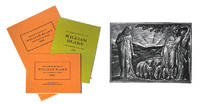
1976réf. 1252431976. Normal IL: The American Blake Foundation 1976. 4to 23 loose leafs of text plus 38 loose plates and 3 folded and uncut leafs each with 8 illustrations double-sided. All loosely inserted in a blue cloth folder in a slipcase. Very good to near fine. § Copy #33 of 149 copies thus; a few were issued in a quarter morocco binding. Bentley Monochrome reproduction of copy H with ancillary material see Bentley. Essick contributed a bibliographical introduction. BBS pp.69-70. unknown books
1974réf. 1252441974. Normal Illinois: The American Blake Foundation 1974. 4to 21 pp. and 18 facsimile plates in black and white. Near fine in illustrated red wrappers and an additional loose set of the 18 facsimilies and the Check-List of Secondary Materials in English which accompanies Easson's Editorial Comments and Bentley's Introduction. Original orange cloth as new. § Limited to 474 copies this is #74. There were 26 copies issued in quarter morocco. Trade edition reproducing copy E with additional material; see Bentley BB B9. unknown books
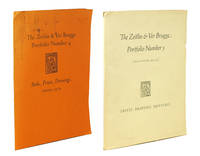
1972réf. 1251801972. Los Angeles: Zeitlin 1972-3 and 1979 Slim folio printed folders containing descriptions and images of art work. § Two scarce listings by the renowned Los Angeles dealer Jake Zeitlin; portfolio 3 includes "William Blake - Standing archer holding a sword pencil drawing $4550" and portfolio 4 includes "William Blake - three relief etchings from Songs of Innocence and Experience" sic. Essick commented: "the Songs plates are posthumous. Jake bought for me in the Blake-Varley Sketchbook auction "Harold Killed at the Battle of Hastings." The Standing Archer he bought for stock; Butlin says sold by Jake to Robert H. Taylor. Blake Archive says at Princeton now along with other Blakes given by Taylor. unknown books
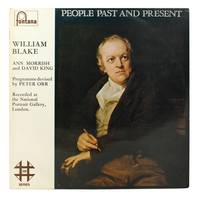
1969réf. 1241521969. Fontana: c.1969. Vinyl record in illustrated sleeve. Color portrait of Blake on front short biography of Blake on back along with information about the actors and the National Portrait Gallery and black and white illustrations of other authors in the album series: Charles I Edward Lear Ellen Terry Jane Austen and Samuel Pepys. Very good. § A spoken word album of Blake's poetry recorded at the National Portrait Gallery in London. unknown books
1780réf. 1240091780. London: Fielding and Walker 1780 and J. Fielding: 1781. Two vols. in one large thick folio vol. 1 frontispiece title page printed in red and black 6 632 pp. with 46 plates including 5 maps and a plan; vol. 2 with title page dated 1781 494 pp. with 33 plates indices etc. 79 of 80 plates in total. Very early calf very worn and rubbed newly consolidated and now stable. Internally very good and the plates in fine condition. § First edition of this version being Blake's first appearance as the sole engraver and in one case the designer and engraver of five plates. Plates 1 2 3 and 5 all engraved and 5 engraved and designed by Blake. See Essick CBI III. Easson and Essick 1 #1 for plate 5. The plates are: 1 Numbers chap. 13 v. 23 in vol. 1; 2 Jonah chap. 3 v. 4; 3 Judith chap. 13 v. 104; Matthew chap. 3 v. 135; Revelations chap. 1 v. 12-13. Plate 5 is signed "d & sc. Blake." Here "d" stands for delineavit as distinct from invenit invented the image. Essick thinks Blake was strongly influenced by an engraving by Picart-see Essick CBI p.22. Blake's wash drawing for pl. 5 is in the British Museum. unknown books
1987réf. 1241201987. Cambridge: 1987. Small folio viii 110 pages. Facsimile interleaved. Original cloth dust-jacket slipcase. As new. § Finely printed at the Stamperia Valdonega in a limited edition. Publication financed by the inimitable Haven O'More see Basbanes A Gentle Madness new edition for much on this enigmatic man with a foreword by O'More. unknown books
1994réf. 1246521994. London: Designed and Printed by Linda Anne Landers at Spoon Print Press. Small slim 8vo 12 ff. with color prints etc. throughout. Sewn into stiff wrappers titled in blue with 4 additional woodcuts in gold on the upper cover. As new. § New version of the 1994 edition this version limited to 4 copiesthis is copy 2 signed by the artist whose highly creative and visionary re-imagining of Blake's poems have earned considerable attention and respect from the book arts collectors. unknown books
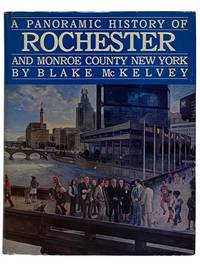
1979réf. 2320229Woodland Hills California: Windsor Publications Inc 1979. First Edition. Large Hardcover. Very Good/Very Good. 11x8x1. First edition. Boards a bit soiled light jacket edge wear ink stamp on front endpaper. Nathaniel Rochester Days poster laid in. Binding tight and square text clean and unmarked. 1979 Large Hardcover. 264 pp. "Blake McElvey's Rochester: A Panoramic History tells the vital story of this city's past present and its future prospects starring the people who are its greatest resource. Stunning photographs and illustrations punctuate a story that has all the elements of a rousing tale: suspense tragedy comic relief natural catastrophes and finally energetic and resilient people. Here are the industrial giants as large as life: Hiram Sibley of Western Union George Eastman and his "passing fad of a toy" Lewis Swift hardware merchant and astronomer and discoverer of comets - only a few of the greats eccentrics and ordinary people who tell the story of a city that valued quality in its products resourcefulness in its people and a belief in its own destiny to be one of America's finest cities. Windsor Publications, Inc hardcover books
1824réf. 1245961824. London: I. Poole 1824. Small 8vo xxiv 372pp. With an engraved frontispiece 4 full-page engravings including one by Blake 8 hand-colored botanical plates 8 plates of engraved music a calendar with an engraved title-page and 6 plates and 12 blank leaves titled "Album 1825" recorded by Keynes but not noted in other copies we have had. Publisher's original full brown calf central panels on both covers blind-stamped within a richly gilt border backstrip with four raised bands gilt-decorated lettered REMEMBER ME slightly scuffed and small black splotch ink on lower cover occasional small spots on plates as usual a very good copy of a de luxe issue binding on the first of three editions of the book. § First edition first issue of the book no state variance in the plate with a very early pencil inscription from one woman to another illegible repeated on the next leaf. One of the rarest of all of the plates designed and engraved by Blake. There was a reissue dated 1826 as part of the title probably published late in 1825. The plate titled 'The Hiding of Moses' was the last plate designed and engraved by Blake himself for a commercial publication; the original drawing 'Moses placed in the Ark of Bulrushes' which closely echoes a tempera now untraced that was executed some 25 years earlier is in the Huntington Library. Bentley BB 490B. Easson and Essick WBBI Vol. I XI recording the Rosenwald proof and 3 copies. Keynes Blake Studies XIX recording 7 variants but not mentioning the 1826 printing. Also see Bentley's detailed essay and census of copies in "Remember Me! Customs and Costumes of Blake's Gift Book" University of Toronto Quarterly 80.4 fall 2011: 880-92. Bentley in the U of T Quarterly 2011 noted: "The gift book Remember Me! with Blake's wonderful engraving of the 'Hiding of Moses' was more remarkable for its decorations than for its literary contents. Of the twenty-four copies recorded each differs from the others in the pattern of binding colour of fore-edges endpapers and the decorated sleeve-case. Despite this varied elegance the work had only a modest sale and the same sheets were re-issued in 1825 for the 1826 gift-giving season. This paucity of sales may be related to the fact that the publisher John Poole had little experience of book distribution. His speciality was as a maker of Marble Paper and Fancy Pocket-Books not in selling them.". unknown books
2007réf. 73718London: Aurum 2007. First edition. 418 pp w/index. Very near fine in like dust jacket. A well-regarded account. London: Aurum unknown books
1982réf. 6699Franklin Center: Franklin Library 1982. Hardcover. Fine. Edited by W.H. Auden and Norman Holmes Pearson. Illustrated by Eugene Karlin. Brown leatherette with raised bands and gilt lettering and designs. Square and firmly bound with gilded edges clean internally. Franklin Library hardcover books
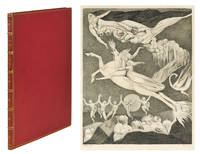
1796réf. 1246441796. London: by S. Gosnell for William Miller 1796. Slim 4to xi 16 pp. With a frontispiece and 2 illustrations headpiece and tailpiece designed by Blake and engraved by Perry. Later full red straight-grain morocco gilt-lettered backstrip a fine copy with a faded inscription on the title-page "Sophia Baillie". § First edition with Blake's illustrations ridiculed in the press upon publication. One of the rarest letterpress books to contain illustrations designed by Blake. Four copies have sold in the last 40 years; two have appeared at auction. The year 1796 saw three translations of Burger's Lenore one by J. T. Stanley one by H. J. Pye the Poet Laureate and a third by W. R. Spencer with designs by Lady Diana Beauclerk. Blake was commissioned to create three illustrations for the Stanley translation including the frontispiece "Lenore clasping her spectral bridegroom" which is famous for supposedly having hung as a separate print in C.G. Jung's office. The British Critic for September 1796 spitefully compared Lady Diana's pictures with those of Blake's: "We are highly impressed by the propriety decorum and grace which characterizes all the figures of this elegant artist Lady Beauclerk even those of a preternatural kind; forming a most striking contrast to the distorted absurd and impossible monsters exhibited in the frontispiece to Mr. Stanley's last edition i.e. Blake's design. Nor can we pass by this opportunity of execrating that detestable taste founded on the depraved fancy of one man of genius which substitutes deformity and extravagance for force and expression and draws men and women without skin with their joints all dislocated; or imaginary beings which neither can nor ought to exist." The Analytical Review chimed in with comments including "perfectly ludicrous instead of terrific." Lenore had a profound effect on the development of Romantic literature throughout Europe7 and a strong influence on the English ballad-writing revival of the 1790s.8 According to German language scholar John George Robertson5 Lenore exerted a more widespread influence than perhaps any other short poem in the literature of the world. . like wildfire this remarkable ballad swept across Europe from Scotland to Poland and Russia from Scandinavia to Italy. The eerie tramp of the ghostly horse which carries Lenore to her doom re-echoed in every literature and to many a young sensitive soul was the revelation of a new world of poetry. No production of the German "Sturm und Drang"-not even Goethe's Werther which appeared a few months later-had such far-reaching effects on other literatures as Bürger's Lenore; it helped materially to call the Romantic movement in Europe to life. In a similar tone English literature scholar Marti Lee claims that:6 "Lenore" had tremendous influence on the literature of the late eighteenth- and early nineteenth-centuries and in fact today's popular horror books and movies are still feeling the reverberations. . In short Bürger's achievement while minor in itself helped father an international movement that led directly to the massive popularity of Gothic works then and now. . As the Gothic novel borrowed many of its original conventions from the German ballads as popularized by "Lenore" we can fairly say that Bürger is one of the most influential founding fathers of the Gothic and horror genres.Bentley Blake Books 440. Easson and Essick William Blake Book Illustrator vol. 2 XLVI. Bindman Complete Graphic Works of Blake 380-382. unknown books
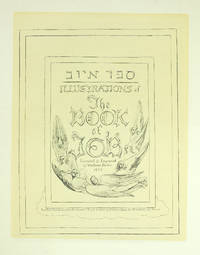
réf. 1246348182. London: March 8 1825 but published 1826. Single leaf recently cleaned. § First edition one of 100 sets printed directly onto Whatman wove with the word "proof" removed. Bentley Blake Books 421A. Bindman Complete Graphic Works of Blake 625-641C. unknown books
réf. 1246378182. London: March 8 1828 i.e 1825 but published 1826. Single leaf recently cleaned. § First edition one of 100 sets printed directly onto Whatman wove with the word "proof" removed. Bentley Blake Books 421A. Bindman Complete Graphic Works of Blake 625-641C. unknown books
réf. 1246368182. London: March 8 1828 i.e 1825 but published 1826. Single leaf recently cleaned. § First edition one of 100 sets printed directly onto Whatman wove with the word "proof" removed. Bentley Blake Books 421A. Bindman Complete Graphic Works of Blake 625-641C. unknown books
réf. 1246331977. London: BM Publications Ltd. 1977. 8vo introductory pamphlet and 17 woodcuts on special paper each in an individual folder all contained in a brown cloth folding box with black leather gilt-lettered labels on upper cover and backstrip. As issued. § Limited to 150 sets this superb reprinting of Blake's only woodcuts from the original blocks was executed by Iain Bain the Bewick authority and sold out immediately. Very few sets have since come to market as most were purchased by institutions. Bentley BBS p.262. unknown books