Lessing, G EBiblio.com

5.764 Ergebnisse
Best.-Nr. 1430456906.Gpaperback. Good. Access codes and supplements are not guaranteed with used items. May be an ex-library book. paperback
Best.-Nr. 336832022X.Gpaperback. Good. Access codes and supplements are not guaranteed with used items. May be an ex-library book. paperback
Best.-Nr. 3743381354.Gpaperback. Good. Access codes and supplements are not guaranteed with used items. May be an ex-library book. paperback
Best.-Nr. 3843069883.Ghardcover. Good. Access codes and supplements are not guaranteed with used items. May be an ex-library book. hardcover
Best.-Nr. 3956109570.Gpaperback. Good. Access codes and supplements are not guaranteed with used items. May be an ex-library book. paperback
Best.-Nr. 3847832581.Ghardcover. Good. Access codes and supplements are not guaranteed with used items. May be an ex-library book. hardcover
1920Best.-Nr. 30609AB1920. Leipzig Insel-Verlag 1920. 8°. 189 S. Mit 7 Nachstichen nach Daniel Chodowiecki. Kalblederband der Zeit mit reicher Rückenvergoldung verg. Deckelfileten. Gedruckt bei Breitkopf & Härtel in einer Gesamtauflage von 1200 Exemplaren. unknown
Best.-Nr. ALIN0081Lpz. Engelmann 1870. kl.8°. 140 S. Mit Portr. Rad. v. Hugo Bürkner nach Johann Heinrich TISCHBEIN d.Ä. als Frontisp. u. 12 Rad. v. Adolf Neumann nach Daniel CHODOWIECKI. OHLdr. Spiegel m. Leimschatten. Lpz., Engelmann 1870. unknown
1920Best.-Nr. 30889Leipzig: Insel Verlag 1920. Limited edition. Hardcover. g. 1/2000. 12mo. 3 189 1pp. Original three-quarter calf with finely gold-tooled spine over marbled boards. Black title-label with gold lettering. Minna von Barnhelm oder das Soldatenglück is a play by Lessing in five acts. Illustrated with copper-engravings by German graphic artist and engraver Daniel Chodowiecki who was one of the most popular German engravers and illustrators of the 18th century. Gotthold Ephraim Lessing 1729-1781 is considered by many the true founder of modern German literature and was the main representative of the Enlightenment in Germany. His most famous works are Nathan the Wise 1779 Minna von Barnhelm 1755 and Miss Sara Sampson 1755. Text in German gothic script. Some age wear and sunning on binding. Tight copy with binding in overall good interior in very good condition. Insel Verlag hardcover
Best.-Nr. 2973-01Lpz. Insel 1920. 2 Bll. 189 S. Mit 12 Taf. nach Kupfern v. D. Chodowiecki OHLdr. m. Rückengoldpräg. Leicht berieb. Sarkowski 1023 - Eines v. 1200 Expl. Die Taf. nach Kupfern von Daniel Chodowiecki aus dem Genealogischen Kalender 1770. Der Text dieser Ausg. gibt den ersten Druck v. Jahre 1767 wieder. Lpz., Insel (1920). unknown
Best.-Nr. 3563277176.Ghardcover. Good. Access codes and supplements are not guaranteed with used items. May be an ex-library book. hardcover
Best.-Nr. 3388057826.Gpaperback. Good. Access codes and supplements are not guaranteed with used items. May be an ex-library book. paperback
Best.-Nr. 43617484-nnew. unknown
Best.-Nr. 43617484like new. unknown
2006Best.-Nr. BN597625Studienkreis 2006. 2006. Softcover. Miß Sara Sampson / Fabeln / Mina von Barnhelm / Emilia Galotti / Nathan der Weise / Fabeln und Erzählungen in Versen. Miß Sara Sampson / Fabeln / Mina von Barnhelm / Emilia Galotti / Nathan der Weise / Fabeln und Erzählungen in Versen. Lessing Gotthold Ephraim Studienkreis paperback
Best.-Nr. 3847839918.Ghardcover. Good. Access codes and supplements are not guaranteed with used items. May be an ex-library book. hardcover
Best.-Nr. 3843018707.Ghardcover. Good. Access codes and supplements are not guaranteed with used items. May be an ex-library book. hardcover
Best.-Nr. 8476588704.Gpaperback. Good. Access codes and supplements are not guaranteed with used items. May be an ex-library book. paperback
Best.-Nr. 5213463Short description: In Russian. Lessing Gotthold Ephraim. Nathan Mudry. type. M. Stasyulevich. The image is provided for reference only. It may reflect condition of one of the available copies or only help in identifying the edition. Please feel free to contact us for a detailed description of the copies available. SKU5213463 unknown
Best.-Nr. 114319599X.Gpaperback. Good. Access codes and supplements are not guaranteed with used items. May be an ex-library book. paperback
Best.-Nr. 1391373324.Ghardcover. Good. Access codes and supplements are not guaranteed with used items. May be an ex-library book. hardcover
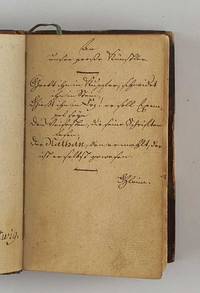
Best.-Nr. 2126432S.l.: s.n. May 1779. bound with:PFRANGER Johann Georg. Der Monch vom Libanon. Ein Nachtrag zu Nathan der Weise. Dessau: printed at the expense of the publisher Heinrich Heybruch for the Allgemeine Buchhandlung der Gelehrten. 1782. 8vo. Near-contemporary half sheep with pastepaper sides contrasting yellow and green morocco lettering-pieces to spine edges stained red marbled endpapers; Nathan der Weise: pp. 4 276; Der Monch: pp. 296; sporadic light spotting some dampstaining to a few pp. A8 and first few ff. of text subtly reinforced at inner margin; nonetheless very good; early ownership inscription 'Hartwig' to front free endpaper verso near-contemporary German purchase note to title of Nathan der Weise near-contemporary authorial attribution to title of Der Monch manuscript verse to front flyleaf see below nineteenth-century ink stamp 'M. Weller' to title and p. 7 of Nathan der Weise 1950s Slough 'Railways of the World' trading card loosely inserted.The true first edition printed in May 1779 for subscribers in the second state of Lessing's play Nathan der Weise Nathan the Wise promoting religious tolerance and friendship amongst Jews Christians and Muslims set in Jerusalem during the Third Crusade. This copy is bound with Pfranger's sequel printed in the hometown of Moses Mendelssohn Lessing's friend and the inspiration for the character of Nathan.In 1778 whilst working as head librarian in Wolfenbuttel Lessing was banned from publishing theological prose due to the intensity of his theological dispute with Johann Melchior Goeze chief pastor of Hamburg. He consequently decided to see if he could 'preach undisturbed' from his 'old pulpit the stage' as he wrote to his brother in August 1778 - having published no plays since Emilia Galotti in 1772 - in the hope of playing a 'vexatious prank on the theologians' with his masterful Enlightenment treatment of religious tolerance. The first edition was printed anonymously for some 1200 subscribers followed by a trade edition printed in the same year by Christian Friedrich Voss in Berlin.The present edition features several distinguishing features: the quote from Gellius on the title opens 'Jntroite' rather than 'Introite' there is no full stop after 'wiederkommt' on p. 1 p. 123 is mispaginated 233 and p. 95 bears the line 'reichre Mann' instead of 'reicher Mann' corrected in later editions. 'There are copies of this edition that show various corrections even though they were pulled from the same setting of type' Muncker trans. This is Muncker's variant B in which the line 'Der reicher Jude' appears instead of 'Der reichre Jude'.This copy has been bound with the first edition of Der Monch vom Libanon a sequel conceived by the clergyman and friend of Schiller Johann Georg Pfranger 1745-1790 who felt that Lessing had 'undermined the honour of the Christian religion' Deutsche Biographie trans. Heinrich Heybruch printed this edition at Dessau - hometown of prominent Jewish Haskalah philosopher Moses Mendelssohn close friend of Lessing and the model for the sage Jewish protagonist of Nathan der Weise - on behalf of the Allgemeine Buchhandlung der Gelehrten General Bookshop for Scholars established in Dessau during the Enlightenment to promote self-published works. In 1805 Heybruch published a heavily revised edition of Mendelssohn's Be'ur the first Jewish translation of the Torah into German rendered in Hebrew letters. Provenance: Inscribed to the front flyleaf and signed 'Gleim' is the manuscript poem 'An unsere grossen Kunstler' in praise of Lessing and of Nathan der Weise: Grabt ihn in Kupfer schneidet ihn in SteinGiesst ihn in Erz! Er soll Exempel seynDen Weisesten die seine Werke lesen;Der Nathan den er malt der ist er selbst gewesen. Lessing sent fifteen copies of the subscribers' edition to his friend the poet Johann Wilhelm Ludwig Gleim 1719-1803 as well as a specially bound author's copy. For three weeks Gleim wrote to Lessing in July 1779 'Nathan der Weise was my only companion. I have studied it; I have read it aloud. Oh how I would love to prove that you could not have created anything better in a book of twenty-four sheets. Everything is excellent: plot verse expression' trans.Gleim's poem would seemingly not be published until 1783 where it appeared in Issue 112 of the Berliner Zeitung and was reproduced in Winkopp's Bibliothek fur Denker und Manner von Geschmak in the same year. The Frankfurt antiquarian bookselling firm Joseph Baer & Co. recorded a copy of the second edition featuring the same poem in Gleim's hand to the front flyleaf cat. 517 c. 1905 no. 3338. Could ours be one of the fifteen subscriber's copies sent by Lessing to GleimNathan der Weise: VD18 11831499; Goedeke IV/1 Lessing 171; Muncker 22 pp. 458-459 variant B; Wilpert/Guhring Lessing 72. Der Monch vom Libanon: VD18 11867019; Goedeke IV/1 Lessing 171m. unknown
1994Best.-Nr. BN736987M. Ludwigs Verlag & Co 1994. 1994. Hardcover. Nathan der Weise. Ein Dramatisches Gedicht in fünf Aufzügen. Faksimileband mit beiliegendem Kommentar von Friedrich Niewöhner und Georg Ruppelt. Nathan der Weise. Ein Dramatisches Gedicht in fünf Aufzügen. Faksimileband mit beiliegendem Kommentar von Friedrich Niewöhner und Georg Ruppelt. Lessing Gotthold Ephraim M. Ludwigs Verlag & Co hardcover
Best.-Nr. 45215546like new. unknown
Best.-Nr. 45215546-nnew. unknown