5 791 résultats
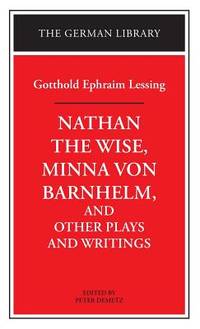
réf. Q-1854597655Nick Hern Books. Paperback. New. New. In shrink wrap. Looks like an interesting title! Nick Hern Books paperback
réf. 1015641679.Ghardcover. Good. Access codes and supplements are not guaranteed with used items. May be an ex-library book. hardcover
réf. 3337006221.Gpaperback. Good. Access codes and supplements are not guaranteed with used items. May be an ex-library book. paperback
réf. 3337305393.Gpaperback. Good. Access codes and supplements are not guaranteed with used items. May be an ex-library book. paperback
réf. 0826407064.Ghardcover. Good. Access codes and supplements are not guaranteed with used items. May be an ex-library book. hardcover
2004réf. Q-0312442432Bedford/St. Martin's 2004-11-01. Paperback. New. In shrink wrap. Looks like an interesting title! Bedford/St. Martin's paperback
réf. DADAX0826407064Continuum 0000-00-00. hardcover. New. 5.75x1.50x8.50. Buy with confidence. Excellent Customer Service & Return policy. Continuum hardcover
réf. SONG0826407064Continuum 0000-00-00. hardcover. Used: Good. 5.75x1.50x8.50. Buy with confidence. Excellent Customer Service & Return policy. Continuum hardcover
réf. 102466807X.Ghardcover. Good. Access codes and supplements are not guaranteed with used items. May be an ex-library book. hardcover
réf. 50611233like new. unknown
1956réf. feb12475ESPLA 1956. Used. 1956; Romanian Edition of Nathan Inteleptul ESPLA BPT ; For more details please contact me ESPLA unknown
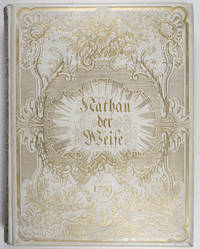
1881réf. 8283Leipzig: W. Druglin 1881. First. Hardcover. vg. Small folio. 354 pp. All edges gilt. Cream colored parchment paper richly decorated in gold on front and rear boards. Bevelled edges. Minor bumping to corners and rubbing to head and tail of spine. Slight foxing to pp. 97 and 97 rest of text clean. Decorative thick marbled enpapers. Text in German Gothic script. Following the third revised and corrected edition this edition was published in honor of the hundredth anniversary of the original printing. Overall very good. W. Druglin hardcover books
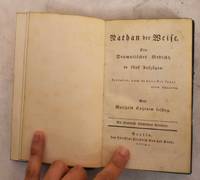
1826réf. 35386Berlin, Bossische Buchhandlung, 1826. gebundene Ausgabe
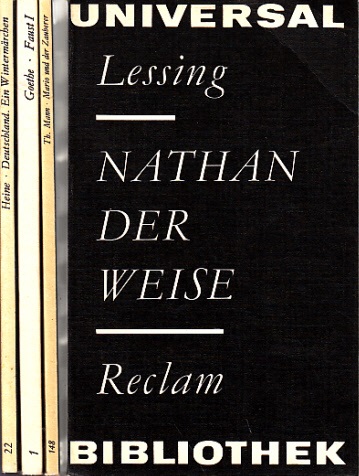
1983réf. 9569Stuttgart: Philipp Reclam jun., 1983. Universal-Bibliothek Nr. 3, 36. Auflage 153 Seiten , 15 cm, kart.,
1976réf. 9227Stuttgart: Philipp Reclam jun., 1976. Universal-Bibliothek Nr. 3 154 Seiten , 15 cm, kart.,
1977réf. 32951Leipzig, Verlag Philipp Reclam jun., 1977. 154, 56, 157, 101 Seiten , 18 cm, kartoniert
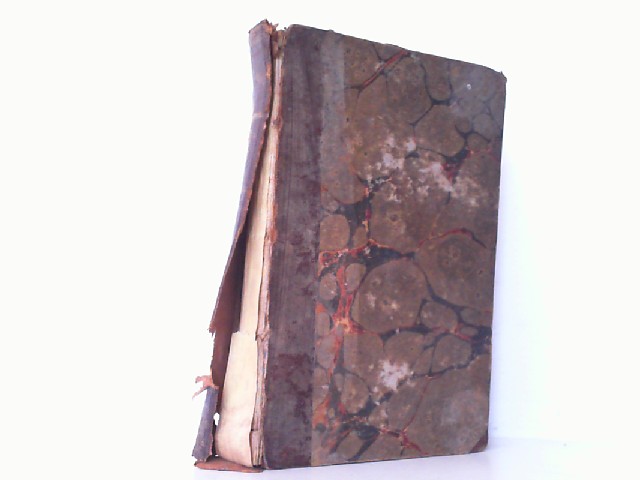
1779réf. 191197Berlin Germany: Christian Friedrich Voss 1779. Hardcover. VG rubbed leather to edges spine edges & corners. lower spine edges each have small tears. remains tightly bound. black leather boards w/ gilt trim & inlaid green marbled paper. leather & gilt spine w/ five raised bands & six gilt compartments. green marbled pastedowns & endpapers. all edges green. 240 pgs. A handsome edition. Foxing to opening and closing pages otherwise foxing appears fairly minimal throught with instances of specks and blotches. Pages remain bright with faint to light tanning text dark and detailed. Text in German. Christian Friedrich Voss hardcover books
1779réf. 176516Berlin: Voss 1779. Hardcover. VG pages tanned as expected with age but pages are readable. Original paper wraps are rebound in full green leather boards gilt lettering on spine with four raised bands untrimmed pages 253 pp. Written in German. Nathan The Wise a dramatic poem in five acts. Voss hardcover books
1978réf. 24613AB1978. Leipzig Insel 1978. Folio. 152 Seiten. Hardcover/ Gebundene Ausgabe mit originalem Schutzumschlag in Brodart / Mylar Spezielle Sammler - Schutzfolie für Schutzumschläge. Leinen mit illustriertem Schutzumschlag. Sehr guter Zustand mit nur absolut geringen rein äußerlichen Gebrauchsspuren. Rücken des Umschlags etwas vergilbt. Nathan the Wise original German title: "Nathan der Weise" is a play by Gotthold Ephraim Lessing in 1779. It is a fervent plea for religious tolerance. It was never performed during Lessing's lifetime and was first performed in 1783 at the Döbbelinsches Theater in Berlin. Set in Jerusalem during the Third Crusade it describes how the wise Jewish merchant Nathan the enlightened sultan Saladin and the initially anonymous Templar bridge their gaps between Judaism Islam and Christianity. Its major themes are friendship tolerance relativism of God a rejection of miracles and a need for communication. Wikipedia Anatoli Tankhum Lvovich Kaplan December 26 1902 in Rahachow Belarus- July 3 1980 in Leningrad was a Jewish-Russian painter sculptor and printmaker whose works often reflect his Jewish origins. Kaplan one was one of six children; his father was a butcher in Rahachow which was at that time within the Jewish Pale of Settlement in Russia. His background was therefore not dissimilar to that of Marc Chagall born a generation earlier in 1887 and although their lives were very different their art has much in common. The shtetl figures in many of Kaplan's paintings - autobiographical references are very clear in The Butcher's Shop 1972 and Tailor's Shops 1975 and in the many illustrations which he was to create to the works of Sholem Aleichem. Around 1922 Kaplan came to Leningrad then named Petrograd where he was to base his career for the rest of his life although he often revisited the towns of his childhood. He graduated in 1927 from the Russian Academy of Arts there. In the 1930s he became associated with a group of artists and lithographers in Leningrad which had been instructed to prepare a series of works dedicated to the remote Jewish Autonomous Oblast being created by Stalin in the hope of resettling Russia's Jewish population in a remote area in the Far East of the country. Here Kaplan learnt and took to the skills of printmaking developing many individual techniques. His first cycle of prints 1937-1940 was entitled Kasrilevka the name of the village invented by Sholem Aleichem. During the war Kaplan was at first evacuated to the Urals but returned to Leningrad in 1944. His lithograph cycle of Landscapes of Leningrad during the Days of the Blockade 1948 was widely acclaimed in Russia and was purchased by eighteen State galleries. At one time Kaplan was supervisor of design in a glassware factory and this gave him an interest in the third dimension which was later to blossom in his ceramics and sculptures. From the 1950s onwards Kaplan's artworks concentrated on Jewish themes despite constant and often serious opposition and obstruction from the Soviet cultural authorities. Amongst these works should be mentioned his cover and illustrations to the Jewish Folksongs of Dmitri Shostakovich 1977 illustrations to Aleichem's Tevye the Milkman 3 series 1957-1966 The Enchanted Tailor 1954-57 and Song of Songs 1962 and a magnificent series of coloured lithographs printed in London in 1961 on the old Jewish Passover song Chad Gadya One Kid Goat. Throughout this time Kaplan was also producing paintings though in view of their subject matter they were rarely displayed in the Russia of his time. From 1967 onward he began also to produce ceramics and sculptures including a remarkable set based on the characters of Gogol's Dead Souls. Wikipedia Anatoli Lwowitsch Kaplan 28. Dezember 1902 in Rahatschou Weißrussland; 3. Juli 1980 in Leningrad war ein russisch-jüdischer Maler Bildhauer und Grafiker. Kaplans Umfeld in der Kindheit war nicht unähnlich dem von Marc Chagall der eine Generation früher 1887 geboren wurde. Auch wenn das Leben der beiden Künstler sehr unterschiedlich verlief so haben sie in ihrem Werk doch viel gemeinsam. Vor allem die Stetl-Gestalten und Szenen spielen bei beiden eine große Rolle. Ebenso die autobiographischen Bezüge wie sie in Kaplans Gemälden Metzgerladen 1972 und Schneiderladen 1975 ganz offensichtlich sind ebenso in vielen Illustrationen zu Werken des Schriftstellers Scholem Alejchem. Auf der Akademie wurde Kaplan in erster Linie als Maler ausgebildet. Weil er damit in den Jahren danach sein Brot nicht verdienen konnte musste er alle möglichen Aufgaben übernehmen. Dadurch erwarb er sich Routine auch in dekorativen und plakativen Arbeiten sowie in unterschiedlichsten Techniken samt dem Umgang mit Schrift und Ornamenten. Im Jahr 1937 erhielt er den Auftrag des Leningrader Ethnographischen Museums für die jüdische Sektion eine Serie von Lithographien zu schaffen. Jetzt erst in der Experimentierwerkstatt des Leningrader Künstlerverbandes erlernte Kaplan systematisch die Techniken der Druckgrafik. Er entwickelte auch eigene Verfahren. Seinen ersten Lithographie-Zyklus 19371940 nannte er Kasrilewke nach einem Dorf in einer Erzählung von Scholem Alejchem. Der Krieg brachte einen harten Einschnitt in Kaplans künstlerisches Wirken. Erst 1944 nach der Rückkehr aus der Evakuierung im Ural konnte er seine Arbeit wieder aufnehmen. Er begann sofort mit einem Lithographien-Zyklus über die Leiden seiner Stadt. 1946 erschien die Mappe Leningrad in den Tagen der Blockade. Kaplan führte die Bildfolge bis zum Ende der fünfziger Jahre weiter und bezog den Wiederaufbau ein. Ab 1953 konzentrierte sich Kaplan wieder ganz auf jüdische Themen. Damit eckte er ständig und ernsthaft bei den sowjetischen Kulturbehörden an. Unter den Werken dieser Epoche sind besonders bemerkenswert die Illustrationen zu Jüdische Volkslieder von Dmitri Schostakowitsch zu Scholem Alejchems Tewje der Milchmann Der behexte Schneider und Stempenju und zu Mendele Moicher Sforims Fischke der Lahme. Ab 1967 schuf Kaplan vor allem Keramiken und Skulpturen darunter einen bemerkenswerten Satz von Gestalten aus Gogols Roman Die toten Seelen. In Formen und Farben beweist er einen phantastisch-spielerischen Umgang mit dem Material. Wikipedia hardcover
réf. ria9783112425534_inpHardcover. New. New Book; Fast Shipping from UK; Not signed; Not First Edition; N/A hardcover
réf. ria9783112376591_inpHardcover. New. New Book; Fast Shipping from UK; Not signed; Not First Edition; N/A hardcover
réf. 43213079-nnew. unknown
réf. 43213079like new. unknown
réf. 0260727490.Ghardcover. Good. Access codes and supplements are not guaranteed with used items. May be an ex-library book. hardcover
réf. 0265787718.Gpaperback. Good. Access codes and supplements are not guaranteed with used items. May be an ex-library book. paperback