ColetteBiblio.com

2387 risultati
1904rif. #17Colette Dialogues de bêtes Paris Société du Mercure de France 1904. Square 12mo. Half red morocco with bands spine with raised bands highlighted with gilt and blind fillets. Top edge gilt. Original wrappers and spine preserved. First edition of the ordinary issue following only 19 copies on Holland paper. Copy enriched with a first autograph inscription signed in black ink on the first leaf traducted in English : "To Gaston Carraud in friendly remembrance from the author Colette Willy." Followed by a second autograph inscription signed in blue ink on the same leaf: "To you now dear Philippe Hériat in memory of a cat and a dog who have become ghosts and of a young woman who has become an old writer Colette." An exceptional testimony to Colette's emancipation embodied in these two inscriptions separated by more than thirty years. Dialogues de bêtes is the first work by Colette to appear after the Claudine series published under the name of her husband Henri Gauthier-Villars. For the first time Colette allowed her own name to appear on the cover signing "Colette Willy." This text marks the beginning of her gradual literary emancipation although it is preceded by the dedication "Pour amuser Willy." In Mes Apprentissages 1936 she would write: "I was vaguely awakening to a duty toward myself—to write something other than the Claudine books. And drop by drop I exuded the Dialogues de bêtes." The 1904 first edition contains four dialogues to which eight more were added in 1905 and 1930 forming the definitive edition. The anthropomorphic characters Toby-Chien and Kiki-la-Doucette were warmly received and remain among the most emblematic features of her work. The particular value of this copy lies in the author's double inscription. Everything contributes to making it a singular witness to Colette's emancipation beginning with the recipients themselves. The first inscription is addressed to Gaston Carraud a composer and mutual acquaintance of the Gauthier-Villars couple while the second is addressed to Philippe Hériat whom Colette likely met in the 1930s when he played a role in Divine 1935 a film whose screenplay and dialogue were written by Colette after L'Envers du music-hall. The signatures themselves are also significant: the first inscription is signed "Colette Willy" a form the author used more or less regularly until 1923 after which she signed only her own name as seen in the second inscription. Even the ink used offers a subtle echo: first black ink then blue—this blue so dear to Colette the blue of Le Fanal bleu which appeared even in her inkwell and on her writing paper. The inscriptions are dated in pencil likely in Philippe Hériat's hand "1904" and "1938." An entire writer's life separates these two inscriptions by Colette in the same copy. Mercure de France
1979rif. 86833Arts et Meteirs Graphiques. As New. 1979. Hardcover. 270040033X . FREE UPGRADE to Courier/Priority Shipping Upon Request - IN STOCK AND IMMEDIATELY AVAILABLE FOR SHIPMENT - AS NEW THE TEXT BLOCK IS PRISTINE CLEAN UNMARKED AND IN EXCELLENT CONDITION - - 511 pages with many illustrations. Catalogue Raisonné Catalogue Raisonne Catalog Raisonnee Complete Works Arts et Meteirs Graphiques hardcover
rif. 51-7059Paris: Chez l'artiste 1932. 4to. 25.5 x 33cm. Original blank wraps repaired.Presented in a linen and goatskin slipcase by the artisan binder Sasha Mosalov. . Illustrée de 36 eaux-fortes originales par Dunoyer de Segonzac. Tirage à 150 ex. numérotés n°72. .References: Aimée Lioré & Pierre Cailler "Catalogue de l'oeuvre gravé de Dunoyer de Segonzac. Tome III " nos. 596-631; Nicolas Rauch Les Peintres et le Livre Alan Wofsy Fine Arts 1991 no. 120; Monod no. 3047; The Artist & The Book 1860-1960 no. 280. Expertise by Danyela PETITOT. Membre du Syndicat Français des Experts Professionnels. 40 Avenue de Ségur 75015 PARIS Paris: Chez l'artiste, 1932 paperback
1930rif. 30584Paris.: La Societe Nouvelle des Editions d'Art Devambez. 1930. Original wrappers with vellum chemise and slipcase. 4to. With 26 original etchings by Chahine many full-page. Edition limited to 226 copies with this one of 10 copies printed entirely on japon nacre a la forme originally reserved for the artist and friends. It has all the etchings in three states including one state with remarques as well as four supplementary plates not published in the book also in three states. Also included is an original signed drawing by Chahine executed in blue pencil. La Societe Nouvelle des Editions d'Art Devambez. hardcover
1932rif. 39127Paris: Chez l'Artiste 1932. André Dunoyer de Segonzac. ANDRE DUNOYER DE SEGONZAC'S UNIQUE PROOF SET OF THE ELEVEN "PLANCHES REFUSEES" FOR COLETTE'S "LA TREILLE MUSCATE" WITH EACH ETCHING PRINTED ON FINE JAPANESE PAPER AND SIGNED AND TITLED BY THE ARTIST. Cailler 632-642 obviously didn't know about this set and thus does not give the titles of these etchings except "La cure de soleil" which is titled in the plate WHICH UNTIL NOW HAVE BEEN COMPLETELY UNKNOWN. The 20 first copies of "La treille muscate" include unsigned and untitled sets of these planches refusées. Cailler 642 annotated "épreuve d'essai sur Japon nacré sic--it is in fact on antique Japanese laid paper / suite de Colette / éditée". IN PERFECT CONDITION WITH NO DEFECTS. UNIQUE AND IMPORTANT. Chez l'Artiste unknown
1959rif. 140944276Beirut: Al-Kutub 1959. First edition. First edition. Signed by Colette Khoury on the front free endpaper in green ink inscribed to previous owner. Bound in publisher's illustrated wraps. In Arabic. Very Good with cocked and creased spine light wear a few dog-eared pages. Scarce signed. A pioneering feminist novel that caused a major scandal in the Arabic literary world for its taboo depictions of female sexuality and agency. Khoury is from a very prominent family the granddaughter of a former Syrian prime minister and this autobiographical novel was about her love affair with famous Syrian poet Nizar Quabbani. Al-Kutub unknown
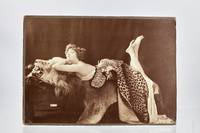
1907rif. 77332s. l. Paris 1907. Fine. Colette the ""nude dancer"" in her stage costume s. l. Paris s. d. 1907 28.70 x 20.40 cm une photographie contrecollée sur carton Rare and superb original contemporary mounted albumen print showing Colette languidly stretched out on a lion skin and covered with a leopard skin. Photographer's penciled number and studio stamp on the back of the mount. A substantially cropped print bearing the same penciled number on the back of our photograph 11214 is in the Reutlinger archives at the Bibliothèque nationale de France Album Reutlinger de portraits divers vol. 53 p.3. We have been unable to find any other examples of this photograph in other public collections. A similar photograph belatedly dedicated to Maurice Chevalier went on sale in 2008. A beautiful sultry shot of Colette probably taken the year of her banned dance show ""Rêve d'Egypte"" at the Moulin Rouge where she shared the bill and a scandalous kiss with her cross-dressing aristocrat lover Missy. ""Colette was a nude dancer which at the time meant that she . draped herself in vaporous veils concealing part of her anatomy under animal skins"" Paula Dumont. Colette had already used animal skins hugging her figure in this picture as a sensual costume in Charles Van Lerberghe's Pan accompanied on stage by Lugné-Poe and Georges Wague. This was the first time anyone had dared to go without a flesh-colored body suit. Justifying her choice she went on to say: ""I want to dance naked if the body suit bothers me and humiliates my plasticity"". At the time of this photograph in 1907 Colette was performing in countless shows following her debut two years earlier in Nathalie Clifford Barney's Sapphic Salon where Mata Hari also danced. For Colette dance was synonymous with emancipation in more ways than one - as a means of sustenance and liberation of her body which finally belonged to her after her separation from her abusive husband Willy in 1906. Her undulating almost gestureless dance was linked by contemporary critics to that of Loïe Fuller and Isadora Duncan; her greatest success remained ""La Chair"" a risqué mime show she performed two hundred times in Paris and was subsequently produced with a new cast in New York's Manhattan Opera House. It was also in the halls of Parisian dance venues that Colette flaunted herself freely on the arm of her lovers. Her scandalous union with Missy the virile Marquise de Morny who accompanied her on stage in male costumes contributed to the fame of her performances. This is probably the rarest photograph of Colette taken by Reutlinger who also photographed her draped in Grecian style or wearing her costume from ""Le Rêve d'Egypte"". A rare visual testimony to a revolution in dance costume brought about by Colette a key figure in twentieth-century artistic and literary Paris. unknown
rif. 51-3634Paris: Editions Mornay 1919-1935. 8vo. 87 vols. a few duplicates. All numbered and some signed. Original wraps.MORNAY Éditions. Ensemble de 87 volumes illustrés. Paris Éditions Mornay 1919 à 1940. In-8 broché couverture illustrée.Important ensemble de 87 ouvrages d'Honoré de Balzac Colette Gustave Flaubert Anatole France Rudyard Kipling Pierre Loti Octave Mirbeau Henri de Régnier ou encore Jules Vallès tous illustrés par George Barbier Carlègle Deluermoz Pierre Falké Louis Jou Mathurin Méheut Jean Lébédeff ou Gaston Nick à travers différentes techniques comme le bois gravé en noir ou l'aquarelle au pochoir.Répartis en deux collections intitulées Les Beaux livres et La Collection originale la centaine de titres publiés par Georges et Antoinette Mornay devaient paraître en un nombre prédéterminé d’ouvrages cinq par an et en quantité limitée. Le tirage justifié était environ de 1 000 exemplaires sur japon ou vélin de Rives.Certains volumes contiennent un envoi autographe signé de l'illustrateur.Liste détaillée : -ANNUNZIO G. d'. Triomphe de la mort. 1923.-BALZAC Honoré de. César Birotteau. 1929. X2-BALZAC Honoré de. Le Père Goriot. 1933.-BÉRAUD Henri. Le Vitriol de Lune. 1931. -BOYLESVE René. La Leçon d’amour dans un parc. 1929.-BOYLESVE René. Les Nouvelles leçons d’amour dans un parc. 1930. x2-BRAZ Le Anatole. Le Gardien de feu. 1923. -CHADOURNE Louis. Le Pot au noir. Scènes et figures des Tropiques. 1922. -CHATEAUBRIANT Alphonse de. Monsieur des Lourdines. 1925.-CHÉRAU Gaston. Valentine Pacquault. 1927.-COLETTE. L’Entrave. 1929.-CONSTANTIN-WEYER Maurice. Clairière. 1929.-CRÉBILLON fils. Le Sopha. 1933.-CURWOOD James Oliver. Nomades du Nord. 1932. -DEVAL Jacques. Marie Galante. 1935. -DOFF Néel. Jours de famine et de détresse. 1927.-DUHAMEL Georges. Vie des martyrs 1914-1916. 1919.-DUNAN Renée. Le Prix Lacombyne. 1924. X2 -FARRÈRE Claude. La Bataille. 1926.-FARRÈRE Claude. Les Civilisés. 1931. X2-FARRÈRE Claude. Thomas l’Agnelet Gentilhomme de fortune. 1928.-FLAUBERT Gustave. Madame Bovary. 1930. -FRANCE Anatole. Crainquebille. Putois riquet et plusieurs autres récits profitables. 1922. X3-FRANCE Anatole. La Révolte des anges. 1921. -FRANCE Anatole. La Rôtisserie de la Reine Pédauque. 1920.-FRANCE Anatole. Le Comte Morin député. 1921 joints spécimen et suites-FRANCE Anatole. Le Crime de Sylvestre Bonnard membre de l’Institut. 1923. -FRANCE Anatole. Les Opinions de Monsieur Jérome Coignard. 1924.-FRANCE Anatole. Les Sept femmes de la Barbe Bleue et autres contes merveilleux. 1925.-GORKY Maxime. Les Vagabonds. 1921. X2-ISTRATI Panaït. Tsatsa Minnka. 1931.-KIPLING Rudyard. Le Livre de la jungle. 1930. X2-KIPLING Rudyard. Le Second livre de la jungle. 1930 X2-KIPLING Rudyard. Les Bâtisseurs de ponts. 1935. X2 -LEMONNIER Camille. Au cœur frais de la forêt. 1922.-LORRAIN Jean. Monsieur de Phocas. Astarté. 1922. X2-LOTI Pierre. Mon frère Yves. 1928. X2-LOUŸS Pierre. Psyché. 1935. X2-MAUROIS André. Ariel ou la vie de Shelley. 1932. X2-MIRBEAU Octave. Le Calvaire. 1928.-MIRBEAU Octave. Le Jardin des supplices. 1923. X2-MIRBEAU Octave. Le Journal d’une femme de chambre. 1932. -MIRBEAU Octave. Sébastien Roch. 1926. -MONTHERLANT Henry de. Les Bestiaires. 1926. X3-MONTFORT Eugène. Un Cœur vierge. 1926.-PERGAUD Louis. De goupil à Margot. 1925. -PERGAUD Louis. Le Roman de Miraut chien de chasse. 1928.-PERGAUD Louis. La Guerre des boutons. 1927.-PHILIPPE Charles-Louis. Marie Donadieu. 1921.-RACHILDE. Portrait d’hommes. 1929. -RÉGNIER Henri de. L’Escapade. 1931. X2-RÉGNIER Henri de. Les Rencontres de Monsieur de Bréot. 1930.-ROLLAND Romain. Colas Breugnon. 1927. -ROUQUETTE Louis-Frédéric. L’Ile d’enfer. 1924.-SAVIGNON André. Filles de la pluie. 1934.-SUDERMANN Hermann. Le Chemin des chats. 1924-TILLIER Claude. Belle-plante et cornelius. 1921.-THARAUD Jérome et Jean. Dingley l’illustre écrivain. 1920. -THARAUD Jérôme et Jean. L’Ombre de la croix. 1932. X2-VALLÈS Jules. Le Bachelier. 1921. -VALLÈS Jules. L’Enfant. 1920.-VALLÈS Jules. Les Réfractaires. 1930. X2 -VALLÈS Jules. L’Insurgé. 1923. -WILDE Oscar. Le Portrait de Dorian Gray. 1920.-WHITE Stewart Edward. Terres de silence. 1922.-ZOLA Émile. La Bête humaine. 1924. -ZOLA Émile. La Faute de l’abbé Mouret. 1922. Tout commence en 1919 pour beaucoup la révolution apportée par les Editions MORNAY fut l'utilisation systématique de l'illustration pour les ouvrages édités par cette maison.Il faut savoir que jusqu'alors l'illustration était réservée aux editions dites "de Luxe" qualificatif qui indiquait à la fois un soin tout particulier apporté à l'édition à la composition mais aussi un prix élevé qui ne permettait pas à tous d'acquerir ces ouvrages et les réservés ainsi aux classes les plus aisées de la société.En ce début de XXeme siécle un certain nombre de maison d'édition se lancérent sur le créneau de ce que l'on appela le livre de "demi-luxe" eut égard aux prix plus modéré pratiqué pour ces ouvrages. Ouvrages qui pour autant permettaient de découvrir des auteurs de tout premier ordre et étaient imprimé avec une attention toute particuliére sur des velins de qualité. Pour autant les illustrations n'étaient qu'exception dans ce genre d'edition.Antoinette et Georges MORNAY ont pensés une organisation qui allait bien au-delà de ce "coté visible de l'iceberg" que fut le recours permanent aux illustrateurs. Leur concept de maison d'edition etait global et trés "marketing" dirions nous aujourd'hui :- Prix de vente trés bas augmentant néanmoins au fil des années avec le succés mais qui n'acceptait aucun compris tant sur la qualité de l'impression papier gravure etc. que sur le choix des auteurs et des illustrateurs .- Création d'un Service de Presse qui par les livres offert aux journalistes donna aux Editions MORNAY une publicité non négligeable.- Campagne de publicité pouvant être de grande envergure Article de Maurice CONSTANTIN-MEYER sur Maria Chapdelaine dans l'Illustration de NOEL 1931De tout cela il nous reste aujourd'hui un formidable ensemble de textes et d'auteurs comprenant 112 ouvrages edités de 1919 à 1935 qui retrace l'évolutions de ces editions du livre illustré moderne : des bois gravé en noir jusqu'aux aquarelles au pochoir. Paris: Editions Mornay, 1919-1935. paperback
2006rif. SBBIH-BODGRT5YLM2RUmbra Journal 2006. paperback. Good. Our good condition books are generally good for reading but not for gifting or collecting. They could have imperfections such as creasing fanning inscriptions margin notes yellowing staining on edge or cover or pages bumps scuffs etc etc sometimes multiple of these. It's a wide category that encompasses anything that isn't almost-new down to anything that is slightly better than poor. We would NOT recommend gifting Good books - these should be considered reading copies. Our books are dispatched from a Yorkshire former cotton mill. We list via barcode/ISBN so please note that the images are stock images and may not be the exact copy you receive furthermore the details about edition and year might not be accurate as many publishers reuse the same ISBN for multiple editions and as we simply scan a barcode or enter an ISBN we do not check the validity of the edition data when listing. If you're looking for an exact edition please don't order at least not without checking with us first although we don't always have time to check. We aim to dispatch prompty the service used will depend on order value and book size. We can ship to most countries see our shipping policies. Payment is via Abe only. Umbr(a) Journal paperback
rif. 51-4198Paris: Chez l'artiste 1932. 4to. Fine. 320 x 266mm. Green morocco binding with gilt and black stamped motifs of leaves circles and curlicues signed by the binder. Dentelles of light green suede; matching half morocco chemise with spine slightly darkened in matching slipcase. This binding is correctly reproduced in "Georges Cretté. Études par Harry Vinckenbosch" which shows 3 bindings for this title at nos. 113-115. It is however reproduced as a binding for "Les Géorgiques" also illustrated by the artist. One of 150 numbered copies on Van Gelder with 36 incl. 13 hors texte etchings.References: Aimée Lioré & Pierre Cailler "Catalogue de l'oeuvre gravé de Dunoyer de Segonzac. Tome III " nos. 596-631; Nicolas Rauch Les Peintres et le Livre Alan Wofsy Fine Arts 1991 no. 120; Monod no. 3047; The Artist & The Book 1860-1960 no. 280.COLETTE. La Treille muscate. S.l.n.d. Paris 1932. Grand in-4° maroquin vert entièrement orné sur lesplats et le dos d’un décor personnalisé doré et à froid tranches dorées doublure et gardes de chamois beigecouverture conservée chemise en demi-maroquin vert à petits recouvrements et étui Georges Cretté.ÉDITION ORIGINALE & PREMIER TIRAGE.36 eaux-fortes par André DUNOYER de SEGONZAC la moitié à pleine page dont un frontispice et un portrait de Colette.Tiré à 165 exemplaires sur hollande Van Gelder celui-ci n° 94.Dos de la chemise passé.Expert Emmanuel de BROGLIECabinet Revel57 rue de Verneuil - 75007 Paris33 01 42 22 17 13 Paris: Chez l'artiste, 1932 unknown
rif. 13-1417Paris: Chez l'artiste 1932. 4to. Fine. 320 x 266mm. Green morocco binding with gilt and black stamped motifs of leaves circles and curlicues signed by the binder. Dentelles of light green suede; matching half morocco chemise with spine slightly darkened in matching slipcase. This binding is correctly reproduced in "Georges Cretté. Études par Harry Vinckenbosch" which shows 3 bindings for this title at nos. 113-115. It is however reproduced as a binding for "Les Géorgiques" also illustrated by the artist. One of 150 numbered copies on Van Gelder with 36 incl. 13 hors texte etchings.References: Aimée Lioré & Pierre Cailler "Catalogue de l'oeuvre gravé de Dunoyer de Segonzac. Tome III " nos. 596-631; Nicolas Rauch Les Peintres et le Livre Alan Wofsy Fine Arts 1991 no. 120; Monod no. 3047; The Artist & The Book 1860-1960 no. 280.COLETTE. La Treille muscate. S.l.n.d. Paris 1932. Grand in-4° maroquin vert entièrement orné sur lesplats et le dos d’un décor personnalisé doré et à froid tranches dorées doublure et gardes de chamois beigecouverture conservée chemise en demi-maroquin vert à petits recouvrements et étui Georges Cretté.ÉDITION ORIGINALE & PREMIER TIRAGE.36 eaux-fortes par André DUNOYER de SEGONZAC la moitié à pleine page dont un frontispice et un portrait de Colette.Tiré à 165 exemplaires sur hollande Van Gelder celui-ci n° 94.Dos de la chemise passé.Expert Emmanuel de BROGLIECabinet Revel57 rue de Verneuil - 75007 Paris33 01 42 22 17 13 Paris: Chez l'artiste, 1932 unknown
1935rif. 196190Paris: Chez l'Artiste Jacques Nam 1935-38. Colette's cats captured by their finest artist First edition limited issue: one of 25 copies on Japon Impérial numbered 630 this being number 27 with five colour aquatints each signed by Jacques Nam. This copy is inscribed by Nam to the painter Lucien Jonas and his wife with the half-title illustrated by Nam inscribed "à Lucien Jonas en témoignage de ma plus sincère amitié" and an original watercolour inscribed "à Madame Jonas très affectueusement". A charming portfolio of feline studies by the French animalier Jacques Nam 1881-1974 best known for his depictions of cats issued in collaboration with Colette 1873-1954 whose devotion to cats runs throughout her life and writing. Nam's artwork is accompanied by text in French penned by Colette describing specific feline personalities like "Le Siamois" "Simplette" and "Fastagette." Nam's paintings and illustrations of animal subjects were exhibited at the Salon d'Automne and the Salon de la Société Nationale des Beaux-Arts and featured in such magazines as La Vie Parisienne and Le Petit Journal Illustré de la Jeunesse; he also illustrated Colette's Sept dialogues de bêtes. Colette one of the most celebrated French writers of the twentieth century is best known for the Claudine novels Chéri and Gigi and became the first woman to preside over the Académie Goncourt. Her lifelong affection for cats is present throughout her work from the Angora Kiki-la-Doucette in Dialogues de bêtes 1904 to La Chatte 1933 in which a young husband's devotion to his cat comes between him and his wife and few writers have observed them with such sympathy. Jonas 1880-1947 Nam's near contemporary at the École des Beaux-Arts was a celebrated portraitist and official war artist known as "le peintre des mineurs" for his scenes of the mining country of northern France. Madame Jonas was his second wife Jeanne née Tard whom he married in 1930. Folio. 5 original aquatints as issued 1 original gouache painting and 1 original charcoal and watercolour drawing on the half-title. Housed in publisher's teal cloth portfolio with cloth ties and printed paper label on cover. Spine split at head and foot with some wear to corners signs of previous mounting to verso of gouache painting painting lightly rubbed: in very good condition. hardcover