4.416 Ergebnisse
1976Best.-Nr. 2111902161002132Iwasaki shoten 1976. Soft Cover. Fine. Number of pages: 27p Size: 25cm Iwasaki shoten paperback
1993Best.-Nr. 2091202133212573Chuokoron Art Publishing 1993. Soft Cover. Fine. Volume: 1 Chuokoron Art Publishing paperback
2003Best.-Nr. 2080202104505021Minerva Shobo 2003. Soft Cover. Fine. Number of pages: 227p Size: 20cm Number of books: 1 Minerva Shobo paperback
1969Best.-Nr. 2091502133600178Perikansha 1969. Soft Cover. Fine. Number of pages: 385p Size: 20cm Perikansha paperback
1959Best.-Nr. 2091502135100290Hayakawashobo 1959. Soft Cover. Fine. Number of pages: 236p Size: 19cm Number of books: 1 Hayakawashobo paperback
1959Best.-Nr. 2092902140309727Hayakawashobo 1959. Soft Cover. Fine. Number of books: 1 Hayakawashobo paperback
Best.-Nr. 2111902161003263Hayakawashobo N.A. Soft Cover. Fine. Number of pages: 236p Size: 19cm Hayakawashobo paperback
2005Best.-Nr. Q-0807829560The University of North Carolina Press 2005-09-05. Hardcover. New. New. In shrink wrap. Looks like an interesting title! The University of North Carolina Press hardcover

2018Best.-Nr. x-3319775375Springer-Verlag New York Inc 2018. Paperback. New. 940 pages. 9.25x6.10x2.05 inches. Springer-Verlag New York Inc paperback
Best.-Nr. 199534University of Chicago Press 1988. 1st edn. 4to. Original gilt lettered blue cloth Fine dustwrapper near Fine. Pp. xix 305 illus with coloured plates and b&w photos in text previous owner's neat inscription on front endpaper. University of Chicago Press, 1988 unknown
Best.-Nr. 83295London George Allen. 1961. Hardback. Scuffed and Torn Dustjacket. Good London, George Allen. 1961. hardcover
Best.-Nr. 80931London George Allen. 1961. Hardback. Binding Pulled. Good Reading Copy London, George Allen. 1961. hardcover
1972Best.-Nr. 001619Bad Goisern: Neugebauer Press 1972. First . Hardcover. Near Fine/No Jacket. 33 x 27 Cm. Angelika Kaufmann. 17 full-page illustrations of the artist's imaginative animals aff full-page. Decorative boards title page biography on rpd. Neugebauer Press hardcover
Best.-Nr. 0871501090.Ghardcover. Good. Access codes and supplements are not guaranteed with used items. May be an ex-library book. hardcover
Best.-Nr. 3955534944.Ghardcover. Good. Access codes and supplements are not guaranteed with used items. May be an ex-library book. hardcover
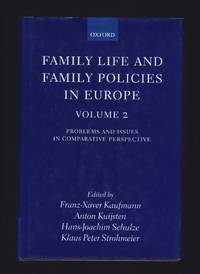
2002Best.-Nr. 6881Oxford University Press 2002. Hardcover. Very Good/Very Good. Volume 2. Hardcover xx 509 pages NOT ex-library. Gentle handling wear a few minor creases. Book is clean and bright with unmarked text free of inscriptions and stamps firmly bound. In an untorn shelfworn dust jacket faint marks and fine scratches. -- Contents: 1. Comparing Family Life In the Frame of National Policies: An Introduction Introduction; New Approaches; In Search of Comparative Results; Overview 2. Variation and Change in the Forms of Private Life in the 1980s Introduction; Demographic Trends in the 1980s; Partnership and Parenthood in the 1980s; Changes in the Forms of Private Life; Conclusions 3. What Happened to the European Family in the 1980s Polarization Between the Family and other Forms of Private Life Introduction; Interpretation of Developments in the Field of Private Life: The German Debate; Polarization; Polarization in the 1980s in Ten European Countries; Polarization within Social Policy Profiles of Ten European Countries; Summary and Perspectives 4. Trends in the Development of Family Law in Europe: Comparative Perspectives Introduction; Impact of International Law Standards upon Family Law; Trends in the Law on Affiliation; Custody/Parental Authority; Access Rights; Marriage Law Registered Partnership and Homosexual Marriage; Conclusions 5. Divorce in Europe: A Cohort Perspective Introduction; Data and Methods; Probability of Divorce by Country and Cohort; Timing of Divorce; Discussion 6. Lone-Parenthood and Social Policies for Lone-Parent Families in Europe Introduction; Lone-parenthood as a Growing Phenomenon; Problems Associated with Lone-parenthood; Specific or General Policies; Social Policies towards Lone-parent Families; Conclusion 7. Induced Abortion and Family Formation in Europe Introduction; Themes in the Abortion Discussion; Legal Status of Induced Abortion in Europe; Abortion Rates in Europe; Effect of Induced Abortion on Fertility and Family Formation; Concluding Remarks 8. Paths Towards a Modernization of Gender Relations Policies and Family Building Introduction: Changes in Gender and Family Relations; Changes in the Gender Division of Paid Work 1973-1995; Changes in the Gender Division of Unpaid Work 1961-1998; Changes in Gender Role Orientations; Changes in Women's and Men's Participation in Higher Education; Gender Relations: Paths Towards Modernity; Gendering Welfare States: Typologies; Policy Regimes Modernization Paths and Family Building; Appendix 9. New Fathers: What Does It Mean for Children Marriage and for Family Policy Modernization of the Family Role Structure; Effects of Familial Role Arrangements on Family Functioning; Family Involvement of the Father and Family Functioning; What Does it Mean for Children Marriage and Family Policy 10. Family Policy: How Does it Work Introduction: Family Policy and Fertility; Family Policy Evaluation; Family Life in Europe: Diversity and Change; What Explains Diversity Is Family Policy Driving the Change; What Does all this Mean to the Policymaker 11. Which Models of the Family are Encouraged or Discouraged by Different Family Policies Introduction; An Approach to Analyse the Potential Impacts of Family Policies; Description of Inter-country Heterogeneity with Regard to Selected Family Policy Measures; Towards a Typology of Family Policy Regimes in Selected European Countries; Interrelations between the Economic Situation Family Related Values and Family Policy Regimes; Hypotheses on the Potential Impact of Family Policy Measures on Family-types and Family Life; Conclusion and Outlook 12. Politics and Policies towards the Family in Europe: A Framework and an Inquiry into their Differences and Convergences Introduction; Analytical Dimensions of Family Policy; Comparing Family Policies in Europe; Differences in National Traditions and European Integration; Towards a European Family Policy; Subject Index; Name Index Oxford University Press hardcover
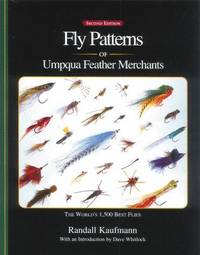
1998Best.-Nr. Q-188521216XUmpqua Feather Merchants 1998-11-01. Paperback. New. In shrink wrap. Looks like an interesting title! Umpqua Feather Merchants paperback
Best.-Nr. 3639279336.Gpaperback. Good. Access codes and supplements are not guaranteed with used items. May be an ex-library book. paperback
Best.-Nr. 55968Editions de la Réunion des Musées Nationaux / ORSTOM. Paris. 1996. . 1st edition with a foreword by Emmanuel Kasarhérou Jean Hubert Martin Ralph Regenvanu and Clara B. Wilpert. Preface by José Garanger. 16 368 PP with 383 b/w and colour illustrations. Eps: Map of Central Pacific Ocean. Laminated illustrated stiff cover. French text. Lower corner with a slight bump o/wise fine. 24.4 x 22. Editions de la Réunion des Musées Nationaux / ORSTOM. Paris. 1996. unknown
1976Best.-Nr. Q-0393007715W. W. Norton & Company 1976-09-17. Paperback. New. New. In shrink wrap. Looks like an interesting title! W. W. Norton & Company paperback
2007Best.-Nr. Q-0306815516Da Capo Press 2007-05-29. Paperback. New. In shrink wrap. Looks like an interesting title! Da Capo Press paperback
Best.-Nr. ria9780202363493_inpPaperback. New. New Book; Fast Shipping from UK; Not signed; Not First Edition; Few philosophers have had as much influence as Hegel. When he died in 1831 he not only dominated German philosophy but also left his mark on the study of religion and art on historical studies and on political thought. Much later L paperback
2008Best.-Nr. 1-1429205199W H Freeman & Co 2008. Paperback. New. eighth edition. 544 pages. 11.00x9.00x0.75 inches. W H Freeman & Co paperback
Best.-Nr. x-3642506208Springer 1879. Paperback. New. reprint edition. 548 pages. German language. 9.25x6.10x1.25 inches. Springer paperback
2001Best.-Nr. BN24562J. Kamphausen 2001. 2001. Softcover. 208 x 134 x 32 cm. Wählen wir wirklich unglücklich zu sein Barry Neil Kaufmann sagt ja! Doch wir können lernen eine bessere Wahl zu treffen. Wir können lernen glücklich zu sein und zu riskieren dass unser Leben so wird wie wir es uns schon immer gewünscht haben. Im Zuge seiner jahrelangen Glückssuche in Seminaren und Beziehungen auf der Therapeutencouch und an der Universität mit äußerlich erfolgreichen Geschäftsprojekten und inneren Reisen in die Spiritualität stößt Barry Neil Kaufmann auf den sogenannten Optionsdialog - ein Frage- und Antwortformat das ganz ähnlich schon von Sokrates gelehrt wurde. Endlich hat er gefunden was er sucht: Eine Methode die einem jeden von uns die Kompetenz zurückgibt glücklich zu sein. "Wir alle haben gelernt unglücklich zu sein" sagt Kaufmann "unsere Kultur unterstützt das." Doch "all unsere Gefühle und unser Verhalten gründen auf unseren Überzeugungen und diese Überzeugungen können untersucht und nach unserer eigenen Wahl verändert werden." Und: Wenn sich unsere Überzeugungen ändern ändert sich unser Leben. Das demonstriert Kaufmann mit zahlreichen fesselnden Fallgeschichten und Dialogbeispielen von Menschen die mit Hilfe seiner Methode ihr Leben verändert haben. Wir können jeden einzelnen Schritt mit verfolgen und haben am Ende des Buches ganz nebenbei gelernt "wie es geht" - wir sind zu unseren eigenen Experten geworden. Lieben heißt einverstanden sein: Das erste Buch zum Optionsprozess Barry Neil Kaufmann Christine Bolam Lieben heisst einverstanden sein To love is to be happy with Beziehungen Partenrschaft Liebe Ehe Beziehungen Lieben heißt einverstanden sein: Das erste Buch zum Optionsprozess Barry Neil Kaufmann Christine Bolam Lieben heisst einverstanden sein To love is to be happy with Beziehungen Partenrschaft Liebe Ehe Wählen wir wirklich unglücklich zu sein Barry Neil Kaufmann sagt ja! Doch wir können lernen eine bessere Wahl zu treffen. Wir können lernen glücklich zu sein und zu riskieren dass unser Leben so wird wie wir es uns schon immer gewünscht haben. Im Zuge seiner jahrelangen Glückssuche in Seminaren und Beziehungen auf der Therapeutencouch und an der Universität mit äußerlich erfolgreichen Geschäftsprojekten und inneren Reisen in die Spiritualität stößt Barry Neil Kaufmann auf den sogenannten Optionsdialog - ein Frage- und Antwortformat das ganz ähnlich schon von Sokrates gelehrt wurde. Endlich hat er gefunden was er sucht: Eine Methode die einem jeden von uns die Kompetenz zurückgibt glücklich zu sein. "Wir alle haben gelernt unglücklich zu sein" sagt Kaufmann "unsere Kultur unterstützt das." Doch "all unsere Gefühle und unser Verhalten gründen auf unseren Überzeugungen und diese Überzeugungen können untersucht und nach unserer eigenen Wahl verändert werden." Und: Wenn sich unsere Überzeugungen ändern ändert sich unser Leben. Das demonstriert Kaufmann mit zahlreichen fesselnden Fallgeschichten und Dialogbeispielen von Menschen die mit Hilfe seiner Methode ihr Leben verändert haben. Wir können jeden einzelnen Schritt mit verfolgen und haben am Ende des Buches ganz nebenbei gelernt "wie es geht" - wir sind zu unseren eigenen Experten geworden. J. Kamphausen paperback