Livre Rare Book

415 Ergebnisse
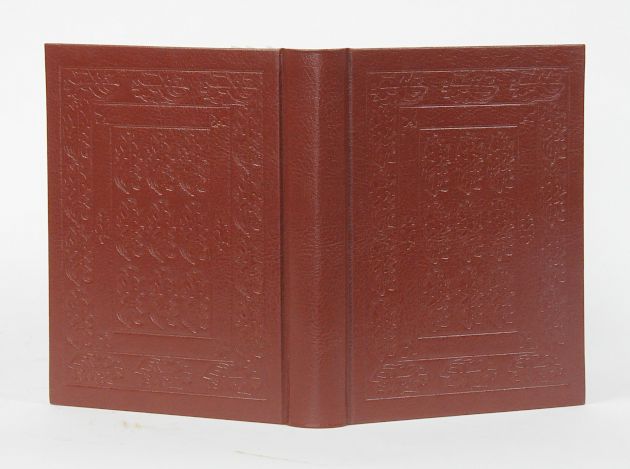
Best.-Nr. CZC-11879La Sainte bible traduite en Français sous la direction de l’école Biblique de Jérusalem ISAÏE, traduit par Auvray & J.Steinmann Le livre d'Isaïe est l'un des livres majeurs de l'Ancien Testament, attribué au prophète Isaïe, qui a exercé son ministère principalement à Jérusalem au VIIIe siècle avant notre ère. Structure et thèmes : Le livre se divise en plusieurs sections, traitant de thèmes variés. Les chapitres 1 à 39 se concentrent sur les jugements de Dieu contre Israël et les nations, la nécessité de la repentance, et la promesse de la délivrance. Isaïe annonce des messages de condamnation mais aussi d'espoir, particulièrement en ce qui concerne la venue d'un Messie. Les chapitres 40 à 55, souvent appelés "Livre de la Consolation", offrent des promesses de rédemption et de réconfort pour un peuple en exil. Ce passage célèbre la grandeur de Dieu et évoque la figure du Serviteur souffrant, qui portera les péchés du monde. Les derniers chapitres (56 à 66) se penchent sur la restauration finale d'Israël, le jugement des nations et la vision d'un nouveau ciel et d'une nouvelle terre. Importance : Le livre d'Isaïe est essentiel pour comprendre la théologie biblique, la notion de justice divine, et les attentes messianiques qui culmineront dans le Nouveau Testament. Ses prophéties ont eu une influence profonde sur la pensée juive et chrétienne. vol relié demi cuir, 190x150, couvertures conservées, état intérieur neuf, 263pp. Les éditions du Cerf 1957 d'autres volumes de cette édition en vente, groupez les achats ! ref/69
Best.-Nr. CZC-11879La Sainte bible traduite en Français sous la direction de l’école Biblique de Jérusalem ISAÏE, traduit par Auvray & J.Steinmann Le livre d'Isaïe est l'un des livres majeurs de l'Ancien Testament, attribué au prophète Isaïe, qui a exercé son ministère principalement à Jérusalem au VIIIe siècle avant notre ère. Structure et thèmes : Le livre se divise en plusieurs sections, traitant de thèmes variés. Les chapitres 1 à 39 se concentrent sur les jugements de Dieu contre Israël et les nations, la nécessité de la repentance, et la promesse de la délivrance. Isaïe annonce des messages de condamnation mais aussi d'espoir, particulièrement en ce qui concerne la venue d'un Messie. Les chapitres 40 à 55, souvent appelés "Livre de la Consolation", offrent des promesses de rédemption et de réconfort pour un peuple en exil. Ce passage célèbre la grandeur de Dieu et évoque la figure du Serviteur souffrant, qui portera les péchés du monde. Les derniers chapitres (56 à 66) se penchent sur la restauration finale d'Israël, le jugement des nations et la vision d'un nouveau ciel et d'une nouvelle terre. Importance : Le livre d'Isaïe est essentiel pour comprendre la théologie biblique, la notion de justice divine, et les attentes messianiques qui culmineront dans le Nouveau Testament. Ses prophéties ont eu une influence profonde sur la pensée juive et chrétienne. vol relié demi cuir, 190x150, couvertures conservées, état intérieur neuf, 263pp. Les éditions du Cerf 1957 d'autres volumes de cette édition en vente, groupez les achats ! ref/69
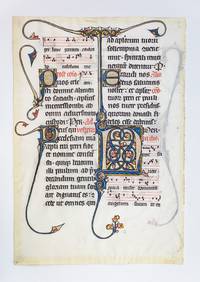
Best.-Nr. ST20214Northern France perhaps Beauvais or Amiens late 13th or early 14th century. 286 x 199 mm. 11 1/4 x 7 3/4". Double column containing a mixture of staves and text approximately 21 lines in an excellent formal gothic book hand. Attractively matted. Rubrics in red chant text containing black penwork initials with red and yellow geometric elaboration BEAUTIFULLY ILLUMINATED with five two-line initials painted blue or pink with white tracery on a ground in the contrasting color two of the initials filled with grotesques and swirling vines and two with the filler design traced out but never completed each initial with blue and pink extensions terminating in orange leaves or spiky shapes; the verso featuring AN IMPRESSIVE SIX-LINE "N" 58 x 50 mm. in the same style filled with an intricate knotwork design and orange leaves with long extensions including a horizontal extension across the upper margin. Margins with light offsetting of the designs from the facing leaf; remnants of mounting tape on recto corners and bottom edge; verso apparently with a barely visible Medieval "14" in lower margin. An area measuring 5 mm. at edges just faintly yellowed from mat burn but IN FINE CONDITION the vellum otherwise quite bright the paint rich and the gold brightly glittering. This sumptuously decorated leaf--which is beautifully preserved and contains a particularly large and handsome initial--comes from the last volume of a three-volume Missal presented to Beauvais Cathedral by Canon Robert de Hangest d. 1356. The Missal remained at the cathedral at least through the 17th century when it is noted in an inventory but was removed from the church at some point likely in the aftermath of the French Revolution. The parent volume eventually entered the collection of Henri-Auguste Brölemann 1775-1854 of Lyon who passed it to his grand-daughter Etienne Mallet who then sold it at Sotheby's in 1926. It was then acquired for the collection of William Hearst where it remained for the next 25 years. In 1941 it was again sold at auction and subsequently dismembered. Though long thought to have been the work of famed biblioclast Otto Ege recent scholarship suggests that it was actually Phillip Duschnes who was responsible for breaking up the book keeping some leaves for himself and selling others on to his colleague Ege for inclusion in his portfolios of "Fifty Original Leaves from Medieval Manuscripts." The Beauvais Missal has been a subject of interest for many notable scholars chief among them being Christopher de Hamel--see: "Otto Ege and the Beauvais Missal" in "Gilding the Lilly: A Hundred Medieval and Illuminated Manuscripts in the Lilly Library" and it is currently the focus of a major effort to "reconstruct" the manuscript digitally--a project spearheaded by Lisa Fagin Davis. Other leaves from the parent volume are in the collections of the Morgan Library the Metropolitan Museum of Art the Cleveland Museum of Art and the Houghton Library at Harvard among many others. Although there is some dispute among art historians the illumination has been tentatively attributed to the artist of the Hours of Yolande of Soissons produced in Amiens ca. 1280 and now held by the Morgan Library MS M.729. It is worth noting that the town of Hangest home to the original owner is only 10 miles from Amiens and is a likely place of origin for the Missal. The present leaf contains a text for a major feast day and thus contains a large and extravagantly decorated initial for its opening "'Nunc scio vere." It is not too much to say that the decoration here is masterful but curiously--and of special interest to us from a modern perspective--the illuminators seem to have forgotten to put the finishing touches on the two smaller initials above which still contain sketches of the preliminary design. unknown books
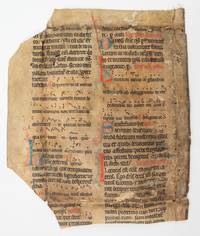
Best.-Nr. ST21124c-01France or Low Countries 14th century. 270 x 230 mm. 10 3/4 x 9". Double columns 32 lines in a gothic book hand. Rubrics and staves in red several initials measuring two or more lines in red or blue with contrasting penwork. Unevenly trimmed missing at most a line of text at the bottom of each column and several words or part-words at corners of outer columns vellum with soiling browning small holes and paper residue consistent with having been used in a binding one side quite darkened but the text there legible with effort nevertheless and entirely legible on the other side. From a noted Missal with numerous large penwork initials this leaf was once used as the cover for a binding yet remains substantially complete. The text here comes from the Temporale containing the cycle of moveable feasts in the Christian year and includes text for Tuesday and Wednesday Feria III and IV of Passion Week. The musical notation on this leaf is highly developed consisting of a four-line staff clef marker and square neumes. unknown books
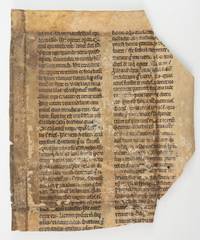
Best.-Nr. ST21124c-02France or Low Countries 14th century. 270 x 461 mm. 10 5/8 x 18 1/8". Double columns 32 lines in a gothic book hand. Rubrics and staves in red three two-line initials in red or blue with contrasting penwork now quite faded. Unevenly trimmed missing at most a line of text at the bottom of each column and several words or part-words at corners of outer columns vellum with soiling browning small holes and paper residue consistent with having been used in a binding but the text entirely legible on one side and legible with effort on the other rather darkened side. From a noted Missal with large penwork initials this leaf was once used as the cover for a binding yet remains substantially complete. The text here comes from the Temporale containing the cycle of moveable feasts in the Christian year and includes Wednesday Feria IV after the fourth Sunday of Lent with a long passage from John 9. The musical notation on this leaf is highly developed consisting of a four-line staff clef marker and square neumes. unknown books
Best.-Nr. ST20214Northern France perhaps Beauvais or Amiens late 13th or early 14th century. 286 x 199 mm. 11 1/4 x 7 3/4". Double column containing a mixture of staves and text approximately 21 lines in an excellent formal gothic book hand. Attractively matted. Rubrics in red chant text containing black penwork initials with red and yellow geometric elaboration BEAUTIFULLY ILLUMINATED with five two-line initials painted blue or pink with white tracery on a ground in the contrasting color two of the initials filled with grotesques and swirling vines and two with the filler design traced out but never completed each initial with blue and pink extensions terminating in orange leaves or spiky shapes; the verso featuring AN IMPRESSIVE SIX-LINE "N" 58 x 50 mm. in the same style filled with an intricate knotwork design and orange leaves with long extensions including a horizontal extension across the upper margin. Margins with light offsetting of the designs from the facing leaf; remnants of mounting tape on recto corners and bottom edge; verso apparently with a barely visible Medieval "14" in lower margin. An area measuring 5 mm. at edges just faintly yellowed from mat burn but IN FINE CONDITION the vellum otherwise quite bright the paint rich and the gold brightly glittering. This sumptuously decorated leaf--which is beautifully preserved and contains a particularly large and handsome initial--comes from the last volume of a three-volume Missal presented to Beauvais Cathedral by Canon Robert de Hangest d. 1356. The Missal remained at the cathedral at least through the 17th century when it is noted in an inventory but was removed from the church at some point likely in the aftermath of the French Revolution. The parent volume eventually entered the collection of Henri-Auguste Brölemann 1775-1854 of Lyon who passed it to his grand-daughter Etienne Mallet who then sold it at Sotheby's in 1926. It was then acquired for the collection of William Hearst where it remained for the next 25 years. In 1941 it was again sold at auction and subsequently dismembered. Though long thought to have been the work of famed biblioclast Otto Ege recent scholarship suggests that it was actually Phillip Duschnes who was responsible for breaking up the book keeping some leaves for himself and selling others on to his colleague Ege for inclusion in his portfolios of "Fifty Original Leaves from Medieval Manuscripts." The Beauvais Missal has been a subject of interest for many notable scholars chief among them being Christopher de Hamel--see: "Otto Ege and the Beauvais Missal" in "Gilding the Lilly: A Hundred Medieval and Illuminated Manuscripts in the Lilly Library" and it is currently the focus of a major effort to "reconstruct" the manuscript digitally--a project spearheaded by Lisa Fagin Davis. Other leaves from the parent volume are in the collections of the Morgan Library the Metropolitan Museum of Art the Cleveland Museum of Art and the Houghton Library at Harvard among many others. Although there is some dispute among art historians the illumination has been tentatively attributed to the artist of the Hours of Yolande of Soissons produced in Amiens ca. 1280 and now held by the Morgan Library MS M.729. It is worth noting that the town of Hangest home to the original owner is only 10 miles from Amiens and is a likely place of origin for the Missal. The present leaf contains a text for a major feast day and thus contains a large and extravagantly decorated initial for its opening "'Nunc scio vere." It is not too much to say that the decoration here is masterful but curiously--and of special interest to us from a modern perspective--the illuminators seem to have forgotten to put the finishing touches on the two smaller initials above which still contain sketches of the preliminary design. unknown
Best.-Nr. ST21124c-01France or Low Countries 14th century. 270 x 230 mm. 10 3/4 x 9". Double columns 32 lines in a gothic book hand. Rubrics and staves in red several initials measuring two or more lines in red or blue with contrasting penwork. Unevenly trimmed missing at most a line of text at the bottom of each column and several words or part-words at corners of outer columns vellum with soiling browning small holes and paper residue consistent with having been used in a binding one side quite darkened but the text there legible with effort nevertheless and entirely legible on the other side. From a noted Missal with numerous large penwork initials this leaf was once used as the cover for a binding yet remains substantially complete. The text here comes from the Temporale containing the cycle of moveable feasts in the Christian year and includes text for Tuesday and Wednesday Feria III and IV of Passion Week. The musical notation on this leaf is highly developed consisting of a four-line staff clef marker and square neumes. unknown
Best.-Nr. ST21124c-02France or Low Countries 14th century. 270 x 461 mm. 10 5/8 x 18 1/8". Double columns 32 lines in a gothic book hand. Rubrics and staves in red three two-line initials in red or blue with contrasting penwork now quite faded. Unevenly trimmed missing at most a line of text at the bottom of each column and several words or part-words at corners of outer columns vellum with soiling browning small holes and paper residue consistent with having been used in a binding but the text entirely legible on one side and legible with effort on the other rather darkened side. From a noted Missal with large penwork initials this leaf was once used as the cover for a binding yet remains substantially complete. The text here comes from the Temporale containing the cycle of moveable feasts in the Christian year and includes Wednesday Feria IV after the fourth Sunday of Lent with a long passage from John 9. The musical notation on this leaf is highly developed consisting of a four-line staff clef marker and square neumes. unknown
2023Best.-Nr. x-3031346432Springer Nature 2023. Hardcover. New. 1096 pages. 9.25x6.10x1.73 inches. Springer Nature hardcover
Best.-Nr. 35315Milano: Tip. S. Lega Eucaristica 1912 . 8vo. 14cm x 8.2cm x 2.5cm . pp.317 . A very good original full leather binding with its original box Interior clean clasp in working order but edges rubbed and soiled. Maroon crushed morocco with gilt ruled border over thin card covers. All page edges bright gilt. Inner gilt dentelles. Fine watered silk endpapers with a couple of silk lined pockets for personal prayers etc. Toned endpapers. Black and white frontis "Sacra Famiglia". Printed title in red & black with vignette and historated capital. On last page: "Mediolani die 14 Martii 1912 Nihil obstat quominus imprimatur. P.ter Rodolphus Dossi Censor eccl. Imprimatur In Curia Arch. Med. die 17 Martii 1912 Can. Joannes Rossi Pro Vic. gen." Clean Italian text throughout. Each page within a red-ruled border with black & white illustrations to the beginning of each section. A very good book. Milano: Tip. S. Lega Eucaristica, 1912 . hardcover
1994Best.-Nr. 50645Zagreb, 1994. 8°. 215 num., 1 nn. Bll. u. 24 S. (Beiheft), Blindgepr. OKunstldr.-Bd.
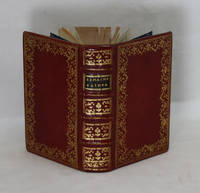
Best.-Nr. 13722Semaine Sante à l’usage du Diocèse de BAYEUX selon les nouveaux missel et bréviaire. Avec des réflexions, méditations & prières pour la confession et la communion. In 12 plein cuir fauve à nerfs, pièce de titre cuir brun clair caissons dorés, roulette dorée sur coupes 100x172mm. Frontispice gravé, titre ; 720 pages, tranches rouges. A Bayeux chez Antoine NICOLLE 1780. Bon exemplaire.
2008Best.-Nr. 44574Madison WI: University of Wisconsin 2008. First printing. 8vo pp. xii 267. Notes index. Illustrated with photographs and reproductions. As new in dj. A cultural history of the project. University of Wisconsin unknown books
Best.-Nr. ria9780299229405_inpHardcover. New. New Book; Fast Shipping from UK; Not signed; Not First Edition; Arrows in the Dark recounts and analyzes the many efforts of aid and rescue made by the Jewish community of Palestine--the Yishuv--to provide assistance to European Jews facing annihilation by the Nazis. Tuvia Friling provides a detaile hardcover
Best.-Nr. 6694627University of Wisconsin Press . Hardback. New. pp. 280 1st edition of Wisconsin Press Shelby Jenkins sjenkins@apa.org University of Wisconsin Press hardcover
Best.-Nr. 5954449-nnew. unknown
2008Best.-Nr. x-0299229408Univ of Wisconsin Pr 2008. Hardcover. New. 1st edition. 336 pages. 9.26x6.30x0.89 inches. Univ of Wisconsin Pr hardcover
2008Best.-Nr. Q-0299229408University of Wisconsin Press 2008-11-30. Hardcover. New. In shrink wrap. Looks like an interesting title! University of Wisconsin Press hardcover
2008Best.-Nr. DADAX0299229408University of Wisconsin Press 2008-11-30. 1. hardcover. New. 9.26x6.30x0.89. Buy with confidence. Excellent Customer Service & Return policy. University of Wisconsin Press hardcover
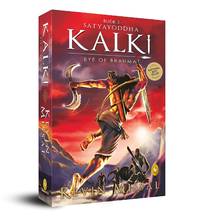
Best.-Nr. 9789388369152Fingerprint Publishing. New. New Fingerprint Publishing unknown
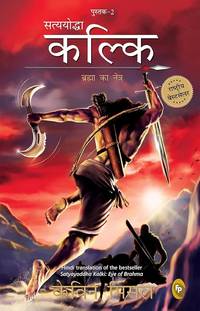
Best.-Nr. 9789354401497Fingerprint Publishing. New. New Fingerprint Publishing unknown
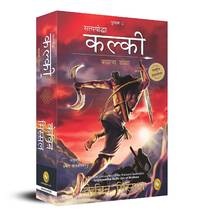
Best.-Nr. 9789354400711Fingerprint Publishing. New. New Fingerprint Publishing unknown
Best.-Nr. 50350421like new. unknown
Best.-Nr. 939533987X.Gpaperback. Good. Access codes and supplements are not guaranteed with used items. May be an ex-library book. paperback
1772Best.-Nr. HW40 /6BMaroon calf binding with black title plate gilt decoration and title on the spine. Gilt decoration on the boards. We provide an in-depth photographic presentation of this item to stimulate your feeling and touch. More traditional book descriptions are immediately available As the photographs depict this is a lovely and well preserved book both to its binding and contents. Just fantastic. Holy Week is for Christians the week before Easter and the last part of Lent . It is intended to commemorate the Passion of Christ. The Easter Triduum of the Passion and Resurrection of Christ begins on Thursday evening of this week and ends on the evening of Easter Sunday. These three days are the high point of the liturgical year because it was by his death that Christ destroyed death and it was by rising again that he restored life. Orthodox Christians call it Great Week . Romanian Orthodox Christians most often call it the Week of Sufferings . The services of Holy Week have the particularity of beginning with Compline and Matins and ending with Vespers whereas it is normally the Vespers service that begins the liturgical day. Holy Week consists of liturgical ceremonies that take place only once a year. The first of these is Palm Sunday . Chez J Felix Faulcon. hardcover