415 résultats
1961réf. LFA-126742036Un ouvrage de 671 pages, format 110 x 155 mm, illustré, relié cuir, tranches dorées, publié en 1961, Editions Tardy
1956réf. LFA-126745061Un ouvrage de 1950 pages, format 110 x 170 mm, relié cartonnage souple, publié en 1956, Editions Tardy / Action Catholique Rurale / Editions Ouvrières, bon état
1966réf. LFA-126748442Un ouvrage de 1950 pages, format 110 x 170 mm, relié cartonnage souple, publié en 1966, Editions Tardy / Action Catholique Rurale / Editions Ouvrières, bon état
1900réf. 154941900 Mame & fils 1900 Tours in-8 Relié, 80 pages.tranches dorees, Dessins ornementaux à chaque page rehaussés d’or et couleurs. Belle pleine reliure ornementée et frappée d’or en très bon état. Rare
1900réf. 228481900 Mame & fils (1900) Tours in-8 Relié plein veau blond plats et dos ornés,dos à nerfs avec titre à froid, gardes de tissu moiré brun, decor a dentelle intérieure dorée, 80 pages.tranches dorees, Dessins ornementaux à chaque page rehaussés d’or et couleurs. Belle pleine reliure ornementée et frappée d’or en très bon état. Rare
réf. 19001Impression Darantière pour la librairie Leullier Paris 1900. in/16 9.5 x 6 cm reliure plein veau marbré plats à filets dorés et frise à froid dentelle intérieure moire verte sur les gardes doré trois tranches chaque feuillet comporte une enluminure imprimée et réhaussée à la main réhaut datés en fin d'ouvrage : 1922. Joli petit ouvrage précieux aux enluminures tout en nuances. unknown
réf. 19001Impression Darantière pour la librairie Leullier, Paris, 1900. in/16 (9.5 x 6 cm), reliure plein veau marbré, plats à filets dorés et frise à froid, dentelle intérieure, moire verte sur les gardes, doré trois tranches, chaque feuillet comporte une enluminure imprimée et réhaussée à la main (réhaut datés en fin d'ouvrage : 1922).
réf. 1083358Encuadernación de tapa dura. Aceptable. . Sin datos. Siglo XVII. 21x13 cm. Falto de portada 32 folios 728 págs. Commune Sanctorum in Vigilia. 110 págs. 4 págs. restauradas con injertos. creo que faltan algunas páginas mas Texto a dos columnas y a dos tintas Pentagramas con letra y música 9 Láms. grabadas a plena página 15 pequeños grabados entre texto Letras Capitulares. Ejemplar restaurado encuadernado en pleno pergamino a la romana titulo manuscrito en lomera. # religión. hardcover
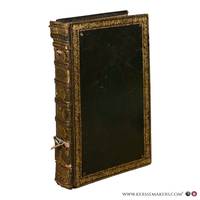
1835réf. 85361Monasterii Münster: Ex Officina Coppenrathiana 1835. 37 x 23.5 cm. Dark green leather hardcover gilt-tooled floral border to both boards richly gilt spine with raised bands and gilt title 'Missale' gilt turn-ins decorative burr-wood pattern endpapers gilt page edges fore-edge index tabs. 58 594 CVIII pages. Title page printed in red and black within ornamental border with the arms of the bishop. Text within ruled borders Canon printed in red and black with plainchant notation. With lithographed plate of the Crucifixion by B. Herwig Münster facing the Canon Missae. Text in Latin. Original metal fittings mandorla-shaped centrepieces and clasps removed outlines and nail holes remaining on both boards. Boards scratched. Spine leather damaged and partially detached in several places. Year '1835' added in ink to title page. Paper somewhat browned throughout few stains; binding worn and fragile but text block still fully usable see pictures. Ex Officina Coppenrathiana hardcover
réf. 116362Campoduni (Kempten), Ex Typographia olim Ducali, num J. Koeseliana 1846, 380x245mm, CLV - 994 + 303pages, Titre gravé, lettrines, 3 gravures hors texte.Cuir noir, titre et filets au dos dorés, tranches dorées, plats en reliefs avec ornementations dorés, fermoirs et coins en laiton (manque un coin), taches d’eau sur le haut du volume.
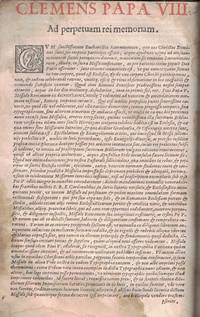
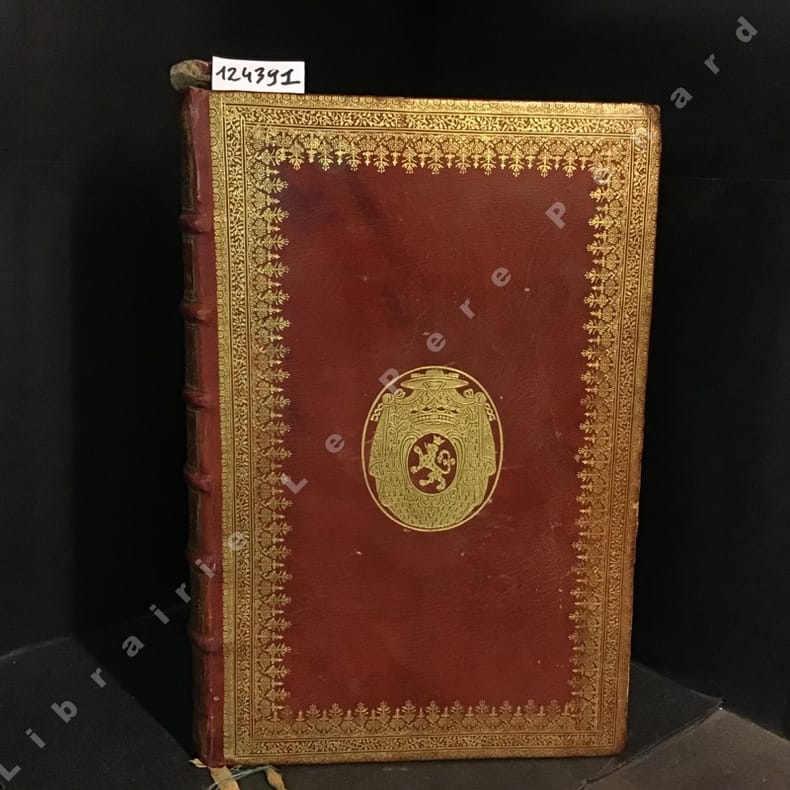
1698réf. 1243911698 Lutetiæ Parisiorum, Apud Johannem Baptistam Coignard, Regis Typographum (Chez Jean-Baptiste Coignard, Imprimeur du Roi, Paris) - M. DC. XCVIII. (1698) - Un volume In-folio (27x40cm), reliure plein maroquin rouge, dos à 6 nerfs avec titre et caissons ornés de fleurons en dorée, encadrement en dorée sur les plats, roulette dorée sur les tranches et les contreplats, coussinet de lecture et signet, onglets en tissus, toutes tranches dorées, reliure armoriée aux armes de Jacques-Nicolas Colbert (archevêque de Rouen) - A-M + 668 + civ pages - Très beaux ornements (vignettes, lettrines, culs-de-lampe, fleurons) et gravures hors-texte en N&B dans l'ouvrage - Texte en N&B et rouge en latin sur deux colonnes
1741réf. xf403Lugduni, ex officina Jacobi-Joseph Barbier Relié 1741 In-4 (20 x 26 cm), reliure plein veau, dos lisse orné de dorures, 572-cxij pages, texte en latin ; reliure abîmée (épidermures, usures, cuir décollé du cartonnage au premier plat), par ailleurs belle impression, en l'état. Livraison a domicile (La Poste) ou en Mondial Relay sur simple demande.
réf. 50296aafAugustae Taurinorum (Torino), ex typis Binelli, (and) Benedicti Canonica cum ejusdem filio Joanne, 1882, in-4to, text on 2 col., 3 leaves + 32 p. + 496 p. + 1 leaf; 136 p. + 16 leaves + 3 lithogr. illustr. plates, some leaves somewhat stained or browned, tear in one leaf, several silk signets of different colours, 9 leaves with brown silk signet on edge, a few leaves loosening, bordeaux red morocco binding, spine on 5 bands gilt, covers with gilt floral frame and centre piece composed of two angels facing a monstrance surmounted by "IHS" emanating beams of light, with studs in each corner and center, somewhat stained and rubbed, corners partly bumped, bords scratched, remains of gilding on edges.
1952réf. 12371Regensburg, Pustet, 1952. 28. Auflage (Editio XXVIII juxta Typicam Vaticanam) 8° (18,5-22,5 cm). 75*, 712, [212], 36, 7** S. Ganzleder mit goldgeprägtem Rückentitel und Deckelverzierung sowie 6 Lesebändchen in Oschuber [3 Warenabbildungen]
1726réf. 311716Venice 1726. Printed in red & black; Engravings including initial letters & title page vignette depicting St Peters and a papal crown by Sister Isabella Piccini. Short thick folio red velvet worn over boards With silver escutcheons & corner pieces on back & front covers. Venetiis: Typographia Balleoniana 1726 unknown books
1730In 4. Dim. 34,5x25x7 cm. Pp. 36 (n.n.)+460+XCI+(8)+36+(2)+(2)+(2)+(2)+(2). Peso Kg. 2,900 Splendido messale di grandi dimensioni e peso del 1730 in folio interamente scritto a caratteri rosso e neri con splendidi capilettera decorati, almeno 1 per pagina (ad esclusione dei canti gregoriani). All'interno del testo tre bellissime incisioni a piena pagina che raffigurano delle scene religiose (l'annunciazione, la crocifissione, la resurrezione). Bella vignetta al frontespizio. All'inizio del messale un introduzione dedicata alla memoria dei tre Papi che si erano occupati di redigerlo (Pio V; Clemente VIII; Urbano VIII) e una sorta di prefazione all'opera con delle tabelle indicanti il calendario liturgico che rimanda alle parti del messale da recitare. Presente anche Commune Sanctorum e Missae Propriae Sanctorum ad uso dei Frati Minori di San Francesco. Pagine e pagine di canti gregoriani all'interno. Il messale è del 1730, ma alla fine sono state aggiunte alcune parti: la Missae Propriae Sanctorum ad usum fratrum minorum S. Francisci del 1731, commemorazione di Maria Santissima della Madia di Monopoli della metà del 1700, commemorazione di Santa Pulcheria Vergine del 1753, San Gennaio Vescovo (numerosi strappi e pagina staccata) del 1731, San Stanislao del 1750 circa (staccato dalla legatura) e tre fogli anticamente manoscritti (uno con strappi e numerose mancanze). Imponente copertina in piena pelle settecentesca con borchie (vedere foto). Segnalibri di stoffa che aiutavano il sacerdote nella lettura. Era un testo che veniva abitualmente utilizzato quindi presenta dei segni d'uso come segni di restauro, cera e rare macchie di sporco (vedere specifica sotto). Antico manoscritto alla prima carta bianca e alle ultime pagine. Alto valore. Copertina in piena pelle settecentesca a cinque nervi con borchie e decorazioni a secco in discrete condizioni generali con usure e parti mancanti: le borchie al centro del piatto e la borchia inferiore destra del piatto posteriore risultano mancanti. Legatura in buone condizioni generali ma rottura alle sguardie, qualche pagina in parte staccata e alcuni fogli finali staccati. All'interno le pagine si presentano in buone condizioni generali con mende, rare fioriture, rari segni di sporco e di cera. Segno di tarlo al margine destro e inferiore dalla prima pagina sino alla fine senza perdita di testo. Strappo al margine inferiore di pag. 193 inficiante testo e incisione. Segno di restauro al margine inferiore di pag. 195 e 198. Very beautiful missal of big dimension and weight of 1730 in folio enterely written in black and red charachters with faboulous decorated initial letters, at least 1 for page (excluding Gregorian music). Inside the text there are three beautiful full page engravings representing some religious scenes (annunciation, crucifission, resurrection). Very beautiful vignette in the title page. At the beginning three introductions dedicated to the memories of the three Popes that wrote it (Pio V; Clemente VIII; Urbano VIII) and a sort of introduction to the work with some charts indicating the liturgic calendar which indicates the part of the missal to be read. There are also Commune Sanctorum and Missae Propriae Sanctorum for the usage of Grey Friars. There are pages and pages of Gregorian music inside (see the photoes). The missal if of 1730, but as usual, at the end some parts were added: the Missae Propriae Sanctorum ad usum fratrum minorum S. Francisci of 1731, commemoration of Maria Santissima della Madia di Monopoli of 1750 circa, commemoration of Santa Pulcheria Vergine of 1753, San Gennaio Vescovo (different tears and page detached) of 1731, San Stanislao of 1750 circa (detached from binding) and three pages manuscripted in ancient times (one with tears and different missing parts). Imponent full skin decorated cover of the XVIII century. Very beautiful decorated initial letters. Fabric bookmarks to get easier the reading to the priest. It was a text that was normally used, so we find some signs of usage as restoration signs, rare wax signs and rare dirt's signs (see details in the description below). High value. Full leather cover of the XVIII century with five nerfs and studs in fair conditions with wearings and missing parts: the central studs and the lower right stud of back plate are missing. Binding in good general conditions apart for a crack in the frontspice, some page almost detached and some final pages detached. Inside pages are in good conditions with usage signs, occasional foxings, wax and dirt's signs. Worming in the right edge and lower edge in the whole volume with no loss of text. Tear in the lower edge of pag. 193 ruining text and engraving. Restauration sign in the lower edge of pag. 195 and 198.
1898réf. 11027Regensburg, Friedrich Pustet, 1898. 14. Auflage 12° (15-18,5 cm). CXIV S., 1 Bl., 716, 292, 23 SS. Halbleder der Zeit mit goldgeprägtem Rückentitel und Ganzkopfrotschnitt
1600réf. 2945Paris: the Associated Booksellers to the Church 1600. Folio 362 x 245 mm. Collation: ã6 ê6 î4 i4 blank õ6 ũ6 ãã6 êê4; A-Z Aa-Yy6. 38 228 42 leaves. Double column printed in red and black double rule page-borders throughout. 57 pages with printed music staves red-printed. Woodcut title illustration of Saints Peter and Paul seven full-page woodcuts the first in two blocks: a woodcut border and small Annunciation cut five small woodcut vignettes including two repeats and approximately 368 historiated initials in various sizes and from various series. Small tear to corner of title-leaf occasional foxing very occasional offsetting of red ink small stains in gutters in quire O finger-soiling in Canon quire X small rust-hole in f. 212 NN2 affecting 3 letters last few leaves with narrow marginal dampstain and slight creasing to upper fore-corners. Bound in contemporary French gold-tooled and -stamped light brown goatskin covers paneled with double fillets inner panel with fleurons at outer corners inner corners with large stamp of leafy branches emerging from a small medallion with winged cherub’s head large central oval medallion of the Crucifixion on upper cover and Annunciation on lower cover smooth spine with recessed cords decorated with overall double fillet panel with tiny fleurons at corners gilt edges plain endpapers remains of numerous fore-edge tabs in paper pale green or pink silk and black silk for the Mass for the Dead. Corners bumped slight wear front cover slightly rubbed a few small holes to lower cover foxing to endpapers. Provenance: contemporary inscription in French on front flyleaf listing “Messes pour tous les iours de la sepmaine” Masses for every day of the week; loosely inserted armorial papercut unidentified arms lion rampant on a chief three roses. Unrecorded issue of an imposing post-Tridentine Missal in a fine Parisian gold-tooled binding. The woodcut illustrations of this copy differ from the other known copies of this edition which are illustrated with engravings. The binding tools appear on other books published by the same publishing consortium and have been associated with religious lay confraternities founded by Henri III in the 1580s. This exceptional copy is of interest for the history of publishing printing illustration and binding; it raises questions about the very concept of an edition about the transmission of images and about the relations between printer-publishers bookbinders and book buyers in the hand-press period. In 1570 with the papal bull “Quo primum” Pope Pius V imposed uniformity on the rites of Mass previously a hodge-podge of different local traditions. That bull was printed in all subsequent missals; it is accompanied here by papal and royal privileges which supply crucial information concerning the publishing history of this edition. Jacques Kerver was the first French libraire to obtain a privilege for the publication of liturgical works. When he died in 1583 the privilege passed to his widow who ceded it to a consortium of booksellers: Sebastian Nivelle Guillaume Chaudière Guillaume de la Noue Michel Sonnius and Thomas Brumen cf. Renouard Imprimeurs et libraires parisiens du XVIe siècle IV 22. That privilege expired on 22 December 1595. This edition includes Papal and Royal renewals of the Kerver privilege for the printing of “sacred books” Missals Breviaries and Offices of the Virgin granted respectively by Clement VIII and Henri IV both on 4 April 1596. For Thomas Brumen who had died in 1588 the Royal privilege substitutes his son-in-law and heir Jean Corbon II and adds the names of Claude Chapelet identified as bookseller to the Academy and Jamet Mettayer and Pierre L’Huillier respectively Royal printer and Royal bookseller Mettayer was also the official printer for the Royal confraternities. The preliminary matter further includes the reformed Gregorian Paschal calendar for the years 1582 to 1700 a table of moveable feasts for 1589 to 1621 the Rubricae generalis missae the Ritus servandus in celebratione Missae and an index of Saints’ names. The second part of the Missal separately paginated contains the Commune Sanctorum. The subjects of the full-page illustrations are: the Annunciation: a small cut within an historiated woodcut border in twelve compartments showing four scenes from the life of the Virgin alternating with angels and the four Evangelists fol. êê4v; the Nativity B4v Crucifixion T6v opening the Canon Resurrection X4v Pentecost AA1v Last Supper BB3r and Last Judgment PP2v. These monumental woodcuts influenced by Italian and Flemish mannerism derive from various engraved sources including at least one engraving the Resurrection used by Jamet Mettayer in an Office of the Virgin published in 1586. The five smaller woodcuts printed from three blocks include a Crucifixion showing Longinus piercing the side of Jesus repeated twice the Last Supper and a smaller primitive Crucifixion cut. Noteworthy are the many historiated initials. Ruth Mortimer describing an edition by Kerver from 1574 noted that the elaborate historiated initials containing “figures of the saints the Evangelists and . New Testament scenes may be attributed to the same artists who worked on the illustrations. The blocks are so detailed as to give the impression of additional illustrations rather than initials.” As in previous editions the initials were chosen carefully here to match the text: for example the four Rs opening the word Requiem in the Mass for the Dead incorporate a skeleton and funeral scenes. The full-page woodcuts had appeared previously in the Kerver-consortium’s 1588 edition cf. an illuminated copy offered by Breslauer in 1981 cat. 104/II no. 192. Only a few copies of these repeatedly printed Paris post-Tridentine Missals survive in public collections and precise descriptions are few. The most thorough description is that by Ruth Mortimer of the Harvard copy of the 1574 Kerver edition. Both that edition and the 1583 edition of which there is a copy at the Newberry Library are illustrated with only two full-page woodcuts including the canon cut of the Crucifixion used here and numerous smaller woodcuts. The title of the 1574 edition bears the same Peter and Paul cut while the 1583 edition has Kerver’s device. The present copy represents a previously unrecorded variant issue of the 1600 edition. I have located two other copies of the edition at the Austrian National Library digitized and with Sokol Books catalogue 65/64; they are illustrated with engravings instead of woodcuts all but one of which differ iconographically from the woodcuts in our copy. The exception is the aforementioned Resurrection woodcut which is copied in reverse from the engraving. The typesetting other than the title appears to be identical but rather than a letterpress title-page and seven woodcut full-page illustrations the other copies have an engraved title and seven full-page engravings. Another variant setting occurs in quires M and N: both issues have the small Longinus woodcut on M1v but the spaces here filled by 3 small woodcuts one used twice are left blank in those copies. The existence of multiple editions of these post-Tridentine Paris Missals has been documented; Mortimer for example noted that in 1574 Kerver printed two folio editions as well as quarto and octavo editions. From the early 1570s to the end of the century these liturgical books now rare were churned off the presses to meet the needs of priests and clerics throughout France and beyond several copies of the Kerver or Kerver-consortium editions survive in Spanish and Italian libraries. Under these circumstances the existence of multiple editions and variant issues is not surprising though the outright replacement of engravings with woodcuts or vice-versa seems unusual. The attractive Parisian binding shows signs of hasty finishing: the cornerpieces using a popular cherub’s head and leafy branch motif are single stamps and those on the upper cover are unevenly placed so that three of them overlap the double fillet panel. It is however a luxury binding of high-quality goatskin and its decoration is charged with meaning which remains to be completely teased out. Several variants of the Crucifixion and Annunciation medallions were used on the bindings of a number of devotional books published by the present publishing consortium or by its individual members. A few of those bindings bear a motto Spes mea Deus used by members of the Confraternity of Penitents of the Annunciation founded by Henri III in 1583. Possibly by extension the Crucifixion stamp itself has been associated with the confraternity and with the three other “congregations” established by that devout monarch in 1583-85. The same large Crucifixion and Annunciation medallion stamps were used in a similar center- and cornerpiece design on the aforementioned Breslauer copy of the 1588 edition of this Missal and in a dated binding from 1599 covering a 1508 Verard book of hours in the British Library shelfmark c29f16 reproduced in the BL Database of Bookbindings. In both cases the corner feuillage stamps are different but the central medallions appear to be identical to those on this binding. Similar but not identical stamps besides those cited in the sources below are found on: a copy of Mettayer’s 1586 Pseaultier de David recently offered by the Paris booksellers Laurent Coulet and Ariane Adeline in their catalogue “1586: Jamet Mettayer et les Confréries de Pénitents”; an Officium beatae Mariae Virginis Paris: apud Societatem Typographicum 1586 using both the Annunciation and Crucifixion medallions set within a fanfare design Bibliothèque Sainte Geneviève Réserve 8 Z 6685 INV 9940; and an Office de La Vierge published by Mettayer in 1586 BnF Réserve B. 1654 Lacombe 486. A book of hours for the use of Amiens Paris: for Guillaume de La Noue 1589 bound with several devotional tracts BnF Réserve B-27949; Lacombe 492 has a different Annunciation stamp but apparently the same Crucifixion stamp. Coulet and Adeline established a typology of 9 different Crucifixion stamps or 8 stamps and one variant the one used here being no. 8. Given these facts the possibility cannot be excluded that the publishers were involved in commissioning the bindings of this copy and of the other “Crucifixion medallion” bindings found on their imprints. USTC 137500 Austrian National Library only variant issue - not in their OPAC. Cf. Harvard/Mortimer French 378 8 June 1574 edition. Not in Weale-Bohatta or Amiet. On the binding cf. Hobson & Culot Italian and French 16th-century Bookbindings 1991 62; Claude La Charité “Henri III Le miroir des religieux 1585 de Louis de Blois et `la troisiesme couronne à frere Henri de Valois’” Revue de Bibliothèques et Archives du Québec no. 2 2010 online; Needham Twelve Centuries of Bookbindings 1979 82. the Associated Booksellers to the Church unknown books
réf. 107.521Mechlinlae (Malines), H. Dessain, 1935. "20 x 28, li + 689 + 189 + 130 pages, quelques planches, nombreuses lettrines, culs-de-lampe, reliure plein cuir à 5 nerfs, dos orné de 5 fleurons, plats gravés à froid (2 croix catholiques), garde marbrée, 3 tranches rougies, 8 larges signets en tissu, 14 onglets en cuir rouge, bon état (quelques épidermures; certains textes on été biffés)."
1853réf. 246031853 P. J. Hanicq, Mechliniae [Malines Mechelen, Flanders, Belgium], 1853,IN FOLIO reliure plein chagrin rouge (posterieure),plats decorés (cartonnage fers dorés,monogramme MM ,2e plat)),tranches dorées,dos à caissons dorés,signets tissus multicolores à fleurs de lys,11 planches gravées ht (bois et litho) - Title vignette; illustrated initials; printed in red and black; text in double columns.[40], 484, cxxxvj,+ [1]-[1-1bl]-2-2-2-20-[1-1bl-2] p.,pages datées posterieures : , 11 unnumbered leaves of plates : illustrations, music ; 36 x 26 cm, RELIURE ANIMEE plaques romantique, bon état .Missale Romanum is a highly important text in the Roman Catholic Church and contains within it the texts and rubrics relating to the Catholic Rite of Mass, considered an essential part of Catholic doctrine. This particular version of the Roman Missal contains the changes made by Pope Clement VIII in 1604 which include corrections to the previous standard edition created by Pope Pius V and the further corrections made by Pop Urban VIII in 1634. The work is an unusual edition of a highly important and still widely recognised part of Catholic Dogma,with last corrections.
réf. 15862Paris, Jean-Baptiste Coignard, 1724, 1 pleine basane, plats et dos frottés, coins émoussés. in-12, titre, 39 ff.n.c., 612-CXXII-4-2 pp., texte sur 2 colonnes imprimé en rouge et noir, gravures hors-texte ;
1912réf. 144610Turonibus, A. Mame et Filiorum 1912 In-4 28 x 19 cm. Reliure éditeur basane noire, dos à nerfs encadrés de fers dorés, plats ornés d’un décor gaufré encadré de d’un filet doré, 576-250-XII-84 pp. Reliure sensiblement frottée, mors supérieur fragilisé.
RATISBONAE, ROMAE et NEO EBORACI, Sumptibus, chartis et typis Friderici Pustet - 1890 - In-4 - Reliure Pleine Percaline de l'époque - Dos à nerfs, à caissons dorés et ornés - 1 er Plat orné d'un crucifix au centre, entouré d'écoinçons dorés avec une croix dans chaque coin - 4 è plat identique à l'exception d'un coeur remplassant le crucifix - Toutes tranches dorées - Filets dorés sur les coupes - Gardes ornées avec lisérés ornés dorés - Frontispice en couleurs - Bandeaux (couleurs ou NB), Lettrines en couleurs, Bandeaux - Texte en N ou rouge encadré d'un filet rouge - Musique - (42)-572 pages + Commune Sanctorum 216 pages + Suppementum : Ex. Piteux Fratres, 1892 : 61 pages - Bel exemplairze
1890réf. 244991890 RATISBONAE, ROMAE et NEO EBORACI, Sumptibus, chartis et typis Friderici Pustet - 1890 - In-4 - Reliure Pleine Percaline de l'époque - Dos à nerfs, à caissons dorés et ornés - 1 er Plat orné d'un crucifix au centre, entouré d'écoinçons dorés avec une croix dans chaque coin - 4 è plat identique à l'exception d'un coeur remplassant le crucifix - Toutes tranches dorées - Filets dorés sur les coupes - Gardes ornées avec lisérés ornés dorés - Frontispice en couleurs - Bandeaux (couleurs ou NB), Lettrines en couleurs, Bandeaux - Texte en N ou rouge encadré d'un filet rouge - Musique - (42)-572 pages + Commune Sanctorum 216 pages + Suppementum :Ex. Piteux Fratres, 1892 : 61 pages - Bel exemplairze
1892réf. 183796Mame Turonibus, A Mame, 1892. In-4 relié plein chagrin nour, dos à feux nerfs, ornés, plat estampés à froid. Tranches dorées. Frontispice, titre, paginé 33 - 168 + Missae Propriae sanctorum quae in hispana celebrantur. 1888 de 38 pages + Addenda proprio missarum quae in Hispana Celebrantur de 8 pages.