8,039 results
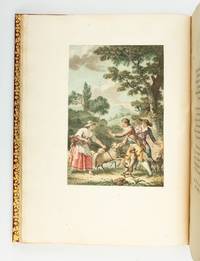
1793ref. ST20474Paris: Defer de Maisonneuve 1793. First Edition with these Illustrations. 350 x 262 mm. 13 3/4 x 10 1/4". 125 pp. VERY PRETTY 19TH CENTURY CRIMSON MOROCCO ELEGANTLY GILT covers framed with floral tools raised bands spine panels filled with rows of flower-and-lozenge roll gilt lettering gilt turn-ins top edges gilt. FOUR FINE STIPPLE-ENGRAVED PLATES by Colibert and Cazenave after Monsiau PRINTED IN COLORS. A Large Paper Copy. Cohen-de Ricci 400; Furstenberg 122; Lewine p. 188; Maggs 1930 Catalogue of French Illustrated Books 84; Ray p. 145. Occasional minor foxing the margins of one plate foxed a bit more otherwise a fine copy clean and fresh internally with immense margins the plates with pleasing colors and the unworn binding bright with gilt. This is an especially tall copy of Florian's pastoral romance in imitation of Cervantes one of the grander French books to be printed in colors when the vogue for such productions took hold during the last years of the 18th century. Ours is one of six such books all printed after 1786 that Ray singles out for praise as "handsome and imposing volumes." A noted painter of both classical and modern subjects Monsiau 1754-1837 was also an illustrator whose "abundant and interesting work in this line" is underrated even though it has the merits of being simple natural lively and piquant. Ray Monsiau's obscurity says Ray may be owing to the fact that he most often worked as a secondary collaborator on major illustrated works; the present book is one of the few he did on his own and it is among his best. Publisher Defer de Maisonneuve did not originate the technique of stipple engraving on copper plates but he did perfect the process which allowed for gradual tonal changes in hues and intensities of color rather than the "stained glass" effect of separately printed patches of color. Given the turmoil of the period when this book was published it is quite likely that it did not have an especially decorative original binding and may have remained in publisher's boards as was often the case. Happily a later owner supplied a period-appropriate binding here that matches the opulence of the contents. While our copy has the engraver's name just visible beneath the plates perhaps disqualifying them as the "avant la lettre" versions used in the Large Paper Copies per Cohen-de Ricci the size of the margins here and the quality of the paper certainly argue for that designation. Defer de Maisonneuve unknown books
1871ref. 295Washington: Government Printing Office 1871. 4to. 290 x 230 mm. 11 1/2 x 9 inches. 4 205 pp. Illustrated with 7 chromolithographic plates 6 micro photographs and one lithograph. Bound in contemporary pebbled morocco spine and tips over marbled paper boards; edges rubbed but a sound and attractive copy. First illustrated edition; the text was published in an abbreviated form in 1869. This report was initiated by an outbreak of disease in a large number of Texas cattle that had been shipped north and landed in Cairo Illinois. The disease quickly spread and a government response was requested through the House of Representatives. A team lead by the English Professor of Veterinary Medicine James Gamgee and the botanists H. W. Ravenel of South Carolina traveled to Texas to find the origins of the diseased live stock. In an attempt to better illustrate their findings of the impact of the disease on the lungs spleens hearts and kidneys they employed the latest technology of chromolithographic printing and micro photography to produce highly legible detailed images of damaged organs. The color printed plates and photographs were produced in Baltimore by the Hoen & Co Chromolithographers and they demonstrate the use of color printing for medical research. 295. Government Printing Office unknown books
ref. B47456-10Cambridge 1970. 124pp. Illus. Sq. 4to. Wraps. Presentation in ink on half-title page. Cambridge, 1970. paperback books
1927ref. 68776Salt Lake City UT: Porte Publishing Company 1927. First Porte Publishing edition. Hardcover. Very Good. 153pp. Duodecimo 19 cm 1/4 tan woven cloth with pale greenish-gray paper over boards. Light soiling to the boards. Underlying boards exposed occasionally along the edges. Pages tanned. Reprinted from The Inland Printer. Fiction depicting the printing industry. Roy Trewin Porte 1876-1936 was heavily interested in the field of printing and publishing. "His Porte's mastery of printing and his knowledge of cost finding led to his appointment as secretary and cost expert of the Commercial Printers’ organization in Cincinnati Ohio. In this role he traveled widely as a lecturer on the topic of printing costs. In July 1916 Porte found himself in Salt Lake City Utah to assume the position of secretary of the Ben Franklin Club. One year later he published the first edition of the Price List which later became well-known as the Franklin Printing Catalog. The success of the Price List was immediate and in 1924 the Porte Publishing Company was established to continue publishing the catalog." - J. Willard Marriott Library University of Utah Blog. Porte Publishing Company hardcover books
1822ref. ST17561London: Published for the Proprietor by Longman Hurst Rees Orme and Brown 1822 1823. FIRST EDITION ONE OF 227 COPIES. 288 x 220 mm. 11 3/8 x 8 5/8". 3 p.l. vi 2 100 8 103-118 pp. 2 leaves. Pleasing 20th century rich green crushed morocco gilt-framed covers and smooth spine gilt lettering to spine edges untrimmed. In a burgundy calf-backed clamshell box meant for this book but for some reason substantially larger green morocco title label on spine. WITH 60 ENGRAVED ILLUSTRATIONS as called for in Abbey 48 PRINTED IN COLORS including decorative title page dedication with Earl Spencer's coat of arms six plates with a total of 18 color ink specimens two type specimen plates four engravings of printing presses Columbian Press in two states one before letters nine defaced plates printed recto-verso and six headpieces three color printed 28 engraved plates printed in colors: five in a single block six in two to four blocks 14 in five to nine blocks and three full-color in 13 14 and 29 blocks respectively as called for in the contents and in Abbey. Front pastedown with the bookplate of the Robin Collection. Abbey Life 233; Ray "England" 99. Occasional mild thumbing otherwise nothing but the most trivial imperfections--quite a fine copy internally clean and fresh with pleasing colors in a very appealing unworn binding. This virtuoso production was in Ray's opinion Savage's magnum opus a work that was "both a highly idiosyncratic volume and a notable landmark in the history of color printing from wood." Printer and engraver William Savage 1770-1843 was in Ruari McLean's words "the first true colour printer of the nineteenth century in England." One of his great innovations which made possible color printing as seen here was a new formulation of ink. DNB reports "Printing ink in England at that time was of a very poor quality and Savage by various experiments made a printing ink without any oil in its composition. This made it more serviceable for artistic work and easier to manufacture." Savage's inks transferred so cleanly from the engraved wooden block to the paper that the blocks did not have to be wiped between impressions--speeding up the process considerably especially when as here one image could require up to 29 colored blocks. The oil-free inks were also less inclined to smear or to bleed through the paper. While Savage's elaborate methods were not economically viable for mass printing of color-illustrated works his improvements to printing ink and his use of multiple blocks paved the way for the use of chromolithography. The engravings in this work are rare because the work was strictly limited and because Savage despite some protests fulfilled his promise to subscribers that all the blocks would be destroyed. While the plate count in the work can vary from copy to copy the present item collates as indicated by the table of contents and includes Clymer's Columbian Press plate in two states as called for by Abbey. This work appears on the market from time to time but seldom in the kind of agreeable condition seen here. Published for the Proprietor by Longman, Hurst, Rees, Orme, and Brown unknown books
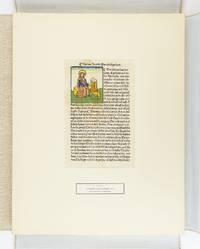
1929ref. ST17493München: Weiss & Co. Antiquariat 1929. No. 21 OF 50 SETS issued with accompanying German text; there were also 50 with accompanying English text. 480 x 375 mm. 19 x 14 3/4". With an 87-pp. volume of commentary in German. Loose as issued in a linen-covered chemise titling in black on front cover. Commentary volume in original paper wrapper. WITH 55 LEAVES FROM INCUNABULA issued by German Swiss Dutch Czech and Italian presses ALL WITH ONE OR MORE WOODCUTS 32 OF THESE HAND-COLORED. ◆Front cover of commentary volume with thin six-inch brown stain along head edge but the volume otherwise clean and fresh the leaves with occasional browning or minor staining but excellent specimens overall the hand coloring often quite attractive. Arranged according to the city in which they were printed this is a wonderful collection of 55 incunabular leaves all illustrated with woodcuts. The group includes important early images large and small with 32 of them hand painted often with brilliant memorable color. Although every leaf here is of interest there are some leaves that deserve special mention: the 1471 Zainer printing of "Heiligenleben" the earliest leaf included; a number of leaves from herbals Bibles and lives of the saints; leaves representing two different editions of Brant's "Stultifera Navis" a Basel 1500 edition of Aesop and the celebrated 1499 Aldine "Hypnerotomachia Poliphili." A full-page woodcut from Koberger's "Schatzbehalter" "Treasure Book" 1491 shows Korah Dathan and Abiram being swallowed up by the Earth for their rebellion against God while Moses and Aaron pray as God sends fire to destroy the rebels. Among the hand-painted woodcuts are several that are outstanding both for the composition of large complex images and for exuberant coloring. These include Pharoah's daughter rescuing the baby Moses as well as the adult Moses with the burning bush both from the German Bible printed by Koberger in 1483; a view of the city of Perugia in Schedel's "Weltchronik" 1493; and another Schedel leaf depicting the martyrdoms of the Apostles Andrew and Thomas. The 55 specimens included here would serve very well either as a final capstone in an advanced collection or else an outstanding nucleus for a beginning collector of illustrated incunabular leaves. Several of the books represented are difficult to obtain and most of the ones that can be procured are very expensive. Weiss & Co. Antiquariat unknown books
ref. ST15039bCMcMinnville Oregon: Phillip J. Pirages 2019. ONE OF 84 COPIES in floral-patterned cloth from a total edition of 165 COPIES. Text: 244 x 154 mm. 9 1/8 x 6 1/8"; Case: 502 x 372 mm. 19 3/4 x 14 5/8". ii 75 pp. Bound in floral-patterned cloth after a Morris design by Amy Borezo who also constructed the case holding the volume and leaves. The book printed letterpress on Zerkall Book Laid Vellum paper by Arthur Larson at Horton Tank Graphics. Book layout by Jill Mann. EACH COPY WITH FIVE LEAVES: ONE FROM THE KELMSCOTT CHAUCER with six- and three-line initials AND ONE EACH FROM THE PRESSES OF FOUR GERMAN PRINTERS FROM THE 1470s--PETER SCHOEFFER JOHANN MENTELIN GÜNTHER ZAINER AND ANTON KOBERGER. The incunabular leaves consistently excellent with only minor defects and the Kelmscott leaves which were never part of a bound volume in entirely fine condition. This is a unique leaf book in the way that it combines three elements: a significant private press production involving people at the top of their craft a scholarly commentary that contributes to a further understanding of the history of printing and--most important--five leaves: one from the Kelmscott Press "Works" of Geoffrey Chaucer and four from books issued by German printers at work in the 1470s. The book has been printed and bound by hand by gifted professionals; the essay addresses a topic of significance to typophiles in a considerably more thoroughgoing way than has been done before; and the assemblage of leaves represents a powerful visual reinforcement of the text as well as an opportunity to share in the ownership of four important incunabula along with the extraordinary Kelmscott Chaucer. The story of the production is heavy on serendipity: in the winter of 2012 after purchasing a very incomplete copy of the Kelmscott Chaucer at auction we considered the possibility of producing a leaf book but because the Chaucer--universally considered to be one of the most beautiful books ever printed--had been written about by so many different people in so many different ways we didn't know what aspect was left for us to explore. The one topic we fastened on as thus far inadequately examined is the origin of the work's typeface. We soon learned that Morris who is known to have owned more than 500 incunables most admired--and was consequently most likely to have been influenced in his typographic design by--Peter Schoeffer of Mainz Johann Mentelin of Strassburg Günther Zainer of Augsburg and Anton Koberger of Nuremberg. Over the course of the years succeeding the purchase of the defective Chaucer we were fortunate beyond all expectation to acquire incomplete books from each of these four eminent printers. As a result the present leaf book will allow the reader not only to read in the accompanying essay about the influence on Morris of his typographic forebears but also to compare with his or her own eyes the resemblances between the Kelmscott leaf and the leaves from four centuries earlier. Phillip J. Pirages unknown books
1975ref. 290280Berkeley: The Friends of The Bancroft Library 1975. Paperback. 84p. comprising 116 separate entries and appended plates and References. Softbound 11x7 inch light tan cardstock wraps illustrated clean sound presswork with just a hint of handling and age very good condition. The Friends of The Bancroft Library paperback books
1949ref. 242891Akron OH / New York: The Saalfield Publishing Company 1949. Hardcover. Unpaginated about sixteen pages illustrated in monochrome and spot-color with three plates in full color two of which moveables with tabs to pull. First edition of this special adaptation; the 'animation' is woefully simplistic but still in good shape with the pull-tabs slightly worn and the moveables in perfect order. A sort of hardbound pamphlet with the paperstock gadgetry fastened around cardstock boards and a stapled textblock. Slight edgewear to book itself staples rusted with a touch of migration pictures and text clean unmarked and as noted above quite sound. The Saalfield Publishing Company hardcover books
1976ref. 238872Detroit: the Union 1976. Thirteen issues of the single-sheet bulletin mostly 8.5x11 some 8.5x14 inches. Fold creases some issues unevenly toned one with heavy wear to bottom edge. Issues present are vol. 22 nos. 9 10; vol. 23 nos. 3 6 7/8 9-12; vol. 24 nos. 1-5. the Union unknown books
1940ref. 140670Chicago: Organizational Committee of Chicago Printing Trades Unions 1940. Single 5.5x9 inch sheet printed one side chip at upper left corner not reaching text evenly browned else very good condition. Urges boycott of magazines using an anti-union printing company. "Labor editors: Please use this release at once in connection with the nation-wide campaign against the anti-union printing enterprises of R.R. Donnely & Sons company." Urges readers to ask their barbers doctors' offices etc. to switch to similarly-themed magazines printed with union labor such as Field and Stream. Organizational Committee of Chicago Printing Trades Unions unknown books
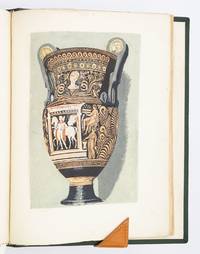
1886ref. 007461Paris 1886. Pebbled Cloth. Very Good. Spectacular catalogue with chromolithographic plates of ornate stoves heaters fireplaces. Elephantine Folio 49 by 34 cm. First color plate is double paged showing tile platterns followed by 23 color plates showing the company's products one stove or fireplace per plate. Double paged plate illustrates 97 samples of tiles. At end is a one page price list for January 1886. Curiously this price list doesn't correspond with the plates. Scarce -- no copies found of any catalogue issued by Debaecker or for Victor Vogt its predecessor firm on OCLC COPAC or KVK. Condition: rebacked inconspicuously. A fair amount of soiling on the boards. Occasional light soil on the leaves. Generally clean and illustrations remain bright and crisp. unknown books
ref. ST15039bAMcMinnville Oregon: Phillip J. Pirages 2019. ONE OF 84 COPIES in floral-patterned cloth from a total edition of 165 COPIES. Text: 244 x 154 mm. 9 1/8 x 6 1/8"; Case: 502 x 372 mm. 19 3/4 x 14 5/8". ii 75 pp. Bound in floral-patterned cloth after a Morris design by Amy Borezo who also constructed the case holding the volume and leaves. The book printed letterpress on Zerkall Book Laid Vellum paper by Arthur Larson at Horton Tank Graphics. Book layout by Jill Mann. EACH COPY WITH FIVE LEAVES: ONE FROM THE KELMSCOTT CHAUCER with one or more 10-line initials multiple six- and/or three-line initials AND ONE EACH FROM THE PRESSES OF FOUR GERMAN PRINTERS FROM THE 1470s--PETER SCHOEFFER JOHANN MENTELIN GÜNTHER ZAINER AND ANTON KOBERGER. ◆The incunabular leaves consistently excellent with only minor defects and the Kelmscott leaves which were never part of a bound volume in entirely fine condition. This is a unique leaf book in the way that it combines three elements: a significant private press production involving people at the top of their craft a scholarly commentary that contributes to a further understanding of the history of printing and--most important--five leaves: one from the Kelmscott Press "Works" of Geoffrey Chaucer and four from books issued by German printers at work in the 1470s. The book has been printed and bound by hand by gifted professionals; the essay addresses a topic of significance to typophiles in a considerably more thoroughgoing way than has been done before; and the assemblage of leaves represents a powerful visual reinforcement of the text as well as an opportunity to share in the ownership of four important incunabula along with the extraordinary Kelmscott Chaucer. The story of the production is heavy on serendipity: in the winter of 2012 after purchasing a very incomplete copy of the Kelmscott Chaucer at auction we considered the possibility of producing a leaf book but because the Chaucer--universally considered to be one of the most beautiful books ever printed--had been written about by so many different people in so many different ways we didn't know what aspect was left for us to explore. The one topic we fastened on as thus far inadequately examined is the origin of the work's typeface. We soon learned that Morris who is known to have owned more than 500 incunables most admired--and was consequently most likely to have been influenced in his typographic design by--Peter Schoeffer of Mainz Johann Mentelin of Strassburg Günther Zainer of Augsburg and Anton Koberger of Nuremberg. Over the course of the years succeeding the purchase of the defective Chaucer we were fortunate beyond all expectation to acquire incomplete books from each of these four eminent printers. As a result the present leaf book will allow the reader not only to read in the accompanying essay about the influence on Morris of his typographic forebears but also to compare with his or her own eyes the resemblances between the Kelmscott leaf and the leaves from four centuries earlier. We have additional copies of this binding available at different price points. Please contact us directly for more details. Phillip J. Pirages unknown books
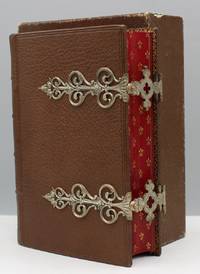
1855ref. 17474Paris: L. Curmer Éditeur 1855 First edition thus. Finely bound in brown morocco with metal fore-edge clasps. Spine titled in blind. Glossy red gauffered edges. Small octavo. . With eleven plates ten of which are beautifully chromolithographed including three plates with richly illustrated ornamental borders and hand-drawn gilt accents. The eleventh plate is printed in brown with a floral frame for an ownership signature. That plate is attractively hand-illustrated in color and gilt with the text "Laure & Oscar 29 Octobre 1862" in manuscript. Some toning to versos and margins of plates. Otherwise a fine bright copy of a scarce book in a matching custom slipcase and chemise. Henri Léon Curmer 1801 – 1870 is best remembered for publishing a landmark chromolithographed edition of L'Imitation de Jesus-Christ 1856 printed by Joseph Lemercier and Jules Claye. McLean calls Curmer's publication a "masterpiece of French chromolithography…in which over four hundred pages are decorated in almost every known style of ornamentation in up to fourteen colors" including medieval Renaissance and Islamic examples Victorian Book Design p. 166. In A History of Chromolithography 2013 Michael Twyman wrote that the book "took chromolithography into new territory" and required an enormous amount of labor and resources p. 158. An average of ten to twelve impressions were required for each page and the printing process used over nine hundred stones. L. Curmer, Éditeur books
1978ref. 17628Laguna Beach California: Laguna Verde Imprenta 1978 One of fifty copies printed for Lawrence Clark Powell and Archibald MacLeish 1892 – 1982. This is a reprint of MacLeish's poem "Poem" which originally appeared in A Miscellany of American Poetry 1927 with a foreword by Powell. When Powell expressed his interest in publishing the poem which had not appeared in MacLeish's collected poems MacLeish was "astonished" and told Powell "I have no memory of the poem and…I do not recognize the rhythms as mine. Original Cockerell marbled paper wrappers. . 9 in. x 4 in. . Printed decorations in blue and gold by Rex Brandt. Hand-set and printed by Ward Ritchie on an Albion hand press. Handmade paper. A fine copy. Ward Ritchie notes in the colophon that as a student he wrote to MacLeish for permission to print a poem of his. The result was Interrogate the Stones which Ritchie published in an edition of twenty-seven copies in the spring of 1929 while he was a student at Frank Wiggins Trade School in Los Angeles. Ritchie writes "Now these many years later I am happy to have the privilege of printing another of his poems on an Albion hand press with decorations by my friend Rex Brandt." Laguna Verde Imprenta,] books
1954ref. 3977Périgueux France: Imprimerie Ronteix 1954. Staplebound. Tan wraps. Very good. Unpaginated 17pp. Title: Extract from the General Catalog of all-purpose Labels for Canned Goods - Collection of "Cooking Dishes" labels. French colorful trade catalog with an emphasis on canned food products. Merchandise includes Cassoulet Tripe Foie Gras Patés and more. A signed typed letter in laid in from the owner of the business explaining the procedure to order and describing the companies ability to print any design a customer can think of. Clean and crisp copy. Imprimerie Ronteix paperback books
ref. ST15039aBMcMinnville Oregon: Phillip J. Pirages 2019. ONE OF 32 COPIES in linen-backed blue paper boards from a total edition of 165 COPIES. Text: 244 x 154 mm. 9 1/8 x 6 1/8"; Case: 502 x 372 mm. 19 3/4 x 14 5/8". ii 75 pp. Bound in linen-backed blue paper boards inspired by Kelmscott Press bindings by Amy Borezo who also constructed the case holding the volume and leaves. The book printed letterpress on Zerkall Book Laid Vellum paper by Arthur Larson at Horton Tank Graphics. Book layout by Jill Mann. EACH COPY WITH FIVE LEAVES: ONE FROM THE KELMSCOTT CHAUCER with text only AND ONE EACH FROM THE PRESSES OF FOUR GERMAN PRINTERS FROM THE 1470s--PETER SCHOEFFER JOHANN MENTELIN GÜNTHER ZAINER AND ANTON KOBERGER. ◆The incunabular leaves consistently excellent with only minor defects and the Kelmscott leaves which were never part of a bound volume in entirely fine condition. This is a unique leaf book in the way that it combines three elements: a significant private press production involving people at the top of their craft a scholarly commentary that contributes to a further understanding of the history of printing and--most important--five leaves: one from the Kelmscott Press "Works" of Geoffrey Chaucer and four from books issued by German printers at work in the 1470s. The book has been printed and bound by hand by gifted professionals; the essay addresses a topic of significance to typophiles in a considerably more thoroughgoing way than has been done before; and the assemblage of leaves represents a powerful visual reinforcement of the text as well as an opportunity to share in the ownership of four important incunabula along with the extraordinary Kelmscott Chaucer. The story of the production is heavy on serendipity: in the winter of 2012 after purchasing a very incomplete copy of the Kelmscott Chaucer at auction we considered the possibility of producing a leaf book but because the Chaucer--universally considered to be one of the most beautiful books ever printed--had been written about by so many different people in so many different ways we didn't know what aspect was left for us to explore. The one topic we fastened on as thus far inadequately examined is the origin of the work's typeface. We soon learned that Morris who is known to have owned more than 500 incunables most admired--and was consequently most likely to have been influenced in his typographic design by--Peter Schoeffer of Mainz Johann Mentelin of Strassburg Günther Zainer of Augsburg and Anton Koberger of Nuremberg. Over the course of the years succeeding the purchase of the defective Chaucer we were fortunate beyond all expectation to acquire incomplete books from each of these four eminent printers. As a result the present leaf book will allow the reader not only to read in the accompanying essay about the influence on Morris of his typographic forebears but also to compare with his or her own eyes the resemblances between the Kelmscott leaf and the leaves from four centuries earlier. We have additional copies of this binding available at different price points. Please contact us directly for more details. Phillip J. Pirages unknown books
1983ref. ST2862York: The Ebor Press 1983. 298 x 210 mm. 11 3/4 x 8 1/4". 2 p.l. 116 pp. Green paper wrappers. ◆In fine condition. . The Ebor Press unknown books
ref. B47456-8Cambridge 1970. 124pp. Illus. Sm. sq. 4to. Wraps. Cambridge, 1970. paperback books
ref. B115108-4Cambridge 1968. 64pp. Prof. illus. Sm. 4to. Boards 1/4 cloth. Edition limited to 500 numbered copies. Cambridge, 1968. hardcover books
ref. B26220-8Cambridge 1976. 32pp. 70 plates. Lrg. 8vo. Wraps. Cambridge, 1976. paperback books
1953ref. 74425New York NY: The Colton Press Inc. Very Good. 1953. Softcover. This magazine is soft-bound in pictorial covers. The cover wrappers show some light soiling to the covers as well as light wear to the edges and spine. There is some wear to the text-block but with the binding solid. The contents are bright and clean with illustrations and printing samples such as Metallic paper a Pop-Up and other samples. . The Colton Press, Inc. paperback books
1961ref. 59417Other: NY: Privately Printed. Very Good. 1961. Hardcover. NY: Privately Printed hardcover books
1952ref. 22664Paris: Eliane Norberg. 1952. First Edition; First Printing. Flexible vinyl. Soft flexible wraps loose gatherings laid in a numbered edition of 380 copies printed entirely on polyvinyl chloride plastic blue and white manufactured especially for this project and with more than half of the edition going to the two co-operating chemical companies Societe Interplast Paris and Societe Svenska Chemaco Sweden. This is one of only 160 copies distributed to the trade No. 330 with 23 engravings in color by Jean Boutet. Fine in clamshell box with see-through plastic cover. An amazing production and an obvious forerunner to Claes Oldenburg's "soft book". ; 4to 11" - 13" tall . Eliane Norberg unknown books
1976ref. 1344765Philadelphia: American Philosophical Society 1976. Reprinted. Hardcover. Octavo; VG-/G-; dark cream spine with blue text; reprinted; dust jacket shows some soiling smudges; several chips to edges; cloth exterior has only mild wear; tape mends inside dj; slightly rubbed edges; sturdy boards; text block edges have light ivory tone; mild offset to endpapers; interior pages clean; illustrated; pp 433. 1344765. FP New Rockville Stock. American Philosophical Society hardcover books