8,253 results
4to. (23) ff. Printed in red and black. With full-page woodcut on verso of title-page and 15 woodcut genealogical diagrams, some full-page. Modern half vellum over marbled boards. Important collection of commentaries on the canon law of marriage and inheritance among blood relations; a standard work of the Middle Ages that saw more than 59 incunabular editions. Compared to Höltzel's first issue, produced in 1505, the present edition has been expanded by 5 leaves. Of the 15 woodcuts showing various degrees of relation, six are by Hans Baldung Grien, whose first works of woodcut book illustration these are. The new woodcut on leaf e2v ist not by Baldung, but by an imitator. The finely printed woodcut on the verso of the title-page, the work of an unidentified artist, shows St. Jerome kneeling before a crucifix with a fortified city in the background. - Trimmed rather closely with insignificant loss to some of the printed marginal glosses. Light brownstaining to title-page; an old blue crayon annotation to the colophon. VD 16, J 321. BM-STC German 31. Adams A 1056. IA 105.179. Panzer VII, 443, 29. Oldenbourg L 2. Kat. Karlsruhe I Anm. Dodgson, Cat. I, 510, 23. Kat. Baldung-Ausstellung Nürnberg 1961, Nr. 26. Oettinger/Knappe, Nr. 71.
1932ref. 100711932 Paris, Brodard et Taupin, (1932) ; fort volume in-8°, pleine percaline vert tendre illustrée de médaillons à froid, titre et date doré sur fond orange au 1er plat et dos; 602pp. + feuillets d'annonces et feuillets de l'agenda non chiffrés (environ 300 pp.). Illustré dans le texte de photographies et hors texte de publicités en couleurs et d'un grand plan dépliant de Paris en noir.
1965ref. 24913New York N.Y.: No Publisher Noted 1965. 12 pages illustrated in color & black and white. With 24 numbered examples of illustrated artwork using various printing methods: silk screen linoleum and woodcuts combined woodcut & screen processes. Printed on glossy paper stock. Approx. 8" x 10 1/2" size oblong format simply side-stapled; the cover with the logo and text title; no other date text or explanatory material within; research indicates that this was the exhibition catalog for a gallery show of graphics at Peridot Gallery NY circa 1965. Cover paper darkened little wear; contents clean and in very good condition. First Printing. Soft Cover. Very Good. No Publisher Noted paperback
ref. 120816aafBasel, Wilhelm Haas, 1840, in-4to, Frontispiz lithogr. (Froben & Erasmus) (J. Pack lithogr. nach H. Hess del.) (Lithogr. Hasler & Cie) + 26 S., illustrierte Original-Broschüre.
ref. 68991aaf1740, in-Folio, 6 Blatt (12 S. mit gest. Kopfleiste und 1 Zierbuchstabe (Redinger 1740). Rückenbrochur (Brokatpapierstreifen), Faltspuren.
ref. 1020452757.Ghardcover. Good. Access codes and supplements are not guaranteed with used items. May be an ex-library book. hardcover
1980ref. LFA0070aUn ouvrage de 110 pages, format 210 x 280 mm, illustré, broché couverture rempliée, publié en 1980, Casterman, bon état
1951ref. LFA-126727701Un ouvrage de 47 pages, format 230 x 280 mm, broché, illustré, publié en 1951, A. Quillet, bon état
1981ref. LFA-126718588Une plaquette de 28 pages, format 145 x 230 mm, illustrée, brochée, publiée en 1981, Musée de l'Imprimerie et de la Banque, bon état
2007ref. LFA-126729287Un ouvrage de 197 pages, format 150 x 210 mm, broché, publié en 2007, Imprimerie Nationale, bon état
ref. 37459COLOR PRINTING CHRISTLICHES GEDENKBUCH. St. Louis: Eden Publishing House circa 1900. 8vo. Chromolithographic cloth binding all edges gilt. Unpaginated with 12 chromolithographic plates and all other pages with a pictorial border of flowers and nature scenes printed in brown ink. First edition. A stunningly fine copy with raised flowers on the spine and front board. Each month begins with a piece of biblical verse with a chromolithographic border and German text printed in several colors and gold. Rare. We could not find a copy cited by OCLC. The publication was meant for daily reflection on the bible. unknown
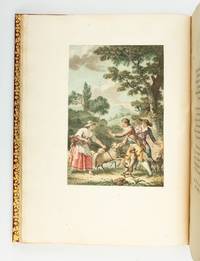
1793ref. ST20474Paris: Defer de Maisonneuve 1793. First Edition with these Illustrations. 350 x 262 mm. 13 3/4 x 10 1/4". 125 pp. VERY PRETTY 19TH CENTURY CRIMSON MOROCCO ELEGANTLY GILT covers framed with floral tools raised bands spine panels filled with rows of flower-and-lozenge roll gilt lettering gilt turn-ins top edges gilt. FOUR FINE STIPPLE-ENGRAVED PLATES by Colibert and Cazenave after Monsiau PRINTED IN COLORS. A Large Paper Copy. Cohen-de Ricci 400; Furstenberg 122; Lewine p. 188; Maggs 1930 Catalogue of French Illustrated Books 84; Ray p. 145. Occasional minor foxing the margins of one plate foxed a bit more otherwise a fine copy clean and fresh internally with immense margins the plates with pleasing colors and the unworn binding bright with gilt. This is an especially tall copy of Florian's pastoral romance in imitation of Cervantes one of the grander French books to be printed in colors when the vogue for such productions took hold during the last years of the 18th century. Ours is one of six such books all printed after 1786 that Ray singles out for praise as "handsome and imposing volumes." A noted painter of both classical and modern subjects Monsiau 1754-1837 was also an illustrator whose "abundant and interesting work in this line" is underrated even though it has the merits of being simple natural lively and piquant. Ray Monsiau's obscurity says Ray may be owing to the fact that he most often worked as a secondary collaborator on major illustrated works; the present book is one of the few he did on his own and it is among his best. Publisher Defer de Maisonneuve did not originate the technique of stipple engraving on copper plates but he did perfect the process which allowed for gradual tonal changes in hues and intensities of color rather than the "stained glass" effect of separately printed patches of color. Given the turmoil of the period when this book was published it is quite likely that it did not have an especially decorative original binding and may have remained in publisher's boards as was often the case. Happily a later owner supplied a period-appropriate binding here that matches the opulence of the contents. While our copy has the engraver's name just visible beneath the plates perhaps disqualifying them as the "avant la lettre" versions used in the Large Paper Copies per Cohen-de Ricci the size of the margins here and the quality of the paper certainly argue for that designation. Defer de Maisonneuve unknown
1875ref. 9365Paris: Ve. A. Morel 1875. First edition. 20 chromolithographic plates 5 uncolored architectural views. 1 vols. Folio. Half red morocco. Some rubbing and chipping with head of spine missing corners repaired with red cloth not unattractive. 2 Photographs of Sainte Chapelle loosely inserted paste marks to front free endpaper. Text and plates bright. First edition. 20 chromolithographic plates 5 uncolored architectural views. 1 vols. Folio. Very fine plates by Lemercier of Paris. Ve. A. Morel unknown
ref. 35708COLOR PRINTING PICTURES AND SONGS FOR THE LITTLE ONES AT HOME. London: Thomas Nelson and Sons 1865. 8vo. Publisher's cloth. 16 leaves printed on one side only with 15 color plates. First edition. This is a very nice example of color printing by Thomas Nelson who used a transfer lithography method very similar to Baxter's color printing technique. In it Nelson transferred the images from steel engravings as opposed to Baxter taking his images from wood blocks. Then Nelson used oil based colors to print the image as did Baxter producing very bright and vivid colors. The color images in this book are quite small 1 1/2 x 1 3/4 inches and are pasted on the pages all printed in brown ink with gold borders and vignettes that surround the color plates. Some sporadic foxing and slight cover discoloration but a good example of a seldom seen Victorian method of color printing. unknown
1822ref. ST17561London: Published for the Proprietor by Longman Hurst Rees Orme and Brown 1822 1823. FIRST EDITION ONE OF 227 COPIES. 288 x 220 mm. 11 3/8 x 8 5/8". 3 p.l. vi 2 100 8 103-118 pp. 2 leaves. Pleasing 20th century rich green crushed morocco gilt-framed covers and smooth spine gilt lettering to spine edges untrimmed. In a burgundy calf-backed clamshell box meant for this book but for some reason substantially larger green morocco title label on spine. WITH 60 ENGRAVED ILLUSTRATIONS as called for in Abbey 48 PRINTED IN COLORS including decorative title page dedication with Earl Spencer's coat of arms six plates with a total of 18 color ink specimens two type specimen plates four engravings of printing presses Columbian Press in two states one before letters nine defaced plates printed recto-verso and six headpieces three color printed 28 engraved plates printed in colors: five in a single block six in two to four blocks 14 in five to nine blocks and three full-color in 13 14 and 29 blocks respectively as called for in the contents and in Abbey. Front pastedown with the bookplate of the Robin Collection. Abbey Life 233; Ray "England" 99. Occasional mild thumbing otherwise nothing but the most trivial imperfections--quite a fine copy internally clean and fresh with pleasing colors in a very appealing unworn binding. This virtuoso production was in Ray's opinion Savage's magnum opus a work that was "both a highly idiosyncratic volume and a notable landmark in the history of color printing from wood." Printer and engraver William Savage 1770-1843 was in Ruari McLean's words "the first true colour printer of the nineteenth century in England." One of his great innovations which made possible color printing as seen here was a new formulation of ink. DNB reports "Printing ink in England at that time was of a very poor quality and Savage by various experiments made a printing ink without any oil in its composition. This made it more serviceable for artistic work and easier to manufacture." Savage's inks transferred so cleanly from the engraved wooden block to the paper that the blocks did not have to be wiped between impressions--speeding up the process considerably especially when as here one image could require up to 29 colored blocks. The oil-free inks were also less inclined to smear or to bleed through the paper. While Savage's elaborate methods were not economically viable for mass printing of color-illustrated works his improvements to printing ink and his use of multiple blocks paved the way for the use of chromolithography. The engravings in this work are rare because the work was strictly limited and because Savage despite some protests fulfilled his promise to subscribers that all the blocks would be destroyed. While the plate count in the work can vary from copy to copy the present item collates as indicated by the table of contents and includes Clymer's Columbian Press plate in two states as called for by Abbey. This work appears on the market from time to time but seldom in the kind of agreeable condition seen here. Published for the Proprietor by Longman, Hurst, Rees, Orme, and Brown unknown
1790ref. ST14261Paris: Drouhin 1790. FIRST EDITION. 265 x 205 mm. 10 3/8 x 8". Two volumes. VERY ATTRACTIVE CONTEMPORARY MARBLED CALF GILT IN A NEOCLASSICAL DESIGN covers with a cresting palmette frame featuring ornate urn ornaments at corners flat spine divided into compartments by Greek key roll floral spray centerpieces one green and one black label marbled endpapers. With 55 PLATES OF COSTUMES designed by Philippe Chéry and engraved by Pierre-Michel Alix 50 of these PRINTED IN COLOR five in black and white a couple of these with color highlights applied by hand and with a color portrait of the author from the 1802 edition tipped in at front. Colas 717; Hiler p. 542; Lipperheide 3203; Cohen-de Ricci 227; Brunet IV 1135. One corner worn to board joints and extremities lightly rubbed but the bindings lustrous and generally very attractive. First volume slightly browned throughout second volume occasionally so volume II with two-inch marginal stain to upper gutter affecting four quires and six plates but not touching text or images two plates with pen marks in margins touching lettering but not image other trivial defects but still an excellent copy internally the colors especially clear and pleasing. This is an elegant production with the Neoclassical binding being the perfect complement to the color engravings of ancient Greek and Roman costumes that illustrate the present history of theatrical attire. In the two volumes here theater critic and historian Jean Charles Le Vacher de Charnois 1749-92 covers Classical tragedies and comedies as well as later interpretations of these dramas by playwrights including Racine. Le Vacher de Charnois intended a series of books encompassing as the title indicates theatrical costumes from all nations and from the ancient to the modern; however the French Revolution interrupted his scheme and as a monarchist he was imprisoned in 1792 for his writings in support of the aristocracy. It was long thought that he had died in the massacres at the Abbaye prison in September of that year but later research indicates that he may have been executed during the Reign of Terror in 1794. The artists who illustrated this work were at the opposite end of the political spectrum. Painter Philippe Chéry 1759-1838 studied with Jacques-Louis David and adopted his master's passionate support for the Revolution as well as his Neoclassical style. Engraver Pierre-Michel Alix 1762-1817 was a specialist in color printing best known for his portraits of leaders of the French Revolution and later of Napoleon and First Empire dignitaries. While the handsome binding here is unsigned the palmette roll on the covers is very similar but not identical to one used by Bozerian see Culot "Jean-Claude Bozerian" roll #44 and plate #XXIV. Perhaps our binder had trained in that atelier as the design and workmanship are certainly of that level. Drouhin unknown
1902ref. 56590London 1902. 14 x 13-1/2 printed in colors blue purple brown yellow & green. The text and portrait of the King and Queen Alexandra are in blue inside a multi-colored floral border. Some wrinkled at the folds other wise fine. A remarkable survival. Fragile. "On the occasion of the Thanksgiving Service at St. Paul's on Sunday their Majesties will drive along Victoria Street the Embankment and Ludgate Hill returning by Holborn Street Oxford Street Hyde Park and Constitution Hill. unknown
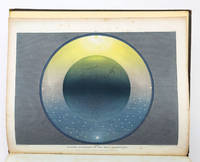
1846ref. ST19286London: Printed by Catchpool & Trent for Simpkin Marshall & Co 1846. FIRST EDITION. 320 x 255 mm. 12 1/2 x 10". xiii 3 96 pp. Publisher's original blind-decorated dun-colored cloth gilt titling to upper cover smooth spine newer endpapers. WITH 11 COLOR ENGRAVINGS after Frost by W. P. Chubb & Son printed in oil colors by George Baxter all with original tissue guards. Front free endpaper with small ink signature of John Hill. See: Francis Reid "Isaac Frost's 'Two Systems of Astronomy' 1846: Plebeian Resistance and Scriptural Astronomy" in "The British Journal for the History of Science" Vol. 38 No. 2 Jun. 2005 pp. 161-177. Cloth rather spotted corners bumped but the binding solid with no wear to joints or hinges. A few spots of foxing to title page half of the tissue guards with overall very faint foxing/browning the illustrations with minor foxing at edges and in margins but the images themselves clean and bright and all in all a really excellent copy the text wide-margined and quite clean and fresh and the plates with rich coloring. Illustrated with beautiful color plates this anti-Newtonian work promotes a view of the universe based on the backward-looking beliefs professed by a Protestant sect known as the Muggletonians. Named after co-founder Lodowicke Muggleton the Muggletonians emerged in London in 1651 based on the claims of two tailors who professed to be the "Last Witnesses" described in the Book of Revelation. Rejecting the new directions in philosophical reason Muggletonians believed in a purely scriptural interpretation of the universe. According to E. P. Thompson's 1994 "Witness Against the Beast" the Muggletonians had curious notions quite contrary to other Protestant denominations: they believed that the soul is mortal that Jesus and God are one and the same that Heaven was left without divine supervision from Jesus' death until the day of judgment that Heaven resides six miles above the Earth that God stands between five and six feet tall and other unconventional things. Although the sect initially avoided both worship and evangelizing during the 19th century some followers became more outspoken about their beliefs and even published books appealing to the general public. Our author Isaac Frost 1793-1858 was a prominent Muggletonian and successful owner of a brass foundry who along with his brother Joseph invested large sums to promote their belief system--the present work being an especially notable example. Divided into two main sections the text first describes the Newtonian system of heliocentric astronomy and then turns to Frost's scriptural interpretation and geocentric views. As Reid tells us "According to Frost Scripture clearly states that the Sun the Moon and the Stars are embedded in a firmament made of congealed water and revolve around the Earth that Heaven has a physical reality above and beyond the stars and that the planets and the Moon do not reflect the Sun's rays but are themselves independent sources of light. Our book was apparently written as a reaction against the lecturers who expressed Newtonian astronomy--which was often for them and their audiences simply shorthand for heliocentrism." The 11 plates that illustrate these extraordinary ideas are the work of George Baxter a pioneering printer who revolutionized color printing techniques by combining metal engravings with woodblock printing using oil-based inks to produce high-quality affordable prints. The plates here are appropriately ethereal and otherworldly utilizing a beautiful palette with subtle gradations and esoteric figures to create memorable pseudo-scientific imagery. Although this work appears at auction with some regularity it is almost always incomplete no doubt because the attractiveness of its plates encourages harvesting. Useful price comparisons include a complete copy said to be in fine condition selling for £7500 in 2016 and six loose prints from the book fetching £6875 in 2015. [Printed by Catchpool & Trent for] Simpkin, Marshall, & Co unknown
1822ref. ST17561London: Published for the Proprietor by Longman Hurst Rees Orme and Brown 1822 1823. FIRST EDITION ONE OF 227 COPIES. 288 x 220 mm. 11 3/8 x 8 5/8". 3 p.l. vi 2 100 8 103-118 pp. 2 leaves. Pleasing 20th century rich green crushed morocco gilt-framed covers and smooth spine gilt lettering to spine edges untrimmed. In a burgundy calf-backed clamshell box meant for this book but for some reason substantially larger green morocco title label on spine. WITH 60 ENGRAVED ILLUSTRATIONS as called for in Abbey 48 PRINTED IN COLORS including decorative title page dedication with Earl Spencer's coat of arms six plates with a total of 18 color ink specimens two type specimen plates four engravings of printing presses Columbian Press in two states one before letters nine defaced plates printed recto-verso and six headpieces three color printed 28 engraved plates printed in colors: five in a single block six in two to four blocks 14 in five to nine blocks and three full-color in 13 14 and 29 blocks respectively as called for in the contents and in Abbey. Front pastedown with the bookplate of the Robin Collection. Abbey Life 233; Ray "England" 99. Occasional mild thumbing otherwise nothing but the most trivial imperfections--quite a fine copy internally clean and fresh with pleasing colors in a very appealing unworn binding. This virtuoso production was in Ray's opinion Savage's magnum opus a work that was "both a highly idiosyncratic volume and a notable landmark in the history of color printing from wood." Printer and engraver William Savage 1770-1843 was in Ruari McLean's words "the first true colour printer of the nineteenth century in England." One of his great innovations which made possible color printing as seen here was a new formulation of ink. DNB reports "Printing ink in England at that time was of a very poor quality and Savage by various experiments made a printing ink without any oil in its composition. This made it more serviceable for artistic work and easier to manufacture." Savage's inks transferred so cleanly from the engraved wooden block to the paper that the blocks did not have to be wiped between impressions--speeding up the process considerably especially when as here one image could require up to 29 colored blocks. The oil-free inks were also less inclined to smear or to bleed through the paper. While Savage's elaborate methods were not economically viable for mass printing of color-illustrated works his improvements to printing ink and his use of multiple blocks paved the way for the use of chromolithography. The engravings in this work are rare because the work was strictly limited and because Savage despite some protests fulfilled his promise to subscribers that all the blocks would be destroyed. While the plate count in the work can vary from copy to copy the present item collates as indicated by the table of contents and includes Clymer's Columbian Press plate in two states as called for by Abbey. This work appears on the market from time to time but seldom in the kind of agreeable condition seen here. Published for the Proprietor by Longman, Hurst, Rees, Orme, and Brown unknown books
1902ref. 56590London 1902. 14 x 13-1/2 printed in colors blue purple brown yellow & green. The text and portrait of the King and Queen Alexandra are in blue inside a multi-colored floral border. Some wrinkled at the folds other wise fine. A remarkable survival. Fragile. "On the occasion of the Thanksgiving Service at St. Paul's on Sunday their Majesties will drive along Victoria Street the Embankment and Ludgate Hill returning by Holborn Street Oxford Street Hyde Park and Constitution Hill. unknown books
ref. 37459COLOR PRINTING CHRISTLICHES GEDENKBUCH. St. Louis: Eden Publishing House circa 1900. 8vo. Chromolithographic cloth binding all edges gilt. Unpaginated with 12 chromolithographic plates and all other pages with a pictorial border of flowers and nature scenes printed in brown ink. First edition. A stunningly fine copy with raised flowers on the spine and front board. Each month begins with a piece of biblical verse with a chromolithographic border and German text printed in several colors and gold. Rare. We could not find a copy cited by OCLC. The publication was meant for daily reflection on the bible. unknown books
ref. 35708COLOR PRINTING PICTURES AND SONGS FOR THE LITTLE ONES AT HOME. London: Thomas Nelson and Sons 1865. 8vo. Publisher's cloth. 16 leaves printed on one side only with 15 color plates. First edition. This is a very nice example of color printing by Thomas Nelson who used a transfer lithography method very similar to Baxter's color printing technique. In it Nelson transferred the images from steel engravings as opposed to Baxter taking his images from wood blocks. Then Nelson used oil based colors to print the image as did Baxter producing very bright and vivid colors. The color images in this book are quite small 1 1/2 x 1 3/4 inches and are pasted on the pages all printed in brown ink with gold borders and vignettes that surround the color plates. Some sporadic foxing and slight cover discoloration but a good example of a seldom seen Victorian method of color printing. unknown books
1875ref. 9365Paris: Ve. A. Morel 1875. First edition. 20 chromolithographic plates 5 uncolored architectural views. 1 vols. Folio. Half red morocco. Some rubbing and chipping with head of spine missing corners repaired with red cloth not unattractive. 2 Photographs of Sainte Chapelle loosely inserted paste marks to front free endpaper. Text and plates bright. First edition. 20 chromolithographic plates 5 uncolored architectural views. 1 vols. Folio. Very fine plates by Lemercier of Paris. Ve. A. Morel unknown books
1846ref. ST19286London: Printed by Catchpool & Trent for Simpkin Marshall & Co 1846. FIRST EDITION. 320 x 255 mm. 12 1/2 x 10". xiii 3 96 pp. Publisher's original blind-decorated dun-colored cloth gilt titling to upper cover smooth spine newer endpapers. WITH 11 COLOR ENGRAVINGS after Frost by W. P. Chubb & Son printed in oil colors by George Baxter all with original tissue guards. Front free endpaper with small ink signature of John Hill. See: Francis Reid "Isaac Frost's 'Two Systems of Astronomy' 1846: Plebeian Resistance and Scriptural Astronomy" in "The British Journal for the History of Science" Vol. 38 No. 2 Jun. 2005 pp. 161-177. Cloth rather spotted corners bumped but the binding solid with no wear to joints or hinges. A few spots of foxing to title page half of the tissue guards with overall very faint foxing/browning the illustrations with minor foxing at edges and in margins but the images themselves clean and bright and all in all a really excellent copy the text wide-margined and quite clean and fresh and the plates with rich coloring. Illustrated with beautiful color plates this anti-Newtonian work promotes a view of the universe based on the backward-looking beliefs professed by a Protestant sect known as the Muggletonians. Named after co-founder Lodowicke Muggleton the Muggletonians emerged in London in 1651 based on the claims of two tailors who professed to be the "Last Witnesses" described in the Book of Revelation. Rejecting the new directions in philosophical reason Muggletonians believed in a purely scriptural interpretation of the universe. According to E. P. Thompson's 1994 "Witness Against the Beast" the Muggletonians had curious notions quite contrary to other Protestant denominations: they believed that the soul is mortal that Jesus and God are one and the same that Heaven was left without divine supervision from Jesus' death until the day of judgment that Heaven resides six miles above the Earth that God stands between five and six feet tall and other unconventional things. Although the sect initially avoided both worship and evangelizing during the 19th century some followers became more outspoken about their beliefs and even published books appealing to the general public. Our author Isaac Frost 1793-1858 was a prominent Muggletonian and successful owner of a brass foundry who along with his brother Joseph invested large sums to promote their belief system--the present work being an especially notable example. Divided into two main sections the text first describes the Newtonian system of heliocentric astronomy and then turns to Frost's scriptural interpretation and geocentric views. As Reid tells us "According to Frost Scripture clearly states that the Sun the Moon and the Stars are embedded in a firmament made of congealed water and revolve around the Earth that Heaven has a physical reality above and beyond the stars and that the planets and the Moon do not reflect the Sun's rays but are themselves independent sources of light. Our book was apparently written as a reaction against the lecturers who expressed Newtonian astronomy--which was often for them and their audiences simply shorthand for heliocentrism." The 11 plates that illustrate these extraordinary ideas are the work of George Baxter a pioneering printer who revolutionized color printing techniques by combining metal engravings with woodblock printing using oil-based inks to produce high-quality affordable prints. The plates here are appropriately ethereal and otherworldly utilizing a beautiful palette with subtle gradations and esoteric figures to create memorable pseudo-scientific imagery. Although this work appears at auction with some regularity it is almost always incomplete no doubt because the attractiveness of its plates encourages harvesting. Useful price comparisons include a complete copy said to be in fine condition selling for £7500 in 2016 and six loose prints from the book fetching £6875 in 2015. [Printed by Catchpool & Trent for] Simpkin, Marshall, & Co unknown books
1793ref. ST20474Paris: Defer de Maisonneuve 1793. First Edition with these Illustrations. 350 x 262 mm. 13 3/4 x 10 1/4". 125 pp. VERY PRETTY 19TH CENTURY CRIMSON MOROCCO ELEGANTLY GILT covers framed with floral tools raised bands spine panels filled with rows of flower-and-lozenge roll gilt lettering gilt turn-ins top edges gilt. FOUR FINE STIPPLE-ENGRAVED PLATES by Colibert and Cazenave after Monsiau PRINTED IN COLORS. A Large Paper Copy. Cohen-de Ricci 400; Furstenberg 122; Lewine p. 188; Maggs 1930 Catalogue of French Illustrated Books 84; Ray p. 145. Occasional minor foxing the margins of one plate foxed a bit more otherwise a fine copy clean and fresh internally with immense margins the plates with pleasing colors and the unworn binding bright with gilt. This is an especially tall copy of Florian's pastoral romance in imitation of Cervantes one of the grander French books to be printed in colors when the vogue for such productions took hold during the last years of the 18th century. Ours is one of six such books all printed after 1786 that Ray singles out for praise as "handsome and imposing volumes." A noted painter of both classical and modern subjects Monsiau 1754-1837 was also an illustrator whose "abundant and interesting work in this line" is underrated even though it has the merits of being simple natural lively and piquant. Ray Monsiau's obscurity says Ray may be owing to the fact that he most often worked as a secondary collaborator on major illustrated works; the present book is one of the few he did on his own and it is among his best. Publisher Defer de Maisonneuve did not originate the technique of stipple engraving on copper plates but he did perfect the process which allowed for gradual tonal changes in hues and intensities of color rather than the "stained glass" effect of separately printed patches of color. Given the turmoil of the period when this book was published it is quite likely that it did not have an especially decorative original binding and may have remained in publisher's boards as was often the case. Happily a later owner supplied a period-appropriate binding here that matches the opulence of the contents. While our copy has the engraver's name just visible beneath the plates perhaps disqualifying them as the "avant la lettre" versions used in the Large Paper Copies per Cohen-de Ricci the size of the margins here and the quality of the paper certainly argue for that designation. Defer de Maisonneuve unknown books