Allied Printing Trades CouncilBiblio.com

8,253 results
ref. 0332024377.Ghardcover. Good. Access codes and supplements are not guaranteed with used items. May be an ex-library book. hardcover
196382p. 35 illustrations. Tall 8vo. Original red cloth binding. A very useful Gilbert & Sullivan Bibliography. **PRICE JUST REDUCED REF5
ref. 66672aafBrepols, Hes, 1993, gr. in-4to, 160 p., rich. ill., orig. hardbd., with DJ.
8vo. (168) pp. With printer's woodcut device to title-page and final page. 18th century full calf with remains of a gilt spine label; florally gilt spine; all edges red. Marbled endpapers. Silk divider. Scarce work on medicine among the Arabs, referencing Avicenna and Rhazes among other authorities. "The thought of the Arabs was not derivative [...] The original nature of Arab contributions has had an impact on Europe [...] The book by Jacobus Allaxinus found an audience for its treatise [...] on medical topics in the viewpoint of both European and Arabic medicine" (Jordan, The Mentally Retarded, p. 75). - Occasional light brownstains to margins, otherwise a very good, prettily bound copy. Rare: a single copy in auction records of the last 40 years internationally. BM-STC French 11. Durling 172. Wellcome I, 222. Jöcher I, 280. OCLC 14325907. Not in Adams.
1966ref. 126454Mainz, Vlg. d. Gutenberg-Ges. 1966. M. 19 Abb. 85 S. Pp. M. Rsign. St. a. Tit.
ref. DADAX1593076738New unknown
1810ref. 63501810 París: Chez Charles Barrois, Libraire, 1810 (Tomo I) (Imprimerie de Doublet) trés rare en edition originale . Tomo I : XVI, 438 p., 20x13,5 cm.Le tome 2 ne sera publié qu'en 1818, Ouvrage en bon état, sauf que, la reliure du dos est manquante sur une grande surface, le reste de la reliure est solide et propre .
2011New Turkish Paperback. Roy. 8vo. (24 x 17 cm). In Turkish. 148 p. Ayribasim. Osmanbey ve matbaasi: Ser-kurenâ Osman Bey'in hikâyesine ve Matbaa-i Osmaniye'nin tarihçesine medhal.
Folio (274 x 402 mm). (64), 406 pp., final blank leaf (and leaf *4 blank). Engraved title-page. With woodcut initials and 39 engraved illustrations (20 double-page). 17th c. green vellum, spine gilt in compartments. Marbled ebdpapers and edges. First edition. "One of the most beautifully printed treatises on military architecture of the entire century" (de la Croix). Alghisi worked for Ercole II and Alfonso II d'Este of Ferrara as both a civil and military architect, constructing churches and theatres as well as fortifications. He took a theoretical approach to fortress design, describing the plans for fortresses with increasing numbers of bastions, reaching the astounding number of 21 (the fortress of Palmanova was unusual in having as many as nine). Bastions had become an increasingly important element of fortifications during the 16th century as a result of the need to provide defence against cannon fire which tall medieval towers failed to do (providing, as they did, a large area for the cannon to target). Bastions were lower, thicker and provided a means for the defenders of a fortress to overlook the attackers from a platform large enough to hold cannons of their own. - Some brownstaining; rust mark on pp. 174-175 from a pair of scissors. A few engravings shaved. Joints cracking, spine-ends chipped. Provenance: from the collection of Thomas Fremantle, 3rd Baron Cottesloe (1862-1956), commander of the Territorial Army and president of the Society for Army History Research. Edit 16, CNCE 1140. Adams A 742. BM-STC Italian 19. Cockle 778. Jähns 803. D'Ayala 83. Berlin Kat. 3512. Marini 27. Riccardi I, 22f. Guarnieri 4. Haym IV, 112. Manzi 33. Breman 11, Horst de la Croix, "The Literature on Fortification in Renaissance Italy", Technology and Culture 4 [1963], pp. 30-50, here at p. 41. For the printer, see: D. E. Rhodes, Silent Printers. Anonymous printing at Venice in the sixteenth century, p. 9.
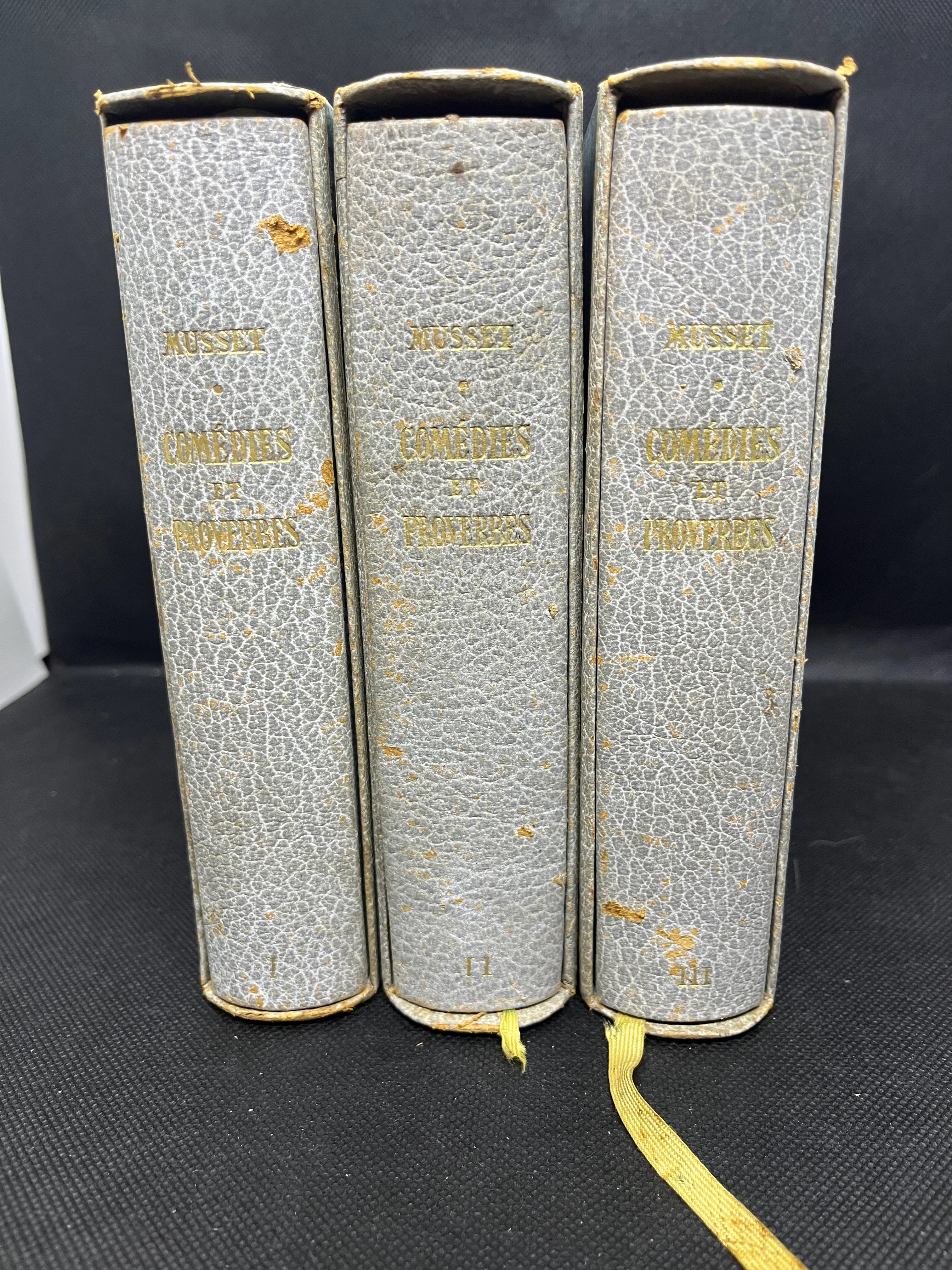
1950ref. FGP-4Comédies et proverbes Alfred de Musset 3 volumes complet 1950 Imprimeur Paris - Nice 1950. Edition illustrée de P. Leroy Livres reliés avec coffret au format in-8 (12x17,5cm). Couvertures et coffrets des volumes frottés. Intérieur des volumes en très bon état. Exemplaire numéroté : n°101.
1968ref. LFA-126723968Un ouvrage de 279 pages, format 120 x 185 mm, illustré, relié cartonnage, publié en 1968, Gérard Th. van Heusden, bon état, peu courant
1978ref. 6512Imprimerie Nationale 1978 369 pages in8. 1978. reliure editeur. 369 pages. Lorenzaccio est un drame romantique en cinq actes écrit par Alfred de Musset en 1834 inspiré d'une idée de George Sand. La pièce raconte l'histoire romancée de la tentative de révolution des Florentins pour renverser le pouvoir des Médicis en 1536-1537 en suivant le personnage tourmenté de Lorenzaccio qui tente de commettre un crime patriotique pour donner un sens à sa vie
1896ref. 27097paris Imprimerie Chaix 1896 Une Affichette Publicitaire [Fac-similé réduit de l'affiche originale], lithographiée en couleurs, format : 40 x 29 cm, Signé en bas à droite : STEINLEN, Timbre sec dans le coin inférieur droit : "Les Maîtres de l'affiche // Imprimerie Chaix", 1896 [Paris] : Les Maîtres de l'Affiche Editeur,
ref. 349681 page in4 - bon état - cachet - adresse au dos -
1978ref. 161016Grand Rapids, Mich.: Zondervan 1978. XV, (1), 482 Seiten. 8° (17,5-22,5 cm). Orig.-Leinenband mit Orig.-Schutzumschlag. [Hardcover / fest gebunden].
2003ref. ABE-1281108992Polygon Edinburgh 2003 RARE SIGNED FIRST PRINTING. Pristine first printing first impression as new signed. This charming novel is one of Smith's Professor Dr Moritz-Maria von Igelfeld 'Entertainments'. Brilliant captivating and a true tall tale. Unread copy signed on the title page. Language: eng Language: eng 0.0 Language: eng 0.0 Language: eng 0.0 Language: eng. Signed by Author. 1st Edition. Soft cover. As New. Polygon, Edinburgh paperback
8vo. (16), 279, (23) pp., final blank f. Half vellum using a leaf from an antiphonary. First Latin edition of Alessio's "De secretis", still in six books. The author is commonly identified with the alchemist Girolamo Ruscelli (1520-66). "Das Werk gehört nach Caillet zur 'haute philosophie hermetique'. Es enthält außer alchemistischen auch viele kosmetische Rezepte, ferner solche gegen Pest, Schlangengift, Ungeziefer, wie auch Konfekt, Einmachen von Früchten, Druckerschwärze, Putzmittel, Schlafmittel usw., des weiteren sehr frühe Beispiele zur Syphilis-Therapie und Arsenikverbindungen zur Haarvertilgung" (Horn/Arndt). "Une des premières éditions de ces célébres secrets que l'on considère comme merveilleux. Quelques personnes qui ont fait l'essai de plusieurs affirment que les résultats sont prodigieux" (Caillet). Sections on making wine, ink, soap, toothpaste, etc. From 1569 onwards Perna also published a German translation. - Somewhat brownstained and waterstained throughout; a few contemporary marginalia; extensive notes by a contemporary hand on reverse of title-page and at the end. Very rare; no copy in auction records of the past decades. VD 16, R 3835. Durling 110. Wellcome 178. Ferchl 455. Ferguson I, 22 (note). Duveen 15 (note). Cf. Caillet I, 177ff. Rosenthal 754. Graesse (Bib. magica) 50. Simon 33.
2023ref. 16762023 Couverture souple Paris, Gallimard, domaine de Chaumont sur Loire, 2023. Un volume in-8 (24 x 17 cm), broché, couverture illustrée, dans son étui cartonné avec motif gaufré au centre, tranches bleutées. 198 pages, illustrées de nombreuses reproductions d'oeuvres de l'artiste en noir et en couleurs. Cette édition de luxe comprend une eau-forte sous serpente, signée et numérotée par Alechinsky, imprimée à l'atelier Clot à Paris. Un des 99 exemplaires numérotés du tirage de tête (n°44). Ouvrage publié à l'occasion de l'exposition du 1er avril au 29 octobre 2023 au Centre d'arts et de nature du Domaine de Chaumont-sur-Loire. En tête d'ouvrage, texte d'Alechinsky "Vadrouille à l'âge lithique", dans lequel l'artiste revient sur son rapport concret à l'imprimerie. « Aller à l'imprimerie, c'est comme pousser la porte du bistrot, quitter l'égocentrisme de l'atelier d'artiste pour retrouver les mordus, les habitués du comptoir lithographique. On respire l'odeur de l'encre. On piétine le même plancher » (Ambidextre, 2019). Né en 1927 en Belgique, Pierre Alechinsky est une figure marquante de l'art contemporain, membre fondateur du groupe Cobra. Bel exemplaire, comme neuf, de cette édition originale.
4to, xxviii, [234], 105-189pp., orig. cloth, d.w.
1926112p. Beardsley style Art Nouveau endpapers and dust jacket designed by Frank Mechau. Decorative bordered title page. Some foxing. 8vo. Original full cloth binding, gold decorated and lettered. Binding worn with small loss at head of spine. Original dust jacket, spotted and torn with loss. Hardbound. Limited Edition of only 1010 copies of which 500 are for England and 510 for America. This copy is numbered 460. PRESS/W32
Second edition, 3 vols., royal 8vo (235 x 155 mm), large paper copy, [4], 425, [1]; [4], 434, [2]; xl, 420, [4]pp., with half-titles and engraved frontispiece portrait to first and second volumes as called for, 10 facsimile plates, 6 of which are double-page or folding, some occasional light spotting to text (mainly prelims), marbled endpapers, cont. red morocco, spines gilt extra, marbled boards, spines just slightly faded, uncut, t.e.g. an attractive set. This famous bibliography of the output of the Manutius family and their Aldine Press, 1494-1598, has remained the standard work on the subject and has been praised as a classic of its kind. Over 1,500 entries given. Provenance: From the library of Charles Butler (1821-1910), Warren Wood in Hatfield, Hertfordshire. The majority of the library was sold at Sotheby's, London, on 5 April 1911.
4to, numerous illustrs., (some coloured), orig. decorated wrappers, 86 lots.
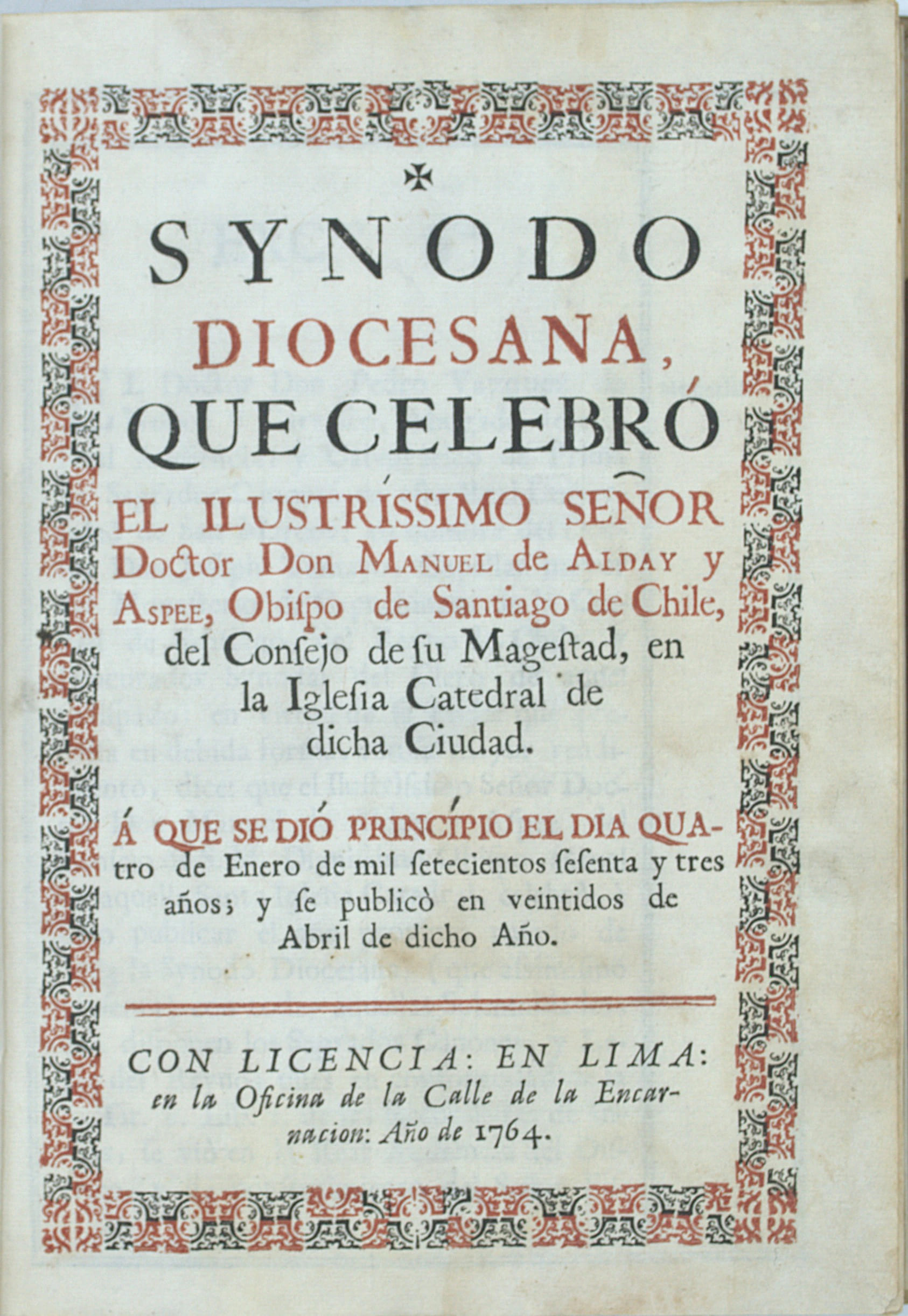
1764ref. PHO-2524Lima, Oficina de la Calle de la Encarnación, Imprenta Real, 1764. Grand in-4° (280 × 206 mm), 4ff.-170pp.-13ff. ; 7ff.-168 pp., relié en demi-vélin à coins, pièce de titre et de tomaison. 1 cahier bruni.
8vo. 256, (6) pp. With the title and imprint set in type in the cartouches of an elaborate woodcut architectural frame including atlantes, grotesque faces, garlands of fruit, etc., and Rouille's woodcut eagle and snake device in an oval window in a pendant hanging from the title-cartouche; 210 emblems (200 with woodcuts); nearly every page (with or without an emblem woodcut) in one of about 34 different richly decorated woodcut frames (generally in four pieces made for use together). There are 6 additional small woodcuts (plus many repeats), usually used as tailpieces, and 5 woodcut decorated initials (3 series of roman capitals in white on a pictorial background). Set in roman and italic types (some by Robert Granjon) including several of the earliest italics to use sloped capitals. Early 18th-century (Spanish?) sheepskin parchment, sewn on 2 supports, with a hollow back, with the title in manuscript across the head of the spine. Rouille issue of the first Spanish edition of the first emblem book, by the legal scholar Andrea Alciato (1492-1550) in Milan, first published in Latin at Augsburg in 1531 with only 104 emblems (97 with woodcuts), but greatly expanded up to the author's death. The present edition has more emblems and more woodcuts than any earlier edition, also more than the French and Italian editions by the same publishers in the same year and more than the competing editions by De Tournes. It brings the work nearly to its definitive form. The Macé issue of the present edition is identical except for the imprint and device on the title-page. Alciato not only produced a work that was to continue through hundreds of editions over the centuries, he invented a whole new genre, the emblem book, which combines allegorical images with a brief motto that aims to give the core of the idea and explanatory text (here in verse), the combination of text and image intended to give more meaning to both and to encourage contemplation by the reader. - The first authorized edition, published by Wechel at Paris in 1534, expanded the first edition and included 113 emblems. Aldo Manutio published a second volume at Venice in 1546, but it was in Lyon that the two volumes were first published together, by two competing firms: De Tournes produced an edition in 1547 with 113 + 86 = 199 emblems, but the 86 in the second volume have no woodcuts; Rouille (publisher) and Bonhomme (printer) produced an edition in 1548 with 201 emblems (128 with woodcuts). On 9 August 1548 they also received a privilege for translations into French, Italian and Spanish, and as these appeared they continued to expand the work. The present first Spanish edition of 1549 (one year before the author's death) therefore contains 210 emblems (200 with woodcuts). Ten emblems (all with woodcuts) therefore make their first appearance as emblems in the present edition, and it omits only 2 emblems published earlier: one that was considered obscene and another omitted for unclear reasons. These 212 emblems were to remain the definitive set for future editions. In most respects, the present Spanish edition follows the 1548 Latin edition but Bernardino Daza who translated it into Spanish claimed to have followed a printed copy with corrections in Alciato's hand, making the present Spanish text an essential source for the author's intentions, rather than just a translation. - Most of the emblems are based on episodes in classical literature, so that their woodcuts depict those scenes, but one shows a map and 14 show quite detailed botanical illustrations of different species of trees: these were cut for the great botanist Leonard Fuchs, De historia stirpum commentarii insignes, which also appeared in 1549. - Except for these trees, the emblem woodblocks are believed to have been cut by Pierre Eskrich. Many appeared in Bonhomme and Rouille's 1548 Latin edition and were based primarily on those cut by Bernard Salomon for Jean de Tournes's 1547 edition, but Eskrich made revisions and additions of his own and as the editions expanded he cut further blocks not based on Salomon. Of the 34 woodcut frames, at least 12 are signed, all with the initials "PV", identified as Pierre Vase, another name used by Eskrich. These present a tremendous wealth of grotesque faces, atlantes, caryatids, fantastic beasts, plants and various kinds of abstract ornament. Some show a single scene interrupted by the space left for the emblem and text (one shows a large ship, two show landscapes, etc.). - With several early owners' inscriptions, some struck through; a ca. 1815 bookseller's engraved label of Théophile Barrois, fils, libraire, Quai Voltaire, n°. 11, Paris, on salmon-coloured paper (35 x 54 mm); and an engraved armorial bookplate of the Dublin-born physician in Paris, Sir Robert Alexander Chermside MD (1787-1860). Lacking the final blank leaf R4. As in many copies, the descender of the 9 in the imprint date "1549" has not printed, so that the date looks like "1540" (this has lead to frequent references to a ghost edition of "1540"). A fraction of a millimetre has been shaved off the head of the woodcut frame on the title-page, there is a long tear along the gutter fold of bifolium O1.8, a couple corners of leaves torn off (not approaching the text or woodcuts), a tiny hole in the title-page, occasional and mostly marginal stains and a few marginal reinforcements. In spite of these defects, most leaves are in good or very good condition. Macé's presswork is somewhat inconsistent, but this has more effect on the woodcut frames than the emblem woodcuts (and since the frames repeat, one can generally find an example that has printed well). Adams, Rawles & Saunders F029. Baudrier IX, 167. Fairfax Murray (French) 9. Green, Andrea Alciati 36. Iberian books 63018. Landwehr, Romanic emblem books, 40. USTC 342602. Cf. Adams A614 (Bonhomme issue); Jammes, Emblèmes 5 (Bonhomme issue); Mortimer (French) 15 (1549 French ed.); Palau 6061 (Bonhomme issue); Praz, p. 250 (1548 & 1550 Latin eds.).
1955ref. 119715München, 1955. M. 61 Abb. 122 S. (Mitteil. d. Inst. d. Dt. Ges. f. Forsch. im Graph. Gewerbe 1/1).