N C Department of Labor and PrintingBiblio.com

8,124 results
ref. 0332938204.Ghardcover. Good. Access codes and supplements are not guaranteed with used items. May be an ex-library book. hardcover
ref. 0365839736.Gpaperback. Good. Access codes and supplements are not guaranteed with used items. May be an ex-library book. paperback
ref. 0366387251.Ghardcover. Good. Access codes and supplements are not guaranteed with used items. May be an ex-library book. hardcover
ref. 042875404X.Ghardcover. Good. Access codes and supplements are not guaranteed with used items. May be an ex-library book. hardcover
ref. 0428447546.Ghardcover. Good. Access codes and supplements are not guaranteed with used items. May be an ex-library book. hardcover
ref. 0666214972.Ghardcover. Good. Access codes and supplements are not guaranteed with used items. May be an ex-library book. hardcover
ref. 1332905684.Gpaperback. Good. Access codes and supplements are not guaranteed with used items. May be an ex-library book. paperback
ref. 0428020992.Gpaperback. Good. Access codes and supplements are not guaranteed with used items. May be an ex-library book. paperback
ref. 0267065035.Ghardcover. Good. Access codes and supplements are not guaranteed with used items. May be an ex-library book. hardcover
ref. 0483432822.Gpaperback. Good. Access codes and supplements are not guaranteed with used items. May be an ex-library book. paperback
ref. 0331337819.Gpaperback. Good. Access codes and supplements are not guaranteed with used items. May be an ex-library book. paperback
ref. 033133786X.Ghardcover. Good. Access codes and supplements are not guaranteed with used items. May be an ex-library book. hardcover
ref. NJ-BIO6-P6F7Hardcover. Good. G.P.O. hardcover. Original green cover with gilt decoration and lettering. Cover shows minor wear. Binding sound. Pages clean. hardcover
1977ref. 2090502113711182Not Available 1977. Soft Cover. Fine. The book is in fine condition. Not Available paperback
16mo (12.5 x 8 cm). [44], [4 blank], 499, [8], [5 blank] pp. With dozens of woodcut illustrations in text. Contemporary limp sheepskin parchment. Third edition in the original Latin, of the first part of Conrad Gesner's very popular book of secrets. It primarily concerns distillation and its use in making medicines, with most of the woodcuts illustrating furnaces, glassware and other equipment for distilling. It discusses the various kinds of distillation, the equipment and techniques, aqueous solutions, the making of medicines from a wide variety of plants, animals and minerals (including metal salts), extracting oils, etc. - "The work begins with a short historical introduction which says that the Greeks and Romans could not yet distil and claims that the art was invented by the Barbarians, Carthaginians and Arabs shortly after the famous Hellenistic physicians. He gives a few short notes on Arabian scientists like Mesue, Avicenna and Bulcasis, describing their methods of making rose-oil" (Forbes). - Conrad Gesner (1516-65), a Zurich scholar of remarkable breadth who wrote on bibliography, botany, zoology, medicine and pharmacology, published the first volume of his De remediis secretis in 1552 under the pseudonym Euonymus Philiatrus. It quickly went through many editions and was translated into French, German, Italian and English by 1559. A second part appeared posthumously, edited by Gesner's student Caspar Wolf (1532-1601) and Froschauer, who printed its first edition. - Binding soiled and a few stains and smudges throughout; a good copy. USTC 151668. Wellcome I, 2778. Not in Durling. Cf. Forbes, A short history of the art of distillation, pp. 120-126.
4to. (8), "225" [= 215], (1 blank); "80" [= 72] pp. Including: Nicander of Colophon. Alexipharmaca. In Nicander Theriaca scholia auctoris incerti, et vetusta et utilia. In eiusdem Alexipharmaca diversorum auctorum scholia. 3 parts in 1 volume. Each part with its own title-page, with a woodcut caduceus device on all three. Set in roman and Greek types. 17th-century(?) richly gold-tooled red morocco, gilt edges; subtly rebacked, with the original backstrip laid down. Bilingual edition (Greek & Latin) of two medical hexametric poems by the Hellenistic poet and physician Nicander of Colophon (fl. second century BC), followed by a part with ancient scholia in Greek. The two poems are followed by comments by its translator, the Parisian pharmacist Jean de Gorris (1505-1577). They were first published separately in 1549 and 1556 and here for the first time published together. Nicander wrote at least 20 works, but "only his Theriaca (958 hexameters on poisonous creatures and on antidotes for their bites and stings) and Alexipharmaca (630 hexameters on antidotes to poisons) are extant". - "Nicander's influence on later Greek and Latin literature was considerable. Not only did Virgil, Ovid, and Antoninus Liberalis draw on his works, but Lucan, Pliny the Elder, Erotian, Aelian, and Athenaeus of Naucratis also benefited from direct or indirect familiarity with Nicander. In the 1st century BC the enormously learned scholar Didymus ("Chalcenterus") appears to have made extensive use of Nicander's lexicographic contributions. Although Dioscorides only twice cites Nicander's views in his Materia Medica, Galen in his pharmacological works quotes a number of verse passages from Nicander. Papyrus fragments from the 1st to 3rd centuries AD further confirm Nicander's popularity in the Roman empire" (Von Staden). - With the bookplate of the British politician John Thynne, Baron Carteret of Hawnes, dated 1841. Washed, with some faint early manuscript notes. Durling notes that, like in our copy, a general title-page is lacking in their copy, but this appears to be as usual. Internally in very good condition. Rebacked, lower hinge weakened, front hinge professionally repaired. Durling 3341. USTC 160585. Wellcome I, 4530. Cf. H. Von Staden, "Nicander" in N. Wilson, Encyclopedia of ancient Greece (2006).
8vo. (48), 283, (5) pp. (including errata leaf and priviledge at end). - Bound with (II): Cardona, Juan Bautista. De expungendis haereticorum propriis nominibus etiam de libris qui de religione ex professo non tractant. Rome, Giuseppe de Angelis, 1576. 152 pp. With woodcut printer's device on title-page. Contemporary limp vellum with ms. spine title. First edition of this notorious 16th century defence of censorship, couched as a dialogue between Theotimus and Nicolaus, which includes biting attacks on authors who were thought to threaten public morals - notably Rabelais. Other widely-received works of a particularly corrupting character that Dupuyherbault (ca. 1490-1566) singles out for criticism include the Arthurian literary cycle, Merlin's prophecies (highly esteemed in the Middle Ages), Ogier the Dane, and especially the 13th century Roman de la Rose: indeed, the author of this work (he writes) must have suffered the fate of Judas, unless he repented of his sins (p. 131). Dupuyherbault is also one of the earliest scholars to note that catalogues of banned books are prone to being exploited as lists of recommended reading by persons who otherwise would have remained ignorant of their existence (p. 238). - Very rare: a single copy in auction records since 1963. A German translation appeared as early as 1581. - II: "A curious little work" (Reusch) in which Cardona, who was himself involved with the Roman Congregation's expurgation efforts, provides an elaborate argument for striking also the names of the heretic authors from their expurged books. The Spaniard J. B. Cardona (1511-89), bishop of Tortosa, suggests that this would bring greater honour to Christ while denying the heretic the honour he craves, whereas preserving their names would be tantamount to giving credit where none is due. The only cases in which the heretic authors' names are to be kept are those in which they are mentioned by pious or learned men with the purpose of refuting or slighting them. "A member of the Index Congregation, Cardinal Gabriel Paleotto, agreed with Cardona and prompted him to have his treatise printed. Gregory XIII accepted the dedication of the work and issued the relevant decree 'for the said reasons as well as for others'" (cf. Reusch I, 454). Rare; a single copy in auction records internationally. - Rather light browning throughout the volume, but an attractive and well-preserved book. I: BM-STC French 145. Adams D 1154. Reusch I, 284. - II: BM-STC Italian 149. Edit 16, CNCE 9486. Reusch I, 453f. OCLC 872432320. Not in Adams.
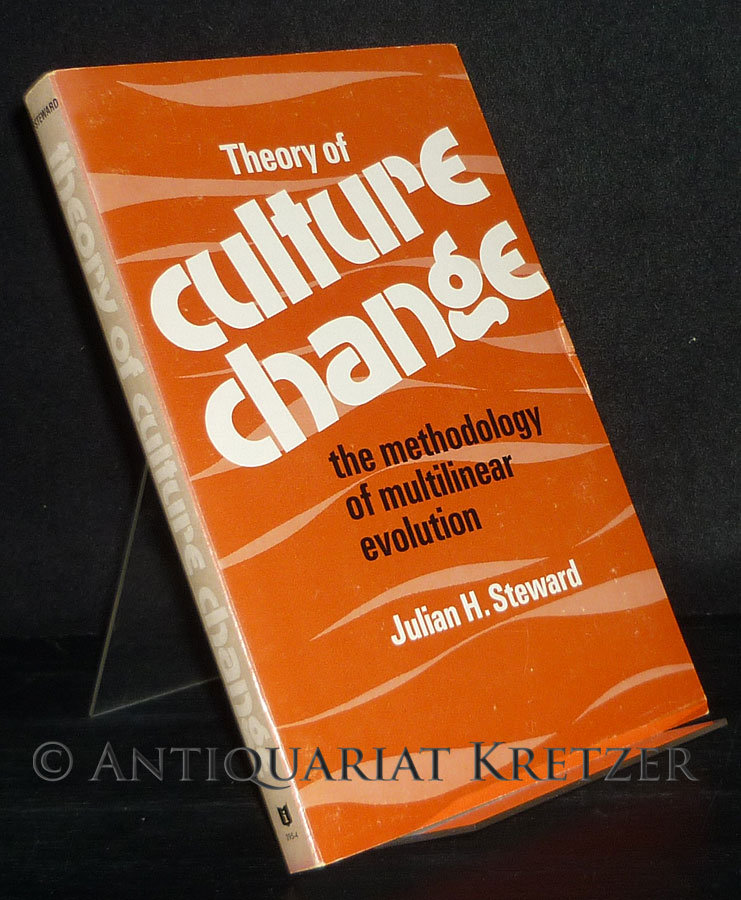
1972ref. 7104591Urbana, Chicago & London: University of Illinois Press 1972. (8), 244 Seiten. Gr. 8° (22,5-25 cm). Orig.-Broschur. [Softcover / Paperback].
ref. 1410205932.Gpaperback. Good. Access codes and supplements are not guaranteed with used items. May be an ex-library book. paperback
1903ref. 3448459Hamburg, Staackmann, 1903. II, 169 S. OBroschur (Umschlag leicht eingerissen).
1981ref. 161151Chicago: Moody Press 1981. XVII, 538; XVII, 541-1124 Seiten. Zweispaltiger Druck. 4° (25-35 cm). Orig.-Kunstlederbände mit goldgeprägten Titeln auf Deckeln und Rücken. [Hardcover / fest gebunden].
1996ref. 160993Peabody, Mass.: Hendrickson 1996. LXIII, 492; XI, 603; X, 694 Seiten. Gr. 8° (22,5-25 cm). Orig.-Kunstlederbände mit goldgeprägten Rückentiteln sowie mit Orig.-Schutzumschlägen. [Hardcover / fest gebunden].
8vo. (6), 351, (1) pp. With woodcut printer's device on title-page (repeated on verso of final leaf). 16th century brown ruled calf with later handwritten spine title. All edges red. First issue of the Leipzig edition, the second printing ever. Greek text throughout; Victorinus Strigel issued a Latin translation (not present here) to accompany it. - Theodoret, bishop of Cyrus (ca. 393-458) was an influential theologian of the School of Antioch. He played a pivotal role in several 5th century Byzantine Church controversies that led to various ecumenical acts and schisms and is considered "one of the principal Greek writers of the 5th century" (Tusc. Lex. Lit., p. 254). - Light browning and staining (more pronounced in first and last leaf). A few contemporary annotations. VD 16, T 768. Hoffmann I, 495. Graesse VI.2, 118. OCLC 54244694.
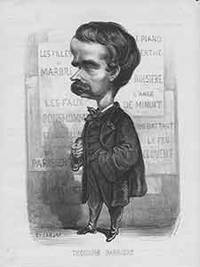
ref. 19-8255Paris: Le Boulevard ca. 1860s. 11.5 x 16.75 inches 29.5 x 42 cm. Unbound sheet. Good with creasing along top edge and tearing along sides. Original black and white 19th century lithograph by Etienne Carjat signature on left bottom corner: “Et. Carjat.” Additional text on bottom reads: ”Imp. Bertrauts Paris.” Published in Le Boulevard text verso. En Francais. Paris: Le Boulevard, [ca. 1860s]. unknown
First Edition, 21pp., 4 illustrs., orig. decorated cloth.