Wagner, RichardAntiquariat.de
1 538 résultats
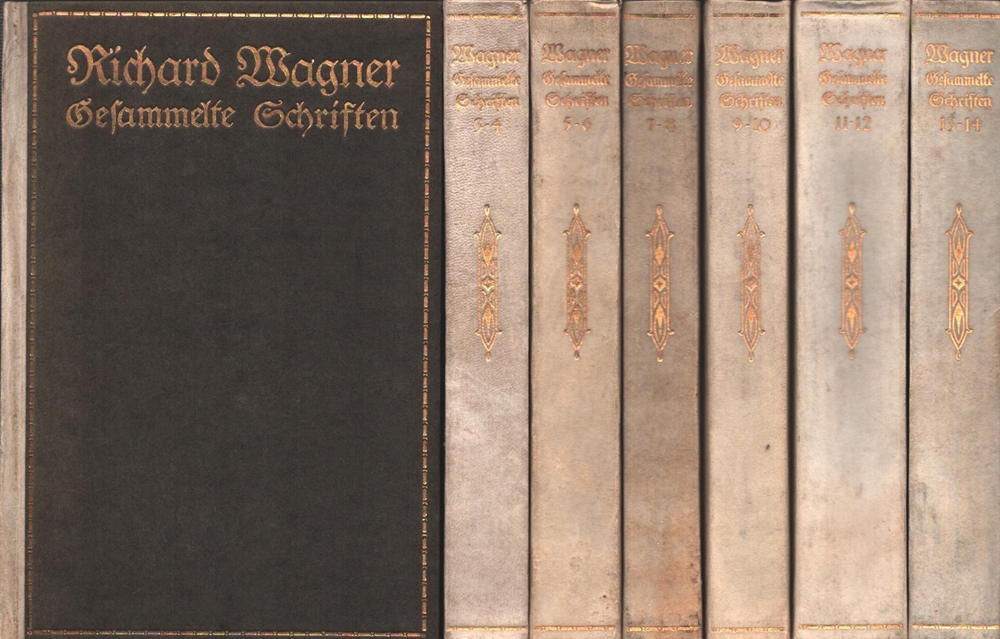
1914réf. 96405Leipzig, Hesse & Becker, 1914. [= Deutsche Klassiker-Bibliothek]. 18 cm. Goldgeprägt. OHPgt mit goldgeprägt. Deckeln und Kopfgoldschnitt.
1998réf. 014405Paris Editions Fallois - Collection "L'Age d'Homme" 1998 In-8 Broché, couverture illustrée
1958réf. 016113Paris - New York Hazan - Pierre Matisse - XXe Siécle 1958 En feuilles, couverture rempliée illustrée
1709réf. 77182Hamburg, Christian Liebezeit (Drucker: Spiering), 1709. Titel in Rot-Schwarz-Druck, 26 Bll., 527 S. Mit 1 Kpfr.-Frontispiz u. 1 gefalt. Kpfr.-Taf. (18 x 11,5 cm). Pgt. d. Zt.
réf. 38579Paris : sans mention d'éditeur, 1656 - un volume in-12 (14,5x7,5cm) plein vélin à lacets : reliure de l'époque, 527 pages, (6) feuillets + 148 pages et (4) feuillets - vélin légèrement froissé par l'usure du temps, rousseurs éparses et légère mouillure angulaire sur 10 pages sinon bon état -
Two volumes, complete. The "goig" is a typical Catalan art form ("gozo" in Spanish), dating back to the 16th century. It is a broadsheet with a printed poem dedicated to a specific saint, and illustrated with woodcuts or metalcuts. During the 20th century Ricard Vives Sabate was the only artist who kept this tradition alive. These two portfolios contain ten of his goigs, dedicated to those saints most venerated in Catalonia: Sant Jordi (St. George), La Nostra Senyora de Montserrat (Our Lady of Montserrat), Santa Eulalia, Santa Cecilia, Sant Ricard, La Mare de Deu de la Merce, Santa Anna, Sant Josep Oriol, Sant Oleguer, and Sant Lluis. Each of the goigs is printed by hand and illustrated with several metalcuts. From a total edition of 255 copies, each of these portfolios is one of only FIVE copies with the goigs printed on parchment and beautifully hand-illuminated in color and heightened with gold. Furthermore, each of the goigs is signed by the artist. Folio, hand-made paper wraps (also decorated with hand-illuminated metalcuts). Fine and bright, with no defects.
réf. 1713268612.Gpaperback. Good. Access codes and supplements are not guaranteed with used items. May be an ex-library book. paperback
2019réf. BN540217M & M Limitless Online Inc. 2019. 2019. Trauma Toolbox: Techniques Your Doctor Won't Tell You About Healing Trauma Trauma Toolbox: Techniques Your Doctor Won't Tell You About Healing Trauma Vitela Michael und Lawrence Conley M & M Limitless Online Inc. unknown
1927réf. 004903Paris NRF 1927 In-12 Broché Edition originale
réf. 2047Lithographies originales de René Demeurisse. Texte latin et traduction nouvelle de Henry Charpentier.P, Éd. Galatea 1946, Grd. in-4 ( 33,5 x 26 cm) de (8) 135 (5) pp. Impression bicolore rouge et noire. Toutes les pages de la partie texte en latin (p. 1 à 79) sont lithographiées soit à pleine page, soit en accompagnement du texte, certaines ill. sur les deux pages. En-têtes et culs de lampe Pour la traduction : vignette de titre, 11 en-têtes, 10 culs de lampe et 2 "à pleine page". Plein vélin à la Bradel doublé, titre doré; couv. entiérement cons., dont le plat sup. porte une litho tirée en sanguine. Tirage à 220 ex., un des 180 sur papier vélin à la forme d'Auvergne. belle réalisation.
1933réf. 012539Paris G.l.m. - Collection "Echantillons" n°2 1933 Plaquette in-16 En feuilles, couverture à rabat
1947réf. 014104Paris Cartier 1947 In-4 en feuilles, couverture rempliée
1905réf. 2407Paris, Librairie des Amateurs, Ferroud, 1905 ; petit in-8, broché ; (3) ff. (bl., faux-titre, titre), 45 pp., (2) ff. (achevé d'imprimer, bl.) ; 10 illustrations en noir et trois états ; couverture beige à rabats imprimée en rouge et noir.
1947réf. 014103Paris Cartier 1947 In-4 en feuilles, couverture rempliée
réf. 4053in 12 carré broché,couverture rempliée illustrée avec titre. Titre au dos en long. aux-titre,frontispice, titre, 206 pages, 20 illustrations hors-texte en sépia de Françoise-Emilie DANGON exemplaire numéroté sur vélin supérieur Collection Le ballet des Muses Novembre 1947.
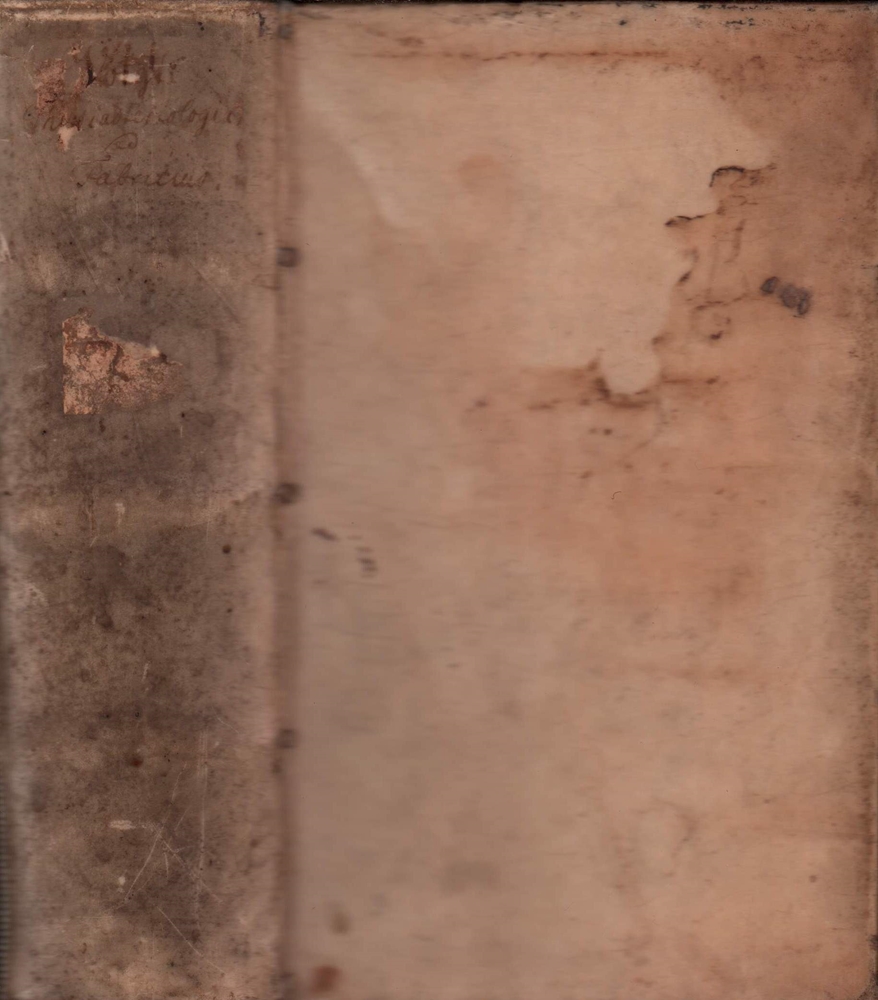
1622réf. 19912Paris, Jean Houzé, 1622 ; in 4°, vélin moucheté de l’époque ; [8], 514, [22] pp.
1951réf. 010157Paris Gibert Jeune Librairie d'Amateurs 1951 In-8 Broché, couverture illustrée
1911réf. 010814Paris Bibliothèque de l'Occident 1911 Broché, couverture rempliée.
réf. 5237Paris, Georges Crès et Cie, 1914 13 x 19, 541 pp., broché, bon état
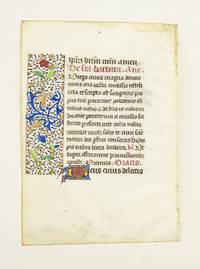
1450réf. ST11774DParis ca. 1450. 159 x 108 mm. 6 1/4 x 4 1/4". Single column 15 lines per page in an excellent gothic book hand. Rubrics in red each leaf with two or more two-line initials in burnished gold on red and blue ground with white tracery some also with one-line initials and line fillers similarly decorated one or both sides with a swirling panel border featuring flowers leaves strawberries and many burnished gold ivy leaves on hairline stems. Isolated trivial stains or imperfections but VERY BRIGHT CLEAN AND FRESH. In fine condition beautifully decorated and sparkling with gold these leaves are marvelous examples of a high-quality Parisian Book of Hours made for a person of means. The borders here are especially pleasing with skeins of hairline vines accented by burnished bezants and ivy bright blue and gold acanthus pale green leaves and cheerful red blossoms. For leaves at other price points please check our website. unknown books
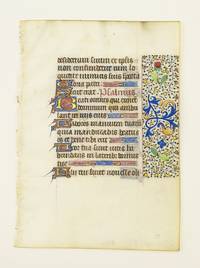
1450réf. ST11774EParis ca. 1450. 159 x 108 mm. 6 1/4 x 4 1/4". Single column 15 lines per page in an excellent gothic book hand. Rubrics in red each leaf with line fillers and multiple one- and two-line initials in burinshed gold on red and blue ground with white tracery one or both sides with swirling panel border featuring flowers leaves strawberries and many burnished gold ivy leaves on hairline stems. Isolated trivial stains or imperfections but VERY BRIGHT CLEAN AND FRESH. In fine condition beautifully decorated and sparkling with gold these leaves are marvelous examples of a high-quality Parisian Book of Hours made for a person of means. The borders here are especially pleasing with skeins of hairline vines accented by burnished bezants and ivy bright blue and gold acanthus pale green leaves and cheerful red blossoms. For leaves at other price points please check our website. unknown books
1450réf. ST11774DParis ca. 1450. 159 x 108 mm. 6 1/4 x 4 1/4". Single column 15 lines per page in an excellent gothic book hand. Rubrics in red each leaf with two or more two-line initials in burnished gold on red and blue ground with white tracery some also with one-line initials and line fillers similarly decorated one or both sides with a swirling panel border featuring flowers leaves strawberries and many burnished gold ivy leaves on hairline stems. Isolated trivial stains or imperfections but VERY BRIGHT CLEAN AND FRESH. In fine condition beautifully decorated and sparkling with gold these leaves are marvelous examples of a high-quality Parisian Book of Hours made for a person of means. The borders here are especially pleasing with skeins of hairline vines accented by burnished bezants and ivy bright blue and gold acanthus pale green leaves and cheerful red blossoms. For leaves at other price points please check our website. unknown
1450réf. ST11774EParis ca. 1450. 159 x 108 mm. 6 1/4 x 4 1/4". Single column 15 lines per page in an excellent gothic book hand. Rubrics in red each leaf with line fillers and multiple one- and two-line initials in burinshed gold on red and blue ground with white tracery one or both sides with swirling panel border featuring flowers leaves strawberries and many burnished gold ivy leaves on hairline stems. Isolated trivial stains or imperfections but VERY BRIGHT CLEAN AND FRESH. In fine condition beautifully decorated and sparkling with gold these leaves are marvelous examples of a high-quality Parisian Book of Hours made for a person of means. The borders here are especially pleasing with skeins of hairline vines accented by burnished bezants and ivy bright blue and gold acanthus pale green leaves and cheerful red blossoms. For leaves at other price points please check our website. unknown
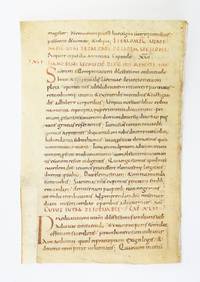
réf. ST17767BEGermany second quarter of ninth century. Each leaf approximately 305 x 205 mm 12 x 8". Single column 29-30 lines in a large and extremely legible Caroline minuscule. Rubrics in red each leaf with one or more large initials in red. Text with a few contemporary corrections and erasures. Accompanied by a copy of a letter from Bernhard Bischoff dating the manuscript leaves. ◆Vellum a little toned and soiled one leaf with an old repair to the bottom third of the outer margin minor folds small stains and other trivial imperfections but IN EXTREMELY FINE CONDITION the lettering clear and legible the vellum in excellent shape and the margins surprisingly comfortable. These are nothing short of magnificent specimens and remarkable survivals with wide borders all around with entirely clear and distinct script with only minimal overall dust soiling and with strength and freshness to the vellum; the leaves present a powerful redolence of a time as far in the past as one could optimistically hope to encounter among Western manuscript artifacts in the marketplace. The script here is an outstanding example of the highly legible Caroline minuscule that dominated Europe in the ninth century characterized by clear letter forms ample spacing between letters and between lines and very few abbreviations the most common occurrence being "&" for "et" occurring anywhere in a word. The parent manuscript was almost certainly a Homiliary containing sermons by various Christian authors to be said throughout the year with the present leaves containing passages from part of Leo I Sermo XCV and parts of a tractatus on Luke by Ambrose as well as other lections readings for the Vigil of the Feast of St Peter and the Feast of the Octave of Pentecost and the opening of a sermon of Leo I for Feria IV mensis IV; four other sister leaves are known and contain additional passages from Leo I and Ambrose as well as Pope Gregory I and readings for various feast days. The presence of these texts suggest that the leaves might have come from a Homiliary originally composed by Paul the Deacon at the behest of Charlemagne a version that was widely circulated throughout the Carolingian Empire in the eighth and ninth centuries. Although the scriptorium in which these leaves were produced has yet to be determined we can say with confidence that they date to the second quarter of the ninth century due to the style of the script as stated in the accompanying letter by esteemed paleographer Bernard Bischoff. Much of their history over the last 12 centuries remains a mystery but we do know that three of the extant leaves were in the possession of dealer Bruce Ferrini by 1989 with his stock number beginning "VM" and two bear the stock numbers and price codes of Quaritch. All were acquired by Martin Schøyen and became part of the renowned Schøyen collection MS 587. Very early leaves such as these often survive only because they come from manuscripts that were dismembered with the leaves then being reused as binding scrap; when later recovered they are typically in lamentable condition. The present leaves by contrast met no such fate--they have always been intact and untouched by the binder and so show none of the staining and trimming that are almost always present with repurposed leaves from demolished manuscripts. This notably fine state of preservation is rarely seen on the market. As a consequence these specimens are not only among the earliest leaves we have ever offered for sale but also some of the most extraordinary survivals we have ever acquired. We have bought and sold only a handful of ninth century leaves in our 45 years in business; in the present case because we were extremely lucky to acquire a small collection of six leaves from a single source we are able to offer them here at an advantageous price point. unknown books
réf. ST17767BEGermany second quarter of ninth century. Each leaf approximately 305 x 205 mm 12 x 8". Single column 29-30 lines in a large and extremely legible Caroline minuscule. Rubrics in red each leaf with one or more large initials in red. Text with a few contemporary corrections and erasures. Accompanied by a copy of a letter from Bernhard Bischoff dating the manuscript leaves. ◆Vellum a little toned and soiled one leaf with an old repair to the bottom third of the outer margin minor folds small stains and other trivial imperfections but IN EXTREMELY FINE CONDITION the lettering clear and legible the vellum in excellent shape and the margins surprisingly comfortable. These are nothing short of magnificent specimens and remarkable survivals with wide borders all around with entirely clear and distinct script with only minimal overall dust soiling and with strength and freshness to the vellum; the leaves present a powerful redolence of a time as far in the past as one could optimistically hope to encounter among Western manuscript artifacts in the marketplace. The script here is an outstanding example of the highly legible Caroline minuscule that dominated Europe in the ninth century characterized by clear letter forms ample spacing between letters and between lines and very few abbreviations the most common occurrence being "&" for "et" occurring anywhere in a word. The parent manuscript was almost certainly a Homiliary containing sermons by various Christian authors to be said throughout the year with the present leaves containing passages from part of Leo I Sermo XCV and parts of a tractatus on Luke by Ambrose as well as other lections readings for the Vigil of the Feast of St Peter and the Feast of the Octave of Pentecost and the opening of a sermon of Leo I for Feria IV mensis IV; four other sister leaves are known and contain additional passages from Leo I and Ambrose as well as Pope Gregory I and readings for various feast days. The presence of these texts suggest that the leaves might have come from a Homiliary originally composed by Paul the Deacon at the behest of Charlemagne a version that was widely circulated throughout the Carolingian Empire in the eighth and ninth centuries. Although the scriptorium in which these leaves were produced has yet to be determined we can say with confidence that they date to the second quarter of the ninth century due to the style of the script as stated in the accompanying letter by esteemed paleographer Bernard Bischoff. Much of their history over the last 12 centuries remains a mystery but we do know that three of the extant leaves were in the possession of dealer Bruce Ferrini by 1989 with his stock number beginning "VM" and two bear the stock numbers and price codes of Quaritch. All were acquired by Martin Schøyen and became part of the renowned Schøyen collection MS 587. Very early leaves such as these often survive only because they come from manuscripts that were dismembered with the leaves then being reused as binding scrap; when later recovered they are typically in lamentable condition. The present leaves by contrast met no such fate--they have always been intact and untouched by the binder and so show none of the staining and trimming that are almost always present with repurposed leaves from demolished manuscripts. This notably fine state of preservation is rarely seen on the market. As a consequence these specimens are not only among the earliest leaves we have ever offered for sale but also some of the most extraordinary survivals we have ever acquired. We have bought and sold only a handful of ninth century leaves in our 45 years in business; in the present case because we were extremely lucky to acquire a small collection of six leaves from a single source we are able to offer them here at an advantageous price point. unknown