Pierre LotiLivre Rare Book

1 534 résultats
1924réf. 11347Calmann-Lévy Éditeurs 1924 377 pages in8. 1924. Broché avec jaquette. 377 pages.
1929réf. 260431929. L'Edition d'Art H. Piazza, Paris. Mit 12 Farbtafeln und Abbildungen von Kay Nielsen. Originalbroschur im Originalschuber. 117, [3] Seiten.
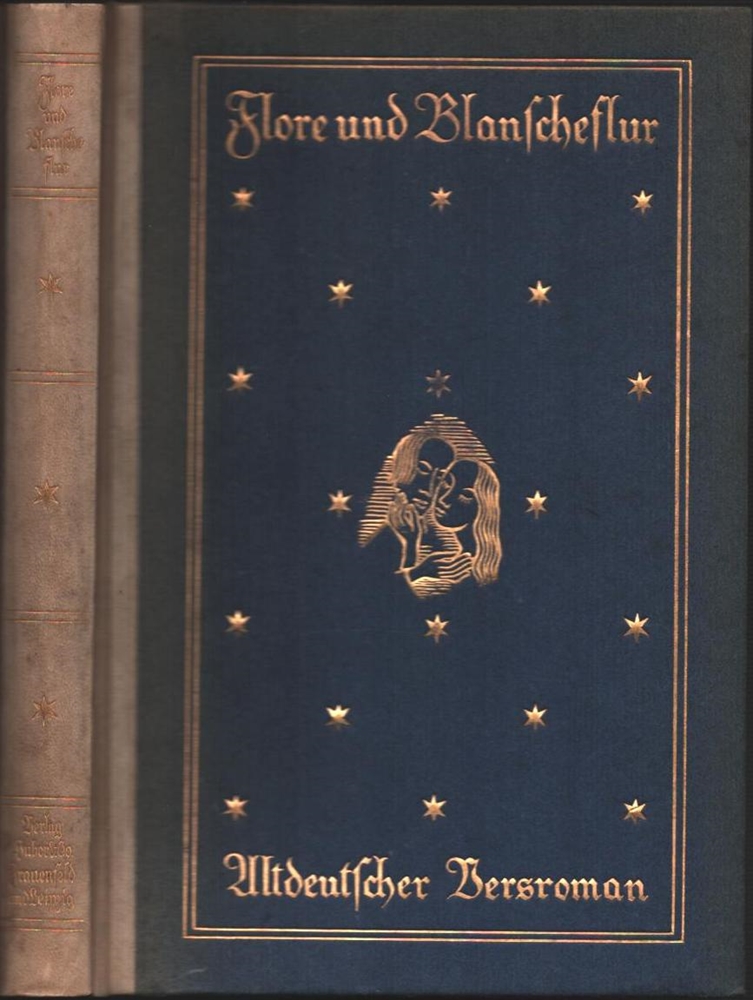
1924réf. 96454Frauenfeld (Schweiz) & Leipzig, Huber, 1924. VIII, 240 S. 19,5 cm. OHPgt. mit Goldprägung u. Farbkopfschnitt.
1913réf. 88686Berlin, J.G.Cotta, 1913. 348 S. 18,5 cm. Privat. HALBPERGAMENT mit Pergamentecken, gebatikter Deckelbezug.
réf. 25628Paris, Calmann-Levy, 1925 13.4x19.8 cm., 306 pp., relie, demi-maroquin bleu, filet dore cernant les plats de pap., dos a 5 nerfs et finnement fleuronnes dores (decor floral), tete doree, couverture imprimee d'editeur. Relie par Laurent Peeters - Anvers. Tirage limite. Tirage de 1800 ex. numerotes sur papier velin du marais.
1976réf. boz_006823Jean Tardieu - Formeries - EO 1/20 sur vélin d'Arches Arjomari-Prioux - 1976 Auteur : Jean Tardieu Titre : Formeries, poèmes Édition : Éditions Gallimard (nrf), Paris, 1976 Tirage : Édition originale, exemplaire n 18, l'un des 20 exemplaires de tête numérotés sur vélin d'Arches Arjomari-Prioux Reliure : Ouvrage broché sous couverture souple imprimée. Exemplaire tel que paru, avec ses marges non coupées. Dimensions : 15,2 x 22 cm État : Très bel exemplaire. Intérieur frais, Couverture propre. Présence d'un billet nominatif d'entrée pour une séance au Centre Georges Pompidou en 1993à. Voir photos pour plus de détails. Nombre de pages : 97 pages.
1948réf. 015871Paris Les Actes des Apotres, Charles de Jonquières Editeur 1948 In-12 Reliure Ed. originale
1973réf. 015726Paris La Rubeline 1973 In-4 carré En feuilles, couverture, emboitage toilé illustré
1945réf. 13419ÉDITIONS ÉMILE-PAUL FRÈRES 1945 29 pages in12. 1945. Broché couverture rempliée. 29 pages. Ce recueil rassemble des lettres de Rainer Maria Rilke datées de 1914-1915 où le poète exprime sa révolte face aux mensonges guerriers et son sentiment d'exil forcé de Paris. Son témoignage marqué par un pacifisme tragique prend une résonance nouvelle en rappelant l'indignation nécessaire devant toutes les barbaries
1921réf. 96148Tübingen, A. Fischer, 1921. 132 S. Druck in Rot und Schwarz. 19 cm. OHPgt mit goldgeprägtem Rückentitel.
1915réf. ST17129-042Chicago: Written and Illuminated for The Renaissance Society ca. 1915. 216 x 153 mm. 8 1/2 x 6". ii 28 pp. 1 leaf colophon. Single column 18 lines in an attractive calligraphic hand. VERY PRETTY VIOLET CRUSHED MOROCCO GILT AND INLAID for The Renaissance Society stamp-signed in gilt on front doublure smooth spine with gilt titling FULL MOROCCO DOUBLURES consisting of a green morocco panel framed by purple morocco with gilt dots and scrolling floral motifs at each corner each with an inlaid white morocco flower cream-colored watered silk endleaves. In a lavender buckram chemise and matching purple morocco-backed slipcase with raised bands and gilt lettering. With many one-line initials in pink each leaf with a different two- to four-line initial in a different style with both painted and gilt elements and exuberantly decorated most leaves with a panel or "L"-shaped border ranging from simple lines to elaborate decorative bars a few borders with small landscapes and a total of FOUR FIGURAL SCENES decorative title page with colorful initials lettering and decorative flourishes text beginning with A HALF-PAGE MINIATURE OF ST. JEROME AT HIS DESK surrounded by A FULL BORDER of flowers gilt detailing and stylized heads of putti all by Louis Bauhan. Front free endpaper with bookplate of Phoebe Boyle. Leather with a slight chalky appearance silk endleaves starting to fray at fore edge a few leaves with a hint of waviness but THE MANUSCRIPT IN BEAUTIFUL CONDITION the vellum entirely clean and the paint especially bright and fresh. Exuberantly decorated by a major illustrator of the period this manuscript was commissioned and bound for The Renaissance Society of Chicago before making its way into the superb collection of American bibliophile Phoebe Boyle. The text here comes from a poem by "Atlantic Monthly" writer and editor Thomas Bailey Aldrich 1836-1907 imagining the agony and the ecstasy of St. Jerome as he sat down to write his translation of the Bible. The illumination though certainly inspired by the decorative programs of Medieval manuscripts is decidedly modern in appearance drawing on the Art Nouveau movement and utilizing bold color combinations and whimsical design motifs. It is not clear why the illustrator here Louis Bauhan 1855-1941 has used the ananym "Siuol Na-Huab" because there is no reason to hide responsibility for producing the clean elegant script the imaginative marginal decoration and the finished human and animal images that enliven the manuscript. Bauhan was a very successful painter and illustrator perhaps best known to the public as art editor of "Cosmopolitan Magazine" under John Brisben Walker who edited and published the magazine from 1889 to 1905. In 1881 Bauhan helped to found the Kit-Kat Club of New York a bohemian artists' and cultural association; he was persistently in demand as a book illustrator; and among other things he painted landscapes and portraits in oil. The colophon here states that the manuscript was written and illuminated for The Renaissance Society--an artistic group associated with the University of Chicago whose mission was to cultivate and promote modern art--and it was given an appropriately luxurious binding by the same organization. The manuscript was obviously valued highly enough to join the collection of Phoebe A. D. Boyle a client George Sutcliffe described as "rivalling the Medici in her patronage of the production of beautiful books." Shepherd "The Cinderella of the Arts" p. 63 Stephen Ratcliffe describes the Boyle collection as "unrivalled" for its jewelled bindings and modern illuminated manuscripts and any book from the Boyle collection which was put together with the greatest taste and discrimination is recognized as desirable beyond its intrinsic literary merit. Written and Illuminated for The Renaissance Society unknown
1915réf. ST17129-042Chicago: Written and Illuminated for The Renaissance Society ca. 1915. 216 x 153 mm. 8 1/2 x 6". ii 28 pp. 1 leaf colophon. Single column 18 lines in an attractive calligraphic hand. VERY PRETTY VIOLET CRUSHED MOROCCO GILT AND INLAID for The Renaissance Society stamp-signed in gilt on front doublure smooth spine with gilt titling FULL MOROCCO DOUBLURES consisting of a green morocco panel framed by purple morocco with gilt dots and scrolling floral motifs at each corner each with an inlaid white morocco flower cream-colored watered silk endleaves. In a lavender buckram chemise and matching purple morocco-backed slipcase with raised bands and gilt lettering. With many one-line initials in pink each leaf with a different two- to four-line initial in a different style with both painted and gilt elements and exuberantly decorated most leaves with a panel or "L"-shaped border ranging from simple lines to elaborate decorative bars a few borders with small landscapes and a total of FOUR FIGURAL SCENES decorative title page with colorful initials lettering and decorative flourishes text beginning with A HALF-PAGE MINIATURE OF ST. JEROME AT HIS DESK surrounded by A FULL BORDER of flowers gilt detailing and stylized heads of putti all by Louis Bauhan. Front free endpaper with bookplate of Phoebe Boyle. Leather with a slight chalky appearance silk endleaves starting to fray at fore edge a few leaves with a hint of waviness but THE MANUSCRIPT IN BEAUTIFUL CONDITION the vellum entirely clean and the paint especially bright and fresh. Exuberantly decorated by a major illustrator of the period this manuscript was commissioned and bound for The Renaissance Society of Chicago before making its way into the superb collection of American bibliophile Phoebe Boyle. The text here comes from a poem by "Atlantic Monthly" writer and editor Thomas Bailey Aldrich 1836-1907 imagining the agony and the ecstasy of St. Jerome as he sat down to write his translation of the Bible. The illumination though certainly inspired by the decorative programs of Medieval manuscripts is decidedly modern in appearance drawing on the Art Nouveau movement and utilizing bold color combinations and whimsical design motifs. It is not clear why the illustrator here Louis Bauhan 1855-1941 has used the ananym "Siuol Na-Huab" because there is no reason to hide responsibility for producing the clean elegant script the imaginative marginal decoration and the finished human and animal images that enliven the manuscript. Bauhan was a very successful painter and illustrator perhaps best known to the public as art editor of "Cosmopolitan Magazine" under John Brisben Walker who edited and published the magazine from 1889 to 1905. In 1881 Bauhan helped to found the Kit-Kat Club of New York a bohemian artists' and cultural association; he was persistently in demand as a book illustrator; and among other things he painted landscapes and portraits in oil. The colophon here states that the manuscript was written and illuminated for The Renaissance Society--an artistic group associated with the University of Chicago whose mission was to cultivate and promote modern art--and it was given an appropriately luxurious binding by the same organization. The manuscript was obviously valued highly enough to join the collection of Phoebe A. D. Boyle a client George Sutcliffe described as "rivalling the Medici in her patronage of the production of beautiful books." Shepherd "The Cinderella of the Arts" p. 63 Stephen Ratcliffe describes the Boyle collection as "unrivalled" for its jewelled bindings and modern illuminated manuscripts and any book from the Boyle collection which was put together with the greatest taste and discrimination is recognized as desirable beyond its intrinsic literary merit. Written and Illuminated for The Renaissance Society unknown books
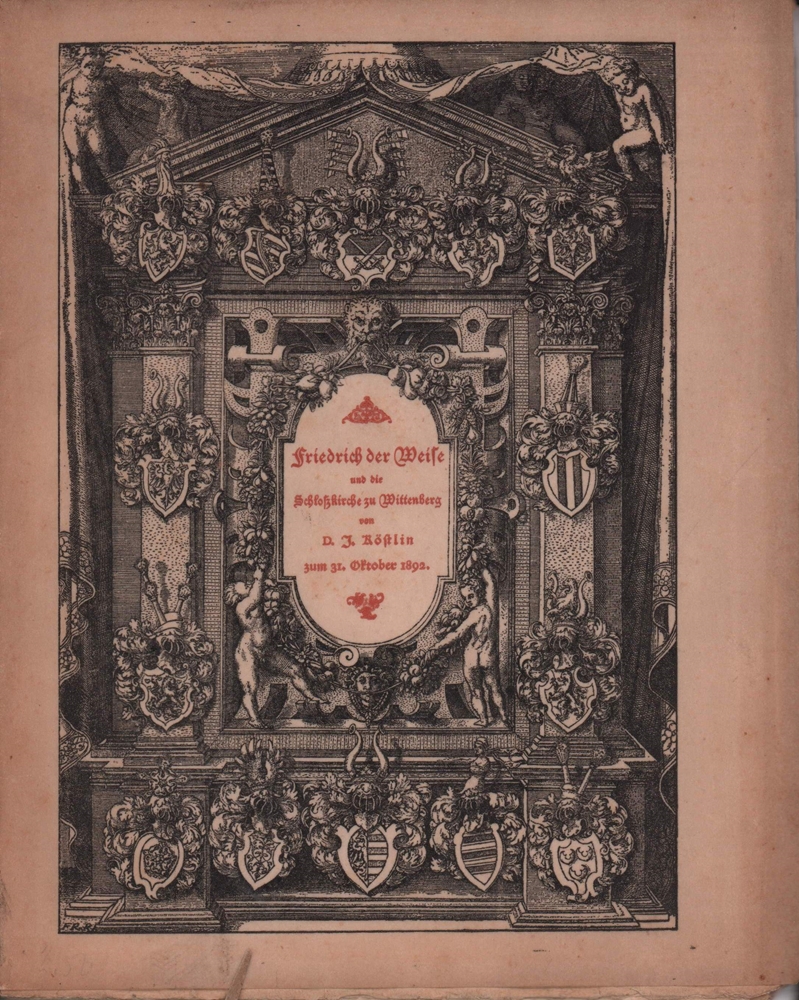
1892réf. 61835Wittenberg, R. Herrosé, 1892. 111 S. Mit 1 Porträt (nach Dürer) als Frontispiz. u. 3 ganzseit. Abb. Gr.-8vo. Illustr. OKart.
1480réf. ST18547Northern France ca. 1480. 164 x 111 mm. 6 1/2 x 4 3/8". Single column 17 lines in a gothic book hand. Rubrics in blue many leaves with line fillers in pink and/or blue with gilt bezants and white tracery each leaf with at least one and often many one- or two-line initials in burnished gold on blue and pink ground with white tracery every side with a panel border consisting of colorful acanthus and different types of flowers on a ground that is either entirely painted gold or with a pattern of painted gold and bare vellum. A few leaves with light wrinkling or a hit of soiling or foxing a couple of leaves with inoffensive marginal repairs but IN VERY FINE CONDITION EXTREMELY CLEAN AND BRIGHT. Featuring both burnished and painted gold in their decoration and offering a multitude of border patterns to choose from these are extremely attractive leaves that are all the more appealing for their fine condition. unknown
1480réf. ST18547Northern France ca. 1480. 164 x 111 mm. 6 1/2 x 4 3/8". Single column 17 lines in a gothic book hand. Rubrics in blue many leaves with line fillers in pink and/or blue with gilt bezants and white tracery each leaf with at least one and often many one- or two-line initials in burnished gold on blue and pink ground with white tracery every side with a panel border consisting of colorful acanthus and different types of flowers on a ground that is either entirely painted gold or with a pattern of painted gold and bare vellum. A few leaves with light wrinkling or a hit of soiling or foxing a couple of leaves with inoffensive marginal repairs but IN VERY FINE CONDITION EXTREMELY CLEAN AND BRIGHT. Featuring both burnished and painted gold in their decoration and offering a multitude of border patterns to choose from these are extremely attractive leaves that are all the more appealing for their fine condition. unknown books
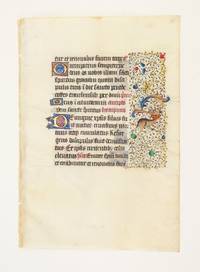
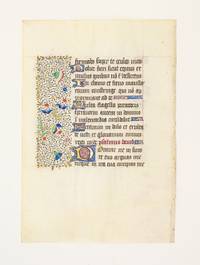
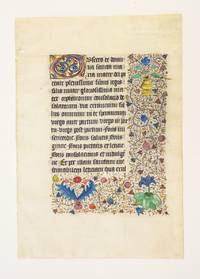
réf. ST17060NFrance probably Besançon 3rd quarter of 15th century. 239 x 165 mm. 9 3/8 x 6 1/2". Single column 15 lines in an elegant gothic book hand. Rubrics in dark pink line enders in pink and blue with white tracery and gold bezant one- and two-line initials painted gold on pink and blue ground with white tracery each side with a panel border decorated with hairline vines gold bezants and ivy and colorful flowers and acanthus RECTO BORDER INHABITED BY A CHARMING DOG-LIKE CREATURE. ◆A small light stain in border decoration largely masked by dense hairline vines but IN FINE CONDITION--bright clean and well preserved. From a large Book of Hours probably produced in Besançon this leaf features very pretty panel borders including one with a particularly charming inhabitant in the form of a dog-like creature with no front legs wearing an orange collar and emitting an acanthus leaf from its mouth. Imaginative touches like this and luxurious elements such as the several dozen gilt bezants and ivy leaves in each border and the unusually wide margins point to this manuscript having been quite a costly production. For additional leaves from this same manuscript at different price points please check our website. unknown
réf. ST17060HFrance probably Besançon 3rd quarter of 15th century. 239 x 165 mm. 9 3/8 x 6 1/2". Single column 15 lines in an elegant gothic book hand. Rubrics in dark pink line enders in pink and blue with white tracery and gold bezant each with multiple one- and/or two-line initials in burnished gold on dark pink and blue ground with white tracery each side of each leaf with a lovely panel border composed of hairline vines with gold ivy and bezants and colorful flowers and acanthus some with floral arrangements in vases and/or especially leafy vegetation. A couple leaves with a little yellowing or light soiling to vellum occasional small stains or smudges other negligible imperfections but on the whole VERY CLEAN BRIGHT AND WELL PRESERVED. From a large Book of Hours probably produced in Besançon these leaves feature very pretty panel borders on every page each with unique flourishes that include colorful acanthus flowers and/or fruits as well as a couple special examples with particularly large fleshy vegetation and vases of floral arrangements. Luxurious touches such as the numerous gilt initials several dozen gilt bezants and ivy leaves in each panel border and the unusually wide margins point to this manuscript having been a costly production. For additional leaves from this same manuscript at different price points please check our website. unknown
réf. ST17060PFrance probably Besançon 3rd quarter of 15th century. 239 x 165 mm. 9 3/8 x 6 1/2". Single column 15 lines in an elegant gothic book hand. Rubrics in dark pink line enders in pink and blue with white tracery and gold bezant each leaf with a three- or four-line initial painted pink or blue with white tracery filled with pink and blue vines and flowers all on a burnished gold ground ONE SIDE OF EACH LEAF WITH A HALF OR THREE-QUARTER BORDER featuring hairline vines gold ivy and bezants colorful acanthus various flowers fleshy plants and vases with floral arrangements the other side of each leaf with a panel border similarly decorated. ◆Vellum slightly yellowed minor smudging to hairline vines and slight rubbing to paint on a few of the border decorations one leaf with some small stains in the border largely masked by the hairline vines but these issues quite minor and the leaves IN FINE CONDITION overall--very clean bright and well-preserved. From a large Book of Hours probably produced in Besançon these leaves feature exceptionally pretty borders each with unique decoration that includes vases of different shapes sizes and hues each containing a different flower arrangement fleshy vegetation and colorful floral accents. The large initials here coupled with the expansive border decoration indicate that these leaves marked the openings of major prayers including "Obsecro te" "O Intemerata" the "Joys of the Virgin" and the "Seven Requests to Our Lord." Luxurious touches such as the several dozen gilt bezants and ivy leaves in each border and the unusually wide margins point to this manuscript having been quite a costly production. For additional leaves from this same manuscript at different price points please check our website. unknown
réf. ST17060NFrance probably Besançon 3rd quarter of 15th century. 239 x 165 mm. 9 3/8 x 6 1/2". Single column 15 lines in an elegant gothic book hand. Rubrics in dark pink line enders in pink and blue with white tracery and gold bezant one- and two-line initials painted gold on pink and blue ground with white tracery each side with a panel border decorated with hairline vines gold bezants and ivy and colorful flowers and acanthus RECTO BORDER INHABITED BY A CHARMING DOG-LIKE CREATURE. ◆A small light stain in border decoration largely masked by dense hairline vines but IN FINE CONDITION--bright clean and well preserved. From a large Book of Hours probably produced in Besançon this leaf features very pretty panel borders including one with a particularly charming inhabitant in the form of a dog-like creature with no front legs wearing an orange collar and emitting an acanthus leaf from its mouth. Imaginative touches like this and luxurious elements such as the several dozen gilt bezants and ivy leaves in each border and the unusually wide margins point to this manuscript having been quite a costly production. For additional leaves from this same manuscript at different price points please check our website. unknown books
réf. ST17060HFrance probably Besançon 3rd quarter of 15th century. 239 x 165 mm. 9 3/8 x 6 1/2". Single column 15 lines in an elegant gothic book hand. Rubrics in dark pink line enders in pink and blue with white tracery and gold bezant each with multiple one- and/or two-line initials in burnished gold on dark pink and blue ground with white tracery each side of each leaf with a lovely panel border composed of hairline vines with gold ivy and bezants and colorful flowers and acanthus some with floral arrangements in vases and/or especially leafy vegetation. A couple leaves with a little yellowing or light soiling to vellum occasional small stains or smudges other negligible imperfections but on the whole VERY CLEAN BRIGHT AND WELL PRESERVED. From a large Book of Hours probably produced in Besançon these leaves feature very pretty panel borders on every page each with unique flourishes that include colorful acanthus flowers and/or fruits as well as a couple special examples with particularly large fleshy vegetation and vases of floral arrangements. Luxurious touches such as the numerous gilt initials several dozen gilt bezants and ivy leaves in each panel border and the unusually wide margins point to this manuscript having been a costly production. For additional leaves from this same manuscript at different price points please check our website. unknown books
réf. ST17060PFrance probably Besançon 3rd quarter of 15th century. 239 x 165 mm. 9 3/8 x 6 1/2". Single column 15 lines in an elegant gothic book hand. Rubrics in dark pink line enders in pink and blue with white tracery and gold bezant each leaf with a three- or four-line initial painted pink or blue with white tracery filled with pink and blue vines and flowers all on a burnished gold ground ONE SIDE OF EACH LEAF WITH A HALF OR THREE-QUARTER BORDER featuring hairline vines gold ivy and bezants colorful acanthus various flowers fleshy plants and vases with floral arrangements the other side of each leaf with a panel border similarly decorated. ◆Vellum slightly yellowed minor smudging to hairline vines and slight rubbing to paint on a few of the border decorations one leaf with some small stains in the border largely masked by the hairline vines but these issues quite minor and the leaves IN FINE CONDITION overall--very clean bright and well-preserved. From a large Book of Hours probably produced in Besançon these leaves feature exceptionally pretty borders each with unique decoration that includes vases of different shapes sizes and hues each containing a different flower arrangement fleshy vegetation and colorful floral accents. The large initials here coupled with the expansive border decoration indicate that these leaves marked the openings of major prayers including "Obsecro te" "O Intemerata" the "Joys of the Virgin" and the "Seven Requests to Our Lord." Luxurious touches such as the several dozen gilt bezants and ivy leaves in each border and the unusually wide margins point to this manuscript having been quite a costly production. For additional leaves from this same manuscript at different price points please check our website. unknown books
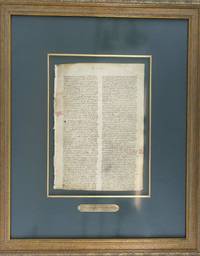
réf. ST12778-0799Italy ca. 1275. 272 x 193 mm. 10 3/4 x 7 1/2". Double column 67 lines of text in a pleasing regular gothic hand. In a very attractive 21 1/2 x 17 1/2" walnut frame of antique design with the leaf in a sunken compartment with a gold lip a brass label below the compartment. Once purchased from Quaritch with their description on the back. ◆Formerly used as the flyleaf in a binding so slightly soiled text with minor fading a very small portion perhaps one or two lines of the text trimmed off at bottom half a dozen small round wormholes but still an attractive legible example of an unusual text. The Quaritch description says that the leaf is from "a Medieval medical work based on Galen concerned with fevers especially those that last a single day 'febres ephemerae'; the present leaf contains the text of chapters 4-7. The author speaks about bloodletting not . . . for the young or elderly baths honey the better kind is clean clear and of sharp odor and delicate Roman women. He cites Hippocrates and the 'Regimen Sanitatis' of Salerno as well as his own writings 'Quisquis igitur se non exercet in meis libris non poterit intelligere' 'Whoever then does not train himself in my own books will not be able to understand'. The text has a strong Galenic tone although it is not a translation of Galen's 'De Differentiis Febrium' and suggests a Medieval work based on Galen and possibly from the great Salerno medical school. The vocabulary includes post-classical words such as 'acetositas' acidity and even some words unrecorded in the massive 'Thesaurus Linguae Latinae' Oxford Medieval Latin Dictionary and Du Cange such as 'crapulositas' drunkenness and 'indigestabilitas.'" The leaf has obvious interest for its content and it is well presented in its attractive frame. unknown
réf. ST12778-0799Italy ca. 1275. 272 x 193 mm. 10 3/4 x 7 1/2". Double column 67 lines of text in a pleasing regular gothic hand. In a very attractive 21 1/2 x 17 1/2" walnut frame of antique design with the leaf in a sunken compartment with a gold lip a brass label below the compartment. Once purchased from Quaritch with their description on the back. ◆Formerly used as the flyleaf in a binding so slightly soiled text with minor fading a very small portion perhaps one or two lines of the text trimmed off at bottom half a dozen small round wormholes but still an attractive legible example of an unusual text. The Quaritch description says that the leaf is from "a Medieval medical work based on Galen concerned with fevers especially those that last a single day 'febres ephemerae'; the present leaf contains the text of chapters 4-7. The author speaks about bloodletting not . . . for the young or elderly baths honey the better kind is clean clear and of sharp odor and delicate Roman women. He cites Hippocrates and the 'Regimen Sanitatis' of Salerno as well as his own writings 'Quisquis igitur se non exercet in meis libris non poterit intelligere' 'Whoever then does not train himself in my own books will not be able to understand'. The text has a strong Galenic tone although it is not a translation of Galen's 'De Differentiis Febrium' and suggests a Medieval work based on Galen and possibly from the great Salerno medical school. The vocabulary includes post-classical words such as 'acetositas' acidity and even some words unrecorded in the massive 'Thesaurus Linguae Latinae' Oxford Medieval Latin Dictionary and Du Cange such as 'crapulositas' drunkenness and 'indigestabilitas.'" The leaf has obvious interest for its content and it is well presented in its attractive frame. unknown books
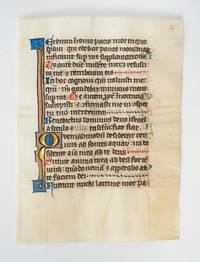
réf. ST20846BSouthern Netherlands ca. 1280. 110 x 83 mm. 4 3/8 x 3 1/4". Single column 19 lines in a gothic hand. Rubrics in red simple line fillers in red or blue each leaf with multiple one-line initials in red or blue and one two-line gilt initial on blue and pink ground with bar border extensions in gold blue and pink. Occasional contemporary or later marginal notations; upper corners with modern foliation in pencil. Gold occasionally just a little dulled some leaves with small smudges light soiling or other minor issues but generally in extremely pleasing condition. Featuring restrained but elegant decoration these leaves come from a charming little Psalter-Hours attributed to the Morgan 183 Group. Active in the late 13th and early 14th centuries and so-named for a highly decorative manuscript once owned by J. Pierpont Morgan the artists of this group are considered important purveyors of the gothic style from Paris into Liege and the Southern Netherlands. Our parent manuscript was probably executed in Brabant or Hainault based on the presence of certain saints associated with these cities that appear in the Litany for example Sts. Waldetrudis of Mons and Amalberga of Maubeuge. Psalter-Hours are not nearly as common on the market as their later descendants Books of Hours; and the present leaves are quite lovely examples being neatly executed and in very nice condition. unknown
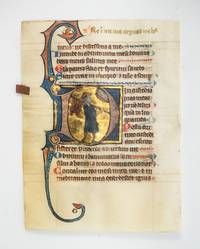
réf. ST20846ESouthern Netherlands ca. 1280. 110 x 83 mm. 4 3/8 x 3 1/4". Single column 19 lines in a gothic hand. Rubrics in red simple line fillers in red or blue each leaf with multiple one-line initials in red or blue one leaf also with three two-line gilt initials on blue and pink ground and with bar border extensions in gold blue and pink EACH LEAF WITH A LARGE HISTORIATED INITIAL measuring seven to eight lines long 27-30 mm. the initial in pink and the figures painted on a gilt ground all this on a blue ground framed in gilt with spiky pink and blue marginal extensions studded with gilt bezants one of the leaves with a small hybrid creature with a human face incorporated into the extension. One leaf with early marginal notation; each leaf with a small leather tab marking major text on fore edge. One leaf with tip of marginal extension just grazed the other with vellum vaguely soiled and thinned in one spot resulting in tiny hole but attractive leaves in very pleasing condition overall. Featuring large historiated initials with some unusual iconography these leaves come from a charming Psalter-Hours attributed to the Morgan 183 Group. Active in the late 13th and early 14th centuries and so-named for a highly decorative manuscript once owned by J. Pierpont Morgan the artists of this group are considered important purveyors of the gothic style from Paris into Liege and the Southern Netherlands. Our parent manuscript was probably executed in Brabant or Hainault based on the presence of certain saints associated with these cities that appear in the Litany for example Sts. Waldetrudis of Mons and Amalberga of Maubeuge. Clues from other extant leaves containing additions and alterations to the text suggest that it was initially made for non-monastic use but later may have been adapted for a Benedictine community. The text of the present leaves come from the so-called "Seven Penitential Psalms" which are traditionally credited to King David and associated with his lamentations and atonement. The beginning of each Psalm is punctuated by a large historiated initial which marks the opening and provides a visual narrative to aid contemplation. The subjects include: a "Noli me tangere" for Psalm 6 "Domine ne in furore tuo arguas me". A full-length Christ in blue robes appears before a kneeling Mary Magdalene after his Resurrection. Between them is a tree with a bulbous red growth at the top acting as a symbolic divider between the earthly and spiritual realms. b David fleeing Saul for Psalm 38 "Dixi custodiam vias meas". This initial depicts David wearing a simple hat and tunic as opposed to a crown and robes as he escapes King Saul's murderous jealousy. He balances a staff holding a bundle of belongings on one shoulder see Morgan MS M.183 fol. 54v for a similar depiction as he is confronted by the disembodied head of God on the right. These leaves are excellent examples of the French high gothic style outside of Paris and offer multiple avenues for further research and comparison. unknown