128 résultats
réf. SONG022644855XUsed: Good unknown
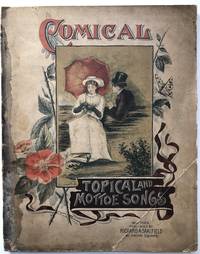
1887réf. H7060New York: Richard A. Saalfield 1887. Good. Quarto 11.5 inches tall pictorial color wraps 171 pp of music plus a few ads. Good with some staining and loss to spine crease on cover mended on the verso with old tape; it has not stained the page light wear and soil some wear to title page and to table of contents page soil but generally very good and clean inside. RARE with only one copy cited by OCLC at Brown University. Unusually the cover artist misspelled 'motto' as 'mottoe' -- see one of the pics for a shot of the table of contents. Richard A. Saalfield unknown
1910réf. List3655New York / Chicago / London: M. Witmark & Sons 1910. Folio sheet music 13 ½ x 10 ½ inches. Color pictorial cover. Light wear and minor creasing to edges; very good overall. A lively Irish-themed novelty song promoted as "Emma Carus' Great Irish Song Hit" issued by the major popular music publisher M. Witmark & Sons. The cover illustration shows Carus dancing before a marching crowd carrying a banner reading "Home Rule" evoking the Irish nationalist movement then a prominent political issue both in Ireland and among Irish-American communities. Emma Carus 1879-1927 was a well-known American vaudeville performer and comic singer who appeared widely in theaters and variety shows during the early twentieth century. Born in New York she became a popular stage personality through novelty songs and character performances often introducing new numbers that were quickly issued in sheet music by publishers such as Witmark. The present piece with lyrics by Bob Harty and music by Ernest Breuer reflects the continuing popularity of Irish-themed songs in American vaudeville and popular music during the period when political themes such as Irish Home Rule frequently appeared in theatrical songs and stage sketches aimed at Irish-American audiences. We find a copy with a variant cover in commerce but not this design. M. Witmark & Sons unknown
1915réf. 59794Chicago IL & Santa Monica CA: Streeter-Bryan Stock Co. Blance Bryan & Morrill Streeter ca. 1915. One silver gelatin real photo postcard sepia-tinted AZO stamp box on verso bearing four triangles at corners point upwards carefully trimmed to 3.5 x 4.5 in. as advertising trade card slightly over-exposed minor dustsoiling still very bright image from the collection of Blanche Bryan Streeter. This promotional sample RPPC advertising the talents of the Streeter-Bryan Stock Co. prima donna with miniature “head-shot” photos tracing her career from Vaudeville ingenue to successful singer along the circuit. Bryan 1879-1976 starred and promoted with her husband Morrill Streeter 1866-1948 playing in productions across the Midwest Oklahoma and Southwest. She starred in three silent movies in 1915 including The Man in the Attic The Sons of Satan and His Vindication. Their “Land of Joy Girls” ran in 1917 for months and were noted for their magnificent costumes & scenery from the Rose Company of Chicago. The pair were also well known at the time for their 1923 automobile vaudeville tour “Plugging Expedition” through Illinois Missouri Colorado Texas New Mexico and California featuring well-appointed automobile and trailer with camping equipment and supplies. Streeter-Bryan Stock Co., Blance Bryan & Morrill Streeter, unknown
1923réf. 63201New York: George H. Doran 1923. 8vo. xiv 337 1 pp. Frontisp. numerous illustrations plates photos. Gray publisher’s cloth red lettering minor dustsoiling & slight foxing to fore-edges of textblock w/ d.j. cover art by James Montgomery Flagg minor dustsoiling rubbing faint stain soiling to spine still VG-/G- copy. First edition of this thrilling and inspirational story of the famed pioneering journalist publicist for P.T. Barnum Circus the Olympic Music Hall agent for the Orpheum vaudeville circuit and more. She represented Al Jolson Will Rogers Lillian Russell and many others. In 1919 she lost her life savings to a bad investment and was confined to a hospital for 5 years in cast and braces because of a paralyzing back injury. This inspirational story was written with one hand holding a pencil and moving over a pad of paper while flat on her back. Illustrations were contributed to this memoir by Rube Goldberg James Montgomery Flagg Tony Sarg Thornton Fisher Ed Hughes and others. Scarce in dustjacket. George H. Doran, hardcover
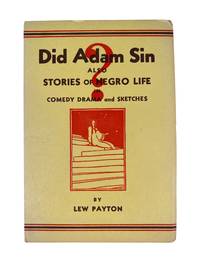
1937réf. 221321937. African AmericanTheaterLiterature Payton Lew. Did Adam Sin Also Stories of Negro Life in Comedy Drama and Sketches. Los Angeles: Lew Payton 1937. First edition. 132 pages. Original yellow wrappers printed in red and brown featuring an abstract graphic of a seated classical figure and a prominent red question mark in the background. A scarce self-published collection of dramatic sketches. Did Adam Sin represents a significant contribution to African American theatrical literature during the Harlem Renaissance's waning years. Written by actor playwright and vaudeville veteran Lew Payton the book offers seven stage-ready works that explore the lives struggles and humor of Black Americans in the early 20th century. Titles include A Bitter Pill Two Sons of Ham and Who Is De Boss blending satire pathos and social commentary with vernacular expression and period-specific concerns. Lew Payton began performing as a child in West Virginia and came of age as an entertainer during the height of Black vaudeville. Here Payton archives both the legacy of African American popular performance and his personal experience in street parades cakewalk acts and Hollywood film roles. The introduction recounts Payton's early experiences with minstrel circuits and his Los Angeles school for Black stage actors. This context situates the collection not only as literature but as pedagogical tool and cultural preservation. The plays foreground the racial dynamics resilience and humor of Black life offering roles that resist the demeaning stereotypes endemic to Hollywood and white theater. Contemporary scholarship increasingly cites Did Adam Sin for its historical value and its intervention into the politics of representation in American drama. Minor edge wear and light toning to wrappers; interior clean and bright; spine uncreased. Overall very good condition. A scarce and important work in the canon of African American theater notable for its authorship self-publication and its insight into Black performance culture during the interwar period. unknown
réf. 0195634144.Ghardcover. Good. Access codes and supplements are not guaranteed with used items. May be an ex-library book. hardcover
réf. 17424Lauder undated; Logan Stonehaven 1987. Page detached from an autograph album 17.5 x 11cm good condition. On the recto the autograph signature of Harry Lauder with the trademark sketch of himself with bonnet and pipe. On the verso the following by Logan "To Archie Many Happy memories of Lauder and Jimmy Logan his signature Stonehaven 1987." Note: Logan "His one-man musical based on the life of Scottish entertainer Sir Harry Lauder was called Lauder 1976.5 Logan collected Lauder memorabilia which is now housed in the Scottish Theatre Archive at the University of Glasgow.". Lauder undated; Logan, Stonehaven 1987. unknown
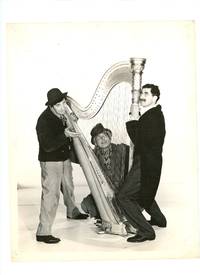
1938réf. 000012475n.p.: n.p. 1938. Photograph. Very Good. 61 cm x 48 cm. Glossy black and white photograph. The photograph depicts from left to right: Chico Harpo and Groucho Marx all gathered around a harp with cheeky expressions on their faces. The harp that is pictured is the one that was used in their 1939 film At the Circus. The Marx Brothers got their start in Vaudeville but would go on to make several motion pictures in the first days of the Silver Screen. Thirteen of their films have been rated in the AFI's top 100 comedic motion pictures: their impact on cinema cannot be overstated. The brothers were sons of German-Jewish immigrants and their mother Minnie acted as their manager until her passing in 1929. In this photograph going left to right the three oldest Marx brothers are shown Chico or Leonard Marx Adolph or Harpo and the youngest of the three Julius or Groucho Marx. A few pinholes and light wear to the corners of the photograph. n.p. unknown
réf. BIBRR111230005Paperback. USED. THIS RARE/ANTIQUE BOOK PUBLISHED IN THE YEAR 1965 BY Institut francais d'indologie HAVING 100 PGS AND SIZE 6.509.50 WRITTEN IN English. THE BOOK IS IN READABLE CONDITION Originally in Unbound with some issues like PB damage and some Pin Holes. THE IMAGE OF THIS BOOK IS GIVEN FOR YOUR REFERENCE. WE CAN REBIND THE SAME IN LEATHER BINDING FOR EXTRA $ 25. paperback
1924réf. 39161Vaudeville Managers Protective Association 1924. vg-. Vaudeville Managers Protective Association unknown
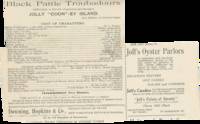
1899réf. List2923Portland Oregon 1899. Two double-sided clippings measuring approximately 7 ½ x 4 ¾ inches both put together with tape. Slightly wrinkled and toned; excellent. Matilda Sissieretta Jones 1869–1933 was an African-American opera singer from Portsmouth Virginia. She studied at the Providence Academy of Music and the New England Conservatory in Boston. At the start of her career Jones sang solo or in small groups touring North and South America the Caribbean and Europe. Jones’ talent was renowned; she was the first Black artist to sing at Carnegie Hall and she performed for multiple US presidents and the English royal family among many other accomplishments.1 In 1896 she formed Black Patti’s Troubadours—Jones was given the nickname “Black Patti” by a critic after famed Spanish opera singer Adelina Patti. The Troubadours would perform comical vaudeville and minstrel skits without Jones followed by Jones performing her “operatic kaleidoscope” of musical excerpts. Offered here are two magazine clippings—based on the advertisements these were printed in Portland Oregon—promoting two Black Patti’s shows: “A Rag Time Frolic at Ras-Bury Park” and “Jolly ‘Coon’-ey Island”. The latter was written by Ernest Hogan a musician widely credited with creating the ragtime genre; he would become the first African-American performer to produce and star in a Broadway show 1907’s The Oyster Man. Jones’ kaleidoscope pieces include excerpts from Faust Pirates of Penzance and others; both shows also feature an audience-judged cakewalk. Of interest to scholars of M. Sissieretta Jones and African-American entertainers at the turn of the century. 1 “Jones M. Sissieretta ‘Black Patti’” in Africana: The Encyclopedia of the African and African American Experience ed. Anthony Appiah and Henry Louis Gates Basic Civitas Books 1999 1064. unknown
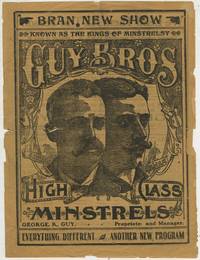
1900réf. BK0117Cincinnati Ohio: Hennegan & Co 1900. Illustrated advertising circular 4 pp. measuring 10 ½ x 14 inches on a single folded sheet. Printed in black with large paired portrait illustration on the front and an interior illustration of the company onstage. Local performance overprint announcing an appearance at the Opera House Brookville Saturday January 8; year not stated. Toning extensive marginal chipping and tears and separations along folds several extending into the text and illustrations; fair condition with the printing substantially preserved. An illustrated circular advertising the Guy Brothers' touring minstrel company with blackface comedy vaudeville specialties electrical stage effects and a dissolving-picture attraction. The company originated in a family entertainment enterprise that included George Guy his wife daughter and six sons. Edward Le Roy Rice's Monarchs of Minstrelsy dates its permanent organization to about 1874 and records its subsequent continuation under George R. Guy identified on the present circular as proprietor and manager.1 The interior provides an extensive roster of performers and musicians including Albert Guy as interlocutor the Mantell Brothers as "A Pair of German Athletes" Harvey Dunn performing a gymnasium specialty with bag punching musical entertainers Adams & Mutt and Louis LeBrun an "Expert Electrician and His Wonderful Machine." One announcement advertises George R. Guy's return to his former position as an end man after an absence of ten years. The orchestra and silver band are separately listed with an invitation to attend the company's street parade and daytime concerts: "Everybody be on the Main Street and See the Parade and Hear Our Band." A large interior illustration depicts the company arranged beneath an elaborate shell-shaped backdrop for its opening production The Palace of Enchantment. The accompanying description emphasizes the combination of electrical spectacle music and racial caricature: "Another Grand Spectacular First Part Produced by GEO. R. GUY with Elegant Special Scenery and Electrical Effects Entitled THE PALACE OF ENCHANTMENT. Illuminated with hundreds of different colored electric lights etc. This part of the Entertainment will be participated in by the Entire Company in elegant costumes who will introduce the Latest Ballads Songs and Beautiful Music of the day. The Six Funny Black Men will make you crack your face laughing at their Antics and Funny Remarks." The rear page gives particular prominence to "Schaefer's Dissolvicanna" advertised as "the Finest Dissolving Picture Machine on Earth" with the assurance that "This is Worth the Admission Alone." The circular does not describe the apparatus further. Other attractions include the one-act comedy School Days billed as "The Funniest Negro Comedy" an old log cabin with "Phantom Doors and Windows" a Zouave drill and ten vaudeville acts. 1 Edw. Le Roy Rice Monarchs of Minstrelsy from "Daddy" Rice to Date Kenny Publishing Company 1911 digitized by Project Gutenberg accessed October 5 2026 https://www.gutenberg.org/cache/epub/69826/pg69826-images.html. . Hennegan & Co unknown
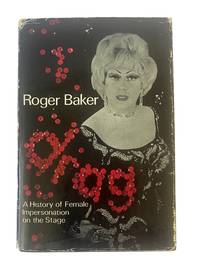
1968réf. 207741968. LGBTQ Baker Roger. Drag: A History of Female Impersonation on the Stage. London: Triton Books 1968. First edition. 256 pages. Original brown cloth binding with author title and publisher stamped on spine. Original dustjacket with black and white image of English drag performer Chris Shaw in a black sequined dress and full glam makeup and title spelled out in red sequins. Includes 92 black and white photographs and illustrations of cross-dressing performers artists and stage productions. This book by British scholar Roger Baker examines the history of drag performance dating back to ancient China Japan and Greece through the punk scene of the 1960s. Baker touches on the difference between drag as a performance art and transvestism a personal practice before delving in to the historical uses of drag by actors and impersonators. Chapters touch on famous cross-dressers including the Chevalier D'Eon Vesta Tilley Marlene Dietrichand Julian Eltinge and cross-dressing traditions on the Elizabethan stage in pantomime Kabuki vaudeville and opera among others. Wear to edges of dustjacket price clipped. Overall very good condition. A detailed history on the uses of drag in performance and entertainment across the world. unknown
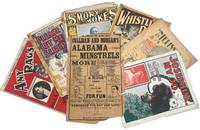
1902réf. 220121902. Minstrelsy Archive of minstrel sheet music and ephemera documenting the role of blackface performance and racial caricature in American popular music during the late 19th and early 20th centuries. Josephine My Jo. Words by R.C. McPherson; music by Jas. T. Brymn 1902 appears alongside a group of minstrel and ragtime-era compositions and a touring advertisement for Culligan and Morgan's Alabama Minstrels establishing a concentrated record of how African American identity was constructed marketed and circulated as commercial entertainment. These materials are tied to vaudeville circuits Tin Pan Alley publishing and traveling minstrel troupes including works associated with Lew Dockstader's Minstrels. Brymn an African American composer who later led the 350th Field Artillery Regiment Band during World War I represents the constrained presence of Black musicians working within a white-dominated industry reliant on the mass acceptance of racist tropes and widely disseminated caricatured imagery and dialect performance. Archive consists of 9 items: 8 pieces of large-format sheet music and 1 minstrel tour poster dating from 1897 to approximately 1900-1915. Sheet music titles include Josephine My Jo 1902; Melissy: A Melody of Dark Town Admiration by Joseph B. Carey 1897 issued as a supplement to the San Francisco Examiner; and additional titles including Any Rags by Thos. S. Allen Smoky Mokes Bunch O' Blackberries By the Watermelon Vine Lindy Lou Whistling Rufus by Kerry Mills and Your Dad Gave His Life for His Country as performed by Lew Dockstader's Minstrels. Sheet music measures approximately 11" x 14" and retains staple-bound or disbound formats with illustrated covers. The poster for Culligan and Morgan's Alabama Minstrels printed in Ohio with illustrations by the National Press and Engraving Company of Chicago measures approximately 10.5" x 27" and survives in multiple separated sections. Across the archive cover imagery employs exaggerated racial caricatures "Darktown" themes and blackface performance conventions reflecting the visual and commercial strategies through which minstrel entertainment was promoted to national audiences. General toning edge wear and chipping present across the sheet music with occasional fragility to bindings; poster is brittle with losses and separation along folds and margins. The advert poster is separated into three pieces with text largely preserved but overall in poor form. Archive in overall good condition. The grouping provides direct primary source evidence of how blackface and minstrelsy operated as a popular form of entertainment and music production while also documenting the limited participation of African American composers within that structure and the broader transition from minstrel traditions into ragtime-era popular music. unknown
1915réf. 2788431915. unbound. very good. Signed 1915 Columbia Records release #A - 1855 one of the earliest comedy releases ever put on phonograph discs featuring a skit titled "Trust Scene" boldly etched into the dead wax and partly on the record labels: "Joe Weber - Lew Fields." The B side of this record has mechanically etched signatures of the performers. Very good condition. Immensely popular Polish-Jewish comedy team who at the height of their stage success opened up their own Broadway venue in 1896 and booked some of the greatest talent of the early 20th century. Included in this roster are Gallagher and Sheen The Marx Brothers Ted Healy and his Three Stooges Jimmy Durante and W.C. Fields. They are also credited with recording some of the earliest known comedy phonograph records between 1912 and 1915. unknown
1925réf. 64700New York NY: Harper & Brothers 1925. 8vo. 8 264 pp. Frontisp. numerous photo plates. Red publisher’s cloth gilt lettering front cover & spine minor shelfwear slight dustsoiling w/ d.j. cover art of Cohan w/ initials RJ front cover minor chipping head & foot of spine couple minor closed tears edgewear old paper repair to spine on verso still a VG/VG- copy w/ former ownership marking on front pastedown. First edition stated of this anecdotal memoir by the famed actor playwright singer dancer and producer offering a vivid picture of the Vaudeville and Broadway Theatre circuit in the closing years of the Gilded Age into the Progressive Era through World War I when he became known as “the man who owned Broadway” and his adaptation of the Earl Derr Biggers “Seven Keys to Baldpate” mystery was a long-running hit and later silent film. Very scarce in original dustjacket. Harper & Brothers, hardcover
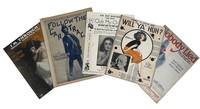
1910réf. 208451910. Archive of drag performance and female impersonation music ephemera 1910s-1950s documents the role of stage performance popular song and nightclub culture in the development of early twentieth century queer entertainment. The material centers on performers who shaped female impersonation traditions in vaudeville cabaret and nightclub circuits preserving evidence of repertoire publicity and audience engagement. Figures such as Karyl Norman and Bert Errol appear through attributed sheet music situating the archive within a transatlantic performance culture in which gender impersonation functioned as both theatrical convention and queer expression. Five pieces of sheet music and related memorabilia measuring approximately 9 x 12 to 10 x 14 inches. Two sheet music titles associated with Karyl Norman include I'm Through Shedding Tears Over You and Nobody Lied When They Said I Cried Over You reflecting the popular song repertoire of female impersonators active from the late 1910s through the 1940s. One sheet is attributed to Bert Errol performing Gimme a Little Kiss Will Ya Huh a standard adapted within impersonation performance contexts. The archive also includes a 1950s promotional pamphlet for Club My-O-My a venue known for female impersonation shows featuring the tagline "The World's Most Beautiful Boys in Women's Attire" and illustrated with black and white photographs of performers in formal gowns wigs and stage makeup. Spanning the period from vaudeville through midcentury nightclub entertainment the material reflects the persistence and evolution of drag performance prior to the emergence of modern LGBTQ political movements. The combination of printed music and promotional imagery supports research into performance history gender expression and the commercial infrastructure of queer nightlife. Minor wear to some covers; materials remain clean and visually strong; overall very good condition. unknown
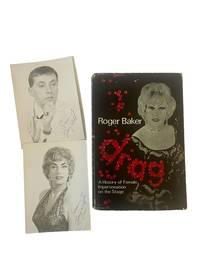
1968réf. 207711968. Baker Roger. Drag: A History of Female Impersonation on the Stage 1968 surveys the historical development of drag performance across theatrical traditions and situates gender impersonation within global performance culture. The study traces practices from early stage conventions in Asia and Europe through modern entertainment circuits distinguishing between drag as theatrical performance and cross dressing as personal identity expression. By documenting performers venues and performance styles Baker provides a consolidated account of drag within stage history offering material for the study of gender representation theatrical convention and LGBTQ cultural expression in the mid twentieth century. Baker Roger. Drag: A History of Female Impersonation on the Stage. London: Triton Books 1968. Signed by the author on the title page "Roger Baker April 1969." First edition. One volume. 256 pages. Illustrated with 92 black and white photographs and illustrations depicting performers productions and historical figures. Original brown cloth binding with titled spine; original dust jacket featuring drag performer imagery. Also included are two loose signed black and white photographs of performer Gary Webb one in drag and one out of costume whose career is referenced within the text. The volume includes discussion of figures such as Chevalier d'Éon Vesta Tilley Marlene Dietrich and Julian Eltinge alongside analysis of performance traditions in Elizabethan theatre pantomime Kabuki vaudeville and opera. Published during a period of expanding visibility for gender nonconforming performance and emerging queer cultural discourse the work consolidates earlier theatrical traditions into a single historical narrative accessible to contemporary audiences. Its combination of textual analysis and photographic documentation supports research into performance studies gender history and the evolution of drag as both entertainment and cultural practice. Dust jacket shows edge wear and is price clipped; volume otherwise clean and intact; overall very good condition. unknown
réf. SONG0415938538Used: Good unknown
1920réf. List2734Unknown location 1920. Approximately 10 x 13 inches. Some tears and chips at edges very good contrast editorial overpainting on recto overall very good. Marks on verso reading “Julian Eltinge Hippodrome March 12”. Very good. Julian Eltinge 1881/1883–1941 was an American actor and “female impersonator”—in today’s terms a drag performer—from Newtonville Massachusetts. Eltinge’s drag career began at age ten and by the early 1900s he was touring internationally performing a vaudeville act wherein the “audience was completely deceived as to Eltinge’s sex until he removed his wig”1. This portrait shows Eltinge seated in costume. On the reverse is written “Julian Eltinge Hippodrome March 12” and the front is signed “Herold Brown” this signature does not appear to belong to commercial photographer Harold M. Brown. A stamp is legible that dates the photograph to the 1920s though the exact year is not legible. Eltinge has been described as “without question the most famous female impersonator of all time” ibid. 1 Slide Anthony “Julian Eltinge” in The Vaudevillians: A Dictionary of Vaudeville Performers Westport Connecticut: Arlington House 1981 46. unknown
1925réf. 55679Kokomo IN & Lewiston ID: Lylburn B. Johnson 514 S. Webster ca. 1925-1933. Seven pieces. 1st - Folio. 11 x 14 in. Photo-illustrated broadside printed on thick card stock minor soiling very small and slight oil stain at upper fore-edge still VG; 2nd -- 8vo. 4 x 8 in. Four pieces printed on colour-tinted newsprint stock 1 w/ additional stamping minor toning edgewear; 3rd. - 16mo. 2.5 x 3.5 in. Photo-illust. on playing card by T.L. DeLand design on verso rounded corners NF; 4to. 2 x 4 in. photo-printed business card w/ lettering & address on recto illustration on verso NF. Fascinating small collection of exceedingly scarce promotional advertising for the Kokomo IN illusionist and magician Lylburn Johnson b. 1904. He performed with the Chautauqua Circuit between 1925 and 1929 and later on the vaudeville circuit throughout the Midwest and West for private clubs fundraisers vaudeville theaters and more. His act illustrated as illustrated on these pieces incorporated his double death defying feat of begin handcuffed and locked in a barrel full of water escaping from ropes tied to a chair as well as the Mysterious Mail Bag Escape in which he had been locked. In addition he would drive a car blindfolded perform illusions such as the floating woman floating ball and skull the burning cone of water and perform mind reading and spiritualist portions as well. One of the playbills specifically cites performing at the Legion Club House for a P.T.A. Benefit in Lewiston ID Friday Nov. 10 1933. Johnson was the only child of the noted Kokomo IN physician Dr. Oliver Johnson 1878-1927 and although continuing to list the family home as his place of residence and business on the advertising cards included here appears in no street directories trade directories or census records after 1910. No copies in Worldcat; See: Lylburn B. Johnson The Great Johnson with His Mysteries Brochures and Promotional Materials Redpath Chautauqua Collection Univ. of Iowa Special Collections No. MSC0150. Lylburn B. Johnson, 514 S. Webster, unknown
1920réf. 201891920. LGBTQ Cross-Dressing Collection of eight photographs 1920s-1990s traces the evolution of female impersonation and cross-dressing entertainment across the twentieth century spanning early vaudeville-era performers through television and film portrayals of gender variance. The archive captures both underground stage culture and mainstream representation illuminating shifting public attitudes toward cross-dressing in American performance history. Early real photo postcards advertising Francis Blair as "Dancer De Luxe" demonstrate commercial promotion of female impersonation in the 1920s while later silver gelatin photographs depict drag performers in 1960s stage attire and publicity stills from film and television exploring gender disguise as narrative device. One image references Jamie Farr's portrayal of a cross-dressing soldier in 1979 television described in accompanying press text as "the first time a man played a man who would dress as a woman" underscoring changing media engagement with gender nonconformity. Collection of eight photographs. Sizes range from 3.5 x 5.25 inches to 8 x 10 inches. Includes two real photo postcards from the early 1920s advertising Francis Blair; four silver gelatin photographs from the 1960s showing drag performers in contemporary women's fashion; publicity still of Reg Varney in The Best Pair of Legs in the Business 1973; and images of Danielle Carter in tiger print stage costume. Several photographs retain original press articles or captions en verso. The archive chart a movement from theatrical female impersonation in live revue culture to mediated representation in film and television. They illustrate how cross-dressing functioned alternately as spectacle satire subcultural identity and emerging topic of public conversation. Photographs crisp with minimal edge wear; versos clean where visible. Overall very good condition. A cross-generational visual archive of twentieth-century gender-nonconforming performance. unknown
1911réf. 239881911. Midwestern theatrical photograph album circa 1912 to 1918 centered on a striking group of large photographs documenting professional popular entertainment during the height of American vaudeville and variety theater. The theatrical images encompass blackface minstrelsy musical and comic performance costumed spectacle and patriotic staging while the remainder of the album records the dances music Great Lakes excursions and social life of the young Midwestern circle that assembled it. Additional material includes the Demon Dozen's 1912 Leap Year Dance a portrait identified as Metropolitan Opera soprano Mabel Garrison and contemporary theatrical ephemera. Photo album containing 101 photographs silver gelatin prints including large full-page photographs and smaller photographs ranging from approximately 4 by 2.5 to 7.5 by 5 inches Midwestern United States and Great Lakes locations circa 1912 to 1918. The large photographs form the album's most substantial theatrical component and appear to depict professional or organized stage performers. A particularly striking photograph shows a large blackface minstrel company with rows of male performers in stage makeup white shirts and bow ties posed before a painted architectural backdrop accompanied by musicians and a pianist. Other photographs show costumed performers in white sailor outfits carrying tambourines and parasols; a company posed with rifles around an American flag; musicians with mandolins; and performers arranged in exaggerated comic tableaux. Collectively the photographs document several forms central to early twentieth-century American popular entertainment: minstrelsy musical performance patriotic spectacle costume acts and broad stage comedy. The smaller photographs place this theatrical material within a broader world of Midwestern leisure. Young men and women appear aboard Great Lakes vessels on beaches and rural outings making music posing for informal portraits and gathering socially. Inscriptions identify individuals and groups including "Doc Merz" "Merz & Curtiss" "Tubby" "Judge" and successive "G.H.C." groups. One photograph is captioned "U.S.S. Essex" while another shows a company posed aboard a vessel. Also retained is substantial material from the Demon Dozen's 1912 Leap Year Dance at Odd Fellows Hall including a printed dance program with partners handwritten beside waltzes two-steps schottisches a rye waltz and a Cubanola. Newspaper accounts describe the grand march German favors decorations and supper providing unusually specific evidence of organized social dancing during the period. The album's connection to contemporary professional entertainment is reinforced by an advertisement for Harry Lauder's farewell American tour and Irving Berlin's Stop! Look! Listen! Berton Braley's anti-Kaiser poem "The Limit" and a portrait identified in manuscript as "Mabel Garrison opera singer." Also a Great Lakes vessel photograph is identified as the Eastland the Chicago excursion steamer whose 1915 capsizing killed more than 800 people. The album provides a visually rich record of popular entertainment and leisure in the prewar and wartime Midwest with its large theatrical photographs providing its strongest documentary content and the surrounding images of dancing music excursions and social life showing the cultural world in which such entertainment circulated. Album leaves and mounts show moderate handling and edge wear; some photographs cut and unbound. Clippings show chipping and photographs show scattered fading surface wear and occasional creasing. Overall in good to near fine condition. unknown
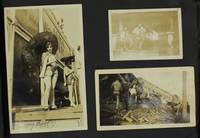
1928réf. 5820Various locations 1928. Good. 28 leaves illustrated with seventy-five photographs and numerous ephemeral items. Oblong quarto. Contemporary black paper-covered boards string tied. Some chipping scuffing and soiling to boards. Contents worn and shaken with some leaves detached or trimmed some images detached. Still a lively collection. A unique vernacular photograph album and scrapbook documenting a couple of years of Strout's Military Hussar Band a notable sideshow act that toured the country in the early part of the 20th century. A newspaper clipping one of about thirty in the album describes the group: "one of the finest bands in the country is furnishing music at the fair and has already made a big hit with the visitors. In the bright red uniform of the Hussars the band makes an excellent appearance." Another clipping states that "This attraction a singing band of some 16 members is said to be one of the most pretentious organizations of its sort on tour this year." The photographs within are mostly portraits of the band members the majority of which have been shape-cut out of larger photographs. There are also group photographs of other circus performers and sideshow acts as well as some images capturing the after-effects of a train crash; the side of the train reads "D.D. Murphy Shows" a well-known promoter during this period with whom the Hussar Band apparently traveled. One of the more interesting group photographs is pasted on the inside front cover and shows seven large individuals next to a manuscript caption reading "World's Fattest Family." The ephemeral items peppered throughout the album include tickets to fairs in Beaumont Texas; Little Rock Arkansas; Fargo Minot and Devil's Lake North Dakota; Memphis Tennessee; and Sedalia Missouri. Other ephemeral items include a business card for the solo clarinet and saxophonist of Strout's Hussar Band Benne Kenner; other business and calling cards newspaper clippings and other clippings probably from magazines. unknown