319 risultati
rif. D19738Collection of approximately 20 real photo postcards most signed and many addressed to a Miss Florie Florrie Hopkins. First decade of the 20th century. Vaudeville performers. A delightful group. Also included is a large photo of a young woman dated Kansas City 1915. unknown
rif. D19738Collection of approximately 20 real photo postcards most signed and many addressed to a Miss Florie Florrie Hopkins. First decade of the 20th century. Vaudeville performers. A delightful group. Also included is a large photo of a young woman dated Kansas City 1915. unknown books
1920rif. List2734Unknown location 1920. Approximately 10 x 13 inches. Some tears and chips at edges very good contrast editorial overpainting on recto overall very good. Marks on verso reading “Julian Eltinge Hippodrome March 12”. Very good. Julian Eltinge 1881/1883–1941 was an American actor and “female impersonator”—in today’s terms a drag performer—from Newtonville Massachusetts. Eltinge’s drag career began at age ten and by the early 1900s he was touring internationally performing a vaudeville act wherein the “audience was completely deceived as to Eltinge’s sex until he removed his wig”1. This portrait shows Eltinge seated in costume. On the reverse is written “Julian Eltinge Hippodrome March 12” and the front is signed “Herold Brown” this signature does not appear to belong to commercial photographer Harold M. Brown. A stamp is legible that dates the photograph to the 1920s though the exact year is not legible. Eltinge has been described as “without question the most famous female impersonator of all time” ibid. 1 Slide Anthony “Julian Eltinge” in The Vaudevillians: A Dictionary of Vaudeville Performers Westport Connecticut: Arlington House 1981 46. unknown
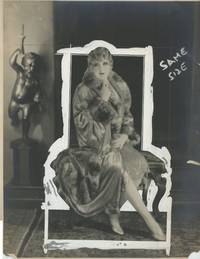
1920rif. List2734Unknown location 1920. Approximately 10 x 13 inches. Some tears and chips at edges very good contrast editorial overpainting on recto overall very good. Marks on verso reading “Julian Eltinge Hippodrome March 12”. Very good. Julian Eltinge 1881/1883–1941 was an American actor and “female impersonator”—in today’s terms a drag performer—from Newtonville Massachusetts. Eltinge’s drag career began at age ten and by the early 1900s he was touring internationally performing a vaudeville act wherein the “audience was completely deceived as to Eltinge’s sex until he removed his wig”1. This portrait shows Eltinge seated in costume. On the reverse is written “Julian Eltinge Hippodrome March 12” and the front is signed “Herold Brown” this signature does not appear to belong to commercial photographer Harold M. Brown. A stamp is legible that dates the photograph to the 1920s though the exact year is not legible. Eltinge has been described as “without question the most famous female impersonator of all time” ibid. 1 Slide Anthony “Julian Eltinge” in The Vaudevillians: A Dictionary of Vaudeville Performers Westport Connecticut: Arlington House 1981 46. unknown books
1925rif. 55679Kokomo IN & Lewiston ID: Lylburn B. Johnson 514 S. Webster ca. 1925-1933. Seven pieces. 1st - Folio. 11 x 14 in. Photo-illustrated broadside printed on thick card stock minor soiling very small and slight oil stain at upper fore-edge still VG; 2nd -- 8vo. 4 x 8 in. Four pieces printed on colour-tinted newsprint stock 1 w/ additional stamping minor toning edgewear; 3rd. - 16mo. 2.5 x 3.5 in. Photo-illust. on playing card by T.L. DeLand design on verso rounded corners NF; 4to. 2 x 4 in. photo-printed business card w/ lettering & address on recto illustration on verso NF. Fascinating small collection of exceedingly scarce promotional advertising for the Kokomo IN illusionist and magician Lylburn Johnson b. 1904. He performed with the Chautauqua Circuit between 1925 and 1929 and later on the vaudeville circuit throughout the Midwest and West for private clubs fundraisers vaudeville theaters and more. His act illustrated as illustrated on these pieces incorporated his double death defying feat of begin handcuffed and locked in a barrel full of water escaping from ropes tied to a chair as well as the Mysterious Mail Bag Escape in which he had been locked. In addition he would drive a car blindfolded perform illusions such as the floating woman floating ball and skull the burning cone of water and perform mind reading and spiritualist portions as well. One of the playbills specifically cites performing at the Legion Club House for a P.T.A. Benefit in Lewiston ID Friday Nov. 10 1933. Johnson was the only child of the noted Kokomo IN physician Dr. Oliver Johnson 1878-1927 and although continuing to list the family home as his place of residence and business on the advertising cards included here appears in no street directories trade directories or census records after 1910. No copies in Worldcat; See: Lylburn B. Johnson The Great Johnson with His Mysteries Brochures and Promotional Materials Redpath Chautauqua Collection Univ. of Iowa Special Collections No. MSC0150. Lylburn B. Johnson, 514 S. Webster, unknown
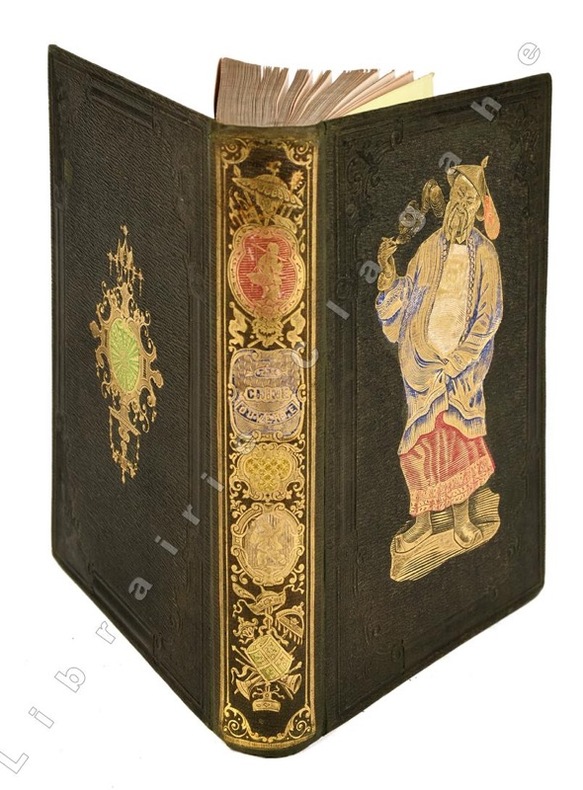
1845rif. 11299Paris, H. Fournier, 1845 ; cartonnage polychrome à fond noir représentant un personnage chinois fumant, en habit traditionnel doré rehaussé de rouge, bleu et blanc, fond décoré de scènes et objets symboliques, second plat à grand décor doré et vert, tranches dorées ; VI, (2), 396 pp., 50 planches hors-texte, nombreuses illustrations in-texte de tous formats, dessins de Auguste Borget.
rif. 21911Paris, Librairie théâtrale, artistique et littéraire, 1914. In-8, 376 pp., broché, couverture originale imprimée (petits manques, taches et déchirures à la couverture, quelques rousseurs).
rif. 21912Paris, Librairie théâtrale, 1910. In-8, 280 pp., broché, couverture originale imprimée (petits manques, taches et déchirures marginales à la couverture, second plat détaché, marges empoussiérées).
1920rif. 201891920. LGBTQ Cross-Dressing Collection of eight photographs 1920s-1990s traces the evolution of female impersonation and cross-dressing entertainment across the twentieth century spanning early vaudeville-era performers through television and film portrayals of gender variance. The archive captures both underground stage culture and mainstream representation illuminating shifting public attitudes toward cross-dressing in American performance history. Early real photo postcards advertising Francis Blair as "Dancer De Luxe" demonstrate commercial promotion of female impersonation in the 1920s while later silver gelatin photographs depict drag performers in 1960s stage attire and publicity stills from film and television exploring gender disguise as narrative device. One image references Jamie Farr's portrayal of a cross-dressing soldier in 1979 television described in accompanying press text as "the first time a man played a man who would dress as a woman" underscoring changing media engagement with gender nonconformity. Collection of eight photographs. Sizes range from 3.5 x 5.25 inches to 8 x 10 inches. Includes two real photo postcards from the early 1920s advertising Francis Blair; four silver gelatin photographs from the 1960s showing drag performers in contemporary women's fashion; publicity still of Reg Varney in The Best Pair of Legs in the Business 1973; and images of Danielle Carter in tiger print stage costume. Several photographs retain original press articles or captions en verso. The archive chart a movement from theatrical female impersonation in live revue culture to mediated representation in film and television. They illustrate how cross-dressing functioned alternately as spectacle satire subcultural identity and emerging topic of public conversation. Photographs crisp with minimal edge wear; versos clean where visible. Overall very good condition. A cross-generational visual archive of twentieth-century gender-nonconforming performance. unknown
1920rif. 201891920. LGBTQ Cross-Dressing Collection of eight photographs 1920s-1990s traces the evolution of female impersonation and cross-dressing entertainment across the twentieth century spanning early vaudeville-era performers through television and film portrayals of gender variance. The archive captures both underground stage culture and mainstream representation illuminating shifting public attitudes toward cross-dressing in American performance history. Early real photo postcards advertising Francis Blair as "Dancer De Luxe" demonstrate commercial promotion of female impersonation in the 1920s while later silver gelatin photographs depict drag performers in 1960s stage attire and publicity stills from film and television exploring gender disguise as narrative device. One image references Jamie Farr's portrayal of a cross-dressing soldier in 1979 television described in accompanying press text as "the first time a man played a man who would dress as a woman" underscoring changing media engagement with gender nonconformity. Collection of eight photographs. Sizes range from 3.5 x 5.25 inches to 8 x 10 inches. Includes two real photo postcards from the early 1920s advertising Francis Blair; four silver gelatin photographs from the 1960s showing drag performers in contemporary women's fashion; publicity still of Reg Varney in The Best Pair of Legs in the Business 1973; and images of Danielle Carter in tiger print stage costume. Several photographs retain original press articles or captions en verso. The archive chart a movement from theatrical female impersonation in live revue culture to mediated representation in film and television. They illustrate how cross-dressing functioned alternately as spectacle satire subcultural identity and emerging topic of public conversation. Photographs crisp with minimal edge wear; versos clean where visible. Overall very good condition. A cross-generational visual archive of twentieth-century gender-nonconforming performance. unknown books
rif. 22125reunis dans un volume IN4 reliure demi chagrin ,dos à faux nerfs titré,TE BOURR’ PAS l’CRANE revue en 2 actes ,janvier 1908,151p.- A C’ qu’ ON S’TORD, revue en 2 actes et un prologue 1909,non pagine 150p, -BEN ! QUOI D’NEUF;revue en 2 actes et 3 tableaux couplets et rondaux ,100p.
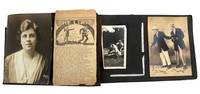
1911rif. 239881911. Midwestern theatrical photograph album circa 1912 to 1918 centered on a striking group of large photographs documenting professional popular entertainment during the height of American vaudeville and variety theater. The theatrical images encompass blackface minstrelsy musical and comic performance costumed spectacle and patriotic staging while the remainder of the album records the dances music Great Lakes excursions and social life of the young Midwestern circle that assembled it. Additional material includes the Demon Dozen's 1912 Leap Year Dance a portrait identified as Metropolitan Opera soprano Mabel Garrison and contemporary theatrical ephemera. Photo album containing 101 photographs silver gelatin prints including large full-page photographs and smaller photographs ranging from approximately 4 by 2.5 to 7.5 by 5 inches Midwestern United States and Great Lakes locations circa 1912 to 1918. The large photographs form the album's most substantial theatrical component and appear to depict professional or organized stage performers. A particularly striking photograph shows a large blackface minstrel company with rows of male performers in stage makeup white shirts and bow ties posed before a painted architectural backdrop accompanied by musicians and a pianist. Other photographs show costumed performers in white sailor outfits carrying tambourines and parasols; a company posed with rifles around an American flag; musicians with mandolins; and performers arranged in exaggerated comic tableaux. Collectively the photographs document several forms central to early twentieth-century American popular entertainment: minstrelsy musical performance patriotic spectacle costume acts and broad stage comedy. The smaller photographs place this theatrical material within a broader world of Midwestern leisure. Young men and women appear aboard Great Lakes vessels on beaches and rural outings making music posing for informal portraits and gathering socially. Inscriptions identify individuals and groups including "Doc Merz" "Merz & Curtiss" "Tubby" "Judge" and successive "G.H.C." groups. One photograph is captioned "U.S.S. Essex" while another shows a company posed aboard a vessel. Also retained is substantial material from the Demon Dozen's 1912 Leap Year Dance at Odd Fellows Hall including a printed dance program with partners handwritten beside waltzes two-steps schottisches a rye waltz and a Cubanola. Newspaper accounts describe the grand march German favors decorations and supper providing unusually specific evidence of organized social dancing during the period. The album's connection to contemporary professional entertainment is reinforced by an advertisement for Harry Lauder's farewell American tour and Irving Berlin's Stop! Look! Listen! Berton Braley's anti-Kaiser poem "The Limit" and a portrait identified in manuscript as "Mabel Garrison opera singer." Also a Great Lakes vessel photograph is identified as the Eastland the Chicago excursion steamer whose 1915 capsizing killed more than 800 people. The album provides a visually rich record of popular entertainment and leisure in the prewar and wartime Midwest with its large theatrical photographs providing its strongest documentary content and the surrounding images of dancing music excursions and social life showing the cultural world in which such entertainment circulated. Album leaves and mounts show moderate handling and edge wear; some photographs cut and unbound. Clippings show chipping and photographs show scattered fading surface wear and occasional creasing. Overall in good to near fine condition. unknown
1911rif. 239881911. Midwestern theatrical photograph album circa 1912 to 1918 centered on a striking group of large photographs documenting professional popular entertainment during the height of American vaudeville and variety theater. The theatrical images encompass blackface minstrelsy musical and comic performance costumed spectacle and patriotic staging while the remainder of the album records the dances music Great Lakes excursions and social life of the young Midwestern circle that assembled it. Additional material includes the Demon Dozen's 1912 Leap Year Dance a portrait identified as Metropolitan Opera soprano Mabel Garrison and contemporary theatrical ephemera. Photo album containing 101 photographs silver gelatin prints including large full-page photographs and smaller photographs ranging from approximately 4 by 2.5 to 7.5 by 5 inches Midwestern United States and Great Lakes locations circa 1912 to 1918. The large photographs form the album's most substantial theatrical component and appear to depict professional or organized stage performers. A particularly striking photograph shows a large blackface minstrel company with rows of male performers in stage makeup white shirts and bow ties posed before a painted architectural backdrop accompanied by musicians and a pianist. Other photographs show costumed performers in white sailor outfits carrying tambourines and parasols; a company posed with rifles around an American flag; musicians with mandolins; and performers arranged in exaggerated comic tableaux. Collectively the photographs document several forms central to early twentieth-century American popular entertainment: minstrelsy musical performance patriotic spectacle costume acts and broad stage comedy. The smaller photographs place this theatrical material within a broader world of Midwestern leisure. Young men and women appear aboard Great Lakes vessels on beaches and rural outings making music posing for informal portraits and gathering socially. Inscriptions identify individuals and groups including "Doc Merz" "Merz & Curtiss" "Tubby" "Judge" and successive "G.H.C." groups. One photograph is captioned "U.S.S. Essex" while another shows a company posed aboard a vessel. Also retained is substantial material from the Demon Dozen's 1912 Leap Year Dance at Odd Fellows Hall including a printed dance program with partners handwritten beside waltzes two-steps schottisches a rye waltz and a Cubanola. Newspaper accounts describe the grand march German favors decorations and supper providing unusually specific evidence of organized social dancing during the period. The album's connection to contemporary professional entertainment is reinforced by an advertisement for Harry Lauder's farewell American tour and Irving Berlin's Stop! Look! Listen! Berton Braley's anti-Kaiser poem "The Limit" and a portrait identified in manuscript as "Mabel Garrison opera singer." Also a Great Lakes vessel photograph is identified as the Eastland the Chicago excursion steamer whose 1915 capsizing killed more than 800 people. The album provides a visually rich record of popular entertainment and leisure in the prewar and wartime Midwest with its large theatrical photographs providing its strongest documentary content and the surrounding images of dancing music excursions and social life showing the cultural world in which such entertainment circulated. Album leaves and mounts show moderate handling and edge wear; some photographs cut and unbound. Clippings show chipping and photographs show scattered fading surface wear and occasional creasing. Overall in good to near fine condition. unknown books
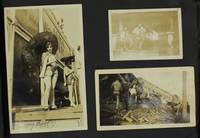
1928rif. 5820Various locations 1928. Good. 28 leaves illustrated with seventy-five photographs and numerous ephemeral items. Oblong quarto. Contemporary black paper-covered boards string tied. Some chipping scuffing and soiling to boards. Contents worn and shaken with some leaves detached or trimmed some images detached. Still a lively collection. A unique vernacular photograph album and scrapbook documenting a couple of years of Strout's Military Hussar Band a notable sideshow act that toured the country in the early part of the 20th century. A newspaper clipping one of about thirty in the album describes the group: "one of the finest bands in the country is furnishing music at the fair and has already made a big hit with the visitors. In the bright red uniform of the Hussars the band makes an excellent appearance." Another clipping states that "This attraction a singing band of some 16 members is said to be one of the most pretentious organizations of its sort on tour this year." The photographs within are mostly portraits of the band members the majority of which have been shape-cut out of larger photographs. There are also group photographs of other circus performers and sideshow acts as well as some images capturing the after-effects of a train crash; the side of the train reads "D.D. Murphy Shows" a well-known promoter during this period with whom the Hussar Band apparently traveled. One of the more interesting group photographs is pasted on the inside front cover and shows seven large individuals next to a manuscript caption reading "World's Fattest Family." The ephemeral items peppered throughout the album include tickets to fairs in Beaumont Texas; Little Rock Arkansas; Fargo Minot and Devil's Lake North Dakota; Memphis Tennessee; and Sedalia Missouri. Other ephemeral items include a business card for the solo clarinet and saxophonist of Strout's Hussar Band Benne Kenner; other business and calling cards newspaper clippings and other clippings probably from magazines. unknown
1928rif. 5820Various locations 1928. Good. 28 leaves illustrated with seventy-five photographs and numerous ephemeral items. Oblong quarto. Contemporary black paper-covered boards string tied. Some chipping scuffing and soiling to boards. Contents worn and shaken with some leaves detached or trimmed some images detached. Still a lively collection. A unique vernacular photograph album and scrapbook documenting a couple of years of Strout's Military Hussar Band a notable sideshow act that toured the country in the early part of the 20th century. A newspaper clipping one of about thirty in the album describes the group: "one of the finest bands in the country is furnishing music at the fair and has already made a big hit with the visitors. In the bright red uniform of the Hussars the band makes an excellent appearance." Another clipping states that "This attraction a singing band of some 16 members is said to be one of the most pretentious organizations of its sort on tour this year." The photographs within are mostly portraits of the band members the majority of which have been shape-cut out of larger photographs. There are also group photographs of other circus performers and sideshow acts as well as some images capturing the after-effects of a train crash; the side of the train reads "D.D. Murphy Shows" a well-known promoter during this period with whom the Hussar Band apparently traveled. One of the more interesting group photographs is pasted on the inside front cover and shows seven large individuals next to a manuscript caption reading "World's Fattest Family." The ephemeral items peppered throughout the album include tickets to fairs in Beaumont Texas; Little Rock Arkansas; Fargo Minot and Devil's Lake North Dakota; Memphis Tennessee; and Sedalia Missouri. Other ephemeral items include a business card for the solo clarinet and saxophonist of Strout's Hussar Band Benne Kenner; other business and calling cards newspaper clippings and other clippings probably from magazines. unknown books
1776rif. 7597Sans lieu (Paris), sans nom, 1776 ; deux tomes ; suivi de "Les A propos de la Folie ou chansons grotesques, grivoises et annonces de parades". Sans lieu (Paris), sans nom, 1776. Ensemble de trois tomes in-8 ; demi-basane havane, dos à faux-nerfs dorés, pièces de titre et de tomaison vert-sapin, plats de papier imitation cuir havane raciné, tranches marbrées (reliure début XIXe) ; (2) ff. blancs, X (dont titre gravé), 302 pp., (1) f. blanc ; 316 ; VI, 319, (1) pp. et en tout pour les tomes 1 et 2 : 1 titre gravé dessiné et gravé par Moreau, identique aux tomes 1 et 2, 2 figures hors-texte par Moreau, gravées par De Launay et Simonet, 2 vignettes et 2 culs-de-lampe par Moreau, gravés par Duclos, Martini et De Launay ; et au tome 3 : titre-frontispice, 1 figure, 1 vignette et 1 cul-de-lampe par Moreau, gravés par Martini.
rif. 60174Various places including Auburn New York early 20th century. Formerly framed; some items laid down on mat boards; generally very attractive. various sizes up to about 20 x 16 inches matted. 18 items including illustrated flyers advertising Milo Vagge and the Vagge Bag Punching Act original photographs of vaudeville acts with the blind-embossed stamp of the "White Hats Actor's Union of American and Associated Actresses of America" 4 photographs of other performers inscribed to the Vagges and 8 broadsides etc. featuring clog dancing comedy and musical bag punching steel top table dancing juggle lifting and posing the "High-class Irish Comedy 'The Wright and Mr. Wrong'" Novelty Acrobats comedy Boxers etc. hardcover
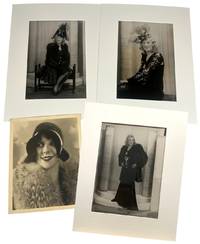
1920rif. 226731920. LGBTQ Drag JJimmy Slater and Rusty female impersonator photograph archive documenting early twentieth century drag performance culture and queer theatrical networks in Britain and the United States produced circa 1920s-1940s. The photographs capture two performers working within the tradition of stage female impersonation that flourished in music halls vaudeville circuits and theatrical revues during the interwar period. Jimmy Slater an English female impersonator who began performing in seaside concert parties as a teenager and later honed his craft in British Army concert parties during the First World War appears in elaborate theatrical portraits reflecting the glamorous visual language associated with drag performance of the era. The archive also includes a signed studio photograph of the American drag performer Rusty inscribed to Patsy Kelly the Hollywood actress widely recognized as one of the earliest openly lesbian figures in American film culture. Together the images document both the public stage presence of female impersonators and the personal networks connecting queer performers and entertainers across transatlantic entertainment circuits. Archive of four professional studio photographs dating from approximately the 1920s through the 1940s. Three photographs depict Jimmy Slater in highly stylized theatrical portraits taken by Debrons Theatrical Photographers of Preston. In these images Slater appears in fur-trimmed evening gowns feathered hats and elaborate stage costume emphasizing the aesthetic conventions of female impersonation performance in British theatrical culture. The fourth photograph is a professional Chicago studio portrait of the drag performer Rusty photographed wearing a cloche hat and fur stole in a style associated with Jazz Age stage glamour. The Rusty photograph bears a handwritten inscription addressed to Patsy Kelly linking the image directly to an actress whose career spanned Hollywood film Broadway theater and later television and who has been widely identified within queer cultural history. Four photographs. Silver gelatin prints. Three Jimmy Slater portraits measure approximately 8 x 10 inches and are mounted in large presentation mats measuring approximately 11.75 x 15 inches. The Rusty portrait measures approximately 8 x 10 inches. These photographs document the visual culture of female impersonation performance during a period when drag artists occupied a complex position within popular entertainment appearing in concert parties vaudeville stages and theatrical revues while also circulating within informal queer social networks. The inscription to Patsy Kelly provides documentary evidence of connections between drag performers and queer figures in early twentieth century entertainment industries in both Britain and the United States. Light surface wear and minor handling marks to prints and mats consistent with age. Images remain strong and well defined. Overall very good condition. A visually striking group preserving early drag performance aesthetics and personal connections within interwar queer entertainment culture. unknown
1920rif. 226731920. LGBTQ Drag JJimmy Slater and Rusty female impersonator photograph archive documenting early twentieth century drag performance culture and queer theatrical networks in Britain and the United States produced circa 1920s-1940s. The photographs capture two performers working within the tradition of stage female impersonation that flourished in music halls vaudeville circuits and theatrical revues during the interwar period. Jimmy Slater an English female impersonator who began performing in seaside concert parties as a teenager and later honed his craft in British Army concert parties during the First World War appears in elaborate theatrical portraits reflecting the glamorous visual language associated with drag performance of the era. The archive also includes a signed studio photograph of the American drag performer Rusty inscribed to Patsy Kelly the Hollywood actress widely recognized as one of the earliest openly lesbian figures in American film culture. Together the images document both the public stage presence of female impersonators and the personal networks connecting queer performers and entertainers across transatlantic entertainment circuits. Archive of four professional studio photographs dating from approximately the 1920s through the 1940s. Three photographs depict Jimmy Slater in highly stylized theatrical portraits taken by Debrons Theatrical Photographers of Preston. In these images Slater appears in fur-trimmed evening gowns feathered hats and elaborate stage costume emphasizing the aesthetic conventions of female impersonation performance in British theatrical culture. The fourth photograph is a professional Chicago studio portrait of the drag performer Rusty photographed wearing a cloche hat and fur stole in a style associated with Jazz Age stage glamour. The Rusty photograph bears a handwritten inscription addressed to Patsy Kelly linking the image directly to an actress whose career spanned Hollywood film Broadway theater and later television and who has been widely identified within queer cultural history. Four photographs. Silver gelatin prints. Three Jimmy Slater portraits measure approximately 8 x 10 inches and are mounted in large presentation mats measuring approximately 11.75 x 15 inches. The Rusty portrait measures approximately 8 x 10 inches. These photographs document the visual culture of female impersonation performance during a period when drag artists occupied a complex position within popular entertainment appearing in concert parties vaudeville stages and theatrical revues while also circulating within informal queer social networks. The inscription to Patsy Kelly provides documentary evidence of connections between drag performers and queer figures in early twentieth century entertainment industries in both Britain and the United States. Light surface wear and minor handling marks to prints and mats consistent with age. Images remain strong and well defined. Overall very good condition. A visually striking group preserving early drag performance aesthetics and personal connections within interwar queer entertainment culture. unknown books