239 resultados
1915ref. 2788431915. unbound. very good. Signed 1915 Columbia Records release #A - 1855 one of the earliest comedy releases ever put on phonograph discs featuring a skit titled "Trust Scene" boldly etched into the dead wax and partly on the record labels: "Joe Weber - Lew Fields." The B side of this record has mechanically etched signatures of the performers. Very good condition. Immensely popular Polish-Jewish comedy team who at the height of their stage success opened up their own Broadway venue in 1896 and booked some of the greatest talent of the early 20th century. Included in this roster are Gallagher and Sheen The Marx Brothers Ted Healy and his Three Stooges Jimmy Durante and W.C. Fields. They are also credited with recording some of the earliest known comedy phonograph records between 1912 and 1915. unknown books
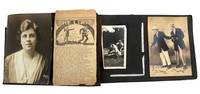
1909ref. 15615np: np 1909. First Edition. Hardcover. Very good. Oblong small 4to. commercial album produced by R.A. Leet and Co. Oakland California. Textured cloth covered stiff card boards. Measuring approximately 10.5" x 7". 44 cyanotype prints recto mounted to 10 black paper leaves. Remaining 15 leaves blank. Area of discolor to front board. 5 prints perished. Overall clean sound. Prints with occasional rubbing though overall well preserved. A small archive of cyanotype photgraphs capturing primarily a mother and daughter members of a Vaudeville performance troop touring the Orpheum Circuit in the United States Pacific Northwest in 1909. Identified locations include Portland Seattle Spokane San Francisco and Oakland. A clear portrait captures a woman and young child standing beneath an Orpheum marquee in Spokane which lists acts for a Sunday July 25 1909 matinee performance including: Joseph Hart's Bathing Girls Mr. George Auger Carson and Willard Lew Bloom Moffett and Clare and Frank Rogers the colored ventriloquist. Additional images capture the troop members travelling with families and at rest. Of note is a clear shot showing George Auger who reportedly stodd nearly 8 feet tall towering above other members of the troop. np hardcover books
ref. 33409Paris: Chez Le Fuel n. d. 1st edition. Ca 1817. Bound in beautiful color printed silk onlays same design to front & back affixed to gold boards with floral motif panel affixed to spine. AEG. Slipcase also with color printed silk onlays. General wear to silk panels. One engraving protrudes slightly. A Very Good copy in a rubbed slipcase with 1 cm seam splits at slipcase opening. 4 209 5 pp. Printed by Didot. Engraved title with vignette. Illustrated with 8 full-page copperplate engravings. 1817 calendar at rear with engraved headpieces by Bosselman. 18mo in 6s. 4-5/8" x 3" 11.8 cm x 7.7 cm. Quite scarce work compiling divers French theatrical pieces from 1792-1815. OCLC locates 4 cc worldwide with KVK adding a 5th. at the time of cataloging Chez Le Fuel hardcover books
1911ref. 42917Cincinnati 1911. Silver gelatin photograph mounted on stiff grey mounting board with green border and bevelled edges. Very minor soiling/wear to photo signed and inscribed at upper and lower corner. Light soiling to mounting board upper corner slightly bumped light damp-staining to verso with few spots of loss to paper overlay. VG overall. Photo: 8-3/4" x 7-13/16". Mounting board: 12" x 10" Publicity photograph from vaudeville performer W.E. Crafeaux signed and briefly inscribed to his mother on the photo itself with a longer signed inscription to the verso of the mounting board. Crafeaux is in blackface and clownlike apparel. The inscription on the verso is dated "Cincinnati O. 3/29/11" and reads in part: "Darling Mamma: - Don't laugh at your red-headed son in this garb as its sic the way he makes his living making other people laugh. Crazy way to make a living isn't it. Some are born fools and others get jealous and make fools of themselves but I don't know whether Im sic a natural fool or naturally a fool or a fool naturally however Im sic not as big a fool as some fools I've fooled . . . " W. E. Crafeaux who seems to have been known professionally as Earle performed with his wife Tessie in several locations on the West Coast as well as in Oklahoma and the Midwest. The Tulsa Morning Herald called them "a pair of the cleverest entertainers on any vaudeville circuit" April 9 1911 and the Vinita Daily Chieftain reported that the Crafeaux were particularly well-liked by a "large audience . . . that readily showed their appreciation of this clever and versatile team by many rounds of applause" August 13 1910. The Vinita Daily Chieftain goes on to note that the final offering that night was the Crafeaux's original blackface comedy "The New Hostler." Research indicates that the Crafeaux also performed in Bakersfield and Santa Ana CA as well as Abilene KS primarily circa 1910 - 1915. They appear to have lived in San Francisco around that time as well as in Los Angeles. unknown books
1924ref. WRCLIT49263New York: Boni & Liveright 1924. Large thick octavo. Cloth. Portrait and plates. First edition. Signed by Weber and Fields on a preliminary blank as often. Spine dull and worn at head and toe; just a good sound copy. Boni & Liveright hardcover books
1978ref. 1606090899xbvkSpotswood - New Jersey, Joyce Music, September 1978. (1) 56 singleside-printed sheets of Text. - Publisher's photographically illustrated lightgreen softcover with black cloth spine; 4to.(ca. 28 x 21,5 cm).
1828ref. 3732xbvkDupon, Bruxelles 1828. 68 p. Brochure orig. avec titre (dos frotté); 12mo.
1837ref. 1712180999xbvkBruxelles, Société Typographique Belge / Leipzig - Librairie Belge, 1837. 250 pages. - 'Publisher's' decoratively blind-embossed gilt-decorated and -titled cloth-binding of the period; 8vo.(ca. 15 x 11 cm).
1945ref. 17673HW-Werbung, Köln (1945). 8 S. mit Titelzeichnung u. mehreren Illustrationen von Asbach-Forstbach, Kesberg, mehrere Anzeigen. Geheftet. Leichte Knickfalte, sonst sehr gut erhalten. - Robert Baums betrieb ab Ende 1945 mit dem Tazzelwurm-Theater
2001ref. 51983Archeophone, 2001. ARCH 9004 CD CD
1968ref. 1223462Ahn + Simrock Bühnen- und Musikverlag; Berlin, Wiesbaden, 1968. 181 Seiten; qu.-14,5 cm; kart.
1941ref. 10643Detmold, E. Hammann, (1941). 62 S. Mit Abb. (= Hammanns lustige Bücher, 2). Farb. illustr. OBrosch.
1887ref. 17215Velhagen & Klasing, Bielefeld 1887 (Sammlung französischer u. englischer Schriftsteller. Neue Schulausgaben. Theatre francais, XVI. Folge, 8. Lfg.). 163 S., 18 S. beigelegtes Wörterbuch. Kl.-8°. Halbleinen u. Brosch. Gebrsp. Etwas berieben u. bestoßen. Stempel auf Einband. Mehrere Anmerkungen u. Anstreichungen. - Beilage: Bree, A.: Les soirées de famille. Histoires
1931ref. 016809Boivin & Cie, Paris 1931. Leinen Gut
1983ref. 6045822Heidelberg, Winter 1983. 8°. 244 pp. Broschur. Kleines Signaturschild. Stempel verso Titel. Sonst ordentlich.
1911ref. 239881911. Midwestern theatrical photograph album circa 1912 to 1918 centered on a striking group of large photographs documenting professional popular entertainment during the height of American vaudeville and variety theater. The theatrical images encompass blackface minstrelsy musical and comic performance costumed spectacle and patriotic staging while the remainder of the album records the dances music Great Lakes excursions and social life of the young Midwestern circle that assembled it. Additional material includes the Demon Dozen's 1912 Leap Year Dance a portrait identified as Metropolitan Opera soprano Mabel Garrison and contemporary theatrical ephemera. Photo album containing 101 photographs silver gelatin prints including large full-page photographs and smaller photographs ranging from approximately 4 by 2.5 to 7.5 by 5 inches Midwestern United States and Great Lakes locations circa 1912 to 1918. The large photographs form the album's most substantial theatrical component and appear to depict professional or organized stage performers. A particularly striking photograph shows a large blackface minstrel company with rows of male performers in stage makeup white shirts and bow ties posed before a painted architectural backdrop accompanied by musicians and a pianist. Other photographs show costumed performers in white sailor outfits carrying tambourines and parasols; a company posed with rifles around an American flag; musicians with mandolins; and performers arranged in exaggerated comic tableaux. Collectively the photographs document several forms central to early twentieth-century American popular entertainment: minstrelsy musical performance patriotic spectacle costume acts and broad stage comedy. The smaller photographs place this theatrical material within a broader world of Midwestern leisure. Young men and women appear aboard Great Lakes vessels on beaches and rural outings making music posing for informal portraits and gathering socially. Inscriptions identify individuals and groups including "Doc Merz" "Merz & Curtiss" "Tubby" "Judge" and successive "G.H.C." groups. One photograph is captioned "U.S.S. Essex" while another shows a company posed aboard a vessel. Also retained is substantial material from the Demon Dozen's 1912 Leap Year Dance at Odd Fellows Hall including a printed dance program with partners handwritten beside waltzes two-steps schottisches a rye waltz and a Cubanola. Newspaper accounts describe the grand march German favors decorations and supper providing unusually specific evidence of organized social dancing during the period. The album's connection to contemporary professional entertainment is reinforced by an advertisement for Harry Lauder's farewell American tour and Irving Berlin's Stop! Look! Listen! Berton Braley's anti-Kaiser poem "The Limit" and a portrait identified in manuscript as "Mabel Garrison opera singer." Also a Great Lakes vessel photograph is identified as the Eastland the Chicago excursion steamer whose 1915 capsizing killed more than 800 people. The album provides a visually rich record of popular entertainment and leisure in the prewar and wartime Midwest with its large theatrical photographs providing its strongest documentary content and the surrounding images of dancing music excursions and social life showing the cultural world in which such entertainment circulated. Album leaves and mounts show moderate handling and edge wear; some photographs cut and unbound. Clippings show chipping and photographs show scattered fading surface wear and occasional creasing. Overall in good to near fine condition. unknown
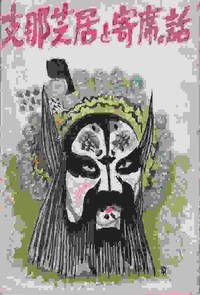
1419ref. 219549奉天. Mukden.: 滿鐵鐵道總局營業局旅客課. Mantetsutetsudōsōkyokueigyōkyokuryokakuka Hōten. Showa 14 1939. Black and white photographic illustrations 33pp 18.7 x 12.7cm original wrappers upper cover pictorial. Minor wear and light browning. Good copy. This charming tourist booklet with its delightful pictorial cover offers a comprehensive introduction to Peking Opera and Chinese vaudeville. It outlines the rules governing movement and costume in opera and describes the range of story types and productions a visitor might expect to see. The vaudeville section explains the various forms of oral entertainment performed for audiences together with the customs and rules observed in the theatre. Published in Mukden the booklet provides an accessible and informative overview of the region’s popular entertainments. . 滿鐵鐵道總局營業局旅客課. [Mantetsutetsudōsō unknown
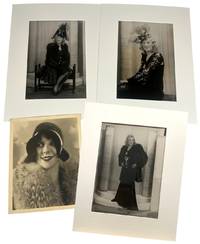
1920ref. 226731920. LGBTQ Drag JJimmy Slater and Rusty female impersonator photograph archive documenting early twentieth century drag performance culture and queer theatrical networks in Britain and the United States produced circa 1920s-1940s. The photographs capture two performers working within the tradition of stage female impersonation that flourished in music halls vaudeville circuits and theatrical revues during the interwar period. Jimmy Slater an English female impersonator who began performing in seaside concert parties as a teenager and later honed his craft in British Army concert parties during the First World War appears in elaborate theatrical portraits reflecting the glamorous visual language associated with drag performance of the era. The archive also includes a signed studio photograph of the American drag performer Rusty inscribed to Patsy Kelly the Hollywood actress widely recognized as one of the earliest openly lesbian figures in American film culture. Together the images document both the public stage presence of female impersonators and the personal networks connecting queer performers and entertainers across transatlantic entertainment circuits. Archive of four professional studio photographs dating from approximately the 1920s through the 1940s. Three photographs depict Jimmy Slater in highly stylized theatrical portraits taken by Debrons Theatrical Photographers of Preston. In these images Slater appears in fur-trimmed evening gowns feathered hats and elaborate stage costume emphasizing the aesthetic conventions of female impersonation performance in British theatrical culture. The fourth photograph is a professional Chicago studio portrait of the drag performer Rusty photographed wearing a cloche hat and fur stole in a style associated with Jazz Age stage glamour. The Rusty photograph bears a handwritten inscription addressed to Patsy Kelly linking the image directly to an actress whose career spanned Hollywood film Broadway theater and later television and who has been widely identified within queer cultural history. Four photographs. Silver gelatin prints. Three Jimmy Slater portraits measure approximately 8 x 10 inches and are mounted in large presentation mats measuring approximately 11.75 x 15 inches. The Rusty portrait measures approximately 8 x 10 inches. These photographs document the visual culture of female impersonation performance during a period when drag artists occupied a complex position within popular entertainment appearing in concert parties vaudeville stages and theatrical revues while also circulating within informal queer social networks. The inscription to Patsy Kelly provides documentary evidence of connections between drag performers and queer figures in early twentieth century entertainment industries in both Britain and the United States. Light surface wear and minor handling marks to prints and mats consistent with age. Images remain strong and well defined. Overall very good condition. A visually striking group preserving early drag performance aesthetics and personal connections within interwar queer entertainment culture. unknown
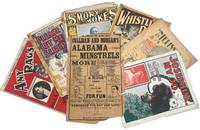
1902ref. 220121902. Minstrelsy Archive of minstrel sheet music and ephemera documenting the role of blackface performance and racial caricature in American popular music during the late 19th and early 20th centuries. Josephine My Jo. Words by R.C. McPherson; music by Jas. T. Brymn 1902 appears alongside a group of minstrel and ragtime-era compositions and a touring advertisement for Culligan and Morgan's Alabama Minstrels establishing a concentrated record of how African American identity was constructed marketed and circulated as commercial entertainment. These materials are tied to vaudeville circuits Tin Pan Alley publishing and traveling minstrel troupes including works associated with Lew Dockstader's Minstrels. Brymn an African American composer who later led the 350th Field Artillery Regiment Band during World War I represents the constrained presence of Black musicians working within a white-dominated industry reliant on the mass acceptance of racist tropes and widely disseminated caricatured imagery and dialect performance. Archive consists of 9 items: 8 pieces of large-format sheet music and 1 minstrel tour poster dating from 1897 to approximately 1900-1915. Sheet music titles include Josephine My Jo 1902; Melissy: A Melody of Dark Town Admiration by Joseph B. Carey 1897 issued as a supplement to the San Francisco Examiner; and additional titles including Any Rags by Thos. S. Allen Smoky Mokes Bunch O' Blackberries By the Watermelon Vine Lindy Lou Whistling Rufus by Kerry Mills and Your Dad Gave His Life for His Country as performed by Lew Dockstader's Minstrels. Sheet music measures approximately 11" x 14" and retains staple-bound or disbound formats with illustrated covers. The poster for Culligan and Morgan's Alabama Minstrels printed in Ohio with illustrations by the National Press and Engraving Company of Chicago measures approximately 10.5" x 27" and survives in multiple separated sections. Across the archive cover imagery employs exaggerated racial caricatures "Darktown" themes and blackface performance conventions reflecting the visual and commercial strategies through which minstrel entertainment was promoted to national audiences. General toning edge wear and chipping present across the sheet music with occasional fragility to bindings; poster is brittle with losses and separation along folds and margins. The advert poster is separated into three pieces with text largely preserved but overall in poor form. Archive in overall good condition. The grouping provides direct primary source evidence of how blackface and minstrelsy operated as a popular form of entertainment and music production while also documenting the limited participation of African American composers within that structure and the broader transition from minstrel traditions into ragtime-era popular music. unknown
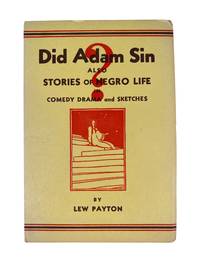
1937ref. 221321937. African AmericanTheaterLiterature Payton Lew. Did Adam Sin Also Stories of Negro Life in Comedy Drama and Sketches. Los Angeles: Lew Payton 1937. First edition. 132 pages. Original yellow wrappers printed in red and brown featuring an abstract graphic of a seated classical figure and a prominent red question mark in the background. A scarce self-published collection of dramatic sketches. Did Adam Sin represents a significant contribution to African American theatrical literature during the Harlem Renaissance's waning years. Written by actor playwright and vaudeville veteran Lew Payton the book offers seven stage-ready works that explore the lives struggles and humor of Black Americans in the early 20th century. Titles include A Bitter Pill Two Sons of Ham and Who Is De Boss blending satire pathos and social commentary with vernacular expression and period-specific concerns. Lew Payton began performing as a child in West Virginia and came of age as an entertainer during the height of Black vaudeville. Here Payton archives both the legacy of African American popular performance and his personal experience in street parades cakewalk acts and Hollywood film roles. The introduction recounts Payton's early experiences with minstrel circuits and his Los Angeles school for Black stage actors. This context situates the collection not only as literature but as pedagogical tool and cultural preservation. The plays foreground the racial dynamics resilience and humor of Black life offering roles that resist the demeaning stereotypes endemic to Hollywood and white theater. Contemporary scholarship increasingly cites Did Adam Sin for its historical value and its intervention into the politics of representation in American drama. Minor edge wear and light toning to wrappers; interior clean and bright; spine uncreased. Overall very good condition. A scarce and important work in the canon of African American theater notable for its authorship self-publication and its insight into Black performance culture during the interwar period. unknown
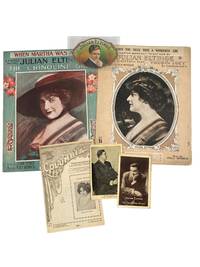
1910ref. 225041910. Eltinge Julian. ephemera relating to early twentieth-century female impersonation documents one of the most prominent figures in American stage performance and the cultural negotiation of gender presentation in the 1910s. Active across vaudeville Broadway and early film Eltinge achieved national recognition for highly stylized and convincing portrayals of women at a time when cross-dressing performance operated within both popular entertainment and legal scrutiny. His stage roles in productions such as The Fascinating Widow The Crinoline Girl and Cousin Lucy circulated widely through promotional media including sheet music postcards and theater programs. These materials demonstrate how Eltinge's career depended on the simultaneous cultivation of a theatrical feminine persona and an offstage masculine identity reflecting broader social constraints surrounding gender nonconformity in the early twentieth century. Eltinge Julian. When You Skate with a Wonderful Girl. New York: Leo Feist 1910s. Sheet music with pictorial cover showing Eltinge in costume for Cousin Lucy music by Percy Wenrich lyrics by Edward Madden. Eltinge Julian. I'm at Your Service Girls. New York: Bernard Granville Publishing Co. 1916. Sheet music from Cousin Lucy pictorial cover featuring Eltinge out of costume with facsimile signature music by Jimmy Shea and Billy Venderveer. Eltinge Julian. When Martha Was a Girl. New York: Leo Feist 1910s. Sheet music with color pictorial cover depicting Eltinge in costume for The Crinoline Girl lyrics by Eltinge music by Percy Wenrich. Eltinge Julian. The Fascinating Widow. Washington D.C.: Columbia Theatre November 14 1910. Theatre program with portrait of Eltinge in costume. Eltinge Julian. Real photo postcard promoting The Fascinating Widow. Mounted on cardboard. Eltinge Julian. Real photo postcard promoting The Fascinating Widow. Eltinge Julian. Color cigar box label with portrait of Eltinge in suit within decorative frame. Group of seven items including three pieces of sheet music one theatre program two real photo postcards and one lithographed cigar box label. Materials include both in-costume and out-of-costume representations illustrating the dual marketing of Eltinge's stage and public identities. These materials were produced during a period when female impersonation occupied a visible but carefully mediated place in American entertainment shaped by audience expectations and social regulation of gender expression. Eltinge's widespread popularity and commercial success positioned him as a central figure in this performance tradition and the range of formats in this archive demonstrates how his image circulated across theatrical musical and consumer markets. Light handling wear with mild toning and minor creasing to paper; colors remain vivid and photographic images clear; overall very good condition. The archive provides a focused record of early twentieth-century drag performance. unknown
1925ref. 64700New York NY: Harper & Brothers 1925. 8vo. 8 264 pp. Frontisp. numerous photo plates. Red publisher’s cloth gilt lettering front cover & spine minor shelfwear slight dustsoiling w/ d.j. cover art of Cohan w/ initials RJ front cover minor chipping head & foot of spine couple minor closed tears edgewear old paper repair to spine on verso still a VG/VG- copy w/ former ownership marking on front pastedown. First edition stated of this anecdotal memoir by the famed actor playwright singer dancer and producer offering a vivid picture of the Vaudeville and Broadway Theatre circuit in the closing years of the Gilded Age into the Progressive Era through World War I when he became known as “the man who owned Broadway” and his adaptation of the Earl Derr Biggers “Seven Keys to Baldpate” mystery was a long-running hit and later silent film. Very scarce in original dustjacket. Harper & Brothers, hardcover
1923ref. 63201New York: George H. Doran 1923. 8vo. xiv 337 1 pp. Frontisp. numerous illustrations plates photos. Gray publisher’s cloth red lettering minor dustsoiling & slight foxing to fore-edges of textblock w/ d.j. cover art by James Montgomery Flagg minor dustsoiling rubbing faint stain soiling to spine still VG-/G- copy. First edition of this thrilling and inspirational story of the famed pioneering journalist publicist for P.T. Barnum Circus the Olympic Music Hall agent for the Orpheum vaudeville circuit and more. She represented Al Jolson Will Rogers Lillian Russell and many others. In 1919 she lost her life savings to a bad investment and was confined to a hospital for 5 years in cast and braces because of a paralyzing back injury. This inspirational story was written with one hand holding a pencil and moving over a pad of paper while flat on her back. Illustrations were contributed to this memoir by Rube Goldberg James Montgomery Flagg Tony Sarg Thornton Fisher Ed Hughes and others. Scarce in dustjacket. George H. Doran, hardcover
1925ref. 55679Kokomo IN & Lewiston ID: Lylburn B. Johnson 514 S. Webster ca. 1925-1933. Seven pieces. 1st - Folio. 11 x 14 in. Photo-illustrated broadside printed on thick card stock minor soiling very small and slight oil stain at upper fore-edge still VG; 2nd -- 8vo. 4 x 8 in. Four pieces printed on colour-tinted newsprint stock 1 w/ additional stamping minor toning edgewear; 3rd. - 16mo. 2.5 x 3.5 in. Photo-illust. on playing card by T.L. DeLand design on verso rounded corners NF; 4to. 2 x 4 in. photo-printed business card w/ lettering & address on recto illustration on verso NF. Fascinating small collection of exceedingly scarce promotional advertising for the Kokomo IN illusionist and magician Lylburn Johnson b. 1904. He performed with the Chautauqua Circuit between 1925 and 1929 and later on the vaudeville circuit throughout the Midwest and West for private clubs fundraisers vaudeville theaters and more. His act illustrated as illustrated on these pieces incorporated his double death defying feat of begin handcuffed and locked in a barrel full of water escaping from ropes tied to a chair as well as the Mysterious Mail Bag Escape in which he had been locked. In addition he would drive a car blindfolded perform illusions such as the floating woman floating ball and skull the burning cone of water and perform mind reading and spiritualist portions as well. One of the playbills specifically cites performing at the Legion Club House for a P.T.A. Benefit in Lewiston ID Friday Nov. 10 1933. Johnson was the only child of the noted Kokomo IN physician Dr. Oliver Johnson 1878-1927 and although continuing to list the family home as his place of residence and business on the advertising cards included here appears in no street directories trade directories or census records after 1910. No copies in Worldcat; See: Lylburn B. Johnson The Great Johnson with His Mysteries Brochures and Promotional Materials Redpath Chautauqua Collection Univ. of Iowa Special Collections No. MSC0150. Lylburn B. Johnson, 514 S. Webster, unknown
ref. 79736Couverture rigide. Bon/1996. in-8. Oxford 1996 in-8 334pp Reliure éditeur jaquette illustrée Très bel exemplaire! unknown