[sans auteur] - [CAPELLE (Pierre)].Livre Rare Book

334 résultats
1827réf. 31683A Bruxelles, chez Adolpge Weissenbruch, s.d. [1827]. Un fort vol. au format in-4 à l'italienne (232 x 155 mm) de 1 page de titre gravée n.fol., vii - 220 pp. et 500 pp. de partitions gravées in fine. Reliure de l'époque de demi-maroquin glacé incarnat à coins, doubles filets gras et maigres dorés portés sur chacun des plats, dos lisse orné d'un filet maigre d'encadrement doré, larges fleurons romantiques dorés, jeu de filets courbes en noir, titre doré, supra libros doré en queue.
réf. 60174Various places including Auburn New York early 20th century. Formerly framed; some items laid down on mat boards; generally very attractive. various sizes up to about 20 x 16 inches matted. 18 items including illustrated flyers advertising Milo Vagge and the Vagge Bag Punching Act original photographs of vaudeville acts with the blind-embossed stamp of the "White Hats Actor's Union of American and Associated Actresses of America" 4 photographs of other performers inscribed to the Vagges and 8 broadsides etc. featuring clog dancing comedy and musical bag punching steel top table dancing juggle lifting and posing the "High-class Irish Comedy 'The Wright and Mr. Wrong'" Novelty Acrobats comedy Boxers etc. hardcover
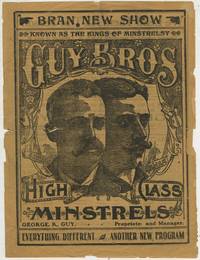
1900réf. BK0117Cincinnati Ohio: Hennegan & Co 1900. Illustrated advertising circular 4 pp. measuring 10 ½ x 14 inches on a single folded sheet. Printed in black with large paired portrait illustration on the front and an interior illustration of the company onstage. Local performance overprint announcing an appearance at the Opera House Brookville Saturday January 8; year not stated. Toning extensive marginal chipping and tears and separations along folds several extending into the text and illustrations; fair condition with the printing substantially preserved. An illustrated circular advertising the Guy Brothers' touring minstrel company with blackface comedy vaudeville specialties electrical stage effects and a dissolving-picture attraction. The company originated in a family entertainment enterprise that included George Guy his wife daughter and six sons. Edward Le Roy Rice's Monarchs of Minstrelsy dates its permanent organization to about 1874 and records its subsequent continuation under George R. Guy identified on the present circular as proprietor and manager.1 The interior provides an extensive roster of performers and musicians including Albert Guy as interlocutor the Mantell Brothers as "A Pair of German Athletes" Harvey Dunn performing a gymnasium specialty with bag punching musical entertainers Adams & Mutt and Louis LeBrun an "Expert Electrician and His Wonderful Machine." One announcement advertises George R. Guy's return to his former position as an end man after an absence of ten years. The orchestra and silver band are separately listed with an invitation to attend the company's street parade and daytime concerts: "Everybody be on the Main Street and See the Parade and Hear Our Band." A large interior illustration depicts the company arranged beneath an elaborate shell-shaped backdrop for its opening production The Palace of Enchantment. The accompanying description emphasizes the combination of electrical spectacle music and racial caricature: "Another Grand Spectacular First Part Produced by GEO. R. GUY with Elegant Special Scenery and Electrical Effects Entitled THE PALACE OF ENCHANTMENT. Illuminated with hundreds of different colored electric lights etc. This part of the Entertainment will be participated in by the Entire Company in elegant costumes who will introduce the Latest Ballads Songs and Beautiful Music of the day. The Six Funny Black Men will make you crack your face laughing at their Antics and Funny Remarks." The rear page gives particular prominence to "Schaefer's Dissolvicanna" advertised as "the Finest Dissolving Picture Machine on Earth" with the assurance that "This is Worth the Admission Alone." The circular does not describe the apparatus further. Other attractions include the one-act comedy School Days billed as "The Funniest Negro Comedy" an old log cabin with "Phantom Doors and Windows" a Zouave drill and ten vaudeville acts. 1 Edw. Le Roy Rice Monarchs of Minstrelsy from "Daddy" Rice to Date Kenny Publishing Company 1911 digitized by Project Gutenberg accessed October 5 2026 https://www.gutenberg.org/cache/epub/69826/pg69826-images.html. . Hennegan & Co unknown books
1900réf. BK0117Cincinnati Ohio: Hennegan & Co 1900. Illustrated advertising circular 4 pp. measuring 10 ½ x 14 inches on a single folded sheet. Printed in black with large paired portrait illustration on the front and an interior illustration of the company onstage. Local performance overprint announcing an appearance at the Opera House Brookville Saturday January 8; year not stated. Toning extensive marginal chipping and tears and separations along folds several extending into the text and illustrations; fair condition with the printing substantially preserved. An illustrated circular advertising the Guy Brothers' touring minstrel company with blackface comedy vaudeville specialties electrical stage effects and a dissolving-picture attraction. The company originated in a family entertainment enterprise that included George Guy his wife daughter and six sons. Edward Le Roy Rice's Monarchs of Minstrelsy dates its permanent organization to about 1874 and records its subsequent continuation under George R. Guy identified on the present circular as proprietor and manager.1 The interior provides an extensive roster of performers and musicians including Albert Guy as interlocutor the Mantell Brothers as "A Pair of German Athletes" Harvey Dunn performing a gymnasium specialty with bag punching musical entertainers Adams & Mutt and Louis LeBrun an "Expert Electrician and His Wonderful Machine." One announcement advertises George R. Guy's return to his former position as an end man after an absence of ten years. The orchestra and silver band are separately listed with an invitation to attend the company's street parade and daytime concerts: "Everybody be on the Main Street and See the Parade and Hear Our Band." A large interior illustration depicts the company arranged beneath an elaborate shell-shaped backdrop for its opening production The Palace of Enchantment. The accompanying description emphasizes the combination of electrical spectacle music and racial caricature: "Another Grand Spectacular First Part Produced by GEO. R. GUY with Elegant Special Scenery and Electrical Effects Entitled THE PALACE OF ENCHANTMENT. Illuminated with hundreds of different colored electric lights etc. This part of the Entertainment will be participated in by the Entire Company in elegant costumes who will introduce the Latest Ballads Songs and Beautiful Music of the day. The Six Funny Black Men will make you crack your face laughing at their Antics and Funny Remarks." The rear page gives particular prominence to "Schaefer's Dissolvicanna" advertised as "the Finest Dissolving Picture Machine on Earth" with the assurance that "This is Worth the Admission Alone." The circular does not describe the apparatus further. Other attractions include the one-act comedy School Days billed as "The Funniest Negro Comedy" an old log cabin with "Phantom Doors and Windows" a Zouave drill and ten vaudeville acts. 1 Edw. Le Roy Rice Monarchs of Minstrelsy from "Daddy" Rice to Date Kenny Publishing Company 1911 digitized by Project Gutenberg accessed October 5 2026 https://www.gutenberg.org/cache/epub/69826/pg69826-images.html. . Hennegan & Co unknown
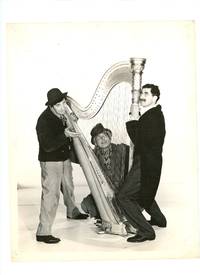
1938réf. 000012475n.p.: n.p. 1938. Photograph. Very Good. 61 cm x 48 cm. Glossy black and white photograph. The photograph depicts from left to right: Chico Harpo and Groucho Marx all gathered around a harp with cheeky expressions on their faces. The harp that is pictured is the one that was used in their 1939 film At the Circus. The Marx Brothers got their start in Vaudeville but would go on to make several motion pictures in the first days of the Silver Screen. Thirteen of their films have been rated in the AFI's top 100 comedic motion pictures: their impact on cinema cannot be overstated. The brothers were sons of German-Jewish immigrants and their mother Minnie acted as their manager until her passing in 1929. In this photograph going left to right the three oldest Marx brothers are shown Chico or Leonard Marx Adolph or Harpo and the youngest of the three Julius or Groucho Marx. A few pinholes and light wear to the corners of the photograph. n.p. unknown
1925réf. 55679Kokomo IN & Lewiston ID: Lylburn B. Johnson 514 S. Webster ca. 1925-1933. Seven pieces. 1st - Folio. 11 x 14 in. Photo-illustrated broadside printed on thick card stock minor soiling very small and slight oil stain at upper fore-edge still VG; 2nd -- 8vo. 4 x 8 in. Four pieces printed on colour-tinted newsprint stock 1 w/ additional stamping minor toning edgewear; 3rd. - 16mo. 2.5 x 3.5 in. Photo-illust. on playing card by T.L. DeLand design on verso rounded corners NF; 4to. 2 x 4 in. photo-printed business card w/ lettering & address on recto illustration on verso NF. Fascinating small collection of exceedingly scarce promotional advertising for the Kokomo IN illusionist and magician Lylburn Johnson b. 1904. He performed with the Chautauqua Circuit between 1925 and 1929 and later on the vaudeville circuit throughout the Midwest and West for private clubs fundraisers vaudeville theaters and more. His act illustrated as illustrated on these pieces incorporated his double death defying feat of begin handcuffed and locked in a barrel full of water escaping from ropes tied to a chair as well as the Mysterious Mail Bag Escape in which he had been locked. In addition he would drive a car blindfolded perform illusions such as the floating woman floating ball and skull the burning cone of water and perform mind reading and spiritualist portions as well. One of the playbills specifically cites performing at the Legion Club House for a P.T.A. Benefit in Lewiston ID Friday Nov. 10 1933. Johnson was the only child of the noted Kokomo IN physician Dr. Oliver Johnson 1878-1927 and although continuing to list the family home as his place of residence and business on the advertising cards included here appears in no street directories trade directories or census records after 1910. No copies in Worldcat; See: Lylburn B. Johnson The Great Johnson with His Mysteries Brochures and Promotional Materials Redpath Chautauqua Collection Univ. of Iowa Special Collections No. MSC0150. Lylburn B. Johnson, 514 S. Webster, unknown
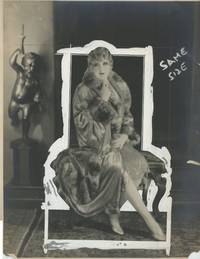
1920réf. List2734Unknown location 1920. Approximately 10 x 13 inches. Some tears and chips at edges very good contrast editorial overpainting on recto overall very good. Marks on verso reading “Julian Eltinge Hippodrome March 12”. Very good. Julian Eltinge 1881/1883–1941 was an American actor and “female impersonator”—in today’s terms a drag performer—from Newtonville Massachusetts. Eltinge’s drag career began at age ten and by the early 1900s he was touring internationally performing a vaudeville act wherein the “audience was completely deceived as to Eltinge’s sex until he removed his wig”1. This portrait shows Eltinge seated in costume. On the reverse is written “Julian Eltinge Hippodrome March 12” and the front is signed “Herold Brown” this signature does not appear to belong to commercial photographer Harold M. Brown. A stamp is legible that dates the photograph to the 1920s though the exact year is not legible. Eltinge has been described as “without question the most famous female impersonator of all time” ibid. 1 Slide Anthony “Julian Eltinge” in The Vaudevillians: A Dictionary of Vaudeville Performers Westport Connecticut: Arlington House 1981 46. unknown books
1920réf. List2734Unknown location 1920. Approximately 10 x 13 inches. Some tears and chips at edges very good contrast editorial overpainting on recto overall very good. Marks on verso reading “Julian Eltinge Hippodrome March 12”. Very good. Julian Eltinge 1881/1883–1941 was an American actor and “female impersonator”—in today’s terms a drag performer—from Newtonville Massachusetts. Eltinge’s drag career began at age ten and by the early 1900s he was touring internationally performing a vaudeville act wherein the “audience was completely deceived as to Eltinge’s sex until he removed his wig”1. This portrait shows Eltinge seated in costume. On the reverse is written “Julian Eltinge Hippodrome March 12” and the front is signed “Herold Brown” this signature does not appear to belong to commercial photographer Harold M. Brown. A stamp is legible that dates the photograph to the 1920s though the exact year is not legible. Eltinge has been described as “without question the most famous female impersonator of all time” ibid. 1 Slide Anthony “Julian Eltinge” in The Vaudevillians: A Dictionary of Vaudeville Performers Westport Connecticut: Arlington House 1981 46. unknown
1776réf. 7597Sans lieu (Paris), sans nom, 1776 ; deux tomes ; suivi de "Les A propos de la Folie ou chansons grotesques, grivoises et annonces de parades". Sans lieu (Paris), sans nom, 1776. Ensemble de trois tomes in-8 ; demi-basane havane, dos à faux-nerfs dorés, pièces de titre et de tomaison vert-sapin, plats de papier imitation cuir havane raciné, tranches marbrées (reliure début XIXe) ; (2) ff. blancs, X (dont titre gravé), 302 pp., (1) f. blanc ; 316 ; VI, 319, (1) pp. et en tout pour les tomes 1 et 2 : 1 titre gravé dessiné et gravé par Moreau, identique aux tomes 1 et 2, 2 figures hors-texte par Moreau, gravées par De Launay et Simonet, 2 vignettes et 2 culs-de-lampe par Moreau, gravés par Duclos, Martini et De Launay ; et au tome 3 : titre-frontispice, 1 figure, 1 vignette et 1 cul-de-lampe par Moreau, gravés par Martini.
1910réf. List3655New York / Chicago / London: M. Witmark & Sons 1910. Folio sheet music 13 ½ x 10 ½ inches. Color pictorial cover. Light wear and minor creasing to edges; very good overall. A lively Irish-themed novelty song promoted as "Emma Carus' Great Irish Song Hit" issued by the major popular music publisher M. Witmark & Sons. The cover illustration shows Carus dancing before a marching crowd carrying a banner reading "Home Rule" evoking the Irish nationalist movement then a prominent political issue both in Ireland and among Irish-American communities. Emma Carus 1879-1927 was a well-known American vaudeville performer and comic singer who appeared widely in theaters and variety shows during the early twentieth century. Born in New York she became a popular stage personality through novelty songs and character performances often introducing new numbers that were quickly issued in sheet music by publishers such as Witmark. The present piece with lyrics by Bob Harty and music by Ernest Breuer reflects the continuing popularity of Irish-themed songs in American vaudeville and popular music during the period when political themes such as Irish Home Rule frequently appeared in theatrical songs and stage sketches aimed at Irish-American audiences. We find a copy with a variant cover in commerce but not this design. M. Witmark & Sons unknown books
1910réf. List3655New York / Chicago / London: M. Witmark & Sons 1910. Folio sheet music 13 ½ x 10 ½ inches. Color pictorial cover. Light wear and minor creasing to edges; very good overall. A lively Irish-themed novelty song promoted as "Emma Carus' Great Irish Song Hit" issued by the major popular music publisher M. Witmark & Sons. The cover illustration shows Carus dancing before a marching crowd carrying a banner reading "Home Rule" evoking the Irish nationalist movement then a prominent political issue both in Ireland and among Irish-American communities. Emma Carus 1879-1927 was a well-known American vaudeville performer and comic singer who appeared widely in theaters and variety shows during the early twentieth century. Born in New York she became a popular stage personality through novelty songs and character performances often introducing new numbers that were quickly issued in sheet music by publishers such as Witmark. The present piece with lyrics by Bob Harty and music by Ernest Breuer reflects the continuing popularity of Irish-themed songs in American vaudeville and popular music during the period when political themes such as Irish Home Rule frequently appeared in theatrical songs and stage sketches aimed at Irish-American audiences. We find a copy with a variant cover in commerce but not this design. M. Witmark & Sons unknown
1969réf. 120102Paris, École française d'Extrême-Orient, coll. « Publications de l'École française d'Extrême-Orient », n° 73 1969 In-4 28 x 19,5 cm. Broché, couverture grise, auteur & titre en noir sur le dos et le premier plat, 170 pp., notes en bas de page, bibliographie, index verborum, table des matières. Exemplaire en très bon état, pages non coupées.
1955réf. 120663Paris, Librairie d'Amérique et d'Orient 1955 In-4 27 x 18 cm. Broché, couverture grise, auteur & titre en noir sur le dos et le premier plat de couverture, XXVIII-157 pp., notes bibliographiques en pied de page, table des matières.Exemplaire en bon état.
réf. 020388[Edmond Rostand, Cyrano de Bergerac] Gilles de Saint Germain (1833-1899), acteur notamment de l'Odéon, de la Comédie française et du Vaudeville. L.A.S., sd [après le 28 décembre 1897], 2p in-8. A Coquelin aîné (1841-1909). Belle lettre de félicitations pour « son grand succès » qu'il n'a pu voir étant absent et malade. « mais j'ai les comptes-rendus et j'ai vu beaucoup de spectateurs, même enthousiasme, mêmes éloges sur toi, pour plusieurs cela rappelait les triomphe de Mascarille ». Il s'est procuré la pièce et a pu la lire. « M. Rostang [sic] est un homme de théâtre. Il y a deux ou trois situations originales et théâtrales, par contre d'autres scènes qu'on ne peut juger qu'à la représentation ». Il verra la pièce à son retour. Mascarille fait référence à l'un des grands succès de Coquelin quand il joué ce rôle dans L'étourdi (Molière) à la Comédie-Française en 1871. Très belle lettre. [490]
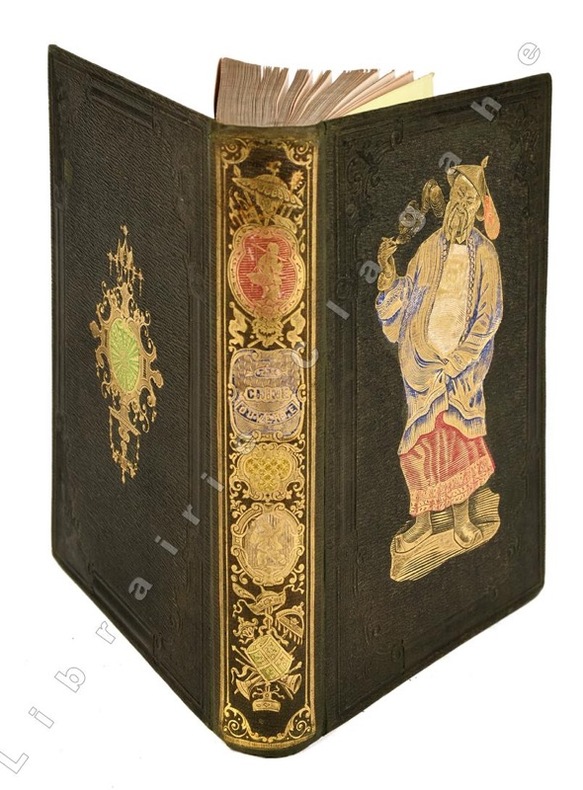
1845réf. 11299Paris, H. Fournier, 1845 ; cartonnage polychrome à fond noir représentant un personnage chinois fumant, en habit traditionnel doré rehaussé de rouge, bleu et blanc, fond décoré de scènes et objets symboliques, second plat à grand décor doré et vert, tranches dorées ; VI, (2), 396 pp., 50 planches hors-texte, nombreuses illustrations in-texte de tous formats, dessins de Auguste Borget.
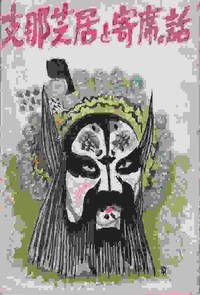
1419réf. 219549奉天. Mukden.: 滿鐵鐵道總局營業局旅客課. Mantetsutetsudōsōkyokueigyōkyokuryokakuka Hōten. Showa 14 1939. Black and white photographic illustrations 33pp 18.7 x 12.7cm original wrappers upper cover pictorial. Minor wear and light browning. Good copy. This charming tourist booklet with its delightful pictorial cover offers a comprehensive introduction to Peking Opera and Chinese vaudeville. It outlines the rules governing movement and costume in opera and describes the range of story types and productions a visitor might expect to see. The vaudeville section explains the various forms of oral entertainment performed for audiences together with the customs and rules observed in the theatre. Published in Mukden the booklet provides an accessible and informative overview of the region’s popular entertainments. . 滿鐵鐵道總局營業局旅客課. [Mantetsutetsudōsō unknown
1949réf. 21512Paris, Mercure de France, 1949; in-4°, broché; 59 pp., [2] ff. le dernier blanc, couverture crème imprimée en rouge avec caducée du Mercure de France.
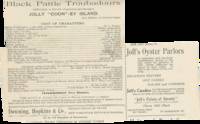
1899réf. List2923Portland Oregon 1899. Two double-sided clippings measuring approximately 7 ½ x 4 ¾ inches both put together with tape. Slightly wrinkled and toned; excellent. Matilda Sissieretta Jones 1869–1933 was an African-American opera singer from Portsmouth Virginia. She studied at the Providence Academy of Music and the New England Conservatory in Boston. At the start of her career Jones sang solo or in small groups touring North and South America the Caribbean and Europe. Jones’ talent was renowned; she was the first Black artist to sing at Carnegie Hall and she performed for multiple US presidents and the English royal family among many other accomplishments.1 In 1896 she formed Black Patti’s Troubadours—Jones was given the nickname “Black Patti” by a critic after famed Spanish opera singer Adelina Patti. The Troubadours would perform comical vaudeville and minstrel skits without Jones followed by Jones performing her “operatic kaleidoscope” of musical excerpts. Offered here are two magazine clippings—based on the advertisements these were printed in Portland Oregon—promoting two Black Patti’s shows: “A Rag Time Frolic at Ras-Bury Park” and “Jolly ‘Coon’-ey Island”. The latter was written by Ernest Hogan a musician widely credited with creating the ragtime genre; he would become the first African-American performer to produce and star in a Broadway show 1907’s The Oyster Man. Jones’ kaleidoscope pieces include excerpts from Faust Pirates of Penzance and others; both shows also feature an audience-judged cakewalk. Of interest to scholars of M. Sissieretta Jones and African-American entertainers at the turn of the century. 1 “Jones M. Sissieretta ‘Black Patti’” in Africana: The Encyclopedia of the African and African American Experience ed. Anthony Appiah and Henry Louis Gates Basic Civitas Books 1999 1064. unknown books
1899réf. List2923Portland Oregon 1899. Two double-sided clippings measuring approximately 7 ½ x 4 ¾ inches both put together with tape. Slightly wrinkled and toned; excellent. Matilda Sissieretta Jones 1869–1933 was an African-American opera singer from Portsmouth Virginia. She studied at the Providence Academy of Music and the New England Conservatory in Boston. At the start of her career Jones sang solo or in small groups touring North and South America the Caribbean and Europe. Jones’ talent was renowned; she was the first Black artist to sing at Carnegie Hall and she performed for multiple US presidents and the English royal family among many other accomplishments.1 In 1896 she formed Black Patti’s Troubadours—Jones was given the nickname “Black Patti” by a critic after famed Spanish opera singer Adelina Patti. The Troubadours would perform comical vaudeville and minstrel skits without Jones followed by Jones performing her “operatic kaleidoscope” of musical excerpts. Offered here are two magazine clippings—based on the advertisements these were printed in Portland Oregon—promoting two Black Patti’s shows: “A Rag Time Frolic at Ras-Bury Park” and “Jolly ‘Coon’-ey Island”. The latter was written by Ernest Hogan a musician widely credited with creating the ragtime genre; he would become the first African-American performer to produce and star in a Broadway show 1907’s The Oyster Man. Jones’ kaleidoscope pieces include excerpts from Faust Pirates of Penzance and others; both shows also feature an audience-judged cakewalk. Of interest to scholars of M. Sissieretta Jones and African-American entertainers at the turn of the century. 1 “Jones M. Sissieretta ‘Black Patti’” in Africana: The Encyclopedia of the African and African American Experience ed. Anthony Appiah and Henry Louis Gates Basic Civitas Books 1999 1064. unknown
réf. 21698Au Temple de Mémoire 1775 in 8 (19,5x12,5) 1 fascicule broché, sous couverture muette de papier marbré ancien, faux-titre, frontispice gravé, titre, 32 pages. Par un Avocat au Parlement de Bretagne. Bel exemplaire ( Photographies sur demande / We can send pictures of this book on simple request )
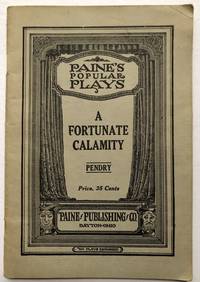
1923réf. H6749Dayton OH: Paine Publishing Co 1923. Paperback. Very Good. Wraps 67 pp very good light wear. Story centers on the Merkle family and her two daughters one of whom is ambitious one of whom is not and the complications that ensue from this. Included in the cast are Rastus Johnsing 'An Honest Coon' and his wife Dinah Johnsing a servant. OCLC locates three copies in institutions. Paine Publishing Co paperback
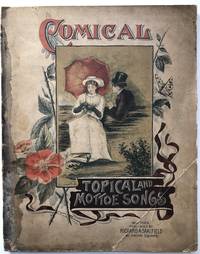
1887réf. H7060New York: Richard A. Saalfield 1887. Good. Quarto 11.5 inches tall pictorial color wraps 171 pp of music plus a few ads. Good with some staining and loss to spine crease on cover mended on the verso with old tape; it has not stained the page light wear and soil some wear to title page and to table of contents page soil but generally very good and clean inside. RARE with only one copy cited by OCLC at Brown University. Unusually the cover artist misspelled 'motto' as 'mottoe' -- see one of the pics for a shot of the table of contents. Richard A. Saalfield unknown
S.l., s.n.t., s.d. (18..), in-24, copertina verde muta coeva, pp. 26, (2).
réf. 654In 8 broché,190 pages,24 illustrations hors-texte en couleurs et 19 dans le texte de DUBOUT.Edition du livre Monte-Carlo.1944.édition numérotée sur grand velin Crèvecoeur. emboîtage avec titre doré pour le premier et bordure toilée bleu pour le second.très bon état.
Firenze, Tip. Adriano Salani (Via S. Niccolò N. 102), 1876, in-24, br. edit. verde con graziosa copertina ant. figurata, pp. 30. Collezione di farse italiane e straniere, 140. Apparsa anonima, ma tratta dal vaudeville in un atto dell'attore e drammaturgo francese.