325 resultados
1915ref. 2788431915. unbound. very good. Signed 1915 Columbia Records release #A - 1855 one of the earliest comedy releases ever put on phonograph discs featuring a skit titled "Trust Scene" boldly etched into the dead wax and partly on the record labels: "Joe Weber - Lew Fields." The B side of this record has mechanically etched signatures of the performers. Very good condition. Immensely popular Polish-Jewish comedy team who at the height of their stage success opened up their own Broadway venue in 1896 and booked some of the greatest talent of the early 20th century. Included in this roster are Gallagher and Sheen The Marx Brothers Ted Healy and his Three Stooges Jimmy Durante and W.C. Fields. They are also credited with recording some of the earliest known comedy phonograph records between 1912 and 1915. unknown books
1827ref. 31683A Bruxelles, chez Adolpge Weissenbruch, s.d. [1827]. Un fort vol. au format in-4 à l'italienne (232 x 155 mm) de 1 page de titre gravée n.fol., vii - 220 pp. et 500 pp. de partitions gravées in fine. Reliure de l'époque de demi-maroquin glacé incarnat à coins, doubles filets gras et maigres dorés portés sur chacun des plats, dos lisse orné d'un filet maigre d'encadrement doré, larges fleurons romantiques dorés, jeu de filets courbes en noir, titre doré, supra libros doré en queue.
1915ref. 2788431915. unbound. very good. Signed 1915 Columbia Records release #A - 1855 one of the earliest comedy releases ever put on phonograph discs featuring a skit titled "Trust Scene" boldly etched into the dead wax and partly on the record labels: "Joe Weber - Lew Fields." The B side of this record has mechanically etched signatures of the performers. Very good condition. Immensely popular Polish-Jewish comedy team who at the height of their stage success opened up their own Broadway venue in 1896 and booked some of the greatest talent of the early 20th century. Included in this roster are Gallagher and Sheen The Marx Brothers Ted Healy and his Three Stooges Jimmy Durante and W.C. Fields. They are also credited with recording some of the earliest known comedy phonograph records between 1912 and 1915. unknown
1911ref. 42917Cincinnati 1911. Silver gelatin photograph mounted on stiff grey mounting board with green border and bevelled edges. Very minor soiling/wear to photo signed and inscribed at upper and lower corner. Light soiling to mounting board upper corner slightly bumped light damp-staining to verso with few spots of loss to paper overlay. VG overall. Photo: 8-3/4" x 7-13/16". Mounting board: 12" x 10" Publicity photograph from vaudeville performer W.E. Crafeaux signed and briefly inscribed to his mother on the photo itself with a longer signed inscription to the verso of the mounting board. Crafeaux is in blackface and clownlike apparel. The inscription on the verso is dated "Cincinnati O. 3/29/11" and reads in part: "Darling Mamma: - Don't laugh at your red-headed son in this garb as its sic the way he makes his living making other people laugh. Crazy way to make a living isn't it. Some are born fools and others get jealous and make fools of themselves but I don't know whether Im sic a natural fool or naturally a fool or a fool naturally however Im sic not as big a fool as some fools I've fooled . . . " W. E. Crafeaux who seems to have been known professionally as Earle performed with his wife Tessie in several locations on the West Coast as well as in Oklahoma and the Midwest. The Tulsa Morning Herald called them "a pair of the cleverest entertainers on any vaudeville circuit" April 9 1911 and the Vinita Daily Chieftain reported that the Crafeaux were particularly well-liked by a "large audience . . . that readily showed their appreciation of this clever and versatile team by many rounds of applause" August 13 1910. The Vinita Daily Chieftain goes on to note that the final offering that night was the Crafeaux's original blackface comedy "The New Hostler." Research indicates that the Crafeaux also performed in Bakersfield and Santa Ana CA as well as Abilene KS primarily circa 1910 - 1915. They appear to have lived in San Francisco around that time as well as in Los Angeles. unknown books
1925ref. 64700New York NY: Harper & Brothers 1925. 8vo. 8 264 pp. Frontisp. numerous photo plates. Red publisher’s cloth gilt lettering front cover & spine minor shelfwear slight dustsoiling w/ d.j. cover art of Cohan w/ initials RJ front cover minor chipping head & foot of spine couple minor closed tears edgewear old paper repair to spine on verso still a VG/VG- copy w/ former ownership marking on front pastedown. First edition stated of this anecdotal memoir by the famed actor playwright singer dancer and producer offering a vivid picture of the Vaudeville and Broadway Theatre circuit in the closing years of the Gilded Age into the Progressive Era through World War I when he became known as “the man who owned Broadway” and his adaptation of the Earl Derr Biggers “Seven Keys to Baldpate” mystery was a long-running hit and later silent film. Very scarce in original dustjacket. Harper & Brothers, hardcover
ref. 21913Paris, Librairie théâtrale, artistique et littéraire, 1914. In-8, 78 pp., broché, couverture originale imprimée (petits manques, taches et déchirures marginales à la couverture, dos fendu, 1er cahier débroché).
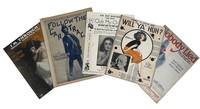
1910ref. 208451910. Archive of drag performance and female impersonation music ephemera 1910s-1950s documents the role of stage performance popular song and nightclub culture in the development of early twentieth century queer entertainment. The material centers on performers who shaped female impersonation traditions in vaudeville cabaret and nightclub circuits preserving evidence of repertoire publicity and audience engagement. Figures such as Karyl Norman and Bert Errol appear through attributed sheet music situating the archive within a transatlantic performance culture in which gender impersonation functioned as both theatrical convention and queer expression. Five pieces of sheet music and related memorabilia measuring approximately 9 x 12 to 10 x 14 inches. Two sheet music titles associated with Karyl Norman include I'm Through Shedding Tears Over You and Nobody Lied When They Said I Cried Over You reflecting the popular song repertoire of female impersonators active from the late 1910s through the 1940s. One sheet is attributed to Bert Errol performing Gimme a Little Kiss Will Ya Huh a standard adapted within impersonation performance contexts. The archive also includes a 1950s promotional pamphlet for Club My-O-My a venue known for female impersonation shows featuring the tagline "The World's Most Beautiful Boys in Women's Attire" and illustrated with black and white photographs of performers in formal gowns wigs and stage makeup. Spanning the period from vaudeville through midcentury nightclub entertainment the material reflects the persistence and evolution of drag performance prior to the emergence of modern LGBTQ political movements. The combination of printed music and promotional imagery supports research into performance history gender expression and the commercial infrastructure of queer nightlife. Minor wear to some covers; materials remain clean and visually strong; overall very good condition. unknown
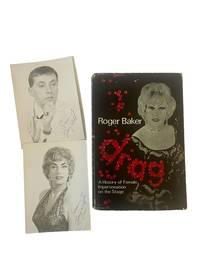
1968ref. 207711968. Baker Roger. Drag: A History of Female Impersonation on the Stage 1968 surveys the historical development of drag performance across theatrical traditions and situates gender impersonation within global performance culture. The study traces practices from early stage conventions in Asia and Europe through modern entertainment circuits distinguishing between drag as theatrical performance and cross dressing as personal identity expression. By documenting performers venues and performance styles Baker provides a consolidated account of drag within stage history offering material for the study of gender representation theatrical convention and LGBTQ cultural expression in the mid twentieth century. Baker Roger. Drag: A History of Female Impersonation on the Stage. London: Triton Books 1968. Signed by the author on the title page "Roger Baker April 1969." First edition. One volume. 256 pages. Illustrated with 92 black and white photographs and illustrations depicting performers productions and historical figures. Original brown cloth binding with titled spine; original dust jacket featuring drag performer imagery. Also included are two loose signed black and white photographs of performer Gary Webb one in drag and one out of costume whose career is referenced within the text. The volume includes discussion of figures such as Chevalier d'Éon Vesta Tilley Marlene Dietrich and Julian Eltinge alongside analysis of performance traditions in Elizabethan theatre pantomime Kabuki vaudeville and opera. Published during a period of expanding visibility for gender nonconforming performance and emerging queer cultural discourse the work consolidates earlier theatrical traditions into a single historical narrative accessible to contemporary audiences. Its combination of textual analysis and photographic documentation supports research into performance studies gender history and the evolution of drag as both entertainment and cultural practice. Dust jacket shows edge wear and is price clipped; volume otherwise clean and intact; overall very good condition. unknown
ref. 17877(Ecrit sous le pseudonyme de Paul Smith). Paris, Labitte. 1844. Deux volumes in-8 (21x13). 384-366 pages. Demi-chagrin prune, dos à nerfs ornés de fleurons dorés (reliure fin 19°).
ref. D19738Collection of approximately 20 real photo postcards most signed and many addressed to a Miss Florie Florrie Hopkins. First decade of the 20th century. Vaudeville performers. A delightful group. Also included is a large photo of a young woman dated Kansas City 1915. unknown
ref. 33409Paris: Chez Le Fuel n. d. 1st edition. Ca 1817. Bound in beautiful color printed silk onlays same design to front & back affixed to gold boards with floral motif panel affixed to spine. AEG. Slipcase also with color printed silk onlays. General wear to silk panels. One engraving protrudes slightly. A Very Good copy in a rubbed slipcase with 1 cm seam splits at slipcase opening. 4 209 5 pp. Printed by Didot. Engraved title with vignette. Illustrated with 8 full-page copperplate engravings. 1817 calendar at rear with engraved headpieces by Bosselman. 18mo in 6s. 4-5/8" x 3" 11.8 cm x 7.7 cm. Quite scarce work compiling divers French theatrical pieces from 1792-1815. OCLC locates 4 cc worldwide with KVK adding a 5th. at the time of cataloging Chez Le Fuel hardcover books
1920ref. List2734Unknown location 1920. Approximately 10 x 13 inches. Some tears and chips at edges very good contrast editorial overpainting on recto overall very good. Marks on verso reading “Julian Eltinge Hippodrome March 12”. Very good. Julian Eltinge 1881/1883–1941 was an American actor and “female impersonator”—in today’s terms a drag performer—from Newtonville Massachusetts. Eltinge’s drag career began at age ten and by the early 1900s he was touring internationally performing a vaudeville act wherein the “audience was completely deceived as to Eltinge’s sex until he removed his wig”1. This portrait shows Eltinge seated in costume. On the reverse is written “Julian Eltinge Hippodrome March 12” and the front is signed “Herold Brown” this signature does not appear to belong to commercial photographer Harold M. Brown. A stamp is legible that dates the photograph to the 1920s though the exact year is not legible. Eltinge has been described as “without question the most famous female impersonator of all time” ibid. 1 Slide Anthony “Julian Eltinge” in The Vaudevillians: A Dictionary of Vaudeville Performers Westport Connecticut: Arlington House 1981 46. unknown
1925ref. 55679Kokomo IN & Lewiston ID: Lylburn B. Johnson 514 S. Webster ca. 1925-1933. Seven pieces. 1st - Folio. 11 x 14 in. Photo-illustrated broadside printed on thick card stock minor soiling very small and slight oil stain at upper fore-edge still VG; 2nd -- 8vo. 4 x 8 in. Four pieces printed on colour-tinted newsprint stock 1 w/ additional stamping minor toning edgewear; 3rd. - 16mo. 2.5 x 3.5 in. Photo-illust. on playing card by T.L. DeLand design on verso rounded corners NF; 4to. 2 x 4 in. photo-printed business card w/ lettering & address on recto illustration on verso NF. Fascinating small collection of exceedingly scarce promotional advertising for the Kokomo IN illusionist and magician Lylburn Johnson b. 1904. He performed with the Chautauqua Circuit between 1925 and 1929 and later on the vaudeville circuit throughout the Midwest and West for private clubs fundraisers vaudeville theaters and more. His act illustrated as illustrated on these pieces incorporated his double death defying feat of begin handcuffed and locked in a barrel full of water escaping from ropes tied to a chair as well as the Mysterious Mail Bag Escape in which he had been locked. In addition he would drive a car blindfolded perform illusions such as the floating woman floating ball and skull the burning cone of water and perform mind reading and spiritualist portions as well. One of the playbills specifically cites performing at the Legion Club House for a P.T.A. Benefit in Lewiston ID Friday Nov. 10 1933. Johnson was the only child of the noted Kokomo IN physician Dr. Oliver Johnson 1878-1927 and although continuing to list the family home as his place of residence and business on the advertising cards included here appears in no street directories trade directories or census records after 1910. No copies in Worldcat; See: Lylburn B. Johnson The Great Johnson with His Mysteries Brochures and Promotional Materials Redpath Chautauqua Collection Univ. of Iowa Special Collections No. MSC0150. Lylburn B. Johnson, 514 S. Webster, unknown
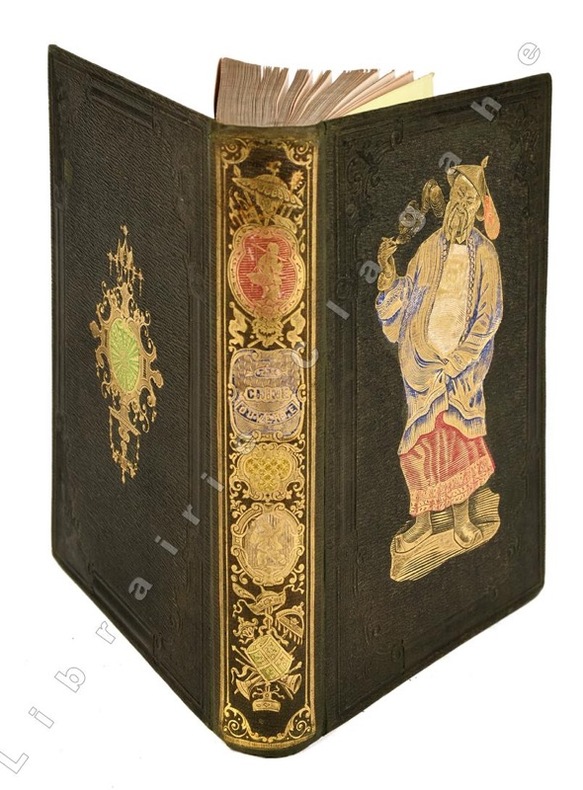
1845ref. 11299Paris, H. Fournier, 1845 ; cartonnage polychrome à fond noir représentant un personnage chinois fumant, en habit traditionnel doré rehaussé de rouge, bleu et blanc, fond décoré de scènes et objets symboliques, second plat à grand décor doré et vert, tranches dorées ; VI, (2), 396 pp., 50 planches hors-texte, nombreuses illustrations in-texte de tous formats, dessins de Auguste Borget.
1909ref. 15615np: np 1909. First Edition. Hardcover. Very good. Oblong small 4to. commercial album produced by R.A. Leet and Co. Oakland California. Textured cloth covered stiff card boards. Measuring approximately 10.5" x 7". 44 cyanotype prints recto mounted to 10 black paper leaves. Remaining 15 leaves blank. Area of discolor to front board. 5 prints perished. Overall clean sound. Prints with occasional rubbing though overall well preserved. A small archive of cyanotype photgraphs capturing primarily a mother and daughter members of a Vaudeville performance troop touring the Orpheum Circuit in the United States Pacific Northwest in 1909. Identified locations include Portland Seattle Spokane San Francisco and Oakland. A clear portrait captures a woman and young child standing beneath an Orpheum marquee in Spokane which lists acts for a Sunday July 25 1909 matinee performance including: Joseph Hart's Bathing Girls Mr. George Auger Carson and Willard Lew Bloom Moffett and Clare and Frank Rogers the colored ventriloquist. Additional images capture the troop members travelling with families and at rest. Of note is a clear shot showing George Auger who reportedly stodd nearly 8 feet tall towering above other members of the troop. np hardcover books
ref. 21911Paris, Librairie théâtrale, artistique et littéraire, 1914. In-8, 376 pp., broché, couverture originale imprimée (petits manques, taches et déchirures à la couverture, quelques rousseurs).
ref. 21912Paris, Librairie théâtrale, 1910. In-8, 280 pp., broché, couverture originale imprimée (petits manques, taches et déchirures marginales à la couverture, second plat détaché, marges empoussiérées).
1920ref. 201891920. LGBTQ Cross-Dressing Collection of eight photographs 1920s-1990s traces the evolution of female impersonation and cross-dressing entertainment across the twentieth century spanning early vaudeville-era performers through television and film portrayals of gender variance. The archive captures both underground stage culture and mainstream representation illuminating shifting public attitudes toward cross-dressing in American performance history. Early real photo postcards advertising Francis Blair as "Dancer De Luxe" demonstrate commercial promotion of female impersonation in the 1920s while later silver gelatin photographs depict drag performers in 1960s stage attire and publicity stills from film and television exploring gender disguise as narrative device. One image references Jamie Farr's portrayal of a cross-dressing soldier in 1979 television described in accompanying press text as "the first time a man played a man who would dress as a woman" underscoring changing media engagement with gender nonconformity. Collection of eight photographs. Sizes range from 3.5 x 5.25 inches to 8 x 10 inches. Includes two real photo postcards from the early 1920s advertising Francis Blair; four silver gelatin photographs from the 1960s showing drag performers in contemporary women's fashion; publicity still of Reg Varney in The Best Pair of Legs in the Business 1973; and images of Danielle Carter in tiger print stage costume. Several photographs retain original press articles or captions en verso. The archive chart a movement from theatrical female impersonation in live revue culture to mediated representation in film and television. They illustrate how cross-dressing functioned alternately as spectacle satire subcultural identity and emerging topic of public conversation. Photographs crisp with minimal edge wear; versos clean where visible. Overall very good condition. A cross-generational visual archive of twentieth-century gender-nonconforming performance. unknown
ref. 22125reunis dans un volume IN4 reliure demi chagrin ,dos à faux nerfs titré,TE BOURR’ PAS l’CRANE revue en 2 actes ,janvier 1908,151p.- A C’ qu’ ON S’TORD, revue en 2 actes et un prologue 1909,non pagine 150p, -BEN ! QUOI D’NEUF;revue en 2 actes et 3 tableaux couplets et rondaux ,100p.
1911ref. 239881911. Midwestern theatrical photograph album circa 1912 to 1918 centered on a striking group of large photographs documenting professional popular entertainment during the height of American vaudeville and variety theater. The theatrical images encompass blackface minstrelsy musical and comic performance costumed spectacle and patriotic staging while the remainder of the album records the dances music Great Lakes excursions and social life of the young Midwestern circle that assembled it. Additional material includes the Demon Dozen's 1912 Leap Year Dance a portrait identified as Metropolitan Opera soprano Mabel Garrison and contemporary theatrical ephemera. Photo album containing 101 photographs silver gelatin prints including large full-page photographs and smaller photographs ranging from approximately 4 by 2.5 to 7.5 by 5 inches Midwestern United States and Great Lakes locations circa 1912 to 1918. The large photographs form the album's most substantial theatrical component and appear to depict professional or organized stage performers. A particularly striking photograph shows a large blackface minstrel company with rows of male performers in stage makeup white shirts and bow ties posed before a painted architectural backdrop accompanied by musicians and a pianist. Other photographs show costumed performers in white sailor outfits carrying tambourines and parasols; a company posed with rifles around an American flag; musicians with mandolins; and performers arranged in exaggerated comic tableaux. Collectively the photographs document several forms central to early twentieth-century American popular entertainment: minstrelsy musical performance patriotic spectacle costume acts and broad stage comedy. The smaller photographs place this theatrical material within a broader world of Midwestern leisure. Young men and women appear aboard Great Lakes vessels on beaches and rural outings making music posing for informal portraits and gathering socially. Inscriptions identify individuals and groups including "Doc Merz" "Merz & Curtiss" "Tubby" "Judge" and successive "G.H.C." groups. One photograph is captioned "U.S.S. Essex" while another shows a company posed aboard a vessel. Also retained is substantial material from the Demon Dozen's 1912 Leap Year Dance at Odd Fellows Hall including a printed dance program with partners handwritten beside waltzes two-steps schottisches a rye waltz and a Cubanola. Newspaper accounts describe the grand march German favors decorations and supper providing unusually specific evidence of organized social dancing during the period. The album's connection to contemporary professional entertainment is reinforced by an advertisement for Harry Lauder's farewell American tour and Irving Berlin's Stop! Look! Listen! Berton Braley's anti-Kaiser poem "The Limit" and a portrait identified in manuscript as "Mabel Garrison opera singer." Also a Great Lakes vessel photograph is identified as the Eastland the Chicago excursion steamer whose 1915 capsizing killed more than 800 people. The album provides a visually rich record of popular entertainment and leisure in the prewar and wartime Midwest with its large theatrical photographs providing its strongest documentary content and the surrounding images of dancing music excursions and social life showing the cultural world in which such entertainment circulated. Album leaves and mounts show moderate handling and edge wear; some photographs cut and unbound. Clippings show chipping and photographs show scattered fading surface wear and occasional creasing. Overall in good to near fine condition. unknown
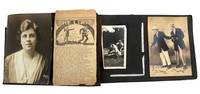
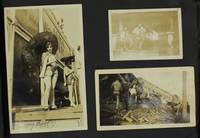
1928ref. 5820Various locations 1928. Good. 28 leaves illustrated with seventy-five photographs and numerous ephemeral items. Oblong quarto. Contemporary black paper-covered boards string tied. Some chipping scuffing and soiling to boards. Contents worn and shaken with some leaves detached or trimmed some images detached. Still a lively collection. A unique vernacular photograph album and scrapbook documenting a couple of years of Strout's Military Hussar Band a notable sideshow act that toured the country in the early part of the 20th century. A newspaper clipping one of about thirty in the album describes the group: "one of the finest bands in the country is furnishing music at the fair and has already made a big hit with the visitors. In the bright red uniform of the Hussars the band makes an excellent appearance." Another clipping states that "This attraction a singing band of some 16 members is said to be one of the most pretentious organizations of its sort on tour this year." The photographs within are mostly portraits of the band members the majority of which have been shape-cut out of larger photographs. There are also group photographs of other circus performers and sideshow acts as well as some images capturing the after-effects of a train crash; the side of the train reads "D.D. Murphy Shows" a well-known promoter during this period with whom the Hussar Band apparently traveled. One of the more interesting group photographs is pasted on the inside front cover and shows seven large individuals next to a manuscript caption reading "World's Fattest Family." The ephemeral items peppered throughout the album include tickets to fairs in Beaumont Texas; Little Rock Arkansas; Fargo Minot and Devil's Lake North Dakota; Memphis Tennessee; and Sedalia Missouri. Other ephemeral items include a business card for the solo clarinet and saxophonist of Strout's Hussar Band Benne Kenner; other business and calling cards newspaper clippings and other clippings probably from magazines. unknown
1776ref. 7597Sans lieu (Paris), sans nom, 1776 ; deux tomes ; suivi de "Les A propos de la Folie ou chansons grotesques, grivoises et annonces de parades". Sans lieu (Paris), sans nom, 1776. Ensemble de trois tomes in-8 ; demi-basane havane, dos à faux-nerfs dorés, pièces de titre et de tomaison vert-sapin, plats de papier imitation cuir havane raciné, tranches marbrées (reliure début XIXe) ; (2) ff. blancs, X (dont titre gravé), 302 pp., (1) f. blanc ; 316 ; VI, 319, (1) pp. et en tout pour les tomes 1 et 2 : 1 titre gravé dessiné et gravé par Moreau, identique aux tomes 1 et 2, 2 figures hors-texte par Moreau, gravées par De Launay et Simonet, 2 vignettes et 2 culs-de-lampe par Moreau, gravés par Duclos, Martini et De Launay ; et au tome 3 : titre-frontispice, 1 figure, 1 vignette et 1 cul-de-lampe par Moreau, gravés par Martini.
ref. 60174Various places including Auburn New York early 20th century. Formerly framed; some items laid down on mat boards; generally very attractive. various sizes up to about 20 x 16 inches matted. 18 items including illustrated flyers advertising Milo Vagge and the Vagge Bag Punching Act original photographs of vaudeville acts with the blind-embossed stamp of the "White Hats Actor's Union of American and Associated Actresses of America" 4 photographs of other performers inscribed to the Vagges and 8 broadsides etc. featuring clog dancing comedy and musical bag punching steel top table dancing juggle lifting and posing the "High-class Irish Comedy 'The Wright and Mr. Wrong'" Novelty Acrobats comedy Boxers etc. hardcover
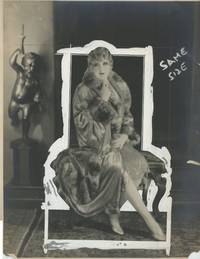
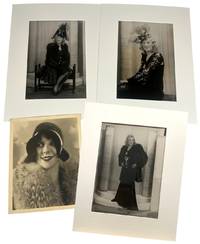
1920ref. 226731920. LGBTQ Drag JJimmy Slater and Rusty female impersonator photograph archive documenting early twentieth century drag performance culture and queer theatrical networks in Britain and the United States produced circa 1920s-1940s. The photographs capture two performers working within the tradition of stage female impersonation that flourished in music halls vaudeville circuits and theatrical revues during the interwar period. Jimmy Slater an English female impersonator who began performing in seaside concert parties as a teenager and later honed his craft in British Army concert parties during the First World War appears in elaborate theatrical portraits reflecting the glamorous visual language associated with drag performance of the era. The archive also includes a signed studio photograph of the American drag performer Rusty inscribed to Patsy Kelly the Hollywood actress widely recognized as one of the earliest openly lesbian figures in American film culture. Together the images document both the public stage presence of female impersonators and the personal networks connecting queer performers and entertainers across transatlantic entertainment circuits. Archive of four professional studio photographs dating from approximately the 1920s through the 1940s. Three photographs depict Jimmy Slater in highly stylized theatrical portraits taken by Debrons Theatrical Photographers of Preston. In these images Slater appears in fur-trimmed evening gowns feathered hats and elaborate stage costume emphasizing the aesthetic conventions of female impersonation performance in British theatrical culture. The fourth photograph is a professional Chicago studio portrait of the drag performer Rusty photographed wearing a cloche hat and fur stole in a style associated with Jazz Age stage glamour. The Rusty photograph bears a handwritten inscription addressed to Patsy Kelly linking the image directly to an actress whose career spanned Hollywood film Broadway theater and later television and who has been widely identified within queer cultural history. Four photographs. Silver gelatin prints. Three Jimmy Slater portraits measure approximately 8 x 10 inches and are mounted in large presentation mats measuring approximately 11.75 x 15 inches. The Rusty portrait measures approximately 8 x 10 inches. These photographs document the visual culture of female impersonation performance during a period when drag artists occupied a complex position within popular entertainment appearing in concert parties vaudeville stages and theatrical revues while also circulating within informal queer social networks. The inscription to Patsy Kelly provides documentary evidence of connections between drag performers and queer figures in early twentieth century entertainment industries in both Britain and the United States. Light surface wear and minor handling marks to prints and mats consistent with age. Images remain strong and well defined. Overall very good condition. A visually striking group preserving early drag performance aesthetics and personal connections within interwar queer entertainment culture. unknown
1920ref. 59766Portland OR New York & Hollywood & Los Angeles CA: Earl Mossman Revue and Productions ACME Commercial Studio Allara Blixt Braun Bruno Allen J. De Lay Photo-Art Commercial Studio et al ca. 1920-1976. Three vols. Thick 4to. 179; 124; 117 leaves unnumbered. all archival mylar sleeves some 2-pocket for 5 x 7 in. material most for holding 8 x 10 in. images. With 425 photographs sized from 4 x 4 in. up to 8 x 10 in. over 90% are 8 x 10 in. most images w/ photographer’s imprints on versos many w/ pencil annotations editing notes camera-ready copy several are negative contact print sheets a few colour images many are signed some have minor tears or creasing a few show remnants of old scrapbook leaves together with several newspaper and magazine clippings printed promotions holiday leaflets. All preserved in three black cloth 3-ring clamshell binders an excellent archive. This unequaled archive of photographs chronicling the successful and colourful Vaudeville and entertainment career of Earl Mossman reveals wealth of musical and theatrical history from the Pacific Northwest during first album in this archive is largely devoted to Earl Mossman’s contributions and managing of his the first half of the 20th Century as well as impact on historic events. The chorus-line all-girl revue shows at the Frontier Village during the 100 day run of the Oregon Centennial Exposition. This re-created town from the 1870’s Old West featured the Golden Nugget dance hall & saloon as well as livery stable church post office and hotel and proved to be the most successful attraction. Mossman’s Can-Can girls put on daily shows and held dances where the daringly dressed women would dance with visitors and hired actors. The 1859-1959 Centennial Exposition lasted from June 10 to Sept. 17 on 65 acres along the Columbia River formerly Vanport wiped away in the tragic 1948 flood and also featured a Gayway Amusement Park Garden of Tomorrow & Adventureland. The photos depict not only Mossman’s Can-Can girl revue but also steam locomotives Modernist sculptures and murals by Louis Bunce and other Oregon artists as well as photos of the Mid-Century Modern Lumber Industry Pavilion and the striking Hall of Religious History in the Garden of Tomorrow which featured murals of Carl Morris. Also shown are neon sculptures the filled arena showing the opening ceremonies which featured actor Raymond Burr as master of ceremonies the Nelson Picket Dancers the Golden Nugget and Frontier Trading Post from the air and more. The second album includes as well more images from the Centennial as well as many from Earl Mossman’s “Productions” talent agency and entertainment group who supplied vaudeville dance and music acts such as Beverly Short Eleanor Malcolm Gary Marvin Ginger McClane Gwen Gibson Jerry Brown Freddie Keller’s Orchestra and Maury Meriweather’s Band to Portland OR and surrounding Pacific Northwest clubs and venues. Photos included here depict as well the Nelson Pickett Dancers The Glenns “originating new tricks in a dancing mood;” The Carsony Brothers; the Earl Mossman Girls featuring models from the Gloria LaVonne modeling agency; along with Walter Blacke Jacqueline Clark Earl Mossman’s Dolls for “Delta Dome” and more. Other notable names include Billy Daniels d. 1988 with photos of his ‘The Masculine Touch” recorded live at the Mocambo on the Sunset Strip well-known African-American singer form the mid-1930’s to 1986 who launched his career in the Harlem Renaissance; along with Jeanne Gayle who sang with Bob Crosby and starred in the Great Gildersleeve 1954 Jack Nagel and even Shirley of the Hoti PocaDot Bikini Contest.The many photos also depict Mossman meeting and greeting celebrities rolling into Portland running for mayor of Portland OR he never won: touting and promoting the “Straw hat day May 15” by not only wearing straw hats himself but inducing his all-girl revues to wear as well along with leading parades including the 1972 Merrykhana Parade where he was appointed “King of the Parade.” Many of the images show him with many different canes drawn from his large collection signing contracts for the American Legion seated in limousines and Porsches and even attending dinners. One photo includes dinner guests of Miracle Oxygen which featured the editor of The Oregonian Dick Nokes Paul Hauron stage feature writer the Todds and others. Of additional interest are the photos of Mossman showing off his scrapbook filled with images from his long career as well as images while convalescing with his bevy of beauties in the Shriner’s Hospital in Portland OR. Mossman 1894-1976 was an Oregon native and grandson of Isaac Mossman who had fought in the 1855-1856 Indian Wars rode with the Washington Territory’s Pony Express out of Walla Walla and was the first Washington Territorial librarian in 1870. Earl Mossman began running away from home as a young boy to perform in taverns and saloons in downtown Portland later worked for Pacific Power & Light Co. as an office boy and in 1913 after marrying his childhood sweetheart Catherine Groos launched his career on the Vaudeville Circuit. He initially played with the Basco Comedy Co. and later with Connie & Mack’s and the Bert Levy Circuit. Walter Winchell coined him as the “Beau Brummel of Broadway” during the 1920’s and by the 1930’s was performing with Norma Lawton in Broadway productions such as “The Dancing Producer” and performed with his partner Ray Vance at the Lotus Isle Amusement Park and the Peacock Ballroom. He would marry five different times performed at civic activities Rose Festivals and beauty pageants across the Pacific Northwest.Over half the photographs in this collection were shot by Allen J. De Lay photographer with The Oregonian from 1947 until the newspaper strike of 1960 who was not only an extraordinary photographer but also musician and competitive swimmer. He is perhaps best remembered for his photographs of the darker seamier side of Portland in the post-World War II era. Other Oregon photographers represented include Maxwell Allara Paul Blixt Kirk Braun Bill Gray Hodge Kennell-Ellis Verne Lewis Alfred Monner Dick Slater Don Thompson Donald Wilson and others. Of particular interest are noted theatrical photographers such as Bruno in Hollywood and James J. Kriegsmann 1909-1994 celebrity & theatrical photographer from 1929 to the 1980’s. We could find no similar archive of Mossman related photos in any institutional holdings except for a few images. See: Ellis Lucia Earl Mossman Oral History Recording pacific University Archives 1914-1918 Washington County Oral Histories; Walkathons - Dance Marathons Al Painter’s Lotus Isle Walkathon Organization PDX History 2022; David Kludas Centennial Exposition of 1959 Oregon Encyclopedia 2022. Earl Mossman Revue, and Productions, ACME Commercial Studio, Allara, Blixt, Braun, Bruno, Allen J. De Lay, Photo-Art Commercial hardcover