2.913 Ergebnisse
1966Best.-Nr. 41602New York: Abrams 1966. Very good. Inscribed first edition of this founding document of performance and environmental art - the first such work by a major publisher Abrams. A founding document of performance and environmental art and the first by a major publisher Kaprow's ASSEMBLAGE ENVIRONMENTS & HAPPENINGS was originally planned as an official Fluxus publication see CODEX p. 288 but eventually evolved into this broader book. Artists covered include Robert Rauschenberg Claes Oldenburg Red Grooms and George Segal with contributions from Wolf Vostell George Brecht Kaprow and others. The recipient is almost certainly photojournalist Paul Berg whose photos are included in this volume and fall roughly where Kaprow suggests they should though there is no such plate 164. Berg photographed and covered Kaprow's happening "Push and Pull" for the ST. LOUIS POST DISPATCH in 1963. The uncommon hardcover issue of this important resource it is scarce signed especially with any kind of association. 12'' x 12''. Original brown burlap covered boards. Lacking original clear vinyl jacket. Black endpapers. 341 3 pages. Inscribed by Kaprow to early preliminary: "For Paul on / his birthday - / A nostalgic / time in which / you played a / part see pl. / 164 somewhere / deep inside! / - in friendship / Allan K." Sunning to lower edges spine faded. Else clean and sound throughout. Abrams unknown books
1966Best.-Nr. 41602New York: Abrams 1966. Very good. Inscribed first edition of this founding document of performance and environmental art - the first such work by a major publisher Abrams. A founding document of performance and environmental art and the first by a major publisher Kaprow's ASSEMBLAGE ENVIRONMENTS & HAPPENINGS was originally planned as an official Fluxus publication see CODEX p. 288 but eventually evolved into this broader book. Artists covered include Robert Rauschenberg Claes Oldenburg Red Grooms and George Segal with contributions from Wolf Vostell George Brecht Kaprow and others. The recipient is almost certainly photojournalist Paul Berg whose photos are included in this volume and fall roughly where Kaprow suggests they should though there is no such plate 164. Berg photographed and covered Kaprow's happening "Push and Pull" for the ST. LOUIS POST DISPATCH in 1963. The uncommon hardcover issue of this important resource it is scarce signed especially with any kind of association. 12'' x 12''. Original brown burlap covered boards. Lacking original clear vinyl jacket. Black endpapers. 341 3 pages. Inscribed by Kaprow to early preliminary: "For Paul on / his birthday - / A nostalgic / time in which / you played a / part see pl. / 164 somewhere / deep inside! / - in friendship / Allan K." Sunning to lower edges spine faded. Else clean and sound throughout. Abrams hardcover books
2021Best.-Nr. BN42411Indigo Spirit Verlag 2021. 2021. Hardcover. 210 x 300 mm. Das Buch der Heilung Das Sammel- und Meisterwerk von Geistheiler Sananda alias Oliver Michael Brecht! Unzählige Klientenfeedbacks noch nie veröffentlichte Bilder Zitate und Weisheiten von Geistheiler Sananda Persönliche Ausführungen von Geistheiler Sananda zum Thema Heilungen. Warum werden manche geheilt und andere nicht Was kann jeder selbst tun um geheilt zu werden Warum können wenige heilen viele nicht Ein Muss für jeden der Heilung sucht! Ein Muss für jeden der höheres Bewusstsein erlangen will! Begrenzte einmalige Auflage von 2000 Stück! Verlagsort Kreuzlingen Sprache deutsch Maße 210 x 300 mm Gewicht 7061 g Einbandart gebunden Literatur Biografien Erfahrungsberichte Sachbuch Ratgeber Geschichte Politik Asthar Sheran Astralwelt Außerirdische Besessenheit Besetzung Bewusstsein Chemtrails Dunkelwesen Flüche galaktische Föderation Geheimbünde Geistheiler Sananda Geistiges Heilen Geistige Welt Heimatplanet Illuminaten Indigo Seelen Magier Menschheitsgeschichte Mind Control Nahtoderfahrung Paranormale Phänomene Seelenplan Wahrsager ISBN-10 3-9525414-0-0 3952541400 ISBN-13 978-3-9525414-0-1 9783952541401 Literatur Biografien Erfahrungsberichte Sachbuch Ratgeber Geschichte Politik Asthar Sheran Astralwelt Außerirdische Besessenheit Besetzung Bewusstsein Chemtrails Dunkelwesen Flüche galaktische Föderation Geheimbünde Geistheiler Sananda Geistiges Heilen Geistige Welt Heimatplanet Illuminaten Indigo Seelen Magier Menschheitsgeschichte Mind Control Nahtoderfahrung Paranormale Phänomene Seelenplan Wahrsager ISBN-10 3-9525414-0-0 3952541400 ISBN-13 978-3-9525414-0-1 9783952541401 Das Buch der Heilung Das Sammel- und Meisterwerk von Geistheiler Sananda alias Oliver Michael Brecht! Unzählige Klientenfeedbacks noch nie veröffentlichte Bilder Zitate und Weisheiten von Geistheiler Sananda Persönliche Ausführungen von Geistheiler Sananda zum Thema Heilungen. Warum werden manche geheilt und andere nicht Was kann jeder selbst tun um geheilt zu werden Warum können wenige heilen viele nicht Ein Muss für jeden der Heilung sucht! Ein Muss für jeden der höheres Bewusstsein erlangen will! Begrenzte einmalige Auflage von 2000 Stück! Verlagsort Kreuzlingen Sprache deutsch Maße 210 x 300 mm Gewicht 7061 g Einbandart gebunden Indigo Spirit Verlag hardcover
1974Best.-Nr. BN32251Bielefeld Luther-Verlag; Göttingen Vandenhoeck & Ruprecht 1974. 1974. Softcover. Pietismus und Neuzeit. Ein Jahrbuch zur Geschichte des neueren Protestantismus. Im Auftrag der Historischen Kommission zur Erforschung des Pietismus herausgegeben von Martin Brecht Klaus Deppermann Andreas Lindt u. a. Konvolut von 22 Bänden 1974-1997. von Martin Hrsg. Deppermann Klaus Hrsg. Lindt Andreas Hrsg. u. a. Brecht Autor Pietismus und Neuzeit. Ein Jahrbuch zur Geschichte des neueren Protestantismus. Im Auftrag der Historischen Kommission zur Erforschung des Pietismus herausgegeben von Martin Brecht Klaus Deppermann Andreas Lindt u. a. Konvolut von 22 Bänden 1974-1997. von Martin Hrsg. Deppermann Klaus Hrsg. Lindt Andreas Hrsg. u. a. Brecht Autor Bielefeld, Luther-Verlag; Göttingen, Vandenhoeck & Ruprecht paperback
1970Best.-Nr. OP-2355Forth Studios Ltd Edinburgh Edinburgh 1970. staple binding. fine. Forth Studios Ltd Edinburgh, Edinburgh unknown
1963Best.-Nr. 039378La Monte Young & Jackson Mac Low 1963. Soft cover. Very Good. Octavo Oblong. Sunned front cover a little scuffed back cover. Clean and crisp interior. Shipped from the Calico Cat Bookshop a brick and mortar bookshop established in 1975. La Monte Young & Jackson Mac Low paperback
Best.-Nr. PB-HHDS-GZVMHardcover. Fluxnullkit. Very Good. SIGNED Berlin: Edition Hundertmark 1978. Boxed edition with loose leaves; off-set printed in black-and-white. Limited edition of 180 signed and numbered copies. An artist's book collaboration by George Brecht Hermann Braun and Wolfgang Feelisch. Consists of a thin cardboard box containing letters with text by the artists plus illustrations and design proposals for the propellor of a "fluxship" meant to transport Fluxus artists. Text in German and English. Signed by each artist on the title page. In very good overall condition; no owner marks NOT EX-LIBRARY. fpbw unknown
2002Best.-Nr. x-0824706870Marcel Dekker Inc 2002. Hardcover. New. 2nd revised expanded edition. 744 pages. 10.00x7.00x1.50 inches. Marcel Dekker Inc hardcover
1969Best.-Nr. 100304Tokyo 1969 784x446mm Affiche Tokyo, janvier 1969, 784x446mm, impression offset recto verso. Conception graphique de Sugihura, le prestigieux graphiste de " The Map " de Kawada, " Barakei " de Hosoe et " Saint Marco " de Narahara. Le festival, organisé par Kosugi et Chiomi regroupait en outre les artistes suivants :Junzo Ishiko, Tukumi Kazekara, Akimichi Takeda, Koichi Tanigawa et Li-lan qui interprétèrent des pièces de George Brecht, Dick Higgins, Jackson McLow, Name June Paik, Thomas Schmit, Ben Vautier, Emmett Williams et La Monte Young. Il eut lieu à Tokyo du 18 au 21 janvier 1969. Silverman 279 ; Fluxus-Art into Life, Urawa Art Museum 2004, n°140 reproduit au catalogue. (100304)
1905Collectie van 146 nummers van dit tijdschrift dat werd uitgegeven van 1905 tot en met 1967 (zie hieronder), samen ca. 4700 pp., originele omslagen, over het algemeen in zeer goede staat (enkele oudere nummers met wat gebreken zoals o.m. roestplekjes), zeldzaam, [Inhoud: Jg.1 nr.1 (1905, 28pp.), Jg.2 nr.1-2-3-4 (1906, 82pp.), Jg.3 nr.1-2-3-4 (1907, 68pp.), Jg.4 nr.1-2-3-4 (1908, 68pp.), Jg.5 nr.1-2-3-4 (1909, 66pp.), Jg.6 nr.1-2-3-4 (1910, 72pp.), Jg.7 nr.1-2-3/4 (1911, 74pp.), Jg.8 nr.1-2-3-4 (1912, 64pp.), Jg.9 nr.1-2-3-4 (1913, 66pp.), Jg.10 nr.1-2 (1914-1919, 32pp.), Jg.13 nr.1-2-3-4 (1922, 94pp.), Jg.14 nr.3-4 (1923, pp.49-92), Jg.15 nr.1-2-4 (1924, 68pp.), Jg.16 nr.1-3/4 (1925, 68pp.), Jg.17 nr.1-2-3-4 (1926, 92pp.), Jg.18 nr.1/2-3-4 (1927, 96pp.), Jg.19 nr.1-2-3-4 (1928, 108pp.), Jg.20 nr.1-2-3-4 (1929, 168pp.), Jg.21 nr.1-2-3-4 (1930, 192pp.), Jg.22 nr.1-2-3-4 (1931, 186pp.), Jg.23 nr.1-2-3-4 (1932, 158 + XX pp.), Jg.24 nr.1-2-3-4 (1933, 164pp.), Jg.25 nr.1-2-3-4 (1934, 118 + XXII pp.), Jg.26 nr.1-2-3/4 (1935, 60 + 18pp.), Jg.27 nr.1/2-3-4 (1936, 149 + 32pp.), Jg.28 nr.1/2/3-4 (1937, 120 + 72 + [20] pp.), Jg.29 nr.1-2/3-4 (1938, 16 + 116 + 16pp.), Jg.30 nr.1-2/3/4 (1939, 127 + 46pp.), Jg.31 nr.1 (1940, 70pp.), Jg.32 nr.1-2-3-4 (1951, 132 + 22pp.), Jg.35 nr.1-2-3 (1952, 112 + 14pp.), Jg.36 nr.1/2/3-4 (1953, 174 + 18pp., nr.1/2/3 betreft themanummer door Verbeemen: Emigratie uit de antwerpse kempen bronnenuitgave, 135pp.), Jg.43 nr.1/2/3 (1960, 88pp.), Jg.44 nr.1/2/3-4 (1961, 140 + XVIII pp. bevat vnl. Ernalsteen: Kempische schuttersgilden deel 1), Jg.45 nr.1/2/3-4 (1962, 152 + XVIII pp. bevat vnl. Ernalsteen's Kempische schuttersgilden deel 2), Jg.46 nr.1/2/3-4 (1963, 113 + XXV pp.), Jg.47 nr.1/2/3-4-5-6 (1964, 147 + XXV pp.), Jg.48 nr.1/2/3-4 (1965, 170 + XX pp.), Jg.49. nr.1/2/3-4 (1966, 151 + XXXV pp.), Jg.50 nr.1/2/3-4 (1967, 59 + 15pp.) // De volgende nummers ONTBREKEN dus: Jg.I nr.2-3-4 // vanaf Jg.10 (1914) nr.3 tot en met jg.12 (1921) // Jg.14 nr.1-2 // Jg.15 nr.3 // Jg.16 nr.2 // vanaf Jg.31 nr.2 t.e.m. Jg.33 (deze oorlogsnummers ontbreken in alle bekende collecties en werden dus wellicht nooit uitgegeven?!) // Jg.35 nr.4 // Jg.37 t.e.m. jg.42 // Jg.43 nr.4], De ondertitel van dit tijdschrift varieert, gewicht: 11kg., N.B.: Deze collectie wordt enkel als set aangeboden (er worden dus géén losse nummers uit verkocht), B95811
1905Best.-Nr. B95811Brecht, 1905-1967 Collectie van 146 nummers van dit tijdschrift dat werd uitgegeven van 1905 tot en met 1967 (zie hieronder), samen ca. 4700 pp., originele omslagen, over het algemeen in zeer goede staat (enkele oudere nummers met wat gebreken zoals o.m. roestplekjes), zeldzaam, [Inhoud: Jg.1 nr.1 (1905, 28pp.), Jg.2 nr.1-2-3-4 (1906, 82pp.), Jg.3 nr.1-2-3-4 (1907, 68pp.), Jg.4 nr.1-2-3-4 (1908, 68pp.), Jg.5 nr.1-2-3-4 (1909, 66pp.), Jg.6 nr.1-2-3-4 (1910, 72pp.), Jg.7 nr.1-2-3/4 (1911, 74pp.), Jg.8 nr.1-2-3-4 (1912, 64pp.), Jg.9 nr.1-2-3-4 (1913, 66pp.), Jg.10 nr.1-2 (1914-1919, 32pp.), Jg.13 nr.1-2-3-4 (1922, 94pp.), Jg.14 nr.3-4 (1923, pp.49-92), Jg.15 nr.1-2-4 (1924, 68pp.), Jg.16 nr.1-3/4 (1925, 68pp.), Jg.17 nr.1-2-3-4 (1926, 92pp.), Jg.18 nr.1/2-3-4 (1927, 96pp.), Jg.19 nr.1-2-3-4 (1928, 108pp.), Jg.20 nr.1-2-3-4 (1929, 168pp.), Jg.21 nr.1-2-3-4 (1930, 192pp.), Jg.22 nr.1-2-3-4 (1931, 186pp.), Jg.23 nr.1-2-3-4 (1932, 158 + XX pp.), Jg.24 nr.1-2-3-4 (1933, 164pp.), Jg.25 nr.1-2-3-4 (1934, 118 + XXII pp.), Jg.26 nr.1-2-3/4 (1935, 60 + 18pp.), Jg.27 nr.1/2-3-4 (1936, 149 + 32pp.), Jg.28 nr.1/2/3-4 (1937, 120 + 72 + [20] pp.), Jg.29 nr.1-2/3-4 (1938, 16 + 116 + 16pp.), Jg.30 nr.1-2/3/4 (1939, 127 + 46pp.), Jg.31 nr.1 (1940, 70pp.), Jg.32 nr.1-2-3-4 (1951, 132 + 22pp.), Jg.35 nr.1-2-3 (1952, 112 + 14pp.), Jg.36 nr.1/2/3-4 (1953, 174 + 18pp., nr.1/2/3 betreft themanummer door Verbeemen: Emigratie uit de antwerpse kempen bronnenuitgave, 135pp.), Jg.43 nr.1/2/3 (1960, 88pp.), Jg.44 nr.1/2/3-4 (1961, 140 + XVIII pp. bevat vnl. Ernalsteen: Kempische schuttersgilden deel 1), Jg.45 nr.1/2/3-4 (1962, 152 + XVIII pp. bevat vnl. Ernalsteen's Kempische schuttersgilden deel 2), Jg.46 nr.1/2/3-4 (1963, 113 + XXV pp.), Jg.47 nr.1/2/3-4-5-6 (1964, 147 + XXV pp.), Jg.48 nr.1/2/3-4 (1965, 170 + XX pp.), Jg.49. nr.1/2/3-4 (1966, 151 + XXXV pp.), Jg.50 nr.1/2/3-4 (1967, 59 + 15pp.) // De volgende nummers ONTBREKEN dus: Jg.I nr.2-3-4 // vanaf Jg.10 (1914) nr.3 tot en met jg.12 (1921) // Jg.14 nr.1-2 // Jg.15 nr.3 // Jg.16 nr.2 // vanaf Jg.31 nr.2 t.e.m. Jg.33 (deze oorlogsnummers ontbreken in alle bekende collecties en werden dus wellicht nooit uitgegeven?!) // Jg.35 nr.4 // Jg.37 t.e.m. jg.42 // Jg.43 nr.4], De ondertitel van dit tijdschrift varieert, gewicht: 11kg., N.B.: Deze collectie wordt enkel als set aangeboden (er worden dus géén losse nummers uit verkocht), B95811
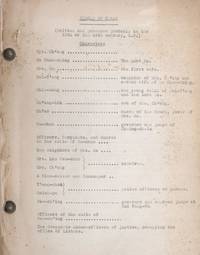
1930Best.-Nr. 3243881930. Duplicated typescript printed rectos only. Prologue and 4 acts paginated individually. 6 20 17 9 12 pp. 1 vols. 4to. Metal brads. Toned some light inking of a few pages. Duplicated typescript printed rectos only. Prologue and 4 acts paginated individually. 6 20 17 9 12 pp. 1 vols. 4to. My station in life Is that of a clerk. But privately There are two things I love Surpassingly: Good wine And the women Of other men. Acting script of the Ethel van der Veer translation of a Chinese play Circle of Chalk which tells a tale of disputed inheritance discord and murder in the tenth century C.E. The play was first popularized in the west through a German translation by Klabund Alfred Henschke produced in Berlin in 1925 and also produced in London from a script by James Laver with Anna May Wong as the heroine. Independent of these productions Ethel van der Veer's translation was published in 1933. The Circle of Chalk must be counted as a key source for Bertholt Brecht's postwar drama Die Kaukasische Kreidekreis. The present text is uncredited but follows the van der Veer with the frequent addition of stage directions many of which now seem "Brechtian" in the way characters turn to face and often directly address the audience. unknown
1930Best.-Nr. 3243881930. Duplicated typescript printed rectos only. Prologue and 4 acts paginated individually. 6 20 17 9 12 pp. 1 vols. 4to. Metal brads. Toned some light inking of a few pages. Duplicated typescript printed rectos only. Prologue and 4 acts paginated individually. 6 20 17 9 12 pp. 1 vols. 4to. My station in life Is that of a clerk. But privately There are two things I love Surpassingly: Good wine And the women Of other men. Acting script of the Ethel van der Veer translation of a Chinese play Circle of Chalk which tells a tale of disputed inheritance discord and murder in the tenth century C.E. The play was first popularized in the west through a German translation by Klabund Alfred Henschke produced in Berlin in 1925 and also produced in London from a script by James Laver with Anna May Wong as the heroine. Independent of these productions Ethel van der Veer's translation was published in 1933. The Circle of Chalk must be counted as a key source for Bertholt Brecht's postwar drama Die Kaukasische Kreidekreis. The present text is uncredited but follows the van der Veer with the frequent addition of stage directions many of which now seem "Brechtian" in the way characters turn to face and often directly address the audience. unknown books
1928Best.-Nr. 011176Vienna: Universal- Edition A. G. 1928. Hardcover. Near Fine. Rebound copy lacking paper covers with 220 stamped in the middle of the right margin on page 31 thus indicating either one of 300 copies of the first printing or perhaps less likely one of 500 copies of the second printing. Rebound in 1/4 cloth over dark beige and black marbelized boards oversized to original leaf dimensions with separate sheets bound in between each leaf of text. 79 pp 1. Internally fine. Covers a wee soiled. Universal- Edition A. G. hardcover
1928Best.-Nr. 011176Vienna: Universal- Edition A. G. 1928. Hardcover. Near Fine. Rebound copy lacking paper covers with 220 stamped in the middle of the right margin on page 31 thus indicating either one of 300 copies of the first printing or perhaps less likely one of 500 copies of the second printing. Rebound in 1/4 cloth over dark beige and black marbelized boards oversized to original leaf dimensions with separate sheets bound in between each leaf of text. 79 pp 1. Internally fine. Covers a wee soiled. Universal- Edition A. G. hardcover books
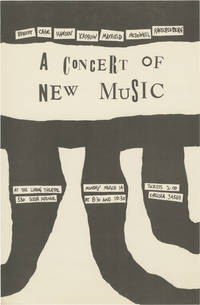
1960Best.-Nr. 160202New York: The Living Theatre 1960. Vintage flyer for an experimental music show held at The Living Theatre on March 14 1960. Flyer advertises performances by John Cage George Brecht Alfred Hansen Allan Kaprow Richard Maxfield John Herbert McDowell and Robert Rauschenberg. Among the pieces performed were Kaprow's "Sound Piece 1958" Brecht's "Candle Piece for Radios" and "Card Piece for Voice" Rauschenberg's "Telephone Music" Maxfield's "Cough Music" and "Symphonie Pastorale" Cage's "Imaginary Landscape No. 5" and "Suite for Toy Piano" Hansen's "Bibbe's Tao" and McDowell's "Music for a While." Founded in 1947 The Living Theatre laid the foundation for a robust underground art scene in the New York City. After more than a decade of successful original radical stage productions and adaptations of works by playwrights such as Bertold Brecht and Gertrude Stein founders Judith Malina and Julian Beck used their space and resources for the nourishment of the arts more broadly offering the theatre for literary benefits film screenings and musical performances such as the ones advertised here. 8.5 x 12.75 inches. Near Fine. The Living Theatre unknown
1960Best.-Nr. 160202New York: The Living Theatre 1960. Vintage flyer for an experimental music show held at The Living Theatre on March 14 1960. Flyer advertises performances by John Cage George Brecht Alfred Hansen Allan Kaprow Richard Maxfield John Herbert McDowell and Robert Rauschenberg. Among the pieces performed were Kaprow's "Sound Piece 1958" Brecht's "Candle Piece for Radios" and "Card Piece for Voice" Rauschenberg's "Telephone Music" Maxfield's "Cough Music" and "Symphonie Pastorale" Cage's "Imaginary Landscape No. 5" and "Suite for Toy Piano" Hansen's "Bibbe's Tao" and McDowell's "Music for a While." Founded in 1947 The Living Theatre laid the foundation for a robust underground art scene in the New York City. After more than a decade of successful original radical stage productions and adaptations of works by playwrights such as Bertold Brecht and Gertrude Stein founders Judith Malina and Julian Beck used their space and resources for the nourishment of the arts more broadly offering the theatre for literary benefits film screenings and musical performances such as the ones advertised here. 8.5 x 12.75 inches. Near Fine. The Living Theatre unknown books
Best.-Nr. WEAU0043Wien u. Leipzig Österr. Bundesverlag dann Leipzig später Stuttgart Reclam 1928-1950. 8°. Je Bd. ca 300 S. Farb. OLeinenbde. u. OHLeinenbde 2 m. Rü.- u. Deckeltitel sowie Deckelrahmen in Goldpräg u. farb. Kopfschnitt; 25 illustr. Originalumschläge beiliegend. 3 Bde. m. Bibl.etik. am Rü. einige Bände mit leichten Gebrauchsspuren großteils jedoch unberührt. Bode Reclam S.146ff. - Vollständige Sammlung dieser umfassenden Textreihe die zunächst auf 250 dann auf 300 Bände angelegt war. Reclam übernahm die 1928 mit 2 Bänden begonnene Edition vom Österreichischen Bundesverlag. Die Sammlung blieb - äußerlich durch den zweiten Weltkrieg bedingt - ein Torso. Reihen mit bekannteren Texten wie 'Klassik' sind kaum begonnen worden andere Reihen wie 'Neue Mystik und Magie' wurden in Verlagsprospekten angekündigt sind aber nie erschienen. Die abgeschlossenen Reihen z.B. 'Aufklärung' und 'Romantik' gelten als wissenschaftlich verdienstvoll. Bei Reclam wurden 110 Bände ediert zuletzt 1950 noch Band 1 der Reihe 'Romantik'. Das Monumentalwerk sollte den ""Gesamtbesitz deutscher Dichtung"" überschaubar machen und wissenschaftsgeschichtlich die vom Positivismus des 19. Jahrhunderts geprägte Sammlung 'Kürschners Nationalliteratur' ablösen. Die Herausgabe wurde - auch von Nichtwissenschaftlern wie H. Hesse Thomas Mann und Karl Wolfskehl lebhaft begrüßt. Mit dem Aufkommen des Nationalsozialismus und der bekannten systemkonformen politischen Einstellung des Hauptherausgebers Kindermann bei gleichzeitigem Ausscheiden von Walther Brecht erlebte das Reihenwerk einige Planänderungen und Ergänzungen in denen sich die Wendung ins Volkhaft-Nationale spiegelt. - Die erschienenen Bände - wie vorliegend : Drama des Mittelalters 3 Bde. / Geistliche Dichtung des Mittelalters 2 Bde. / Höfische Dichtung 1 Bd. / Realistik des Spätmittelalters 4 Bde. / Humanismus und Renaissance 2 Bde. / Reformation 7 Bde. / Dt. Volkslied 2 Bde. / Volks- und Schwankbücher 3 Bde. / Barockdrama 6 Bde. / Barocklyrik u. Erg.Bd 4 Bde. / Barocktradition im. Volkstheater 6 Bde. / Aufklärung 15 Bde. / Irrationalismus 4 Bde. / Klassik 3 Bde. / Romantik 23 Bände / Politische Dichtung 9 Bände / Deutsche Selbstzeugnisse 10 Bde. / Deutsche Sagen 3 Bde. / Naturalismus 2 Bde. / Formkunst 3 Bde. Wien u. Leipzig, Österr. Bundesverlag, dann Leipzig (später Stuttgart), Reclam 1928-1950. unknown
1933Best.-Nr. 138407Germany: Kinematrade 1933. Vintage US poster for the 1932 German communist propaganda film "Kuhle Wampe oder Wem gehort die Welt" The subtitle is seen here under the English translation "Whither Germany." Circa 1933 as identified by the name of the Philadelphia theatre on the poster. The last and arguably most important communist film of the Weimar era "Kuhle Wampe oder" is according to screenwriter Brecht a "Collective Presentation" that tells the tale of a family in early 1930s Berlin. After the son is prolongedly unemployed he commits suicide and the family is forced to relocate to a shantytown known as "Kuhle Wampe" or "Empty Stomach." Created under severely limited material conditions with filming constantly being broken up by the Weimar government's paramilitary SA agency the film attempts to depict archetypes of the times including an intellectual clash on a subway between members of the bourgeoisie and the proletariat. Banned first by the failing Weimar Republic and subsequently by the Nazi Reich the film was believed to have been lost until it reappeared over 20 years later in East Germany in 1958. This poster likely originates from screenings held in November 1933 by an unknown pro-communist organization in Philadelphia at the short-lived left-leaning Philkino theater. A US screening of this film dating before the film's disappearance and only just after the very beginnings of Hitler's rise to power makes this poster not only very scarce but one of significant historical value. The poster touting "Kuhle Wampe" as "The Film Hitler Burned" features an image of a man with a hammer and sickle attacking two snakes that form the Nazi swastika and touts the involvement of members of the "Labor Sports Union" in the film. 9.5 x 13 inches letterpress on pale faded pink stock. Very Good with expected moderate wear. Kinematrade unknown
1933Best.-Nr. 138407Germany: Kinematrade 1933. Vintage US poster for the 1932 German communist propaganda film "Kuhle Wampe oder Wem gehort die Welt" The subtitle is seen here under the English translation "Whither Germany." Circa 1933 as identified by the name of the Philadelphia theatre on the poster. The last and arguably most important communist film of the Weimar era "Kuhle Wampe oder" is according to screenwriter Brecht a "Collective Presentation" that tells the tale of a family in early 1930s Berlin. After the son is prolongedly unemployed he commits suicide and the family is forced to relocate to a shantytown known as "Kuhle Wampe" or "Empty Stomach." Created under severely limited material conditions with filming constantly being broken up by the Weimar government's paramilitary SA agency the film attempts to depict archetypes of the times including an intellectual clash on a subway between members of the bourgeoisie and the proletariat. Banned first by the failing Weimar Republic and subsequently by the Nazi Reich the film was believed to have been lost until it reappeared over 20 years later in East Germany in 1958. This poster likely originates from screenings held in November 1933 by an unknown pro-communist organization in Philadelphia at the short-lived left-leaning Philkino theater. A US screening of this film dating before the film's disappearance and only just after the very beginnings of Hitler's rise to power makes this poster not only very scarce but one of significant historical value. The poster touting "Kuhle Wampe" as "The Film Hitler Burned" features an image of a man with a hammer and sickle attacking two snakes that form the Nazi swastika and touts the involvement of members of the "Labor Sports Union" in the film. 9.5 x 13 inches letterpress on pale faded pink stock. Very Good with expected moderate wear. Kinematrade unknown books
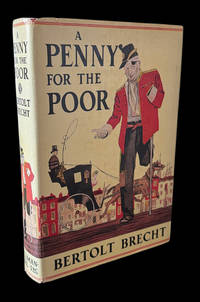
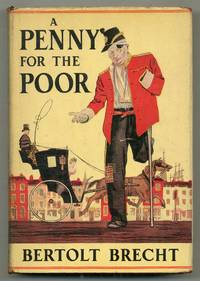
1938Best.-Nr. 112233445566782The First USA Printing published by Hillman-Curl Inc. New York in 1938. The BOOK is in near Fine condition. 8vo. bright red publisher's cloth lettered lined and decorated with hand and arm devices in black to upper cover and spine; yellow top-stain remains bright. else untrimmed; together in the vibrant pictorial wrapper featuring a man with one leg to the upper panel and spine unclipped displaying the correct price of $2.50 to the front flap; An excellent bright copy with just a couple of tiny marks to the rear board; light offsetting and toning to the blank end-papers ; with a small shop sticker of Miller & Rhoads to the lower rear paste-down. The WRAPPER also in excellent Very Good or better condition retaining much of its original colour with just a hint of sunning to the spine; light edge-wear to the spine tips and one small closed tear to the rear flap fold; aside from marginal shelf wear a very attractive example. The wrapper is protected in a removable Brodart archival cover. First USA printing translated from the German by Desmond I. Vesey with the chapter-head verses translated by Christopher Isherwood. A novel based on the author's famous 1928 musical play 'A Threepenny Opera' later re-issued as 'Threepenny Novel' which he co-wrote with Kurt Weill itself loosely based on John Gay's 'The Beggar's Opera'. The play was filtered through Brecht's experiences among the criminal fringe elements of the Weimar Republic. It was the first of Brecht's plays to appear in English. Bertolt Brecht was born in 1898 in Augsburg Germany and was 16 when the First World War broke out. Exploiting a loophole which allowed medical students to be deferred from the army he enrolled at Munich University and began to study theatre under the guidance of Arthur Kutscher. His first works of theatre criticism began to appear as early as 1919 and over the following few years he took part in a political cabaret of the Munich comedian Karl Valentin. Valentin became a huge influence for the young writer and he wrote his first full-length play Baal in response to an argument he had with Kutscher during one of his drama seminars. This re-writing of other's work - as well as his own - would become a key theme in his writings. As he claimed "Anyone can be creative.it's rewriting other people that's a challenge." Over the following years of the 1920s Brecht began studying Marxism and Socialism in earnest. By the 1930s he had formed a writing collective which was composed of such names as Elisabeth Hauptmann Margarete Steffin and Ruth Berlau. Together they adapted John Gay's 'The Beggar's Opera' into 'The Threepenny Opera' with Brecht's lyrics set to music by Kurt Weill. The resulting opera was a huge hit in Berlin and helped to renew public interest in the musical genre worldwide. Set in Victorian London the plot follows Macheath the leader of a criminal gang who marries Polly Peachum at the displeasure of her father. In revenge he seeks out Macheath's death - but is hindered by the chief of police Tiger Brown. ""You are about to hear an opera for beggars" Brecht famously narrates ahead of the performance "Since this opera was intended to be as splendid as only beggars can imagine and yet cheap enough for beggars to be able to watch it is called the Threepenny Opera." Fearing persecution Brecht fled Nazi Germany in February 1933 and after stints in Denmark and Finland he settled in California to continue his career as a screenwriter. Very scarce with the wrapper. More images available on request. Ashton Rare Books welcomes direct contact. Hillman-Curl, Inc., New York hardcover
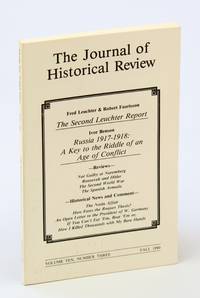
Best.-Nr. 255j2799USA: Institute For Historical Review. Very Good No dust jacket as issued. First Edition. Single Issue Magazine. Feature Article: The Second Leuchter Report - The first published expert report on facilites still widely maintained to have been constructed if not used for homicidal gassings at Dachau Mauthausen and Hartheim Castle. Robert Faurisson's introduction and annotated bibliography provide an excellent historiographical counterpoint to Mr. Leuchter's technical expertise. Additional Features: Russia 1917-1918 - A Key to the Riddle of an Age of Conflict; Carlos Porter Not Guilty at Nuremberg; Robert E. Herzstein Roosevelt and Hitler; John Keegan - The Second World War; Felipe Fernandez-Armesto - The Spanish Armada; The Notin Affair; How Fares the Roques Thesis; Open Letter to the President of W. Germany; If You Can't Eat'em Beat'em or How I Killed Thousands with my Bare Hands. p. 261-384. Clean tight and unmarked with moderate wear. A sound example.; 8vo . 1990. Institute For Historical Review unknown
1961Best.-Nr. 60454Hamburg, Hauswedell 1961. 22 Holzschnitte von Hansen-Bahia. 21 Bll. lose in OLwd.-Kassette. 34,5 x 26 cm. OPp.
1938Best.-Nr. 576859New York: Hillman-Curl 1938. Hardcover. Fine/Near Fine. First American edition. Translated by Desmond I. Vesey. Verse translation by Christopher Isherwood. Tiny stamped initials on half-title and copyright page else fine in handsome near fine dust jacket with a light toning on the spine. A novel later re-issued as Threepenny Novel loosely based on John Gay's The Beggar's Opera filtered through Brecht's experiences among the criminal fringe elements of the Weimar Republic. A novelization by Brecht of his famous collaboration with Kurt Weill the 1928 musical drama The Three-Penny Opera the opera had not previously appeared in America. The play continues to be widely performed was filmed on many occasions and provided the popular hit song "Mack the Knife." A nick copy of an important title. Hillman-Curl hardcover
1938Best.-Nr. 576859New York: Hillman-Curl 1938. Hardcover. Fine/Near Fine. First American edition. Translated by Desmond I. Vesey. Verse translation by Christopher Isherwood. Tiny stamped initials on half-title and copyright page else fine in handsome near fine dust jacket with a light toning on the spine. A novel later re-issued as Threepenny Novel loosely based on John Gay's The Beggar's Opera filtered through Brecht's experiences among the criminal fringe elements of the Weimar Republic. A novelization by Brecht of his famous collaboration with Kurt Weill the 1928 musical drama The Three-Penny Opera the opera had not previously appeared in America. The play continues to be widely performed was filmed on many occasions and provided the popular hit song "Mack the Knife." A nick copy of an important title. Hillman-Curl hardcover books