Fleury, JosephBiblio.com
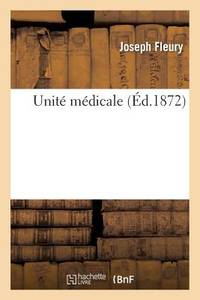
Unité Médicale Sciences French Edition
Best.-Nr. 2011740983.Gpaperback. Good. Access codes and supplements are not guaranteed with used items. May be an ex-library book. paperback
Bonita · Vereinigte Staaten56,25 $≈ 50,16 €
3.798 Ergebnisse
1878Best.-Nr. SAV158Rouen: E. Augé 1878. Hardcover. Very Good. 8vo 245 x 160mm. xvi preface 418pp. with tables. Pictorial printed wrappers and title printed in red and black. Double etched frontispiece by Jules Adeline. Preface by Champfleury the pseudonym of writer Jean Fleury 1821-1889. Édition de luxe numbered 2 of 220 and initialed by Jules Adeline JA; issued as the first 20 on papier de Chine with a double suite of etchings in black and white and sepia. 127 vignettes forming the 100 pages of vignettes stated on the title depicting monumental sculpture capitals vaults reliefs gargoyles in-text. Bound by E. Quinet in 1883 in full medieval-style cuir-ciselé binding depicting two reliefs on the Cathedral of Rouen: a gothic grotesque hooded man holding staff front cover and hybrid dog-like centaur playing fiddle back cover spine blind-lettered SCULPTURES GROTESQUES marbled endpapers green gold and purple silk endbands gilt edges; A fine deluxe printing in impeccable form the binding is a treasure and was made especially for the text nothing else is quite like it. Ex-libris and oval gilt morocco bookplate of Estelle Doheny on front pastedown. This is a deluxe issue of the famous monograph written and illustrated by Jules Adeline on the grotesque Gothic sculptures and gargoyles in the region of Rouen. Amply illustrated on fine papier de Chine it is numbered 2 in the first set of 20 and is initialed by Jules Adeline on the edition leaf. The deluxe edition of this monograph printing is quite rare. This was the tirage tout spécial destined for distribution between the author and printers circle. By Adelines initials we conclude this copy enjoyed that privileged circulation. Adeline was a fixture in his hometown of Rouen. His career began in architectural sketching where he developed a keen eye for depicting the monumental sculpture in his native French medieval city. Adeline also worked as a caricaturist and artistic columnist for several newspapers including the "Journal de Rouen" "Rouen Nouvelliste" and "Le Progrès de Rouen." In particular this publication dealt with the satirical and symbolic sculptures that he encountered on the winding avenues of Rouen. With contributions from Champfleury a trailblazer of Realism in painting and literature this work was celebrated for its conclusions in medieval art iconography mainly that hybrid characters embodied complex nuanced and understated ideas that often resist exact interpretation. The custom presentation binding of cuir-ciselé cut-leatherwork is most exceptional. Not only is it unusual in treatment but also it incorporates two relief panels from the Cathedral of Rouen in the form of characteristic medieval grotesques. Not much is known about the Parisian binder Quinet but he can be linked to other bindings of the late-nineteenth century many described as magnificently gilt. This artisanal binding is unparalleled in its distinctive medieval-revival leather craftsmanship; it is period to five years of the printing and would have circulated through Jules Adeline himself perhaps even by his commission. E. Augé hardcover
Best.-Nr. 2011740983.Gpaperback. Good. Access codes and supplements are not guaranteed with used items. May be an ex-library book. paperback
Best.-Nr. 6209080723.Gpaperback. Good. Access codes and supplements are not guaranteed with used items. May be an ex-library book. paperback
Best.-Nr. 6209083285.Gpaperback. Good. Access codes and supplements are not guaranteed with used items. May be an ex-library book. paperback
Best.-Nr. 48844in-8 reliure toile éditeur sans sa jaquette illustrée - nombreuses illustrations, planches et figures - 1956 - 252 pages - Ed. Zodiaque - coll. La Nuit des Temps 3 - Photographies inédites de R. G. Phelipeaux
Best.-Nr. KN6626RLWBroché bon état . Contenu propre. 1958. 137 pages . Variations du miroir .
Best.-Nr. 9003Tome XXVII. Oct.-nov.-déc. 1911. Jean Moréas, Emile Verhaeren, Raymond de La Tailhède, Pierre Quirard, P.-N. Roinard, Hugues Rebell, Guillaume Apollinaire, Jules Romains, André Salmon, Saint-Georges de Bouhélier, Albert Fleury, Marcel Coulon, Gaston Danville, Henriette Charasson, Emile Cottinet, Jean-Richard Bloch, Tristan Leclère [Klingsor], John Keats, Jean Metzinger, Paul Fort Bon état.
Best.-Nr. 2013549512.Gpaperback. Good. Access codes and supplements are not guaranteed with used items. May be an ex-library book. paperback
Best.-Nr. 6209103758.Gpaperback. Good. Access codes and supplements are not guaranteed with used items. May be an ex-library book. paperback
Best.-Nr. 012333VPSH
1843Best.-Nr. 118083Poitiers, Henri Oudin ; P., Th. Le Clerc Jeune, 1843, in-8°, xxiv-432 pp, reliure demi-basane brune, dos lisse avec titres et doubles filets dorés (rel. de l'époque), dos lég. frotté, bon état. Edition originale
1875Best.-Nr. 35504122Poitiers, Paris, Oudin, 1875 ; in-16, broché. 2 ff., VIII pp., 168 pp. - Portrait lithographié en frontispice.Histoire de Sainte Radégonde (née en Thuringe vers 519), femme de Clotaire. Elle se retira de la Cour et vécut à Saix en Poitou. Fondation du monastère de Poitiers, mort et sépulture de la sainte ; miracles anciens et récents.
Best.-Nr. 26464Bourges, Typogrpahie Pigelet et Fils et Tardy 1882, 225x140mm, XI- 240pages, broché. Couverture défraichie.
Best.-Nr. 586280Paris, Ed. du CNRS, 1969. In-8, rel. éd. pleine toile bleue roi, titre doré, blason doré sur le plat sup. sous rodhoïd, 234 pp., 1 pl., 1 carte dépliante, table de concordance, ouvrages cités, index des noms et des mots in fine. Tampons de bibliothèque, ex-libris, qq. marques marginales au crayon. Rare.
Best.-Nr. lc_109328La Société d’histoire du canton de Fribourg (SHCF) 2017
Best.-Nr. 057741Paris Editions du Centre National de la Recherche Scientifique C.N.R.S. 1965 in 8 (24,5x16) 1 volume reliure toilée bleue de l'éditeur, rhodoïd, 165 pages [1], avec 4 planches hors texte. Epitoma vitae regis Rotberti Pii. Texte édité, traduit et annoté par Robert-Henri Bautier, professeur à l'Ecole des Chartes et Gillette Labory, archiviste-paléographe ingénieur au CNRS. Avertissement de Charles-Edmond Perrin. Collection '' Sources d'histoire médiévale '', 1.. Bel exemplaire ( Photographies sur demande / We can send pictures of this book on simple request )
Best.-Nr. 17540Reliure éditeur - 16 x 24,5 - 165 pp - année 1965 - Editions du Centre Nationalde Recherche Scientifique - Texte édité traduit et annoté par : Robert Henri Bautier et Gillette Labory . Avertissement de M. Charles Edmond Perrin
Best.-Nr. 0259830968.Gpaperback. Good. Access codes and supplements are not guaranteed with used items. May be an ex-library book. paperback
Best.-Nr. 0666428387.Ghardcover. Good. Access codes and supplements are not guaranteed with used items. May be an ex-library book. hardcover
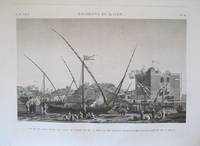
Best.-Nr. 1971Middle East: Paris Impremerie de C.L.F.Pancoucke 1820-1829. Copper engraved view of Festival of the Nile flood and the opening of Khaleej dike Cairo from the first volume of the "Etat Modene "of the "Description de l'Egypte" 2nd Edition; 1822; black & white; verso blank. Blind stamp of the publisher Panckoucke to margin. The view shows the festival celebrated at the opening of the Khaleej dike so that the flood waters of the Nile can enter the canal. Since ancient times the Nile has played a vital role in Egypt to the point that it is the river that the Egyptians attributed the birth and existence of their country. As the waters of the Nile rose the Egyptians prepared to let them through for irrigation etc thus a most important moment each year to be celebrated. the sultan would proceed to the Misr point to open the dike. Called the cavalcade of the opening of the Khaleej. it was was one of the most important festivals of the year. Good dark impression; some light foxing; glue and remains of tissue guard to upper margin. "Description de l'Egypte ou Recueil des observations et des recherches qui ont été faites en Egypte pendant l'expédition de l'armée française." When Napoleon Bonaparte invaded Egypt in 1798 he brought with him an entourage of more than 160 scholars and scientists. Known as the French Commission on the Sciences and Arts of Egypt these experts undertook an extensive survey of the country's archeology topography and natural history. . For four years more than 150 artists engineers linguists and scientists traveled throughout the country examining almost every aspect of ancient and contemporary Egypt. They recorded and measured in meticulous detail Egypt's topography flora and fauna and its ancient and contemporary architecture. A soldier who was part of the expedition found the famous Rosetta Stone which the French linguist and scholar Jean-François Champollion 1790-1832 later used to unlock many of the mysteries that long had surrounded the language of ancient Egypt. The Egyptian expedition ended with a total military failure. The French left Egypt in 1801 with the honors of war but defeated; yet military failure remains a significant event in the history of knowledge because it is the first time a military expedition was accompanied by a scientific expedition. In 1802 Napoleon authorized the publication of the commission's findings in a monumental multi-volume work that included plates maps scholarly essays and a detailed index. Publication of the original Imperial edition began in 1809 and continued to 1822 sold by subscription. It proved so popular that a second edition was published under the post-Napoleonic Bourbon Restoration. The "Royal edition" published in Paris by C.L.F. Panckoucke from 1820-1830. The Second edition consists of 11 or 12 volumes of plates in folio and 24 of text bound as 26 8vo. Brunet:II 617; Blackmer/Navari: 476 1st edition Middle East Egypt Cairo Festival of the Khaleej Paris Impremerie de C.L.F.Pancoucke 1820-1829 unknown
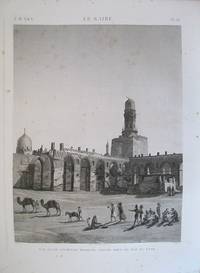
Best.-Nr. 1969Middle East: Paris Impremerie de C.L.F.Pancoucke 1820-1829. Copper engraved view of an old mosque Cairo from the first volume of the "Etat Modene "of the "Description de l'Egypte" 2nd Edition; 1822; black & white; verso blank. Blind stamp of the publisher Panckoucke to margin. The view shows the mosque close to the gate of Bab el Nasr and the city walls. In the foreground are travelers arriving in the city by camel and donkey. Two French soldiers seem to be moving on a group of musicians and healers. Good dark impression; foxing to sky and blank margins. "Description de l'Egypte ou Recueil des observations et des recherches qui ont été faites en Egypte pendant l'expédition de l'armée française." When Napoleon Bonaparte invaded Egypt in 1798 he brought with him an entourage of more than 160 scholars and scientists. Known as the French Commission on the Sciences and Arts of Egypt these experts undertook an extensive survey of the country's archeology topography and natural history. . For four years more than 150 artists engineers linguists and scientists traveled throughout the country examining almost every aspect of ancient and contemporary Egypt. They recorded and measured in meticulous detail Egypt's topography flora and fauna and its ancient and contemporary architecture. A soldier who was part of the expedition found the famous Rosetta Stone which the French linguist and scholar Jean-François Champollion 1790-1832 later used to unlock many of the mysteries that long had surrounded the language of ancient Egypt. The Egyptian expedition ended with a total military failure. The French left Egypt in 1801 with the honors of war but defeated; yet military failure remains a significant event in the history of knowledge because it is the first time a military expedition was accompanied by a scientific expedition. In 1802 Napoleon authorized the publication of the commission's findings in a monumental multi-volume work that included plates maps scholarly essays and a detailed index. Publication of the original Imperial edition began in 1809 and continued to 1822 sold by subscription. It proved so popular that a second edition was published under the post-Napoleonic Bourbon Restoration. The "Royal edition" published in Paris by C.L.F. Panckoucke from 1820-1830. The Second edition consists of 11 or 12 volumes of plates in folio and 24 of text bound as 26 8vo. Brunet:II 617; Blackmer/Navari: 476 1st edition Middle East Egypt Cairo Bab el Nasr Paris Impremerie de C.L.F.Pancoucke 1820-1829 unknown
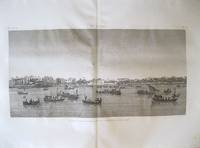
Best.-Nr. 1968Middle East: Paris Impremerie de C.L.F.Pancoucke 1820-1829. Large double page copper engraved view of the area of Ezbekyeh North West Cairo from the first volume of the "Etat Modene "of the "Description de l'Egypte" 2nd Edition; 1822; black & white; verso blank. Blind stamp of the publisher Panckoucke to margin. The view shows the area of Ezbekieh in Cairo as seen from the Nile with many boats in the foreground. Ezbekieh is part of modern Cairo close to the gardens of the same name and popular with foreign visitors. Good dark impression; foxing to sky and blank margins. "Description de l'Egypte ou Recueil des observations et des recherches qui ont été faites en Egypte pendant l'expédition de l'armée française." When Napoleon Bonaparte invaded Egypt in 1798 he brought with him an entourage of more than 160 scholars and scientists. Known as the French Commission on the Sciences and Arts of Egypt these experts undertook an extensive survey of the country's archeology topography and natural history. . For four years more than 150 artists engineers linguists and scientists traveled throughout the country examining almost every aspect of ancient and contemporary Egypt. They recorded and measured in meticulous detail Egypt's topography flora and fauna and its ancient and contemporary architecture. A soldier who was part of the expedition found the famous Rosetta Stone which the French linguist and scholar Jean-François Champollion 1790-1832 later used to unlock many of the mysteries that long had surrounded the language of ancient Egypt. The Egyptian expedition ended with a total military failure. The French left Egypt in 1801 with the honors of war but defeated; yet military failure remains a significant event in the history of knowledge because it is the first time a military expedition was accompanied by a scientific expedition. In 1802 Napoleon authorized the publication of the commission's findings in a monumental multi-volume work that included plates maps scholarly essays and a detailed index. Publication of the original Imperial edition began in 1809 and continued to 1822 sold by subscription. It proved so popular that a second edition was published under the post-Napoleonic Bourbon Restoration. The "Royal edition" published in Paris by C.L.F. Panckoucke from 1820-1830. The Second edition consists of 11 or 12 volumes of plates in folio and 24 of text bound as 26 8vo. Brunet:II 617; Blackmer/Navari: 476 1st edition Middle East Egypt Cairo Ezbekieh Paris Impremerie de C.L.F.Pancoucke 1820-1829 unknown
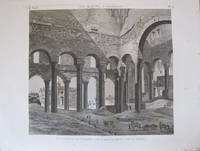
Best.-Nr. 1970Middle East: Paris Impremerie de C.L.F.Pancoucke 1820-1829. Copper engraved view the interior of a mosque Cairo from the first volume of the "Etat Modene "of the "Description de l'Egypte" 2nd Edition; 1822; black & white; verso blank. Blind stamp of the publisher Panckoucke to margin. The view shows the interior of an abandoned mosque within the Citadel of Cairo. Engineers are excavating whilst a canon is brought forward by 2 camels. Good dark impression; some foxing to blank margins. "Description de l'Egypte ou Recueil des observations et des recherches qui ont été faites en Egypte pendant l'expédition de l'armée française." When Napoleon Bonaparte invaded Egypt in 1798 he brought with him an entourage of more than 160 scholars and scientists. Known as the French Commission on the Sciences and Arts of Egypt these experts undertook an extensive survey of the country's archeology topography and natural history. . For four years more than 150 artists engineers linguists and scientists traveled throughout the country examining almost every aspect of ancient and contemporary Egypt. They recorded and measured in meticulous detail Egypt's topography flora and fauna and its ancient and contemporary architecture. A soldier who was part of the expedition found the famous Rosetta Stone which the French linguist and scholar Jean-François Champollion 1790-1832 later used to unlock many of the mysteries that long had surrounded the language of ancient Egypt. The Egyptian expedition ended with a total military failure. The French left Egypt in 1801 with the honors of war but defeated; yet military failure remains a significant event in the history of knowledge because it is the first time a military expedition was accompanied by a scientific expedition. In 1802 Napoleon authorized the publication of the commission's findings in a monumental multi-volume work that included plates maps scholarly essays and a detailed index. Publication of the original Imperial edition began in 1809 and continued to 1822 sold by subscription. It proved so popular that a second edition was published under the post-Napoleonic Bourbon Restoration. The "Royal edition" published in Paris by C.L.F. Panckoucke from 1820-1830. The Second edition consists of 11 or 12 volumes of plates in folio and 24 of text bound as 26 8vo. Brunet:II 617; Blackmer/Navari: 476 1st edition Middle East Egypt Cairo Citadel Paris Impremerie de C.L.F.Pancoucke 1820-1829 unknown
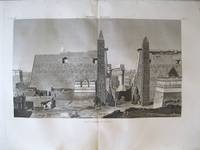
Best.-Nr. 1973Middle East: Paris Impremerie de C.L.F.Pancoucke 1820-1829. Large double page copper engraved view entrance to the Templeof Luxor Thebes from the third volume of the "Antiquities "of the "Description de l'Egypte" 2nd Edition; black & white; verso blank. Blind stamp of the publisher Panckoucke to margin. The view shows the entrance to the temple with the two obelisks the one on the right now stands in the Place de la Concorde in Paris with two defaced heads of statues buried in the sand in front of the pylons of the temple with their decorated walls; just glimpsed through the entrance can be seen the hall of columns. Good dark impression; some light foxing. mainly to upper margin. "Description de l'Egypte ou Recueil des observations et des recherches qui ont été faites en Egypte pendant l'expédition de l'armée française." When Napoleon Bonaparte invaded Egypt in 1798 he brought with him an entourage of more than 160 scholars and scientists. Known as the French Commission on the Sciences and Arts of Egypt these experts undertook an extensive survey of the country's archeology topography and natural history. . For four years more than 150 artists engineers linguists and scientists traveled throughout the country examining almost every aspect of ancient and contemporary Egypt. They recorded and measured in meticulous detail Egypt's topography flora and fauna and its ancient and contemporary architecture. A soldier who was part of the expedition found the famous Rosetta Stone which the French linguist and scholar Jean-François Champollion 1790-1832 later used to unlock many of the mysteries that long had surrounded the language of ancient Egypt. The Egyptian expedition ended with a total military failure. The French left Egypt in 1801 with the honors of war but defeated; yet military failure remains a significant event in the history of knowledge because it is the first time a military expedition was accompanied by a scientific expedition. In 1802 Napoleon authorized the publication of the commission's findings in a monumental multi-volume work that included plates maps scholarly essays and a detailed index. Publication of the original Imperial edition began in 1809 and continued to 1822 sold by subscription. It proved so popular that a second edition was published under the post-Napoleonic Bourbon Restoration. The "Royal edition" published in Paris by C.L.F. Panckoucke from 1820-1830. The Second edition consists of 11 or 12 volumes of plates in folio and 24 of text bound as 26 8vo. Brunet:II 617; Blackmer/Navari: 476 1st edition Middle East Egypt Luxor Thebes Paris Impremerie de C.L.F.Pancoucke 1820-1829 unknown
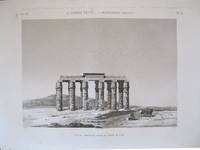
Best.-Nr. 1983Middle East: Paris Impremerie de C.L.F.Pancoucke 1820-1829. Copper engraved view of the temple of Hermopolis Magna Achmouneyn. from the fourth volume of the "Antiquities "of the "Description de l'Egypte" 2nd Edition; black & white; verso blank. Blind stamp of the publisher Panckoucke to margin. The view shows the ruins of the temple of Hermopolis which was dedicated to the Ibis-headed god. The emblems the Ibis and the Cynocephalus or ape are the most conspicuous among the sculptures upon the great portico of the temple. Good dark impression; generally clean; some spotting to margins; remains of glue and tissue guard to upper margin. "Description de l'Egypte ou Recueil des observations et des recherches qui ont été faites en Egypte pendant l'expédition de l'armée française." When Napoleon Bonaparte invaded Egypt in 1798 he brought with him an entourage of more than 160 scholars and scientists. Known as the French Commission on the Sciences and Arts of Egypt these experts undertook an extensive survey of the country's archeology topography and natural history. . For four years more than 150 artists engineers linguists and scientists traveled throughout the country examining almost every aspect of ancient and contemporary Egypt. They recorded and measured in meticulous detail Egypt's topography flora and fauna and its ancient and contemporary architecture. A soldier who was part of the expedition found the famous Rosetta Stone which the French linguist and scholar Jean-François Champollion 1790-1832 later used to unlock many of the mysteries that long had surrounded the language of ancient Egypt. The Egyptian expedition ended with a total military failure. The French left Egypt in 1801 with the honors of war but defeated; yet military failure remains a significant event in the history of knowledge because it is the first time a military expedition was accompanied by a scientific expedition. In 1802 Napoleon authorized the publication of the commission's findings in a monumental multi-volume work that included plates maps scholarly essays and a detailed index. Publication of the original Imperial edition began in 1809 and continued to 1822 sold by subscription. It proved so popular that a second edition was published under the post-Napoleonic Bourbon Restoration. The "Royal edition" published in Paris by C.L.F. Panckoucke from 1820-1830. The Second edition consists of 11 or 12 volumes of plates in folio and 24 of text bound as 26 8vo. Brunet:II 617; Blackmer/Navari: 476 1st edition Middle East Egypt Hermopolis Magna Achmouneyn Paris Impremerie de C.L.F.Pancoucke 1820-1829 unknown