TAKAHASHI, RumikoLivre Rare Book

3.472 resultados
1999ref. 1235161999 Editons Glénat - 1999 - In-12, broché, couverture illustrée à rabats - 174 planches en N&B
1999ref. 1235171999 Editons Glénat - 1999 - In-12, broché, couverture illustrée à rabats - 174 planches en N&B
1985ref. 12494Gallimard 1985 157 pages 19 6x13 8x1 6cm. 1985. Broché. 157 pages. Béton est un roman de Thomas Bernhard publié en 1982 se présentant sous forme d'un monologue de 150 pages sans chapitres ni paragraphes. Il explore l'impossibilité d'être seul ou de ne pas l'être ainsi que l'impossibilité d'écrire et de renoncer à écrire à travers une mécanique narrative qui se resserre comme un garrot
1958ref. 929121958 N° 29 - Mars 1958 - Revue bimestrielle illustrée - In-8, broché - 112 pages
1958ref. 313101958 N° 31 - Septembre 1954 - Revue trimestrielle illustrée - In-8, broché - 168 pages
1960ref. 1091511960 N° 37 - 1er trimestre 1960 - Revue trimestrielle illustrée - In-8, broché - 144 pages
1960ref. 1091521960 N° 39 - 3e trimestre 1960 - Revue trimestrielle illustrée - In-8, broché - 160 pages
1961ref. 1091531961 N° 41 - 1er trimestre 1961 - Revue trimestrielle illustrée - In-8, broché - 141 pages
1962ref. 1091541962 N° 45 - 1er trimestre 1962 - Revue trimestrielle illustrée - In-8, broché - 160 pages
1934ref. cr512Librairie E. Droz Société des textes français modernes Broché 1934 In-12 (12x19 cm), broché non coupé, XXIV-151 pages, édition annotée par Jacques Madeleine ; dos jauni, coiffes légèrement frottées, bon état. Livraison a domicile (La Poste) ou en Mondial Relay sur simple demande.
ref. 106.746Paris, Editions du Pavois, 1946. 12 x 19, 242 pp., broché, non coupé, bon état.
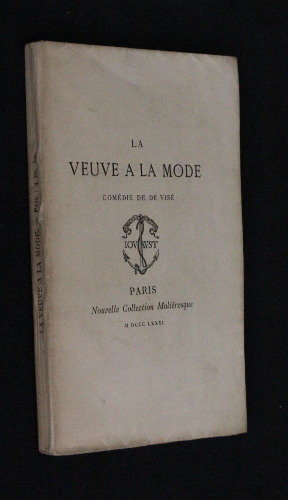
1881ref. pl1992Librairie des Bibliophiles Nouvelle collection moliéresque Broché 1881 In-12 (10.5x16 cm), broché, (XXII)-51 pages, un des 300 exemplaires sur Vergé, n°216, avec une notice par Edouard Thierry et une préface par le bibliophile Jacob, vignettes et culs-de-lampe ; mors coiffes frottées, légères pliures au dos, volume jauni, bon état. Livraison a domicile (La Poste) ou en Mondial Relay sur simple demande.
2008ref. 5916FLEUVE EDITIONS 2008 368 pages 14x3x22cm. 2008. Taschenbuch. 368 pages. Trois amies new-yorkaises Emmy Leigh et Adriana font un pacte lors d'une soirée arrosée pour changer radicalement leur comportement notamment envers les hommes bouleversant ainsi leur existence
1999ref. 917971New York: Abrams, 1999. 160 S. mit zahlr. Abb., Gebundene Ausgabe mit Schutzumschlag.
in-8°, 93 pages, broche, couv. Bon état. [MI-3]
in-8, 130 pp., broché, couv. carton souple. Bel exemplaire [SO-7]
1972164p. illus. chronology index, ame of previous owner Book
19508vo., Third Impression, with a portrait frontispiece and 30 plates on 24; green cloth, backstrip lettered in black, a very good, bright, clean copy in unclipped dustwrapper, the latter mildly frayed at edges. The story of Britain's best-loved pre-war comedian and star of WWII's ITMA by his scriptwriter and closest friend. Published a year after the first edition. Uncommon in this condition.
1996Scholars' name to halftitle (Mark Golden). Very light shelfwear. ; In this volume William S. Anderson sets Plautus, who wrote Rome's earliest surviving poetry, in his rightful place among the Greek and Roman writers of what we know as New Comedy (fourth to second centuries). Anderson begins by defining major innovations that Plautus made on inherited Greek New Comedy (Menander, Philemon, and Diphilus) , transforming it from romantic domestic drama to a celebration of rollicking family anarchy. He shows how Plautus diminished the traditional importance of love and replaced it with a new major theme: 'heroic badness,' especially embodied in the rogue slave (ancestor of the impudent servant, valet, or maid). Anderson then examines the unique verbal texture of Plautus' drama and demonstrates his revolt against realism, his drive to have his characters defy everyday circumstances and pit their intrepid linguistic wit against social order, their Roman extravagant impudence against Greek self-control. Finally, Anderson explores the special form of metatheatre that we admire in Plautus, by which he undermines the assumptions of his Greek models' and replaces them with a new, confident Roman comedy. ; Robson Classical Lectures; 194 pages
1996Faint creasing to spine. Light shelfwear. Scholar's name to half-title (Robert Brown). ; In this volume William S. Anderson sets Plautus, who wrote Rome's earliest surviving poetry, in his rightful place among the Greek and Roman writers of what we know as New Comedy (fourth to second centuries). Anderson begins by defining major innovations that Plautus made on inherited Greek New Comedy (Menander, Philemon, and Diphilus) , transforming it from romantic domestic drama to a celebration of rollicking family anarchy. He shows how Plautus diminished the traditional importance of love and replaced it with a new major theme: 'heroic badness,' especially embodied in the rogue slave (ancestor of the impudent servant, valet, or maid). Anderson then examines the unique verbal texture of Plautus' drama and demonstrates his revolt against realism, his drive to have his characters defy everyday circumstances and pit their intrepid linguistic wit against social order, their Roman extravagant impudence against Greek self-control. Finally, Anderson explores the special form of metatheatre that we admire in Plautus, by which he undermines the assumptions of his Greek models' and replaces them with a new, confident Roman comedy. ; Robson Classical Lectures; 194 pages
1958Creasing to spine. Light edgewear. Minor shelfwear. ; Parallel text in French and Greek. ; Collection Des Universités De France. Association Guillaume Budé; Vol. 2; 156 pages
1948Browning to spine. Small chips and light creasing to spine. Pages tanned. Scholars' name to half-title (Daniel de Montmollin). ; Parallel text in French and Greek. ; Collection Des Universités De France. Association Guillaume Budé; Vol. 2; 156 pages
1958Creasing to spine. Pages tanned. ; Parallel text in French and Greek. ; Collection Des Universités De France. Association Guillaume Budé; Vol. 2; 156 pages
1964Creasing to spine. Tape to head and base of spine with Tape stains to wraps. Scholar's bookplate to inner cover (Robert Brown). ; Parallel text in French and Greek. ; Collection Des Universités De France. Association Guillaume Budé; Vol. 2; 156 pages
1954Creasing to wraps spine and tears to backstrip. Spine and Wraps have been crudely repaired with cellotape. Scuffing to wraps. Scholars' bookplate to inner cover. Pencil marginalia on a few pages. ; Parallel text in French and Greek. ; Collection Des Universités De France. Association Guillaume Budé; Vol. 4; 157 pages