3514 resultados
1774ref. 7432Paris chez Delalain rue et à coté de la comédire française 1774 plaquette de 37 pages
MARSEILLE, Jean Mossy - 1777 - In-8 - Broché - Sans couverture - 67 pages - Très propre
1972Top corners lightly bumped. Else fine. DJ spine a little discolored. Light edgewear with 1 small tear (1 cm). DJ is price-clipped. ; 280 pages; Professor Dover's book is designed for those who are interested in the history of comedy as an art form but who are not necessarily familiar with the Greek language. The eleven surviving plays of Aristophanes are treated as representative of a genre. Old Attic Comedy, which was artistically and intellectually homogeneous and gave expression to the spirit of Athenian society in the late fifth and early fourth centuries B. C. Aristophanes is regarded primarily not as a reformer or propagandist but as a dramatist who sought, in competition with his rivals, to win the esteem both of the general public and of the cultivated and critical minority. He succeeded in this effort by making people laugh, and the book pays more attention than has generally been paid to the technical means, whether of language or of situation, on which Aristophanes' humor depends. Particular emphasis is laid on his indifference-positively assisted by the physical limitations of the Greek theatre and the conditions of the Athenian dramatic festivals-to the maintenance of continuous "dramatic illusion" or to the provision of a dramatic event with the antecedents and consequences which might logically be expected. More importance is attached to Aristophanes' adoption of popular attitudes and beliefs, to his creation of uninhibited characters with which the spectators could identify themselves, and to his acceptance of the comic poet's traditional role as a mordant but jocular critic of morals, than to any identifiable and consistent elements in his political standpoint.
1972Creasing to spine. Chipping to spine ends. Tear to base of spine cover (3 cm). Scholar's bookplate to inner cover (Robert Brown). Scholar's name to ffep (Robert Brown). Else VG. ; 280 pages; Professor Dover's book is designed for those who are interested in the history of comedy as an art form but who are not necessarily familiar with the Greek language. The eleven surviving plays of Aristophanes are treated as representative of a genre. Old Attic Comedy, which was artistically and intellectually homogeneous and gave expression to the spirit of Athenian society in the late fifth and early fourth centuries B. C. Aristophanes is regarded primarily not as a reformer or propagandist but as a dramatist who sought, in competition with his rivals, to win the esteem both of the general public and of the cultivated and critical minority. He succeeded in this effort by making people laugh, and the book pays more attention than has generally been paid to the technical means, whether of language or of situation, on which Aristophanes' humor depends. Particular emphasis is laid on his indifference-positively assisted by the physical limitations of the Greek theatre and the conditions of the Athenian dramatic festivals-to the maintenance of continuous "dramatic illusion" or to the provision of a dramatic event with the antecedents and consequences which might logically be expected. More importance is attached to Aristophanes' adoption of popular attitudes and beliefs, to his creation of uninhibited characters with which the spectators could identify themselves, and to his acceptance of the comic poet's traditional role as a mordant but jocular critic of morals, than to any identifiable and consistent elements in his political standpoint.
1972light foxing to top of textblock. Scholar's name to ffep (Philippa Goold née Forder). Minor shelfwear to DJ. ; 280 pages; Professor Dover's book is designed for those who are interested in the history of comedy as an art form but who are not necessarily familiar with the Greek language. The eleven surviving plays of Aristophanes are treated as representative of a genre. Old Attic Comedy, which was artistically and intellectually homogeneous and gave expression to the spirit of Athenian society in the late fifth and early fourth centuries B. C. Aristophanes is regarded primarily not as a reformer or propagandist but as a dramatist who sought, in competition with his rivals, to win the esteem both of the general public and of the cultivated and critical minority. He succeeded in this effort by making people laugh, and the book pays more attention than has generally been paid to the technical means, whether of language or of situation, on which Aristophanes' humor depends. Particular emphasis is laid on his indifference-positively assisted by the physical limitations of the Greek theatre and the conditions of the Athenian dramatic festivals-to the maintenance of continuous "dramatic illusion" or to the provision of a dramatic event with the antecedents and consequences which might logically be expected. More importance is attached to Aristophanes' adoption of popular attitudes and beliefs, to his creation of uninhibited characters with which the spectators could identify themselves, and to his acceptance of the comic poet's traditional role as a mordant but jocular critic of morals, than to any identifiable and consistent elements in his political standpoint.
1972Spine slightly sunned. Very minor shelfwear. ; 280 pages; Professor Dover's book is designed for those who are interested in the history of comedy as an art form but who are not necessarily familiar with the Greek language. The eleven surviving plays of Aristophanes are treated as representative of a genre. Old Attic Comedy, which was artistically and intellectually homogeneous and gave expression to the spirit of Athenian society in the late fifth and early fourth centuries B. C. Aristophanes is regarded primarily not as a reformer or propagandist but as a dramatist who sought, in competition with his rivals, to win the esteem both of the general public and of the cultivated and critical minority. He succeeded in this effort by making people laugh, and the book pays more attention than has generally been paid to the technical means, whether of language or of situation, on which Aristophanes' humor depends. Particular emphasis is laid on his indifference-positively assisted by the physical limitations of the Greek theatre and the conditions of the Athenian dramatic festivals-to the maintenance of continuous "dramatic illusion" or to the provision of a dramatic event with the antecedents and consequences which might logically be expected. More importance is attached to Aristophanes' adoption of popular attitudes and beliefs, to his creation of uninhibited characters with which the spectators could identify themselves, and to his acceptance of the comic poet's traditional role as a mordant but jocular critic of morals, than to any identifiable and consistent elements in his political standpoint.
ref. 0282738614.Gpaperback. Good. Access codes and supplements are not guaranteed with used items. May be an ex-library book. paperback
ref. 6424In8 reliure amateur,demi-toile muette,plats illustrés contrecollés.Faux-titre,page de titre absente,XXXI,345 pages,non rogné,nombreuses illustrations,pleine page et dans le texte d’après les documents d’époque.Paris Eugène Fasquelle 1909.
ref. EYL-131Poitiers, E. Druineaud, 1878. In 8 (130 x 195) de 2 ff., 214 p., 1 f. Broché.
ref. 62863aafParis, Bureau général Chef-d'oeuvres dramatique, 1791, pt. in-8vo, 2 ff. + 127 p., cachet “Auguste Rouffy, Prerssy“ sur titre, reliure en veau originale. Dos orné. Tranches dorées.
ref. 106.760Paris, Editions Sansot, R. Chiberre, Editeur, 1923. 12 x 19, 39 pp., broché, non coupé, bon état.
ref. 12779Comédie-proverbe en un acte, mêlée de couplets, précédée de nouvelles et contes rémois en prose et en vers. Cet ouvrage orné de vignette, fleurons, encadrements etc. est composé (typographiquement) par l’auteur, n’a été tiré qu’à 50 exemplaires dont 25 exemplaires seulement sont en vente. In 12 cartonnage à la bradel, pièce de titre cuir, titre, 120 pages, texte encadré d’un filet noir, non rogné ; Reims H. HUET imprimeur. BRISSARD BINET libraire 1855. Deux plats de couverture conservés. Très bon état. Edition originale fort rare. Le novice de St Thierry- Fauvette et jeune fille- Pastel- récréation les rues de Reims arrangées en conte- 99 moutons… comédie proverbe en un acte.
1928ref. 37781928 Paris, Delagrave, 1928, in 12 broché, 128 pages, 8 illustrations hors-texte ; couverture rempliée.
1928ref. 17544Paris Plon 1928 In-12 24 hors texte et 402 pp
ref. 106.750Paris, Editions Sansot, Alexandre, Editeur, 1927. 12 x 19, 45 pp., broché, bon état.
1971Light wear to corners of wraps. Former owner's name to half-title. Minor shelfwear. ; The study of roman Comedy is a study of the work of two comic poets, Titus Maccius Plautus and Publius Terentius Afer. Looks at the twenty extant plays of Plautus and the six by Terence. Also looks at Greek Comedy and Roman Comedy's influence on later authors. ; 501 pages
1971Foxing to textblock. Former owner's name on ffep. Edgewear and some colour loss to wraps. Minor staining to base of textblock. ; The study of roman Comedy is a study of the work of two comic poets, Titus Maccius Plautus and Publius Terentius Afer. Looks at the twenty extant plays of Plautus and the six by Terence. Also looks at Greek Comedy and Roman Comedy's influence on later authors. ; 501 pages
1971Rubbing to extremities has caused light colour loss. Minor shelfwear. ; The study of roman Comedy is a study of the work of two comic poets, Titus Maccius Plautus and Publius Terentius Afer. Looks at the twenty extant plays of Plautus and the six by Terence. Also looks at Greek Comedy and Roman Comedy's influence on later authors. ; 501 pages
19652 corners bumped. Small tear to cloth at head of spine (1 cm). Minor rubbing. ; The study of roman Comedy is a study of the work of two comic poets, Titus Maccius Plautus and Publius Terentius Afer. Looks at the twenty extant plays of Plautus and the six by Terence. Also looks at Greek Comedy and Roman Comedy's influence on later authors. ; 501 pages
1965Corners and spine ends are worn and slightly fraying. Moderate edgewear. Slight Discoloration to front board. ; The study of roman Comedy is a study of the work of two comic poets, Titus Maccius Plautus and Publius Terentius Afer. Looks at the twenty extant plays of Plautus and the six by Terence. Also looks at Greek Comedy and Roman Comedy's influence on later authors. ; 501 pages
1952Book has minor shelfwear and rubbing. Rubbing to extremities; The study of roman Comedy is a study of the work of two comic poets, Titus Maccius Plautus and Publius Terentius Afer. Looks at the twenty extant plays of Plautus and the six by Terence. Also looks at Greek Comedy and Roman Comedy's influence on later authors. ; 501 pages
1952Book has minor shelfwear and rubbing. Some pages tanned. Long gift inscription from author to Glen Bowersock. Some browning to DJ. Tape applied to top of DJ. Some chipping and a bit of loss to DJ. ; The study of roman Comedy is a study of the work of two comic poets, Titus Maccius Plautus and Publius Terentius Afer. Looks at the twenty extant plays of Plautus and the six by Terence. Also looks at Greek Comedy and Roman Comedy's influence on later authors. ; 501 pages; Signed by Author
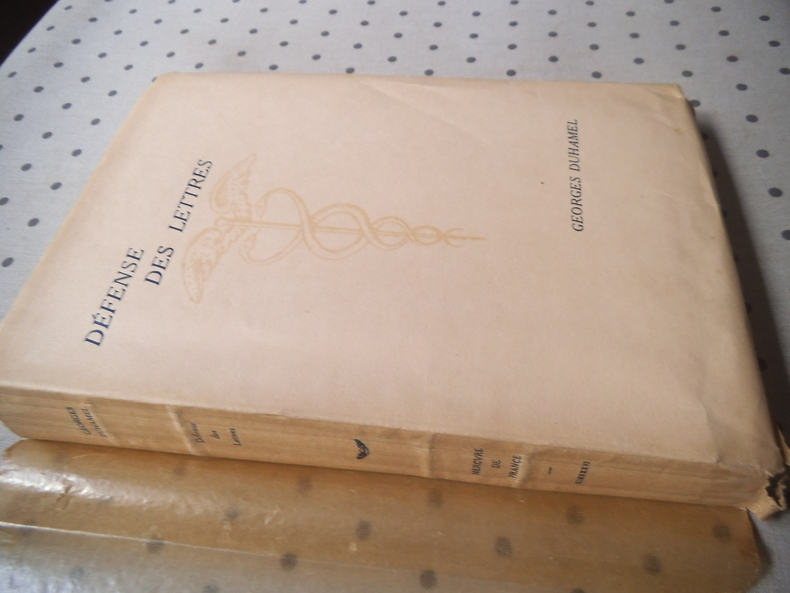
ref. 14781In 8 broché,faux titre,titre,314 pages,Mercure de France 24 avril 1937.Exemplaire numéroté sur vergé blanc pur chiffon d'Arches.Edition originale Grandes marges.
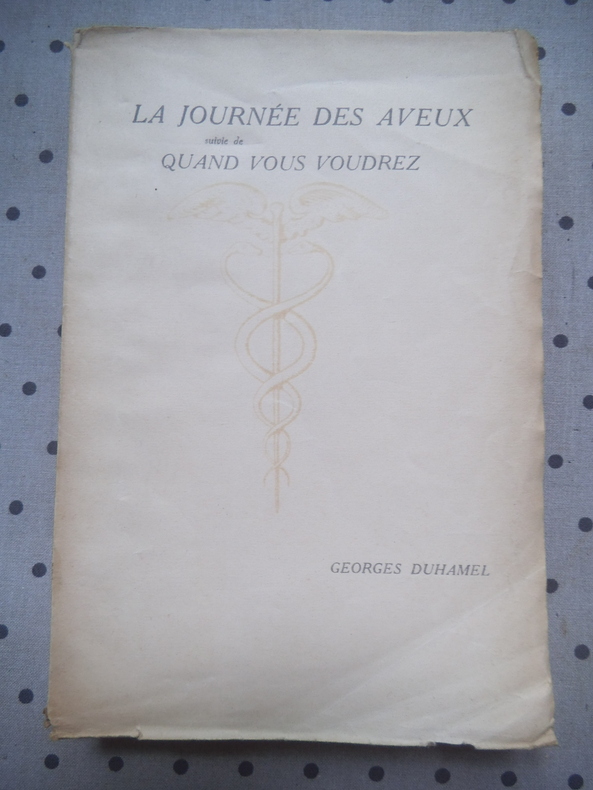
ref. 14773comédie en 3 actes suivie de Quand vous voudrez comédie en 1 acte.In 12 broché,130x190mm,Mercure de France 1924.édition originale numérotée su vergé de rives.Bel exemplaire à grandes marges.
ref. 14850in 8 broché,couverture à rabats,195x140mm,faux-titre,titre, VII 219 pages,Paris Calmann Levy éditeur.Édition numérotée 345 sur vélin du Marais.Très bon état