7 634 résultats
réf. 40079PARIS GARNIER FRERES LIBRAIRES-EDITEURS 1880. FRENCH TEXT. A VERY GOOD COPY IN FULL LEATHER MARBLED END PAPERS AND PAGE EDGES. ARMORIAL DESIGN IN GILT TO FRONT BOARD WHICH IS SLIGHTLY MARKED ELABORATE GILT TO THE SPINE. 737 PAGES. NO DATE BUT CIRCA 1880. VERY GOOD. PARIS, GARNIER FRERES, LIBRAIRES-EDITEURS, [1880] hardcover
réf. 35187CAMBRIDGE THE RAMPANT LIONS PRESS 1977. FIRST EDITION LIMITED TO 150 COPIES FAWN PAPER-COVERED BOARDS. PLUS THE PROSPECTUS. A FINE COPY. CAMBRIDGE, THE RAMPANT LIONS PRESS, 1977 hardcover
réf. 0428586902.Ghardcover. Good. Access codes and supplements are not guaranteed with used items. May be an ex-library book. hardcover
réf. DADAX0413703207New unknown
1805réf. 16590Amsterdam: H. Moolenijzer 1805. 2nd ed. Hardback small good condition no jacket very good condition marbled board covers dark brown leatherette spine vignette title page pages little wavy poor quality paper minor creasing untrimmed edges roughly cut & toned edgewear minor annotation. 168 pp. An historic play translated from German into Dutch. Title in English: "The East-Indiaman: A Stage Play in Three Acts”. SCARCE: published in 1805. Second edition. Dutch language. H. Moolenijzer hardcover
réf. DADAX0810109999New unknown
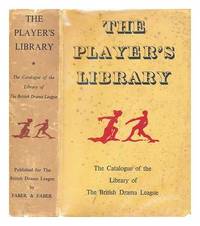
1950réf. 368368London : Published for the British Drama League by Faber and Faber 1950. First Edition. Hardcover. Fine cloth copy in a good if somewhat edge-torn with some loss and dust-dulled dust-wrapper now mylar-sleeved. Remains quite well-preserved overall; tight bright clean and strong. Physical description; xvi 1115 pages ; 23 cm. Subjects; British Drama League. Library ; Catalogs. English drama ; Bibliography ; Catalogs. Drama ; Bibliography ; Catalogs. Theater ; Bibliography. Drama Bibliography Catalogs. English drama Bibliography Catalogs. London : Published for the British Drama League by Faber and Faber hardcover
réf. 1334833982.Gpaperback. Good. Access codes and supplements are not guaranteed with used items. May be an ex-library book. paperback
réf. 1334910685.Gpaperback. Good. Access codes and supplements are not guaranteed with used items. May be an ex-library book. paperback
réf. SONG0802009212Used: Good unknown
réf. SONG0230013295Used: Good unknown
réf. 028209511X.Gpaperback. Good. Access codes and supplements are not guaranteed with used items. May be an ex-library book. paperback
réf. 1390616193.Gpaperback. Good. Access codes and supplements are not guaranteed with used items. May be an ex-library book. paperback
réf. 35025331like new. unknown
réf. 32853825like new. unknown
réf. SONG0415164427Used: Good unknown
réf. SONG0333308743Used: Good unknown
2014réf. 2-2924097231Editions-dhArt 2014. Paperback. New. 1st edition. 290 pages. French language. 8.27x5.22x0.66 inches. Editions-dhArt paperback
réf. DADAX0268036020New unknown
1797réf. 002713London: T.N. Longman 1797. Very Good. The Second Edition. iv 5-87 1 p.; 20 cm. Disbound from a miscellaneous volume. Includes Prologue by T.W. Fitzgerald Epilogue by M.P. Andrews and cast list. Publisher's advertisements on page following text. A popular comedy. Disbound; in Very Good Condition: occasional light foxing and browning; otherwise clean and tight. T.N. Longman unknown
1774réf. 001157Edinburgh: J. Robertson 1774. Very Good. 77 1 p.; 17 cm. Signatures: a4-a4 B-G6. 12mo. Disbound. First published in 1697 as "The Provoked Wife." The ending in this edition consists of an Epilogue spoken by Lady Brute and Belinda. The author was both a playwright and an architect designing Blenheim Palace among other buildings. Disbound; otherwise in Very Good Condition: foxing; margins of last two leaves darkened. A very scarce copy of the Edinburgh edition of Vanbrugh's second comedy. J. Robertson unknown
1998Very light shelfwear to DJ. Remainder mark to top of the textblock. ; Sather Classical Lectures; 1.12 x 9.25 x 6.25 Inches; 384 pages; Modern readings of ancient Athenian drama tend to view it as a presentation of social or moral problems, as if ancient drama showed the same realism seen on the present-day stage. Such views are belied by the plays themselves, in which supremely violent actions occur in a legendary time and place distinct both from reality and from the ethics of ordinary life. Offering fresh readings of Attic tragedy, Anne Pippin Burnett urges readers to peel away twentieth-century attitudes toward vengeance and reconsider the revenge tragedies of ancient Athens in their own context. After a consideration of how our view of Elizabethan drama has obscured an accurate view of the ancient tragedies, Burnett reviews early Greek notions of vengeance as expressed in the Odyssey, Heracles' tales, Pindar's odes, Attic judicial processes, and the legend of Harmodius and Aristogeiton. Then, setting aside post-Platonic and Judeo-Christian notions of criminality, she provides new interpretations of all the Attic tragedies in which revenge is a central theme: Aeschylus' Libation Bearers, Sophocles' Ajax, Electra, and Tereus, and Euripides' Children of Heracles, Hecuba, Medea, Electra, and Orestes. Burnett shows that for the ancients, revenge meant a redress of imbalances in both human and divine worlds, achieved through human actions. The vengeful heroines thus appear in a new light. Electra, Hecuba, Medea, and others cease to be the picture of depravity in dramas that are grotesque and sensational, and are instead representative human figures who respond with grandeur to the outsize demands of necessity and supernatural powers.

1991Scholar's bookplate to inner cover (G. P. Goold). Foxing/dustsoiling to top of textblock. Foxing to DJ. ; 8.7 X 5.8 X 0.7 inches; 198 pages
1897Wraps have corners missing. Chipping along edges of wraps. Spine is missing half of spinecover. Bumping to top of spine. Spine has been reinforced with clear tape. ; 148 pages
1986Foxing/dustsoiling to top of textblock. Minor Foxing to DJ. ; Greeks divided the world into Greece vs. The land of foreigners, into Hellenes vs. Barbarians, seeing their country as a bastion of culture, learning, and military might surrounded by a sea of the uncivilized. Long shows how comedy expressed the Greek feeling of superiority over the barbarians, how it dealt with the so-called barbarian-Hellene antithesis. The result is a contribution to the study of ancient Greek comedy—both the comedy itself and the beliefs, the prejudices, the limitations, and the variety in the society from which the plays emerged. The comedians’ responses to the barbarians ranged from idealization to neutrality to raw racism. Although contemptuous of barbarians, the Hellenes could not keep elements of foreign culture from entering their own. Long’s major contention is that the Greek reaction to Oriental and other foreign influence can be seen in the treatment of barbarians in Greek comedy. ; 240 pages