Strindberg, August (1849-1912)Antiquariat.de
7 534 résultats
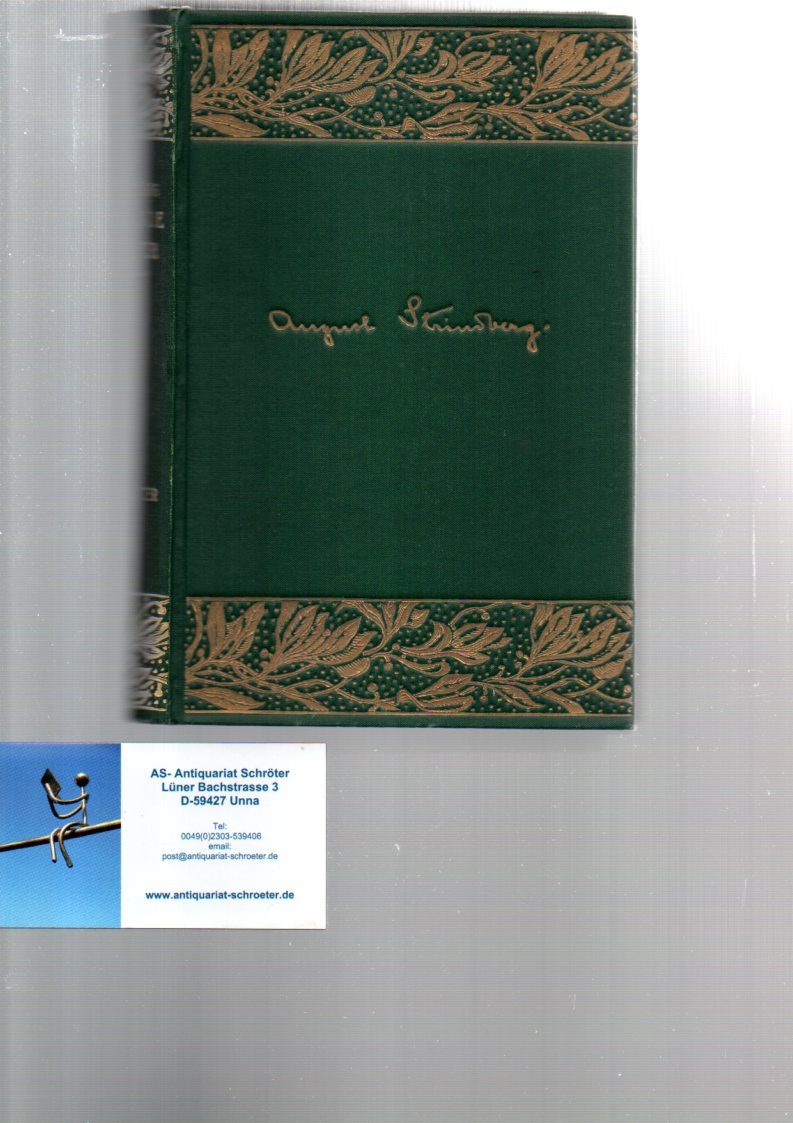
1912réf. 11729Albert Bonniers Förlag, Stockholm, 1912-1921. Original goldgeprägtes grünes Leinen, erste schwedische Gesamtausgabe. Wenige Rücken leicht ausgeblichen. Schöne Ausgabe in gutem Zustand. Please ask for the shipping cost before(!) ordering. Good copies. Printed in swedish.
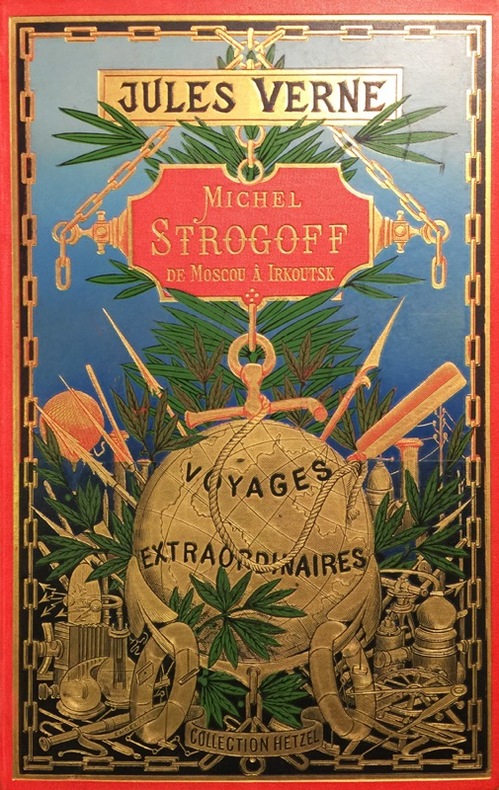
1894réf. 22131Paris, Bibliothèque d'Education et de Récréation, J. Hetzel, [1894] ; in-8, cartonnage "à la Mappemonde", 2e plat type "P", dos type "F" ; 4, 370 pp., catalogue HF de nouveautés pour 1894-1895, 8 pp.
1772364p. Uncut and unopened. Foxed. 4to. [304 x 235 mm.] Contemporary binding of paper boards backed in morocco tooled in gold gilt. John Baskerville (1706-1775) was the greatest printer of his era. Born in Wolverley, Hereford - Worcester, England, he became a writing master in Birmingham. He also carried on a successful japanning (varnishing) business there. In about 1750 he began to make experiments in letter founding, and produced the wonderful series of types now named after him. His first book, the Virgil of 1757, was also the first to be printed upon wove paper (manufactured by a process that he invented). In 1758 he became printer to Cambridge University. All of his books show fine craftsmanship and a refined sense of design. In the last few years before his death, Baskerville published a few Latin classics in quarto and duodecimo. "All these bear the marks of unabated genius even in his declining days: and suffice, had he printed nothing else, to distinguish him as the first typographer of his time" - T. B. Reed, in 'Old English Letter Foundries' It is worth emphasising how remarkable it is to find an uncut and unopened Baskerville quarto. Gaskell 46; Brunet V:718. EXTREMELY RARE AND UNUSUAL. **PRICE JUST REDUCED! W113
1944réf. 058006New York 1945: Ballet Russe De Monte Carlo 1944. First Edition . Illustrated Wrappers. Very Good. B/W Photographs and Color Plates. Large size program inscribed by Frederic Franklin over a full page photograph in mid-step; Nathalie Krassovska over a full page photograph while en point; Leon Danielian over a full-page photograph in mid-leap; Ruthanna Boris Yurek Lazowski Dorothy Etheridge Maria Tallchief Mary Ellen Moylan over their own full page individual photographs; Michel Katcharoff; Nicholas Magallanes; and on a page with Ballanchine at center and Nijinska Fokine Schwezoff and Agnes Demille at corners by George Balanchine as "G. Balanchine". Ballet Russe De Monte Carlo unknown
1937réf. 039423Los Angeles: Merle Armitage 1937. 1st Edition 1st Printing. Hardcover. Very Good /No Jacket. 132 Pp. First Printing. Red Cloth Gilt; Contents Completely Identical To The Commoner Grey Cloth Stamped In Black With The 1937 Date Except Spine Panel On This Red Binding Is Stamped "Dance Of Martha Graham / Merle Armitage" Without The Date And Cover Lettering On This Red Binding Has Smaller Letters And An Additional 12 Gilt Stars Lacking In The Grey Cloth Binding. The First Book About Martha Graham Printed In An Edition Of 1000 Copies. Near Fine Slight Rubbing And Corners And Slight Fading To Spine Cloth All Gilt Brilliant But A Few Emphasis Marks And Underlines In Ink And Pencil With Previous Owner's Signature Carolyn Hoyt On Front Endpaper. Signed By Armitage On The Copyright Page At Front And Dated In 1946. Merle Armitage hardcover
1927réf. 018151New York : Boni & Liveright Inc. 1927. 1st Edition 1st Printing. Green Cloth. Very Good/Near Fine Dustjacket. 8 3/8 " High. Three Different Editions: A Fine Copy Of The Signed Limited First Edition Of The Book Signed By O'neill In A Near Fine Original Slipcase. Also Included Is The First Trade Edition Near Fine In A Near Fine Unfaded Dust Jacket Not Price-Clipped. Also Included Is A Unique Copy Of The Third Printing February 1928 The Printing Just Before The First Production Of The Play At The Pasadena Playhouse. Prepared By Or For Claude D. Seaman Of The Standard Lighting Company Los Angeles With His Name On Front Endpaper Carefully Blocked In Ink. Printed Heading By Hand On First Blank "World Premiere/ Of O'neill's/ "Lazarus Laughed"/ Pasadena Community Playhouse/ April 9 - 1928"; Repeated On Verso; Half Title With Line For Author's Signature But He Was Not Present And This Line Is Thus Blank; Verso With "World Premiere." Text Repeated With Lines For Director Musical Director Director Of Movement Art Director Production Manager Business Manager And The Chairman Of The Production Committee Each Line Signed By The Person Holding That Position; Title Page; Verso Is Copyright Page; Synopsis Page; Verso Are Lines Drawn And Extended To Each Of The "Characters" Listed On The Following Page Each Line Signed By The Person Who Played That Part Maurice Wells Thus Signing Twice 14 Signatures In All; "World Premiere" Text Repeated At Foot Of Characters Page And Again On Verso; "Act One" Title Page; Verso Repeats Then "World Premiere.' Text Followed By Lijnes For Each Of The Producing Staff / Setting Including The Designer James Hyde And 11 Others. With Laid In Loosely The Los Angeles Newspaper Review By The Spectator Of The Production Which Shortly Moved To The Hollywood Music Box Theatre With A Clipped Newspaper Ad For The Production Citing A Cast Of 250 And A Production Cost Of $100000. The Play Has Since Been Produced Only Four Times Due In Part To The Expense And Difficulty But Also To Its Philosophical Didactic Yet Confrontational Tone Which Has Not Set Well With General Audiences Since The Original Use Of This Dramatic Form Several Thousand Years Past. Irving Pichel 1891-1954 Played The Title Role. He Also Played The Servant Sandor In Dracula's Daughter Fagin In The 1933 Film Oliver Twist And About 57 Other Films 1930-1939 With Minor Roles In Films He Later Directed. He Directed Films 1932-1954 Including The Most Dangerous Game She Earthbound Hudson's Bay The Moon Is Down They Won't Believe Me The Miracle Of The Bells Destination Moon And Santa Fe. In 1947 Hje Was One Of The Hollywood 19 Subpoened By The House Un-America Activities Committee; He Was Not Called To Testify But Was Blacklisted Requiring Him To Work Outside The Us. Victor Jory 1902-1982 Was Canadian Attended School In Pasadena Appeared In Theatre All Over The Us And Made His Motion Picture Debut In 1930 Later Appearing In Over 150 Pictures And Dozens Of Tv Episodes. Note That This Book Is Not Signed By O'neill. Gilmor Brown Producer Of The Play Was Director Of Public Speaking And Dramatics At Caltech Later Director Of The Pasadena Playhouse And Responsible For Making It Into One Of The Premier Small Theatres In The U.S. From The 1920'S Into The 1950'S Routinely Featuring Prominent Starring Actoirs And Furnishing An Entree For Many Actors Who Later Became Successful In Motion Pictures And Tv. Boni & Liveright, Inc. hardcover
1718In-8°, 2 voll, contengono 1. Le curieux impertinent; L'ingrat; L'irrésolu. 2. Le médisant; Le triple mariage; L'obstacle imprévu. Le opere hanno ciascuno un frontespizio proprio datato tra il 1712 e il 1718. Legatura in piena pelle con tassello, titolo e fregi in oro al dorso.
réf. 10319Pékin, Albert Nachbaur, Editeur à Pékin, 1927. Achevé d'imprimer sur les Presses Na Che Pao, 16 Kan Yu Hutung (Rue de la Pluie Bienfaisante), à Pékin, le 30 Avril 1927, 29e Jour de la 2e Lune de l'Année du Lapin. 1 volume in-folio, couverture cartonnée illustrée d'une figure contrecollée, 21 pp., enrichi de 3 images populaires théâtrales chinoises sur les 5 que devrait contenir l'ouvrage, peintures en couleurs, parfait état. Tirage limité à 500 exemplaires. Très rare. Cette ouebvre avait été publiée originellement par M. de Brunoff, Editeur à Paris en 1922, enrichi de 9 peintures en couleurs et de 21 dessins de la plume de Jacovleff. Nachbaur reprend ici le texte de Tchou-Kia Kien et l'enrichit d'images populaires Chinoises.
1826réf. 0005340Chiswick: Charles Whittingham 1826. First edition. Hardcover. Near Fine. 60 wood engravings by John Thompson from drawings by Stothard Corbould Harvey and others. 16mos full dark cherry calf raised bands extra glt spines inner dentelles a.e.g. bound by Zaehnsdorf Bindery for Lauriat's of Boston some rubbed spots at tips of some spines. Singer was a member of the Society of Antiquaries and a former bookseller when he and Charles Whittingham printed this handsome popular illustrated edition of the Bard of Avon. "Singer was responsible for a careful collation of the text and many useful notes. . He unostentatiously did much to advance the study of Elizabethan literature - DNB." John Thompson trained by Robert Branston and Thomas Bewick was considered unexcelled as a wood engraver in the two decades surrounding this set. 60 wood engravings by John Thompson from drawings by Stothard Corbould Harvey and others. This was the first edition to possess Singer's Notes - Jaggard SHAKESPEARE BIBLIOGRAPHY p. 517 . Charles Whittingham hardcover
2019réf. 2081502111907074Shanghai People's Publishing 2019. Soft Cover. Fine. The book is in fine condition. Shanghai People's Publishing paperback
1910réf. 042638New York: The Macmillan Company 1910. 1st Edition 1st Printing. Hardcover. Very Good. Xii 272 Pp. White Cloth Spine Stamped In Black With "The Macmillan Company" At Base Of Spine Maroon Ribbed Cloth Boards Stamped In White On The Front Cover Top Edge Gilt. One Of 900 Copies Only Of The First Printing With Broken Type On Pp 47 And 65. Sisson & Martens Identify A Primary Binding With "The Macmillan Company" At Base Of Spine And Top Edge Gilt Like This One Others In Olive Cloth Without Gilt. Spine Dusty Would Be Near Fine Slight Rubbing No Marks Or Bookplates But Front Endpaper Entirely Removed And Part Of White Stamping On Front Cover Has Flaked Away Although Lettering Still Readable. The Macmillan Company hardcover
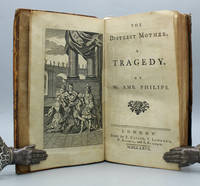
réf. 17764Includes the following: Philips Ambrose The Distrest Mother. A Tragedy London: T. Caslong et al. 59 pp. frontispiece; Banks John The Happy Favourite; or the Earl of Essex. A Tragedy. printed for I. Hawes 70 2 pp.; Shakespeare William Hamlet Prince of Denmark printed for Woodfall 1868 72 ppl.' Shakespeare William The History of King Lear printed for Noble 1771 71 pp.; Congreve William The Mourning Bride Printed for S. Bladon 1768 71 pp.;; Shakespeare William Macbeth printed for Woodfall 1768 68 4 pp.; All of these are later editions but the compilation is a fascinating picture of what plays were popular in London in the 1760s and 1770s. . The six plays bound together in contemporary calf rebacked. Corners rubbed. Some offsetting from plates. Contemporary armorial bookplate John Beale. Also bookplate of anthropologist Frances Emma Watkins plus another ownership signature: "L. Watkins Denver Colo. 1873." A very good copy with interesting provenance. Details about library holdings of individual titles available upon request. Frances Emma Watkins 1899 – 1987 was born in Colorado and attended the University of Denver. After graduating with specializations in archaeology and anthropology in 1929 Watkins joined Isabel Kelly and Eva Horner in New Mexico on what was possibly the first excavation directed by an all-female team. Later Watkins worked as a curator at the Southwest Museum in Los Angeles where she managed the museum's archives. Includes the following: Philips, Ambrose, The Distrest Mother. A Tragedy, London: T. Caslong [et al.[, 59 pp., frontispiece; Ban
1973réf. 021308London: Secker & Warburg 1973 First printing of the first U.K. edition. Publisher's black cloth and dust jacket with £2.50 price Octavo 163pp.Douglas Fairbanks Jr.'s copy Who wrote the forward with his armorial bookplate on front-free-endpaper also loosely laid-in is an auction card for The Estate of Douglass Fairbanks Jr.Signed and inscribed by Harold French to Douglas Fairbanks Jr. who wrote the Foreword. Light bump to upper board edge else book in fine condition; dust jacket with mild edge wear light tanning to spine and a bit of age-toning to top edge of flaps else dust jacket in fine condition. Unique signed-association copy scarce thus. Secker & Warburg hardcover
1864réf. 0008949London: Chapman And Hall 1864. Revised edition. Hardcover. Fine. 8vos 3/4 brown morocco extra-gilt spines marbled boards and edges. Ex libris Cyrus K. Hale. The title-page states "In Eight Volumes". Some versions of this had nine. Dyce is considered to have been a scrupulous editor: "Its textual criticism is of the highest value and the brief annotations are always useful and to the point. The glossary is full and meets most of the difficulties. A vast number of.Shakespearean students regard it as the most readable and satisfactory of all the editions of the dramatist - DNB." Frontispiece portraits. Jaggard SHAKESPEARE BIBLIOGRAPHY p. 538 . Chapman And Hall hardcover
réf. 38808LONDON HURST ROBINSON AND CO. 1824. NEW EDITION 20 VOLUMES. SMALL OCTAVO HALF LEATHER OVER MARBLED BOARDS RAISED BANDS. WITH A FINE ENGRAVING AT THE FRONT OF EACH PLAY FOXED TEXT VERY CLEAN. IN VERY GOOD CONDITION. WITH BIOGRAPHICAL AND CRITICAL REMARKS. A HANDSOME SET. LONDON, HURST, ROBINSON AND CO., 1824 hardcover
réf. 38900LONDON THOMAS TEGG 1812. 12 VOLUMES COMPLETE. BOUND IN FULL LEATHER RAISED BANDS A.E.G. WITH 12 FINELY ENGRAVED TITLE PAGES AND 38 OTHER PLATES. ARMORIAL BOOKPLATE REMOVED FROM EACH FRONT PASTEDOWN. SOME FOXING TO THE PRELIMS. ONLY THEN CLEAN AND TIGHTLY BOUND. CRACKED JOINT TO VOLUME 12. A VERY GOOD SET OF A SCARCE WORK. LONDON, THOMAS TEGG, 1812 hardcover
1909Very Good Turkish, Ottoman (1500-1928) In modern, handsome full brown morocco. Foolscap 8vo. (18 x 12.5 cm). In Ottoman script (Old Turkish with Arabic letters). 159 p. Extremely rare first Turkish translation of Macbeth, printed in Ottoman Cairo. Macbeth reflected Abdullah Cevdet's reaction against Hamidian despotism and his love and advocacy of liberty. One must also remember him as one of the founding members of the Party of Union and Progress - a secret organization that conspired to overthrow Abdülhamid's absolutist regime. The argument that Abdullah Cevdet's translation of Hamlet, Julius Caesar and Macbeth reflected his opposition to Abdülhamid II's absolute monarchy could be justified with the fact that the themes of the translated plays were perceived by the political authorities as threatening since they were about the murder of kings and heads of state. In Abdullah Cevdet's view, Macbeth is famous as a drama of "ambition for status" (hirs-i cah). Abdullah Cevdet was an Ottoman-born Turkish intellectual and physician of Kurdish ethnic descent, and one of the founders of the Committee of Union and Progress (CUP). In 1908, he joined the Democratic Party that later on merged with the Freedom and Accord Party in 1911. He was also a translator, radical free-thinker, and ideologist of the Young Turks until 1908. The son of a physician, and himself a graduate from the Military College in Constantinople as an ophthalmologist, Cevdet, initially a pious Muslim, was influenced by Western materialistic philosophies and came to oppose institutionalized religion but thought that "although the Muslim God was of no use in the modern era, the Islamic society must preserve Islamic principles." He published the periodical Içtihat from 1904 to 1932, of which articles he used to promote his modernist thoughts. He was arrested and expelled from his country several times due to his political activities and lived in European cities including Vienna, Geneva and Paris. His poetry was linked with the Symbolist movement in France and he received accolades from leading French authors like Gustave Kahn. (Source: DR. ABDULLAH CEVDET'S TRANSLATIONS (1908-1910): THE MAKING OF A WESTERNIST AND MATERIALIST "CULTURE REPERTOIRE" IN A "RESISTANT" OTTOMAN CONTEXT; Ayluçtarhan, Sevda). "Between 1908 and 1910, Abdullah Cevdet produced a large oeuvre of translations, including four translations of Shakespeare's tragedies: The translations of Hamlet and Julius Caesar (translated by Cevdet as Jül Sezar) were published in 1908, the same year as the declaration of the Second Constitution. Macbeth, translated by Cevdet as Makbes, was published in the following year. [.] Nonetheless, Abdülhamid II seemed to be even less tolerant of the dissemination of Hamlet, Macbeth, and Julius Caesar, since they were all about unjust rulers who were executed in the end. It is not surprising that the performances of these plays became subject to strict censorship in the Ottoman lands and banned (Paker 1986: 91). This could be shown as a reason why Abdullah Cevdet was able to publish the translations of these plays only after 1908, though he had finished translating Hamlet in 1902, Julius Caesar and Macbeth in 1904, and Romeo and Juliet in 1905 (Süssheim 1987). As Abdullah Cevdet was a planner of culture, his literary translations cannot merely be judged on an "aesthetic" level. It will be discussed in this chapter that Abdullah Cevdet's translations of Hamlet, Julius Caesar and Macbeth could be read as critical texts directed against Abdülhamid II's absolutist regime. [.] Due to the fact that the selection of source language and culture is an important factor in accounting for any kind of "translation policy", Abdullah Cevdet's selection of both these instruments needs to be taken into account (Toury 2000: 202). Özege 12009. Only one copy in OCLC: 949612474 (Bogaziçi University Library of Turkey).
réf. 30743LONDON 1684 AND 1692. TWO WORKS BY DRYDEN BOUND IN MODERN 1934 FULL BROWN LEATHER. THE STATE OF INNOCENCE AND THE FALL OF MAN AN OPERA. PRINTED BY H.H. FOR HENRY HERRINGMAN 1684. DEDICATION 4pp POEM OF PARADISE 2pp AUTHOR'S APOLOGY 6pp STATE OF INNOCENCE 26pp. BOUND WITH OEDIPUS; A TRAGEDY BY DRYDEN AND MR. LEE FOURTH EDITION PRINTED FOR RICHARD BENTLEY COVENT GARDEN 1692. PREFACE 2pp DRAMATIS PERSONAE 1pp PROLOGUE 1pp OEDIPUS 71pp EPILOGUE 1pp. NEW ENDPAPERS BOOKPLATE TO FRONT PASTEDOWN. BROWNING OF PAGES COMMENSURATE WITH THE AGE. NOTE THAT THE AGE OF INNOCENCE IS INCOMPLETE ENDING AT ACT V SCENE 1 PARADISE PARAGRAPH 11.'EVE - PLEASE THEN YOUR SELF WITH ME.'. FINE BINDING WITH A FEW MARKS TO THE LEATHER. VERY SCARCE. LONDON, 1684 AND 1692 hardcover
réf. 30744LONDON H PLAYFORD 1694. THE SECOND EDITION 58 PAGES. .AS IS ACTED AT THE THEATRE ROYAL BY HIS MAJESTY'S SERVANTS. VERY NICELY BOUND IN MODERN 1934 FULL BROWN LEATHER. NEW ENDPAPERS BOOKPLATE TO FRONT PASTEDOWN. BROWNING OF PAGES COMENSURATE WITH THE AGE. FINE BINDING WITH A FEW MARKS TO THE LEATHER. VERY SCARCE. LONDON, H PLAYFORD, 1694 hardcover
1831réf. 002014Paris Auguste Auffray 1831
1911réf. 2289Moscow: A.A. Gorozhankin and K.A. Fisher 1911-12. Twenty-six postcards each 5 1/2 x 3 3/8 inches 138 x 84 mm featuring black-and-white photos of scenes from Anton Chekhov's The Cherry Orchard and text descriptions in Russian. The Cherry Orchard opened at the Moscow Art Theatre on January 17 1904 in a production directed by Konstantin Stanislavsky just six months before the death of Chekhov. In the play a family is forced to sell their estate at auction to pay their debts. The buyer Lopakhin plans to cut down the family's beloved cherry orchard so he can build cottages on the estate. These postcards feature cast members from early productions: Olga Knipper as Madame Ranevskaya the estate owner Maria Lilina as Anya her daughter Margarita Savitskaya as Varya foster daughter Stanislavsky himself as Gaev Ranevskaya's brother Leonid Leonidov as Lopakhin Vladimir Gribunin as Simeonov-Pishchik a landowner Elena Muratova as Charoltta Ivanovna a governess Alexander Artyom as Firs an elderly valet Vasily Kachalov as Trofimov a student and Ivan Moskvin as Yephikhov a bookkeeper. Olga Knipper was the wife of Chekhov Maria Lilina was the wife of Stanislavsky and Ivan Moskvin became director of the Moscow Art Theatre in 1943. All three were among the 39 original members of the troupe when Stanislavsky founded it in 1898 with Vladimir Nemirovich-Danchenko. Chekhov conceived The Cherry Orchard as a comedy but Stanislavsky turned it into a tragedy angering Chekhov. "My play opened yesterday so my mood is none too good" Chekhov wrote in a letter to author and dramatist Ivan Leontyev known as Shcheglov quoted in Laurence Senelick Anton Chekhov's Selected Plays. New York: W.W. Norton 2005 page 456. And in late March 1904 writing from Yalta Chekhov declared in a letter to his wife Olga Knipper the star of the play: "One thing I can say: Stanislavsky has butchered the play for me." Senelick page 457. While Chekhov may not have liked the play the public certainly did. Indeed in a note on the verso of one card an anonymous writer says translating: "we have just got back from the Art Theatre where we saw The Cherry Orchard. There are no words to tell how wonderful it was." The note appears on a card showing Stanislavsky and his wife Maria Lilina. A.A. Gorozhankin published two of the cards in 1911. The famous Moscow photographer Karl Fisher issued all the others. Two of them not identified as the Moscow Art Theatre production are dated 1912. A fascinating set of postcards depicting scenes from one of the theatre world's most acclaimed plays. CONDITION: Inscription in ink to the verso of one card stains or soiling to many cards lower corner of one card of Olga Knipper damaged with slight loss of text; old bookseller's stamp to the verso of half a dozen cards; all a bit rubbed or edge-worn. About Good overall. A.A. Gorozhankin and K.A. Fisher
1911réf. 2289Moscow: A.A. Gorozhankin and K.A. Fisher 1911-12. Twenty-six postcards each 5 1/2 x 3 3/8 inches 138 x 84 mm featuring black-and-white photos of scenes from Anton Chekhov's The Cherry Orchard and text descriptions in Russian. The Cherry Orchard opened at the Moscow Art Theatre on January 17 1904 in a production directed by Konstantin Stanislavsky just six months before the death of Chekhov. In the play a family is forced to sell their estate at auction to pay their debts. The buyer Lopakhin plans to cut down the family's beloved cherry orchard so he can build cottages on the estate. These postcards feature cast members from early productions: Olga Knipper as Madame Ranevskaya the estate owner Maria Lilina as Anya her daughter Margarita Savitskaya as Varya foster daughter Stanislavsky himself as Gaev Ranevskaya's brother Leonid Leonidov as Lopakhin Vladimir Gribunin as Simeonov-Pishchik a landowner Elena Muratova as Charoltta Ivanovna a governess Alexander Artyom as Firs an elderly valet Vasily Kachalov as Trofimov a student and Ivan Moskvin as Yephikhov a bookkeeper. Olga Knipper was the wife of Chekhov Maria Lilina was the wife of Stanislavsky and Ivan Moskvin became director of the Moscow Art Theatre in 1943. All three were among the 39 original members of the troupe when Stanislavsky founded it in 1898 with Vladimir Nemirovich-Danchenko. Chekhov conceived The Cherry Orchard as a comedy but Stanislavsky turned it into a tragedy angering Chekhov. "My play opened yesterday so my mood is none too good" Chekhov wrote in a letter to author and dramatist Ivan Leontyev known as Shcheglov quoted in Laurence Senelick Anton Chekhov's Selected Plays. New York: W.W. Norton 2005 page 456. And in late March 1904 writing from Yalta Chekhov declared in a letter to his wife Olga Knipper the star of the play: "One thing I can say: Stanislavsky has butchered the play for me." Senelick page 457. While Chekhov may not have liked the play the public certainly did. Indeed in a note on the verso of one card an anonymous writer says translating: "we have just got back from the Art Theatre where we saw The Cherry Orchard. There are no words to tell how wonderful it was." The note appears on a card showing Stanislavsky and his wife Maria Lilina. A.A. Gorozhankin published two of the cards in 1911. The famous Moscow photographer Karl Fisher issued all the others. Two of them not identified as the Moscow Art Theatre production are dated 1912. A fascinating set of postcards depicting scenes from one of the theatre world's most acclaimed plays. CONDITION: Inscription in ink to the verso of one card stains or soiling to many cards lower corner of one card of Olga Knipper damaged with slight loss of text; old bookseller's stamp to the verso of half a dozen cards; all a bit rubbed or edge-worn. About Good overall. A.A. Gorozhankin and K.A. Fisher books
réf. 34893LUGANO OFFICINA BODONI 1924. A PRESENTATION COPY FROM HANS MARDERSTEIG FOUNDER OF THE OFFICINA BODONI TO W J BURCH. LIMITED TO 224 COPIES PRINTED ON HAND-MADE PAPER BOUND IN GREEN VELLUM WITH THE ORIGINAL TYPES OF GIAMBATTISTA BODONI. A NEAR FINE COPY IN THE ORIGINAL SLIPCASE WHICH IS WORN AND DAMAGED BUT HAS DONE ITS JOB IN PROTECTING THE BOOK. LUGANO, OFFICINA BODONI, 1924 hardcover
1934réf. 1169Quarto 12 1/8 x 8 7/8 inches; 307 x 220 mm pp. 8 ix-xlvii 1 introduction 195 plates 3 199-211 1 appendix in publisher's original brown cloth lacking the rare dust jacket. A celebration of Alexander Tairov's pathbreaking Kamerny Theatre in Moscow featuring set and costume designs as well as scenes from the theatre's first 20 years. Text entirely in Russian. Profusely illustrated in both color and black and white the book showcases each production of the Kamerny founded by Alexander Tairov 1885-1950 and his wife the actress Alisa Koonen 1889-1974. Tairov brought many non-Russian productions to the Kamerny including works by Shakespeare Bertolt Brecht Eugene O'Neill George Bernard Shaw and Oscar Wilde. Tairov's productions were known for their magnificent set and costume designs and he collaborated with some of the most acclaimed avant-garde artists of the day including Alexandra Exter and Natalia Goncharova. Indeed it's possible to see the evolution of 20th-century Russian art through the set and costume designs which reflected Cubist Constructivist Rayonist and even Art Deco influences. It was an exciting time in Soviet theatre; this era featured some of the greatest directors of the 20th century such as Stanislavsky Meyerhold Vakhtangov and of course Tairov. The Kamerny was the scene of one of the most significant plays of the Soviet theatre according to Nick Worrall in his authoritative study "Modernism to Realism on the Soviet Stage" Cambridge University Press 1989. Vsevolod Vishnevsky's Russian civil-war play Optimistic Tragedy opened at the Kamerny on December 18 1933. "It concerns particular historical events associated with the civil war in the Soviet Union but more generally it is an article of faith -- in the triumph of Life over Death of the Collective over the Individual of faith in the necessary tragedy of revolution of the necessary destruction of those who oppose revolution of hostility to the spirit of anarchism and faith in the leadership of the party." Indeed the play which is featured in this book marked an important milestone in the development of "socialist realism." The Soviet government closed the Kamerny Theatre in 1949 and Tairov died a year later. The Kamerny's home at 23 Tverskoy Boulevard is now occupied by the Moscow Pushkin Drama Theatre. A stunning look at the first 20 years of the Kamerny Theatre one of the most innovative theatres at an important moment in Soviet theatre history. SCARCE. CONDITION: Both boards rubbed small scrape to rear paste down a few scattered stains. Tissue guards separating each play plate 36 not present but apparently never published according to list of illustrations in the appendix plate 41 detached but present some small closed tears to a few pages plate 175 improperly trimmed not affecting the illustration. Overall Very Good or better. Izd. Vseros. teatral nogo obshchestva hardcover
1934réf. 1169Moscow: Izd. Vseros. teatral nogo obshchestva 1934. First Edition. 4to 12 1/8 x 8 7/8 inches / 307 x 220 mm xlvii 11-195 plates 3 199-211 appendix 1 pages in publisher's original brown cloth lacking the rare dust jacket. A celebration of Alexander Tairov's pathbreaking Kamerny Theatre in Moscow featuring set and costume designs as well as scenes from the theatre's first 20 years. Text entirely in Russian Profusely illustrated in both color and black and white the book showcases each production of the Kamerny founded by Alexander Tairov 1885-1950 and his wife the actress Alisa Koonen 1889-1974. Tairov brought many non-Russian productions to the Kamerny including works by Shakespeare Bertolt Brecht Eugene O'Neill George Bernard Shaw and Oscar Wilde. Tairov's productions were known for their magnificent set and costume designs and he collaborated with some of the most acclaimed avant-garde artists of the day including Alexandra Exter and Natalia Goncharova. Indeed it's possible to see the evolution of 20th-century Russian art through the set and costume designs which reflected Cubist Constructivist Rayonist and even Art Deco influences. It was an exciting time in Soviet theatre; this era featured some of the greatest directors of the 20th century such as Stanislavsky Meyerhold and Vakhtangov. The Kamerny was the scene of one of the most significant plays of the Soviet theatre according to Nick Worrall in his authoritative study "Modernism to Realism on the Soviet Stage" Cambridge University Press 1989. Vsevolod Vishnevsky's Russian civil-war play Optimistic Tragedy opened at the Kamerny on December 18 1933. "It concerns particular historical events associated with the civil war in the Soviet Union but more generally it is an article of faith -- in the triumph of Life over Death of the Collective over the Individual of faith in the necessary tragedy of revolution of the necessary destruction of those who oppose revolution of hostility to the spirit of anarchism and faith in the leadership of the party." Indeed the play which is featured in this book marked an important milestone in the development of "socialist realism." The Soviet government closed the Kamerny Theatre in 1949 and Tairov died a year later. The Kamerny's home at 23 Tverskoy Boulevard is now occupied by the Moscow Pushkin Drama Theatre. A stunning look at the first 20 years of the Kamerny Theatre one of the most innovative theatres at an important moment in Soviet theatre history. SCARCE. CONDITION: Both boards rubbed small scrape to rear paste down. Tissue guards separating each play page 36 unpublished according to list of illustrations in the appendix plate 41 loose some small closed tears in a few pages plate 175 improperly trimmed not affecting the illustration. Overall Very Good or better. Izd. Vseros. teatral nogo obshchestva hardcover books