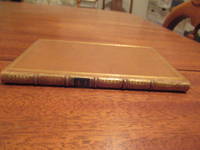
SCOTT CapitaineLivre Rare Book

réf. 14491Journal de route du Capitaine SCOTT au Pôle Sud. Adaptation de Ch. RABOT. In 4 reliure éditeur pleine toile verte avec portrait en pied de SCOTT et titre doré. 265x205mm, (poids 1,8kg). Faux titre, portrait de SCOTT en frontispice, titre, X- 381 pages, 91 gravures hors texte y compris le frontispice. Tête dorée, Hachette & Cie 1914.Petit raccommodage au dos, une déchirure réparée en marge intérieure du frontispice sinon bon exemplaire.
1721réf. 060321Paris: Jean Musier / C. L. Thiboust / Jean Pepingue 1721. 1st Edition . Hardcover. Near Fine. 71 Viii Pp. Ads At Rear.Olive Morocco Spine Elaborately Gilt Five Bands Black Spine Label Gilt Edges And Turns Edges Of Page Block Gilt Marbled Endpapers. Binder's Stamp "Petit Succrde St----Er" Small Provenance Notations In Pencil At Top Of Verso Of Front Endpaper. Light Wear At Corners Very Good . Per Wikipedia Marc-Antoine Legrand Or Le Grand 1673 -1728 Was A 17Th-18Th-Century French Actor And Playwright. The Son Of A Surgeon At The Hôtel Des Invalides Legrand Started Very Early His Acting Career First In Lyon In 1692 In The Company Of Marshall De Villeroy And Made A First Attempt At The Comédie-Française 19 March 1694 But Was Not Received. After A Stay In Warsaw At The Court Of John Iii Sobieski He Returned To The Comédie-Française 21 March 1702 And Was Received 18 October. Disgraced By Nature He One Day Harangued The Audience By Throwing "Gentlemen It Is Easier For You To Accustom Yourself To My Face That For Me To Change It." If He Never Gave Up The Stage He Even Played The Role Of Maître Robert In His Last Play Les Amazones Modernes In 1727 Written In Collaboration With Louis Fuzelier He Devoted Part Of His Time To Writing Theater Plays Forty In All Sometimes To The Comédie Française Sometimes To The Comedie Italienne And Once Even For A Théâtre De La Foire The Opéra Comique Les Animaux Raisonnables 1717. Le Roi De Cocagne 1718 Is Usually Considered To Be His Masterpiece.Hile He Was Composing The Play Cartouche Ou Les Voleurs 1721 He Pushed The Sake Of Realism As Far As Visiting In Prison The Famous Brigand To Document The Argot Jean Musier / C. L. Thiboust / Jean Pepingue hardcover
1934réf. 050645San Franbcisco: Bohemian Club 1934. Hardcover. Good. 46 Pp. Green Card Covers. Second Edition For The Revival Of The Play At The Bohemian Grove In 1934. Inscribed By "Good Luck To My Friend Bill Todt Wallace A. Sabin" And Additionally Signed By 22 Cast Members Opposite The Players' List. Damp Staining To Covers And Bottom Edges Of Pp 21 To End. The Original Play Is Quite Scarce This 1934 Revival Edition Even More So It Is Not Known To Wikipedia Or The Sources Upon Which It Is Based. H. Morse Stephens 1857 -1919 Was An Historian And Professor Of History At The University Of California Berkeley Who Helped To Purchase The Bancroft Library And Who Worked To Build Archives Of California History The 1906 San Francisco Earthquake And World War I. He Was Educated At Haileybury College And Attended Balliol College Oxford University Where He Was Granted A B.A. In 1880 And An M.A. In 1892. He Was A Staff Lecturer On The Oxford University Extension System From 1892-1894 And Lecturer On Indian History At Cambridge Writing Also For The Academy The Daily Chronicle The Speaker And 'Acting As London Correspondent For The Statesman And The Calcutta Friend Of India. Stephens Immigrated To The United States In 1894 And Took The Position Of Professor At Cornell University In The Department Of History Where He Taught European History. In 1902 Stephens Went To The University Of California As Professor Of History And Director Of University Extension A Position He Held From 1902-1909. He Served As Dean Of The University Of California College Of Arts And Sciences From The Fall Of 1918 Until His Death. During His Time At Berkeley He Worked To Build The Bancroft Library's Collection Of Historical Materials With Special Success In The Area Of Spanish And Mexican History Now Known As The Bolton Collection. Stephens Was Involved With The Bohemian Club And Wrote The Script For St. Patrick At Tara The Main Grove Play Performed In 1909 At The Bohemian Grove. The Play Depicted Saint Patrick And His Interaction With Druids Chieftains And Kings Of Ireland. Stephens Was An Active Member Of The American Historical Association Serving As Its President In 1915. His Most Notable Contribution In The Aha However Was As A Member Of The Committee Of Seven Which In 1899 Produced The Report The Study Of History In Schools For The Aha And Which Influenced The Teaching Of History In American Schools For The Next 40 Years. Wallace Arthur Sabin 1869 -1937 Was A Composer And Organist Born In Culworth Northamptonshire England. In 1894 Or '95 Sabin Moved To San Francisco To Serve As Organist For The Congregations Of Temple Emanu-El And St. Luke's Episcopal Church. He Became A Fellow Of The American Guild Of Organists Ago In 1899. He Was President Of The San Francisco Chapter Of Ago From 1911 To 1913 Then Again From 1923 To 1926. In 1915 Sabin Was The Official Organist Of The Panama-Pacific International Exposition. In One Concert He Directed The 400-Voice Exposition Chorus While Playing Organ Accompaniment As Camille Saint-Saëns Conducted The 80-Member Orchestra. Sabin Set Various Parts Of The Jewish Service To Music And Is Published In Stark's Service Book. In 1920 With Edwin H. Lemare And Uda Waldrop He Helped Inaugurate The Bohemian Club's Outdoor Organ Austin Opus 913 Set Into The Main Stage At The Bohemian Grove. Bohemian Club hardcover
1890Hardcover folios in green cloth boards with gilt title to spine and gilt illustration to covers. 3 volumes in 9 folios : illustrations (some color), color frontispieces, plates (some color, some pasted on) ; 32 cm Complete in nine books. Illustrated by Sir John Gilbert, George Cruikshank, and R. Dudley. || Contents: pt. 1. Tempest ; Two gentlemen of Verona ; Merry wives of Windsor ; Twelfth night ; Measure for measure ; Much ado about nothing -- pt. 2. Taming of the shrew ; Comedy of errors ; Merchant of Venice ; Midsummer night's dream ; Love's labour's lost ; As you like it -- pt. 3. As you like it (continued) ; Winter's tale ; All's well that ends well ; Macbeth ; Troilus and Cressida ; Timon of Athens -- pt. 4. Timon of Athens (continued) ; Hamlet ; Cymbeline ; Romeo and Juliet ; King Lear -- pt. 5. King Lear (continued) ; Othello ; Coriolanus ; Julius Caesar ; Antony and Cleopatra -- pt. 6. King John ; King Richard II ; King Henry IV ; Henry V -- pt. 7. Henry V (continued) ; King Henry VI ; King Richard III ; King Henry VIII -- pt. 8. King Henry VIII (continued) ; Titus Andronicus ; Pericles ; Poems -- v. 9. Notes, critical and explanatory / by Samuel Neil. || Comedy plays. Drama. Historical drama. Poetry. Tragedies (Drama) ||Vol I-Comedies (Book I) ; Vo. I-Comedies (Book II) ; Vol. I-Comedies (Book III) ; Vol II-Tragedies (Book IV) ; Vol. II-Tragedies (Book V) ; Vol. III-Historical Plays (Book VI) ; Vol. III-Historical Plays (Book VII) ; Vol. III-Historical Plays (Book VIII) ; Notes, Critical and Explanatory (Book IX) // **A large, heavy set. Extra shipping charges may apply for international & expedited orders. Please inquire.**
17184to., on laid paper, some mild age- and damp-marking to several leaves; strongly bound in twentieth century boards, paper label, a bright, crisp copy. Although attributed here to Beaumont and Fletcher, later scholarship increasingly favours authorship by Fletcher and Massinger. The play, one of the finest Restoration comedies, was first performed in 1622 with the first licensed edition following in 1647. We have not been able to trace another eighteenth century edition of this work on its own. Tannenbaum, 501; see CBEL I, 635.
1692Sm. 4to., First Edition, some mild age-staining and spotting throughout; modern grey boards, paper label lettered in black on upper board, one or two upper margins closely shaved else a crisp, firm copy. Dryden's second-to-last play, and according to MacDonald partially completed by Southerne. Its first performance should have been early in April 1692, but on the 9th it was prohibited; it was acted out on or before 16 April at the Theatre Royal. In his Dedication Dryden attributes the lifting of the ban to Rochester (the dedicatee), who had represented the drama to the Queen as 'wholly innocent of those Crimes which were laid unjustly to its Charge'. The Life of Cleomenes is supplied by Creech (from Plutarch; see MacDonald 131). In this copy, as often, the Prologue and Epilogue appear before the 'Life'. CBEL II, p.267; MacDonald, 92.
1756in-8°. pp 138. Legatura originale in cartone alla rustica. Prima edizione di questa commedia rusticale, che deve la sua importanza sia al fatto che fu scritta in dialetto senese sia perché venne spesso paragonata alla Tancia del Buonarroti il Giovane. Opera a cura di Giovanni Conti e da lui dedicata al “Signore di Morgan, capitano d"Infanteria…al servzio di S.M. Cristianissima”. In fine correda l’opera un dizionario di spiegazione di “molte parole oscure, disusate o corrotte che sono nell’assetta”, con traduzioni di termini gergali e modi di dire popolari, e un repertorio bibliografico complemento alla Drammaturgia dell’Allacci del 1755. B. Mariscalco, Accademico “Appuntato, Intronato e Rozzo” di Siena, è lo pseudonimo di Francesco Mariani, parroco di Marciano. LANCETTI 395. MELZI-PASSANO II, 163. PARENTI, LUOGHI FALSI, 140. GAMBA 1217. SOLEINNE 4640 “Fort curieuse pour l’etude du dialect toscan”. RASI 447.
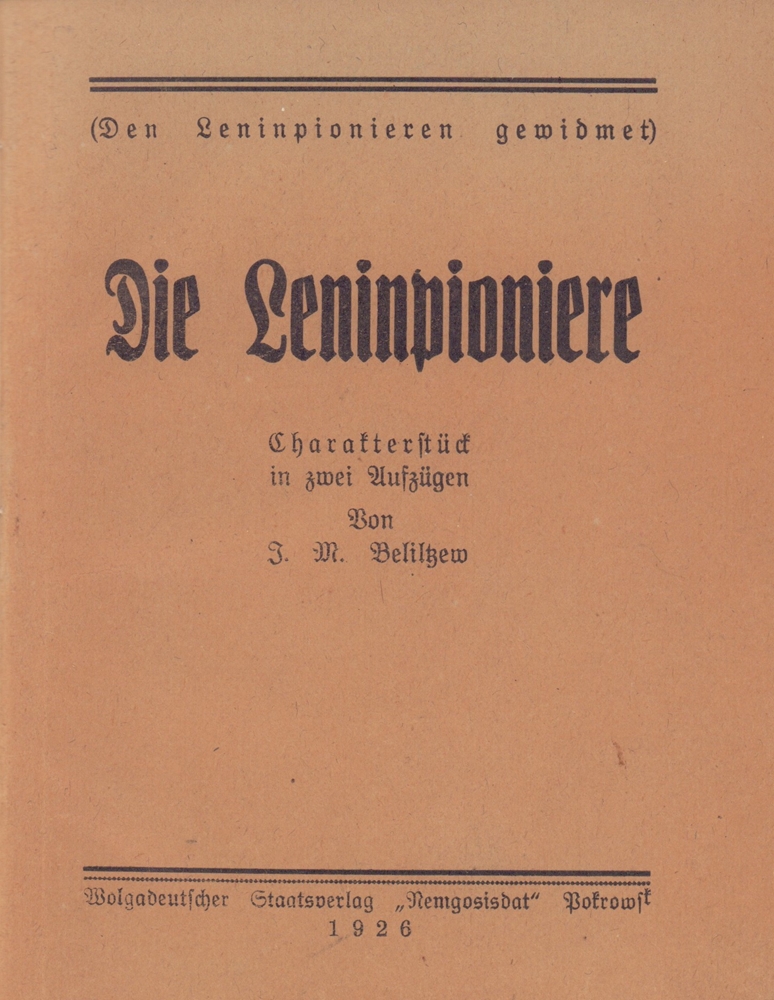
1926réf. 71586Pokrowsk, Wolgadeutscher Staatsverlag "Nemgosisdat", 1926. 37 S. Kl.-8vo (16,5 x 13 cm). Priv. HLn. mit marmor. Deckeln u. eingebundenem bedruckten OU.
1976réf. 123723Michel De L'Ormeraie 1976 In-quatro Couverture rigide A Paris, Chez Michel De L'Ormeraie - 1976 - Complet en douze volumes in-4; reliure pleine peau mouchetée; dos à 5 nerfs; caissons, titre et auteur en dorés au dos; blason et filets en dorés sur les plats; toutes tranches dorées; frises dorées sur les tranches des contreplats; signet; frontispice en N&B - 364 + 336 + 396 + 405 + 350 + 345 + 398 + 329 + 385 + 413 + 329 + 406 pages - Cette édition reproduit fidèlement celle illustrée en 1774 par Gravelot. Second tirage, strictement conforme au tirage de tête, numéroté à partir de 1000, celui-ci porte le numéro 1358.
1921First Yiddish edition. Publishers cloth. 8vo. 364; 368; 312 pages. 22 cm. With frontispiece portrait of Darwin, and numerous illustrations throughout. Translation by Y. A. Merison of Charles Darwins The Descent of Man, and Selection in Relation to Sex, his second book on evolutionary theory (originally published 1871; two volumes) . A prolific journalist and translator, Jacob Merison (a. K. A. Jacob Maryson, a. K. A. Y. A. Merison) was a prominent Jewish socialist, anarchist, and proponent of Yiddish culture. Born near Vilna, Lithuania, to a rabbinical family, in 1887 he immigrated to the United States and settled in New York, where he earned a medical degree and joined the Pioneers of Freedom, the first Jewish American anarchist group. Merison is best known for translating the work of writers like Charles Darwin, Karl Marx, Max Stirner, Errico Malatesta, and Peter Kropotkin into Yiddish, as well as the work of other socialists and anarchists. (The International Encyclopedia of Revolution and Protest; Merison, Jacob A. ; Kenyon Zimmer) . With original jackets. Subjects: Yiddish translations Darwin. Evolution. Natural selection. Heredity. Human beings - Origin.Light wear, Very Good Condition. An attractive set (YID-16-11A)
réf. 1724o.J. 4° (31 x 23 cm). 30 n.n. Blatt mit 144 montierten fotografischen Bildern und 4 hinreißenden, rot-schwarzen Original-Farblithographien im Art Deco-Stil auf den Vorsätzen. Vollständig. Seltenes Sammelalbum mit leichten Alterungsspuren. Einband an den Kapitalen leicht bestoßen, innen und außen teilweise etwas stockfleckig, sonst gut erhalten.
1878In-4°; grande; 5 tomi in bella legatura in mezza pelle rossa con angoli titolo impresso in oro al dorso con nervi, ciascuna in custodia. ottimo stato.
réf. 10941 En feuillets, sous couverture imprimée parcheminée, chemise et étui d'édition. Non coupé, très bel état intérieur. La chemise est fendue aux mors, quelques éraflures. 31,5 x 24,5 cm, 144-[8] p. + planches hors-texte. Paris, s.n.e., s.d.
réf. 10941 En feuillets, sous couverture imprimée parcheminée, chemise et étui d'édition. Non coupé, très bel état intérieur. La chemise est fendue aux mors, quelques éraflures. 31,5 x 24,5 cm, 144-[8] p. + planches hors-texte. Paris, s.n.e., s.d.
1874réf. Y115973Paris, Alphonse Lemerre 1874-1875 Ouvrage complet en 5 tomes : lx,279,[2] + 286,[2] + 279,[2] + 284,[1] + 230,[1] pp., avec frontispice dans tome I (portrait de Racine par Rajon), jolies reliures uniformes d'époque en demi-cuir bleu (plats marbrés, titre et décorations dorées aux dos, coins peu usés), tranches supérieures dorées, feuilles de garde marbrées, avec signet, texte et intérieur sont très frais, avec ex-libris héraldique, bel ensemble, poids: 1.8 kg., Y115973
1924Publishers cloth. 8vo. 288; 286; 286; 288; 318; 285 pages. 21 cm. First edition. In Yiddish. Yonah Rozenfelds Collected Writings in six volumes: 1. Tsvishen tog un nakht 2. In shotens fun toyt. - 3. Froyen - 4. Nohente un vayte - 5. Ikh 6. Oyf di grenetsen. Yona Rozenfeld (18801944) , Yiddish prose writer. Born in Tshartorisk (mod. Staryi Chartoriisk) , Ukraine, Yona Rozenfeld received a traditional Jewish education that was interrupted when his parents both died of cholera in 1893. Shortly thereafter, under arrangements made by his older brother, 13-year-old Yona began an apprenticeship with a turner in Odessaan experience vividly depicted in his autobiographical novel Eyner aleyn (All Alone; 1940) . Rozenfeld showed his early writings to Y. L. Peretz when the latter visited Odessa in 1902. As a result, Rozenfelds first (autobiographical) story, Dos lernyingl (The Apprentice) , was published in Der fraynd in 1904. At the age of 23, Rozenfeld left his job as a turner and devoted himself to writing. He published his first collection of stories, the two-volume Shriftn (Writings; 19091912) , which included his most famous story, Konkurentn (Competitors) . He immigrated to New York in 1921, and began writing plays. His six-volume Gezamlte shriftn (Collected Writings; 1924) was published in New York and Geklibene verk (Selected Works; 1929) in Vilna. In the mid-1930s, he had a major conflict with Abraham Cahan, editor in chief of Der forverts, after which the newspaper ceased publishing Rozenfelds work. Rozenfeld began writing his autobiographical novel Eyner aleyn in 1937. Upon publication, it received excellent reviews in the Yiddish press. His longest earlier works were fictive and autobiographical diaries. In Fun mayn togbukh (From My Diary; 1924) , Rozenfeld depicted his return to Kovel from Kiev in 1919 during the Russian civil war. He regarded this text and Er un zey, a togbukh fun a gevezenem shrayber (He and They, a Diary of a Former Writer; 1927) as his best works. Together with the autobiographical texts entitled Ikh (I [the first-person pronoun]) in the fifth volume of Rozenfelds Gezamlte shriftn, these pieces indicate the importance of autobiographical writings in the authors work. During a conversation with Yohanan Twersky in 1937, Rozenfeld formulated his literary credo: Without having a big selection of types, I must be content with the situations in which I place my characters. And as a result, each type ceases to be a type. For in reality, the typical kind does not exist! Rozenfelds autobiographical method seeks to explore the potential for deviant behaviour when individuals are removed from their normal social environments and placed in extreme situations. Rozenfeld saw himself as a Yiddish Gorky whose short stories and autobiographical fiction chronicled Jewish working-class life in Odessa and the Lower East Side tenements. Except for a few translations of his short stories, most of his work remains a hidden treasure of modern Yiddish literature. Nevertheless, Rozenfeld belongs among the most original Yiddish prose writers of his generation. (YIVO Encyclopedia of Jews in Eastern Europe; Rozenfeld, Yona) Subjects: Yiddish fiction. Autobiography. Light wear to cloth, endpapers lightly aged, otherwise, fresh and clean. Very good condition. (YID-16-9)
1945réf. 6331BBZürich, 1945. 4°. (32) Bl. Leinenband. + Wichtig: Für unsere Kunden in der EU erfolgt der Versand alle 14 Tage verzollt ab Deutschland / Postbank-Konto in Deutschland vorhanden +
1942Pages 505-532. Features: Cover photo of Monty pinning Sgt. Keith Elliot with the V.C., for outstanding gallantry at Ruweisat; The Battle of the Solomons - U.S. Sea Losses and Land Fighting, with photo of aircraft carrier "Wasp" ablaze and dramatic photo of U.S. auxiliary vessel "Colhoun" and U.S. destroyer "Little" shortly before they went under; Multiple photos of the Battle of the Solomons; Photos of Guadalcanal's vital airfield, Henderson Airport; Six photos of U.S. troop life on Guadalcanal; One-page illustration of sappers 'Hoovering' a minefield in the Western Desert; Photos of Allied airmen waging ceaseless war on Rommel's troops and supply columns; Multiple photos of the Eighth Army's steady progress in the Western Desert - aspects of the battle in its initial stages; The Third British Offensive in Egypt - article; Photos of eleven personalities of interest include Pilot Officer George F. Beurling, John Grix, and Mrs. Roosevelt meeting her U.S. Army son, Elliott, in Britain; Two pages of photos of lively episodes and incidents in the desert battle; Three photos of "Reprisal" raid bombing damage in Canterbury; Seven photos from Madagascar - successful British operations despite road blocks and blown-up bridges; Photos of renewed raids on Malta; Amazing daylight photo from 1 of 94 Lancasters flying low over France enroute to bombing the Schneider words at Le Creusot on October 17th; Illustrations explain how low-flying tactics create new problems for the enemy; Large high-resolution aerial photos of bomb damage to Schneider Works and Breuil Steelworks; Eight woodcuts by Chinese children illustrate the ongoing drama in that nation; Nice colour back cover ad for Johnnie Walker shows iron fence being installed in front of stately home. Moderate wear. Unmarked. A sound vintage copy. Magazine
1942Pages 565-592. Features: Photo and major article celebrating the 100th Anniversary of this publication; Two-pages of illustration of London 100 years ago; Two pages of dramatic photos of bomb damage in present-day London; Page of interesting illustrations from the first issue, 100 years ago; One Hundred Years of Warfare (article); Photos of nine personalities of the week, including Dr. Felix Weingartner, Lord Amulree, Admiral Leahy with Marshal Petain, the Duke of Gloucester on the Libyan battlefront, and Major-General Sir William Dobbie with is wife; Article on the great writer contributors to this publication over the last century - with 17 photos/illustrations; Seven photos of convoy drama in the Mediterranean - Two-page photo spread entitled "Russia, 1942 - the melting snows herald the opening of gargantuan battles with the German invaders; Photos of Germany's new fighter, the Focke-Wulf F.W. "190"; Air photo of bombs exploding on Zeebrugge; Air photo of bombs falling on Dunkirk dock area; Three photos and map of Madagascar beneath caption 'Vichy French Surrender in Madagascar after Severe Fighting'; H.M.S. "Edinburgh" sunk; Free Dutch gather in London; Return of H.M.S. "Upright"; Battle of the Coral Sea - photos of the U.S.S. "Saratoga" and "Lexington", plus Douglas "SBD-1" dive-bombers and map; Interesting one page of illustrations explain American warship design, considerations of speed and range in relation to naval strategy; One page of illustrations explain how Allied pilots recognize Japanese warships from the air; Photos of King an Queen making 1,000-mile tour of the West Country; Half-page ad for War Savings Groups highlights Mrs. Venning of Crouch House, Rickmansworth, Herts.; more vintage ads. Minor nibble from foot of spine. This copy was never stapled. Clean and unmarked with moderate wear. A quality copy of this vintage issue. Book
1944Contents: Cover illustration of a Long Tom (155 mm) gun firing in Italy; Oldsmobile/GM color ad inside front cover features insigne of the 339th fighter squadron Army Air Forces; GM Diesel Power color ad showing excavating equipment in action; First Act of Invasion Drama - attack on Nazi's Gustav Line - Allies strike hard in Italy following regrouping of Forces - Japs follow suit in China; Air cooperation with ground forces still a problem for invasion command; Sevastopol Rises - smashing 3-day assault brings proudest victory since Stalingrad; Interesting list of fines posted near the front line in Italy (place name deleted by censor); Report on Italy - Our First Continental Invasion - Seven Bloody Months of Fighting; Priest Orlemanski's mission to Moscow ends in suspension from Holy duties - his "treating" with Stalin brings disciplinary action amid Polish-Russian Quarrel; Dramatic photos of Herman Wallenda and a stunt gone wrong at Madison Square Garden - with no net below him!; De Soto Transportation ad - shows cars and planes; Poll-Tax Filibuster; Cold-blooded Ethyl ad shows a sneering airman painting another Jap kill onto his aircraft; PCA Airline ad; Bonds to Battleships - James V. Forrestal; Allies touch up last plans for rule of liberated Europe - but Russia does not yet see eye to eye with U.S. and Britain on Handling of Nazis and Poles; Firestone color centerfold ad; Drama in Stokholm - Allied agents Force SKF to decide on ball bearings vital to the Nazis; Photos of Doukhobors partially disrobed in a Vancouver, B.C. courtroom; El Salvador rebels flock back home as Menendez takes over Presidency; Montgomery-Ward employees celebrate their CIO union's election victory; Rocket to the moon - Willie Ley says it is possible; Budd Manufacturing color ad; Old Overholt whiskey color ad. Moderate wear. Address label atop front cover. Unmarked. A sound copy. Book
1944Contents: Ford ad (color) inside front cover; Boeing B-29 ad; Plymouth car ad; Nice color Borden's ad featuring Elsie the cow and family; International Trucks ad; War election proves to world America's faith in democracy - campaign hottest in years but politics stop at the borders of nation united in arms; Wehrmacht wages bitter fight to prolong war through winter - but British storm Walcheren, opening way to use of Antwerp as supply base for Allies; Photo of Red Army soldiers parading through Belgrade; One man's fight against corruption - the story behind the Gen. Joseph W. Stilwell Incident; Risque ad for Samson card tables features stripper (?) standing on table while soldiers look on with pleasure!; Heavy Going - Japs fight hard in Leyte Caves but defense lacks organization; De Gaulle's sway over France challenged by turbulent reds; Lucky Strike - nice color ad; Goodyear color centerfold ad shows the 'Rubber Railroad'; photo of soldiers outside an Italian showing of Charlie Chaplain's "The Dictator"; Photo of Greek money changer - inflation forces him to carry a literal armload of paper drachmae - with text; Mackenzie King names McNaughton to Cabinet - may avert showdown over Zombies; Jack Miner passes away - Canadian Goose man; Britain asks a helping hand to regain vital export trade - wants modified lend-lease and joint reconversion timing after victory in Europe; Kuppenheimer clothing ad - in color; Horse racing and betting popular; Homer P. Rainey booted out of the University of Texas; Brooks Atkinson's Chinese Drama; A.J. Cronin - doctor and craftsman; Great Northern Railway ad shows refrigerator cars for apples being pre-cooled with large blocks of ice; embarassing ad for Kreml Hair Tonic; Chesterfield cigarette color ad (nice) on back cover. Average wear. Address label atop front cover. Unmarked. 2" X 1" chip from lower corner of front cover. A sound copy. Book
194348 pages. Features: Cute photo of skinny-dipping little girl with huge Newfoundland dog; Wartime ad by the Trans-Canada Telephone system explains how citizens must limit use of their services in favour of war activity; Monthly war news update; The Tale of the Lonesome Swine (short story); Drama in the Union Station - Canada's National War Labour Board listens to all comers as it progresses toward its goal of a workable plant for industrial peace - article with photos of Mr. Justice C.L. McTague, Chairman of the Board, Mr. Leo. Lalonde, and Mr. J.L. Cohen, K.C.; Susabelle and Stoney Joe (short story); It's a Rough Road to Rangoon; His Honour the Judge (short story); Hollywood news; Once -age recruiting ad for the WRCNS / CWAC / RCAF; Mosquitoes Sting the Axis - photo-illustrated article on the R.A.F. Mosquito, Mark 11 (Fighter Intruder); Ford Motor Company one-page ad features allied spotters observing an enemy column; Their Watchword "Be Prepared" - the Girl Guides; Nice one-page photo-illustrated Westinghouse ad entitled "The Most Powerful People In the World"; Woodbury soap ad features photos of geology student Joan Patterson of Montreal and her pilot officer fiancee; Colour Orange Crush ad; Interesting article on munitions workers meals; Canadian General Electric ad entitled "Avoid Food Waste"; Woodbury Cold Cream ad features photo of Veronica Lake; Wings on Their Feet - part 2 of a series on AW2 Heck's experiences in the Air Force; Ontario Liberal Harry Nixon; RCAF half-page recruiting ad; Highway Women - interesting article on Canadian women who have moved to Northern Canada to support its development; Kotex ad includes illustration of lady building planee; World Sayings; Great colour-photo Coke ad inside back cover shows men working in heavy industry; Nice colour back cover recruiting ad for Canadian Women's Army Corps (C.W.A.C.); and more. Faint pencil name atop front cover, otherwise unmarked with moderate wear. A qualilty copy of this excellent vintage issue. Book
réf. 22904No place or date but some time after Hassall's death in 1963 and probably written from Fry's house The Toft. 3pp 4to each page on a separate leaf. In fair condition lightly aged and worn. Folded once. There is no indication that either item was published nor even that the poem is connected to the 'programme'. If unpublished the poem may have found its way into Fry's papers from Hassall's. The 'programme' - with no title or heading - is two pages long with slight damage from a small staple to corners of both leaves and complete being divided into six numbered sections. Section 1 as first typed begins: After the first two pieces on the programme we are taking the poems more or less chronologically so that we can follow the way that Christopher Hassall went in the search which every poet must take for the voice which would say what he wanted to say.' Fry has cut this in autograph to: 'After the first two pieces on the programme the poems follow more or less chronologically.' He praises the 'furious innocence of concentration' of Hassall's early poem 'The Arrow' 'like a child staring: and with it never very far away the ironic comment of humour.' He describes how Hassall's takes time 'to master his individual voice but when it came it was unmistakable'. Recurring themes in Hassall's work are his Christian faith and love of music. He quotes 'some lines in a poem remembering his boyhood days at a choir school in Tenbury Wells'. He turns to Hassall's love of the theatre his career as an actor on leaving Oxford and writing of 'popular lyrics for Ivor Novello's musicals at Drury Lane'. At this point he adds in autograph: 'And later the libretti for operas: the first of all was perhaps the Troilus and Cressida for William Walton.' At the end of the first section Fry announces two readings from Hassall showing his 'great flair for writing pieces for special occasions'. In the second section he discusses Hassall's 1939 Canterbury Festival play 'Christ's Comet' 'which was performed in the Cathedral chapter-house'. Part 3 announces the beginning of 'this second part of the programme' with Fry adding an autograph note about 'a cyle of 7 lyrics': 'They are all about ways of getting about and with them we are in the atmosphere of the delightful poems for children which were to come later.' The fourth section points out 'a change in manner in some of the poems we are going to read now from the Red Leaf - a change partly brought about perhaps by Hassall's admiration for the poetry of D. H. Lawrence'. The fifth section names humorous and children's poems to be recited. The last section announces the eight sonnets from his posthumous collection 'Bell Harry' which end of the programme with Fry explaining the Canterbury context with reference to the 'old Manor House near Canterbury' in which Hassall ended his days. Accompanying the 'programme' on a leaf of thicker paper is the typescript of an unattributed poem titled 'Pilgrim's Way' 'Pilgrims to the golden shrine Under Canterbury towers Blessed by your wayfaring Through the early English flowers.' divided into two eight-line stanzas each with the refrain: 'Every day a Holy day Riding over Pilgrim's Way.' The poem is presumably by Hassall from the window of whose manor house could be seen the celebrated road to Canterbury. A pencil note at the head of the page states that the three leaves were found in Hassall's collection 'The Red Leaf'. No place or date, but some time after Hassall's death in 1963, and probably written from Fry's house, The Toft. unknown
réf. 23784Undated but written in 1883. Addressed in autograph at head: ‘Dutton Cook / 69 Gloucester Crescent. N.W’. For information on Cook see his biography in the Oxford DNB which points out that the subtlety of his later fiction was lost on his contemporaries being written in a style that ‘was not sufficiently sensational’ for the period. The present item is the complete text of the last thing Cook ever wrote: a story which appeared in the weeks following his death in Hood’s Comic Annual for 1884 London 1883. On 3 November 1883 the ‘Bookseller’ quoted the review of the volume in the magazine ‘Fun’: ‘a melancholy interest attaches to the article “Columbines all of a Row” from the fact that it was the last production of the late Mr. Dutton Cook having been completed only a few days before his death’. The Graphic praised the story’s ‘charming intermingling of pathos and humour’. 12pp landscape 12mo. The holograph is written in a close stylized hand in purple ink on twelve 11.5 x 18 cm leaves attached with a brass stud. In good condition lightly aged. Addressed in autograph at top-right of first page: ‘Dutton Cook / 69 Gloucester Crescent. N.W’ and signed at end ‘Dutton Cook’. With autograph emendations throughout but evidently a final draft: the tenth and eleventh leaves have both been divided into two parts with neat vertical cutting and reunited on the reverse with paper labels with the section created by this division indicated by numbering in another hand in pencil in the margins. The story is divided by Cook into nine parts with roman numerals. Undated, but written in 1883. Addressed in autograph at head: ‘Dutton Cook / 69 Gloucester Crescent. N.W’. unknown