1930rif. 70931San Francisco: The Sierra Club 1930. One of 1500 copies. Octavo. x 8 152 pp. Publisher's quarter beige cloth over blue/gray boards printed paper spine label. Label a bit dingy but all present. A very good copy.A reprint of the 1875 edition. Following the Civil War Joseph and his brother moved to California where he helped organize the University of California. LeConte Hall on the University of California Berkeley campus is named for him. In 1889 Joseph embarked on a five week horseback trip to the Yosemite Valley and the High Sierras. This group started a campaign to establish today's Yosemite National Park and to promote more recreational uses of the Sierras. The group was also instrumental in establishing the Sierra Club. The LeConte Memorial Lodge in Yosemite Valley is the Sierra Club's headquarters in the park. The Sierra Club hardcover
1964rif. 69809San Francisco: Book Club of California 1964. First edition. One of 450 copies designed and printed by Mallette Dean. Illustrated and with twelve pages of Carries journal printed in facsimile. Publisher's quarter tan linen over patterned boards printed paper spine label plaind dust jacket. An excellent copy.Carrie Le Conte was the daughter of Jospeh Le Conte and accompanied him and his students on their famous trip to the Yosemite in 1878. Carrie kept her own journal and it is from this that this book was formed the journals themselves are at the Bancroft Library. As opposed to her father's famous memoir of this trip 'Ramblings in the High Sierra' Carrie Le Conte's memoirs are those of Yosemite as seen through the eyes of a teenage girl. Included are three copies of the prospectus and a postcard invitation to see the exhibition of the Yosemite material of Francis Farquhar being put on by the Book Club to commemorate the book's publicationLaid in is an original portrait studio photograph of Carrie Le Conte imprint of 'Webster Oakland'. It is not dated but she appears to be very young indeed. Book Club of California hardcover
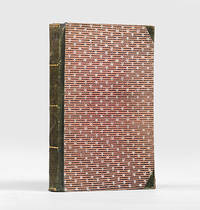
1900rif. 120811London: Religious Tract Society c.1900. 1st ed. thus. Nice copy. large octavo. pictorial boards 360pp. col. frontis. illusts. Essentially a bound volume of 24 copies of Penny Tales for the People. Nice coloured engraved frontispiece & many nice illusts. in text Religious Tract Society hardcover
2007rif. SONG0199287015OXFORD UNIVERSITY PRESS 2007-07-12. 1. hardcover. Used: Good. 8.51x5.52x0.76. Buy with confidence. Excellent Customer Service & Return policy. OXFORD UNIVERSITY PRESS hardcover

rif. 6918262Johns Hopkins University Press . Papeback. New. pp. 864 Johns Hopkins University Press unknown
2001rif. SONG0761909125Sage Publications 2001-11-06. 1. paperback. Used: Good. 6.00x0.59x9.00. Buy with confidence. Excellent Customer Service & Return policy. Sage Publications paperback
1994rif. SONG0801846382The Johns Hopkins University Press 1994-03-01. Revised. hardcover. Used: Good. 7.25x1.75x10.25. Buy with confidence. Excellent Customer Service & Return policy. The Johns Hopkins University Press hardcover
1999rif. SONG0801862531Johns Hopkins University Press 1999-11-19. 2nd. paperback. Used: Good. 6.88x1.47x10.00. Buy with confidence. Excellent Customer Service & Return policy. Johns Hopkins University Press paperback
1817rif. 43772Foligno: Feliciano Campitelli 1817. Submarine warfare before Fulton First edition to include the section on underwater navigation illustrated with a wonderful etching of a submarine propelled by oars including a cut-away view. Count Gaetano Marchetti Tomassi 1774-1857 a nobleman born in Foligno near Perugia was an amateur scientist. He devised one of several methods of squaring the circle which constitutes the first part of the first treatise of the present book the second part containing a discussion on conical sections. The most interesting part however is the second treatise where the author proposes a new model of submarine moved by the tides and able to submerge and resurface with the use of a mechanism similar to the swimbladder of fish. Marchetti Tomassi claims to have first described this boat in a publication issued in Ancona in 1800 though in a very imperfect form. Apparently a boat built to those specifications was given a trial at Rouen under the eye of Napoleon. Thus Marchetti Tomassi anticipated Fulton at least in the concept of a submarine though he does not appear to have heard of him. Marchetti proposes military applications for his submarine though he has no conception of a torpedo and only mentions the use of classical artillery kept dry in his submarine. Quarto 204 x 144 mm. 6 etched plates. Contemporary bottle green half roan patterned paper boards crudely marbled edges. A little light toning some worming at the spine with trails penetrating through the text-block largely marginal but minor loss to text and plates rear hinge cracked but holding remains very good. Cat. Weil 6 275: "very uncommon seems to be very rare". hardcover
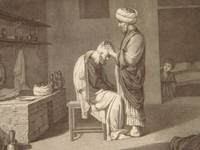
1809rif. 26339Paris: Imprimerie Impériale 1809. Fine. Imprimerie Impériale Paris 1809-1829 71 x 53.50 cm une feuille Original etching in plano untrimmed extracted from the so-called ""Imperial"" edition of the Description de l'Égypte ou Recueil des observations et recherches faites en Égypte pendant l'expédition française publié par les ordres de Sa Majesté l'Empereur Napoléon le Grand. Created between February 1802 and 1829 by order of Napoleon Bonaparte and published from 1809 actually 1810 it was printed in 1000 copies on watermarked laid paper ""Égypte ancienne et moderne"" and offered to institutions. Light and marginal foxing not affecting the engraving otherwise very fine condition and preservation. Volume ETAT MODERNE II: The genius of the Institute's scholars is particularly revealed through the plates of the section called Egypte Moderne. Architecture industry social structures health conditions water management music and craftsmanship are presented with exceptional precision and graphic quality. The spirit of Diderot and d'Alembert's L'Encyclopédie remains underlying in the approach of the Description de L'Egypte draftsmen who accompany the text volumes with numerous detailed plates endeavoring to create a portrait of the populations imbued with beauty and respect. Wealthy pashas or simple potter artisans are represented with sensitivity going about their occupations amid aesthetic compositions without falling into idealism or caricature. LA DESCRIPTION DE L'EGYPTE IMPERIAL edition 1809-1829: La Description de l'Egypte is one of the masterpieces of French publishing and the starting point of a new science: Egyptology. A titanic exposition of Egypt during Bonaparte's conquests between 1798 and 1799 it is divided into 23 volumes including 13 volumes of engravings gathering nearly 1000 plates in black and 72 in color. The 6 volumes of plates entitled Antiquités are devoted to the splendors of Pharaonic Egypt. L'Histoire naturelle is divided into 3 volumes of engravings. One volume is devoted to Cartes géographiques et topographiques while the 3 volumes : Etat Moderne present a striking portrait of Coptic and Islamic Egypt as it was seen by Bonaparte's armies of the Orient. The ""Egyptian campaign"" a military disaster reveals through the engravings of the Description de l'Egypte the scientific success it became thanks to the approximately 167 scholars members of the Commission of Sciences and Arts of the Institute of Egypt who followed Napoleon's army. The Institute brought together in Egypt the mathematician Monge the chemist Berthollet the naturalist Geoffroy Saint-Hilaire as well as numerous artists engineers architects doctors. They were charged with rediscovering modern and ancient Egypt showing its natural riches and the expertise of its inhabitants. The first edition called ""Imperial"" of the Description de l'Egypte was produced in four large formats two of them specially created for it and named ""Moyen-Egypte"" and ""Grand-Egypte"" formats. A specific press was built for its printing which stretched over twenty years between 1809 and 1829. The Imperial edition proved so popular that a second edition in 37 volumes entirely in black and without the ""Egypte ancienne et moderne"" watermark called the ""Panckoucke"" edition was published from 1821 by the C.-L.-F. Panckoucke printing house Paris. The realization of this monument of erudition owes much to Baron Dominique Vivant Denon illustrator diplomat collector and later director of the Napoleon Museum at the Louvre who accompanied Napoleon to Egypt with many other scholars but decided alone to venture into the South of the country while the other invited scientists remained confined to the Cairo region. The fabulous sketches brought back by Denon from his romantic ride gave Bonaparte the idea to send the other members of the Institute there and thus create a faithful and complete portrait of the territory. Following Denon it was therefore the greatest French scientis Imprimerie Impériale unknown
1809rif. 26345Paris: Imprimerie Impériale 1809. Fine. Imprimerie Impériale Paris 1809-1829 53.50 x 71 cm une feuille Original etching in plano untrimmed extracted from the so-called ""Imperial"" edition of the Description de l'Égypte ou Recueil des observations et recherches faites en Égypte pendant l'expédition française publié par les ordres de Sa Majesté l'Empereur Napoléon le Grand. Produced between February 1802 and 1829 by order of Napoleon Bonaparte and published from 1809 actually 1810 it was printed in 1000 copies on watermarked laid paper ""Égypte ancienne et moderne"" and offered to institutions. Light and marginal foxing not affecting the engraving a small repaired tear in the upper margin 1 cm otherwise excellent state of freshness and preservation. Volume ETAT MODERNE II: The genius of the Institute's scholars is particularly revealed through the plates of the section called Egypte Moderne. Architecture industry social structures health conditions water management music craftsmanship are presented with exceptional precision and graphic quality. The spirit of Diderot and d'Alembert's L'Encyclopédie remains underlying in the approach of the draughtsmen of the Description de L'Egypte who accompany the text volumes with numerous detailed plates striving to create a portrait of the populations imbued with beauty and respect. Wealthy pashas or simple potter craftsmen are represented with sensitivity going about their occupations amid aesthetic compositions without falling into idealism or caricature. LA DESCRIPTION DE L'EGYPTE IMPERIAL edition 1809-1829: La Description de l'Egypte is one of the masterpieces of French publishing and the starting point of a new science: Egyptology. A titanic exposition of Egypt at the time of Bonaparte's conquests between 1798 and 1799 it is divided into 23 volumes including 13 volumes of engravings gathering nearly 1000 plates in black and 72 in color. The 6 volumes of plates entitled Antiquités are devoted to the splendors of pharaonic Egypt. L'Histoire naturelle is distributed across 3 volumes of engravings. One volume is devoted to Cartes géographiques et topographiques while the 3 volumes : Etat Moderne present a striking portrait of Coptic and Islamic Egypt as it was seen by Bonaparte's Oriental armies. The ""Egyptian campaign"" a military disaster reveals through the engravings of the Description de l'Egypte the scientific success it became thanks to the approximately 167 scholars members of the Commission of Sciences and Arts of the Institute of Egypt who followed Napoleon's army. The Institute brought together in Egypt the mathematician Monge the chemist Berthollet the naturalist Geoffroy Saint-Hilaire as well as numerous artists engineers architects doctors. They were charged with rediscovering modern and ancient Egypt showing its natural riches and the know-how of its inhabitants. The first edition called ""Imperial"" of the Description de l'Egypte was produced in four large formats two of them specially created for it and named ""Moyen-Egypte"" and ""Grand-Egypte"" formats. A specific press was built for its printing which stretched over twenty years between 1809 and 1829. The Imperial edition proved so popular that a second edition in 37 volumes entirely in black and without the watermark ""Egypte ancienne et moderne"" called the ""Panckoucke"" edition was published from 1821 by the C.-L.-F. Panckoucke printing house Paris. The realization of this monument of erudition owes much to Baron Dominique Vivant Denon illustrator diplomat collector and subsequently director of the Napoleon Museum of the Louvre who accompanied Napoleon to Egypt with numerous other scholars but decided alone to venture into the South of the country while the other invited scientists remained confined to the Cairo region. The fabulous sketches brought back by Denon during his romantic ride gave Bonaparte the idea to send the other members of the Institute there and thus draw a faithful and complete portrai Imprimerie Impériale unknown
1809rif. 26343Paris: Imprimerie Impériale 1809. Fine. Imprimerie Impériale Paris 1809-1829 53.50 x 71 cm une feuille Original etching in plano untrimmed extracted from the so-called ""Imperial"" edition of the Description de l'Égypte ou Recueil des observations et recherches faites en Égypte pendant l'expédition française publié par les ordres de Sa Majesté l'Empereur Napoléon le Grand. Executed between February 1802 and 1829 by order of Napoleon Bonaparte and published from 1809 actually 1810 it was printed in 1000 copies on laid paper watermarked ""Égypte ancienne et moderne"" and presented to institutions. Slight and marginal foxing not affecting the engraving otherwise very fine condition and preservation. Volume ETAT MODERNE II: The genius of the Institute's scholars is particularly revealed through the plates of the section called Egypte Moderne. Architecture industry social structures sanitary conditions water systems music craftsmanship are presented with exceptional precision and graphic quality. The spirit of Diderot and d'Alembert's Encyclopédie remains underlying in the approach of the draughtsmen of the Description de L'Egypte who accompany the text volumes with numerous detailed plates endeavoring to create a portrait of the populations imbued with beauty and respect. Rich pashas or simple potter craftsmen are represented with sensitivity going about their occupations amid aesthetic compositions without falling into idealism or caricature. LA DESCRIPTION DE L'EGYPTE IMPERIAL edition 1809-1829: La Description de l'Egypte is one of the masterpieces of French publishing and the starting point of a new science: Egyptology. A titanic exposition of Egypt at the time of Bonaparte's conquests between 1798 and 1799 it is divided into 23 volumes including 13 volumes of engravings gathering nearly 1000 plates in black and 72 in color. The 6 volumes of plates entitled Antiquités are devoted to the splendors of pharaonic Egypt. L'Histoire naturelle is distributed across 3 volumes of engravings. One volume is devoted to Cartes géographiques et topographiques while the 3 volumes : Etat Moderne present a striking portrait of Coptic and Islamic Egypt as it was seen by Bonaparte's armies of the Orient. The ""Egyptian campaign"" a military disaster reveals through the engravings of the Description de l'Egypte the scientific success it became thanks to the some 167 scholars members of the Commission of Sciences and Arts of the Institute of Egypt who followed Napoleon's army. The Institute brought together in Egypt the mathematician Monge the chemist Berthollet the naturalist Geoffroy Saint-Hilaire as well as numerous artists engineers architects physicians. They were charged with rediscovering modern and ancient Egypt showing its natural riches and the know-how of its inhabitants. The first edition called ""Imperial"" of the Description de l'Egypte was produced in four large formats two of them specially created for it and named ""Moyen-Egypte"" and ""Grand-Egypte"" formats. A specific press was built for its printing which stretched over twenty years between 1809 and 1829. The Imperial edition proved so popular that a second edition in 37 volumes entirely in black and without the watermark ""Egypte ancienne et moderne"" called the ""Panckoucke"" edition was published from 1821 by the C.-L.-F. Panckoucke printing house Paris. The realization of this monument of erudition owes much to Baron Dominique Vivant Denon illustrator diplomat collector and subsequently director of the Napoleon museum at the Louvre who accompanied Napoleon to Egypt with numerous other scholars but decided alone to venture into the South of the country while the other invited scientists remained confined to the Cairo region. The fabulous sketches brought back by Denon during his romantic ride gave Bonaparte the idea to send the other members of the Institute there and thus draw a faithful and complete portrait of the territory. Following Denon it was therefore the g Imprimerie Impériale unknown
1809rif. 26389Paris: Imprimerie Impériale 1809. Fine. Imprimerie Impériale Paris 1809-1829 53.50 x 71 cm une feuille Original etching in plano format untrimmed extracted from the so-called ""Imperial"" edition of the Description de l'Égypte ou Recueil des observations et recherches faites en Égypte pendant l'expédition française publié par les ordres de Sa Majesté l'Empereur Napoléon le Grand. Produced between February 1802 and 1829 by order of Napoleon Bonaparte and published from 1809 actually 1810 it was printed in 1000 copies on laid paper watermarked ""Égypte ancienne et moderne"" and presented to institutions. Light marginal foxing not affecting the engraving otherwise very fine state of freshness and preservation. Volume ETAT MODERNE II: The genius of the Institute's scholars is particularly revealed through the plates of the section called Egypte Moderne. Architecture industry social structures sanitary conditions water management music craftsmanship are presented with exceptional precision and graphic quality. The spirit of Diderot and d'Alembert's L'Encyclopédie remains underlying in the approach of the draftsmen of the Description de L'Egypte who accompany the text volumes with numerous detailed plates endeavoring to create a portrait of the populations imbued with beauty and respect. Wealthy pachas or simple potter artisans are represented with sensitivity going about their occupations amid aesthetic compositions without falling into idealism or caricature. LA DESCRIPTION DE L'EGYPTE IMPERIAL edition 1809-1829: La Description de l'Egypte is one of the masterpieces of French publishing and the starting point of a new science: Egyptology. A titanic exposition of Egypt at the time of Bonaparte's conquests between 1798 and 1799 it is divided into 23 volumes including 13 volumes of engravings gathering nearly 1000 plates in black and 72 in color. The 6 volumes of plates entitled Antiquités are devoted to the splendors of pharaonic Egypt. L'Histoire naturelle is distributed across 3 volumes of engravings. One volume is devoted to Cartes géographiques et topographiques while the 3 volumes : Etat Moderne present a striking portrait of Coptic and Islamic Egypt as it was seen by Bonaparte's armies of the Orient. The ""Egyptian campaign"" a military disaster reveals through the engravings of the Description de l'Egypte the scientific success it became thanks to the some 167 scholars members of the Commission of Sciences and Arts of the Institute of Egypt who followed Napoleon's army. The Institute brought together in Egypt the mathematician Monge the chemist Berthollet the naturalist Geoffroy Saint-Hilaire as well as numerous artists engineers architects physicians. They were charged with rediscovering modern and ancient Egypt showing its natural riches and the know-how of its inhabitants. The first edition called ""Imperial"" of the Description de l'Egypte was produced in four large formats two of them specially created for it and named ""Moyen-Egypte"" and ""Grand-Egypte"" formats. A specific press was built for its printing which stretched over twenty years between 1809 and 1829. The Imperial edition proved so popular that a second edition in 37 volumes entirely in black and without the ""Egypte ancienne et moderne"" watermark called the ""Panckoucke"" edition was published from 1821 by the C.-L.-F. Panckoucke printing house Paris. The realization of this monument of erudition owes much to Baron Dominique Vivant Denon illustrator diplomat collector and later director of the Napoleon Museum of the Louvre who accompanied Napoleon to Egypt with many other scholars but decided alone to venture into the South of the country while the other invited scientists remained confined to the Cairo region. The fabulous sketches brought back by Denon during his romantic ride gave Bonaparte the idea to send the other members of the Institute there and thus create a faithful and complete portrait of the territory. Following Denon it was therefor Imprimerie Impériale unknown
1809rif. 26348Paris: Imprimerie Impériale 1809. Fine. Imprimerie Impériale Paris 1809-1829 53.50 x 71 cm une feuille Original etching in plano format untrimmed extracted from the so-called ""Imperial"" edition of the Description de l'Égypte ou Recueil des observations et recherches faites en Égypte pendant l'expédition française publié par les ordres de Sa Majesté l'Empereur Napoléon le Grand. Produced between February 1802 and 1829 by order of Napoleon Bonaparte and published from 1809 actually 1810 it was printed in 1000 copies on laid paper watermarked ""Égypte ancienne et moderne"" and presented to institutions. Light and marginal foxing not affecting the engraving otherwise very fine state of freshness and preservation. VOLUME ETAT MODERNE II: The genius of the scholars of the Institute is particularly revealed through the plates of the section called Egypte Moderne. Architecture industry social structures health conditions water management music craftsmanship are presented with exceptional precision and graphic quality. The spirit of L'Encyclopédie by Diderot and d'Alembert remains underlying in the approach of the draftsmen of the Description de L'Egypte who accompany the text volumes with numerous detailed plates endeavoring to create a portrait of the populations imbued with beauty and respect. Rich pashas or simple potter craftsmen are represented with sensitivity going about their occupations in the midst of aesthetic compositions without falling into idealism or caricature. LA DESCRIPTION DE L'EGYPTE IMPERIAL edition 1809-1829: La Description de l'Egypte is one of the masterpieces of French publishing and the starting point of a new science: Egyptology. A titanic exposition of Egypt at the time of Bonaparte's conquests between 1798 and 1799 it is divided into 23 volumes including 13 volumes of engravings gathering nearly 1000 black plates and 72 in color. The 6 volumes of plates entitled Antiquités are devoted to the splendors of pharaonic Egypt. L'Histoire naturelle is divided into 3 volumes of engravings. One volume is devoted to Cartes géographiques et topographiques while the 3 volumes : Etat Moderne present a striking portrait of Coptic and Islamic Egypt as it was seen by Bonaparte's Army of the Orient. The ""Egyptian campaign"" a military disaster reveals through the engravings of the Description de l'Egypte the scientific success it became thanks to the some 167 scholars members of the Commission of Sciences and Arts of the Institute of Egypt who followed Napoleon's army. The Institute brought together in Egypt the mathematician Monge the chemist Berthollet the naturalist Geoffroy Saint-Hilaire as well as numerous artists engineers architects doctors. They were charged with rediscovering modern and ancient Egypt showing its natural riches and the know-how of its inhabitants. The first edition called ""Imperial"" of the Description de l'Egypte was produced in four large formats two of them specially created for it and named ""Moyen-Egypte"" and ""Grand-Egypte"" formats. A specific press was built for its printing which extended over twenty years between 1809 and 1829. The Imperial edition proved so popular that a second edition in 37 volumes entirely in black and without the watermark ""Égypte ancienne et moderne"" called the ""Panckoucke"" edition was published from 1821 by the C.-L.-F. Panckoucke printing house Paris. The realization of this monument of erudition owes much to Baron Dominique Vivant Denon illustrator diplomat collector and subsequently director of the Napoleon Museum at the Louvre who accompanied Napoleon to Egypt with numerous other scholars but decided alone to venture into the South of the country while the other invited scientists remained confined to the Cairo region. The fabulous sketches brought back by Denon from his romantic ride gave Bonaparte the idea to send the other members of the Institute there and thus create a faithful and complete portrait of the territory. Following Denon it Imprimerie Impériale unknown
1809rif. 26326Paris: Imprimerie Impériale 1809. Fine. Imprimerie Impériale Paris 1809-1829 71 x 53.50 cm une feuille Original etching in plano untrimmed extracted from the so-called ""Imperial"" edition of the Description de l'Égypte ou Recueil des observations et recherches faites en Égypte pendant l'expédition française publié par les ordres de Sa Majesté l'Empereur Napoléon le Grand. Executed between February 1802 and 1829 by order of Napoleon Bonaparte and published from 1809 actually 1810 it was printed in 1000 copies on watermarked laid paper ""Égypte ancienne et moderne"" and presented to institutions. Slight marginal foxing not affecting the engraving otherwise very fine condition and preservation. Volume ETAT MODERNE II: The genius of the Institute's scholars is particularly revealed through the plates of the section called Egypte Moderne. Architecture industry social structures health conditions water management music and craftsmanship are presented with exceptional precision and graphic quality. The spirit of Diderot and d'Alembert's Encyclopédie remains underlying in the approach of the Description de L'Egypte draftsmen who accompany the text volumes with numerous detailed plates endeavoring to create a portrait of the populations imbued with beauty and respect. Wealthy pashas or simple pottery craftsmen are represented with sensitivity going about their occupations amid aesthetic compositions without falling into idealism or caricature. LA DESCRIPTION DE L'EGYPTE IMPERIAL edition 1809-1829: La Description de l'Egypte is one of the masterpieces of French publishing and the starting point of a new science: Egyptology. A titanic exposition of Egypt at the time of Bonaparte's conquests between 1798 and 1799 it is divided into 23 volumes including 13 volumes of engravings gathering nearly 1000 plates in black and 72 in color. The 6 volumes of plates entitled Antiquités are devoted to the splendors of pharaonic Egypt. L'Histoire naturelle is divided into 3 volumes of engravings. One volume is devoted to Cartes géographiques et topographiques while the 3 volumes : Etat Moderne present a striking portrait of Coptic and Islamic Egypt as it was seen by Bonaparte's Eastern armies. The ""Egyptian campaign"" a military disaster reveals through the engravings of the Description de l'Egypte the scientific success it became thanks to the 167 scholars who were members of the Commission of Sciences and Arts of the Institute of Egypt who followed Napoleon's army. The Institute brought together in Egypt the mathematician Monge the chemist Berthollet the naturalist Geoffroy Saint-Hilaire as well as numerous artists engineers architects doctors. They were charged with rediscovering modern and ancient Egypt showing its natural riches and the expertise of its inhabitants. The first edition called ""Imperial"" of the Description de l'Egypte was produced in four large formats two of them specially created for it and named ""Moyen-Egypte"" and ""Grand-Egypte"" formats. A specific press was built for its printing which stretched over twenty years between 1809 and 1829. The Imperial edition proved so popular that a second edition in 37 volumes entirely in black and without the ""Egypte ancienne et moderne"" watermark called the ""Panckoucke"" edition was published from 1821 by the C.-L.-F. Panckoucke printing house Paris. The realization of this monument of erudition owes much to Baron Dominique Vivant Denon illustrator diplomat collector and later director of the Napoleon Museum at the Louvre who accompanied Napoleon to Egypt with many other scholars but decided alone to venture into the South of the country while the other invited scientists remained confined to the Cairo region. The fabulous sketches brought back by Denon during his romantic ride gave Bonaparte the idea to send the other members of the Institute there and thus create a faithful and complete portrait of the territory. Following Denon the greatest French scientists and artists ve Imprimerie Impériale unknown
1809rif. 26294Paris: Imprimerie Impériale 1809. Fine. Imprimerie Impériale Paris 1809-1829 71 x 53.50 cm une feuille Original unshaved full-page etching from the Imperial edition of the Description de l'Égypte or Recueil des observations et recherches faites en Égypte pendant l'expédition française publié par les ordres de Sa Majesté l'Empereur Napoléon le Grand A Collection of the observations and research carried out in Egypt during the French expedition published on the orders of his Majesty the Emperor Napoleon the Great'.Produced between February 1802 and 1830 on the orders of Naopleon Bonaparte and published between 1809 and 1828 1000 copies were printed and distributed to institutions on vergé paper with an 'Égypte ancienne et moderne' watermark visible when held up to the light. Light marginal spotting not touching image otherwise in very fresh fine condition. An engraving from the Description de l'Egypte one of the masterpieces of French printing and the birth of a new field: Egyptology. A gigantic survey of Egypt at the time of Bonaparte's conquests in 1798 and 1799 the work is divided into 13 volumes of engravings making up 892 plates of which 72 colored as well as presenting the splendors of the Egypt of the Pharaohs in 9 volumes. The other volumes discuss natural history and present a fascinating portrait of Coptic and Islamic Egypt as it was seen by Bonaparte's Eastern Armies. The Egyptian campaign' militarily a disaster demonstrates through the engravings of the Description d'Egypte the scientific success it nonetheless became thanks to the 167 expert members of the Commission of the Sciences and Arts of the Institut d'Egypte Egyptian Institute who followed Napoleon's army. The Institut gathered together in Egypt the mathematician Monge the chemist Berthollet the naturalist Geoffroy Saint-Hilaire as well as numerous artists engineers architects and doctors. They were tasked with re-discovering modern and ancient Egypt and displaying its natural treasures as well as the know-how of its inhabitants.This edition the so-called Imperial edition of the plates for the Description de l'Egypte was printed in four large formats two of which were specially created for it and christened Moyen-Egypte and Grand-Egypte. A special press was built to print it the process extending over 20 years from 1809 to 1829. The Imperial edition proved so popular that a second edition this time in black and white and without the Egypte ancienne et moderne watermark known as the Royal Edition was published during the Restoration by the printing house of C.-L.-F. Panckoucke Paris.The engravings of the Description d'Egypte owe a great deal to Baron Dominique-Vivant Denon illustrator diplomat collector and later Director of the Musée Napoléon the Louvre. His exploration of the South of Egypt gave Bonaparte the idea of sending the experts of the Institut there thus creating a faithful and complete portrait of the area. This was the research gathered together from 1802 in the mammoth Description de L'Egypte.Denon embarked on this story of archeological exploration at the age of 51 reaching first Alexandria and then Cairo before exploring Upper Egypt. Along with the members of the Institut d'Egypte the Natural History Museum's painter H.J. Redouté brother of Pierre-Joseph Redouté author of Roses the mineralogist Dolomiue and the draughtsman Joly Denon then explored the Nile Delta and Lower Egypt. When however he joined the 21st Light Infantry Regiment as it marched across Upper Egypt in pursuit of the retreating Mameluks in November 1798 he found himself the only civilian. In the very midst of the battle itself he reeled off sketches of the works of art that peppered his path right up to the threshold of the Sudan. He said that he had crossed a country that is apart from its name entirely unknown to Europeans and therefore everything was worth describing Voyages dans la Basse et la Haute Egypte pendant les campagnes Imprimerie Impériale unknown
1809rif. 26344Paris: Imprimerie Impériale 1809. Fine. Imprimerie Impériale Paris 1809-1829 53.50 x 71 cm une feuille Original etching in plano untrimmed extracted from the so-called ""Imperial"" edition of the Description de l'Égypte ou Recueil des observations et recherches faites en Égypte pendant l'expédition française publié par les ordres de Sa Majesté l'Empereur Napoléon le Grand. Produced between February 1802 and 1829 by order of Napoleon Bonaparte and published from 1809 actually 1810 it was printed in 1000 copies on watermarked laid paper ""Égypte ancienne et moderne"" and offered to institutions. Light and marginal foxing not affecting the engraving otherwise very fine state of freshness and preservation. Volume ETAT MODERNE II: The genius of the Institute's scholars is particularly revealed through the plates of the section called Egypte Moderne. Architecture industry social structures health conditions water management music craftsmanship are presented with exceptional precision and graphic quality. The spirit of Diderot and d'Alembert's L'Encyclopédie remains underlying in the approach of the draughtsmen of the Description de L'Egypte who accompany the text volumes with numerous detailed plates striving to create a portrait of the populations imbued with beauty and respect. Wealthy pashas or simple potter craftsmen are represented with sensitivity going about their occupations amid aesthetic compositions without falling into idealism or caricature. LA DESCRIPTION DE L'EGYPTE IMPERIAL edition 1809-1829: La Description de l'Egypte is one of the masterpieces of French publishing and the starting point of a new science: Egyptology. A titanic exposition of Egypt at the time of Bonaparte's conquests between 1798 and 1799 it is divided into 23 volumes including 13 volumes of engravings gathering nearly 1000 plates in black and 72 in color. The 6 volumes of plates entitled Antiquités are devoted to the splendors of pharaonic Egypt. L'Histoire naturelle is distributed across 3 volumes of engravings. One volume is devoted to Cartes géographiques et topographiques while the 3 volumes : Etat Moderne present a striking portrait of Coptic and Islamic Egypt as it was seen by Bonaparte's Oriental armies. The ""Egyptian campaign"" a military disaster reveals through the engravings of the Description de l'Egypte the scientific success it became thanks to the approximately 167 scholars members of the Commission of Sciences and Arts of the Institute of Egypt who followed Napoleon's army. The Institute brought together in Egypt the mathematician Monge the chemist Berthollet the naturalist Geoffroy Saint-Hilaire as well as numerous artists engineers architects doctors. They were charged with rediscovering modern and ancient Egypt showing its natural riches and the know-how of its inhabitants. The first edition called ""Imperial"" of the Description de l'Egypte was produced in four large formats two of them specially created for it and named ""Moyen-Egypte"" and ""Grand-Egypte"" formats. A specific press was built for its printing which stretched over twenty years between 1809 and 1829. The Imperial edition proved so popular that a second edition in 37 volumes entirely in black and without the watermark ""Egypte ancienne et moderne"" called the ""Panckoucke"" edition was published from 1821 by the C.-L.-F. Panckoucke printing house Paris. The realization of this monument of erudition owes much to Baron Dominique Vivant Denon illustrator diplomat collector and subsequently director of the Napoleon Museum of the Louvre who accompanied Napoleon to Egypt with numerous other scholars but decided alone to venture into the South of the country while the other invited scientists remained confined to the Cairo region. The fabulous sketches brought back by Denon during his romantic ride gave Bonaparte the idea to send the other members of the Institute there and thus draw a faithful and complete portrait of the territory. Following Denon it was there Imprimerie Impériale unknown
1809rif. 26376Paris: Imprimerie Impériale 1809. Fine. Imprimerie Impériale Paris 1809-1829 71 x 53.50 cm une feuille Original unshaved full-page etching from the Imperial edition of the Description de l'Égypte or Recueil des observations et recherches faites en Égypte pendant l'expédition française publié par les ordres de Sa Majesté l'Empereur Napoléon le Grand A Collection of the observations and research carried out in Egypt during the French expedition published on the orders of his Majesty the Emperor Napoleon the Great'.Produced between February 1802 and 1830 on the orders of Naopleon Bonaparte and published between 1809 and 1828 1000 copies were printed and distributed to institutions on vergé paper with an 'Égypte ancienne et moderne' watermark visible when held up to the light. Light marginal spotting not touching image otherwise in very fresh fine condition. An engraving from the Description de l'Egypte one of the masterpieces of French printing and the birth of a new field: Egyptology. A gigantic survey of Egypt at the time of Bonaparte's conquests in 1798 and 1799 the work is divided into 13 volumes of engravings making up 892 plates of which 72 colored as well as presenting the splendors of the Egypt of the Pharaohs in 9 volumes. The other volumes discuss natural history and present a fascinating portrait of Coptic and Islamic Egypt as it was seen by Bonaparte's Eastern Armies. The Egyptian campaign' militarily a disaster demonstrates through the engravings of the Description d'Egypte the scientific success it nonetheless became thanks to the 167 expert members of the Commission of the Sciences and Arts of the Institut d'Egypte Egyptian Institute who followed Napoleon's army. The Institut gathered together in Egypt the mathematician Monge the chemist Berthollet the naturalist Geoffroy Saint-Hilaire as well as numerous artists engineers architects and doctors. They were tasked with re-discovering modern and ancient Egypt and displaying its natural treasures as well as the know-how of its inhabitants.This edition the so-called Imperial edition of the plates for the Description de l'Egypte was printed in four large formats two of which were specially created for it and christened Moyen-Egypte and Grand-Egypte. A special press was built to print it the process extending over 20 years from 1809 to 1829. The Imperial edition proved so popular that a second edition this time in black and white and without the Egypte ancienne et moderne watermark known as the Royal Edition was published during the Restoration by the printing house of C.-L.-F. Panckoucke Paris.The engravings of the Description d'Egypte owe a great deal to Baron Dominique-Vivant Denon illustrator diplomat collector and later Director of the Musée Napoléon the Louvre. His exploration of the South of Egypt gave Bonaparte the idea of sending the experts of the Institut there thus creating a faithful and complete portrait of the area. This was the research gathered together from 1802 in the mammoth Description de L'Egypte.Denon embarked on this story of archeological exploration at the age of 51 reaching first Alexandria and then Cairo before exploring Upper Egypt. Along with the members of the Institut d'Egypte the Natural History Museum's painter H.J. Redouté brother of Pierre-Joseph Redouté author of Roses the mineralogist Dolomiue and the draughtsman Joly Denon then explored the Nile Delta and Lower Egypt. When however he joined the 21st Light Infantry Regiment as it marched across Upper Egypt in pursuit of the retreating Mameluks in November 1798 he found himself the only civilian. In the very midst of the battle itself he reeled off sketches of the works of art that peppered his path right up to the threshold of the Sudan. He said that he had crossed a country that is apart from its name entirely unknown to Europeans and therefore everything was worth describing Voyages dans la Basse et la Haute Egypte pendant les campagnes Imprimerie Impériale unknown
1809rif. 26394Paris: Imprimerie Impériale 1809. Fine. Imprimerie Impériale Paris 1809-1829 53.50 x 71 cm une feuille Original etching in plano uncut from the so-called ""Imperial"" edition of the Description de l'Égypte ou Recueil des observations et recherches faites en Égypte pendant l'expédition française publié par les ordres de Sa Majesté l'Empereur Napoléon le Grand. Executed between February 1802 and 1829 by order of Napoleon Bonaparte and published from 1809 actually 1810 it was printed in 1000 copies on watermarked laid paper ""Égypte ancienne et moderne"" and offered to institutions. Slight marginal foxing not affecting the engraving otherwise in very fine fresh condition and well preserved. Volume ETAT MODERNE II: The genius of the Institute's scholars is particularly revealed through the plates of the section called Egypte Moderne. Architecture industry social structures health conditions water systems music crafts are presented with exceptional precision and graphic quality. The spirit of Diderot and d'Alembert's L'Encyclopédie remains underlying in the approach of the draughtsmen of the Description de L'Egypte who accompany the text volumes with numerous detailed plates endeavoring to create a portrait of the populations imbued with beauty and respect. Wealthy pashas or simple pottery artisans are represented with sensitivity going about their occupations amid aesthetic compositions without falling into idealism or caricature. LA DESCRIPTION DE L'EGYPTE IMPERIAL edition 1809-1829: La Description de l'Egypte is one of the masterpieces of French publishing and the starting point of a new science: Egyptology. A titanic exposition of Egypt at the time of Bonaparte's conquests between 1798 and 1799 it is divided into 23 volumes including 13 volumes of engravings gathering nearly 1000 plates in black and 72 in color. The 6 volumes of plates entitled Antiquités are devoted to the splendors of pharaonic Egypt. L'Histoire naturelle is divided into 3 volumes of engravings. One volume is devoted to Cartes géographiques et topographiques while the 3 volumes : Etat Moderne present a striking portrait of Coptic and Islamic Egypt as it was seen by Bonaparte's armies of the East. The ""Egyptian campaign"" a military disaster reveals through the engravings of the Description de l'Egypte the scientific success it became thanks to the some 167 scholars members of the Commission of Sciences and Arts of the Institute of Egypt who followed Napoleon's army. The Institute brought together in Egypt the mathematician Monge the chemist Berthollet the naturalist Geoffroy Saint-Hilaire as well as numerous artists engineers architects physicians. They were charged with rediscovering modern and ancient Egypt showing its natural riches and the know-how of its inhabitants. The first edition called ""Imperial"" of the Description de l'Egypte was produced in four large formats two of them specially created for it and named ""Moyen-Egypte"" and ""Grand-Egypte"" formats. A specific press was built for its printing which spread over twenty years between 1809 and 1829. The Imperial edition proved so popular that a second edition in 37 volumes entirely in black and without the ""Egypte ancienne et moderne"" watermark called the ""Panckoucke"" edition was published from 1821 by the C.-L.-F. Panckoucke printing house Paris. The realization of this monument of erudition owes much to Baron Dominique Vivant Denon illustrator diplomat collector and later director of the Napoleon Museum of the Louvre who accompanied Napoleon to Egypt with numerous other scholars but decided alone to venture into the South of the country while the other invited scientists remained confined to the Cairo region. The fabulous sketches brought back by Denon from his romantic ride gave Bonaparte the idea to send the other members of the Institute there and thus create a faithful and complete portrait of the territory. Following Denon it was therefore the greatest French scientists and Imprimerie Impériale unknown
1809rif. 26388Paris: Imprimerie Impériale 1809. Fine. Imprimerie Impériale Paris 1809-1829 71 x 53.50 cm une feuille Original etching in plano untrimmed extracted from the so-called ""Imperial"" edition of the Description de l'Égypte ou Recueil des observations et recherches faites en Égypte pendant l'expédition française publié par les ordres de Sa Majesté l'Empereur Napoléon le Grand. Executed between February 1802 and 1829 by order of Napoleon Bonaparte and published from 1809 actually 1810 it was printed in 1000 copies on watermarked laid paper ""Égypte ancienne et moderne"" and offered to institutions. Light and marginal foxing not affecting the engraving otherwise in very fine fresh condition and preservation. Volume MODERN STATE II: The genius of the scholars of the Institute is particularly revealed through the plates of the section called Modern Egypt. Architecture industry social structures health conditions water systems music crafts are displayed with exceptional precision and graphic quality. The spirit of Diderot and d'Alembert's Encyclopédie remains underlying in the approach of the draftsmen of the Description de L'Egypte who accompany the text volumes with numerous detailed plates endeavoring to create a portrait of the populations imbued with beauty and respect. Wealthy pachas or simple potter craftsmen are represented with sensitivity going about their occupations amid aesthetic compositions without falling into idealism or caricature. THE DESCRIPTION DE L'EGYPTE IMPERIAL edition 1809-1829: La Description de l'Egypte is one of the masterpieces of French publishing and the starting point of a new science: Egyptology. A titanic exposition of Egypt at the time of Bonaparte's conquests between 1798 and 1799 it is divided into 23 volumes including 13 volumes of engravings gathering nearly 1000 plates in black and 72 in color. The 6 volumes of plates titled Antiquités are devoted to the splendors of Pharaonic Egypt. Natural History is divided into 3 volumes of engravings. One volume is devoted to Geographic and topographic maps while the 3 volumes : Modern State present a striking portrait of Coptic and Islamic Egypt as it was seen by Bonaparte's Army of the Orient. The ""Egyptian campaign"" a military disaster reveals through the engravings of the Description de l'Egypte the scientific success it became thanks to the some 167 scholars members of the Commission of Sciences and Arts of the Institute of Egypt who followed Napoleon's army. The Institute brought together in Egypt the mathematician Monge the chemist Berthollet the naturalist Geoffroy Saint-Hilaire as well as numerous artists engineers architects physicians. They were charged with rediscovering modern and ancient Egypt showing its natural riches and the know-how of its inhabitants. The first edition called ""Imperial"" of the Description de l'Egypte was executed in four large formats two of them specially created for it and named ""Middle-Egypt"" and ""Grand-Egypt"" formats. A specific press was built for its printing which extended over twenty years between 1809 and 1829. The Imperial edition proved so popular that a second edition in 37 volumes entirely in black and without the ""Ancient and modern Egypt"" watermark called the ""Panckoucke"" edition was published from 1821 by the C.-L.-F. Panckoucke printing house Paris. The realization of this monument of erudition owes much to Baron Dominique Vivant Denon illustrator diplomat collector and subsequently director of the Napoléon Museum at the Louvre who accompanied Napoleon to Egypt with numerous other scholars but decided alone to venture into the South of the country while the other invited scientists remained confined to the Cairo region. The fabulous sketches brought back by Denon from his romantic ride gave Bonaparte the idea to send the other members of the Institute there and thus create a faithful and complete portrait of the territory. Following Denon it was therefore the greatest French scientis Imprimerie Impériale unknown
1809rif. 26337Paris: Imprimerie Impériale 1809. Fine. Imprimerie Impériale Paris 1809-1829 71 x 53.50 cm une feuille Original etching in plano untrimmed extracted from the so-called ""Imperial"" edition of the Description de l'Égypte ou Recueil des observations et recherches faites en Égypte pendant l'expédition française publié par les ordres de Sa Majesté l'Empereur Napoléon le Grand. Created between February 1802 and 1829 by order of Napoleon Bonaparte and published from 1809 actually 1810 it was printed in 1000 copies on watermarked laid paper ""Égypte ancienne et moderne"" and offered to institutions. Light and marginal foxing not affecting the engraving otherwise very fine condition and preservation. Volume ETAT MODERNE II: The genius of the Institute's scholars is particularly revealed through the plates of the section called Egypte Moderne. Architecture industry social structures health conditions water management music and craftsmanship are presented with exceptional precision and graphic quality. The spirit of Diderot and d'Alembert's L'Encyclopédie remains underlying in the approach of the Description de L'Egypte draftsmen who accompany the text volumes with numerous detailed plates endeavoring to create a portrait of the populations imbued with beauty and respect. Wealthy pashas or simple potter artisans are represented with sensitivity going about their occupations amid aesthetic compositions without falling into idealism or caricature. LA DESCRIPTION DE L'EGYPTE IMPERIAL edition 1809-1829: La Description de l'Egypte is one of the masterpieces of French publishing and the starting point of a new science: Egyptology. A titanic exposition of Egypt during Bonaparte's conquests between 1798 and 1799 it is divided into 23 volumes including 13 volumes of engravings gathering nearly 1000 plates in black and 72 in color. The 6 volumes of plates entitled Antiquités are devoted to the splendors of Pharaonic Egypt. L'Histoire naturelle is divided into 3 volumes of engravings. One volume is devoted to Cartes géographiques et topographiques while the 3 volumes : Etat Moderne present a striking portrait of Coptic and Islamic Egypt as it was seen by Bonaparte's armies of the Orient. The ""Egyptian campaign"" a military disaster reveals through the engravings of the Description de l'Egypte the scientific success it became thanks to the approximately 167 scholars members of the Commission of Sciences and Arts of the Institute of Egypt who followed Napoleon's army. The Institute brought together in Egypt the mathematician Monge the chemist Berthollet the naturalist Geoffroy Saint-Hilaire as well as numerous artists engineers architects doctors. They were charged with rediscovering modern and ancient Egypt showing its natural riches and the expertise of its inhabitants. The first edition called ""Imperial"" of the Description de l'Egypte was produced in four large formats two of them specially created for it and named ""Moyen-Egypte"" and ""Grand-Egypte"" formats. A specific press was built for its printing which stretched over twenty years between 1809 and 1829. The Imperial edition proved so popular that a second edition in 37 volumes entirely in black and without the ""Egypte ancienne et moderne"" watermark called the ""Panckoucke"" edition was published from 1821 by the C.-L.-F. Panckoucke printing house Paris. The realization of this monument of erudition owes much to Baron Dominique Vivant Denon illustrator diplomat collector and later director of the Napoleon Museum at the Louvre who accompanied Napoleon to Egypt with many other scholars but decided alone to venture into the South of the country while the other invited scientists remained confined to the Cairo region. The fabulous sketches brought back by Denon from his romantic ride gave Bonaparte the idea to send the other members of the Institute there and thus create a faithful and complete portrait of the territory. Following Denon it was therefore the greatest French scientis Imprimerie Impériale unknown
1809rif. 26330Paris: Imprimerie Impériale 1809. Fine. Imprimerie Impériale Paris 1809-1829 53.50 x 71 cm une feuille Original etching in plano untrimmed extracted from the so-called ""Imperial"" edition of the Description de l'Égypte ou Recueil des observations et recherches faites en Égypte pendant l'expédition française publié par les ordres de Sa Majesté l'Empereur Napoléon le Grand. Executed between February 1802 and 1829 by order of Napoleon Bonaparte and published from 1809 actually 1810 it was printed in 1000 copies on watermarked laid paper ""Égypte ancienne et moderne"" and offered to institutions. Light and marginal foxing not affecting the engraving otherwise very fine condition and preservation. Volume MODERN STATE II: The genius of the scholars of the Institute is particularly revealed through the plates of the section called Modern Egypt. Architecture industry social structures sanitary conditions water management music craftsmanship are presented with exceptional precision and graphic quality. The spirit of Diderot and d'Alembert's Encyclopedia remains underlying in the approach of the draughtsmen of the Description de L'Egypte who accompany the text volumes with numerous detailed plates endeavoring to draw a portrait of the populations imbued with beauty and respect. Wealthy pashas or simple potter craftsmen are represented with sensitivity going about their occupations in the midst of aesthetic compositions without falling into idealism or caricature. THE DESCRIPTION OF EGYPT IMPERIAL edition 1809-1829: The Description of Egypt is one of the masterpieces of French publishing and the starting point of a new science: Egyptology. Titanic exposition of Egypt at the time of Bonaparte's conquests between 1798 and 1799 it is divided into 23 volumes including 13 volumes of engravings gathering nearly 1000 plates in black and 72 in color. The 6 volumes of plates entitled Antiquities are devoted to the splendors of Pharaonic Egypt. Natural History is divided into 3 volumes of engravings. One volume is devoted to Geographical and topographical maps while the 3 volumes : Modern State draw a striking portrait of Coptic and Islamic Egypt as it was seen by Bonaparte's armies of the Orient. The ""Egyptian campaign"" military disaster reveals through the engravings of the Description of Egypt the scientific success it became thanks to the some 167 scholars members of the Commission of Sciences and Arts of the Institute of Egypt who followed Napoleon's army. The Institute brought together in Egypt the mathematician Monge the chemist Berthollet the naturalist Geoffroy Saint-Hilaire as well as numerous artists engineers architects physicians. They were charged with rediscovering modern and ancient Egypt showing its natural riches and the know-how of its inhabitants. The first edition called ""Imperial"" of the Description of Egypt was executed in four large formats two of them specially created for it and baptized ""Middle-Egypt"" and ""Grand-Egypt"" formats. A specific press was built for its printing which stretched over twenty years between 1809 and 1829. The Imperial edition proved so popular that a second edition in 37 volumes entirely in black and without the watermark ""ancient and modern Egypt"" called the ""Panckoucke"" edition was published from 1821 by the C.-L.-F. Panckoucke printing house Paris. The realization of this monument of erudition owes much to Baron Dominique Vivant Denon illustrator diplomat collector and subsequently director of the Napoleon Museum at the Louvre who accompanied Napoleon to Egypt with numerous other scholars but decided alone to venture into the South of the country while the other invited scientists remained confined in the Cairo region. The fabulous sketches brought back by Denon from his romantic cavalcade gave Bonaparte the idea to send the other members of the Institute there and thus draw a faithful and complete portrait of the territory. Following Denon it was therefore the greatest Fre Imprimerie Impériale unknown
1809rif. 26319Paris: Imprimerie Impériale 1809. Fine. Imprimerie Impériale Paris 1809-1829 71 x 53.50 cm une feuille Original etching in plano uncut extracted from the so-called ""Imperial"" edition of the Description de l'Égypte ou Recueil des observations et recherches faites en Égypte pendant l'expédition française publié par les ordres de Sa Majesté l'Empereur Napoléon le Grand. Executed between February 1802 and 1829 by order of Napoleon Bonaparte and published from 1809 actually 1810 it was printed in 1000 copies on watermarked laid paper ""Égypte ancienne et moderne"" and offered to institutions. Light and marginal foxing not affecting the engraving otherwise in very fine state of freshness and preservation. Volume ETAT MODERNE II: The genius of the Institute's scholars is particularly revealed through the plates of the section called Egypte Moderne. Architecture industry social structures sanitary conditions water management music craftsmanship are presented with exceptional precision and graphic quality. The spirit of Diderot and d'Alembert's L'Encyclopédie remains underlying in the approach of the draftsmen of the Description de L'Egypte who accompany the text volumes with numerous detailed plates endeavoring to create a portrait of the populations imbued with beauty and respect. Wealthy pashas or simple potter artisans are represented with sensitivity going about their occupations amid aesthetic compositions without falling into idealism or caricature. LA DESCRIPTION DE L'EGYPTE IMPERIAL edition 1809-1829: La Description de l'Egypte is one of the masterpieces of French publishing and the starting point of a new science: Egyptology. A titanic exposition of Egypt at the time of Bonaparte's conquests between 1798 and 1799 it is divided into 23 volumes including 13 volumes of engravings gathering nearly 1000 plates in black and 72 in color. The 6 volumes of plates titled Antiquités are devoted to the splendors of pharaonic Egypt. L'Histoire naturelle is distributed across 3 volumes of engravings. One volume is devoted to Cartes géographiques et topographiques while the 3 volumes : Etat Moderne present a striking portrait of Coptic and Islamic Egypt as it was seen by Bonaparte's armies of the Orient. The ""Egyptian campaign"" a military disaster reveals through the engravings of the Description de l'Egypte the scientific success it became thanks to the some 167 scholars members of the Commission of Sciences and Arts of the Institute of Egypt who followed Napoleon's army. The Institute brought together in Egypt the mathematician Monge the chemist Berthollet the naturalist Geoffroy Saint-Hilaire as well as numerous artists engineers architects physicians. They were charged with rediscovering modern and ancient Egypt showing its natural riches and the expertise of its inhabitants. The first edition called ""Imperial"" of the Description de l'Egypte was produced in four large formats two of them specially created for it and named ""Moyen-Egypte"" and ""Grand-Egypte"" formats. A specific press was built for its printing which extended over twenty years between 1809 and 1829. The Imperial edition proved so popular that a second edition in 37 volumes entirely in black and without the ""Egypte ancienne et moderne"" watermark called the ""Panckoucke"" edition was published from 1821 by the C.-L.-F. Panckoucke printing house Paris. The realization of this monument of erudition owes much to Baron Dominique Vivant Denon illustrator diplomat collector and later director of the Napoleon Museum of the Louvre who accompanied Napoleon to Egypt with numerous other scholars but decided alone to venture into the South of the country while the other invited scientists remained confined to the Cairo region. The fabulous sketches brought back by Denon during his romantic ride gave Bonaparte the idea to send the other members of the Institute there and thus create a faithful and complete portrait of the territory. Following Denon it was therefore t Imprimerie Impériale unknown
1809rif. 26321Paris: Imprimerie Impériale 1809. Fine. Imprimerie Impériale Paris 1809-1829 71 x 53.50 cm une feuille Original etching in plano uncut extracted from the so-called ""Imperial"" edition of the Description de l'Égypte ou Recueil des observations et recherches faites en Égypte pendant l'expédition française publié par les ordres de Sa Majesté l'Empereur Napoléon le Grand. Executed between February 1802 and 1829 on Napoleon Bonaparte's orders and published from 1809 actually 1810 it was printed in 1000 copies on watermarked laid paper ""Égypte ancienne et moderne"" and presented to institutions. Light marginal foxing not affecting the engraving otherwise very fine condition and preservation. ISLAMIC ARCHITECTURE OF CAIRO : The set of engravings to which this plate belongs constitutes one of the first reasoned studies of the monuments of Islamic Egypt in Cairo gathering plans sections and elevations of mosques mausoleums and fortifications from the 9th century Tulunid period to the Mamluk constructions contemporary with the arrival of Bonaparte's troops. Furthermore the architects and engineers of the Institute of Egypt realized a large series of plates devoted to dwellings and civil constructions whether of grand or more modest execution providing precious testimony on the life of Cairenes at the end of the 19th century. The few ancient vestiges remaining in the city were also immortalized by the scholars of the Institute who had established their quarters in the capital. Volume ETAT MODERNE II : The genius of the Institute's scholars is particularly revealed through the plates of the section called Egypte Moderne. Architecture industry social structures sanitary conditions water systems music craftsmanship are presented with exceptional precision and graphic quality. The spirit of Diderot and d'Alembert's Encyclopédie remains underlying in the approach of the draughtsmen of the Description de L'Egypte who accompany the text volumes with numerous detailed plates endeavoring to create a portrait of the populations imbued with beauty and respect. Wealthy pashas or simple potter craftsmen are represented with sensitivity going about their occupations in the midst of aesthetic compositions without falling into idealism or caricature. LA DESCRIPTION DE L'EGYPTE IMPERIAL edition 1809-1829 : La Description de l'Egypte is one of the masterpieces of French publishing and the starting point of a new science: Egyptology. A titanic exposition of Egypt at the time of Bonaparte's conquests between 1798 and 1799 it is divided into 23 volumes including 13 volumes of engravings gathering nearly 1000 plates in black and 72 in color. The 6 volumes of plates entitled Antiquités are devoted to the splendors of Pharaonic Egypt. L'Histoire naturelle is divided into 3 volumes of engravings. One volume is devoted to Cartes géographiques et topographiques while the 3 volumes : Etat Moderne present a striking portrait of Coptic and Islamic Egypt as it was seen by Bonaparte's Army of the Orient. The ""Egyptian campaign"" a military disaster reveals through the engravings of the Description de l'Egypte the scientific success it became thanks to the some 167 scholars members of the Commission of Sciences and Arts of the Institute of Egypt who followed Napoleon's army. The Institute brought together in Egypt the mathematician Monge the chemist Berthollet the naturalist Geoffroy Saint-Hilaire as well as numerous artists engineers architects doctors. They were charged with rediscovering modern and ancient Egypt showing its natural riches and the know-how of its inhabitants. The first edition called ""Imperial"" of the Description de l'Egypte was executed in four large formats two of them specially created for it and named ""Moyen-Egypte"" and ""Grand-Egypte"" formats. A specific press was built for its printing which extended over twenty years between 1809 and 1829. The Imperial edition proved so popular that a second edition in 37 volumes entirely in Imprimerie Impériale unknown
1809rif. 26393Paris: Imprimerie Impériale 1809. Fine. Imprimerie Impériale Paris 1809-1829 71 x 53.50 cm une feuille Original unshaved full-page etching from the Imperial edition of the Description de l'Égypte or Recueil des observations et recherches faites en Égypte pendant l'expédition française publié par les ordres de Sa Majesté l'Empereur Napoléon le Grand A Collection of the observations and research carried out in Egypt during the French expedition published on the orders of his Majesty the Emperor Napoleon the Great'.Produced between February 1802 and 1830 on the orders of Naopleon Bonaparte and published between 1809 and 1828 1000 copies were printed and distributed to institutions on vergé paper with an 'Égypte ancienne et moderne' watermark visible when held up to the light. Light marginal spotting not touching image otherwise in very fresh fine condition. An engraving from the Description de l'Egypte one of the masterpieces of French printing and the birth of a new field: Egyptology. A gigantic survey of Egypt at the time of Bonaparte's conquests in 1798 and 1799 the work is divided into 13 volumes of engravings making up 892 plates of which 72 colored as well as presenting the splendors of the Egypt of the Pharaohs in 9 volumes. The other volumes discuss natural history and present a fascinating portrait of Coptic and Islamic Egypt as it was seen by Bonaparte's Eastern Armies. The Egyptian campaign' militarily a disaster demonstrates through the engravings of the Description d'Egypte the scientific success it nonetheless became thanks to the 167 expert members of the Commission of the Sciences and Arts of the Institut d'Egypte Egyptian Institute who followed Napoleon's army. The Institut gathered together in Egypt the mathematician Monge the chemist Berthollet the naturalist Geoffroy Saint-Hilaire as well as numerous artists engineers architects and doctors. They were tasked with re-discovering modern and ancient Egypt and displaying its natural treasures as well as the know-how of its inhabitants.This edition the so-called Imperial edition of the plates for the Description de l'Egypte was printed in four large formats two of which were specially created for it and christened Moyen-Egypte and Grand-Egypte. A special press was built to print it the process extending over 20 years from 1809 to 1829. The Imperial edition proved so popular that a second edition this time in black and white and without the Egypte ancienne et moderne watermark known as the Royal Edition was published during the Restoration by the printing house of C.-L.-F. Panckoucke Paris.The engravings of the Description d'Egypte owe a great deal to Baron Dominique-Vivant Denon illustrator diplomat collector and later Director of the Musée Napoléon the Louvre. His exploration of the South of Egypt gave Bonaparte the idea of sending the experts of the Institut there thus creating a faithful and complete portrait of the area. This was the research gathered together from 1802 in the mammoth Description de L'Egypte.Denon embarked on this story of archeological exploration at the age of 51 reaching first Alexandria and then Cairo before exploring Upper Egypt. Along with the members of the Institut d'Egypte the Natural History Museum's painter H.J. Redouté brother of Pierre-Joseph Redouté author of Roses the mineralogist Dolomiue and the draughtsman Joly Denon then explored the Nile Delta and Lower Egypt. When however he joined the 21st Light Infantry Regiment as it marched across Upper Egypt in pursuit of the retreating Mameluks in November 1798 he found himself the only civilian. In the very midst of the battle itself he reeled off sketches of the works of art that peppered his path right up to the threshold of the Sudan. He said that he had crossed a country that is apart from its name entirely unknown to Europeans and therefore everything was worth describing Voyages dans la Basse et la Haute Egypte pendant les campagnes Imprimerie Impériale unknown